Moderate
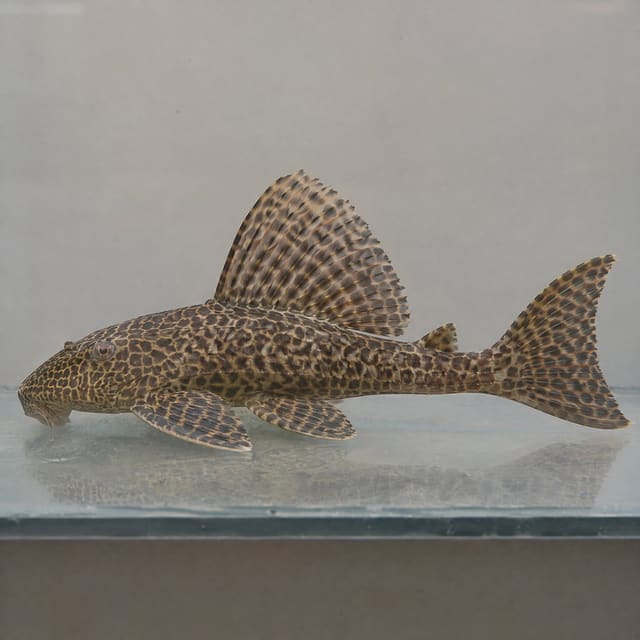
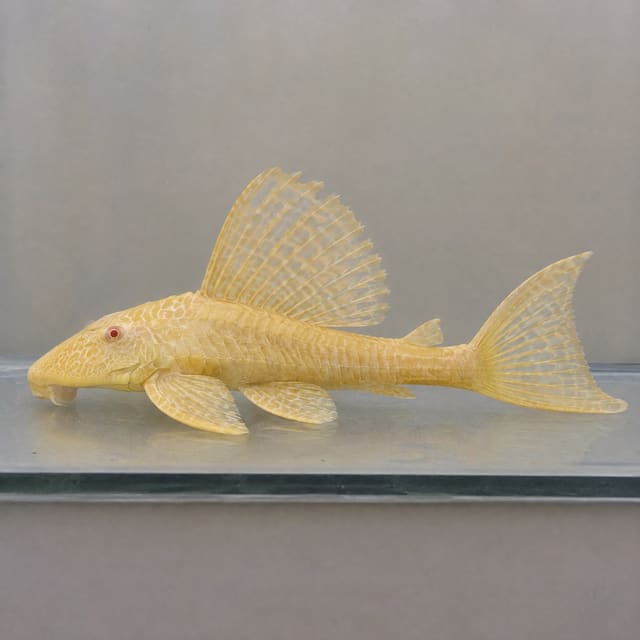
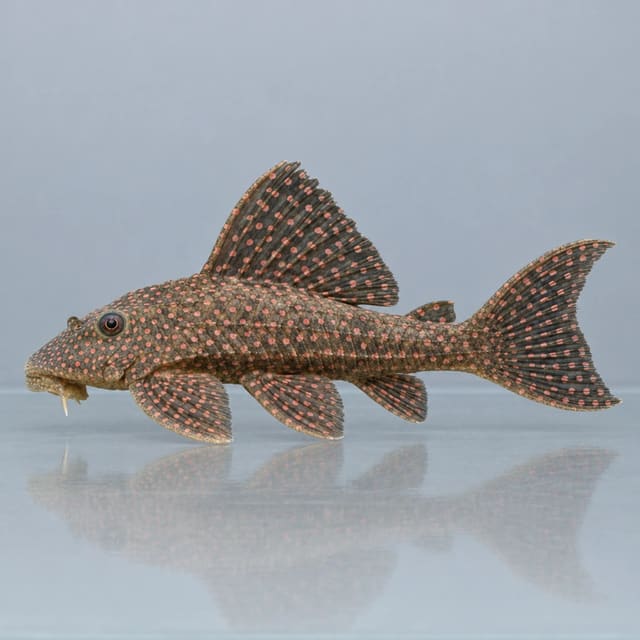
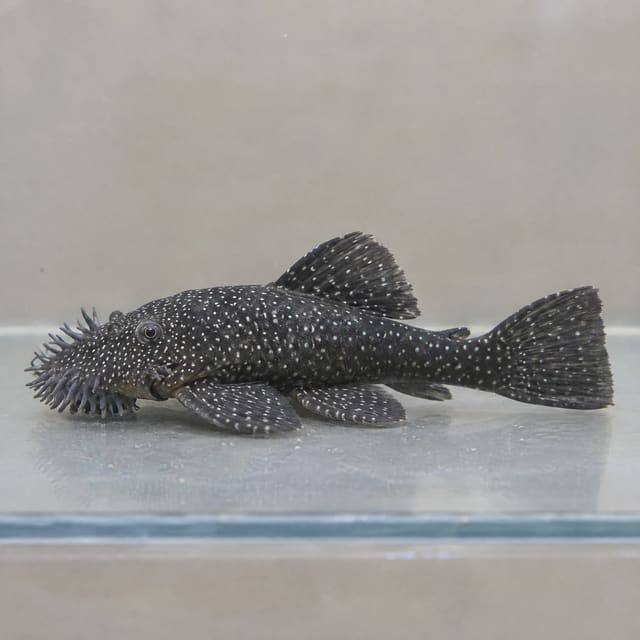
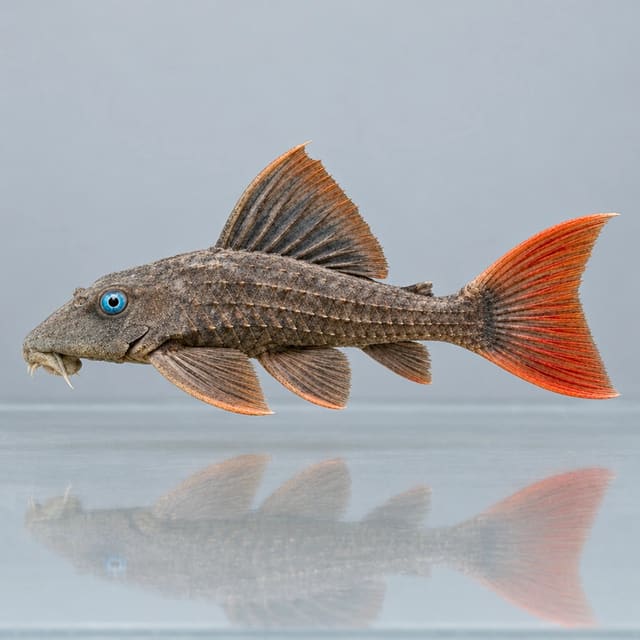
L137 Blue Eye Red Fin Pleco (Hypostomus soniae)
£75.49
The L037 Honeycomb Pleco (Hypostomus faveolus) is a suckermouth catfish from the Tocantins, Araguaia and upper Xingu rivers of central Brazil, named for its pattern of pale, yellowish blotches outlined by thin dark lines. It grows to about 20.6 cm and needs a 120 × 45 cm aquarium at 23–27°C with caves, sand and good filtration. Sold individually as one live fish.
Hypostomus faveolus
The L037 Honeycomb Pleco (Hypostomus faveolus) is a suckermouth catfish from the Tocantins, Araguaia and upper Xingu rivers of central Brazil, named for its pattern of pale, yellowish blotches outlined by thin dark lines. It grows to about 20.6 cm and needs a 120 × 45 cm aquarium at 23–27°C with caves, sand and good filtration. Sold individually as one live fish.
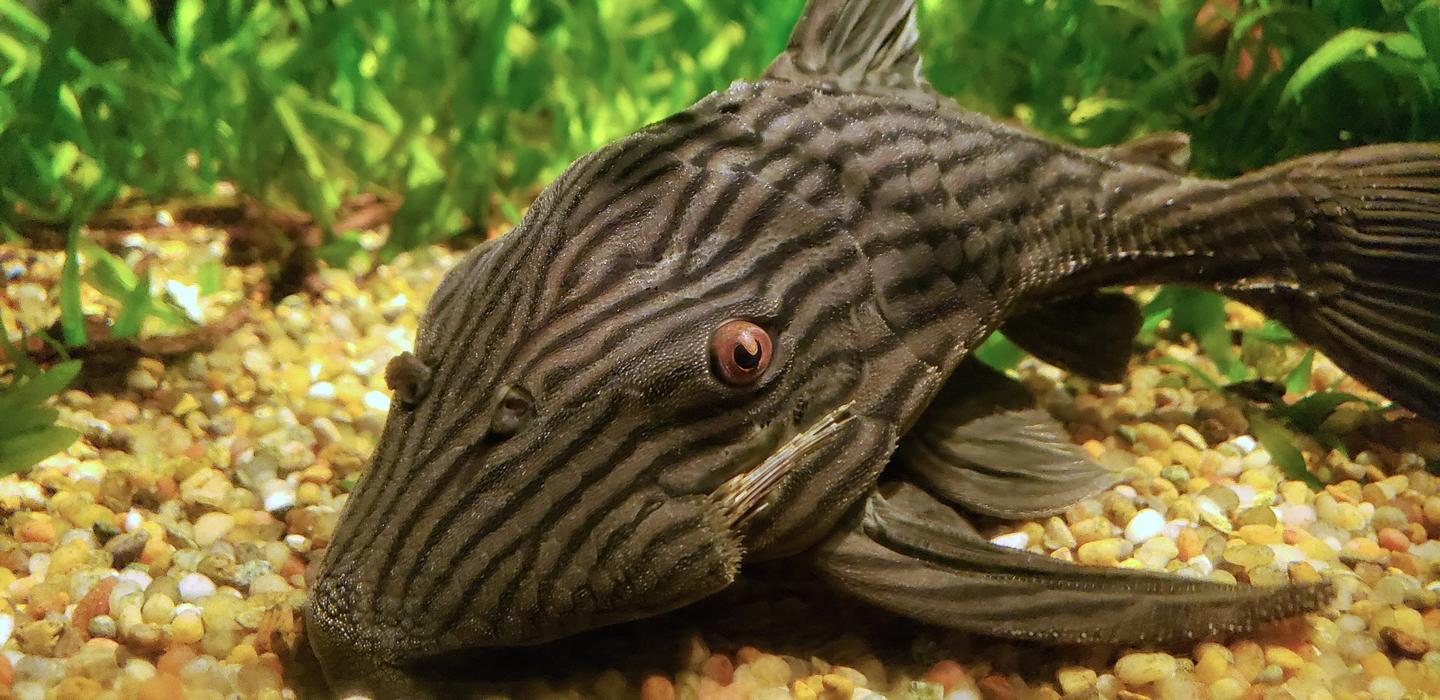
‘Pleco’ is a loose aquarium-trade label, not one species or one care sheet. Before buying, confirm the scientific name or defensible L-number, adult size and measurement method, required footprint, temperature and water, diet, social plan and source. No universal pleco tank size, menu or algae result is honest.
Read the full care guidance when planning conditions for your aquarium.
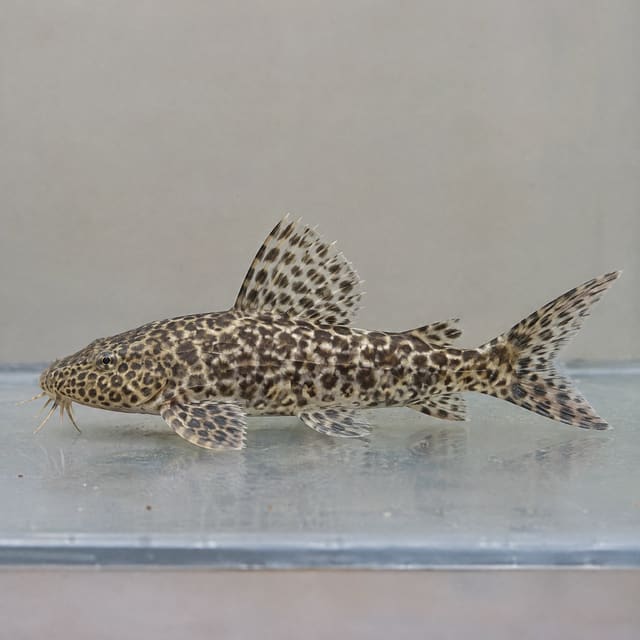
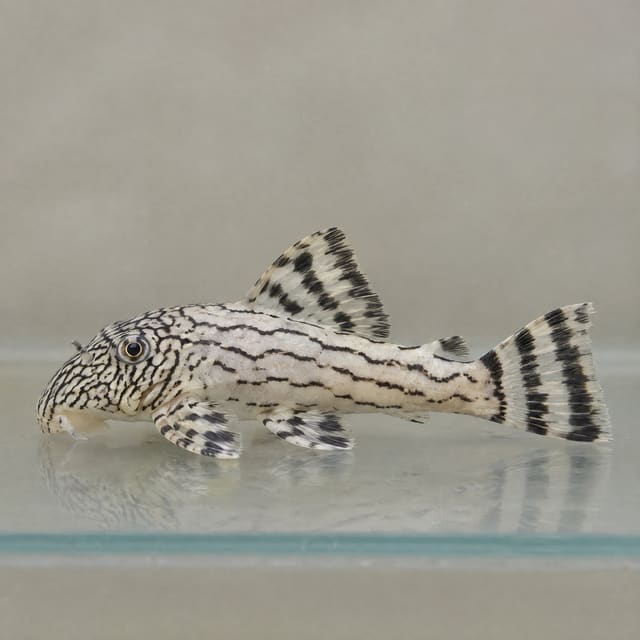
The L037 Honeycomb Pleco (Hypostomus faveolus) is a suckermouth catfish from central Brazil, found in the Rio Tocantins basin, including the Rio Araguaia, and in the upper Rio Xingu basin. Scientists described it in 2008 and named it faveolus, from the Latin for honeycomb, after its colour pattern: large, mostly rounded pale blotches separated by narrow dark lines, so the whole body looks covered in a net. In living fish the pale blotches are more conspicuous and yellowish than in preserved specimens.
In the original scientific description, Zawadzki, Birindelli and Lima explain why the L037 pleco is special: most Hypostomus have dark blotches on a paler background, while this species has pale blotches on a darker one, and it was the first pale-spotted Hypostomus recorded from the Amazon basin. It also has conspicuous keels (raised ridges) on the head, in front of the dorsal fin and along the side plates. Those two features together separate it from every other species in the genus.
| Name | What it means |
|---|---|
| L037 (also written L37) | The trade code for this fish, given before it had a scientific name |
| L037a | A second label: Planet Catfish notes that the Aqualog L-number book shows the real L037 as L037a, and a different fish, Cordylancistrus platyrhynchus, as L037 |
| Honeycomb Pleco | The English name Planet Catfish uses, matching the meaning of the scientific name |
| Tortoise shell pleco | A descriptive name some sellers use; always check the L-number and scientific name as well |
| Hypostomus faveolus Zawadzki, Birindelli & Lima, 2008 | The scientific name |
Do not confuse it with the honeycomb or "wabenmuster" bristlenose plecos, which are Ancistrus, a different genus with fleshy bristles on the snout. You can browse our other Hypostomus plecos, the wider South American catfish category or our full catfish and plecos collection.
Because L-number names get mixed up, it pays to know what the real fish looks like. Use these points from the scientific description when you look at a fish in a shop or in your own tank.
| Feature | What to look for |
|---|---|
| Body pattern | Pale, mostly rounded blotches bordered by thin dark lines, forming a honeycomb; yellowish in life |
| Fins | Usually the same pattern; the fin edges may be faded or plain dark |
| Ridges | Conspicuous keels on the head, in front of the dorsal fin and along the side plates |
| Dorsal fin | One spine and seven branched rays: a normal Hypostomus dorsal, not a tall sail with many rays |
| Tail | A concave rear edge, with the lower lobe longer than the upper |
| Stress colours | Two to five oblique dark bars across the body when the fish is stressed |
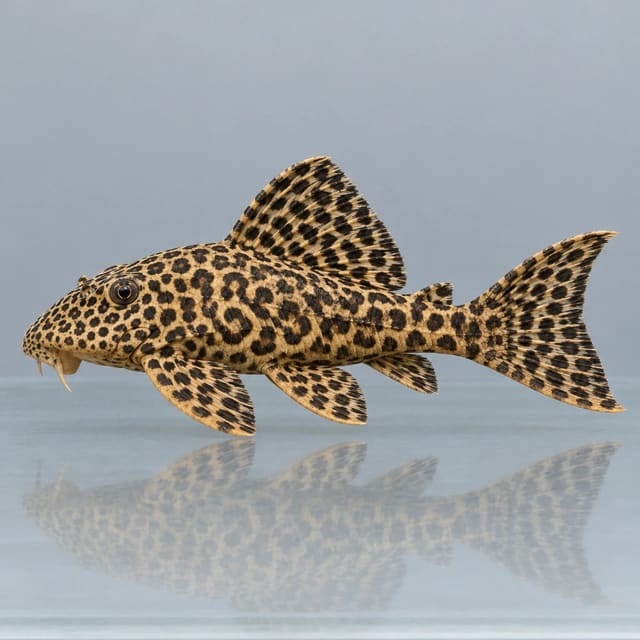
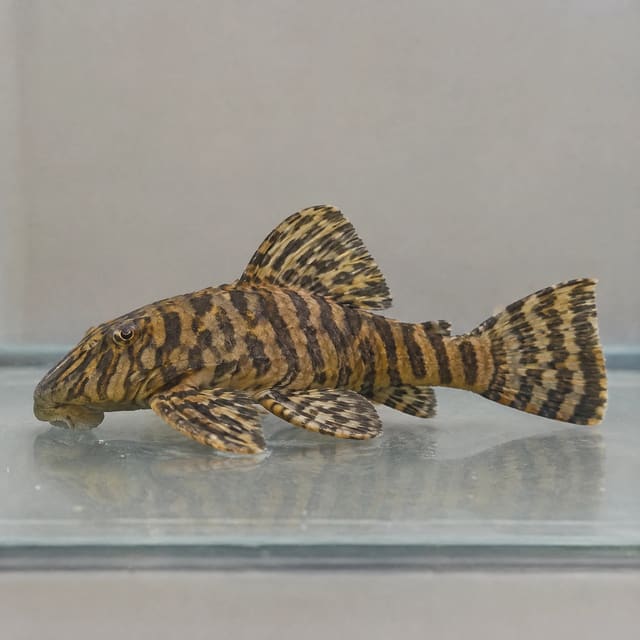
The pattern varies with where the fish comes from. In most fish from the Xingu basin the dark lines are wider, about as broad as the pale blotches, and small Xingu fish under about 5 cm often have wavy, worm-like pale markings on the head; fish from the Tocantins basin show the adult pattern from a small size. The photographs on this page are representative and do not show the individual you will receive, so compare your fish with the features above.
One purchase supplies one live L037 Honeycomb Pleco at the standard size offered on this listing. The largest of the 234 specimens measured in the scientific description was 206 mm standard length (body length without the tail), and FishBase and Planet Catfish both give 20.6 cm as the maximum. Plan for a fish of about 20 cm plus its tail, whatever its size on arrival.
Sex is not specified. Neither the scientific description nor Planet Catfish describes reliable external differences between males and females of this species, so do not plan on receiving a particular sex or a pair.
Have the aquarium mature and ready before you order, and read our delivery and Live Arrival Guarantee terms so you know when to expect the fish.
No minimum aquarium size has been published for H. faveolus itself. For comparison, Seriously Fish's Hypostomus profiles give a base of 120 × 45 cm for species of 23–30 cm standard length, and a tank at least 120 cm long for the 20 cm L229. We therefore treat 120 × 45 cm, about 243 litres at 45 cm tall, as the minimum for one L037.
A heavy-bodied pleco uses the floor rather than the height of a tank, so the footprint matters more than the litres. Allow more floor for every additional large bottom dweller, and more again if you hope to keep two L037 together.
Our tank volume calculator converts the dimensions into litres, and the stocking calculator helps you check the whole community. Our pleco care guide covers the routines every suckermouth catfish needs.
The scientific description calls H. faveolus eurytopic, meaning it copes with a wide range of habitats: it has been collected in rapids and in slow-flowing parts of middle-sized to large rivers, over both rocky and soft bottoms, and a few juveniles were found in small streams and oxbow lakes. Planet Catfish adds that, like all loricariids, it needs good hiding places.
| Area | Purpose |
|---|---|
| Sand or fine gravel floor | Matches the soft river bottoms it lives over; OATA recommends sand or fine gravel so catfish barbels are not injured |
| Rock piles and caves | Recreate its rocky stretches and give it a home base |
| Driftwood | Adds shade, broken sight lines and extra hiding places |
| Open water | Leaves room for tank mates and for the pleco to roam at night |
| Moderate flow | A filter outlet, and a powerhead if wanted, keeps the water moving and oxygenated |
Set rocks and caves on the glass before adding sand so that digging cannot undermine them. If you add plants, choose tough species fixed to wood or rock; a large pleco can dislodge loosely rooted plants as it moves around.
FishBase notes that Hypostomus can breathe air when needed. If your L037 makes frequent dashes to the surface, treat it as a sign to test the water and check that the filter outlet is moving the surface and keeping oxygen levels up.
Planet Catfish gives 23–27°C for this species. No pH or hardness range has been published for it. OATA's general guidance for catfish is pH 6.0–8.0 with a general hardness of 4–18 °dH, and the pH ranges in Seriously Fish's profiles of other Hypostomus all fall between 6.0 and 8.0. A stable pH within that band matters more than any exact figure, so avoid chasing a number with chemicals.
| Reading | Target |
|---|---|
| Temperature | 23–27°C |
| pH | No species value published; keep stable within 6.0–8.0 |
| General hardness | No species value published; OATA's catfish range is 4–18 °dH |
| Ammonia | Zero mg/l |
| Nitrite | Zero mg/l |
| Nitrate | No more than 20 mg/l above your tap water |
UK tap water ranges from soft in many northern and western areas to very hard in parts of southern and eastern England, and conditioned tap water from much of the country falls inside OATA's broad catfish range. Your water company publishes the hardness for your postcode. Always add a conditioner that removes chlorine and chloramine, test your tap water and tank water rather than guessing, and use our water matcher to compare the results. Our water chemistry guide explains pH, hardness and the nitrogen cycle in plain terms.
A 20 cm pleco produces a lot of waste, and droppings collect around its cave. Seriously Fish sizes filters in its pleco profiles at four to five turnovers of the tank volume an hour; for a 243-litre tank that is roughly 970–1,215 litres per hour. A large external filter, or two filters, gives the extra capacity and a back-up if one stops.
If ammonia or nitrite rises above zero, test again, check the filter and cut back the feeding until the readings settle. Clear water can still hold dissolved waste.
No study of this species' diet has been published. The scientific description records long, slender, two-pointed teeth, and Planet Catfish notes that it is not a member of the wood-eating Hypostomus cochliodon group, so treat driftwood as cover rather than as its food. OATA describes plecos in general as herbivorous and says catfish should be given appropriate sinking foods rather than left to scavenge.
A varied diet covers its needs: vegetable-based sinking wafers and tablets as the staple, blanched vegetables such as cucumber, courgette or spinach, and some frozen foods such as bloodworm for variety. Vary the menu through the week rather than relying on a single food.
Watch the belly when it rests on the glass. A rounded belly shows it is feeding well; a hollow one means faster fish may be taking the food, so drop it closer to the cave after dark.
Only add the L037 to a tank with a mature filter, zero ammonia and nitrite and a temperature already within 23–27°C. OATA's floating-bag method works well: turn the aquarium lights off, float the bag for 10 minutes to match temperatures, then add small amounts of tank water to the bag over up to 20 minutes and release the fish with as little bag water as possible. See our guide to acclimatising new fish for the detail.
Plecos have sharp fin spines, which is why OATA advises double-bagging catfish. Avoid netting it where you can; guide it into a container instead so the spines and plates do not snag.
| Checkpoint | What to do |
|---|---|
| Before release | Test ammonia, nitrite, temperature and pH; have its cave in place |
| First night | Keep the lights off and drop a small sinking meal near the cave |
| Days 2–4 | Look for it after dark; daytime hiding is normal at first |
| Mid-week | Retest ammonia and nitrite, as the filter adjusts to a larger fish |
| End of week | Complete the usual water change and check its belly is rounded |
If it still refuses food, breathes heavily or has a hollow belly after the first week, test the water and contact us with your readings.
No compatibility notes have been published for H. faveolus specifically. Seriously Fish records that the larger Hypostomus regani is peaceful with most tank mates but territorial with similar-sized bottom dwellers, especially its own kind, and that the small H. mutucae is peaceful. We plan the L037 on the same cautious basis: easy-going with mid-water fish, but given its own cave away from other large plecos.
| Suits | Use caution with |
|---|---|
| Peaceful mid-water fish that share 23–27°C | A second L037 or another pleco of similar size |
| Bottom dwellers that each have their own cave | Several large catfish competing for one area of the floor |
| Fish that are happy with moderate flow | Fish that need water far outside 23–27°C |
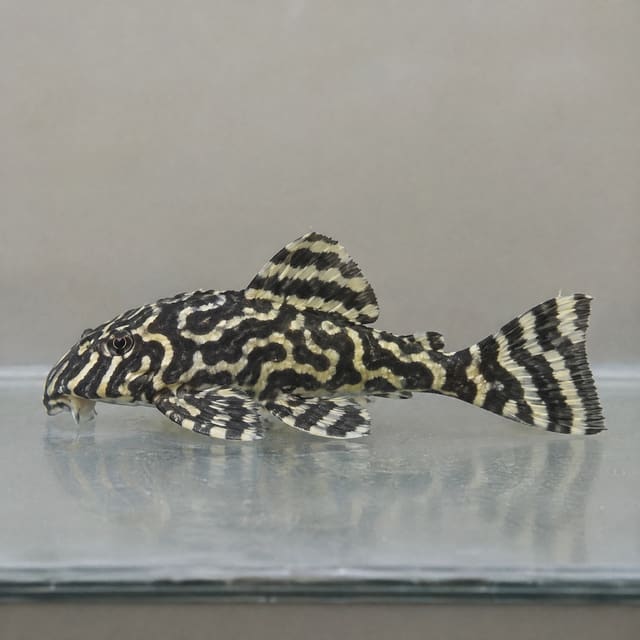
For comparison, our Common Pleco and Gold Suckermouth Catfish are other Hypostomus, and our common pleco guide covers that species in depth. The Gold Spot Pleco L001 comes from the same Araguaia river system: the scientific description mentions both species from that basin. The Leopard Sailfin Pleco shows the opposite pattern, dark spots on a paler body. Check any mix with our tank mates tool, and give each large pleco its own territory.
OATA lists the warning signs for catfish: changes in swimming, colour, breathing, appetite, hiding and body condition, as well as white spots, fluffy growths and damaged fins. A pleco also tells you a lot through its belly and eyes, so check both regularly.
| If you see | Do this |
|---|---|
| Hollow belly or sunken eyes | Feed near its cave after dark and check that tank mates are not taking the food |
| Frequent trips to the surface or fast breathing | Test ammonia and nitrite and increase surface movement |
| Dark oblique bars across the body | A stress pattern: check water, tank mates and hiding places |
| White spots or fluffy patches | Test the water and seek treatment advice |
| Rubbing on décor or clamped fins | Test the water and look closely for parasites |
| Scrapes or torn fins | Look for sharp décor or a dispute with another bottom dweller |
Change one thing at a time and record what you did, so you can see what made the difference. If problems continue after the water is right, contact us with your readings and a description of the signs.
Planet Catfish records that H. faveolus has been bred in the aquarium, but no breeding report has been published there, so details such as egg numbers and spawning triggers are not documented. OATA notes that many plecos need changes in conditions, such as a drop in water temperature, to trigger spawning, which do not happen in a normal home aquarium, so treat breeding as a bonus rather than a plan.
L037 is Hypostomus faveolus, the Honeycomb Pleco, a suckermouth catfish from the Rio Tocantins basin (including the Rio Araguaia) and the upper Rio Xingu basin in central Brazil. It was described in 2008 and named after its honeycomb pattern of pale blotches outlined by thin dark lines.
Some sellers use "tortoise shell pleco" as a descriptive name, but it is not an established name for a species. The fish coded L037 is Hypostomus faveolus. Check the scientific name and look for pale, yellowish blotches outlined by dark lines.
Planet Catfish notes that the Aqualog L-number book shows the real L037 under the code L037a and labels a different fish, Cordylancistrus platyrhynchus, as L037. Both codes may therefore be used for this species.
About 20.6 cm standard length, the size given by Planet Catfish and FishBase and the largest of the 234 fish measured in the scientific description. Plan for a fish of around 20 cm plus its tail.
No minimum has been published for this species. We use a base of at least 120 × 45 cm, about 243 litres at 45 cm tall, which is what Seriously Fish gives for comparable Hypostomus of 23–30 cm.
Planet Catfish gives 23–27°C. No pH or hardness range is published for the species, so keep the pH stable within OATA's general catfish range of 6.0–8.0, with zero ammonia and nitrite and nitrate no more than 20 mg/l above your tap water.
No diet study exists for this species. Feed a varied sinking diet: vegetable-based wafers and tablets, blanched vegetables such as cucumber and courgette, and some frozen foods, once a day in an amount it clears within about 30 minutes.
With care. No compatibility notes are published for L037, but Seriously Fish records that the larger Hypostomus regani is territorial with similar-sized bottom dwellers, especially its own kind. Give every pleco its own cave and enough floor space.
No reviews for this item yet. Bought one? Honest reviews only, good or bad.
What customers say about ordering from us
Easy website plenty of info on fish your buying great to pick a time slot
TRACEY DURRANT · 7 Oct 2026
Got some lovely fish thank you
Kevin Mackie · 7 Oct 2026
Reviews of our shop, collected by Judge.me, an independent third-party review collector. Newest first.
Moved by UK carriers licensed to handle live animals
Hand-packed with oxygen bags, poly box, heat pack
Email photos the same day; an optional unboxing video helps us review problems faster — claim terms apply
Klarna & PayPal Pay in 3 at checkout