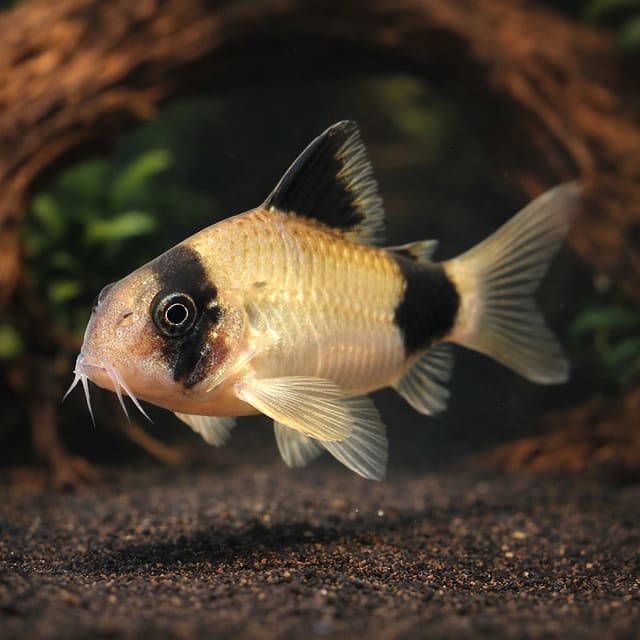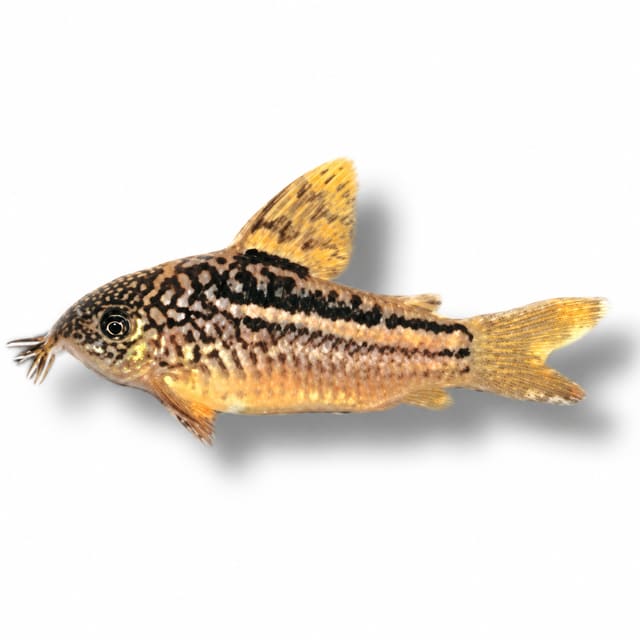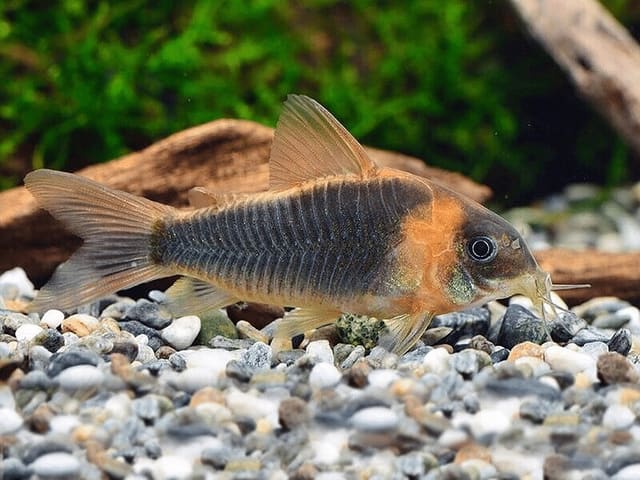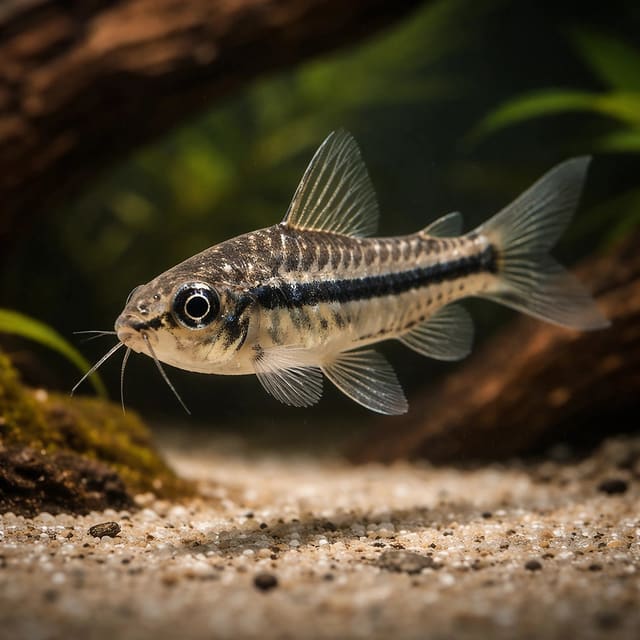
Pigmy Corydoras (Corydoras pygmaeus)
22–26°C · pH 6.4–7.4 · 41L
£3.59

Tatia perugiae is a South American driftwood catfish from the upper Amazon River basin that reaches 5 cm standard length. It suits keepers with a mature, filtered aquarium: use the 26–27°C overlap between FishBase and OATA, with OATA’s group guidance of pH 6.0–8.0 and 4–18°dH. Sold individually in sizes from 1–2.5 cm to 2.5–3 cm.
Adult size is the maximum length this species reaches at full maturity (scientific sources). The livestock you receive will be younger and smaller — pick a size above for the actual shipping size. Product-photo provenance and any image-specific limitations are stated on the listing.
Tatia perugiae
Shoaling fish: kept in a group they feel safer, stay calmer and show their best colour.
Tatia perugiae is a South American driftwood catfish from the upper Amazon River basin that reaches 5 cm standard length. It suits keepers with a mature, filtered aquarium: use the 26–27°C overlap between FishBase and OATA, with OATA’s group guidance of pH 6.0–8.0 and 4–18°dH. Sold individually in sizes from 1–2.5 cm to 2.5–3 cm.
Adult size is the maximum length this species reaches at full maturity (scientific sources). The livestock you receive will be younger and smaller — pick a size above for the actual shipping size. Product-photo provenance and any image-specific limitations are stated on the listing.
Maintain these water conditions for optimal health and vibrant colors
Tatia perugiae is a small South American freshwater catfish from the upper Amazon River basin that reaches a reported maximum of 5 cm standard length. It belongs to the driftwood catfish family, Auchenipteridae, and suits a keeper who can mature and test an aquarium before arrival, maintain 26–27°C, provide accessible shelter and make sure animal-based sinking food reaches the fish. The Tatia genus summary describes these as small South American catfishes. FishBase now lists it as Duringlanis perugiae.
FishBase reports a maximum of 5 cm standard length and places the fish in the upper Amazon River basin. Treat that 5 cm figure as the decisive planning size when considering aquarium space, filtration capacity, shelter and companions.
In nature, it inhabits large rivers with swift water and favours shoreline zones over hard, sandy bottoms without vegetation. Its recorded wild diet consists of insects, especially ants, beetles and mayflies. Use these details to plan open routes, clean water movement and deliberate delivery of animal-based food.
Compatibility and grouping require more thought than simply choosing fish described as community species. Build the plan around measured water, adult dimensions and the behaviour of every intended resident.
One purchase quantity supplies one animal of the selected option. Use the live size selector to choose between the labels 1 - 2,5 cm and 2,5 - 3 cm. The size you select is the size supplied, not the adult size.
Those measurements describe the fish at dispatch. They do not change the 5 cm maximum reported by FishBase, so allow for growth when assessing the aquarium and its existing residents. A smaller dispatch measurement is not permission to use a smaller permanent setup.
Sex is guaranteed only when the selected option explicitly states male or female. This Tatia perugiae listing has no sex-guaranteed option.
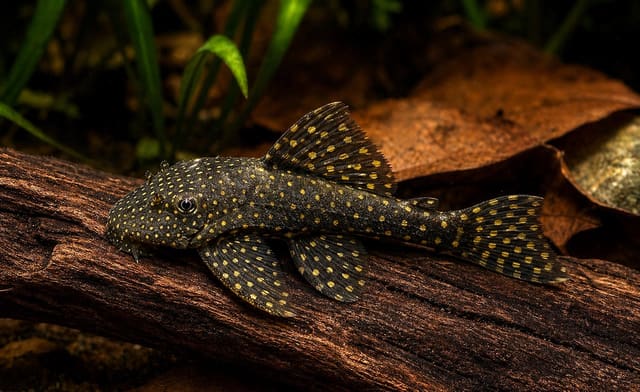
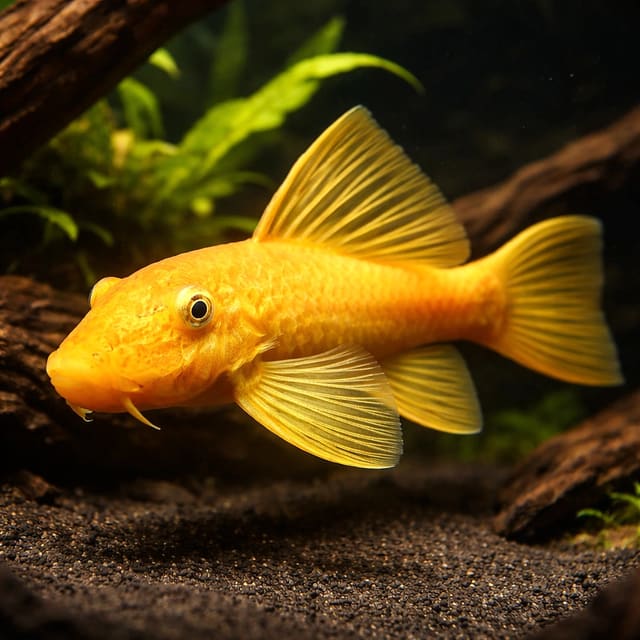
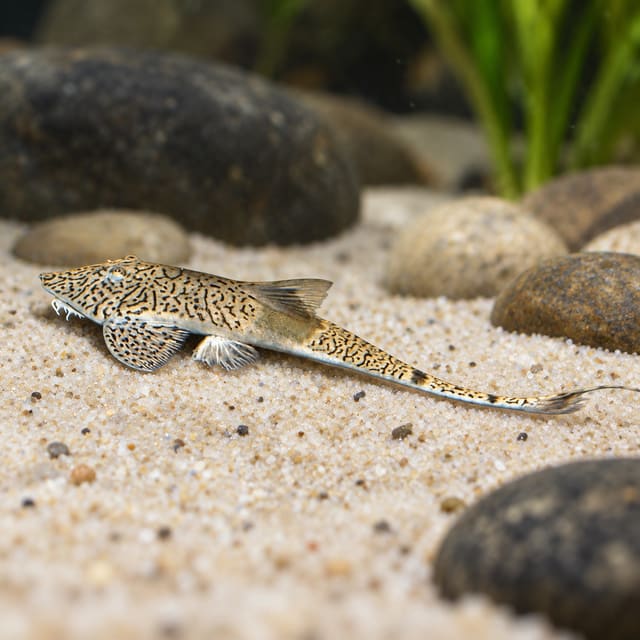
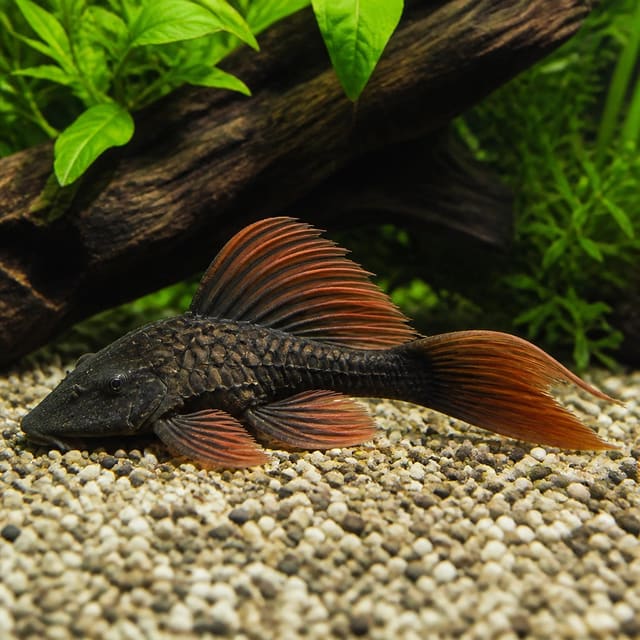
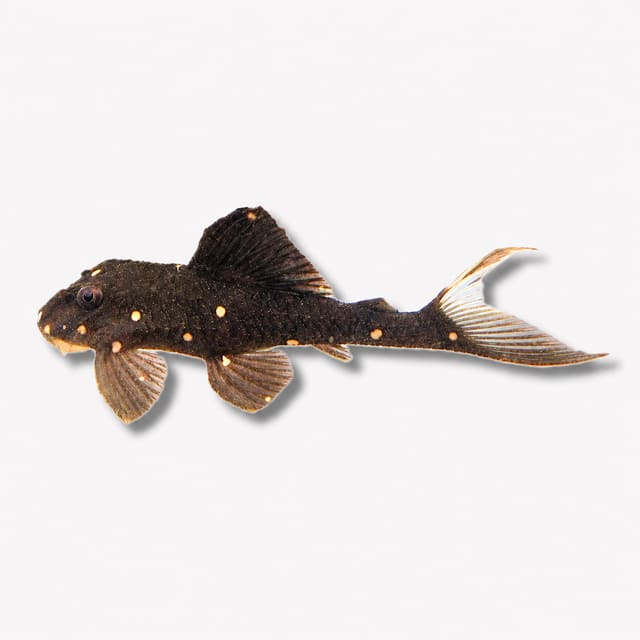
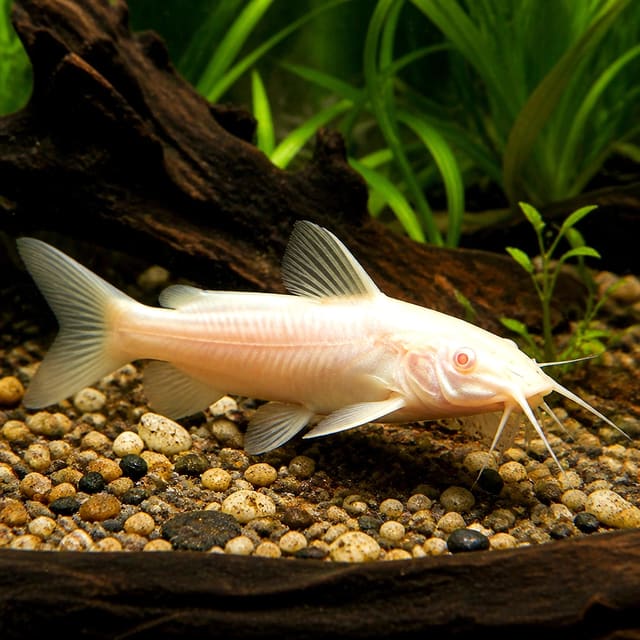
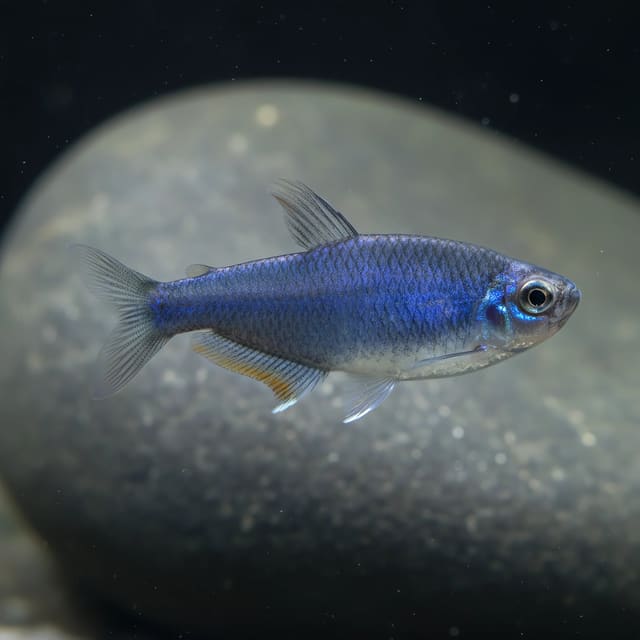
The gallery images are representative, based on reference photographs of this species, so colours can look slightly different from the live animal.
If you are comparing this fish with other catfish rather than assessing tank mates, browse the current catfish and plecos collection. Product relationships shown elsewhere on the page are alternatives for comparison, not compatibility recommendations.
OATA’s freshwater-catfish guidance gives 22–27°C for the group; FishBase reports 26–28°C for this species’ recorded environment. Use 26–27°C as the routine aquarium target because it sits within both ranges. Treat OATA’s chemistry figures as broad group guidance rather than a species-specific optimum.
| Planning value | Working target |
|---|---|
| Temperature | 26–27°C |
| pH | 6.0–8.0 |
| General hardness | 4–18°dH |
| Carbonate hardness | 3–15°dKH |
| Ammonia and nitrite | 0 mg per litre |
| Nitrate | Up to 20 mg per litre above the normal tap-water level |
| Suits | Not suited to |
|---|---|
| A mature, filtered aquarium maintained at 26–27°C | An unfiltered or biologically immature aquarium |
| A layout with accessible shelter and clear feeding routes | A setup where sinking food cannot reach the fish |
| A keeper who tests water and maintains it every week | A plan that relies on water appearance instead of test results |
| Companions whose water needs and feeding behaviour pass the full screen | Combinations requiring water outside the working ranges |
Use an established biological filter and test the aquarium rather than judging water by appearance. A clear tank can still contain toxic ammonia or nitrite, while a stable filter converts fish waste through the nitrogen cycle.
For a multi-catfish plan, compare the layout with OATA’s recommendation of at least 80 litres for a shoal of smaller examples such as Corydoras or smaller plecos. This is a cautious space benchmark, not a Tatia minimum. Complete the decision using the aquarium’s dimensions, filtration, shelter, feeding access and total adult stocking load.
The larger and more stable the aquarium, the more room there is to manage temperature and water quality. Volume alone is not enough: a suitable plan must also provide a mature filter, accessible cover and a realistic maintenance routine.
Set up and mature the aquarium before introducing this catfish. The RSPCA explains why aquarium filtration is vital: fish release toxic ammonia, and beneficial bacteria in a working biological filter convert it first to nitrite and then to the safer nitrate.
A filter running on a newly filled aquarium is not automatically mature. Follow our first tropical aquarium guide to prepare the tank, establish biological filtration and confirm the water with tests before livestock arrives.
| Check | Ready condition |
|---|---|
| Ammonia | 0 mg per litre |
| Nitrite | 0 mg per litre |
| Temperature | Stable at 26–27°C |
| Filter | Running normally without a blockage |
| Shelter | Securely positioned and accessible |
| Maintenance equipment | Tests, conditioner and siphon ready |
Stock gradually after the filter has matured. Each added fish and each increase in feeding raises the amount of waste that the beneficial bacteria must process. OATA warns that adding too many fish too quickly can produce new tank syndrome, when the bacterial population cannot keep pace and ammonia or nitrite rises.
Check the whole stocking plan rather than assessing this fish in isolation. Add the adult dimensions and expected waste of current residents to the proposed additions, then decide whether filtration and swimming space remain adequate. If the aquarium is already close to its practical limit, a small dispatch fish still adds a permanent biological load as it grows.
Do not switch off the filter as part of routine care. Keep it operating, watch for reduced flow and protect its bacterial media during cleaning. The filter is the aquarium’s main waste-processing system, not simply a device for making the water look clear.
Test temperature and chemistry before selecting the fish, after introduction and at least weekly as part of normal maintenance. Our water chemistry guide explains what each reading means, while the water matcher helps compare measured aquarium values with the working ranges.
Maintain 26–27°C. This range respects FishBase’s 26–28°C environmental record without exceeding OATA’s 27°C upper figure for freshwater catfish. Check the reading with a reliable thermometer and correct the setup before introduction if it remains outside that interval.
Measure tap water as well as aquarium water because the nitrate instruction is relative. For example, if normal tap water measures 15 mg per litre nitrate, the aquarium ceiling under this guidance is 35 mg per litre. That arithmetic does not replace maintenance; it gives a clear point for reviewing water changes, feeding and filter performance.
Consider a second worked check. Water at 26.5°C, pH 7.4, 10°dH general hardness, 7°dKH carbonate hardness, 0 mg per litre ammonia and 0 mg per litre nitrite sits inside the working ranges. The same aquarium at 25°C fails the temperature target, while a reading above zero for ammonia or nitrite fails the waste check regardless of the other numbers.
Make changes deliberately rather than chasing small test fluctuations. Retest an unexpected result, compare it with the tap-water baseline and check filter flow, recent stocking and feeding. Stability within the range is more useful than repeatedly moving pH or hardness towards an arbitrary midpoint.
Translate the wild habitat into practical functions rather than a rigid biotope. FishBase associates the species with swift large rivers and shoreline zones over hard, sandy bottoms without vegetation. In the aquarium, provide clean water movement, an unobstructed route across the lower area and places where sinking food can be found.
OATA advises that smaller or shy catfish benefit from cover and that many catfish appreciate wood, pots or caves. Use securely positioned shelter that cannot shift onto the fish. Plants can add cover, but keep enough open space to see whether the fish is moving normally and reaching food.
| Layout feature | Decision it supports |
|---|---|
| Open lower route | Movement, observation and food access |
| Wood, pot or cave | Accessible shelter |
| Filtered water movement | Waste transport and stable water quality |
| Serviceable substrate | Weekly removal of settled solid waste |
| Optional plant cover | Visual cover without blocking routes |
Set the flow by watching the fish after introduction. It should be able to hold position, enter shelter and reach sinking food without being continually displaced. If it struggles to remain in place, redirect the outlet or diffuse the strongest jet while preserving filtration and circulation. If debris consistently settles in an inaccessible dead spot, revise the layout so that weekly siphoning remains practical.
Keep filter intakes and décor openings appropriate for a fish dispatched at 1 - 2,5 cm or 2,5 - 3 cm. Inspect gaps before introduction and after moving equipment. This is a physical-fit check based on the selected dispatch size, while the permanent stocking plan still uses the 5 cm maximum.
A decorative feature earns its place when it provides shelter, leaves a feeding route open or makes maintenance easier. Dense decoration that prevents observation or traps waste works against those goals, even if it resembles a natural scene.
FishBase reports that the wild fish feeds on insects, especially ants, beetles and mayflies. Use that biology to choose an appropriately sized, animal-based sinking food intended for small carnivorous or insect-eating freshwater catfish. The food must reach the fish rather than disappearing into the aquarium before it can feed.
OATA advises feeding catfish an appropriate sinking food because they should not be expected to live on scraps. Offer only what the fish can eat within a few minutes, once a day. Remove uneaten food rather than allowing it to break down and increase the waste burden on the filter.
Appropriate particle size matters for the dispatch grades. A piece should be manageable for the selected fish without creating a cloud of fragments that settles through the tank. Break an appropriate food into smaller portions when necessary, but keep the total daily amount within what is consumed promptly.
Use body condition and feeding interest as longer-term checks. Reduced intake or loss of interest can be an early warning alongside changes in swimming, colour, breathing or hiding. First test water quality and inspect filter flow because ammonia, nitrite or deteriorating conditions can affect behaviour and appetite.
Feeding competition is also a compatibility decision. If other fish repeatedly intercept the sinking ration, alter how the food is distributed so this catfish receives a share. If that still fails, reconsider the combination rather than compensating with excess food. Adding more than the residents can eat raises the risk of uneaten material breaking down into toxic waste.
Keep the routine consistent enough to spot change. A known daily portion and a clear observation point make it easier to distinguish normal variation from a sustained reduction in feeding.
Carry out a partial water change of 25% at least once every week. Use a siphon to remove solid waste from the substrate, and treat replacement tap water with conditioner before it enters the aquarium so chlorine or chloramine does not damage fish or filter bacteria.
Clean filter media only when needed. Do not rinse it under the tap because chlorine or chloramine may kill part of the beneficial bacterial population. Instead, rinse it lightly in aquarium water removed during the partial change. The aim is to clear obstructing debris without stripping away the biological filter.
| Observation | Immediate decision |
|---|---|
| Ammonia or nitrite above zero | Check the filter, stocking and waste load, then take prompt corrective action |
| Nitrate rising faster than usual | Review feeding, waste removal and the water-change routine |
| Reduced filter flow | Inspect for blockage and rinse media correctly if required |
| Uneaten food | Remove it and reduce or redirect the next portion |
| Changed breathing or swimming | Test water immediately and assess the fish closely |
During the first month, compare each weekly result with the previous one. A rising nitrate trend, repeated debris accumulation or declining flow identifies a routine that needs adjustment before it becomes a larger problem. Keep additions gradual while the biological filter adapts to increased waste and feeding.
Watch for hanging at the surface, unusual bottom-sitting, erratic movement, colour becoming darker or paler, increased hiding, altered gill movement, white spots, fluffy growths, damaged fins or scales, weight change and reduced feeding. Test the water first when any of these changes appears, then contact us for health guidance if the concern continues.
Prepare the aquarium before the delivery window and make sure someone can receive live fish rather than leaving the parcel unattended. Confirm that temperature is stable at 26–27°C, ammonia and nitrite are both 0 mg per litre, the filter is running and the intended shelter is accessible.
Follow the current delivery, acclimatisation and Live Arrival Guarantee policy. Film every delivery continuously, starting while the parcel is still sealed and before it is opened.
Keep the first observation practical. Confirm that the fish can hold position, find shelter and move without obstruction. Look for clear eyes, intact fins and appropriate swimming, then continue checking for changes in breathing, colour, feeding interest or body condition.
Add livestock gradually. Even one small fish increases feeding and waste, while several additions require a larger response from the biological filter. Test ammonia and nitrite after stocking and keep both at zero rather than waiting for visible cloudiness or distress.
Do not redesign the aquarium during acclimatisation. Complete filter adjustments, décor security checks and feeding-route planning beforehand so the fish enters a stable environment. If a physical hazard becomes apparent after release, correct it carefully while preserving filter operation and water stability.
OATA notes that catfish vary widely in compatibility, from small community examples to highly predatory species. Aquarium compatibility for this species remains uncertain, so there is no universal tank-mate list. Assess each proposed combination using adult dimensions, temperament, water requirements, feeding behaviour and the area of the aquarium each fish uses.
| Question | Decision rule |
|---|---|
| Do the temperature needs overlap? | The shared aquarium must remain at 26–27°C |
| Do chemistry needs overlap? | All residents must fit the planned pH and hardness |
| Are adult dimensions compatible? | Compare mature measurements, not dispatch grades |
| Can this catfish reach food? | Sinking food must remain accessible within a few minutes |
| Will behaviour cause continual displacement? | The fish must be able to hold position and use shelter |
| Can the filter carry the total load? | Ammonia and nitrite must remain at zero after gradual additions |
Decline a combination when its required temperature sits outside 26–27°C or its chemistry cannot be kept inside the shared working ranges. Likewise, reconsider a mix if another resident continually takes the sinking ration, blocks access to shelter or displaces the catfish from the lower route.
Labels such as peaceful, community or bottom-dwelling are not complete compatibility tests. Two fish can share a broad temperament label yet compete for the same feeding point, require different temperatures or create more waste than the filter can process. Use the actual adult plan and measured water.
For a stocking and compatibility assessment, ask us with the aquarium dimensions, volume, current temperature, pH, hardness, ammonia, nitrite, filter details and a list of residents with their adult sizes. That information allows a specific decision instead of relying on a generic tank-mate list.
Do not transfer a Corydoras shoaling rule directly to Tatia perugiae. OATA explains that some catfish should live in groups of at least five, while others need space and prefer to live alone. Treat the number of Tatia as a deliberate stocking choice based on aquarium capacity and observation rather than assuming either pattern.
Each purchase quantity adds one animal, so the biological load rises with every quantity selected. Several small dispatch fish still grow towards the reported 5 cm maximum and increase both the daily feeding requirement and the waste processed by the filter.
| Proposed plan | Checks to complete |
|---|---|
| One planned animal | Confirm shelter, food access, water match and total community load |
| Several planned animals | Check space, multiple feeding access, cover and gradual filter loading |
| Addition to a community | Compare every resident’s adult size, temperament and water needs |
| Multi-catfish aquarium | Use the earlier 80-litre benchmark, then assess dimensions and filtration |
When planning several, do not add them merely to reach a group number borrowed from another catfish. Ensure the aquarium offers enough usable lower area and that each fish can reach the sinking ration without encouraging overfeeding. Introduce livestock at a pace the mature biological filter can accommodate.
Observation closes the loop after introduction. Check whether the fish uses shelter, holds position in the chosen flow, maintains body condition and feeds within the daily window. Increased hiding, changed colour, altered breathing, erratic movement or reduced intake should trigger immediate water testing and a review of interactions.
The aquarium remains suitable only while the complete community passes these checks. Reassess after adding residents, moving décor, changing filter flow or noticing a shift in feeding access. Compatibility is an ongoing welfare decision rather than a one-time label attached to either fish.
Tatia perugiae reaches a reported maximum of 5 cm standard length. Plan its permanent aquarium around that adult figure rather than its 1–2.5 cm or 2.5–3 cm dispatch size.
Plan Tatia perugiae around its 5 cm adult size, the aquarium’s dimensions, mature filtration, shelter and total stocking load. For a multi-catfish plan, OATA recommends at least 80 litres for a shoal of smaller examples such as Corydoras or smaller plecos; use that as a broad benchmark rather than a Tatia minimum.
Choose the number of Tatia perugiae through a stocking assessment rather than borrowing another catfish’s shoaling rule. Check usable space, mature filtration, shelter and food access for every animal added.
Tatia perugiae suits a keeper who can mature and test a filtered aquarium, maintain 26–27°C, provide accessible shelter and confirm that animal-based sinking food reaches the fish. Use those practical requirements rather than a beginner label.
FishBase records insects, especially ants, beetles and mayflies, in the wild diet of Tatia perugiae. Feed appropriately sized animal-based sinking food once daily, offering only what it can consume within a few minutes and removing leftovers.
Maintain 26–27°C, the overlap between FishBase’s recorded environment and OATA’s freshwater-catfish guidance. OATA’s group guidance gives pH 6.0–8.0, general hardness of 4–18°dH and carbonate hardness of 3–15°dKH.
Its aquarium behaviour with tank mates is uncertain, so watch for aggression, fin damage, continual displacement, increased hiding and reduced feeding. Reconsider the combination if another resident blocks shelter or prevents reliable access to food.
There is no universal tank-mate list. Choose companions only when their adult size, temperament, water needs and feeding behaviour fit the aquarium, including a shared temperature of 26–27°C and reliable access to sinking food for this fish.
Someone must be present to receive it. Film every delivery continuously from the sealed parcel as it is opened, showing the fish still in the sealed bag; then float the bag for 20–30 minutes and release the fish without pouring the bag water into the aquarium.
No reviews for this item yet. Bought one? Honest reviews only, good or bad.
What customers say about ordering from us
I have a small group of long finned mountain minnows. So was delighted to be able to order ten of this variety to increase the genetics in my tank . The ones I recieved are healthy but it’s to early to give a verdict on wether they are of a long finned type since they are small currently.
Gordon Walker · 23 Sept 2026
100% success travel and "installation". Pleased with quality of purchase. The Siamese fighter a bit "shy" so have not yet seen him at his best yet but looking good. Happy customer. GG
George E Garratt · 21 Sept 2026
Reviews of our shop, collected by Judge.me, an independent third-party review collector. Newest first.