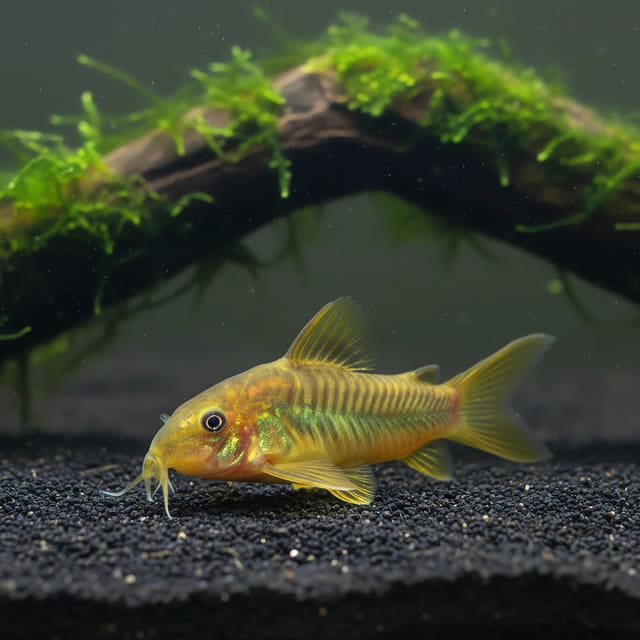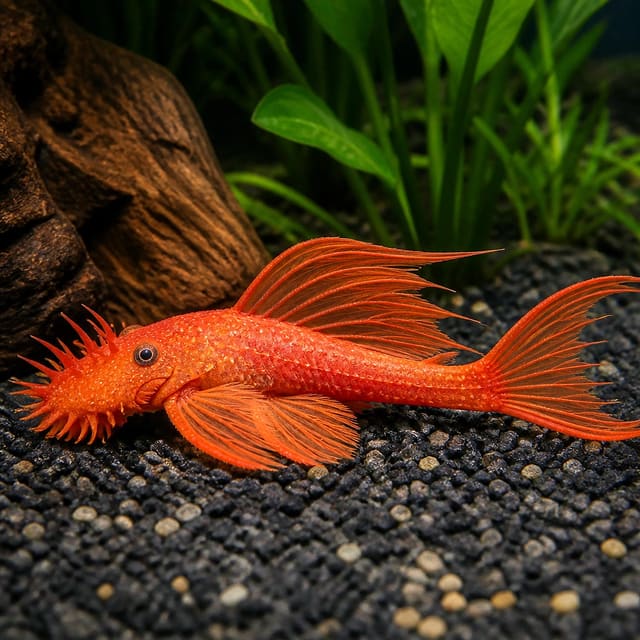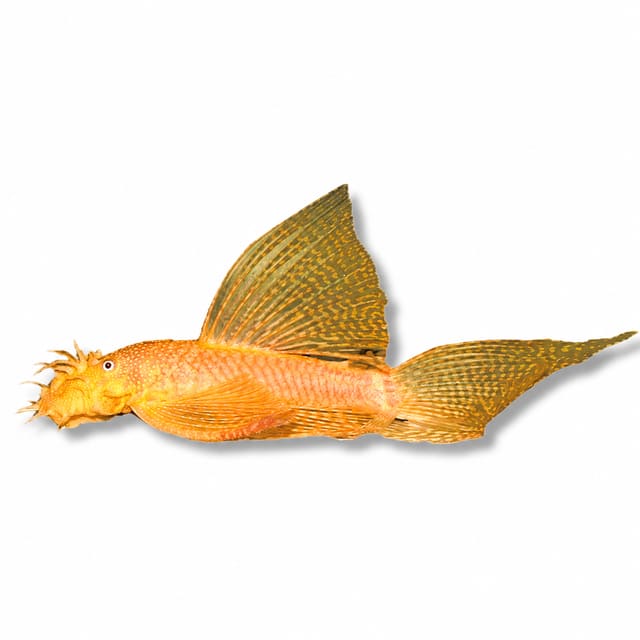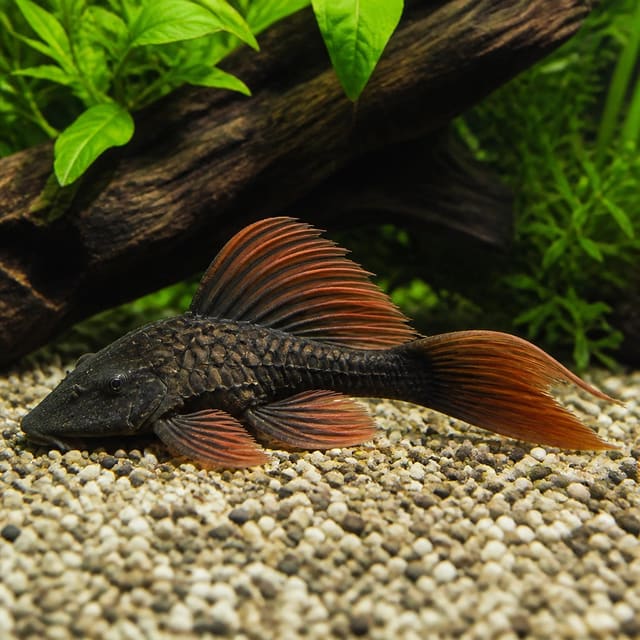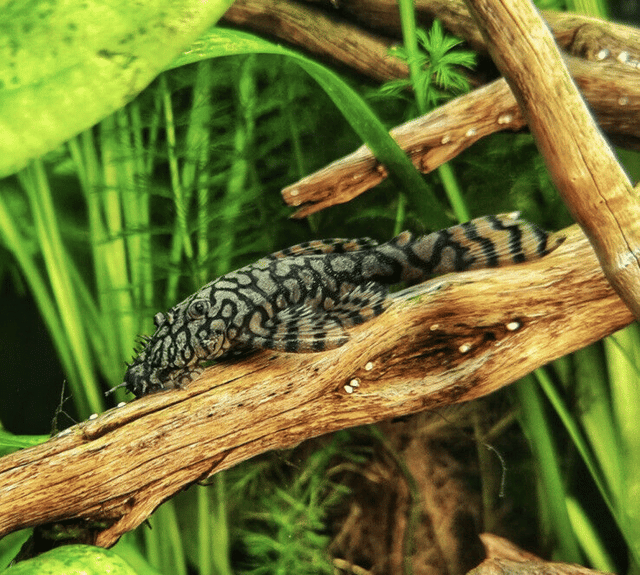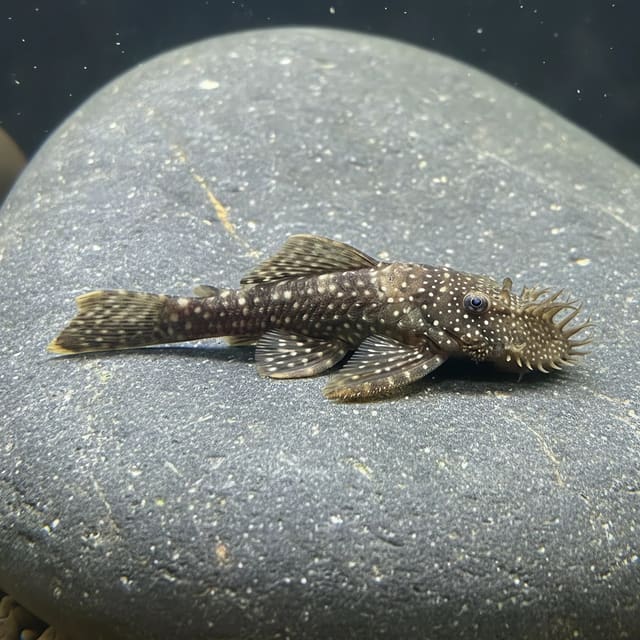
Panda Cory Catfish (Corydoras panda)
22–25°C · pH 6–7.4
£7.29
The Albino Talking Catfish (Megalechis thoracata) is an albino armoured catfish from South American river basins that reaches 15.5 cm standard length. It suits a peaceful or robust community in a tank with a 120 × 38 cm base, a sand or fine-gravel floor and 22–27 °C, pH 6.0–8.0 water, where Seriously Fish's species range overlaps OATA's catfish guidance. Sold individually in sizes from 3–4 cm to 10–11 cm.
Adult size is the maximum length this species reaches at full maturity (scientific sources). The livestock you receive will be younger and smaller — pick a size above for the actual shipping size. Product-photo provenance and any image-specific limitations are stated on the listing.
Megalechis thoracata
The Albino Talking Catfish (Megalechis thoracata) is an albino armoured catfish from South American river basins that reaches 15.5 cm standard length. It suits a peaceful or robust community in a tank with a 120 × 38 cm base, a sand or fine-gravel floor and 22–27 °C, pH 6.0–8.0 water, where Seriously Fish's species range overlaps OATA's catfish guidance. Sold individually in sizes from 3–4 cm to 10–11 cm.
Adult size is the maximum length this species reaches at full maturity (scientific sources). The livestock you receive will be younger and smaller — pick a size above for the actual shipping size. Product-photo provenance and any image-specific limitations are stated on the listing.
Maintain these water conditions for optimal health and vibrant colors
The Albino Talking Catfish is the albino form of Megalechis thoracata, a callichthyid armoured catfish from South America. FishBase records the species in the Amazon, Orinoco and upper Paraguay River basins and in coastal rivers of the Guianas and northern Brazil, with a maximum length of 15.5 cm standard length. It lives on the bottom, breathes air as well as water, and suits a keeper who can give it a long aquarium with a soft floor.
Shops and hobbyists still widely call it Hoplosternum thoracatum, and keepers often shorten either name to “hoplo”. FishBase now treats that older name as a synonym of Megalechis thoracata. Albino describes the colouring of the fish sold here; the care on this page is the care published for the species.
Keepers value it for its toughness and steady habits. Seriously Fish describes the hoplo as a popular, hardy and peaceful community catfish that is not particularly shy. You will see it sifting sand for food and dashing up for a gulp of air, then settling back among the wood and plants. FishBase lists the species as Least Concern on the IUCN Red List, and in parts of South America it is also eaten as a food fish.
| Suits | Not suited to |
|---|---|
| Aquariums with a base of 120 × 38 cm or larger | Short or nano tanks, even while the fish is young |
| Sand or fine gravel it can root through | A floor with no sand or fine gravel to sift |
| Peaceful fish such as tetras and barbs, or sturdy Central American cichlids | Keepers who need a guaranteed male or female |
| New and experienced keepers with room for a 15.5 cm catfish | Anyone unable to plan for the adult size |
| Fact | Detail |
|---|---|
| Family | Callichthyidae, the callichthyid armoured catfishes |
| Adult size | 15.5 cm standard length |
| Tank base | 120 × 38 cm, about 137 litres |
| Water | 22–27 °C, pH 6.0–8.0, 4–18 dGH |
| Floor | Sand or fine gravel |
| Diet | Sinking foods plus live or frozen foods |
| Temperament | Peaceful community catfish |
| Sold as | One live fish per purchase |
Each purchase supplies one live Albino Talking Catfish of the size you pick in the size selector: 3–4 cm, 4–5 cm, 5–6 cm, 7–8 cm or 10–11 cm. The size you select is the size supplied, not the adult size. Whichever you choose, build the aquarium for the 15.5 cm adult from the start; the growth section in the care tab shows how each size compares.
Want more than one? Raise the quantity: each unit is one fish of the chosen size. Read the stocking advice in the care and compatibility tabs first, because every hoplo you add is another 15.5 cm catfish sharing the same floor.
Seriously Fish describes visible differences between males and females, set out in the breeding section, but those features cannot be chosen at the point of sale. Sex is guaranteed only when the selected option explicitly states male or female. This Hoplosternum thoracatum albino listing has no sex-guaranteed option.
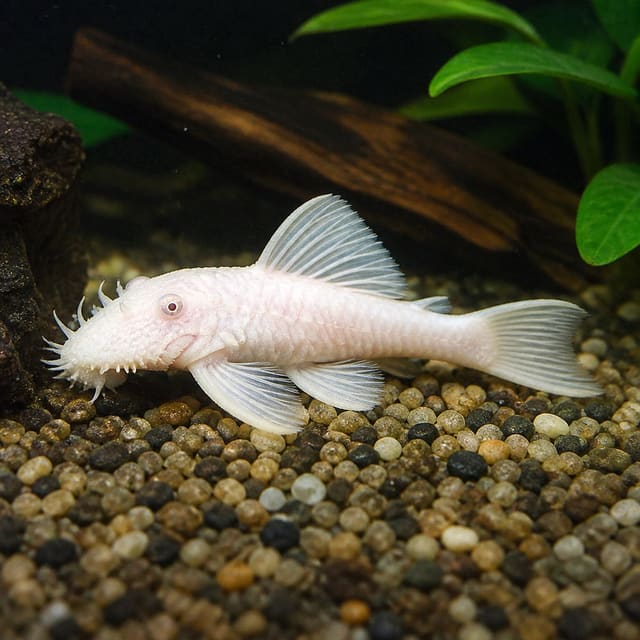
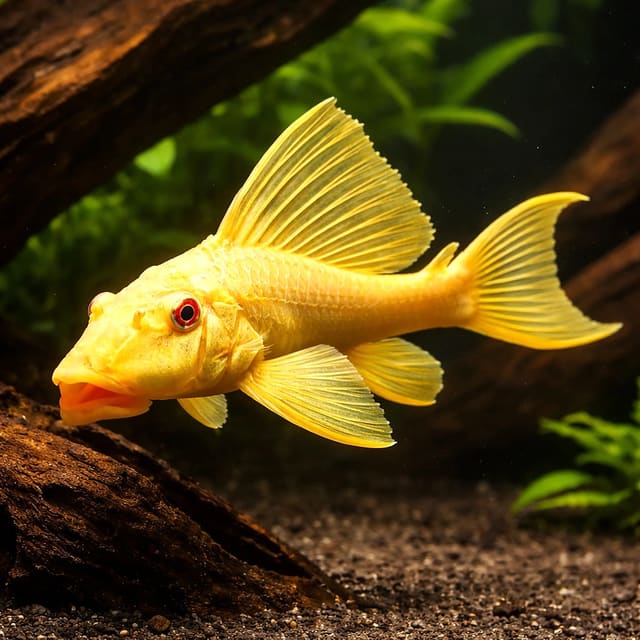
The gallery image shows the pale, red-eyed albino colouring on a gravel floor. Gallery images have been digitally enhanced to improve image quality. Natural colour, pattern, size and maturity can vary between live animals.
If your tank is shorter than 120 cm, compare the other bottom-dwelling species in our catfish and plecos range before deciding; it is easier to match the fish to the aquarium you already have than to rehome a grown catfish later. OATA recommends an aquarium of at least 80 litres for a shoal of the smaller catfish, such as corydoras or the smaller plecos, and names corydoras, Otocinclus and smaller plecos as excellent additions to community aquariums.
Build for 15.5 cm. That is the maximum standard length FishBase records for Megalechis thoracata, and it is the planning size used throughout this guide. The Seriously Fish species profile gives a slightly smaller 150 mm standard length; the larger FishBase figure is the safer one to plan around.
Seriously Fish pairs that adult length with an aquarium base of 120 × 38 cm. At a water depth of 30 cm that holds about 137 litres. Because this catfish lives on the bottom and forages through the floor, the length and front-to-back depth of the base decide how much room it really has; extra height adds water but little usable space for it.
| Size supplied | Share of the 15.5 cm adult |
|---|---|
| 3–4 cm | About a quarter |
| 4–5 cm | Under a third |
| 5–6 cm | About a third |
| 7–8 cm | Roughly half |
| 10–11 cm | About two-thirds |
The smallest fish looks lost in a 120 cm tank at first, and that is exactly right: it is the tank it will need as an adult. A 10–11 cm fish is already a substantial animal, so it needs the full footprint from the day it arrives.
Match the size to your filter as well as your tank. A larger fish eats more and adds more waste from day one, so the 7–8 cm and 10–11 cm choices sit best in an aquarium whose filter has already carried fish for a while. A newly cycled tank copes more easily with one of the smaller sizes.
OATA's freshwater catfish care sheet advises buying an aquarium as large as possible, within reason, because a larger volume keeps temperature and water quality more stable. Treat the 120 × 38 cm base as the starting point rather than a target to squeeze into. If you plan to keep more than one hoplo, choose a longer or deeper base and add the fish gradually, so the filter can keep pace with each addition.
Lay sand or fine gravel. Seriously Fish recommends either because the hoplo roots through the substrate in search of food, and a soft floor lets it do that all day. Keep a good stretch of the front and middle open, so food that sinks there is easy for it to find.
Add cover, even though it is a confident fish. Seriously Fish notes it is not particularly shy but still appreciates rocks, plants and bogwood, and OATA’s catfish guidance adds that many catfish value shelter in wood, pots or caves. A few resting places along the back and sides give it somewhere to settle between foraging runs.
FishBase describes Megalechis thoracata as an obligate air-breather. Seriously Fish explains that it gulps mouthfuls of air at the surface and absorbs the oxygen through its intestine, and that keepers see this behaviour in aquariums as well as in the wild. Plan the decor so the fish can swim straight up and back without squeezing through tangles of stems or wood at the top.
If you grow floating plants, leave open patches of surface among them. That keeps the air route clear and still lets you enjoy the plants, which also matter if a male later builds a nest.
Plan rooted plants with the digging in mind. OATA notes that some catfish dig up live plants, and a fish that sifts the sand all day will loosen anything shallow. Plants fixed to wood or rock, well-anchored rooted plants and sturdy ornaments cope best.
Keep it at 22–27 °C, pH 6.0–8.0 and a general hardness of 4–18 dGH. Seriously Fish gives the species a range of 18–28 °C, pH 6.0–8.0 and up to 20 dGH. OATA’s catfish sheet, written for catfish as a group rather than this species alone, gives 22–27 °C, pH 6.0–8.0 and 4–18 °dH. The targets below are where the two agree, so a heated tropical aquarium set inside them sits within both.
| Water value | Routine target |
|---|---|
| Temperature | 22–27 °C |
| pH | 6.0–8.0 |
| General hardness | 4–18 dGH |
| Carbonate hardness | 3–15 dKH (OATA catfish sheet) |
| Ammonia and nitrite | Zero |
| Nitrate | No more than 20 mg per litre above your tap water |
Seriously Fish’s wider range reaches down to 18 °C. For a heated community tank, pick one temperature inside 22–27 °C and hold it steady rather than letting it wander across the whole span.
Read nitrate against your own tap water. If your tap water tests at 10 mg per litre, OATA’s limit puts the aquarium ceiling at 30 mg per litre; if it tests at zero, the ceiling is 20. When a reading creeps towards that ceiling, the answer is usually more regular partial water changes and a check that you are not overfeeding.
That last step protects the bacteria living in the filter media, which chlorine or chloramine can kill. Our guide to aquarium water parameters explains what each test measures, and the water parameter matcher lets you compare your own readings with the targets in the table.
Choose a filter rated at 550–685 litres per hour for a tank of about 137 litres. Seriously Fish bases that figure on turning the water over four to five times an hour. The same rule scales with your tank: a 200-litre aquarium would call for roughly 800–1,000 litres per hour.
Keep the flow gentle across the floor. Seriously Fish advises slow or still water, while noting the fish will adapt to stronger conditions. Position the filter outlet so the current across the sand stays soft and the feeding area stays calm.
The RSPCA states that no fish should be kept without a well set up and maintained filter. Fish release ammonia, which is toxic; beneficial bacteria in a working filter convert it to nitrite, also toxic, and then to nitrate, which is safer. A 15.5 cm catfish that eats well produces steady waste, so filter capacity and regular maintenance go together.
Mature the filter before the fish arrives. Our step-by-step guide to setting up a first tropical tank walks through cycling, so ammonia and nitrite already read zero when you add livestock.
Seriously Fish estimates that a tank of about 137 litres needs roughly 75–125 W of heating to hold its recommended temperatures, assuming a room at around 20 °C. A cooler room pushes you towards the top of that bracket. Set the thermostat inside the 22–27 °C target and confirm it with a separate thermometer.
Once a day, take thirty seconds to confirm the equipment is doing its job: the filter outlet is moving water, the thermometer reads inside 22–27 °C, and the catfish is foraging and rising for air as usual. A stopped filter or a failed heater is far easier to put right when you notice it the same day.
Base the diet on good sinking foods and add live or frozen foods regularly. Seriously Fish notes that the hoplo accepts most commercially available foods and that live or frozen foods should also form part of its diet. OATA stresses that catfish, despite their reputation as scavengers, need appropriate sinking foods to meet their nutritional needs rather than leftovers from other fish.
Follow OATA’s catfish portion rule: feed only what the fish can eat within a few minutes, once a day. Uneaten food breaks down and releases toxic waste into the water, so overfeeding shows up quickly on your ammonia and nitrite tests.
Size the pieces to the fish. A 3–4 cm juvenile needs small granules it can take easily, while a fish near adult size handles larger pellets. As it grows, move up a size rather than feeding more of the small food.
Start with a small amount and watch. If everything has gone within a few minutes and the catfish is still searching, offer a little more at the next feed. If food is still lying on the sand after that time, cut back. Adjust by the fish’s condition too: a hoplo that looks thin needs more, one that is growing noticeably round needs less.
In a busy community, midwater fish may grab food before it sinks. Feed in a spot away from the main swimming area, or add the catfish’s share after the others have started eating, so enough reaches the floor.
Get the aquarium ready before you order. OATA advises checking that ammonia and nitrite read zero before any fish goes in, and adding fish slowly so the filter bacteria can grow to match the extra waste.
Your fish is hand-packed by our team, bagged in pure oxygen and sent in an insulated box, with a heat pack when the weather calls for it. A licensed live-animal courier carries the parcel, and we email the tracking number and your confirmed delivery date so you know when to be in. Our delivery and Live Arrival Guarantee page sets out the full policy.
The Live Arrival Guarantee requires someone at the address to receive the parcel, the parcel to be opened and inspected on the day it arrives, and that continuous video from the sealed parcel onwards.
Test the water more often than usual while the filter adjusts to a new catfish, and hold back on adding more fish. OATA warns that stocking too quickly can cause new tank syndrome, where the bacteria cannot keep up and ammonia and nitrite climb to harmful levels.
Look for the signs of a healthy fish that OATA lists: clear bright eyes, undamaged fins, intact scales, no ulcers or bumps, and normal swimming. For a hoplo, normal means working the floor and making brief trips to the surface for air.
Expect surface trips. A healthy hoplo darts up, takes a gulp of air and returns to the bottom, because it breathes air as well as water. Seriously Fish points out that this ability lets it endure poor conditions in the wild. In an aquarium, that toughness is a reason to keep testing, not a reason to relax: the fish may look fine for a while in water that is already harming it.
OATA’s catfish sheet lists the changes worth watching. Learn your fish’s normal pattern in the first week so you can spot them early.
| Watch for | What it can look like |
|---|---|
| Swimming | Hanging at the surface, sitting still far more than usual, or erratic movement |
| Breathing | Gill covers moving faster or slower than normal |
| Colour | Turning darker or paler than its usual albino tone |
| Appearance | White spots, fluffy growths, or loss of fins or scales |
| Behaviour | Hiding more than normal or a change in temperament |
| Condition and feeding | Weight loss or gain, or little interest in food |
The difference between normal and worrying is often one of degree. Brief dashes to the surface are part of the day; a fish that hangs there, or suddenly visits far more often than it did last week, deserves a water test straight away.
Test ammonia, nitrite and nitrate first, as OATA advises for any health concern. Correct any problem with a partial water change using conditioned water. If the signs continue, contact us with your readings and a description of what you see.
Jot down roughly how often it rises for air, how quickly it finds food and where it likes to rest. A few lines a day turn OATA’s list of changes into something you can measure against this fish’s own normal, and the notes are useful if you ever need advice.
Handle the fish with care whenever you move it. OATA notes that most catfish carry spines, so guide it gently into a net or container rather than grabbing at it.
Breeding is a possibility with this species rather than a promise, but it helps to recognise what you are seeing. Seriously Fish describes the hoplo as a bubble-nester: the male builds the nest at the surface, and floating plants help him strengthen it.
According to Seriously Fish, the male has a thicker leading ray on each pectoral fin, orange to yellow in colour, and develops a more colourful belly in breeding condition. None of this can be picked at the checkout, so no size comes with a chosen sex.
Seriously Fish rates breeding as fairly easy and notes that, as with most of the family, a water change with cooler water can prompt reluctant fish to spawn. If you have no plans to raise fry, simply leave a nest alone and keep the surface calm around it while the male tends it.
Pick peaceful or robust fish that share its water and leave it the floor. Seriously Fish calls the hoplo a peaceful community fish that can live with smaller fish such as tetras and barbs. Because it is so hardy and adaptable, the same profile says it can be kept in almost any set-up, including with larger, more aggressive species such as Central American cichlids.
That range is wide, but each tank still needs checking. OATA stresses that compatibility varies across catfish and advises taking advice before adding one to a community. Tell us what you already keep, with your tank dimensions, and we can talk it through before you order.
Fish that need strong current are the main group to question. The hoplo will adapt to stronger flow, according to Seriously Fish, but it prefers slow or still water, so a tank built around fast water suits it less well than a calm one.
A planted community. In a 120 cm planted aquarium with tetras or barbs in midwater, the hoplo takes the floor. Plants and bogwood give it cover, open sand gives it foraging ground, and sinking food reaches it after the midwater fish have fed.
A Central American cichlid aquarium. Seriously Fish’s note that it can live with larger, more aggressive species makes it an option here too. Rockwork and bogwood matter more in this set-up, and the tank must be sized for the cichlids and the catfish together, not for the cichlids alone.
Stock gradually whichever companions you choose. OATA’s point about adding fish slowly applies to tank mates as much as to the catfish itself.
Make sure food reaches the bottom. In a lively community, fast midwater feeders can take most of a meal before it sinks, and a catfish that roots for its food can miss out. Sinking foods placed over open sand, as described in the feeding section, solve most of this.
Every 15.5 cm hoplo uses a real share of the base. If you add other catfish or bottom-living fish, count them against the same floor rather than against the total water volume, and give each fish its own resting place among the rocks, plants and bogwood.
In a tank with larger, more assertive fish, the cover described in the care tab matters more. It gives the catfish somewhere to settle while boisterous neighbours hold the open water, and it spreads the fish out across the aquarium.
The only aggression Seriously Fish describes is a nest-guarding male turning on the female after spawning. If a nest appears in a shared tank, watch the female and give her space away from the nest.
Signs that a combination needs rethinking are the ones OATA lists for any health concern: a catfish hiding more than normal, losing condition, refusing food or showing damaged fins after new fish arrive. Test the water first, then look at the stocking and the spread of cover and food.
FishBase records a maximum of 15.5 cm standard length for the species, and Seriously Fish gives 150 mm. Plan the tank for a 15.5 cm adult, whatever size you buy, because the size supplied is only its starting size.
Seriously Fish gives an aquarium base of 120 × 38 cm for this catfish, about 137 litres at 30 cm deep. Floor area matters most, because it lives and feeds on the bottom, and a larger tank stays more stable.
Plan by floor space: the 120 × 38 cm base suits the species at its 15.5 cm adult size, so choose a longer or deeper base for more than one, and add fish gradually so the filter keeps up.
Yes, for a beginner with enough room. Seriously Fish describes it as hardy, adaptable and peaceful. The key is having a matured filter, sand or fine gravel and a 120 × 38 cm base in place before it arrives.
It accepts most commercially available foods, with live or frozen foods as part of the diet, according to Seriously Fish. Feed sinking foods it can finish within a few minutes, once a day, dropped over open sand so they reach the floor.
Keep it at 22–27 °C and pH 6.0–8.0, where the Seriously Fish species range (18–28 °C, pH 6.0–8.0) overlaps OATA's catfish guidance. Aim for 4–18 dGH general hardness.
Seriously Fish describes this catfish as a peaceful community fish that can live with smaller fish such as tetras. The one aggression it notes is a nest-guarding male turning on a female after spawning.
Seriously Fish names smaller fish such as tetras and barbs, and larger, more aggressive species such as Central American cichlids, thanks to its hardy, adaptable nature. Choose companions that suit 22–27 °C and slow water.
Film one continuous unboxing video from the sealed parcel before opening it. The fish travels hand-packed in oxygen with a licensed live-animal courier. Float the bag for 20–30 minutes before releasing it, and send us the video with your order number the same day if anything has gone wrong.
No reviews for this item yet. Bought one? Honest reviews only, good or bad.
What customers say about ordering from us
Easy website plenty of info on fish your buying great to pick a time slot
TRACEY DURRANT · 7 Oct 2026
Got some lovely fish thank you
Kevin Mackie · 7 Oct 2026
Reviews of our shop, collected by Judge.me, an independent third-party review collector. Newest first.