Moderate
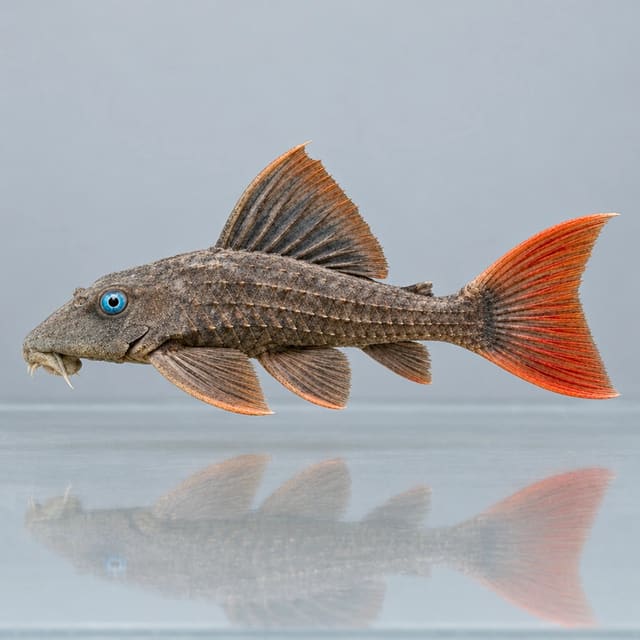
L137 Blue Eye Red Fin Pleco (Hypostomus soniae)
£75.49
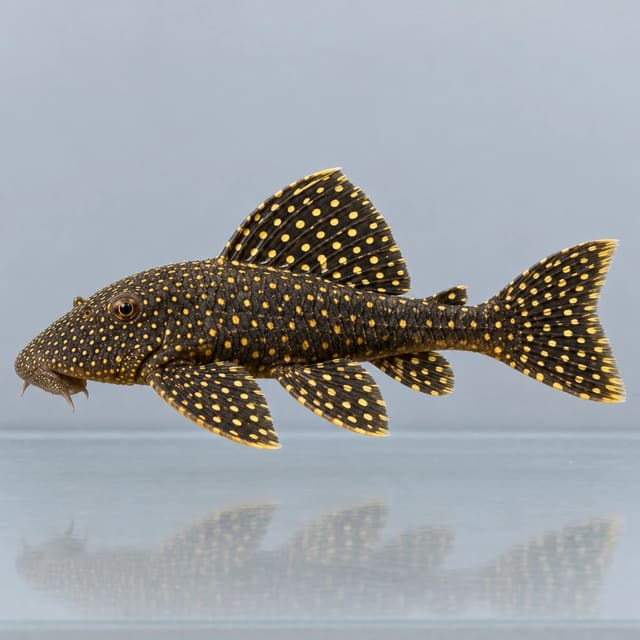
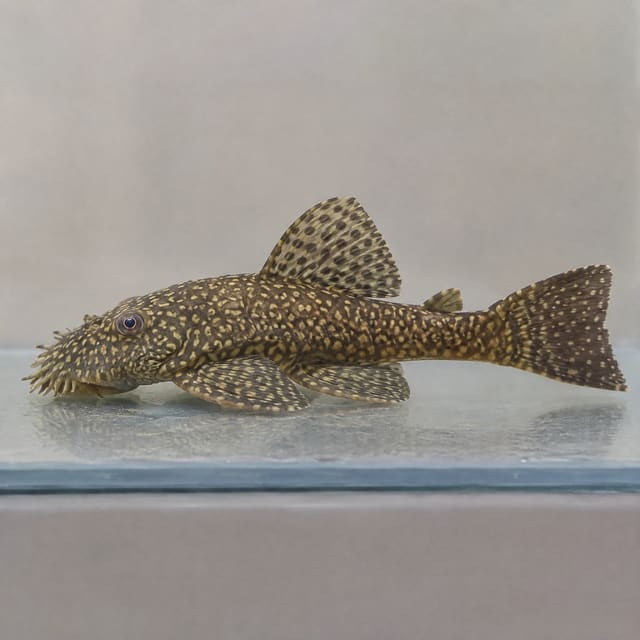
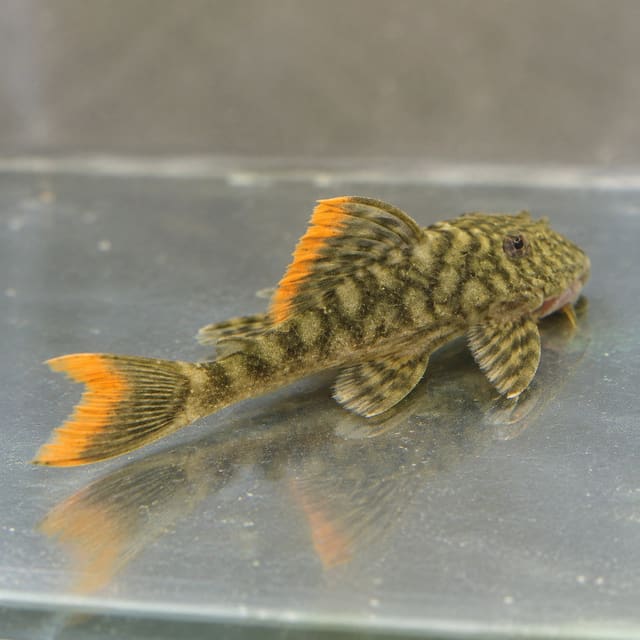
The Rose Spot Pleco is Hypostomus roseopunctatus, a large, peaceful suckermouth catfish from the Uruguay River basin, dark olive-brown with small pink spots on the body and fins. It grows to about 23 cm standard length, prefers cooler water at 18–25°C, and needs a tank of 180 cm or more with wood and strong filtration. One live fish per purchase.
Hypostomus roseopunctatus
The Rose Spot Pleco is Hypostomus roseopunctatus, a large, peaceful suckermouth catfish from the Uruguay River basin, dark olive-brown with small pink spots on the body and fins. It grows to about 23 cm standard length, prefers cooler water at 18–25°C, and needs a tank of 180 cm or more with wood and strong filtration. One live fish per purchase.
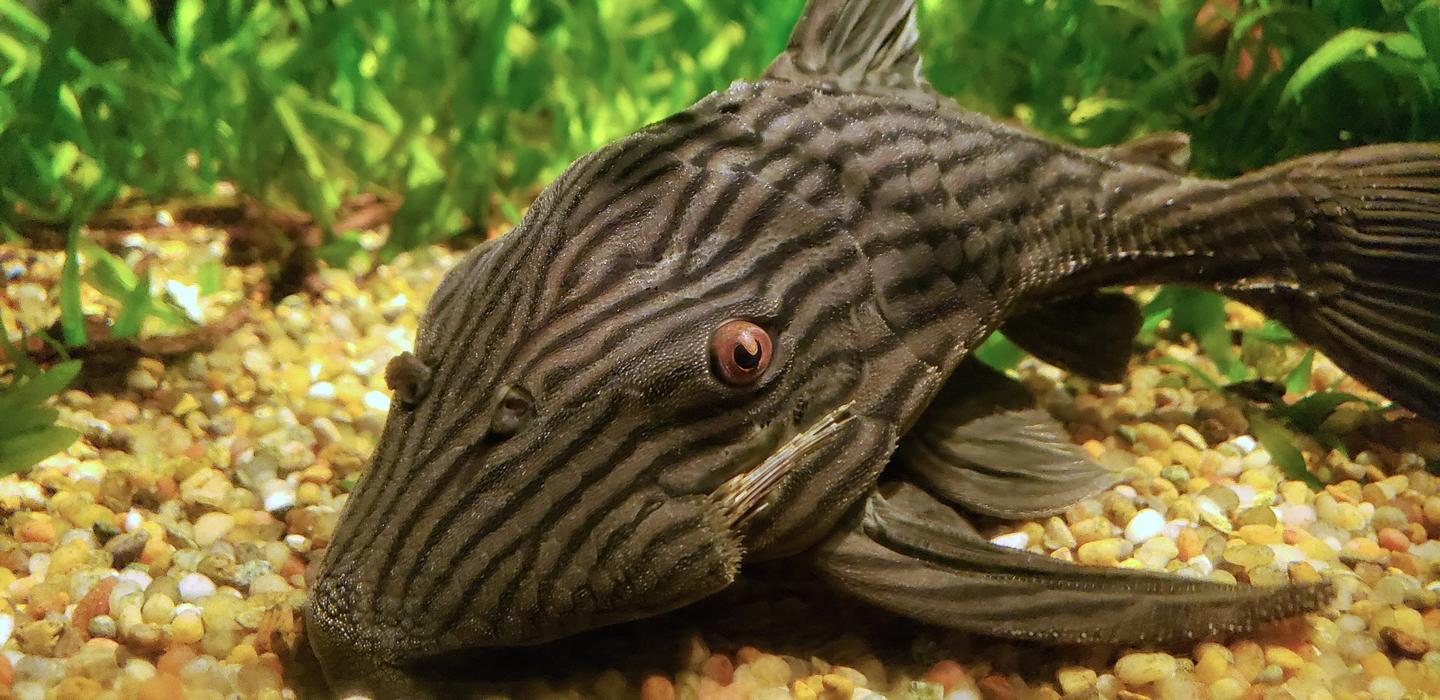
‘Pleco’ is a loose aquarium-trade label, not one species or one care sheet. Before buying, confirm the scientific name or defensible L-number, adult size and measurement method, required footprint, temperature and water, diet, social plan and source. No universal pleco tank size, menu or algae result is honest.
Read the full care guidance when planning conditions for your aquarium.
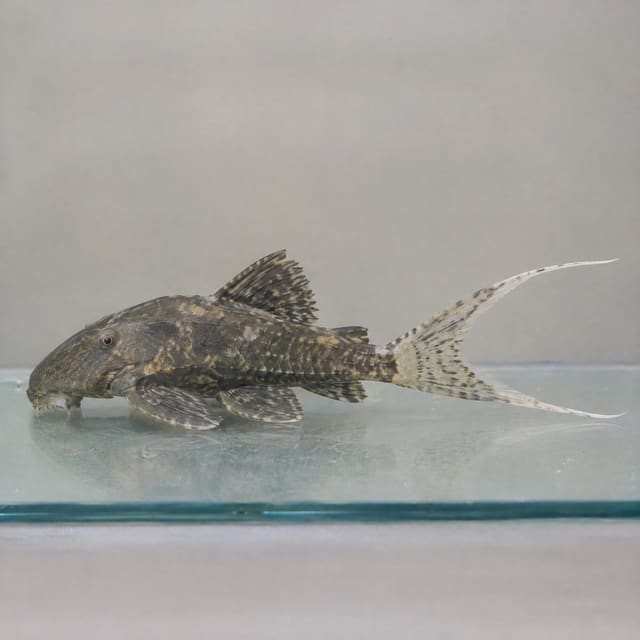
The Rose Spot Pleco is Hypostomus roseopunctatus, a big, peaceful suckermouth catfish from the Uruguay River basin in southern South America. Its dark olive-brown body, head and fins are dotted with small, evenly spaced spots in pink to salmon, which gives the species its name: roseus means rose-coloured and punctatus spotted. The genus name Hypostomus means "mouth underneath", describing the sucker mouth it uses to cling to wood and rasp algae.
Reis, Weber and Malabarba described the species in 1990 from the Rio Pelotas, on the road from Esmeralda to Anita Garibaldi in Rio Grande do Sul, Brazil. Planet Catfish places it in the La Plata system, in the Uruguay basin, including the upper Uruguay, the Pelotas and the Miriñay, and ScotCat shows wild fish photographed in Uruguay. This is a far cooler part of the continent than the Amazon: FishBase classes its climate as temperate, and ScotCat notes that lower water temperatures suit it. The IUCN Red List assesses it as Least Concern (2020).
It is one of the less common Hypostomus in the UK trade, and it rewards a keeper who wants a large, hardy, long-lived pleco for a spacious tank that does not run at full tropical heat.
| Feature | Rose Spot Pleco | Typical tropical Amazon pleco |
|---|---|---|
| Home waters | Uruguay River basin, subtropical to temperate | Warm Amazon tributaries |
| Temperature | 18–25°C (ScotCat) | Warmer, fully tropical water |
| Size | 233 mm SL (Planet Catfish); 43.3 cm TL in the wild (FishBase) | Varies widely by species |
| Main foods | Algae and vegetables, with tablets and frozen treats | Varies: wood, algae, meaty foods |
| Colour | Dark olive-brown with small pink spots | Varies |
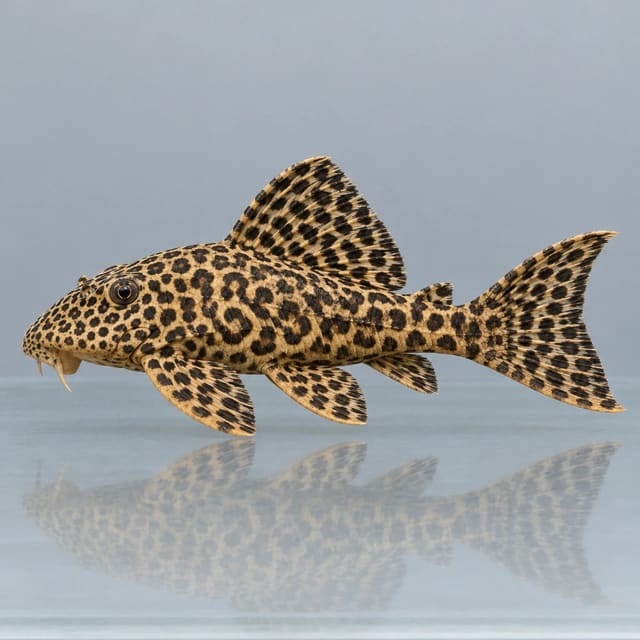
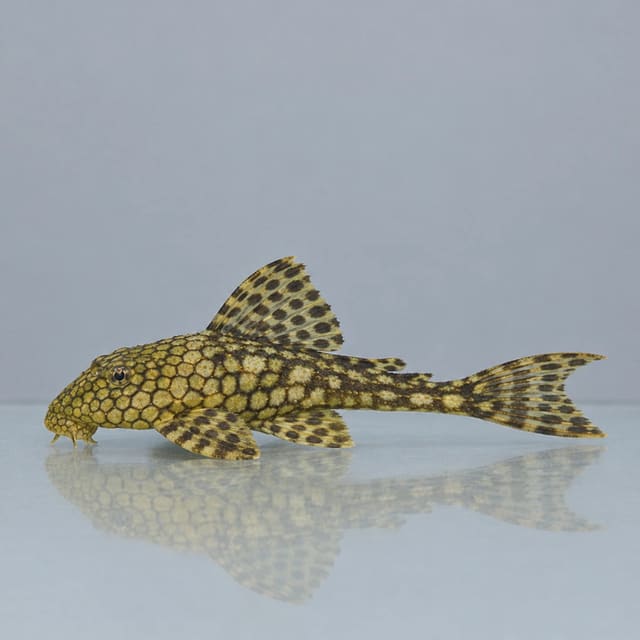
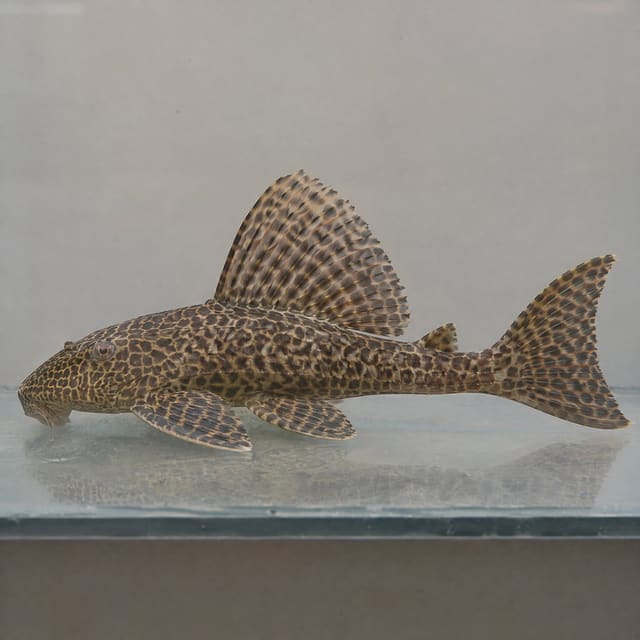
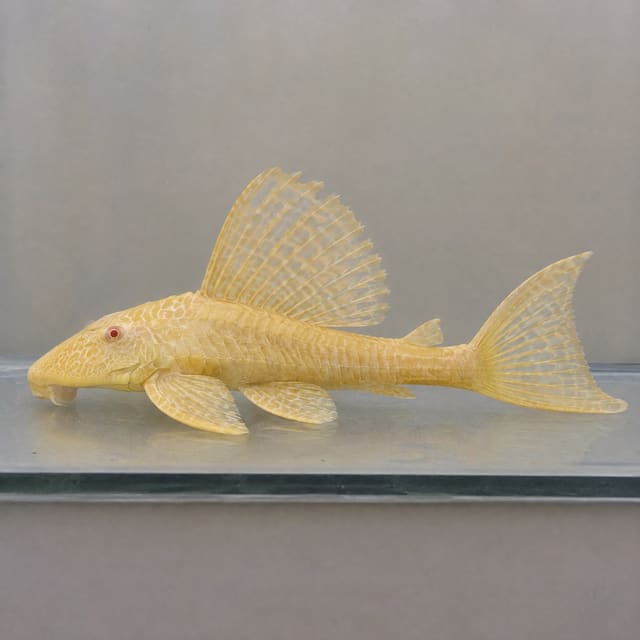
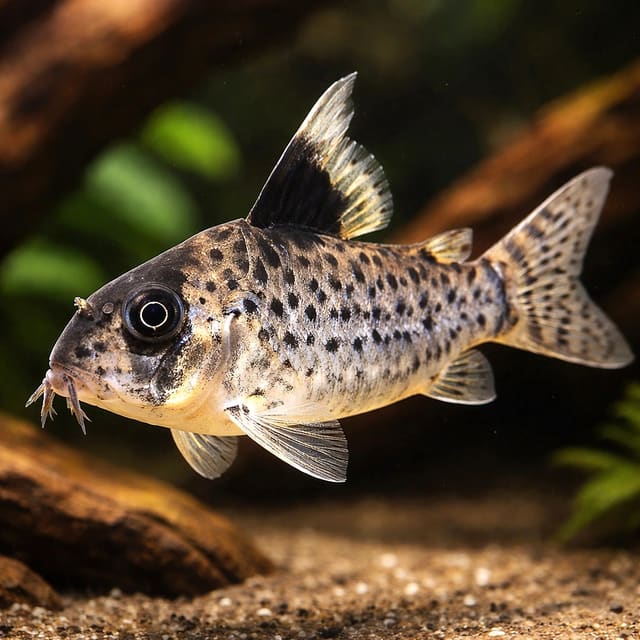
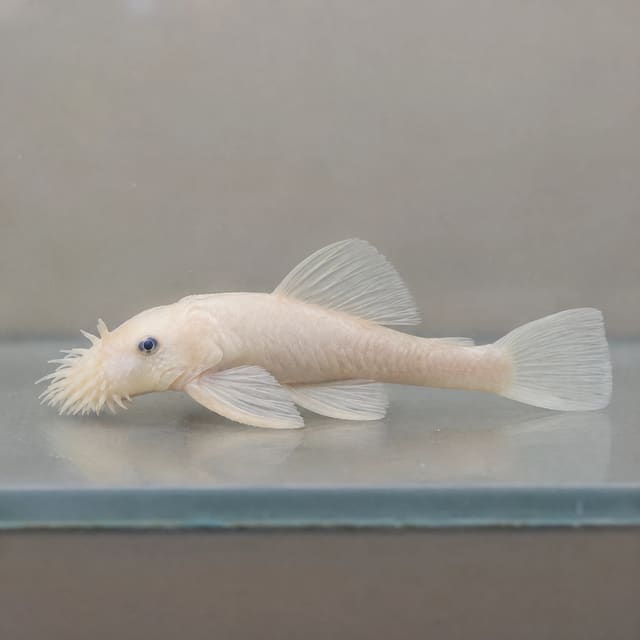
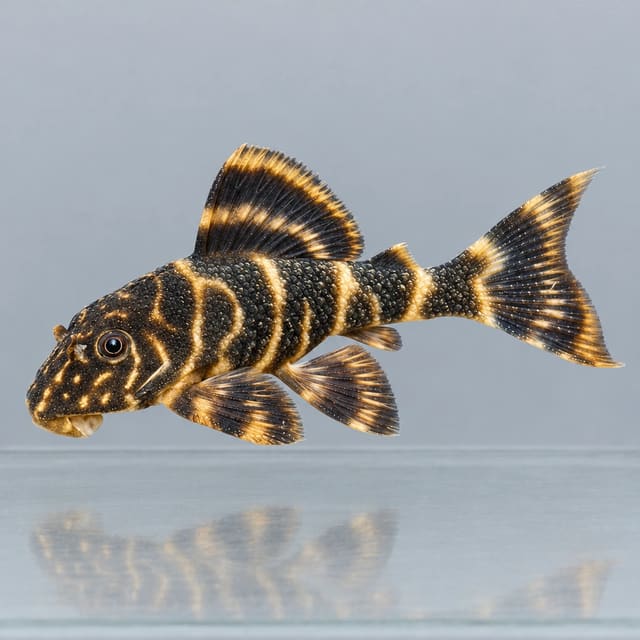
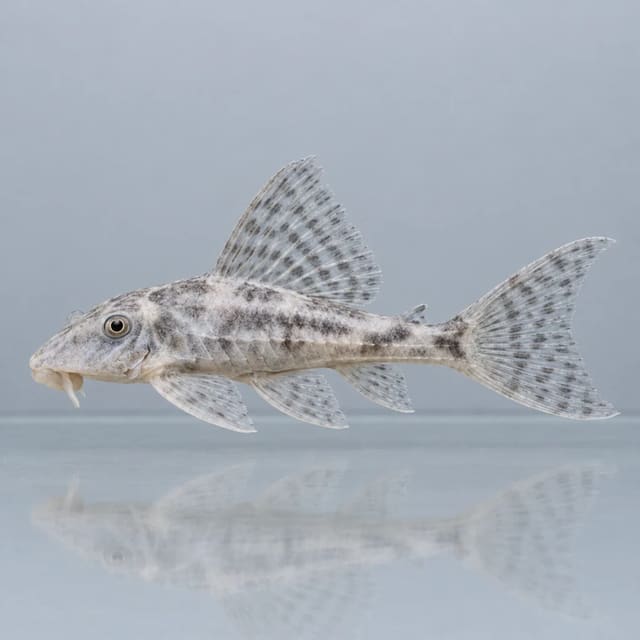
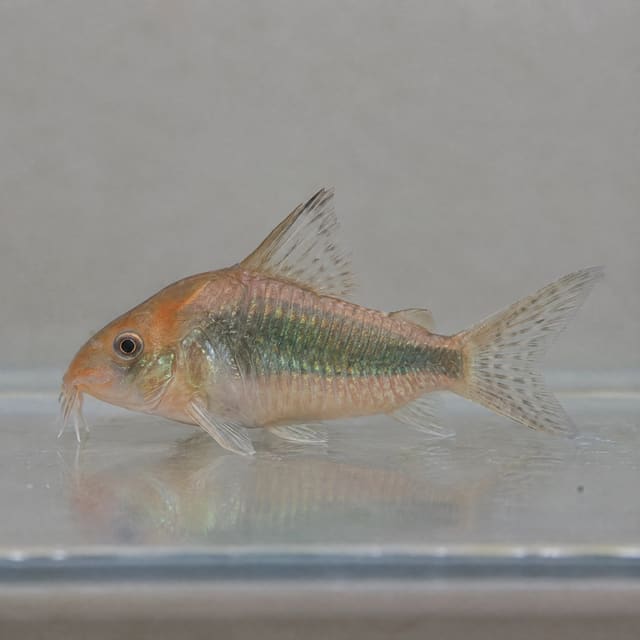
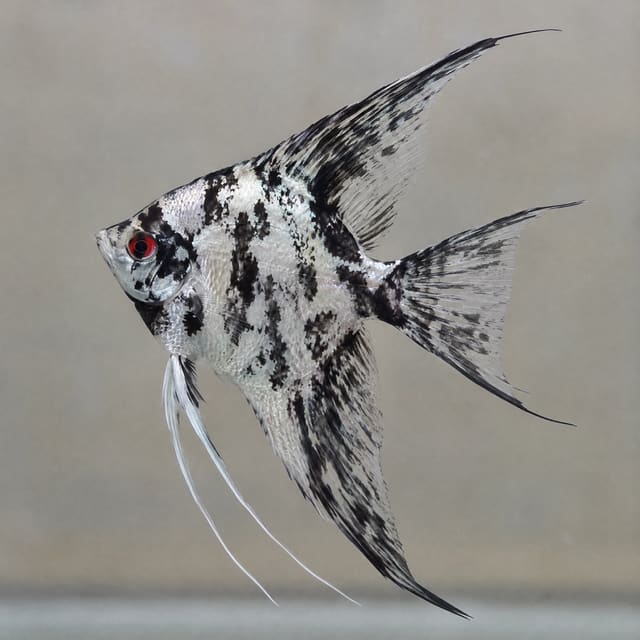
One purchase supplies one live Rose Spot Pleco in the standard size we receive. Sex is not specified, and no reliable way to sex this species is published. Spot colour can look stronger or paler with mood, lighting and age, so the gallery images show the type of fish, not the individual you will receive. The images are prepared from a reference photograph.
Read our delivery and Live Arrival Guarantee policy before you order, and have the aquarium running and tested before the fish arrives.
Planet Catfish gives 233 mm standard length, measured without the tail fin, and ScotCat 23 cm. FishBase records a wild fish of 43.3 cm total length and 796 g, so some fish clearly grow much larger than the usual aquarium figure. Plan for a heavy-bodied fish of at least 23 cm standard length, and more with the tail.
ScotCat recommends a spacious aquarium of 6 ft (180 cm) or over. For comparison, Seriously Fish gives a 180 × 60 cm base for a 300 mm Hypostomus and 120 × 45 cm for some 230–250 mm species; because this fish can grow well beyond 23 cm, we follow ScotCat and recommend at least 180 × 60 cm.
ScotCat advises bogwood and tough plants, and warns that soft plants may be eaten if the fish does not get enough vegetable food. Planet Catfish lists no specific décor, so we build on that advice with sturdy cover and an open, easy-to-clean floor.
| Zone | What to use | Why |
|---|---|---|
| Wood | Large, heavy bogwood pieces | ScotCat's main décor; shelter and grazing surface |
| Cave | A wide clay cave or a gap under wood the adult can fit into | A secure daytime resting place |
| Plants | Tough species, tied to wood or well rooted | Soft plants risk being eaten |
| Floor | Sand or smooth fine gravel | OATA advises soft substrates for catfish |
| Open water | A clear area at the front | Space for midwater tank mates |
Fix every heavy piece securely so a large pleco cannot shift it against the glass.
ScotCat gives 18–25°C and pH 6.0–7.5, and says lower temperatures are beneficial. FishBase classes the species as temperate. OATA's catfish guidance sets the water-quality limits for any tank.
| Value | Target | Source |
|---|---|---|
| Temperature | 18–25°C, cooler end preferred | ScotCat; FishBase: temperate climate |
| pH | 6.0–7.5 | ScotCat |
| Ammonia and nitrite | 0 mg/l | OATA |
| Nitrate | No more than 20 mg/l above tap water | OATA |
Many UK rooms sit close to the lower end of this range in winter, so a heater is still useful to stop the temperature dropping or swinging overnight; set it within 18–25°C rather than at the warmer settings many tropical tanks use. In summer, watch that the tank does not overheat, and keep it out of direct sun. UK tap water is often harder and more alkaline than pH 7.5 in some areas: check yours with our water matcher, and make any change slowly, because a steady pH is better than a perfect one. Always use a tap water conditioner.
ScotCat notes that this genus are mostly messy eaters, so good water quality and filtration must be kept up. A heavy pleco that eats vegetables every day produces a lot of fine waste. OATA's guidance on very large fish adds that several large filters may be needed to keep water quality under control and remove solid waste. Choose filtration rated well above your tank volume, with strong mechanical media. Our guide to aquarium filtration explains how to size it.
ScotCat lists algae and vegetable foods such as cucumber and courgette, with frozen foods as a treat and sinking tablet foods. OATA's guidance on grazing fish says algae eaters always need their diet supplemented with prepared foods such as algae wafers, plus fresh vegetables that have been washed well, or bought organic, to avoid pesticide residues. Feeding enough vegetables also protects your plants.
| Part of the meal | Example | How often |
|---|---|---|
| Vegetable | A slice of blanched courgette or cucumber, weighted to sink | Most evenings; remove leftovers next morning |
| Prepared food | Sinking algae wafers or pleco tablets | Most evenings |
| Treat | A small portion of thawed frozen food | Once or twice a week |
| Grazing | Algae on wood and glass | Always available, but never the whole diet |
Feed after the lights dim, close to its shelter, and adjust the amount so little is left after a few hours.
OATA advises checking that ammonia and nitrite read zero before adding fish and increasing stock slowly so the filter bacteria can keep up. Catfish travel double-bagged because their spines can puncture a single bag. Turn the tank lights off, float the bag for about 10 minutes, then add small amounts of tank water over up to 20 minutes, and release the fish with as little bag water as possible. Our guide to acclimatising new fish covers each step.
| Day | Check | Action |
|---|---|---|
| 1 | The fish finds shelter under wood or in a cave | Keep lights low and leave it undisturbed |
| 2–3 | It moves around after dark | Offer a small slice of courgette and a wafer near its shelter |
| 4–5 | Food disappears overnight | Test ammonia and nitrite; both should read zero |
| 7 | Belly rounded, fins relaxed | Begin the weekly maintenance routine |
Handle it with care: OATA warns that most catfish have spines on the pectoral fins and behind the gills, and plecos easily tangle in nets. Move it in a container where you can.
FishBase notes that Hypostomus can breathe air when they need to, so an occasional dash to the surface is normal, but frequent trips mean you should test the water. OATA lists clamped fins, flicking against décor, shimmying and fast breathing as warning signs in any fish.
| What you see | What to do |
|---|---|
| Repeated trips to the surface to gulp air | Test the water and increase surface movement and filtration |
| Hollow belly | Feed more vegetables, later in the evening, near its shelter |
| Plants being eaten | Increase vegetable feeding; swap soft plants for tough ones |
| Chasing other bottom fish | Add shelters and wood, or reduce the number of bottom dwellers |
| Damaged fins or white patches | Test the water and seek fish-health advice before treating |
Our pleco care guide and common pleco guide cover the routine care large Hypostomus need.
ScotCat describes the Rose Spot Pleco as peaceful, though territorial, so most problems come from other bottom fish competing for shelter, not from the pleco attacking midwater fish. The bigger limit is temperature: its 18–25°C range rules out fish that need warm Amazon water all year.
| Suits | Avoid |
|---|---|
| Peaceful to robust fish that are comfortable at 18–25°C | Fish that need 27°C or warmer |
| Medium and large midwater fish | Several large territorial bottom fish in one tank |
| Fish from subtropical southern South America | Delicate soft plants, unless vegetables are fed daily |
From our range, consider South American cichlids such as the Pearl-Striped Eartheater and the Paraguay Eartheater, checking that their own temperature ranges overlap with this pleco's. For related plecos, compare the Common Pleco (Hypostomus plecostomus), the Gold Suckermouth Catfish and the Leopard Sailfin Pleco. Browse our Hypostomus plecos, all South American catfish, our algae eaters and the full catfish and plecos range.
Planet Catfish records no aquarium breeding of H. roseopunctatus, and no breeding reports have been submitted. No reliable way to tell males from females is published for this species either. Large Hypostomus need a very big tank and suitable burrows or caves to spawn, so treat breeding as unlikely in a home aquarium and buy this fish for its looks and character.
It is Hypostomus roseopunctatus, a large suckermouth catfish from the Uruguay River basin in southern Brazil, Uruguay and Argentina. Its name means "rose-spotted": the dark olive-brown body and fins are dotted with small pink to salmon spots.
Planet Catfish gives 233 mm standard length and ScotCat 23 cm. FishBase records a wild fish of 43.3 cm total length and 796 g, so plan for a big, heavy pleco.
ScotCat recommends a tank of 6 ft (180 cm) or more. Give it a base of at least 180 × 60 cm, with strong filtration for a messy eater.
Yes. ScotCat gives 18–25°C and notes that lower temperatures suit it, and FishBase classes its climate as temperate. Avoid running it warm all year with tropical fish that need 27°C or more.
Mainly vegetable foods: algae, courgette and cucumber, plus sinking tablets, with frozen foods as an occasional treat. ScotCat warns it may eat soft plants if it does not get enough vegetables.
ScotCat says it is peaceful but territorial, and that more than one can share a large tank. Give each fish its own cave or wood shelter and plenty of floor space.
Planet Catfish lists no L-number for it. Some traders link it with L311, a code that may also cover a similar, undescribed Hypostomus, so buy by the scientific name.
Planet Catfish records no aquarium breeding reports. Like other Hypostomus it is expected to spawn in burrows or caves, but no captive spawning has been published.
No reviews for this item yet. Bought one? Honest reviews only, good or bad.
What customers say about ordering from us
Easy website plenty of info on fish your buying great to pick a time slot
TRACEY DURRANT · 7 Oct 2026
Got some lovely fish thank you
Kevin Mackie · 7 Oct 2026
Reviews of our shop, collected by Judge.me, an independent third-party review collector. Newest first.
Moved by UK carriers licensed to handle live animals
Hand-packed with oxygen bags, poly box, heat pack
Email photos the same day; an optional unboxing video helps us review problems faster — claim terms apply
Klarna & PayPal Pay in 3 at checkout