−11%
Chaetostoma thomsoni
22–22°C · pH 6–8
£28.47£31.99

Evidence-led listing for L090 Papa Panaque (Panaque bathyphilus), a very large South American loricariid. Plan for a 40-60 cm adult, 600L+/200 cm aquarium, strong oxygenation and permanent safe wood; one unsexed fish per quantity.
Adult size is the maximum length this species reaches at full maturity (scientific sources). The livestock you receive will be younger and smaller — pick a size above for the actual shipping size. Product-photo provenance and any image-specific limitations are stated on the listing.
Panaque bathyphilus
Confirm your email, then we’ll send an availability message for this exact item if it returns within 180 days.
This request is only for this product—no newsletter or other promotions. A mail-provider retry may very rarely duplicate the same availability message. Unconfirmed addresses are removed after 48 hours. See our privacy policy.
Evidence-led listing for L090 Papa Panaque (Panaque bathyphilus), a very large South American loricariid. Plan for a 40-60 cm adult, 600L+/200 cm aquarium, strong oxygenation and permanent safe wood; one unsexed fish per quantity.
Adult size is the maximum length this species reaches at full maturity (scientific sources). The livestock you receive will be younger and smaller — pick a size above for the actual shipping size. Product-photo provenance and any image-specific limitations are stated on the listing.
‘Pleco’ is a loose aquarium-trade label, not one species or one care sheet. Before buying, confirm the scientific name or defensible L-number, adult size and measurement method, required footprint, temperature and water, diet, social plan and source. No universal pleco tank size, menu or algae result is honest.
Maintain these water conditions for optimal health and vibrant colors
L090 Papa Panaque (Panaque bathyphilus) is an unusual, very large South American loricariid for experienced keepers who can plan for its adult footprint before buying a juvenile. It is associated with deep, turbid main-channel habitat in the upper Amazon basin and is best known in the aquarium hobby for its broad armoured body, powerful rasping mouth and long caudal filaments. This is not a small algae-control fish and it is not suitable for a typical community aquarium.
The most important point is size. Specialist aquarium references do not agree on a single adult maximum: some give about 40 cm, while an established L-number reference gives about 60 cm. FishBase records 7.4 cm standard length from the type specimen, but the original scientific description was based on one specimen and that figure must not be treated as the aquarium adult maximum. This listing therefore uses a conservative long-term plan: allow for a fish approaching 60 cm, an aquarium around 200 cm long and at least 600 litres, with extra width, filtration and volume where tank mates are present.
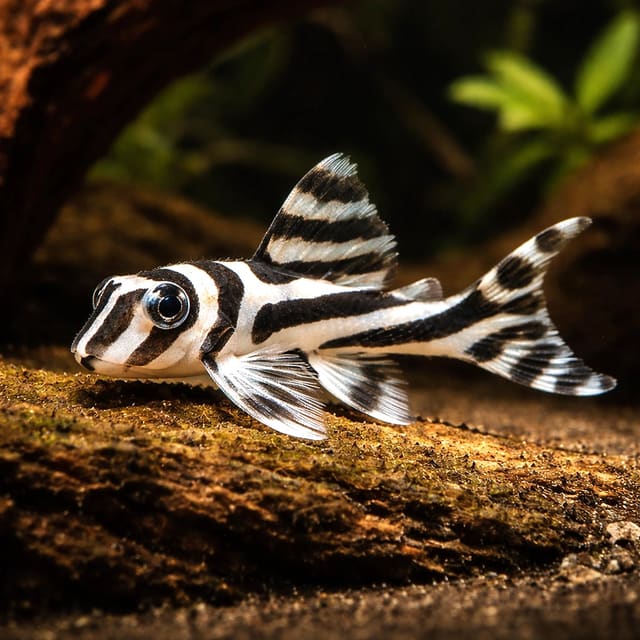
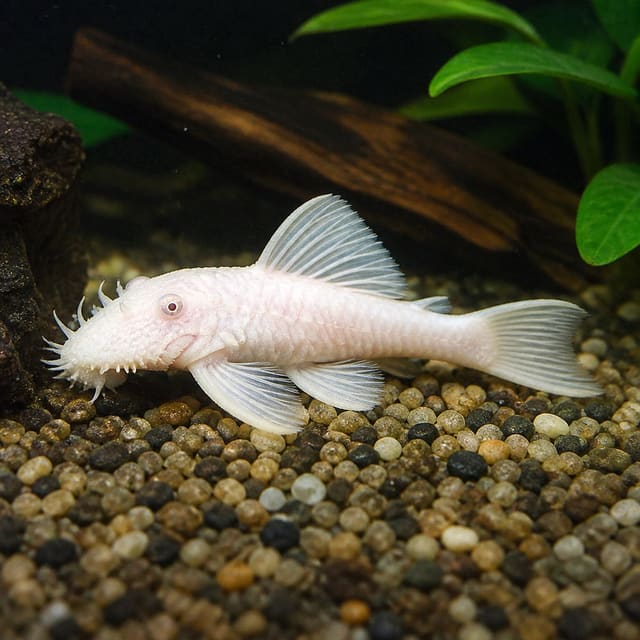
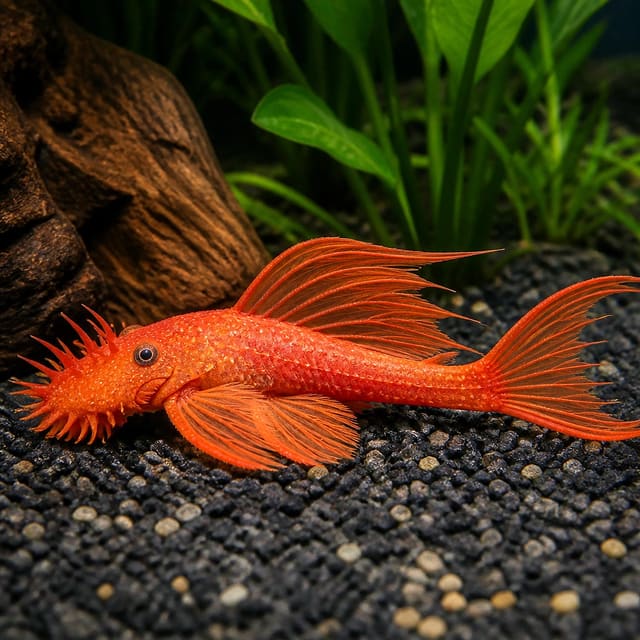
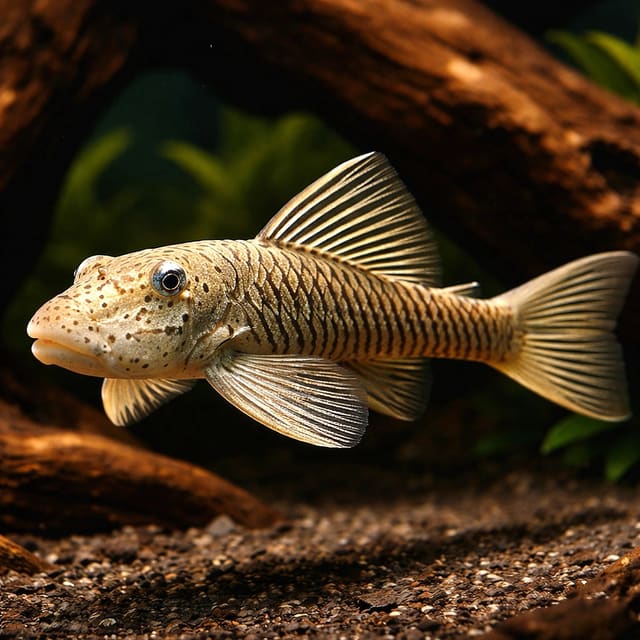
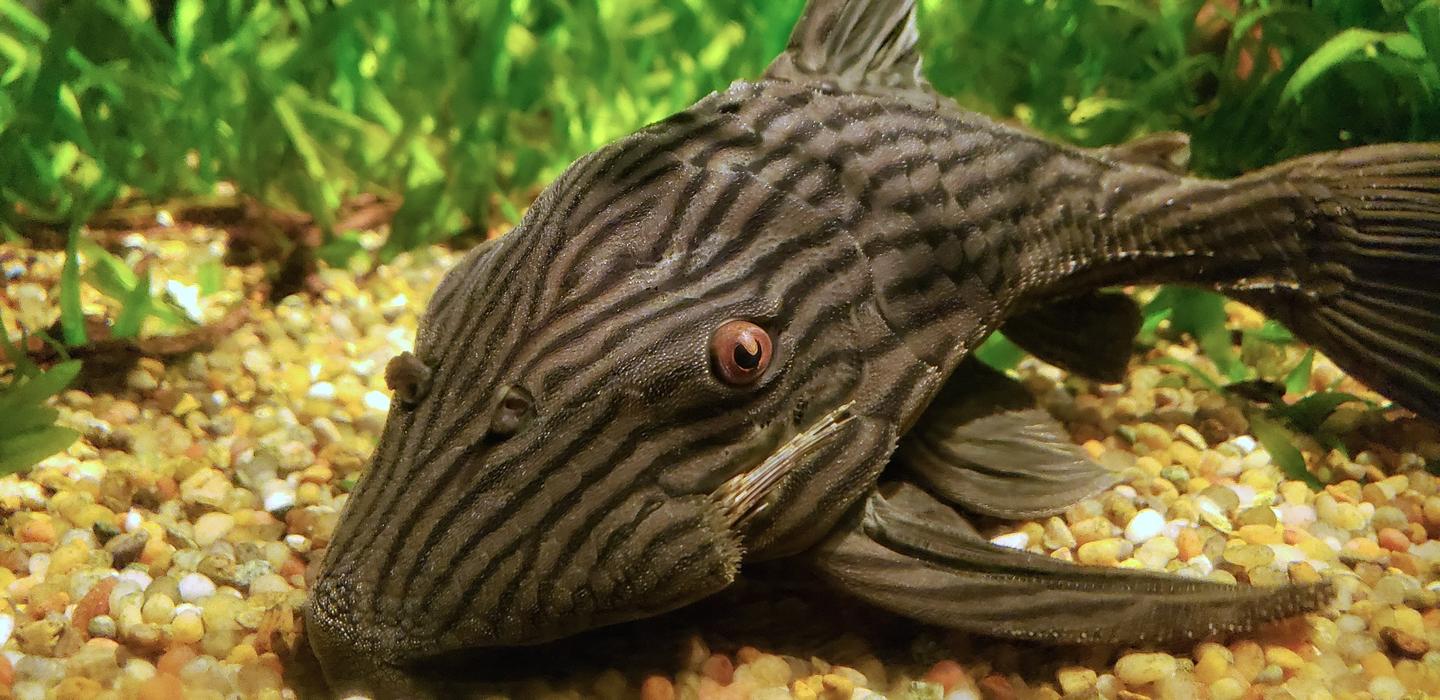
Each quantity ordered is one unsexed fish in the selected size option. The gallery is preserved in full, but its four images are representative illustrations rather than diagnostic photographs of the exact animal. One image shows two fish for visual context; it does not mean that a pair is supplied. Colour, markings, proportions and fin extensions can vary with age, individual development, condition and the animal delivered.
| Accepted scientific name | Panaque bathyphilus Lujan & Chamon, 2008 |
|---|---|
| Trade names | L090, L90, Papa Panaque, Papa Pleco |
| Family | Loricariidae |
| Adult planning size | Published hobby estimates conflict at about 40-60 cm; plan conservatively for the upper end |
| Long-term aquarium | Approximately 200 cm long and 600 litres or more for one adult; footprint and width matter more than litres alone |
| Temperature | 24-28°C |
| pH | About 6.0-7.5, kept stable |
| Hardness | Soft to moderately hard water; roughly 2-15 dGH is a practical aquarium range |
| Water quality | 0 ammonia, 0 nitrite, strong oxygenation and consistently controlled organic waste |
| Diet | Varied high-fibre sinking foods, vegetables and detrital/algal foods, with modest protein; wood always available for rasping |
| Temperament | Usually calm toward midwater fish but potentially territorial around wood, caves and food with other large bottom fish |
| Care level | Advanced, mainly because of final size, waste load and uncertain species-specific husbandry data |
Panaque bathyphilus was formally described in 2008 from the upper Amazon basin. The type material came from the main channel of the Solimoes River in Brazil, upstream of its confluence with the Purus. The authors described a pale fish with relatively small eyes and long caudal filaments, collected by trawling at depths of 12.8-17.8 metres over organic detritus. Those details are important because they separate the species from the generic idea of a shallow, brightly lit algae-eating pleco.
The code L090 is an aquarium-trade L-number. L-numbers were created so loricariids could be distinguished in the hobby before, or while, their formal scientific identity was being resolved. L090 remains useful because shoppers, keepers and specialist references still use it, but the accepted scientific name provides the more precise identity. The product title includes both so that a search for an L090 pleco and a search for Panaque bathyphilus reach the same evidence-led page.
This listing does not claim a collection locality, wild-caught origin or captive-bred origin for the current stock. Those details are not established by the live product record. It also avoids treating every striped or long-filament Panaque image online as proof of identity. Loricariid identification can be difficult, and a reliable name should come from provenance and diagnostic features rather than colour alone.
The original description establishes the species, type locality and the deep-channel capture context. It does not establish a final aquarium adult size, a fixed lifespan, home-breeding method or a complete captive diet. Practical recommendations below combine that primary evidence with transparent, conservative husbandry guidance from specialist aquarium sources.
Papa Panaque is built like a substantial armoured catfish: a broad head, ventral sucker mouth, plated body and large fins adapted to life close to submerged structure. Long filaments can extend from the upper and lower caudal-fin rays, especially in well-developed specimens. The type form was described as very pale, an appearance associated with its deep, dark and turbid habitat, but aquarium-trade fish and online photographs show variation. Lighting, stress, age and provenance can all affect what a fish appears to look like.
The gallery on this page should be used as representative visual context only. The files are illustrations and are not suitable for confirming diagnostic traits, sex or the exact animal that will be delivered. For the actual shipping size, use the selected size option in the buying controls rather than estimating scale from an illustration.
| Visual feature | Reasonable expectation | What not to assume |
|---|---|---|
| Body form | Broad, armoured loricariid with a rasping sucker mouth | That an illustration exactly represents the delivered fish |
| Colour | Pale to brownish tones may vary with individual, setting and condition | A fixed colour grade or pattern guarantee |
| Caudal filaments | Long extensions may become conspicuous in developed fish | That a juvenile arrives with full adult streamers |
| Sex | Not reliably determined from these gallery images | Male, female or a breeding pair |
| Quantity | One fish per quantity selected | Two fish because one illustration depicts two |
There is no defensible reason to repeat the old 35 cm certainty. Practical Fishkeeping and a UK care profile describe an adult around 40 cm, while the Welsfans L-number database gives approximately 60 cm. FishBase lists 7.4 cm standard length, but that value traces to the single type specimen and is not an adult aquarium ceiling. Different measurements may also use standard length or total length, and mature caudal filaments can complicate comparisons.
For animal welfare, planning to the upper credible estimate is safer than buying around the lowest number. An aquarium that suits a 10 cm juvenile can become inappropriate long before the fish is fully grown. The keeper should be able to house, turn, feed and observe a heavily built fish approaching 60 cm without depending on an uncertain future upgrade.
Treat L090 as a very large pleco. Start with an adult destination of about 200 cm in length and 600 litres or more for one fish, then increase width, volume and filtration for additional large residents. A long but narrow aquarium can still be unsuitable if the adult cannot turn comfortably around fixed wood.
Litres are only a rough starting point. For a bottom-oriented fish, usable floor area and front-to-back width determine whether it can move naturally and whether the keeper can arrange wood without blocking every route. A practical adult layout needs open turning space, at least one secure shaded retreat, multiple wood surfaces, clear access to food and enough clearance to siphon waste.
Place the largest wood securely before the fish is introduced. Panaque are powerful enough to shift unstable pieces, so do not balance heavy timber or rock where digging, rasping or routine maintenance can make it fall. Use aquarium-safe wood that has been cleaned and waterlogged. Avoid sharp metal fasteners, soft rotting garden timber, painted decor and any collected wood exposed to pesticides or pollutants.
A bare-bottom quarantine aquarium may be useful temporarily because waste and feeding are easy to monitor, but the permanent display should provide traction, shelter and natural structure. Fine sand or smooth rounded gravel is kinder to the underside than sharp aggregate. Leave broad, unobstructed routes between wood pieces rather than creating a decorative maze sized only for a juvenile.
| Layout element | Purpose | Practical check |
|---|---|---|
| Broad footprint | Turning room and accessible bottom territory | Plan around adult body width and fins, not current sale size |
| Large secure wood | Cover, rasping surface and behavioural enrichment | Cannot roll, trap the fish or block all flow |
| Shaded refuge | Supports a deep-water, light-averse species | Fish can enter and leave without scraping its body |
| Open service lanes | Waste removal and visual health checks | Siphon can reach behind and beneath main structures |
| Protected equipment | Prevents contact with heaters and intakes | Heater guarded; intake secure; flow not pinning the fish |
The original description reports the type specimen from the whitewater main channel at notable depth over organic detritus. This does not mean the home aquarium should be dirty or opaque. It means the species is associated with dim conditions, substantial water movement, low visual exposure and complex material on the river bed. The useful aquarium translation is shaded cover, strong gas exchange, stable warmth and surfaces that support grazing.
Bright planted-tank lighting can be used only if the layout provides deep shade beneath wood and the fish is still feeding and moving normally. Floating plants, taller surrounding plants and directional lighting can soften exposed zones, but the tank must remain easy to clean. Darkness should never be used to hide declining condition or poor water quality.
The deep-channel collection also argues against treating this fish as an outdoor pond algae eater. UK outdoor temperatures are unsuitable for a tropical Amazonian catfish, and a pond makes close feeding and health observation difficult. Keep L090 indoors in a heated aquarium throughout the year.
A practical captive range is 24-28°C and approximately pH 6.0-7.5 in soft to moderately hard water. These are husbandry ranges rather than proof that sudden movement anywhere inside them is harmless. Match the aquarium to the water in which the fish is currently held, acclimate carefully, and make changes gradually. Stable water at an appropriate point in the range is safer than repeatedly adjusting pH to chase a headline number.
Ammonia and nitrite should both remain at zero. Nitrate and dissolved organic waste should be controlled through appropriate stocking, mechanical cleaning, plant uptake where useful and regular water changes. There is no honest universal nitrate number that replaces observing the full system, but rising nitrate, heavy mulm, reduced oxygen or a persistent odour all indicate that maintenance and filtration need attention.
Warm water carries less oxygen than cooler water, while a large fish, bacteria processing waste and accumulated organic material all increase oxygen demand. Keep the surface moving, avoid sealed lids with stagnant air, and make sure circulation reaches behind wood. During hot weather or a power interruption, oxygen can become the immediate risk before the thermometer itself reaches an extreme.
Our water chemistry guide explains pH, hardness, ammonia, nitrite and nitrate in more detail. Test a mature aquarium before ordering and record normal values so that a change is visible rather than guessed.
Large Panaque create conspicuous strings and piles of coarse waste as they rasp wood and process food. That material is not evidence that the fish is converting wood efficiently into nutrition, and it should not be left to accumulate as a substitute for substrate ecology. Physical waste traps detritus, consumes oxygen as it breaks down and can overwhelm sheltered dead spots.
Use generous biological capacity plus mechanical stages that are easy to clean. Two filters or a filter paired with a circulation pump can provide resilience and distribute flow more evenly, but equipment turnover numbers alone do not prove good filtration. Check where debris actually settles. Position intakes to collect suspended particles without creating suction hazards, and use a turkey baster or small pump to lift waste from inaccessible areas before siphoning.
| Maintenance task | Why it matters | Suggested rhythm |
|---|---|---|
| Check temperature and fish respiration | Finds heat, oxygen and flow problems early | Daily |
| Remove uneaten fresh food | Prevents rapid decomposition | After each feeding cycle |
| Siphon coarse waste | Stops mulm packing beneath wood | As observed, often several times each week |
| Test ammonia and nitrite | Confirms biofilter stability | Regularly and whenever behaviour changes |
| Rinse mechanical media in removed tank water | Restores flow without sterilising the system | Before clogging reduces performance |
| Water change | Controls dissolved waste and refreshes minerals | Set by measured load; consistent smaller changes may be easier to match |
Yes, Panaque rasp and ingest substantial amounts of wood. The original species paper notes that members of the genus frequent coarse woody debris and feed predominantly on wood. However, calling L090 an obligate xylivore and presenting timber as a nutritionally complete primary food goes beyond the evidence. Digestive studies on related Panaque nigrolineatus found short gut-retention times, limited cellulose hydrolysis and a pattern more consistent with detritivory than with efficient direct energy extraction from solid wood.
That distinction improves care rather than reducing the importance of wood. Several aquarium-safe wood pieces should remain available continuously because they provide natural rasping surfaces, attached biofilm, shelter and physical fibre. They should sit alongside a varied diet, not replace it. Research was performed on related Panaque and other wood-eating loricariids, so it informs the genus-level explanation but does not prove every nutritional detail for P. bathyphilus.
Wood is essential habitat and grazing substrate. It is not a complete ration. Judge the diet by stable body condition, normal waste, active feeding, clean water and variety rather than by how quickly a piece of wood is marked.
Offer a rotating range of high-fibre sinking foods intended for large loricariids, supplemented with vegetables and foods that represent algal, microbial and detrital material. Courgette, squash, sweet potato, green bean and similar aquarium-safe vegetables can add variety, but no single vegetable is complete. Wash produce, secure it so it cannot trap the fish, and remove deteriorating leftovers before they foul the water.
Modest animal protein can form part of a varied detritivorous diet, but avoid turning rich mussel, prawn or carnivore pellets into the routine staple. The evidence does not support an extreme all-plant prescription, yet chronic overfeeding of concentrated food can rapidly increase waste and degrade water quality. Feed to condition, not to force fast growth.
New fish may feed after lights dim. Place food close to the chosen refuge at first, then check whether it was eaten rather than assuming it vanished. Other large catfish can dominate a feeding station without obvious open aggression. Use more than one feeding point when compatible bottom fish share the aquarium, and observe the L090's abdomen and body mass from above whenever possible.
| Food group | Role | Use with care |
|---|---|---|
| Aquarium-safe wood | Permanent rasping substrate, cover and biofilm surface | Use several safe types; replace pieces only when structurally unsound |
| High-fibre sinking wafers or pellets | Measured, nutritionally designed base foods | Rotate formulas and watch total calories |
| Vegetables | Moisture, fibre and dietary variety | Remove before decomposition; do not rely on cucumber alone |
| Algal and detrital foods | Broader plant and microbial material | Choose products that sink and remain accessible |
| Protein-rich foods | Occasional variety rather than an excluded category | Small portions; avoid a rich daily carnivore diet |
L090 is commonly described as a calm fish, especially toward species occupying the middle and upper water. Calm does not mean socially passive. A large individual can defend a preferred wood surface, feeding location or dark refuge from another bottom fish. The risk rises when two large loricariids are forced to share one cave or when food is always placed in one corner.
Daytime hiding can be normal for a fish associated with deep, dim habitat. A new arrival may remain concealed while it learns the aquarium. Normal hiding should still include evidence of overnight movement, feeding and stable body condition. Constant rapid breathing, refusal of all food, clamped fins, a hollow abdomen or remaining exposed and unresponsive are reasons to check the environment and seek experienced aquatic-veterinary advice.
Do not repeatedly lift wood to make the fish visible. That removes its sense of security and can cause injury if a heavy piece is replaced carelessly. Design one refuge where the animal can be viewed from the side with a torch after dark without dismantling the aquascape.
Choose robust, peaceful tropical fish that tolerate the same warm, well-oxygenated water and will not harass a large bottom-dweller. Suitable midwater species depend on aquarium dimensions, adult sizes and water chemistry, not merely a list of names. Avoid tiny fish that could be pinned during feeding, highly aggressive cichlids, fin-biters, and other large territorial loricariids unless the aquarium offers exceptional separation.
Another Panaque is not automatically the best companion. Similar feeding and shelter needs can concentrate competition. If two large bottom fish are attempted, provide multiple distant refuges, several wood zones, separate food positions and direct observation after lights-out. Be prepared to separate them; a larger tank reduces risk but does not make incompatible individuals cooperate.
| Potential companion | Assessment | Reason |
|---|---|---|
| Peaceful, appropriately sized midwater fish | Often suitable | Uses a different zone and is less likely to compete for wood |
| Small delicate fish | Use caution | May be stressed by the scale, flow and feeding activity of a giant-pleco setup |
| Another large Panaque | Specialist only | Direct competition for territory, grazing surfaces and food |
| Aggressive bottom cichlids or catfish | Avoid | Conflict can occur in concealed spaces before the keeper notices |
| Cold-water or outdoor pond fish | Unsuitable | Temperature and habitat requirements do not match |
One fish is the sensible default. There is no evidence that L090 needs a shoal for welfare, and the adult space needed by several specimens is substantial. A group should be considered only by a specialist with very large accommodation, redundant filtration, multiple territories and a separation plan.
The size options on this page are not a recommendation to combine different juveniles in a standard tank. They indicate the approximate sale size associated with each Shopify variant. Every quantity remains one unsexed fish, and eventual adult accommodation is the same responsibility whichever juvenile size is selected.
Robust plants can be used, especially species attached to wood or rock, but a large Panaque can dislodge stems while moving and rasping. Plant safety is therefore a layout question as much as a feeding question. Protect roots, leave turning space and do not use toxic plant weights or exposed wire. Heavy feeding and high waste also mean that an attractive planted aquarium still needs accessible cleaning routes.
Do not buy this fish for a shrimp display. Tiny shrimp and their food are difficult to monitor around a large nocturnal catfish, and the powerful body can disturb delicate invertebrates even without deliberate predation. Large snails may be ignored, but compatibility is not guaranteed and medication choices become more complicated when invertebrates are present.
Juveniles should be sold as unsexed unless an experienced person has examined reliable mature traits. Body width, odontodes and fin characters sometimes inform loricariid sexing, but the gallery cannot establish sex. This listing therefore makes no male, female or pair promise.
Dependable species-specific reports of home-aquarium breeding are not available. It would be misleading to supply a generic cave-spawning recipe borrowed from smaller plecos. Anyone attempting a serious breeding project should first establish adult identity and provenance, provide very large separate territories, document water and behaviour carefully, and prioritise the welfare of the fish over spawning.
There is no substitute for observing the individual. Check breathing rate, posture, fin use, abdominal fullness, skin and eye condition, faeces and response to food. Learn the fish's normal night-time pattern so a change is meaningful. Photographing the same side and top view periodically can reveal gradual weight loss that is easy to miss day to day.
A hollow abdomen can indicate inadequate intake, competition, parasites or wider illness. Rapid breathing can reflect low oxygen, gill irritation, poor water quality or disease. Reddening, damaged barbels, pressure marks and split fins may point to rough decor or territorial contact. Test water immediately when behaviour changes, but do not assume every problem is corrected by a water change or random medication.
Quarantine should be large enough for the fish to turn and feed normally, with a mature biofilter and secure cover. Do not combine medicines without professional guidance, and remember that some catfish are sensitive to products or doses tolerated by other fish. Contact an aquatic veterinarian for persistent respiratory distress, severe injury, inability to feed, abnormal swelling or unexplained deterioration.
Prepare the aquarium before dispatch. Confirm that temperature, ammonia, nitrite, pH, hardness and filtration are stable; switch the lights down; and make sure the main refuge is accessible. Never place the sealed transport bag in a tank where another fish can attack through the plastic.
Follow the instructions supplied with the livestock and avoid unnecessarily long acclimation once a transport bag is opened, because carbon dioxide can escape and change ammonia toxicity. The correct method depends on transport time and the difference between bag and aquarium water. Our acclimation timer can guide the practical stages, while the delivery paperwork remains the authority for guarantee conditions.
After release, leave the aquarium dim and quiet. Do not chase the fish for a photograph. Offer a small familiar sinking food near cover when it has settled, remove leftovers, and verify the next day that flow, temperature and respiration remain normal.
A useful comparison starts with adult scale and feeding ecology, not pattern alone. The L190 Royal Pleco and L027 Panaque are same-genus comparisons for keepers researching large wood-associated loricariids. They are not small-tank substitutes, and availability can change.
The L333 Hypancistrus represents a very different, smaller loricariid with different dietary emphasis and space needs. The Common Bristlenose Pleco is a more manageable comparison for many established community aquariums. Neither should be described as a miniature L090; they are different fish whose adult care must be assessed on its own evidence.
| Fish | Broad adult-planning category | Main comparison point |
|---|---|---|
| L090 Papa Panaque | Very large | Deep-channel Panaque; plan around the upper 40-60 cm estimate |
| L190 Royal Pleco | Large | Related Panaque with substantial wood, space and filtration needs |
| L027 Panaque | Large | Another same-genus option requiring specialist long-term planning |
| L333 Hypancistrus | Much smaller | Different genus, dietary profile and territory scale |
| Common Bristlenose | Smaller | Often a more practical loricariid for a standard mature community tank |
Choose a size option according to the live variant selector. The centimetre value describes the approximate fish supplied at that stage; it does not change the expected adult accommodation. Prices can differ between variants, and current stock is controlled by Shopify inventory. If the page shows out of stock, do not interpret old wording or an illustration as an availability promise.
Before ordering, measure the aquarium, confirm the adult plan with everyone responsible for the tank, test the water and identify where coarse waste can be removed. A large pleco is a long-term husbandry commitment. It should not be purchased to solve visible algae or because a juvenile currently fits beneath one piece of decor.
The purchase price is only one part of keeping a very large loricariid. Adult accommodation can involve a reinforced cabinet, a wide custom aquarium, multiple filters, heaters, air pumps, replacement media, substantial water changes and a continuing supply of varied sinking food and safe wood. Electricity and water use will be higher than for a small community aquarium. Plan those running costs before choosing a juvenile, not after growth makes an emergency move necessary.
Also decide who can maintain the aquarium during holidays, illness or a house move. The helper must be able to identify the correct fish, feed measured portions, remove leftovers, recognise abnormal breathing and respond to a filter or power failure. Written instructions beside the aquarium are more reliable than a rushed verbal explanation.
| Question before purchase | Ready means |
|---|---|
| Is the adult aquarium already available? | A realistic approximately 200 cm, 600 litre plus destination is secured, not merely hoped for |
| Can the floor and cabinet support it? | The full installed load has been considered by an appropriate professional where needed |
| Can waste be reached? | Wood can remain secure while a siphon accesses the main collection areas |
| Is there equipment resilience? | Air, heat and filtration failures have a practical response plan |
| Can care continue for years? | Space, running costs and cover during absence have been discussed honestly |
Rehoming a giant fish is difficult because relatively few aquariums can accept it. Buying responsibly means treating the adult home as part of today's decision. If that home is not certain, a smaller loricariid comparison is the better choice even when L090 is visually appealing.
Specialist sources conflict at about 40-60 cm. The type specimen was only 7.4 cm standard length, but that is not an adult maximum. Plan the aquarium for a fish approaching 60 cm rather than relying on the smallest published estimate.
Use approximately 200 cm of tank length and at least 600 litres as a conservative floor for one adult. Front-to-back width, open turning space and filtration capacity can make a nominally large aquarium unsuitable, and tank mates may require more.
No. The care is advanced because of uncertain final size, heavy waste, strong oxygen and filtration needs, specialist feeding observation and the expense of appropriate adult accommodation.
It may graze biofilm and algal material, but it should not be bought as an algae-control service. It needs a complete, varied feeding plan and will add substantial waste to the aquarium.
Wood should always be available as grazing structure, habitat and a biofilm surface. Panaque ingest wood, but research on related species does not support treating timber as a nutritionally complete primary food.
Rotate high-fibre sinking loricariid foods, vegetables and algal or detrital foods, with modest protein, while maintaining several pieces of safe wood. Watch body condition and remove leftovers before they decompose.
It rasps and passes large amounts of coarse material, and a large body also consumes substantial food. Strong mechanical collection, mature biological filtration and frequent siphoning are essential.
A practical range is 24-28°C and about pH 6.0-7.5 in soft to moderately hard water. Stability, zero ammonia and nitrite, strong oxygenation and controlled organic load matter more than chasing one exact pH.
One is the sensible default. Multiple large Panaque require exceptional floor space, separate wood and feeding zones, redundant filtration and a plan to separate territorial individuals.
Choose robust, peaceful tropical fish that use other water levels and share the temperature and water-quality requirements. Avoid aggressive bottom fish and direct competitors in all but specialist, very large systems.
It is not recommended for a delicate shrimp display. Large snails may be ignored, but the fish's size, feeding activity and medication requirements make invertebrate compatibility uncertain.
No. It is a tropical Amazonian catfish requiring stable heated water and close feeding and health observation. Outdoor UK pond conditions are inappropriate.
A robust species-specific lifespan figure was not found, so this page does not repeat the old 15-year claim. Buy only if you can make a long-term commitment and maintain adult accommodation without relying on a predicted end date.
No. Each size option is sold as one unsexed fish. The gallery contains representative illustrations, not photographs that can establish sex, exact colour, markings or the individual supplied.
Use the live stock and variant controls on this page. When eligible livestock is available, packing and claim conditions are explained on our Delivery and Live Arrival Guarantee page. New customers can use WELCOME10 for 10% off a first eligible order.
Taxonomy, locality and capture-depth details were checked against Lujan and Chamon's original 2008 species description and the FishBase summary for Panaque bathyphilus. Adult-size and husbandry differences were compared across Practical Fishkeeping and the Welsfans L-number database.
The feeding explanation uses genus-level evidence from peer-reviewed studies of wood-eating loricariids, including research on digestive enzymes and gastrointestinal fermentation, enteric bacterial communities and the effect of diet on the enteric microbiome of Panaque nigrolineatus. Where evidence is from a related species rather than L090 itself, this page says so instead of presenting inference as a species-specific fact.
No reviews for this item yet. Bought one? Honest reviews only, good or bad.
What customers say about ordering from us
I have a small group of long finned mountain minnows. So was delighted to be able to order ten of this variety to increase the genetics in my tank . The ones I recieved are healthy but it’s to early to give a verdict on wether they are of a long finned type since they are small currently.
Gordon Walker · 23 Sept 2026
100% success travel and "installation". Pleased with quality of purchase. The Siamese fighter a bit "shy" so have not yet seen him at his best yet but looking good. Happy customer. GG
George E Garratt · 21 Sept 2026
Reviews of our shop, collected by Judge.me, an independent third-party review collector. Newest first.