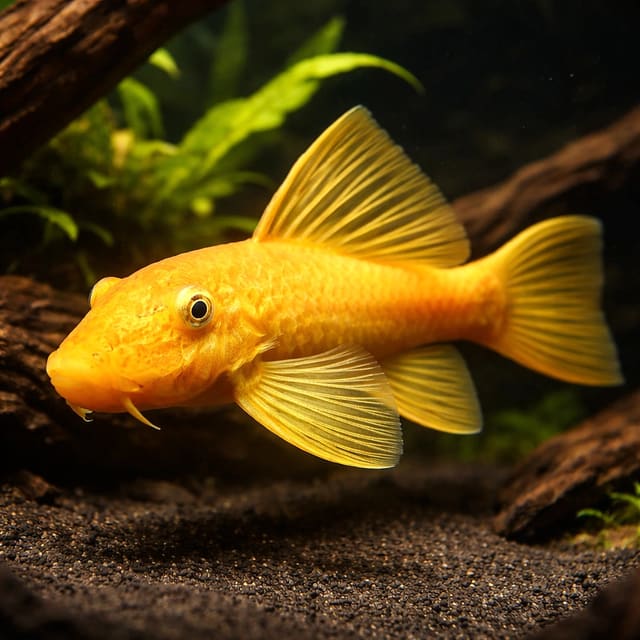
L018 Baryancistrus sp. Golden Nugget
22–27°C · pH 6–8
£80.00

A striking golden royal pleco that grows into a large, peaceful wood-grazing showpiece for spacious, well-filtered aquariums. Difficult care, peaceful. 24-30C, pH 6.0-7.5.
Adult size is the maximum length this species reaches at full maturity (scientific sources). The livestock you receive will be younger and smaller — pick a size above for the actual shipping size. Product-photo provenance and any image-specific limitations are stated on the listing.
Panaque cf. nigrolineatus
Confirm your email, then we’ll send an availability message for this exact item if it returns within 180 days.
This request is only for this product—no newsletter or other promotions. A mail-provider retry may very rarely duplicate the same availability message. Unconfirmed addresses are removed after 48 hours. See our privacy policy.
A striking golden royal pleco that grows into a large, peaceful wood-grazing showpiece for spacious, well-filtered aquariums. Difficult care, peaceful. 24-30C, pH 6.0-7.5.
Adult size is the maximum length this species reaches at full maturity (scientific sources). The livestock you receive will be younger and smaller — pick a size above for the actual shipping size. Product-photo provenance and any image-specific limitations are stated on the listing.
‘Pleco’ is a loose aquarium-trade label, not one species or one care sheet. Before buying, confirm the scientific name or defensible L-number, adult size and measurement method, required footprint, temperature and water, diet, social plan and source. No universal pleco tank size, menu or algae result is honest.
Maintain these water conditions for optimal health and vibrant colors
The Golden Royal Pleco (Panaque cf. nigrolineatus), also known as the L190 Pleco, is a striking South American catfish celebrated for its bold golden stripes and peaceful nature. Native to the Amazon River basin, this large, wood-grazing pleco requires a spacious tank with constant driftwood access and strong filtration. Available for sale UK-wide, the Golden Royal Pleco is an excellent choice for experienced aquarists seeking a visually stunning, specialized catfish with demanding care requirements.
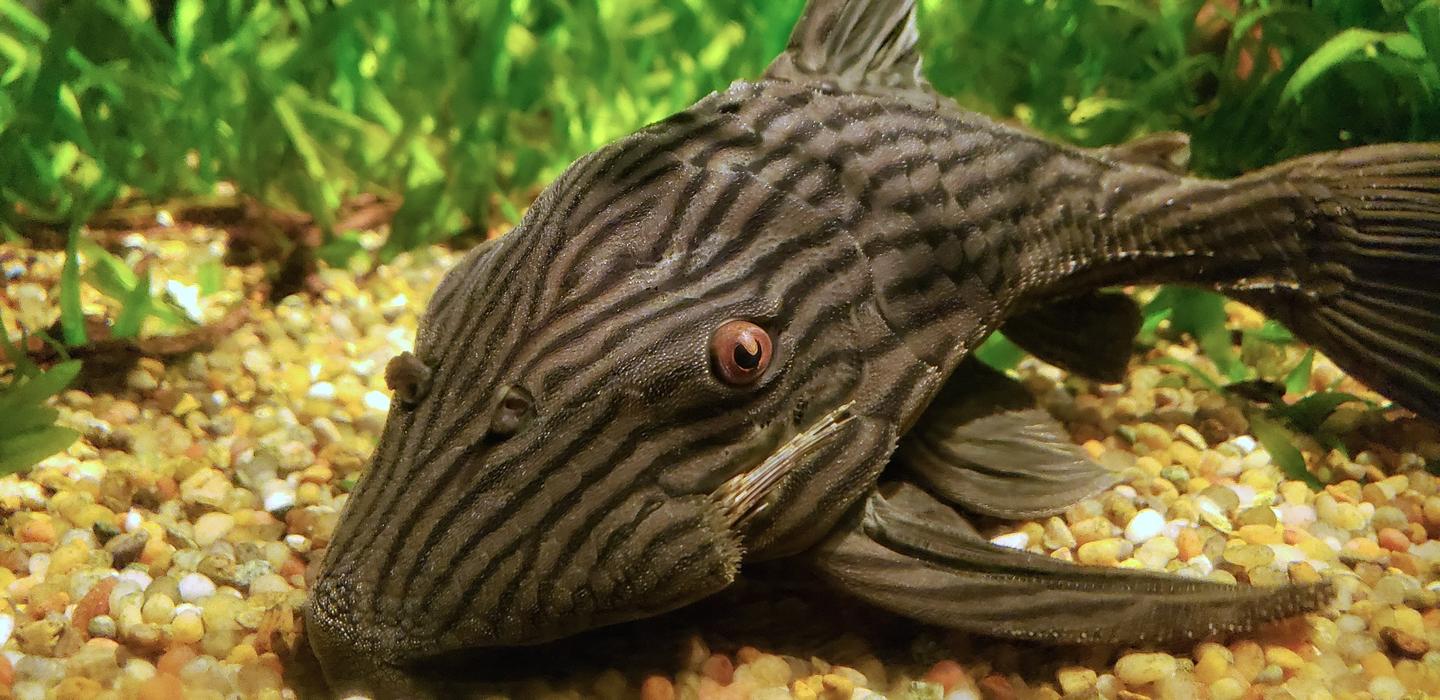
Panaque cf. nigrolineatus displays a robust, armored body with bold golden to yellow stripes on a dark brown to black background. This striking pattern is most pronounced in juveniles and well-conditioned adults. The species has large, expressive eyes, a wide, sucker-like mouth, and prominent odontodes (tooth-like projections) on the gill covers and pectoral fins. Males may have more prominent odontodes than females.
The Golden Royal Pleco inhabits fast-flowing rivers and tributaries across the Amazon River basin in South America (Colombia, Venezuela, and Brazil, depending on collection locality). These environments feature strong current, abundant submerged driftwood, rocky areas, and well-oxygenated water. The fish graze constantly on driftwood and biofilm, sheltering among roots and wood during the day.
A minimum 700-litre aquarium is essential for the Golden Royal Pleco, with larger tanks strongly preferred for adult specimens. Provide substantial driftwood as a constant food source—this species cannot survive without wood. Add caves, smooth rocks, and hardy plants such as Anubias or Java Fern. Strong filtration and high oxygenation are critical, as this species is large, produces substantial waste, and requires well-oxygenated water. Provide hiding places and a secure lid.
Maintain soft to moderately hard water with pH 6.0-7.5 and temperatures between 24-30°C. General hardness (GH) of 3-10 dGH is ideal. The Golden Royal Pleco performs best in well-oxygenated water with strong current. Perform large weekly water changes of 30-50% to control nitrate and maintain stable parameters. Avoid stagnant water or poor filtration.
Panaque cf. nigrolineatus is primarily a wood-grazer. Provide driftwood as a constant food source—without wood, health declines. Supplement with algae wafers, spirulina-based foods, blanched vegetables, and occasional protein-rich foods in small amounts. A constant supply of driftwood for rasping is essential for digestion and natural behavior. Feed supplemental foods once daily in small portions.
This species requires substantial driftwood at all times for digestion and natural grazing. Without wood, health declines rapidly. Ensure a constant supply of suitable driftwood in the aquarium.
The Golden Royal Pleco is a peaceful, nocturnal catfish that spends most of its time grazing on driftwood and resting in caves. This species is generally non-aggressive but can be territorial toward other large plecos in undersized tanks. Provide ample hiding places and multiple territories to reduce competition. Most active during evening and early morning hours.
Ideal tank mates include peaceful community fish of similar water requirements such as tetras, rasboras, Corydoras catfish, and peaceful dwarf cichlids. Avoid aggressive cichlids, fin-nipping fish, highly territorial bottom dwellers in small tanks, very small fish that may be stressed by competition, and other large plecos in undersized aquariums.
Breeding is uncommon in home aquariums and usually requires very large, mature systems with excellent water quality, strong current, caves, and seasonal conditioning. Spawning behavior and fry rearing are poorly documented in captivity. If breeding occurs, males guard eggs in caves until hatching.
At Tropical Fish Co, we specialize in rare and specialist-level catfish, including the stunning Golden Royal Pleco. Every fish is quarantined, health-checked, and acclimatized to UK water conditions before dispatch. We provide expert guidance on large-scale tank setup, driftwood requirements, water chemistry, and compatible stocking to help you succeed with this demanding species. With fast, reliable delivery across the UK and a commitment to quality fishkeeping, Tropical Fish Co is your premier destination for exceptional freshwater fish.
No reviews for this item yet. Bought one? Honest reviews only, good or bad.
What customers say about ordering from us
I have a small group of long finned mountain minnows. So was delighted to be able to order ten of this variety to increase the genetics in my tank . The ones I recieved are healthy but it’s to early to give a verdict on wether they are of a long finned type since they are small currently.
Gordon Walker · 23 Sept 2026
100% success travel and "installation". Pleased with quality of purchase. The Siamese fighter a bit "shy" so have not yet seen him at his best yet but looking good. Happy customer. GG
George E Garratt · 21 Sept 2026
Reviews of our shop, collected by Judge.me, an independent third-party review collector. Newest first.