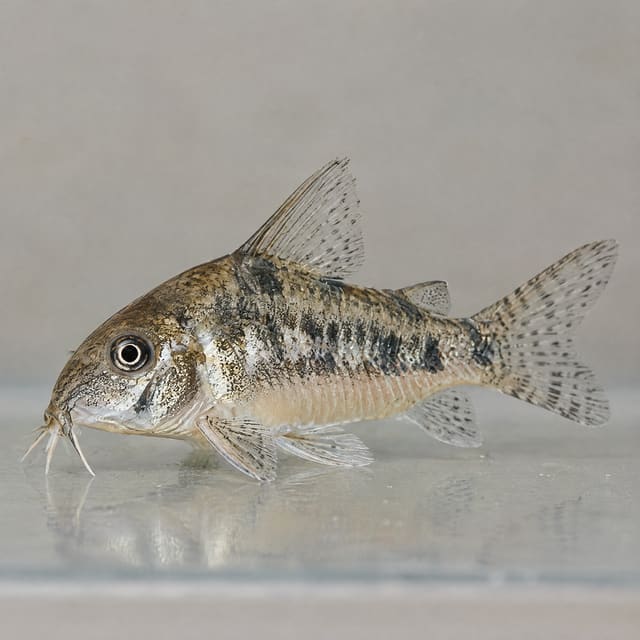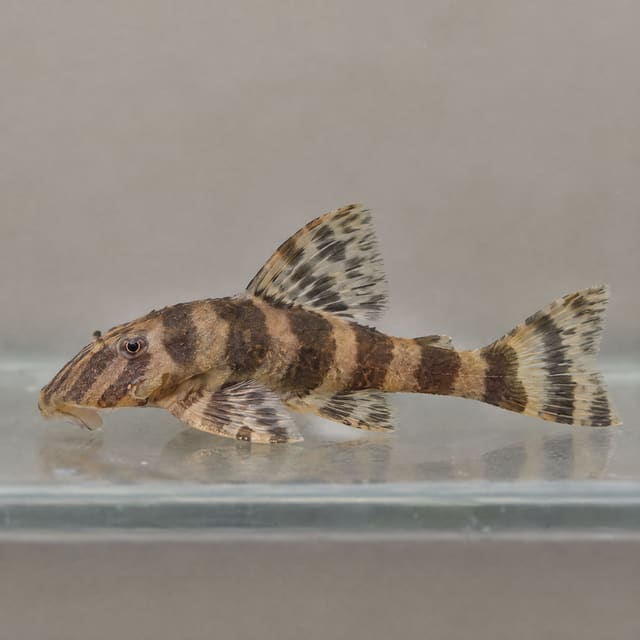
Moderate
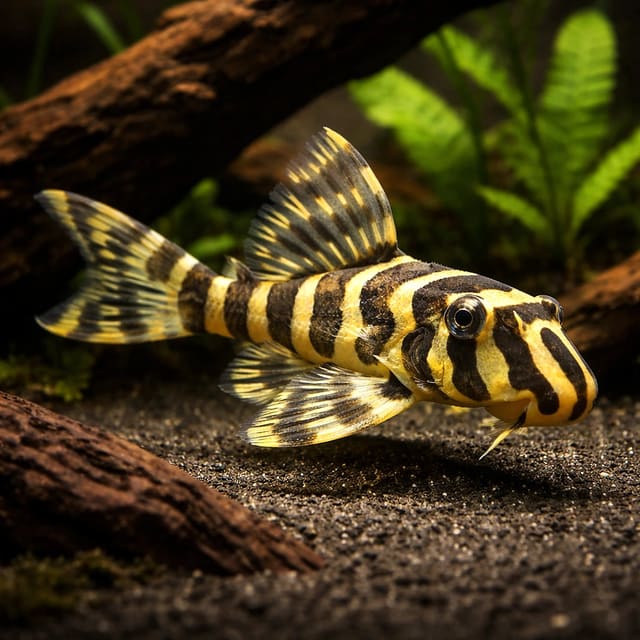
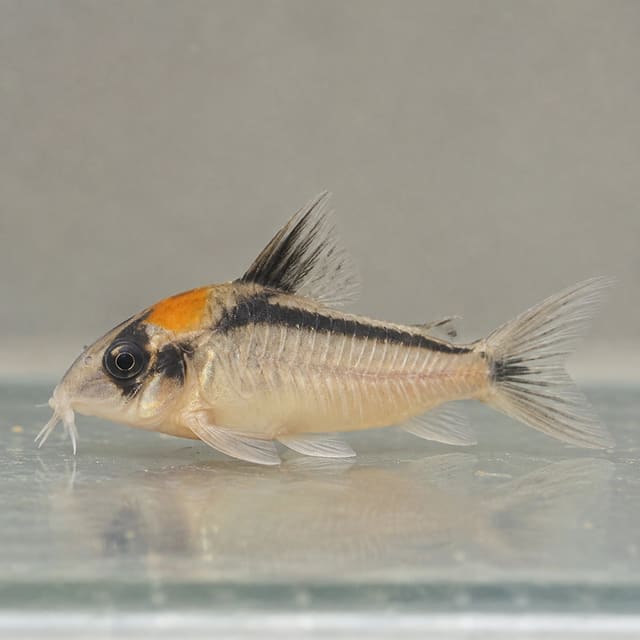
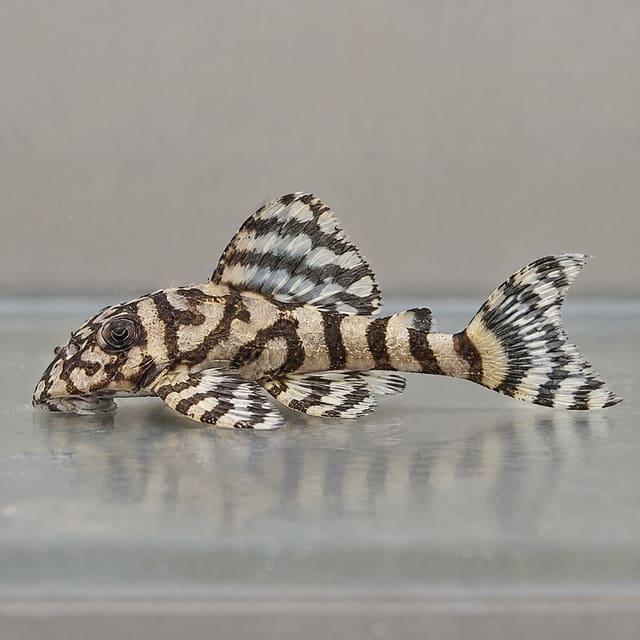
Candy Striped Pleco L015 (Peckoltia vittata)
23–26°C · pH 5–7.5
£22.99
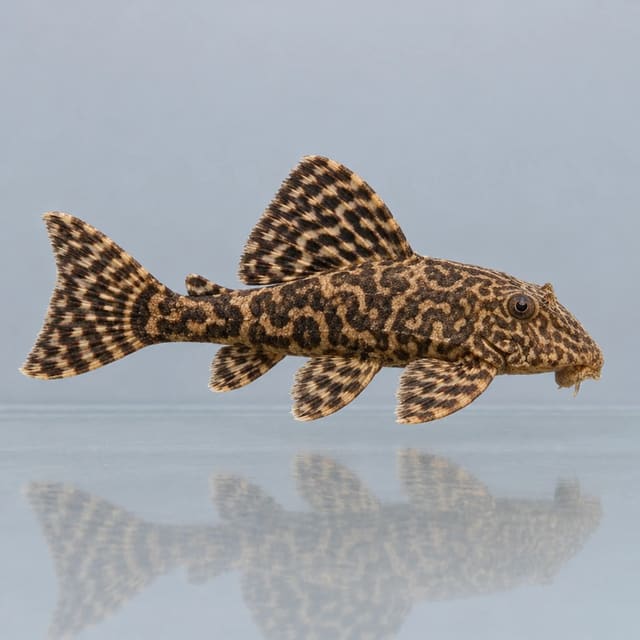
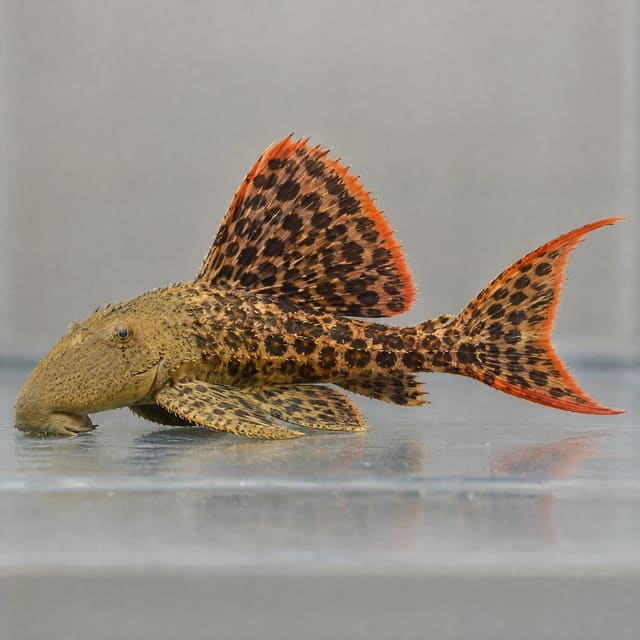
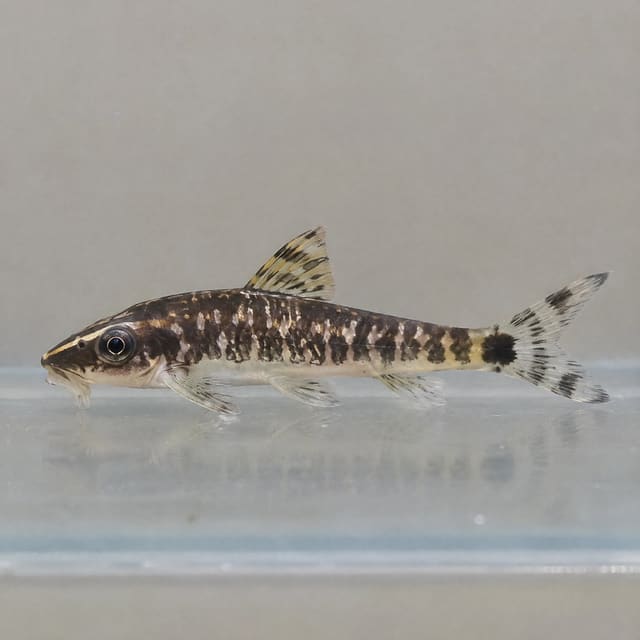
The L076 Orange Seam Pleco (Peckoltia sp. L076) is a peaceful, medium-sized suckermouth catfish from the rio do Pará in northern Brazil, with orange edging on its fins. It grows to about 14 cm and suits a warm community aquarium with a 120 × 45 cm base, rock piles and wood. Sold individually as one live fish.
Peckoltia sp. (L076)
The L076 Orange Seam Pleco (Peckoltia sp. L076) is a peaceful, medium-sized suckermouth catfish from the rio do Pará in northern Brazil, with orange edging on its fins. It grows to about 14 cm and suits a warm community aquarium with a 120 × 45 cm base, rock piles and wood. Sold individually as one live fish.
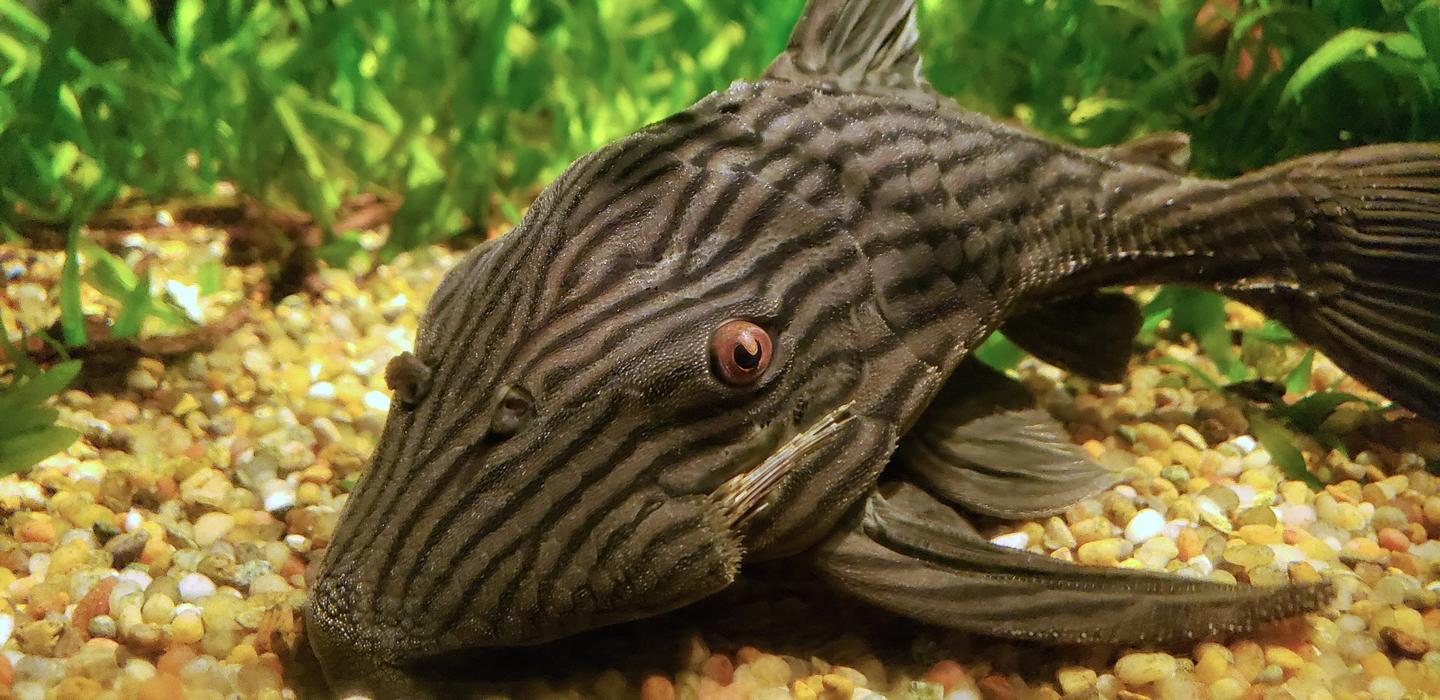
‘Pleco’ is a loose aquarium-trade label, not one species or one care sheet. Before buying, confirm the scientific name or defensible L-number, adult size and measurement method, required footprint, temperature and water, diet, social plan and source. No universal pleco tank size, menu or algae result is honest.
Read the full care guidance when planning conditions for your aquarium.
The L076 pleco (Peckoltia sp. L076), known as the Orange Seam Pleco, is a medium-sized suckermouth catfish from the rio do Pará in northern Brazil, named for the orange edging on its fins. Planet Catfish describes it as an unfussy pleco that can live with a very wide range of tank mates, from small fish and shrimp to all but the largest cichlids. Adults reach about 13–15 cm, which makes it a good long-term choice for a warm community aquarium with a 120 cm base.
Seriously Fish places its collection site on the rio do Pará near Portel in Pará state. The rio do Pará is the southern arm of the mouth of the Amazon, flowing round the west and south of Marajó island. The species has not yet been formally described, which is why it carries a genus name and an L-number rather than a full scientific name.
| Name | What it means |
|---|---|
| L076, Orange Seam Pleco | The L-number and the common name used by Planet Catfish |
| L099 | The paler form; treated as the same species |
| Peckoltia sp. (L076) | The scientific name: the genus is known, the species not yet described |
| Tiger Red Fin Pleco | A label name used by some sellers for L076 |
| Peckoltia cavatica | A name some sellers attach to L076; Seriously Fish and Planet Catfish do not make this link |
Seriously Fish notes that L076 and L099 appear to be the same species: L076 shows a darker colour pattern by day, though both look similar at night. ScotCat likewise calls L099 a lighter-coloured version of L076. In practice your fish may look dark and fairly plain under the aquarium lights and paler and more clearly banded after dark.
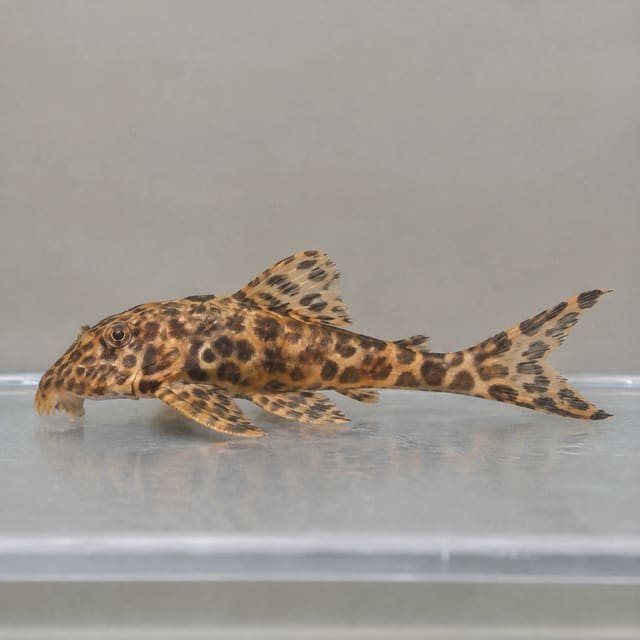
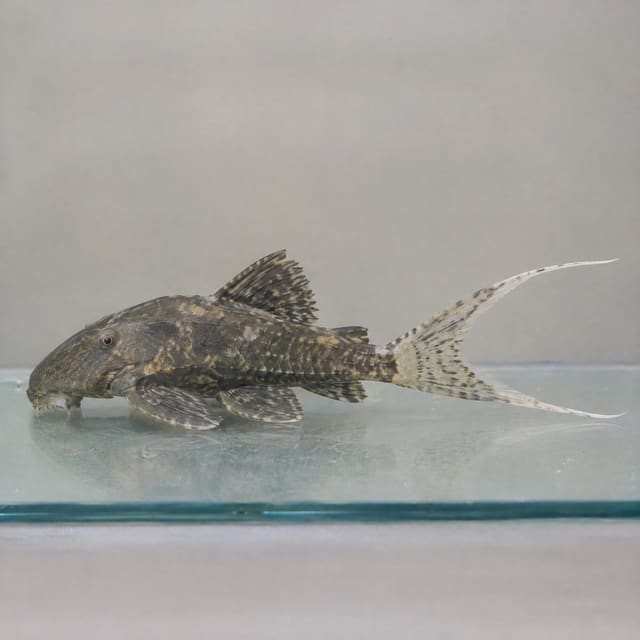
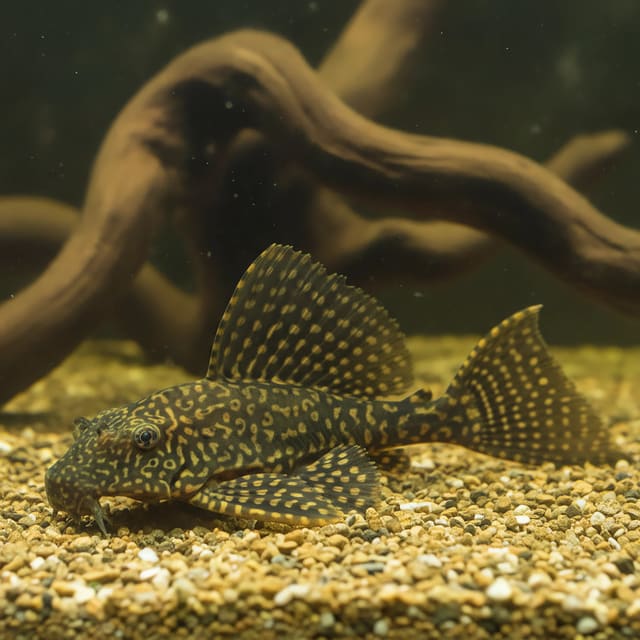
ScotCat describes the Peckoltia genus as having a medium-sized mouth with the same number of teeth in the upper and lower jaws, and a tail fin whose lower edge is usually oblique and only slightly indented. Compare it with our other Peckoltia plecos, such as the L075 Para Pleco, the L134 Leopard Frog Pleco and the Candy Striped Pleco L015.
One purchase supplies one live L076 Orange Seam Pleco. The size option is "Standard": the fish is sent at the size currently available, which is smaller than the adult size. Sex is not chosen or guaranteed.
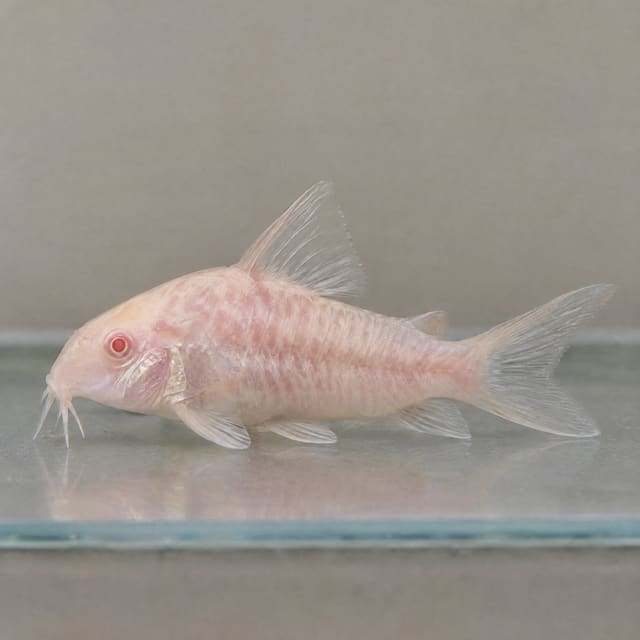
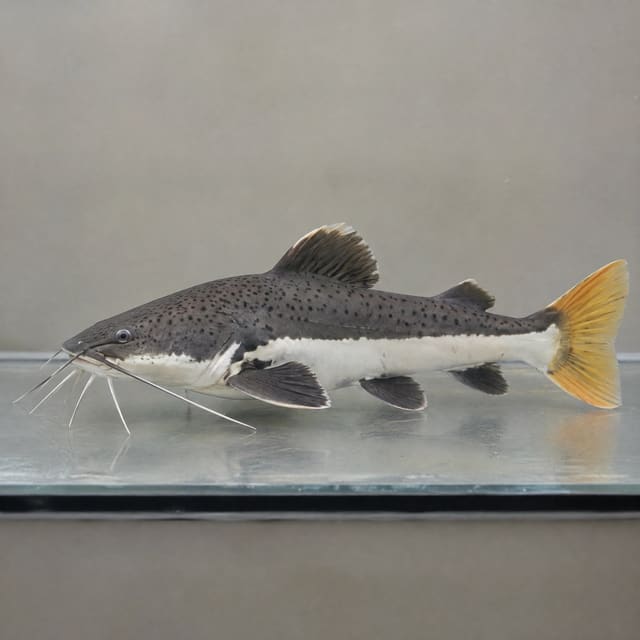
The photographs show the type of fish, not the individual you will receive. Pattern, banding and the strength of the orange fin edging vary from fish to fish, and the colour shifts between day and night, with mood and with the lighting.
Mature males carry odontodes, small tooth-like bristles. Seriously Fish notes them on the tail stem, Planet Catfish on the leading pectoral fin rays and the back half of the body, and ScotCat also behind the gill covers and on the upper rays of the tail fin. Females stay smooth and, seen from above, are wider just behind the pectoral fins. Young fish cannot be sexed reliably. Before you order, read our delivery and Live Arrival Guarantee information.
Seriously Fish gives a maximum of 140 mm standard length, Planet Catfish 150 mm and ScotCat 13 cm. Standard length runs from the snout to the base of the tail, so the tail fin adds more. Plan for the adult, not the size that arrives.
The minimum base Seriously Fish recommends is 120 × 45 cm, about 243 litres. That gives a single pleco room to claim a territory and still leaves space for a group of midwater fish above it. Floor area matters more than height: a pleco spends its life on rocks, wood and sand, so a long, deep tank serves it better than a tall one of the same volume.
Seriously Fish estimates that a tank of this size needs roughly 150–200 W of heating, split across two heaters, to hold 25–29°C in a room at about 20°C. Two heaters also mean that one failure does not chill the aquarium. Keep the tank away from radiators, windows and draughts, as OATA's catfish care sheet advises.
Planet Catfish recommends rock piles and wood tangles, with plants optional. That suits the way a Peckoltia lives: it spends the day wedged in a crevice or under wood, and comes out to forage as the light fades. Well-fed fish will not damage most plants, according to Planet Catfish, so a planted community aquarium is fine as long as the hard cover comes first.
| Area | Purpose |
|---|---|
| Rock piles with gaps | Crevices to wedge into by day and natural territory boundaries |
| Wood tangles and caves | Retreats, a surface to graze and possible spawning sites |
| Open sand or fine gravel | Feeding area where sinking food lands |
| Plants at the back and sides | Shade and broken sight lines for the midwater fish |
OATA recommends sand or fine gravel for catfish to protect their sensitive barbels. Build rock piles directly on the glass or on a base layer before adding sand, so a pleco digging underneath cannot bring them down. Leave a strip of open floor at the front where you can siphon and watch your pleco feed.
Seriously Fish gives 25–29°C, pH 5.5–7.5 and 1–12 dGH. ScotCat agrees on 25–29°C, gives pH 6.0–7.5, and adds that the species should be kept in warm, soft to medium-hard water, at slightly higher temperatures, with a higher oxygen supply. A setting of about 26–27°C sits comfortably inside both sets of figures.
| Reading | Target |
|---|---|
| Temperature | 25–29°C |
| pH | 5.5–7.5 (ScotCat: 6.0–7.5) |
| General hardness | 1–12 dGH (about 18–214 mg/l as calcium carbonate) |
| Ammonia | 0 mg/l |
| Nitrite | 0 mg/l |
| Nitrate | No more than 20 mg/l above your tap water |
The waste readings come from OATA's catfish guidance. UK water companies usually report hardness in mg/l as calcium carbonate; one dGH is about 17.8 mg/l, so the upper limit of 12 dGH is about 214 mg/l. If your supply is harder than that, blend it with reverse-osmosis water rather than chasing pH with chemicals. Enter your readings in our water matcher, and see our guide to aquarium pH and water chemistry guide for what each value means.
For a 243-litre aquarium Seriously Fish suggests a filter rated at roughly 970–1,215 litres per hour, which is four to five times the tank volume each hour. Point the outlet along the length of the tank, across the rock piles, so oxygen-rich water reaches the crevices where the pleco rests. Warm water holds less oxygen, so keep the surface moving.
Stock gradually, so the filter bacteria can keep pace with the extra waste. OATA advises testing weekly and treating replacement water with a tap water conditioner. Clear water is not proof of safe water, so keep testing even when the aquarium looks perfect.
Planet Catfish describes L076 as omnivorous with a tendency towards meaty foods, and warns that it is not an effective algae eater. ScotCat calls it easy to feed with frozen and live foods, tablets and flake. Buy it as a characterful pleco, not as an algae remover, and plan to feed it every day.
Watch the belly. A well-fed pleco has a gently rounded underside; a hollow one after a few weeks means faster fish are taking the food. Change where and when you feed before you increase the amount, which only fouls the water.
Add the fish only to a filtered aquarium that has run long enough to process waste, with ammonia and nitrite at zero and the temperature already inside 25–29°C. OATA recommends acclimatising with the lights off: float the sealed bag for about 10 minutes, add small amounts of aquarium water over up to 20 minutes, then release the fish with as little bag water as possible. Our guide on how to acclimatise new fish goes through each step.
| Checkpoint | What to do |
|---|---|
| Before arrival | Test the water, check the temperature and finish the rock piles and wood |
| Arrival | Acclimatise with the lights off, release, and keep the lights off for the rest of the day |
| First evening | Offer a small sinking portion near the rocks after dark |
| Days 2–7 | Check where it rests, that the belly stays rounded and that leftovers are removed |
| End of week | Retest ammonia, nitrite and nitrate and do the usual water change |
Expect it to vanish into the rocks for the first days and to look dark under the lights. That is normal. Rapid breathing, hanging at the surface or lying on its side are not, and call for an immediate water test.
Planet Catfish describes L076 as peaceful if a little territorial, and as a medium-sized pleco that can be combined with a very wide array of tank mates thanks to its unfussy nature. It is perfectly safe with small fishes and shrimp, yet robust enough to withstand the attention of all but the largest cichlids. Its territorial side shows mainly towards other bottom dwellers that want the same crevice.
| Suits | Avoid |
|---|---|
| Small, peaceful fish such as many tetras | The largest, most aggressive cichlids |
| Freshwater shrimp | Fish that need water below 25°C |
| Corydoras sharing the open sand | Several plecos of the same size and shape with too few caves |
| Peaceful and medium-sized South American cichlids | Fast bottom feeders that clear the food first |
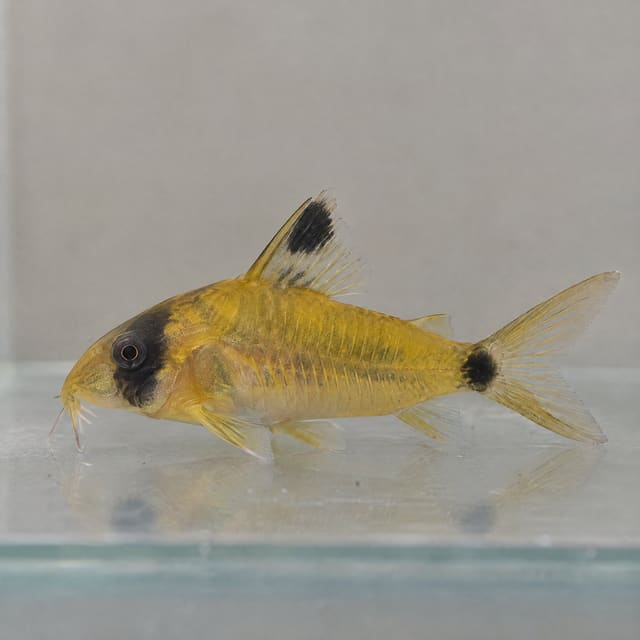
For the floor, the Bronze Corydoras works the open sand while the pleco keeps to the rocks. If you want another pleco with a different look, the L006 Pleco and the L134 Leopard Frog Pleco are fellow Peckoltia. Check any planned mix with our tank mates tool, browse all catfish and plecos, our L-number plecos and the wider range of South American catfish, and read our pleco care guide for the basics.
OATA describes a healthy fish as having clear, bright eyes, undamaged fins and no ulcers or bumps, and lists hanging at the surface, sitting on the bottom and erratic swimming as warning signs. Learn what normal looks like for your pleco in the first month, including its favourite crevice and how quickly it comes to food.
| If you see | Do this |
|---|---|
| A hollow belly | Feed after dark near its rock pile and check for competition |
| Rapid breathing or hanging near the surface | Test ammonia, nitrite and temperature at once and increase surface movement |
| Darker colour by day | Normal for L076; check feeding and breathing instead |
| White spots or fluffy patches | Test the water and get fish-health advice before treating |
| Split fins or scratches | Look for a bullying tank mate or sharp décor and remove the cause |
| Not seen for several days | Look with a dim torch after lights-out and count your fish |
Test first, then act. Most changes in behaviour follow a water-quality or temperature problem, so note the readings and any recent changes before treating.
Seriously Fish and Planet Catfish both describe L076 as a cave spawner, and Seriously Fish adds that the male is responsible for brood care. Planet Catfish lists six breeding reports, and Seriously Fish's gallery includes an aquarium-bred juvenile, so spawning in a home aquarium is realistic.
Keep the young fed with fine sinking foods and keep the water spotless while they grow. The breeding reports on Planet Catfish describe keepers' own conditions and are worth reading before you try.
It is an undescribed Peckoltia species, a suckermouth catfish (family Loricariidae) collected from the rio do Pará near Portel in Pará state, northern Brazil. Planet Catfish calls it the Orange Seam Pleco, after the orange edging on its fins. Some sellers label it Tiger Red Fin Pleco.
Seriously Fish and ScotCat treat them as one species. L076 shows a darker pattern by day and L099 is the paler form; Seriously Fish notes that both look similar at night.
Seriously Fish gives 140 mm standard length, Planet Catfish 150 mm and ScotCat 13 cm. Plan for a fish of about 13–15 cm without the tail.
Seriously Fish recommends a base of at least 120 × 45 cm, about 243 litres. Planet Catfish suggests allowing each pleco an area of about 30 × 30 cm, broken up with rocks and wood.
Warm, clean, well-oxygenated water: Seriously Fish gives 25–29°C, pH 5.5–7.5 and 1–12 dGH, and ScotCat gives pH 6.0–7.5. Keep ammonia and nitrite at zero.
Not effectively. Planet Catfish describes it as an omnivore that leans towards meaty foods and is not an effective algae eater. Feed sinking tablets, frozen foods such as bloodworm and some vegetables.
Yes. Planet Catfish says it is perfectly safe with small fishes and shrimp and robust enough for all but the largest cichlids. It can be a little territorial towards other bottom dwellers, so provide plenty of caves.
Yes. It is a cave spawner and the male guards the brood. Planet Catfish lists six breeding reports, and Seriously Fish shows an aquarium-bred juvenile.
One live fish of the standard size currently available. It is not sexed.
No reviews for this item yet. Bought one? Honest reviews only, good or bad.
What customers say about ordering from us
Easy website plenty of info on fish your buying great to pick a time slot
TRACEY DURRANT · 7 Oct 2026
Got some lovely fish thank you
Kevin Mackie · 7 Oct 2026
Reviews of our shop, collected by Judge.me, an independent third-party review collector. Newest first.
Moved by UK carriers licensed to handle live animals
Hand-packed with oxygen bags, poly box, heat pack
Email photos the same day; an optional unboxing video helps us review problems faster — claim terms apply
Klarna & PayPal Pay in 3 at checkout