Moderate
L075 Para Pleco (Peckoltia sabaji)
26–30°C · pH 6–7.5 · 150L
£56.99

L134 Leopard Frog Pleco is a compact, cave-dwelling Peckoltia compta from Brazil's Tapajos basin. Plan an 80 cm, 100 L+ mature aquarium with warm, oxygen-rich water, secure caves and a varied sinking diet. One unsexed fish is supplied per quantity when available; gallery images are representative.
Adult size is the maximum length this species reaches at full maturity (scientific sources). The livestock you receive will be younger and smaller. Product-photo provenance and any image-specific limitations are stated on the listing.
Peckoltia compta
Confirm your email, then we’ll send an availability message for this exact item if it returns within 180 days.
This request is only for this product—no newsletter or other promotions. A mail-provider retry may very rarely duplicate the same availability message. Unconfirmed addresses are removed after 48 hours. See our privacy policy.
L134 Leopard Frog Pleco is a compact, cave-dwelling Peckoltia compta from Brazil's Tapajos basin. Plan an 80 cm, 100 L+ mature aquarium with warm, oxygen-rich water, secure caves and a varied sinking diet. One unsexed fish is supplied per quantity when available; gallery images are representative.
Adult size is the maximum length this species reaches at full maturity (scientific sources). The livestock you receive will be younger and smaller. Product-photo provenance and any image-specific limitations are stated on the listing.
‘Pleco’ is a loose aquarium-trade label, not one species or one care sheet. Before buying, confirm the scientific name or defensible L-number, adult size and measurement method, required footprint, temperature and water, diet, social plan and source. No universal pleco tank size, menu or algae result is honest.
Maintain these water conditions for optimal health and vibrant colors
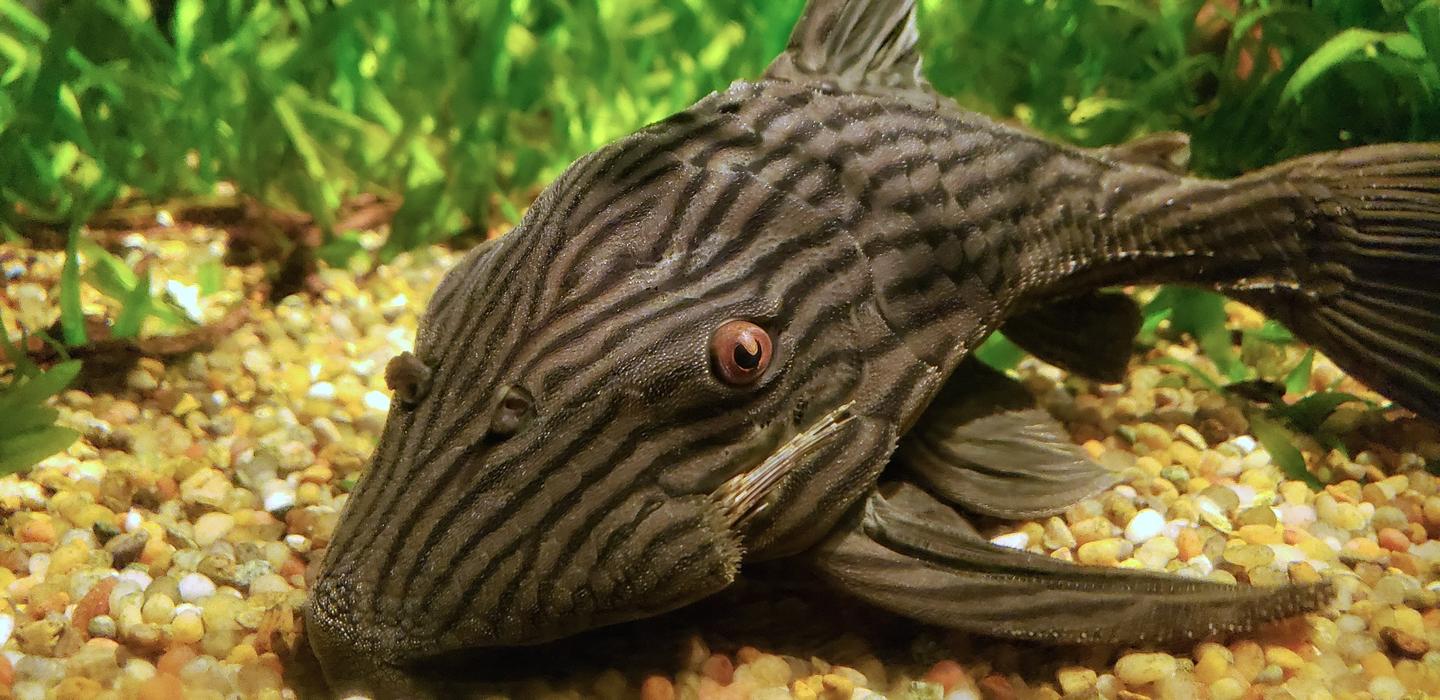
L134 Leopard Frog Pleco is the aquarium trade name for Peckoltia compta, a compact loricariid catfish from Brazil's Tapajos drainage. Its pale yellow-to-cream pattern sits across a darker body as bands on the trunk and lengthwise lines over the head. The pattern is the attraction, but the animal should be chosen for its husbandry needs rather than as a decorative algae tool.
Plan for an adult of about 12 cm total length and give one fish a mature aquarium at least 80 cm long and around 100 litres or more. Length, floor area, filtration and cave layout matter more than a bare volume figure. Warm, stable, oxygen-rich water, secure shaded retreats and a varied sinking diet are central to long-term care. It may graze natural biofilm, but that does not replace deliberate feeding or routine aquarium maintenance.
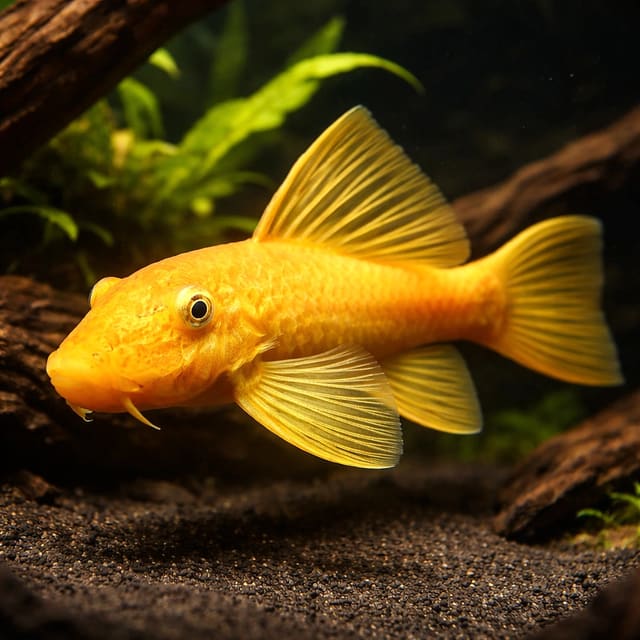
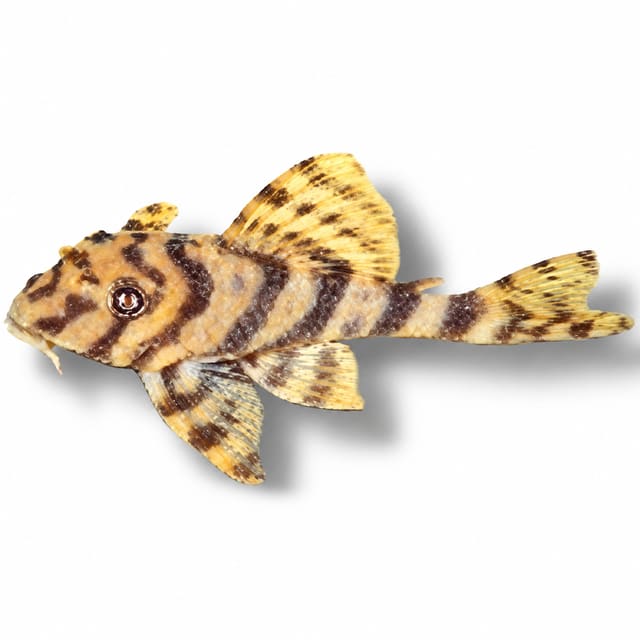
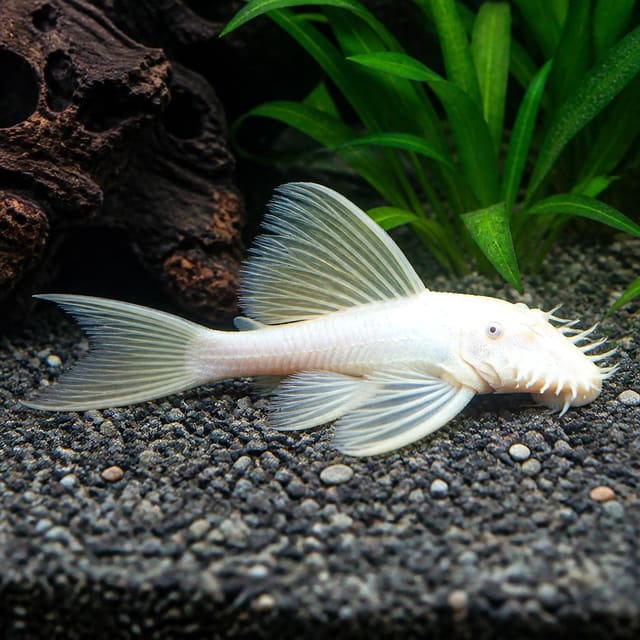
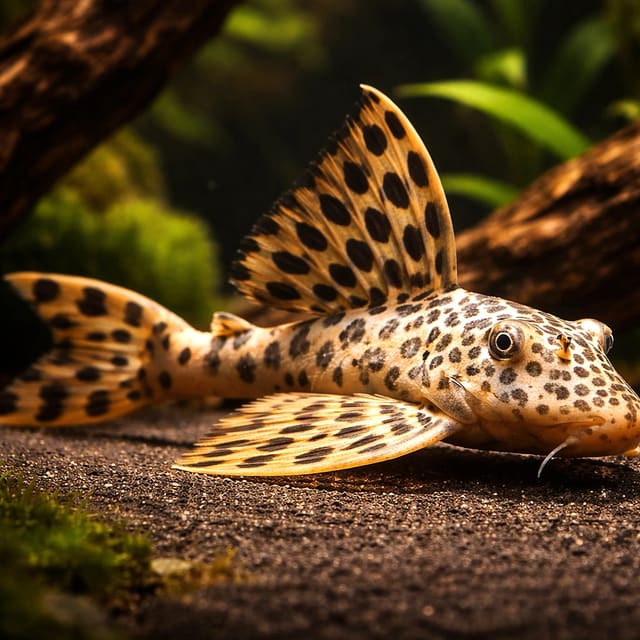
Each available quantity represents one unsexed fish, not a pair. The current supplier information does not establish the sex, exact collection locality, or whether a particular sale fish is wild caught or captive bred, so this page does not make those claims. The four protected gallery images are representative illustrations developed from a reference photo; they do not show the exact individual supplied. Markings, colour, proportions and condition naturally vary.
| Care question | Evidence-led planning answer |
|---|---|
| Accepted scientific name | Peckoltia compta |
| Common trade names | L134; Leopard Frog Pleco |
| Family | Loricariidae |
| Adult planning size | About 12 cm total length; do not confuse this with a 6.2 cm standard-length record that excludes the tail |
| Minimum aquarium for one | At least 80 cm long and approximately 100 litres, with a mature filter and usable bottom area |
| Temperature | 24–28°C |
| pH | 6.0–7.5, kept stable |
| General hardness | Approximately 2–12 dGH; avoid abrupt changes |
| Diet | Varied sinking omnivore diet; algae and biofilm are supplementary, not complete food |
| Temperament | Usually peaceful with suitable mid-water fish; may defend caves from similar bottom dwellers |
| Sale unit | One unsexed fish per quantity when available |
| Care level | Moderate: stable water, strong oxygenation, deliberate feeding and cave management are required |
The product selector covers one live L134 per quantity. It does not promise a male, female, bonded pair, breeding pair or a fish taken from a named river locality. If more than one is selected when stock allows, the order is for that number of individually unsexed fish. A two-fish gallery scene illustrates how the species can look in a structured aquarium; it is not evidence that two fish shown are compatible, sexed or supplied together.
Size at dispatch can change between stock intakes. The live product option and current checkout are the place to confirm any advertised sale size. Juveniles do not display a guaranteed final shade or band width: L134 patterning varies between individuals and can look different with age, lighting, background, stress and photographic processing. Select the species only if the aquarium will suit its adult needs, not because a juvenile appears very small in one photograph.
The gallery remains deliberately additive. All four images are representative interpretations made from a reference photo, not photographs of the animal you will receive. They are useful for showing the broad yellow-and-dark trade appearance, cave use and body form. They are not a diagnostic voucher specimen, a measured scale image or a photograph of the exact fish delivered. The physical animal may have wider or narrower bars, a darker or lighter base colour, different fin patterning and a different body condition.
Peckoltia compta was formally described in 2010 from the Brazilian Tapajos basin. The original taxonomic paper describes a fish with dark transverse bars over the body and longitudinal dark stripes on the head. It separates the species from similar Peckoltia partly through details of the pale lines within those darker head stripes. GBIF also treats P. compta as an accepted species in Loricariidae and records Leopard Frog Pleco as a common name.
The L-number is useful because the aquarium trade used L134 before the scientific description was available. It remains a compact, widely recognised search and retail identifier, but it is not the shop's SKU. The internal stock code must stay in inventory systems, while the customer-facing title can use L134 because it tells keepers which loricariid they are researching.
Common names are less precise on their own. "Leopard pleco" can refer to much larger, unrelated fish, while "frog pleco" can be shortened inconsistently. A buyer comparing adult size, diet or compatibility should look for the complete combination of L134 and Peckoltia compta. That avoids importing advice written for common plecos, sailfin plecos, bristlenoses or different L-number species.
The species is also not a substitute for a specialist algae grazer. Loricariidae contains fishes with very different diets and adult sizes. A suckermouth and armoured body do not prove that a fish can live on glass algae, clean an aquarium, eat pond growth or share a diet with every other pleco. Identification comes first; feeding and aquarium planning follow the identified animal.
Use the accepted name Peckoltia compta when checking scientific or husbandry sources. Use L134 or Leopard Frog Pleco when searching aquarium literature. Reject advice that silently changes the subject to a common pleco, bristlenose, Siamese algae grazer or another striped L-number.
The original description places this species in Brazil's rio Tapajos basin, including material associated with the Jamanxim system. Specialist keeping literature likewise connects L134 with the Tapajos region around Pimental and Itaituba. A US Fish and Wildlife Service evidence review describes it as a small Brazilian armoured catfish collected in clear water with rocky bottom habitat, while also stressing that biological information is limited.
Those clues shape aquarium care without pretending that a glass box can reproduce a river. Clear, warm, moving water supports the case for efficient biological filtration, good gas exchange and low accumulation of organic waste. Rock, wood, crevices and shaded spaces provide physical structure. A stable aquarium with several flow zones is more useful than an exposed decorative tank where every cave faces the same current and every bottom fish competes for one refuge.
Brazilian recovery planning for fishes of the Xingu and Tapajos region includes P. compta and discusses pressures associated with river development and habitat change. That is conservation context for the species, not proof that the individual offered here came from the wild or from a particular tributary. Our stock records do not provide that provenance, so the listing leaves it unknown. Buyers seeking a documented captive-bred line or a named locality should request that evidence before purchase rather than inferring it from an L-number.
Responsible keeping begins after acquisition too. Never release an aquarium fish, egg, plant, transport water or substrate into a pond, stream or drain. If circumstances change, contact an experienced retailer, aquarium society or suitable keeper to arrange rehoming. A rare-looking catfish does not become environmentally harmless simply because UK outdoor water is colder than its preferred range.
| Wild-habitat clue | Useful aquarium response | What not to infer |
|---|---|---|
| Clear, flowing water | Strong gas exchange, mature filtration and controlled waste | That a powerful jet should pin the fish in place |
| Rocky, structured bottom | Secure caves, crevices and visual barriers | That sharp rock or unstable piles are acceptable |
| Warm tropical drainage | Reliable heating within 24–28°C | Pond or unheated-room suitability |
| Tapajos/Jamanxim association | Use regional evidence to understand ecology | That the sale fish has verified locality provenance |
The best-known trade appearance is a dark brown-to-black fish crossed by broad pale yellow or cream bands, with finer longitudinal lines around the head. The contrast can be striking, especially on a dark background under restrained lighting. A stressed, newly moved or resting animal may look flatter in colour. Bright retail or imagery can also exaggerate saturation and edge contrast compared with the fish seen under normal aquarium light.
Pattern is not uniform. The width and continuity of bars, the amount of pale colour on the fins and the head-line arrangement can vary. Growth may change the visual balance between dark and pale areas. A natural variation is not automatically a defect, and a mismatch with one representative picture does not by itself prove a different species. Identification should consider the complete morphology and reliable provenance rather than a single patch of colour.
Body condition is more important than photographic perfection. A fish being assessed in person should have a filled but not swollen abdomen, intact fins, clear eyes, controlled breathing and the ability to attach, rest and move normally. A deeply hollow belly, persistent rapid respiration, wounds, severe fin damage or inability to maintain position deserves investigation. Online, ask for current stock information if you need more than the representative gallery can establish.
A scientific summary may show a maximum of about 6.2 cm standard length. Standard length is measured from the snout to the base of the tail and excludes the caudal fin. It may also reflect the largest measured specimen available to a particular source rather than a promise that every adult stops there. Retail and specialist husbandry accounts commonly plan for a fish closer to 10–12 cm total length. This listing therefore uses approximately 12 cm total length as the conservative aquarium-planning figure.
Tank suitability cannot be reduced to the fish's nose-to-tail length. This is a bottom-oriented cave user that needs feeding space, a secure retreat, waste-processing capacity and a route between cover points. For one animal, start with an aquarium at least 80 cm long and about 100 litres. A wider tank can be more useful than a tall tank of the same volume because it provides more usable bottom area and more ways to separate a cave from feeding traffic.
The recommendation assumes a fully cycled, mature system with stable temperature and adequate filtration. It is not permission to add the fish to a newly filled 100-litre aquarium. Stocking also changes the calculation. A tank already crowded with corys, loaches or other loricariids may have little unclaimed floor area even when its litre figure looks generous. Count adult fish, caves, feeding stations and waste, not only water volume.
Keeping several L134s requires more than multiplying litres. Each fish should have a defensible retreat, with spare caves and visual breaks so one dominant animal cannot control every entrance. The filter must handle the combined feeding and waste load, and food should reach each fish. If the aquarium cannot provide separated territories, one well-kept individual is the more responsible choice.
Use the tank volume calculator to check actual internal volume, then measure the aquarium's length and usable footprint separately. Substrate, decor and an air gap reduce water volume, while a tall narrow shape does not replace bottom area. For this species, an 80 cm length and thoughtful cave layout remain important even when the calculated litres look sufficient.
Add this fish only after the nitrogen cycle is established and ammonia and nitrite remain at zero under the aquarium's normal load. A mature tank also develops microbial films and a more stable ecology, but maturity does not mean neglect. Nitrate, dissolved waste and trapped debris still need management through sensible feeding, filter care and water changes.
Choose filtration that turns over and oxygenates the water without creating an inescapable torrent. A spray bar, venturi, air stone or well-positioned return can increase surface movement. Check the whole tank: strong rippling beside the outlet does not guarantee good oxygen conditions inside a closed cave or behind a large piece of wood. Warmer water holds less oxygen, which makes gas exchange especially relevant near the upper end of the temperature range.
Use inert ceramic pleco caves, smooth rock crevices or securely arranged natural materials. The fish should be able to enter and rest without scraping against a sharp edge. A retreat needs shade and security, but stagnant waste should not collect inside it. Orient some entrances across or slightly away from the strongest flow and inspect them during maintenance.
For one fish, provide at least two credible choices rather than one ornamental hole. For a group, provide one cave per fish plus spares, placed so a dominant occupant cannot watch every entrance from one position. Break sight lines with wood, stone and robust plants. Never balance heavy rock on loose substrate where burrowing, maintenance or a collision can undermine it.
Fine sand or smooth small gravel is easier on a bottom fish than sharp chips. The substrate should allow waste to be removed from feeding zones and around caves. Bare-bottom quarantine can be practical for observation, but a permanent display benefits from cover and structure. Whatever the material, avoid deep pockets where rich sinking food disappears and decomposes unnoticed.
Driftwood adds shade, surfaces for natural growth and physical separation. It can make the aquarium feel secure and is a sensible part of the layout. Do not turn that into the unsupported claim that this fish can live by digesting wood or that every loricariid has the same wood requirement. Offer a complete feeding plan regardless of how much wood is present.
Guard powerful intakes where a small fish could become trapped. Keep heaters protected from impacts and make sure a resting place does not press the fish against hot glass. Fit a lid around cables and pipework; loricariids can exploit openings, particularly during disturbance. If medications, salt or high temperatures are being considered, check species-specific tolerance and seek qualified advice rather than treating the catfish as a generic community fish.
| Setup element | Practical target | Common mistake |
|---|---|---|
| Aquarium | 80 cm or longer; about 100 litres or more for one | Choosing a tall narrow tank from litres alone |
| Filtration | Mature biological media, useful circulation and strong gas exchange | Equating one forceful outlet with whole-tank oxygenation |
| Caves | At least two choices for one fish; one per fish plus spares for groups | One central cave that becomes a contested bottleneck |
| Substrate | Fine sand or smooth, cleanable gravel | Sharp chips or deep waste traps |
| Decor | Secure wood, rock and visual barriers | Unstable piles or a fully exposed floor |
| Lighting | Moderate lighting with shaded retreats | Bright light across every resting place |
A practical target is 24–28°C, pH 6.0–7.5 and approximately 2–12 dGH. These ranges are guides, not a reason to chase numbers with abrupt chemical changes. A stable value within the overlap between the fish, its tank mates and the source water is safer than repeated swings made to hit an imagined perfect point.
Test the aquarium before purchase and again during the settling period. Ammonia and nitrite should remain at zero. Nitrate management depends on source water, stocking, plants and maintenance, so there is no honest universal number that makes every system safe. A rising trend, unusual breathing, reduced feeding or persistent hiding should prompt water testing and a review of oxygenation, temperature and recent changes.
Warm water and rich sinking foods can raise oxygen demand. Keep the surface moving and make sure the fish can choose both sheltered and better-flowing areas. During hot weather, monitor the actual aquarium temperature rather than relying on the heater setting. A power cut, blocked intake or heavily fouled filter can reduce circulation quickly. Battery air support and an outage plan are sensible for valuable warm-water stock.
Water changes should match the aquarium's measured needs and be consistent in temperature and chemistry. Dechlorinate replacement water correctly. Avoid exposing the fish to a sudden cold refill, a rapid pH shift or a large conductivity change. If the source water is very different from the target, prepare it with a repeatable method and verify the result instead of dosing by guesswork.
Treat L134 as a deliberate omnivore feeder. Build the diet around high-quality sinking foods formulated for loricariids or omnivorous bottom fish, then vary texture and ingredients. Suitable wafers or tablets, soft gel foods and modest portions of animal-rich frozen food can all have a place. The exact menu should match the fish's size, condition and response, while avoiding a routine dominated by one rich item.
Natural biofilm and small amounts of algae may be grazed, but a clean aquarium cannot feed the fish by itself. Conversely, visible algae does not prove adequate nutrition. The species should never be purchased as a cure for algae, leftover food or poor maintenance. It produces waste and needs its own food. Correct lighting, nutrient control, plant health, manual cleaning and maintenance address algae at system level.
Offer sinking food close enough to the retreat that the fish can find it, especially during the first days, but do not push food into an inaccessible cave where it cannot be removed. Evening feeding can help a cautious animal compete after brighter lights dim. That is a management option, not a rule that the fish only eats at night. Observe it at different times and adjust the schedule to the individual and the community.
In a mixed tank, fast mid-water fish and other bottom dwellers may intercept food. Use more than one feeding point and confirm that this fish actually eats. A round belly immediately after a meal is not the same as healthy long-term condition; watch the abdomen and body profile over weeks. If the belly becomes hollow, test water, review competition and seek experienced help. Do not simply scatter more food throughout the tank.
Remove remains before they decay. Animal-rich frozen foods and high-protein pellets can place a substantial load on warm water when overused. Feed small amounts, inspect the substrate and adjust from evidence. Fasting schedules, vegetable proportions and exact gram amounts cannot be prescribed responsibly without knowing the product, fish size, stock and full diet.
| Food or resource | Role in the diet | Boundary |
|---|---|---|
| Quality sinking pleco or omnivore tablets | Controllable staple component that reaches the bottom | Check ingredients and portion size; a pleco label does not suit every species automatically |
| Gel or soft sinking food | Can provide variety and allow measured portions | Prepare and store according to the product directions |
| Frozen invertebrate foods | Animal-rich variety in modest portions | Do not make every meal rich or leave fragments to decay |
| Suitable vegetable matter | Occasional dietary variety where accepted | Remove uneaten pieces and do not assume vegetables create a complete diet |
| Algae and biofilm | Supplementary grazing and enrichment | Not a dependable sole food and not a reason to stop feeding |
| Driftwood | Structure, shade and a grazing surface | Not a complete ration |
For a prepared sinking option, compare the declared ingredients and current pack sizes on the Tropical Pleco's Tablets page. That internal link is a product comparison, not a claim that one food alone completes the diet. Introduce any new food gradually and judge acceptance, waste and body condition.
This species is generally considered peaceful toward compatible fish using other parts of the aquarium. Peaceful does not mean socially passive in every context. A valuable cave, narrow feeding area or crowded bottom can produce chasing and exclusion between loricariids. Most problems are better prevented through footprint, structure and food distribution than explained away after fins are damaged.
Small-to-medium peaceful tetras, rasboras and similar mid-water fish can be reasonable companions when their temperature and water chemistry overlap. Avoid fish large enough to swallow or injure the L134, persistent fin or body pickers, and aggressive cichlids that occupy the same shelters. Extremely frantic feeders can also be poor companions if the catfish never reaches food.
Corydoras are not an automatic yes or no. They are social bottom fish that need a proper group, smooth substrate and their own food. In a sufficiently large aquarium with open foraging area, separated refuges and multiple feeding stations, the combination may work. In a crowded 80 cm footprint, the same combination can leave every animal competing at the floor. Plan from the adult community, not a list of individually peaceful labels.
Other plecos require the most caution. Compare adult size, diet, temperature and territorial style, then provide more caves than fish. Similar-looking L-numbers are not guaranteed companions. If one fish controls all shelter, another loses weight or chasing continues beyond brief boundary-setting, the layout or stocking plan needs intervention.
Shrimp safety cannot be guaranteed. A well-fed loricariid is not a specialised shrimp predator, but eggs, tiny shrimplets or compromised animals may be taken opportunistically. Valuable breeding shrimp are safer in a dedicated system. Snails may compete for sinking food, and any medication intended for invertebrates or catfish should be checked carefully before use.
L134 does not need to be purchased as a pair. Keeping one removes sex uncertainty and reduces competition for caves. A group can be rewarding in a larger, carefully structured aquarium, but it creates a higher requirement for floor area, filtration, feeding observation and contingency space.
Prepare the aquarium before delivery: confirm the cycle, temperature, pH, hardness, cave security and lid. Do not buy the fish while the tank is still cycling or while a major rescape is planned. Keep lights subdued on arrival and follow the current livestock instructions supplied with the order, because bag conditions, journey duration and the shop's procedure affect the safest transfer method.
Avoid pouring transport water into the display. Use clean equipment and minimise chasing or air exposure. Temperature matching alone does not address a large chemistry difference, while excessively long acclimation in opened transport water can also create risk. Follow the retailer's documented method and adapt only with a clear understanding of the measured water conditions.
Quarantine in a suitable heated, filtered and covered aquarium is the safest way to observe feeding, waste, breathing and external condition before mixing valuable stock. Quarantine still needs caves and good oxygenation; a sterile bright box with nowhere to hide can suppress normal behaviour. Never medicate preventively without a reason and a product known to be appropriate for loricariids.
During the first week, offer a small amount of familiar sinking food near cover and verify that it is eaten. Record water tests and do not interpret daytime hiding as proof of illness by itself. Concern rises when hiding is combined with rapid respiration, loss of attachment, a hollowing belly, sores, persistent clamped fins or no evidence of feeding. The new-fish acclimation guide provides a broader arrival workflow.
Over the first month, watch how the fish uses caves and whether tank mates block feeding routes. Maintain the usual water-change routine rather than making repeated large corrections. Photographing the body profile from the same angle can help reveal weight loss that is difficult to notice day to day.
| Frequency | Useful checks | Why it matters |
|---|---|---|
| Every feeding | Confirm the food reaches the fish; remove obvious remains | Prevents quiet starvation and waste accumulation |
| Daily | Observe breathing, attachment, fins, belly profile, temperature and equipment flow | Small changes are easier to correct early |
| Weekly or as testing shows | Test water, clean accessible waste zones and complete an appropriate water change | Maintains stable chemistry and controls organic load |
| During filter care | Preserve mature biological media and restore full flow | Avoids a cycle disruption while maintaining oxygenation |
| Monthly | Inspect caves, intake guards, heater protection and rock stability | Decor and equipment can shift or collect hidden debris |
| After any stock change | Reassess food distribution, territory and measured water quality | The previous routine may not suit the new biological load |
There is no fixed water-change percentage that fits every aquarium. Use ammonia, nitrite, nitrate trend, source water, stocking and feeding to set a repeatable schedule. Large emergency changes may be necessary after a measured problem, but routine stability is achieved through consistent maintenance rather than waiting for visible deterioration.
Clean only the filter components that need attention and use a method that protects established bacteria. Do not replace every medium at once. Siphon around feeding points and cave entrances without dismantling the entire territory each week. A fish that has to re-establish security after every maintenance session may remain hidden and feed poorly.
Specialist reports describe P. compta as a cave-spawning loricariid in which the male guards eggs within a suitable retreat. Successful breeding depends on mature, healthy, correctly sexed fish, compatible adults, appropriate caves, high water quality, feeding condition and close observation. A short care table cannot turn unsexed retail stock into a predictable breeding group.
Sexing small fish is uncertain. Mature males may show stronger odontode development and other differences used by experienced breeders, but photographs and juvenile size do not justify a guarantee. Buying two fish does not ensure one of each sex, a bond or peaceful cohabitation. Anyone planning a breeding project should have extra aquariums available to separate incompatible adults and rear young.
Cave dimensions and entrance fit matter, but there is no universal product size that suits every adult. Offer several designs and observe which are occupied. Keep water moving and oxygenated around the breeding zone without blasting the cave. Do not repeatedly pull an occupied cave apart for curiosity, and do not assume every prolonged stay indicates eggs.
Fry care is beyond ordinary community maintenance. Small young need safe food, clean water and protection from intakes and tank mates. Breeding should be planned around welfare and responsible homes, not used as a reason to overcrowd adults. The source literature in the evidence section is a better starting point than generic one-paragraph spawning claims.
The closest alternative is not always another striped fish. Compare adult size, diet, water, temperament, price and current availability. Bristlenose forms are often more straightforward for a first loricariid and are better known as persistent grazers, though they still require food and produce waste. Other Peckoltia species can have different adult sizes and are not interchangeable by genus alone.
| Route | Why compare it | Important difference |
|---|---|---|
| Catfish and pleco collection | Compare current sizes, stock and prices across the catalogue | Every species needs its own adult-size and diet check |
| L075 Para Pleco | Another Peckoltia listing with detailed husbandry | L075 is a different, larger species and requires its own plan |
| Marigold Bristlenose | A more familiar Ancistrus option in several sale sizes | Different genus, appearance, feeding behaviour and price |
| Bristlenose guide | Learn why compact bristlenoses differ from common plecos | The guide does not replace L134-specific care |
The current Shopify selector controls price, stock and any available sale size. An active product page can remain useful while out of stock: it allows research, preserves the canonical URL and gives the live storefront a place to show availability when supplier inventory returns.
When available, review the aquarium first, then the fish. Check adult requirements, existing bottom-dweller load, water chemistry and the ability to provide caves before ordering. Read the current delivery and Live Arrival Guarantee page and the returns and livestock-claim terms. Eligibility and evidence windows are governed by those live terms, not by a sentence copied into a product description.
WELCOME10 is the verified first-order code for 10% off where the basket and promotion terms allow it. Enter it at checkout rather than assuming it changes every product or delivery charge. Discounts do not alter the welfare decision: a specialist fish is good value only when the aquarium is already suitable.
On arrival, inspect the sealed bag promptly under the current guarantee process, then follow the supplied acclimation guidance. Keep photos and packaging until the fish is safely settled and any claim window has passed. If the product remains unavailable, use the verified internal comparison routes rather than purchasing a superficially similar pleco without checking its identity.
Use about 12 cm total length for aquarium planning. A scientific record of roughly 6.2 cm is standard length and excludes the tail, so it should not be presented as a complete adult total-length limit. Individual growth varies, and sufficient floor area is required before the fish reaches its final size.
For one, start with an aquarium at least 80 cm long and around 100 litres, supported by mature filtration, strong gas exchange and several caves. More fish require additional footprint, separated retreats and filtration capacity. A tall tank does not compensate for a crowded bottom.
It may graze algae and biofilm, but it should not be bought as an aquarium-cleaning service. Feed a varied sinking omnivore diet and maintain the tank through lighting control, sensible nutrients, water changes and manual cleaning. Visible algae is not a complete ration.
No single wafer should be assumed to provide the whole diet. Use suitable sinking prepared foods as part of a varied plan, with modest animal-rich foods and other appropriate ingredients. Check the food label, observe body condition and remove uneaten portions.
A practical range is 24–28°C. Keep it stable and maintain good oxygenation, especially near the warmer end. Match tank mates to an overlapping range rather than adjusting the aquarium to conflicting species.
Yes. One fish is a valid stocking choice and does not lack a shoal. Keeping one also reduces competition for caves. A group is possible in a larger structured aquarium, but every fish needs accessible food and its own defensible retreat.
No. Each quantity is unsexed, and two fish are not guaranteed to be one male and one female, compatible or mature. The two-fish gallery image is representative and does not change the sale unit.
It can work when the aquarium provides enough bottom area, smooth substrate, separated caves and several feeding points. Corydoras also need an appropriate social group. Do not crowd both types into a minimum footprint simply because each is described as peaceful.
Compatibility with adult shrimp may be possible, but tiny shrimplets, eggs or weakened animals cannot be guaranteed safe around an omnivorous bottom fish. Use a dedicated shrimp breeding aquarium when protecting every young shrimp matters.
Wood is strongly useful for shade, structure, visual barriers and grazing surfaces. It should be included in a naturalistic layout where practical. It is not a complete food and does not remove the need for a varied sinking diet.
A reliable species-specific lifespan was not established by the primary and specialist sources reviewed for this page, so the previous 10-year certainty has been removed. Treat it as a long-term specialist animal and maintain stable care rather than buying against an unsupported countdown.
Our stock records do not establish that provenance. This listing therefore does not claim either route or a named locality. Ask for documented origin if captive-bred status or collection locality is essential to your decision.
No. They are protected representative images developed from a reference photo. They illustrate the broad species appearance and aquarium context, while individual markings, colour, size, sex and condition vary.
Shopify inventory, not product-page status, controls current availability. Keeping an evidence-rich active page preserves care information and the canonical URL between stock intakes. Check the live selector before ordering; the page should not promise dispatch when quantity is zero.
Husbandry claims were then checked against taxonomy, government and specialist sources. Search volume decided which genuine names and questions deserved prominence; it did not override biological evidence.
Review boundary: the species evidence supports identity and conservative care. It does not establish the age, sex, breeding status, health, exact adult size or origin of an individual fish. Live inventory, price, sale size, delivery eligibility and promotion acceptance remain controlled by Shopify and checkout at the time of purchase.
No reviews for this item yet. Bought one? Honest reviews only, good or bad.
What customers say about ordering from us
I have a small group of long finned mountain minnows. So was delighted to be able to order ten of this variety to increase the genetics in my tank . The ones I recieved are healthy but it’s to early to give a verdict on wether they are of a long finned type since they are small currently.
Gordon Walker · 23 Sept 2026
100% success travel and "installation". Pleased with quality of purchase. The Siamese fighter a bit "shy" so have not yet seen him at his best yet but looking good. Happy customer. GG
George E Garratt · 21 Sept 2026
Reviews of our shop, collected by Judge.me, an independent third-party review collector. Newest first.