Moderate
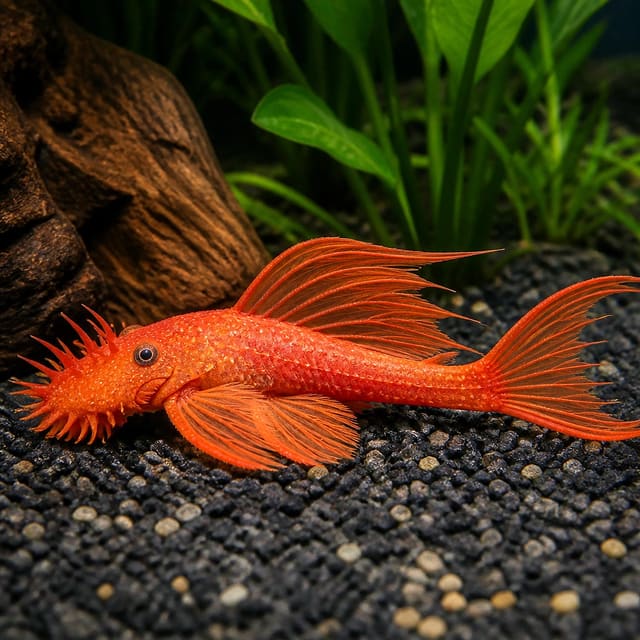
Bristlenose Pleco (Ancistrus sp.)
22–27°C · pH 6–8
From £3.51Some sizes on sale

The Yellowtail Redtail Catfish (Phractocephalus hemioliopterus) is a long-whiskered catfish from the Amazon and Orinoco basins that reaches 135 cm. It suits advanced keepers with public-aquarium-scale facilities: plan for one fish, at least 10,368 litres, 22–26°C and pH 6.0–6.8. Sold individually in dispatch sizes from 3.5–5 cm to 8–10 cm.
Adult size is the maximum length this species reaches at full maturity (scientific sources). The livestock you receive will be younger and smaller — pick a size above for the actual shipping size. Product-photo provenance and any image-specific limitations are stated on the listing.
Phractocephalus hemioliopterus
The Yellowtail Redtail Catfish (Phractocephalus hemioliopterus) is a long-whiskered catfish from the Amazon and Orinoco basins that reaches 135 cm. It suits advanced keepers with public-aquarium-scale facilities: plan for one fish, at least 10,368 litres, 22–26°C and pH 6.0–6.8. Sold individually in dispatch sizes from 3.5–5 cm to 8–10 cm.
Adult size is the maximum length this species reaches at full maturity (scientific sources). The livestock you receive will be younger and smaller — pick a size above for the actual shipping size. Product-photo provenance and any image-specific limitations are stated on the listing.
Maintain these water conditions for optimal health and vibrant colors
The Yellowtail Redtail Catfish (Phractocephalus hemioliopterus) is a freshwater, bottom-associated member of the long-whiskered catfish family Pimelodidae. It comes from South America’s Amazon and Orinoco river basins. FishBase records a maximum adult length of 135 cm. This is therefore a fish for an advanced keeper with a purpose-built, public-aquarium-scale system and a credible plan for its full adult size.
Its broad head and long barbels give it the familiar redtail catfish shape, but the decisive feature for care is scale. A small dispatch fish is still a member of a giant species. The aquarium, filtration, furnishings, feeding routine and compatibility plan must all be chosen for the adult rather than treated as upgrades to arrange later.
We classify this fish as advanced because the adult needs exceptional water volume, large-scale biological filtration, secure furnishings and tightly controlled stocking. It is not a suitable first community fish. Keepers comparing more manageable catfish can browse the catfish and plecos collection before committing to this species.
| Suits | Not suited to |
|---|---|
| Advanced keepers with a purpose-built lifelong facility | A standard home community aquarium |
| A system planned around a 135 cm adult | A temporary juvenile tank without the adult facility ready |
| Keepers able to provide at least 10,368 litres | Aquariums containing smaller fish |
| A plan centred on one redtail catfish | Casual mixed-catfish stocking |
Plan for a system around 360 cm long, 240 cm wide and 120 cm high, holding 10,368 litres. Seriously Fish treats those dimensions as an absolute minimum for a fully grown fish and warns that even this volume would not give it the cruising space it has in the wild. The requirement is therefore closer to a public aquarium exhibit than a conventional large home aquarium.
The footprint matters as much as the litre figure. A 360 × 240 cm base covers 8.64 square metres, giving the fish room to turn and move along the enclosure. A narrower vessel with a similar calculated volume would not reproduce the quoted dimensions. Confirm the internal dimensions, usable water volume, access routes and structural provision before treating any system as suitable.
Keep routine aquarium water at 22–26°C, pH 6.0–6.8 and 4–10 dGH. These targets are the overlap of FishBase’s recorded environment, the Seriously Fish species profile and OATA’s freshwater-catfish guidance. They keep routine values inside the species-level ranges while narrowing them with the UK group guidance. Ammonia and nitrite must remain at zero mg per litre.
If any of these commitments depends on a future move or an uncertain upgrade, postpone the fish until the full facility is ready.
One purchase supplies one Yellowtail Redtail Catfish in the size selected. The live size selector lists 3,5 - 5 cm, 5 - 6 cm and 8 - 10 cm. The size you select is the size supplied, not the adult size. Every selection still requires a lifelong plan for a fish reaching 135 cm.
Sex is guaranteed only when the selected option explicitly states male or female. This Yellowtail Redtail Catfish listing has no sex-guaranteed option.
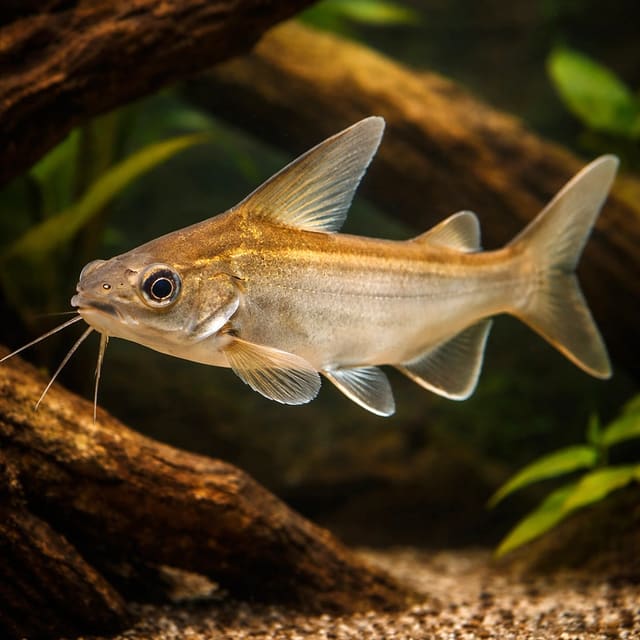
The gallery images are representative, based on reference photographs of this species, so colours can look slightly different from the live animal.
In nature, adults eat fish, crabs and fruit. Seriously Fish likewise describes an opportunistic predator that takes fish, invertebrates and fallen fruit, while also calling the species quite peaceful in general behaviour. These points belong together: a calm-looking fish may still treat smaller animals as food, so temperament cannot make a smaller companion safe.
This combination of adult size, space and workload is why the fish belongs with a small number of highly prepared keepers rather than in an ordinary predator aquarium.
Build the lifelong enclosure before relying on a juvenile holding arrangement. FishBase’s recorded adult maximum is 135 cm total length, which is the planning figure used throughout this care information. Seriously Fish separately records 134 cm standard length. Both figures describe an exceptionally large fish, and neither supports treating the smaller dispatch grades as long-term aquarium sizes.
The quoted adult enclosure is around 360 × 240 × 120 cm and 10,368 litres. Treat each dimension as functional space. The 360 cm length provides a movement path, the 240 cm width contributes turning room, and the 120 cm depth forms part of the required water volume. Seriously Fish still considers that enclosure unable to reproduce the wild cruising space of a fully grown animal, so it is a minimum planning point rather than a generous endpoint.
A weekly 25% water change on 10,368 litres is approximately 2,592 litres. This scale means water storage, conditioning and safe drainage need to be engineered into the facility rather than handled with a few household buckets.
Never release an unwanted giant fish into rivers or ponds. Seriously Fish notes that public aquaria may already receive more donated adults than they can accept, so rehoming cannot replace a lifelong plan made before purchase.
Keep the aquarium at 22–26°C, pH 6.0–6.8 and 4–10 dGH. FishBase records 20–26°C, pH 5.5–6.8 and hardness up to 10 dGH for the species’ environment; Seriously Fish gives 21–26°C, pH 6.0–7.5 and 2–12 dGH for aquarium care. OATA’s freshwater-catfish sheet gives 22–27°C, pH 6.0–8.0 and 4–18 dGH for the group. The recommended targets are the overlap of all three.
Keep ammonia and nitrite at zero mg per litre. OATA also says nitrate should not exceed 20 mg per litre above the normal tap-water level. These waste values are active management limits: test them rather than judging water quality from clarity or smell.
| Measured result | Decision |
|---|---|
| Temperature below 22°C or above 26°C | Restore the aquarium to the 22–26°C target before introducing the fish. |
| pH below 6.0 or above 6.8 | Do not treat it as matching this routine range. |
| Hardness below 4 or above 10 dGH | Resolve the mismatch before the fish arrives. |
| Any measurable ammonia or nitrite | Stop adding fish and restore both readings to zero. |
| Nitrate more than 20 mg/l above tap water | Correct water quality through the established maintenance routine. |
Use the water chemistry guide to understand each test and record the results with dates. The water matcher can then compare those measured values with the stated range. Base the decision on actual aquarium readings, not an estimate drawn from the local water area.
Test the replacement water as well as the enclosure when results change unexpectedly. The purpose is to distinguish a source-water difference from waste accumulating inside the aquarium, allowing the correct part of the system to be addressed.
Use a well-established, efficient biological filter and keep it running as an essential part of the enclosure. The RSPCA explains that fish release toxic ammonia; a working biological filter supports bacteria that convert ammonia to nitrite and then to the safer nitrate. OATA also requires a filter in every catfish aquarium and warns that stocking too quickly can overwhelm the bacterial population.
Prepare the system before the fish arrives. The first tropical aquarium guide explains how to prepare and mature a filter before livestock is introduced. For this species, maturity is only the first condition: the filter must also be appropriate for a fish that becomes exceptionally large and eats substantial meaty foods.
Increase aquarium stocking only slowly because beneficial bacteria must increase when more fish and more food are added. In this enclosure, however, the compatibility plan already centres on one redtail catfish. The slow-stocking rule is not permission to add unsuitable companions; it protects water quality only after every animal has passed the separate space, predation and territorial checks.
Give filtration equipment enough access for inspection and cleaning. A blocked or inaccessible filter cannot be maintained reliably, while furnishings placed across intakes or access points make routine work harder. Arrange the permanent system so the keeper can check flow, remove waste and reach filter media without dismantling the animal’s main swimming space.
Keep the adult enclosure open, secure and simple. Seriously Fish says décor is not essential for an adult when the lighting is fairly dim. Large pieces of bogwood, beech branches or smooth rocks can be used, but they must be too heavy for the fish to move or secured in place. Preserve plenty of open swimming space around every item.
Juveniles can use hiding places formed by bogwood, tangles of roots and branches, rock piles or plastic pipe of a suitable bore. Choose any pipe or opening around the fish’s current body size so it can enter and leave freely. Reassess these shelters as the animal grows; an item that no longer functions safely as a shelter should not remain simply because the fish used it when smaller.
| Base choice | Practical consequence |
|---|---|
| Ordinary aquarium gravel | Avoid it because gravel can be swallowed or become caught in the delicate gills. |
| Sand | It can be used, but expect the fish to move it rather than leave it evenly arranged. |
| Large smooth pebbles | Seriously Fish presents these as a better substrate option. |
| Bare base | This is also an option and makes cleaning easier. |
Test the furnishing plan against the adult rather than the dispatch fish. A lightweight ornament that appears stable beside a small juvenile does not satisfy the instruction that adult furnishings be too heavy to move or securely fixed. Likewise, a decorative layout that occupies most of the floor conflicts with the need for open swimming space.
Use smooth materials where the profile names them and position branches or wood so routine siphoning remains possible. The aim is not to create a crowded display. It is to provide shelter while useful, maintain an unobstructed route through the enclosure and prevent movable objects from becoming hazards as the fish gains size.
Plants are not required by the species profile. If any are included, do not let them conceal areas where solid waste collects or interfere with access to the biological filter. Cleaning, security and open space remain the governing decisions for this giant catfish.
Feed a varied selection of appropriate meaty foods rather than relying on one favourite item. Seriously Fish recommends prawns, mussels, cockle, lancefish and earthworms in captivity. Larger specimens can also take whole fillets of white fish. FishBase records adults eating fish, crabs and fruit in nature, confirming that this is an opportunistic feeder rather than a species with one narrow wild food.
For a juvenile, feed every other day. Reduce meal frequency as the fish grows; an adult needs only a single meal per week at most. Offer a controlled meal and take care not to overfeed. Seriously Fish warns that predatory fish can become overweight when given excessive high-protein food, leading to long-term health problems.
Do not feed beef heart, chicken or other mammal meat. Seriously Fish explains that some of the lipids in these meats cannot be metabolised properly by the fish and can contribute to excess fat deposits. This is a direct food exclusion, not merely a preference for another protein.
Variety also prevents the fish becoming so accustomed to one food that it refuses alternatives. If interest narrows to a single item, restore rotation among the named foods instead of increasing that preferred food’s frequency. A varied schedule protects both nutrition and feeding flexibility.
Link feeding decisions to water testing. OATA warns that overfeeding leaves uneaten food to break down and release toxic waste. If ammonia or nitrite appears, do not conceal the problem with more food or additional animals. Restore water quality and review the portion offered, the waste-removal routine and biological filtration.
At least once every week, change 25% of the aquarium water. On the quoted 10,368-litre adult system, that is approximately 2,592 litres, so the facility needs a safe method for preparing, conditioning, moving and draining a very large volume. Schedule a 25% change at least weekly.
Treat replacement tap water with conditioner to remove harmful chlorine or chloramine before adding it to the aquarium. Use a siphon or suitable large-system equivalent to remove solid waste from the base during the water change. A bare base or large smooth pebbles can make accumulated waste easier to locate than ordinary gravel.
Do not run filter media under the tap. OATA warns that chlorine or chloramine can kill the beneficial bacterial population established in the media. Light rinsing in removed aquarium water reduces the amount of bacteria lost while allowing debris to be cleared.
Record the test results and work completed. A written sequence makes trends visible: a nitrate rise, recurring blockage or detectable ammonia can then be recognised as a developing system problem rather than an isolated reading. Respond before adding any animal or increasing feeding.
Inspect the fish during routine work without turning observation into handling. OATA advises watching for changes in swimming, colour, temperament, breathing, appearance, body condition and feeding. If a change appears, test water quality first and contact us for further guidance on the fish’s health.
The Tropical Fish Co delivery and Live Arrival Guarantee policy says fish are hand-packed in pure oxygen inside an insulated poly box, with a heat pack when the weather calls for it, and carried by a licensed live-animal courier. Someone must be at the address to receive the parcel because live fish cannot be left unattended.
Film every delivery from the sealed parcel onward. If a Live Arrival Guarantee claim is needed, contact us on the day the fish arrives with the order number and continuous unboxing video showing the sealed parcel, its opening and the fish still inside the sealed bag.
Before introduction, OATA advises confirming that ammonia and nitrite are zero. The aquarium must already meet 22–26°C, pH 6.0–6.8 and 4–10 dGH, with a mature biological filter running. These checks belong before release because acclimatisation cannot compensate for unsuitable water or an immature filter.
After introduction, look for clear eyes, undamaged fins, intact skin, appropriate swimming and normal interest in food. Watch for altered breathing, unusual surface hanging, prolonged bottom sitting, erratic swimming, darker or paler colour, increased hiding, white spots, fluffy growths, damaged fins or scales, changing body condition and reduced feeding. When any change occurs, test the water values first.
Continue the established schedule through the first month: test at least weekly, change 25% at least weekly and check the filter for blockages. Do not use the fish’s arrival as a reason to add more livestock quickly.
Avoid smaller fish. Seriously Fish says this catfish will readily eat them and notes that even many fish commonly regarded as “tankbusters” remain too small to be safe. A peaceful manner does not cancel predatory feeding behaviour.
Plan to keep one redtail catfish. It is territorial towards its own kind and other large Pimelodid catfish, so it should be the only fish of this type unless space truly is no issue. Given that one adult already needs a system approaching public aquarium scale, this exception demands more than simply meeting the single-fish minimum.
| Check | Required decision |
|---|---|
| Could the companion be treated as smaller prey? | Avoid the combination. |
| Is it another redtail catfish or large Pimelodid? | Plan without it unless space truly is no issue. |
| Is the proposed system only large enough for one adult? | Do not add a companion. |
| Do its water requirements fall outside 22–26°C, pH 6.0–6.8 or 4–10 dGH? | Reject the match. |
| Would furnishings or another fish reduce essential cruising room? | Keep the space open for the redtail catfish. |
Assess invertebrates as potential food because the natural and captive diets include crabs and other invertebrates. That feeding biology is a caution, not a universal list of invertebrates to avoid. The decision still requires the proposed animal’s adult dimensions, behaviour and ability to coexist in the same enormous enclosure.
Do not use current size as the compatibility test. A fish that appears substantial beside a small dispatch catfish may remain far below the redtail catfish’s 135 cm adult maximum. Compare planned adult animals and the finished enclosure, not the individuals seen on the day of introduction.
Stocking slowly protects the biological filter, but it does not turn an unsafe species combination into a safe one. Complete the predation, territory, water and space assessment first; only then apply OATA’s instruction to increase aquarium population slowly.
Seriously Fish says similarly sized species can be kept with a redtail catfish in suitable surroundings, but doing so needs an aquarium approaching public-aquarium size. Possible companions named in that profile are doradid catfish such as Oxydoras niger and Pterodoras granulosus. Big characins and cyprinids are another possibility only when the aquarium is also very deep.
These are conditional possibilities, not universal tank mates. Each proposed animal must still fit the shared water range, remain appropriate at adult size and leave enough space for normal movement. The quoted 10,368-litre enclosure is already the absolute minimum planning point for one fully grown redtail catfish, so it must not automatically be treated as a mixed-species capacity.
Observe behaviour after any carefully screened introduction. OATA identifies changes in aggression, hiding, swimming, breathing, colour, body condition and feeding as warning signs. Test ammonia and nitrite when behaviour changes because water-quality stress and compatibility problems require different responses.
Do not add a second fish merely to make the display appear busier. This species has no supported shoaling requirement, and its territorial behaviour points towards a one-redtail plan. Open water, secure furnishings and manageable biological loading are more important than filling the enclosure with additional animals.
The honest uncertainty in a mixed exhibit is that named possibilities still depend on the dimensions and inhabitants of the actual facility. A match is credible only after the adult fish, water range, territory and usable swimming space all pass together.
FishBase records an adult maximum of 135 cm total length. Plan the permanent enclosure around that figure rather than the fish’s dispatch size.
Plan for at least 10,368 litres in a system around 360 × 240 × 120 cm. Seriously Fish treats those dimensions as an absolute minimum and says even that does not provide the cruising room it would have in the wild.
Plan on one fish. Seriously Fish says it is territorial towards its own kind and other large Pimelodids and should be the only fish of this type unless space truly is no issue.
This fish is an advanced retailer classification because it reaches 135 cm and needs a purpose-built enclosure of at least 10,368 litres, powerful biological filtration and lifelong large-system maintenance.
Feed this fish a varied rotation of prawns, mussels, cockle, lancefish and earthworms; larger specimens can take white-fish fillets. Feed juveniles every other day, reduce frequency with growth and give an adult no more than one meal per week.
Keep this fish at 22–26°C, pH 6.0–6.8 and 4–10 dGH. These targets are the overlap of FishBase’s recorded environment, the Seriously Fish species profile and OATA’s freshwater-catfish guidance.
Treat it as a peaceful predator: Seriously Fish calls it quite peaceful, but it will eat smaller fish and is territorial towards its own kind and other large Pimelodids. Screen companions for predation and territory rather than relying on a general community label.
Possible companions named by Seriously Fish are similarly sized species, including Oxydoras niger and Pterodoras granulosus, in public-aquarium-scale surroundings. Big characins and cyprinids are possibilities only when the aquarium is also very deep; avoid smaller fish.
Tropical Fish Co’s policy says the fish is hand-packed in pure oxygen inside an insulated poly box, with a heat pack when the weather calls for it, and carried by a licensed live-animal courier. Receive the parcel in person, film continuously from the sealed box and float the bag for 20–30 minutes before release.
No reviews for this item yet. Bought one? Honest reviews only, good or bad.
What customers say about ordering from us
I have a small group of long finned mountain minnows. So was delighted to be able to order ten of this variety to increase the genetics in my tank . The ones I recieved are healthy but it’s to early to give a verdict on wether they are of a long finned type since they are small currently.
Gordon Walker · 23 Sept 2026
100% success travel and "installation". Pleased with quality of purchase. The Siamese fighter a bit "shy" so have not yet seen him at his best yet but looking good. Happy customer. GG
George E Garratt · 21 Sept 2026
Reviews of our shop, collected by Judge.me, an independent third-party review collector. Newest first.