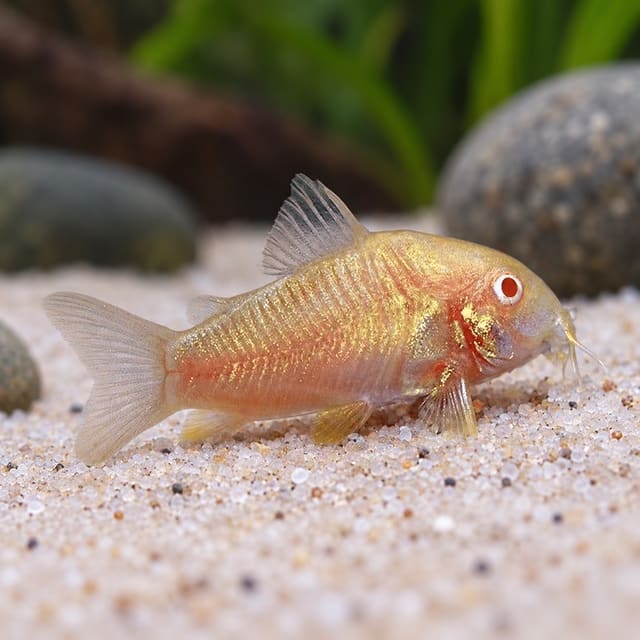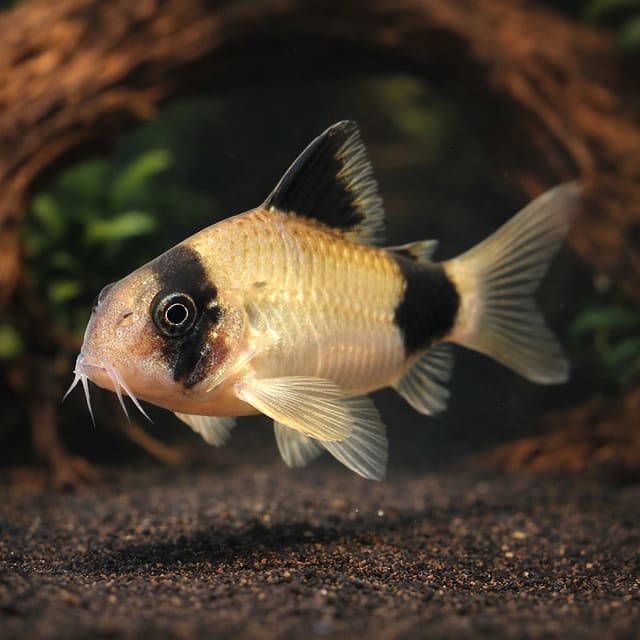
Panda Cory Catfish (Corydoras panda)
22–25°C · pH 6–7.4
£7.29

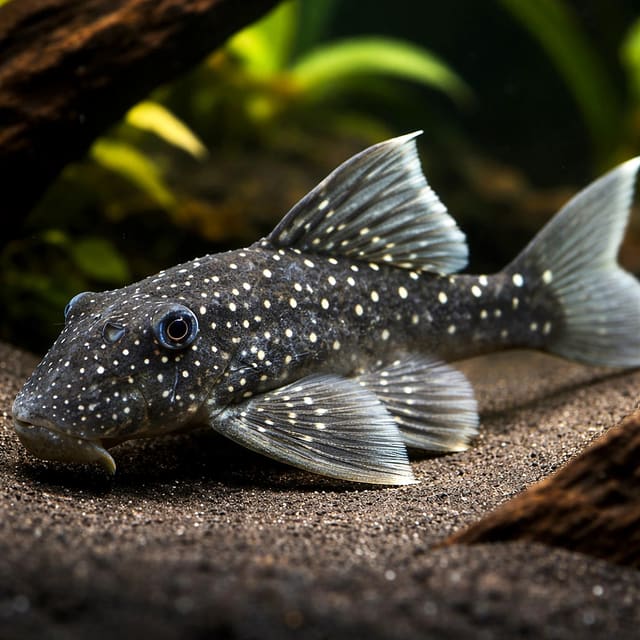
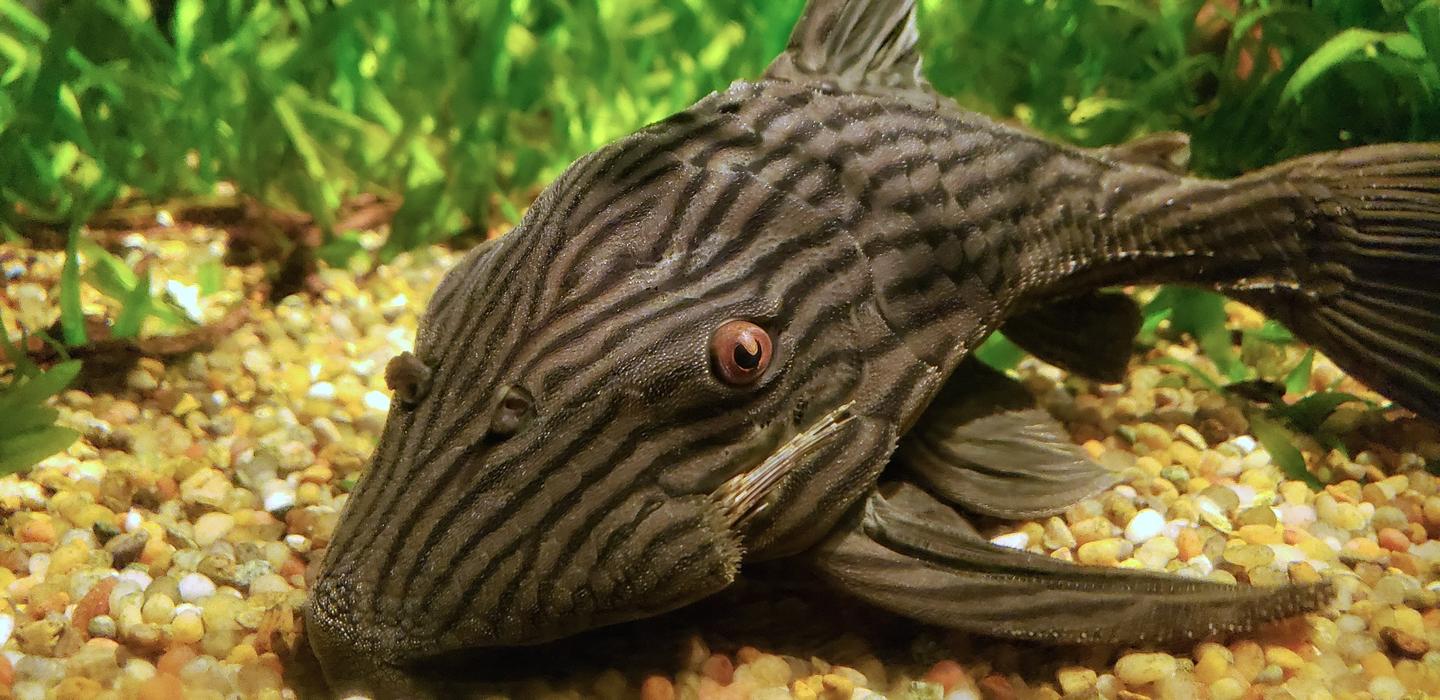
The Banded Rubbernose Catfish (Chaetostoma thomsoni) is a suckermouth armoured catfish endemic to Colombian river drainages that reaches 15.1 cm standard length. It suits a mature filtered aquarium; FishBase's species record and OATA's catfish guidance overlap at 22°C, while OATA gives pH 6.0–8.0 and 4–18°dH. Sold individually at approximately 5 cm.
Adult size is the maximum length this species reaches at full maturity (scientific sources). The livestock you receive will be younger and smaller. Product-photo provenance and any image-specific limitations are stated on the listing.
Chaetostoma thomsoni
The Banded Rubbernose Catfish (Chaetostoma thomsoni) is a suckermouth armoured catfish endemic to Colombian river drainages that reaches 15.1 cm standard length. It suits a mature filtered aquarium; FishBase's species record and OATA's catfish guidance overlap at 22°C, while OATA gives pH 6.0–8.0 and 4–18°dH. Sold individually at approximately 5 cm.
Adult size is the maximum length this species reaches at full maturity (scientific sources). The livestock you receive will be younger and smaller. Product-photo provenance and any image-specific limitations are stated on the listing.
‘Pleco’ is a loose aquarium-trade label, not one species or one care sheet. Before buying, confirm the scientific name or defensible L-number, adult size and measurement method, required footprint, temperature and water, diet, social plan and source. No universal pleco tank size, menu or algae result is honest.
Maintain these water conditions for optimal health and vibrant colors
The Banded Rubbernose Catfish (Chaetostoma thomsoni) is a freshwater, bottom-oriented member of Loricariidae, the suckermouth armoured catfish family. It is endemic to Colombia, where a Wikipedia account of its natural history places it in the Magdalena, Sinú, Cesar and Cauca river drainages. This is a fish for a keeper prepared to run a mature, filtered aquarium, hold a steady 22°C and plan the layout around an adult measuring 15.1 cm standard length.
FishBase records a maximum length of 15.1 cm standard length and lists the species as freshwater, demersal and tropical. “Demersal” places its activity around the lower part of its environment, so aquarium planning must give proper attention to the usable base, shelters and access to food rather than judging space from water volume alone. Its family, the suckermouth armoured catfishes, is named for the sucker mouth and armoured body.
Keep the aquarium at 22°C. FishBase records 20–22°C for the species in its wild environment, while OATA's freshwater-catfish guidance gives 22–27°C for the wider group. Both ranges include 22°C, which makes it the practical aquarium target. Stability matters: measure the aquarium rather than relying on the heater dial, and investigate a repeated movement away from the target.
For the remaining water values, keep pH at 6.0–8.0 and general hardness at 4–18°dH. These are OATA's broad catfish ranges. They are useful operating boundaries when paired with the tighter 22°C temperature instruction, regular testing and a mature biological filter. Ammonia and nitrite must remain at zero mg/l, while nitrate should not rise more than 20 mg/l above the normal level in the tap water used for the aquarium.
Each purchase supplies one live fish, dispatched at approximately 5 cm. That dispatch measurement describes the animal sent, not its eventual size. Plan every permanent choice around the recorded 15.1 cm standard length: aquarium footprint, shelter entrances, feeding access and the adult sizes of other inhabitants all need to work after this catfish grows.
Sex is guaranteed only when the selected option explicitly states male or female. This Chaetostoma thomsoni listing has no sex-guaranteed option.
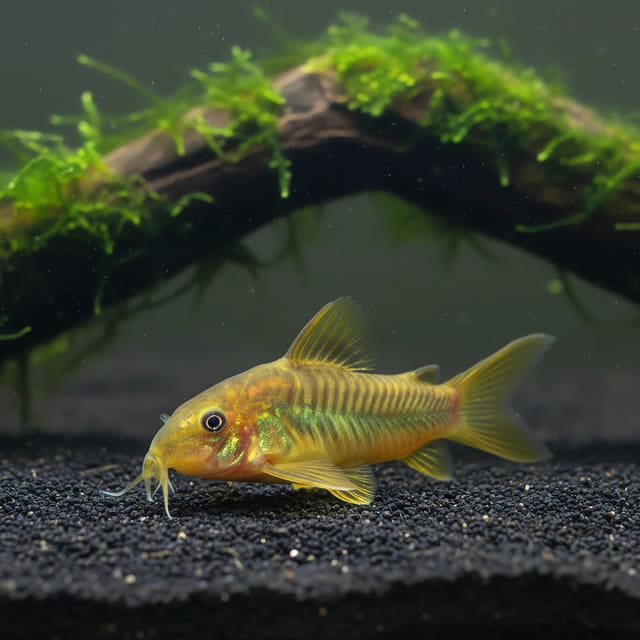
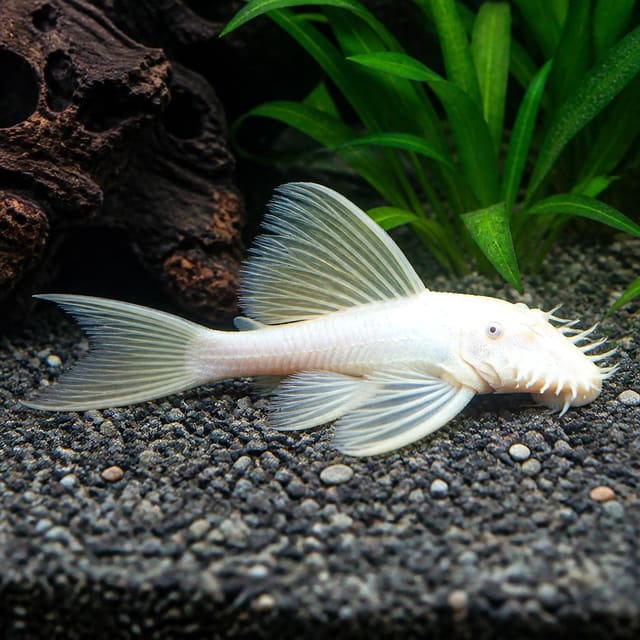
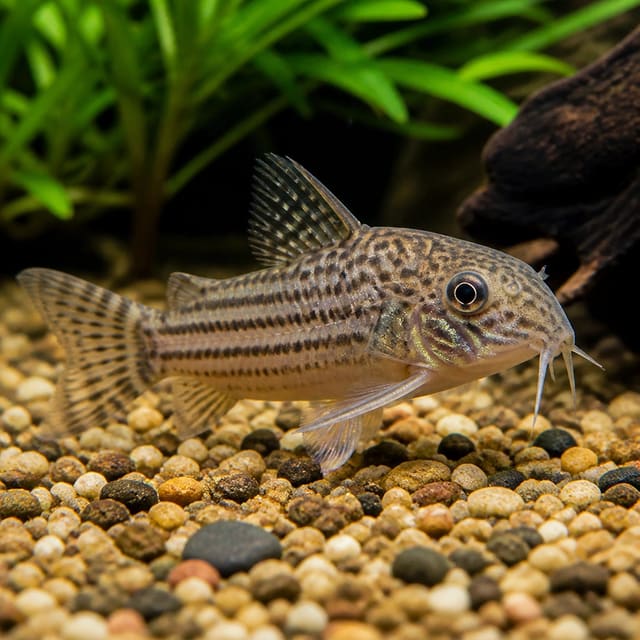
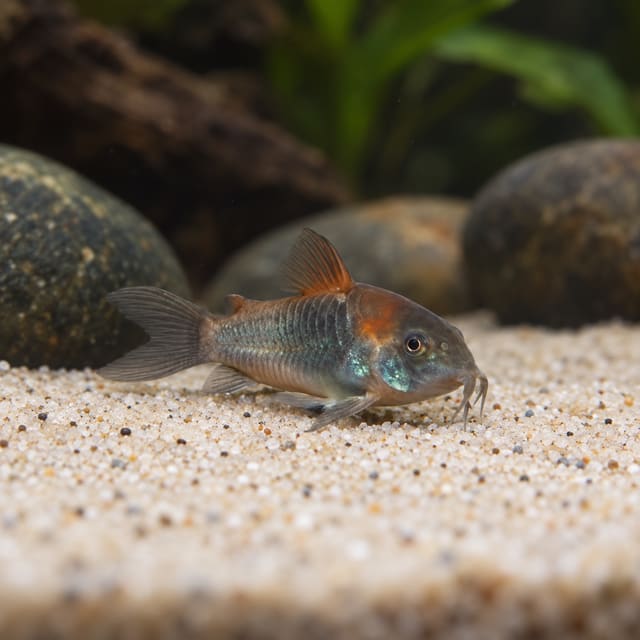
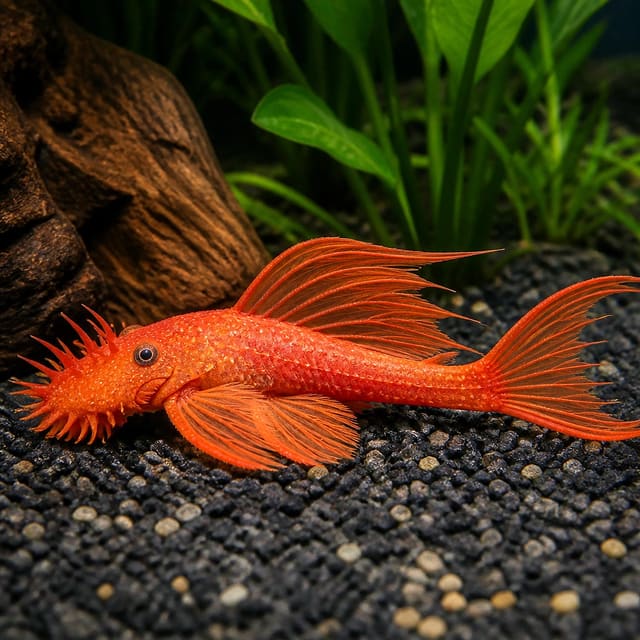
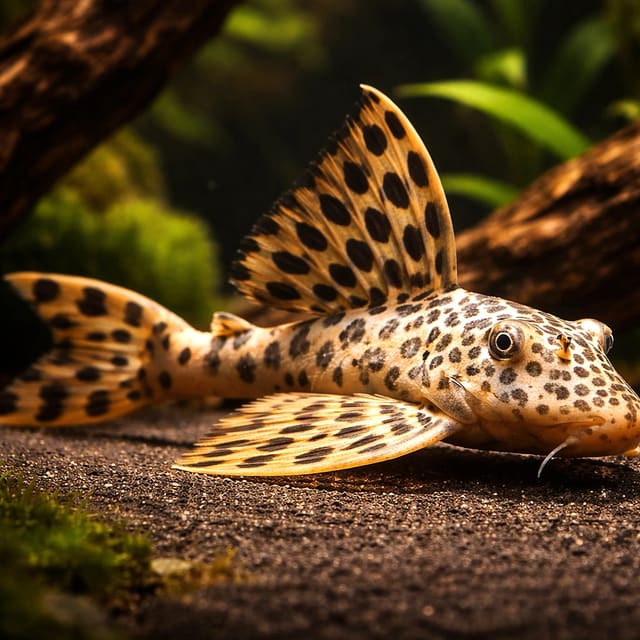
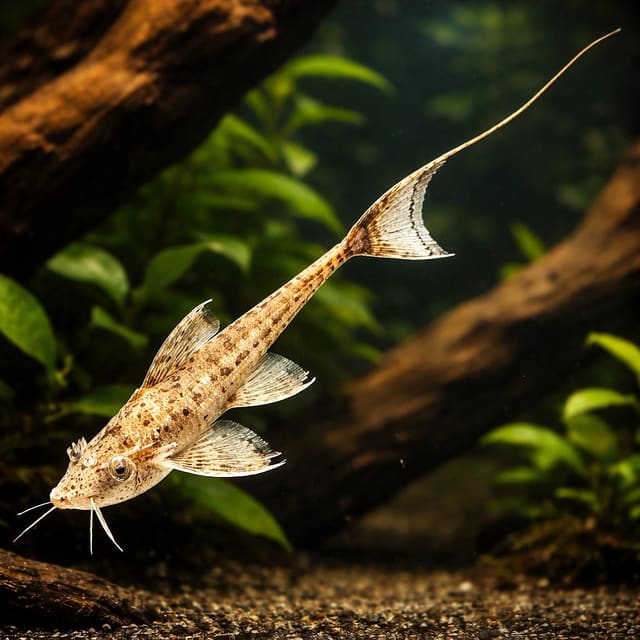
Some gallery images have been digitally enhanced to improve image quality. They show the listed type of animal rather than guaranteeing the exact markings of the individual supplied, so natural colour and pattern can vary.
This fish belongs in a mature freshwater aquarium with a properly maintained biological filter. It should not be treated as a substitute for cleaning, testing or water changes. Its place near the bottom means that a seemingly open aquarium can still be crowded if ornaments and other bottom dwellers occupy the same usable area. Map the lower footprint before choosing companions and leave direct routes between resting places and feeding areas.
| Suits | Not suited to |
|---|---|
| A mature, biologically filtered freshwater aquarium | An unfiltered or newly established aquarium |
| A system that can remain at 22°C | A system that cannot hold 22°C |
| A keeper planning for 15.1 cm standard length | A layout chosen around the 5 cm dispatch measurement |
| A carefully assessed community | Automatic mixing based only on the word “pleco” |
| Weekly testing and partial water changes | Aquariums maintained only when a problem becomes visible |
Browse the catfish and pleco collection when comparing identities, but assess each candidate by its own adult size and water requirements. Catfish cover a very wide range of sizes and behaviours; a shared family or trade label is not a compatibility decision.
Plan for an adult measuring 15.1 cm standard length. The approximately 5 cm dispatch measurement is useful for preparing the immediate shelter and checking that filter intakes are secure, but it must not set the permanent space allowance. Growth changes how much base area the fish occupies, how easily it reaches food and how much waste the filter must process.
OATA recommends at least 80 litres for the smaller pleco species and says much larger aquariums will be needed for bigger species, so treat 80 litres as the lowest starting point for a fish that reaches 15.1 cm standard length and increase the volume whenever the usable base, stocking load or filter capacity makes that necessary.
Volume is only the first check. Compare two aquariums of equal capacity: a layout with a clear lower footprint, several accessible shelters and an appropriately sized filter may serve a bottom-oriented fish better than a tall layout whose base is crowded with ornaments. Measure the internal footprint after décor is installed, not from the external glass dimensions or the manufacturer's nominal capacity.
If the fish must squeeze past décor, compete at every feeding point or remain confined to one exposed patch, increase usable space or simplify the layout. Do not wait for the nominal volume to look crowded from the front; lower-level congestion can develop well before the upper water column appears fully stocked.
Keep the aquarium at 22°C, pH 6.0–8.0 and general hardness 4–18°dH. The temperature is the shared point between FishBase's 20–22°C wild-environment record for this species and OATA's 22–27°C catfish range. Use those values as limits for a stable aquarium, not as an invitation to move rapidly from one end of a range to the other.
Test ammonia, nitrite, nitrate, pH and temperature at least weekly. Ammonia and nitrite must read zero mg/l. Keep nitrate from exceeding 20 mg/l above its normal concentration in the tap water used for replacement. General hardness should remain within 4–18°dH, and OATA also gives carbonate hardness of 3–15°dKH for the group.
| Measurement | Action |
|---|---|
| Temperature | Hold 22°C and investigate a repeated drift |
| pH | Keep within 6.0–8.0 without abrupt adjustment |
| General hardness | Keep within 4–18°dH |
| Ammonia | Maintain zero mg/l |
| Nitrite | Maintain zero mg/l |
| Nitrate | Keep within 20 mg/l above the tap-water baseline |
Use our aquarium water chemistry guide to understand what each test measures, then enter measured values into the water matcher when comparing the aquarium with these boundaries. Record results rather than relying on memory. A simple weekly log reveals gradual movement before it becomes a sudden husbandry problem.
When a result is outside the boundary, confirm it with a fresh test and inspect the aquarium as a whole. Check for uneaten food, trapped waste, reduced filter flow or an increase in stocking and feeding. Correct the cause while using conditioned replacement water for the routine partial change. Avoid chasing pH or hardness with repeated rapid additions, because a steady value inside the stated range is the practical goal.
Run this fish only in a well-established, maintained and appropriately sized filter system. The RSPCA explains biological filtration as the process in which beneficial bacteria convert toxic ammonia into nitrite and then into the safer nitrate. The filter is therefore life support, not simply a device for making the water look clear.
Prepare the aquarium before the animal arrives. Our first tropical aquarium guide covers the practical work of setting up and maturing a system. Confirm zero mg/l ammonia and zero mg/l nitrite before adding the fish. Clear-looking water is not a substitute for those test results.
OATA describes rapid stocking as a cause of new tank syndrome: waste production rises faster than the beneficial bacteria can respond, allowing ammonia or nitrite to reach harmful levels. After introducing this catfish, keep the remainder of the stocking plan gradual. Test more closely whenever feeding increases or another fish is added.
A worked check is simple. If ammonia and nitrite were zero before introduction but either becomes detectable afterwards, stop further additions, inspect feeding and filter performance, and carry out the appropriate conditioned-water maintenance. Do not respond by adding more livestock or food. The test result indicates that waste processing and waste production are temporarily out of balance.
Mechanical cleanliness and biological maturity are different. Remove accumulated solid waste from accessible gravel, but preserve the filter bacteria by avoiding aggressive media replacement or washing. The aim is a system that processes dissolved waste while allowing routine removal of solids before they break down.
Arrange the aquarium for a demersal armoured catfish. FishBase places Chaetostoma thomsoni in the lower part of the freshwater environment, while OATA advises wood, pots or caves as shelter for many catfish. Use those elements to create protected resting places without consuming the whole base.
Test every shelter against the 15.1 cm adult planning length. An entrance that suits a newly dispatched fish may become restrictive later. Choose structures that can be inspected and repositioned rather than making the lower layout impossible to maintain. Stable décor is essential: it should not shift when the substrate is siphoned or when the fish moves underneath it.
Plants can provide cover, but they do not replace a biological filter or regular water testing. Position them so they do not hide uneaten food or prevent access to waste. If a dense planting scheme leaves no visible feeding point, reserve a small open area where sinking food can be placed and observed.
Watch how the fish uses the completed layout. Regular access to shelter, unobstructed movement and a reliable feeding place show that the base is functioning as intended. Persistent exclusion from food or confinement to one corner calls for a layout change. Remove an obstruction, add visual separation or redistribute shelter rather than adding more décor automatically.
The best lower-level design is not the one with the largest number of caves. It is the one that balances security, usable floor area, maintenance access and direct feeding routes for the adult fish.
Feed an appropriate sinking food once a day, offering only what the fish can consume within a few minutes. OATA's catfish guidance notes that dietary needs vary widely and uses plecos as an example of herbivorous catfish. For this animal, a complete sinking food formulated for herbivorous plecos is the practical starting point. Select a product whose directions match the fish's size and reduce the portion whenever food remains.
Do not expect the fish to live on leftovers. OATA specifically warns that the scavenger reputation of catfish does not remove the need for deliberate feeding. Place food where it reaches the lower level and where you can see whether this fish gains access. Other inhabitants eating at the surface does not show that a bottom-dwelling catfish has received a meal.
This method scales better than a fixed tablet count because food sizes and formulations differ. It also responds to changing appetite. The correct portion is the smallest amount that is consumed within the stated period without leaving fragments to decay among wood, plants or gravel.
Uneaten food is a water-quality decision as well as a feeding decision. It breaks down and adds waste that the filter must process. If nitrate rises, ammonia or nitrite appears, or debris accumulates around the feeding point, review the portion before assuming the filter needs replacement. A larger filter does not make chronic overfeeding harmless.
Observe the feeding place rather than dropping food and leaving immediately. If faster companions intercept every portion, use a second location or reassess the community. Reduced interest in food is also one of OATA's warning signs. Test the water and compare the fish's behaviour and body condition with its normal pattern before changing the diet repeatedly.
Keep feeding purposeful: a suitable complete sinking diet, one measured daily meal and direct observation provide a clearer routine than relying on algae, scraps or an unseen food source.
Before the parcel arrives, confirm that someone will be present to receive it. Check that the mature aquarium reads zero mg/l ammonia and zero mg/l nitrite, as OATA's freshwater-catfish guidance advises. Check the 22°C temperature target, make sure the filter is operating normally and leave the planned lower-level shelter accessible. Finish disruptive maintenance before arrival rather than rearranging the aquarium while the fish is being introduced.
These steps come from the Tropical Fish Co delivery and Live Arrival Guarantee policy. The same policy explains that fish are hand-bagged in pure oxygen, placed in an insulated poly box and packed with a heat pack when weather conditions call for one. Read the policy before dispatch so the person receiving the parcel understands the required actions and claim procedure.
OATA advises increasing aquarium populations slowly because the beneficial bacteria in the filter need to respond whenever fish numbers and feeding rise. Treat this introduction as a change in biological load even when the aquarium looks spacious. Delay further livestock additions while monitoring ammonia, nitrite, feeding and normal behaviour.
Use a short written checkpoint for the first week. Record temperature daily and test ammonia and nitrite more often than the normal weekly schedule if the aquarium has recently changed. Confirm that sinking food reaches the fish and remove any remainder. Inspect the filter for normal operation without carrying out unnecessary deep cleaning.
A quiet or concealed fish immediately after introduction still needs objective checks. Confirm water values, breathing rate, swimming or resting behaviour, colour, fin condition and food response. Compare observations from one day to the next instead of making several simultaneous changes. If a health concern develops, testing first gives a useful basis for the next action.
Change 25% of the water at least once every week. Treat the replacement water with a conditioner that removes chlorine or chloramine before it enters the aquarium. Use a siphon to remove solid waste from accessible gravel, and combine this maintenance with the weekly water tests rather than separating visual cleaning from water chemistry.
| Task | Required result |
|---|---|
| Partial water change | 25%, at least once every week |
| Ammonia test | Zero mg/l |
| Nitrite test | Zero mg/l |
| Nitrate comparison | No more than 20 mg/l above tap water |
| Temperature check | 22°C |
| Filter inspection | Operating without blockage |
Rinse filter media lightly in water removed from the aquarium when cleaning is needed; never run it under the tap. Avoid replacing all media at once, because the biological population housed there performs the conversion of ammonia and nitrite.
Know the animal's usual appearance and behaviour so that a change becomes obvious. OATA advises watching swimming behaviour, colour, temperament, breathing, appearance, body condition and interest in food. Warning signs include erratic swimming, hanging at the surface, colour turning darker or paler than normal, more aggression or hiding than normal, faster or slower gill movement, white spots, fluffy growths, loss of fins or scales, a change in body weight or reduced feeding.
If you see one of these changes, test ammonia, nitrite, nitrate, pH and temperature first. Inspect the filter and look for uneaten food or accumulated waste. Correct a measurable husbandry problem promptly, but do not use a disease treatment merely because a fish is hiding or misses one meal. Different causes can produce similar outward signs.
If a concerning change persists or the fish deteriorates after the water and equipment checks, correct any reading outside the stated limits, keep the weekly routine and record each day the test results, temperature, feeding response and the specific behaviour or appearance change.
A consistent weekly routine prevents maintenance from becoming a reaction to visible decline. It also creates a record of the aquarium's normal pattern, making gradual changes easier to identify.
Match every companion by adult size, temperature, pH, hardness, temperament, feeding method and use of the lower level. OATA says smaller plecos make excellent additions to community aquariums, but also stresses that catfish compatibility varies greatly. Treat community suitability as a species-by-species decision rather than assuming all peaceful-looking or bottom-dwelling fish will mix.
OATA says Corydoras, Otocinclus and smaller plecos make excellent additions to community aquariums. That is not an automatic endorsement of a particular pairing with Chaetostoma thomsoni. Each named candidate still needs water, social-group and space checks using its own requirements.
Do not infer suitability for shrimp, snails, fry, goldfish, cichlids, bettas or any other category from the words “algae eater” or “pleco”. A label does not describe predation risk, food competition or shared environmental needs. Put any other proposed animal through the same screen before adding it.
Before combining this catfish with a community, write down the aquarium volume and dimensions, measured water values, filter type, the number and adult size of every resident and the lower layout, and add a companion only when it passes every step of the screen above.
Compatibility must still be observed after a planned introduction. Test results can show that the water is suitable while behaviour reveals competition around shelter or food. Watch the lower level during feeding and at several other points in the day, then compare what each animal can access.
| If you see | Do this |
|---|---|
| One fish intercepts every sinking meal | Add a separated feeding point or revise the mix |
| Persistent displacement from shelter | Increase visual separation and reassess usable space |
| Chasing or injury | Separate the animals and reconsider compatibility |
| More hiding than normal | Check aggression, shelter access and water values |
| Ammonia or nitrite above zero | Pause further stocking and restore water quality |
Do not solve every interaction by adding another cave. More objects can reduce the usable base and create additional defended points. First identify whether the problem is lack of shelter, blocked movement, food competition or an incompatible temperament. Then change the element connected to the observed problem.
Set the number of Chaetostoma thomsoni by the lower-level space, so that every fish has its own shelter and a feeding point it can reach. OATA explains that catfish social needs range from shoaling species kept in groups to species that prefer to live alone. Adult footprint, individual feeding access, shelter use and the behaviour of existing residents must therefore determine the plan for this fish.
When considering another catfish, include its social requirement in the calculation. Corydoras, for example, are identified by OATA as shoaling fish that should be kept in groups of at least five. A proposal to add Corydoras is therefore not a decision about one extra bottom fish; it must account for the whole appropriate group, its space and the resulting biological load.
Review the community again as residents grow. A mix that leaves ample feeding room for juvenile fish may become crowded at adult size. The permanent benchmark for this catfish remains 15.1 cm standard length, not the approximately 5 cm dispatch measurement.
Chaetostoma thomsoni reaches 15.1 cm standard length according to FishBase. Plan the permanent aquarium, shelters and feeding access around that adult figure rather than the approximately 5 cm dispatch measurement.
OATA recommends at least 80 litres for the smaller pleco species and says much larger aquariums will be needed for bigger species. Treat 80 litres as the lowest starting point for a fish that reaches 15.1 cm standard length, and increase the volume when adult footprint, décor, other bottom dwellers or filter capacity require it.
Set the number by the space available rather than assuming either a shoal or a solitary setup, giving every fish its own shelter and a feeding point it can reach. OATA notes that some catfish require groups while others prefer to live alone; adult footprint, shelter and individual feeding access must decide the plan.
It suits a keeper able to maintain a mature filtered aquarium at 22°C, test water weekly, change 25% of the water at least once every week and keep ammonia and nitrite at zero mg/l.
Feed Chaetostoma thomsoni an appropriate complete sinking food once daily, using a herbivorous pleco formulation as the practical starting point from OATA's group guidance. Offer only what it eats within a few minutes, allowing up to 30 minutes if it is still grazing.
Keep Chaetostoma thomsoni at 22°C. FishBase's 20–22°C species record and OATA's 22–27°C catfish guidance meet at 22°C; OATA also gives pH 6.0–8.0 and hardness 4–18°dH.
Do not assume a fixed temperament from the pleco label. OATA says catfish compatibility varies widely, so screen companions for temperament and feeding competition, and separate animals if persistent chasing, displacement or injury occurs.
OATA names Corydoras, Otocinclus and smaller plecos as community examples at group level. For Chaetostoma thomsoni, match every candidate at 22°C and check adult size, social needs, lower-level space, feeding access and filter capacity before mixing.
It is hand-bagged in pure oxygen, placed in an insulated poly box and given a heat pack when weather calls for it, then carried by a tracked licensed live-animal courier. Be present to receive it and film every delivery from the sealed parcel onward before opening, floating or releasing: show the parcel sealed, being opened continuously and the fish still in the bag. Float the bag for 20–30 minutes and do not pour the bag water into the aquarium.
No reviews for this item yet. Bought one? Honest reviews only, good or bad.
What customers say about ordering from us
I have a small group of long finned mountain minnows. So was delighted to be able to order ten of this variety to increase the genetics in my tank . The ones I recieved are healthy but it’s to early to give a verdict on wether they are of a long finned type since they are small currently.
Gordon Walker · 23 Sept 2026
100% success travel and "installation". Pleased with quality of purchase. The Siamese fighter a bit "shy" so have not yet seen him at his best yet but looking good. Happy customer. GG
George E Garratt · 21 Sept 2026
Reviews of our shop, collected by Judge.me, an independent third-party review collector. Newest first.