Easy
Chocolate Whiptail Catfish (Rineloricaria lanceolata)
25–27°C · pH 6–8
£14.99
One unsexed 5-6 cm Gold Whiptail Catfish (Rineloricaria parva) per quantity. A peaceful bottom fish for a mature aquarium with sand, cover and targeted sinking food.
Adult size is the maximum length this species reaches at full maturity (scientific sources). The livestock you receive will be younger and smaller. Product-photo provenance and any image-specific limitations are stated on the listing.
Rineloricaria parva
One unsexed 5-6 cm Gold Whiptail Catfish (Rineloricaria parva) per quantity. A peaceful bottom fish for a mature aquarium with sand, cover and targeted sinking food.
Adult size is the maximum length this species reaches at full maturity (scientific sources). The livestock you receive will be younger and smaller. Product-photo provenance and any image-specific limitations are stated on the listing.
Maintain these water conditions for optimal health and vibrant colors
Gold Whiptail Catfish is the supplier's trade name for this gold-coloured form of Rineloricaria parva, a small, peaceful South American armoured catfish. Quantity one buys one unsexed fish at the supplier's current 5-6 cm size grade. It is not a pair, a guaranteed male or female, or a group. FishBase records the species to 11 cm standard length, so the dispatch size is juvenile and does not describe its finished adult length.
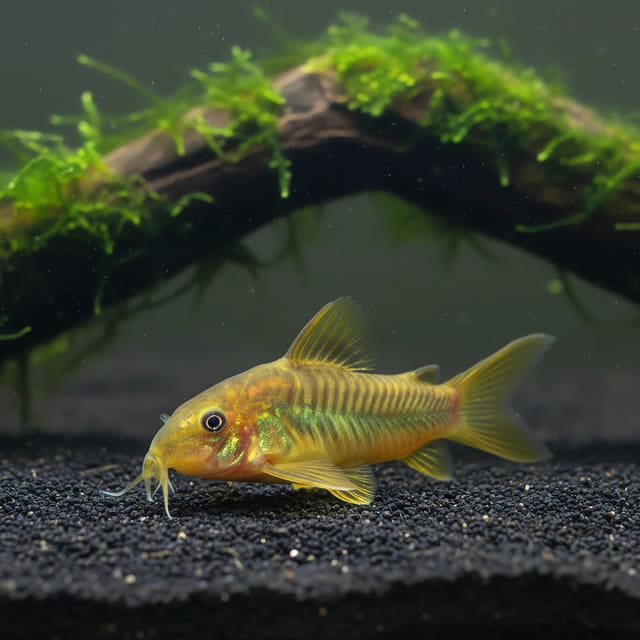
This is a quiet bottom-dwelling fish for a mature aquarium with sand, shaded cover, wood or caves, reliable filtration and calm companions. It browses aufwuchs and biofilm, but it is not a complete algae-control service and must receive its own varied sinking foods. The word "gold" is a trade colour description, not a separate scientific subspecies or a guarantee that every individual will have identical colour.
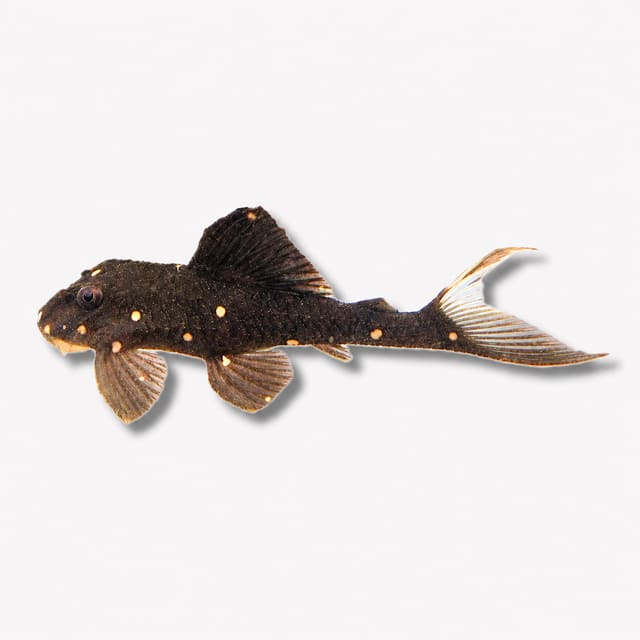
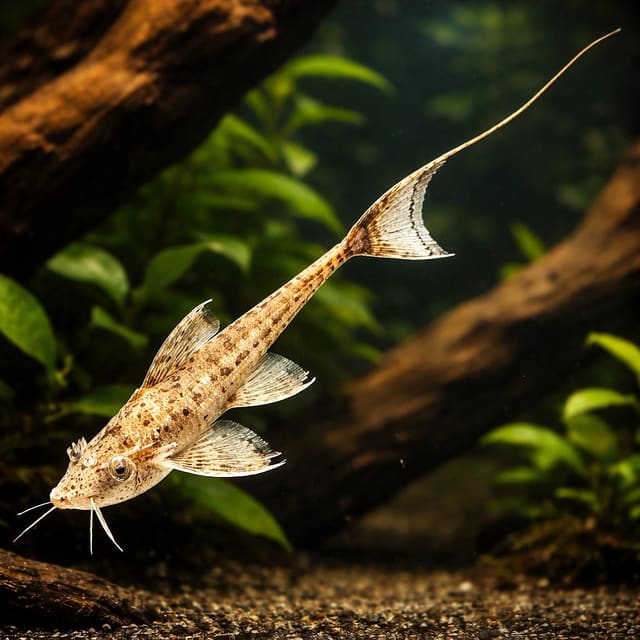
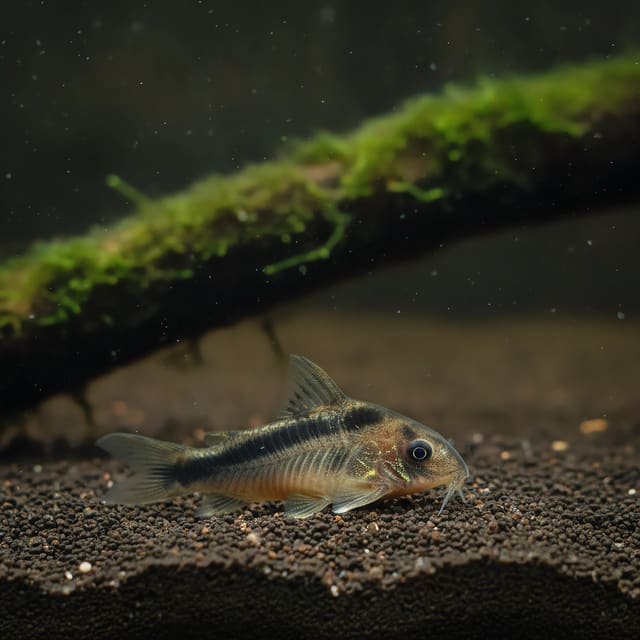
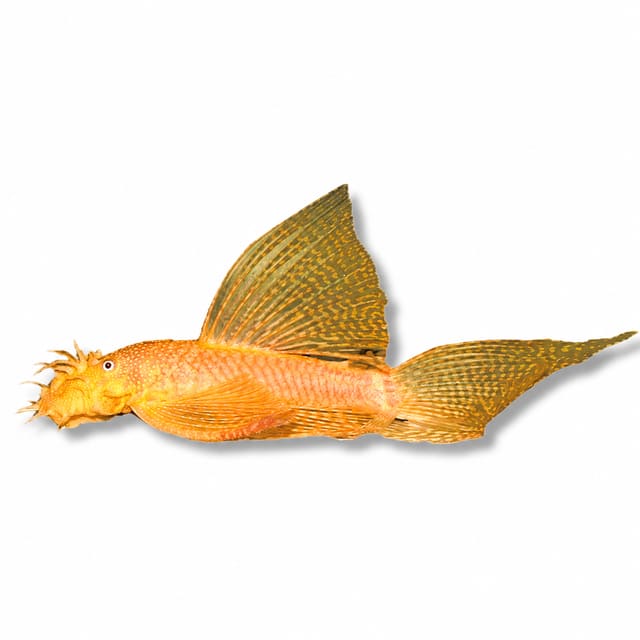
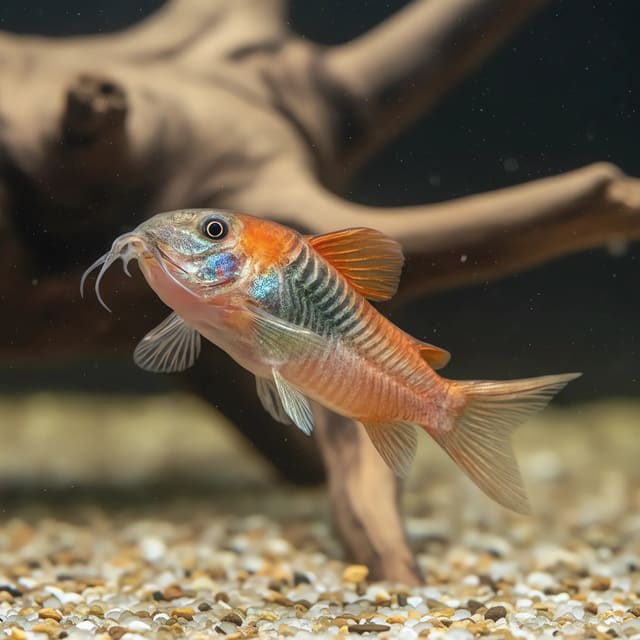
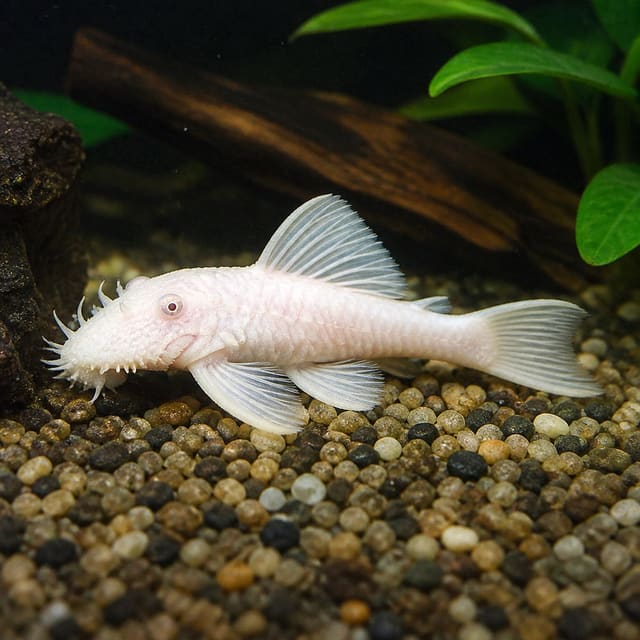
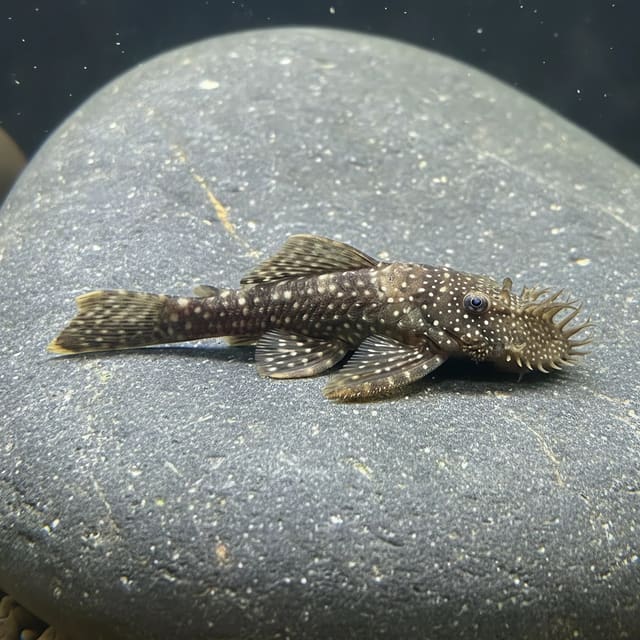
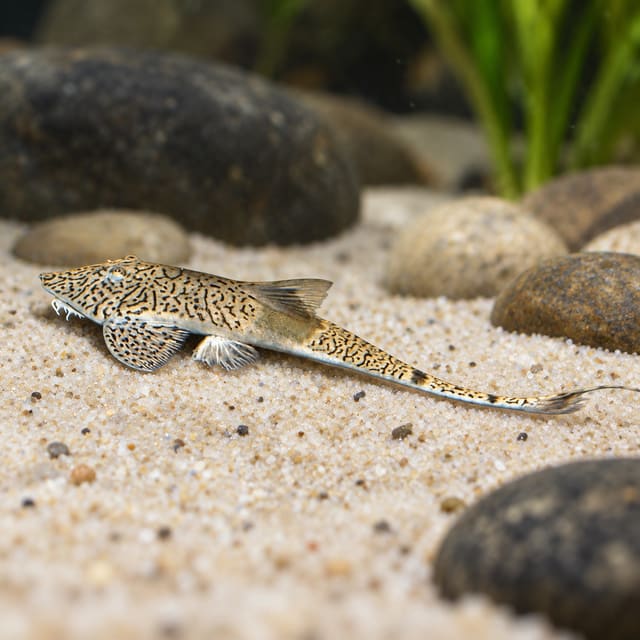
Gallery note: the current gallery contains an aquarium illustration rather than a verified photograph of the individual fish supplied. It should not be used to confirm fine species features, sex or exact colour. Natural fish vary, especially after transport and while settling.
| Care point | Practical guidance | Why it matters |
|---|---|---|
| Accepted name | Rineloricaria parva (Boulenger, 1895) | Hemiloricaria parva and Loricaria parva occur in older literature. |
| Sale unit | One unsexed fish, supplier size grade 5-6 cm | No pair, sex, locality or exact colour is guaranteed. |
| Adult planning size | Up to 11 cm standard length | Standard length excludes the tail fin; the whiptail profile can make the fish look longer overall. |
| Aquarium | A mature tank with at least a 75 cm by 30 cm footprint; around 100 litres is a comfortable community target | Usable floor area, feeding access and stable water matter more than a tall narrow volume. |
| Temperature | 20-25°C for routine care | This species is not a good choice for a permanently hot community aquarium. |
| pH and hardness | pH 6.0-7.5; about 2-15 dH | Match the established aquarium gradually and favour stability over repeated adjustment. |
| Water quality | 0 ammonia, 0 nitrite, controlled nitrate and good oxygenation | A mature biofilter and regular partial water changes protect a sedentary bottom fish from accumulated waste. |
| Temperament | Peaceful and easily outcompeted | Choose calm tank mates and verify that sinking food reaches it. |
| Diet | Omnivorous grazer: sinking foods, vegetable matter and small frozen or live invertebrate foods | Algae and leftovers alone are not a complete diet. |
| Care level | Moderate | The fish is peaceful, but it needs mature water, suitable food and protection from feeding competition. |
Rineloricaria parva is a valid species in the loricariid subfamily Loricariinae. Eschmeyer's Catalog of Fishes lists the current name as valid and records the original description as Loricaria parva. The alternative combination Hemiloricaria parva also appears in aquarium and scientific references, so those names can refer to the same species rather than three different care requirements.
FishBase describes the species as a freshwater, demersal fish from the Paraguay River basin and records a maximum of 11 cm standard length. A taxonomic revision of Rineloricaria from that basin also reports R. parva from the Paraguay basin in Brazil and Paraguay, the Parana River in Argentina and the Uruguay River in Brazil. These are wild-distribution records for the species; they do not prove that the fish offered here was wild caught or collected from a named locality.
The supplier's source label is "Rineloricaria / parva gold". "Gold" should therefore be read as the commercial colour description attached to this stock. It does not establish a taxonomic variety, breeding line certificate or fixed shade. A settled fish may look different under different lighting and substrate colours, and newly arrived livestock can be temporarily pale.
A true whiptail has a slender, flattened body with bony plates, a ventral sucker mouth and an elongated tail profile. Its shape is more delicate than the broad-headed form of a typical bristlenose pleco. The fish often rests along wood, leaves, sand or cave surfaces, relying on stillness and body shape rather than constant open-water swimming.
Colour intensity cannot be guaranteed from a trade name. Age, diet, aquarium lighting, background, health and settling time all affect what the customer sees. The current image is illustrative and is not an identity reference. The supplier name and size grade are the product anchors until a verified specimen photograph becomes available.
Specialist care references describe a 75 cm by 30 cm footprint, about 67.5 litres, as a floor for a small group in a carefully managed species-appropriate setup. For a mixed community, around 100 litres gives more useful floor area, feeding space and water stability. Choose the aquarium by footprint and stocking load rather than volume alone, and increase space when adding other bottom dwellers.
Use fine sand or smooth, rounded gravel. Avoid sharp stone, coarse abrasive gravel and rough plastic decor around the belly, mouth and barbels. Add driftwood, smooth rock, leaf litter where appropriate, broad plant leaves and shaded retreats. Caves or short tubes can provide secure resting places and may later be used by breeding adults.
A planted aquarium suits this species well. Java fern, Anubias and other plants attached to wood leave the substrate open, while floating cover reduces harsh light. Leave several quiet feeding areas so faster fish cannot defend every sinking-food location. A secure cover is sensible during acclimation and maintenance even though this is primarily a bottom fish.
Plan routine care around 20-25°C, pH 6.0-7.5 and roughly 2-15 dH. Some aquarium references report broader tolerated ranges, but the outer limits are not daily targets. Stability, oxygen and clean water are more useful than repeatedly moving the aquarium through a published range. Avoid placing this whiptail in a permanently very warm discus-style community simply because one broad reference includes a higher short-term value.
The aquarium must be fully cycled before arrival. Ammonia and nitrite should remain at zero, and nitrate should be controlled through sensible stocking, feeding and regular partial water changes. Use efficient biological filtration with gentle to moderate movement and good surface exchange. The fish benefits from oxygenated water but still needs calm resting areas.
Remove trapped waste from around wood and caves without stripping every surface clean. Mature biofilm is useful forage, while decomposing food and heavy detritus reduce water quality. Check the fish during evening feeding rather than assuming that a clean-looking tank means it has eaten.
Wild and captive care accounts describe Rineloricaria parva as an omnivorous grazer that takes aufwuchs and small aquatic invertebrates. In the aquarium, rotate quality sinking catfish tablets or soft granules with algae wafers, spirulina foods, blanched courgette, kale or spinach, and small frozen or live foods such as daphnia, cyclops or bloodworm.
Offer food in portions the fish can reach and remove vegetables before they spoil. Evening or lights-dimmed feeding is useful in a busy community, but the fish should also be observed taking food. It must not be expected to survive on glass algae, driftwood or scraps missed by other fish. A full belly, steady activity and stable body condition are better signs than an apparently polished surface.
Feed modestly rather than leaving a large wafer to decay overnight. If several bottom fish share the tank, place food in more than one sheltered location. Recheck after a few minutes to make sure the whiptail has not been displaced by plecos, loaches or fast Corydoras.
This is a peaceful fish and can live with small tetras, pencilfish, rasboras, calm Corydoras, peaceful dwarf cichlids and other gentle community species that use compatible water. It is not a fin nipper or active predator, but very small shrimp young may still be eaten opportunistically. Adult shrimp need cover and should not be treated as guaranteed safe companions.
Avoid aggressive or territorial cichlids, predatory fish, large plecos that dominate caves, and highly vigorous feeders. Temperature compatibility matters too: a fish can be peaceful but still unsuitable if it requires much warmer water. Watch the feeding response after every stocking change.
Whiptails can be kept together when the aquarium has enough floor area, retreats and food. This product is nevertheless sold singly. Buying several separate units does not guarantee a pair, a sex ratio or breeding compatibility. Mature males may become territorial around a chosen spawning cave even though normal community behaviour is calm.
The supplied 5-6 cm fish is unsexed. Mature males can develop odontodes, sometimes described as short bristles, on the head and pectoral rays; females lack the same mature male development. Juvenile shape and colour are not reliable enough for a retail sex promise.
In suitable conditions, a mature male may select a cave or tube and guard fertilised eggs. Breeding accounts describe the male tending and fanning the clutch while the female takes no further part in brood care. Anyone deliberately breeding the species should provide separate caves, condition the adults with varied foods and be prepared for fry that need constant access to fine food and very clean water. No breeding outcome is guaranteed by buying one fish or several unsexed juveniles.
Temporary hiding after transport is expected. Persistent rapid breathing, loss of balance, marked abdominal hollowing or failure to feed requires a prompt water-quality check and careful observation. Do not add medication to the display aquarium without identifying a defensible reason and checking compatibility with catfish.
Browse the Rineloricaria collection for current whiptail options. The Chocolate Whiptail Catfish is a related listing, but it should not be assumed to be the same species, colour form or dispatch size. Compare the live title, size selector, stock and care needs on each page before ordering.
No reviews for this item yet. Bought one? Honest reviews only, good or bad.
What customers say about ordering from us
Easy website plenty of info on fish your buying great to pick a time slot
TRACEY DURRANT · 7 Oct 2026
Got some lovely fish thank you
Kevin Mackie · 7 Oct 2026
Reviews of our shop, collected by Judge.me, an independent third-party review collector. Newest first.