Moderate
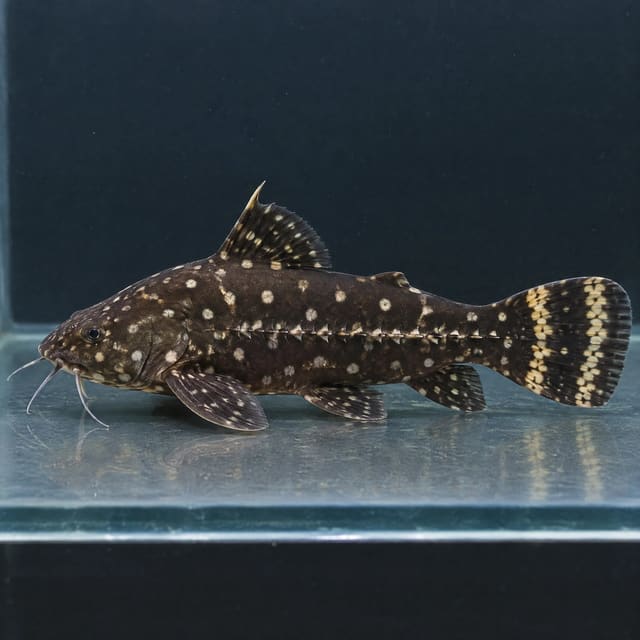
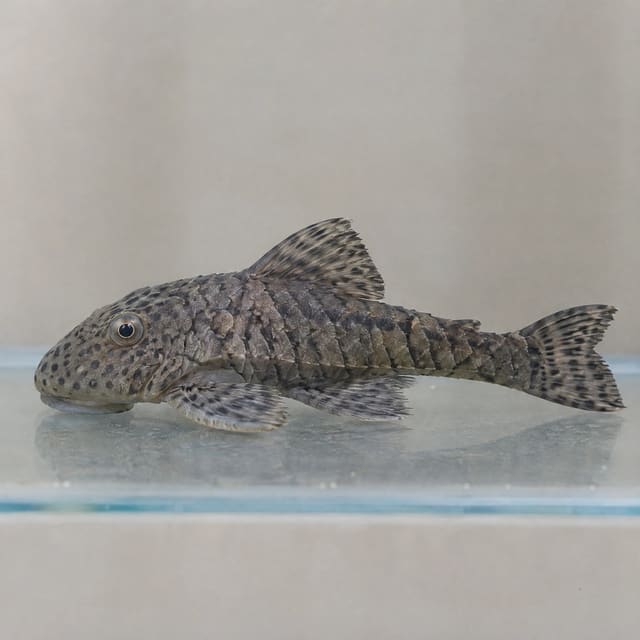
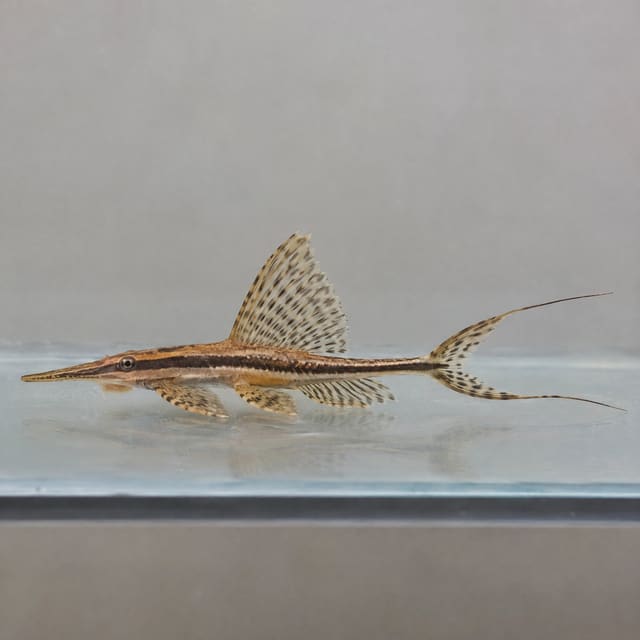
L012 Gainsboro Pleco (Ancistomus feldbergae)
pH 6–7.5
£62.89
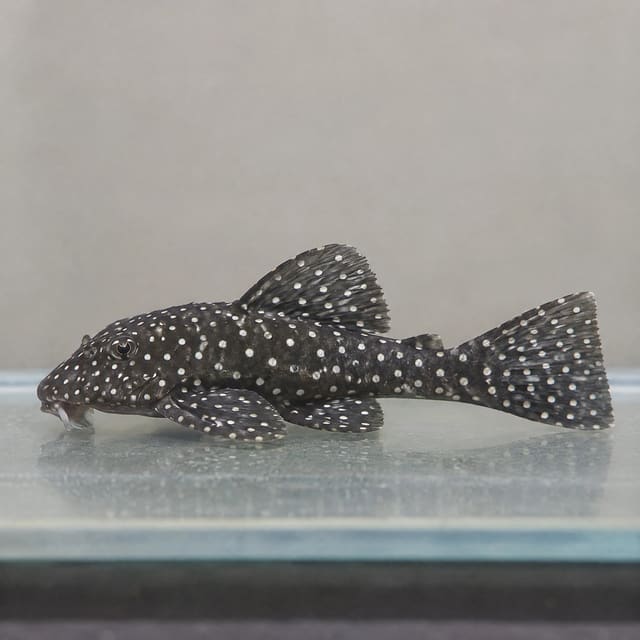
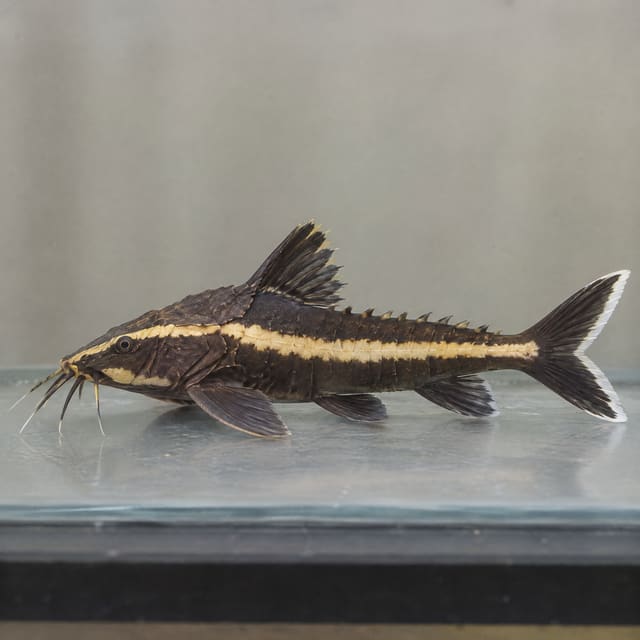
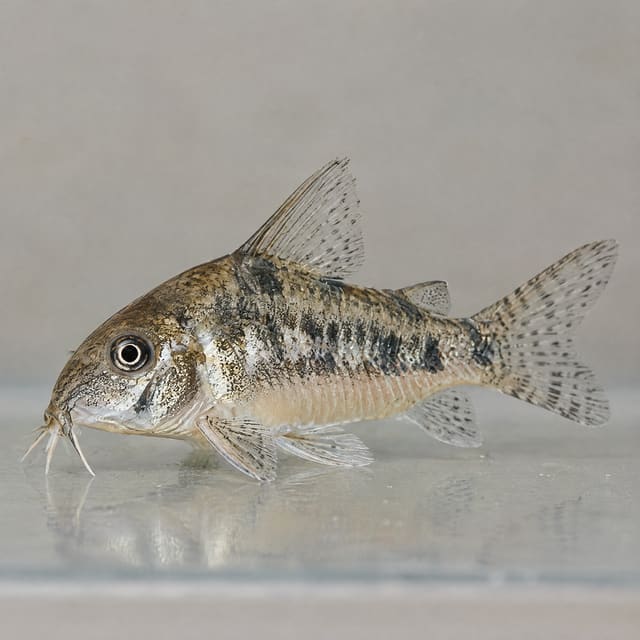
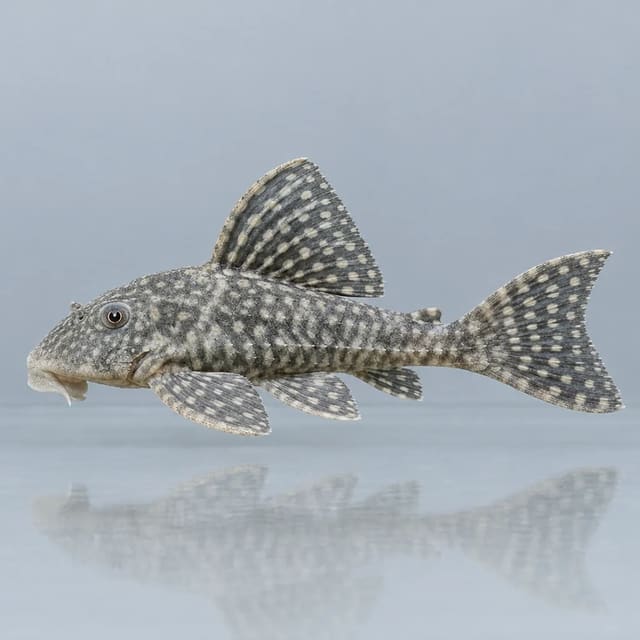
The L141 Ghost Pleco (Ancistomus snethlageae, also L215) is a peaceful, spotted suckermouth catfish from the Rio Tapajós in Brazil, with white-edged fins when young. It grows to about 18–22 cm and needs a warm (25–27°C), clean, flowing aquarium with rocks and a cave of its own. Sold individually as one live fish.
Adult size is the maximum length this species reaches at full maturity (scientific sources). The livestock you receive will be younger and smaller. Product-photo provenance and any image-specific limitations are stated on the listing.
Ancistomus snethlageae
The L141 Ghost Pleco (Ancistomus snethlageae, also L215) is a peaceful, spotted suckermouth catfish from the Rio Tapajós in Brazil, with white-edged fins when young. It grows to about 18–22 cm and needs a warm (25–27°C), clean, flowing aquarium with rocks and a cave of its own. Sold individually as one live fish.
Adult size is the maximum length this species reaches at full maturity (scientific sources). The livestock you receive will be younger and smaller. Product-photo provenance and any image-specific limitations are stated on the listing.
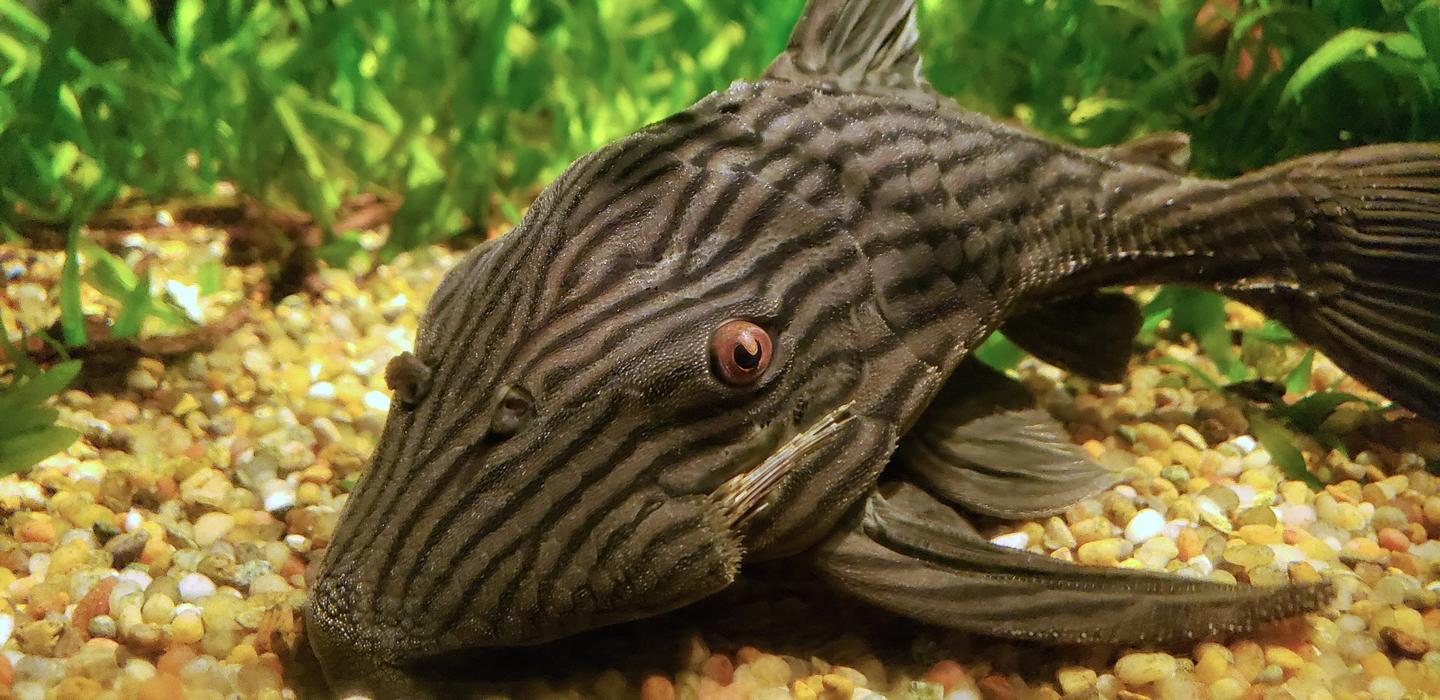
‘Pleco’ is a loose aquarium-trade label, not one species or one care sheet. Before buying, confirm the scientific name or defensible L-number, adult size and measurement method, required footprint, temperature and water, diet, social plan and source. No universal pleco tank size, menu or algae result is honest.
Read the full care guidance when planning conditions for your aquarium.
The L141 Ghost Pleco is Ancistomus snethlageae, a suckermouth catfish from the Rio Tapajós basin in Brazil. It is a spotted, grey-brown to beige pleco, and young fish carry a white edge on the tail and dorsal fin that gives the species its other English name, the white-edged pleco. Planet Catfish confirms that L141 and L215 are the same fish, and the Ghost Pleco grows larger than many shop labels suggest: up to about 18–22 cm.
It was described by Franz Steindachner in 1911 from specimens taken in the Rio Tapajós near Villa Braga and Goyana. The species name honours the German ornithologist Maria Emilie Snethlage (1868–1929), who collected the type specimen. For a UK fishkeeper the L141 is a peaceful, robust, mid- to large-sized pleco for a warm, rocky aquarium with a current, best kept with calm South American companions.
| Name or code | What it means |
|---|---|
| L141 Ghost Pleco | The trade code and common name used by UK shops |
| L215 | A second code for the same fish (Planet Catfish) |
| White-edged pleco | The English name listed by ScotCat, after the white fin edges of young fish |
| Ancistomus snethlageae | The current scientific name |
| Peckoltia, Hemiancistrus, Ancistrus or Lasiancistrus snethlageae | Older genus placements still found on some labels |
The genus has moved several times. In 2015 Armbruster, Werneke and Tan, writing in ZooKeys, recognised Ancistomus as a valid genus with this fish as its type species, and placed in it several relatives including Ancistomus feldbergae, the L012 Gainsboro Pleco. That is why older books list the Ghost Pleco under Peckoltia or Hemiancistrus; you will find its former genus-mates in our Peckoltia plecos category.
Planet Catfish notes that L161, from the Rio Xingu, may be the same species. The only difference it records is the tail edge: yellow in L161, bluish-white or white in L141 and L215. ScotCat also summarises evidence that colour patterns vary between localities, which may point to distinct populations. Expect some variation in shade and spotting between individuals, and buy by the code and the scientific name together.
The IUCN Red List rates Ancistomus snethlageae Endangered (criterion A3c, assessed 2018). As ScotCat summarises the assessment, it is endemic to Brazil, found in the middle Tapajós and Jamanxim river basins in Pará, infrequent and not very abundant, and associated with rocky areas and rapids. Collecting for the aquarium trade does not appear to have a significant impact. The main threat is hydroelectric dams planned in the Tapajós and Jamanxim drainages, which could affect about half of the river stretches where it is recorded and are expected to reduce the population by at least half over three generations.
One purchase supplies one live L141 Ghost Pleco. The size option is "Standard": the fish is sent at the size currently available, normally a juvenile well below the adult size. Sex is not chosen or guaranteed; the differences between males and females show only in mature fish.
The photographs show the species, not the individual you will receive. Spotting, background colour and the white fin edges differ between fish and change with age, mood and lighting.
Before you order, read our delivery and Live Arrival Guarantee information, and make sure the aquarium is matured and heated before the fish arrives.
Sources give different maximum sizes. Planet Catfish gives 220 mm standard length, measured without the tail; FishBase gives 22 cm total length, including the tail; and ScotCat gives 18 cm. Either way this is a substantial pleco, so plan the tank around the adult, not the juvenile that arrives.
No minimum aquarium size has been published for this species. For comparison, Seriously Fish recommends a base of 120 × 45 cm, about 243 litres, for the 16 cm snowball pleco; the Ghost Pleco grows larger, so treat that as a minimum, not a target. For its close relative L012, Planet Catfish suggests giving each fish about a 30 cm (12 in) square of floor broken up with décor, which is a useful rule when you plan caves for more than one pleco.
Keep the aquarium away from radiators, windows and draughts and fit a lid. A heater is needed all year round, and our tropical tank temperature guide explains how to keep the reading steady.
In the wild it lives around rocks and rapids, and one of the Planet Catfish habitat photographs shows the middle Rio Tapajós at Itaituba. Build the aquarium around stacked rocks, caves and wood over a soft floor, with a current running through.
| Area | Purpose |
|---|---|
| Rock piles with crevices | Daytime cover and grazing surfaces |
| Caves sized for an adult | A private retreat for each fish and a potential spawning site |
| Driftwood | Shade, broken lines of sight and extra surfaces to graze |
| Open sand | A feeding area that is easy to siphon |
Use sand or fine gravel, because OATA notes that catfish have sensitive barbels that need a soft bottom. Stand rocks on the glass before adding sand so the stacks cannot collapse onto a resting fish. Choose caves that an adult can turn round in: a cave that fits a juvenile will be too small within a couple of years.
Soft lighting and plenty of shade bring a pleco out more often. Tough plants such as Anubias and Java fern can be tied to wood or rock if you want greenery.
Planet Catfish gives 23–27°C. ScotCat gives 25–30°C and pH 6.0–7.2 and says to keep it in warm, soft to medium-hard water. Because the sources disagree on temperature, we suggest 25–27°C, where both ranges overlap.
| Reading | Target |
|---|---|
| Temperature | 25–27°C (published ranges 23–27°C and 25–30°C) |
| pH | 6.0–7.2 (ScotCat) |
| Hardness | Soft to medium-hard (ScotCat) |
| Ammonia | 0 mg/l |
| Nitrite | 0 mg/l |
| Nitrate | No more than 20 mg/l above your tap water (OATA) |
UK tap water ranges from soft to very hard depending on where you live. If yours is hard and alkaline, mix it with reverse-osmosis water to bring the pH and hardness down gradually, then keep the mix the same at every water change. Use a conditioner every time to remove chlorine or chloramine. Our water matcher compares your readings with this fish's range, and our water chemistry guide explains pH, hardness and the nitrogen readings.
A pleco of 20 cm produces a lot of waste, and a fish from rapids needs clean, oxygen-rich water. Choose filtration generously: Seriously Fish's guidance for rapids plecos is a filter turning over four to five times the tank volume each hour, plus extra water movement where needed, and weekly water changes of 30–50%.
Keep the surface moving for gas exchange, and add a powerhead if parts of the tank stay still. Our guide to aquarium filtration explains how to size and combine filters.
ScotCat describes its diet as vegetarian with added tablet foods and fine to medium-sized live and frozen foods such as mosquito larvae and brine shrimp. In other words it is an omnivore that leans towards plant food. Base the diet on sinking vegetable tablets and wafers, add fresh vegetables, and offer small frozen foods a few times a week.
Watch the belly: a well-fed pleco is gently rounded underneath. A hollow belly in the first weeks means it is not getting enough, often because other fish reach the food first.
Add the fish only to a filtered aquarium that has run long enough to process waste, with zero ammonia and nitrite and the temperature in range. Our pleco care guide covers the general set-up for suckermouth catfish.
OATA recommends acclimatising with the aquarium lights off: float the sealed bag for about 10 minutes, add small amounts of aquarium water over up to 20 minutes, then release the fish with as little bag water as possible. OATA also advises double-bagging catfish because of their fin spines. Our guide on how to acclimatise new fish shows each step.
| Checkpoint | What to do |
|---|---|
| Before arrival | Test the water, set 25–27°C, place caves and dim the lights |
| Arrival | Acclimatise in the dark and release the fish near cover |
| First evening | Offer a small vegetable tablet after lights-out |
| Days 2–7 | Check the belly and eyes, remove leftovers and note where it rests |
| End of week | Retest the water and do the usual water change |
A new pleco often hides for several days; that is normal. Rapid breathing, gasping at the surface or lying on its side is not, and calls for an immediate water test.
ScotCat describes the Ghost Pleco as no problem to keep and non-aggressive, even in a group. Choose companions that share its warm, flowing water and leave the bottom to the plecos. Peaceful eartheaters and characins suit a South American layout; aggressive cichlids and pushy bottom feeders do not.
| Suits | Avoid |
|---|---|
| Peaceful eartheaters such as the Red Head Tapajós Eartheater in a large tank | Aggressive cichlids that chase bottom dwellers |
| Characins that like warm, moving water | Boisterous plecos that take over caves and food |
| Other peaceful plecos, each with its own cave | Fish that need cool or still water |
| Calm midwater fish too large to be bullied | Fin-nippers |
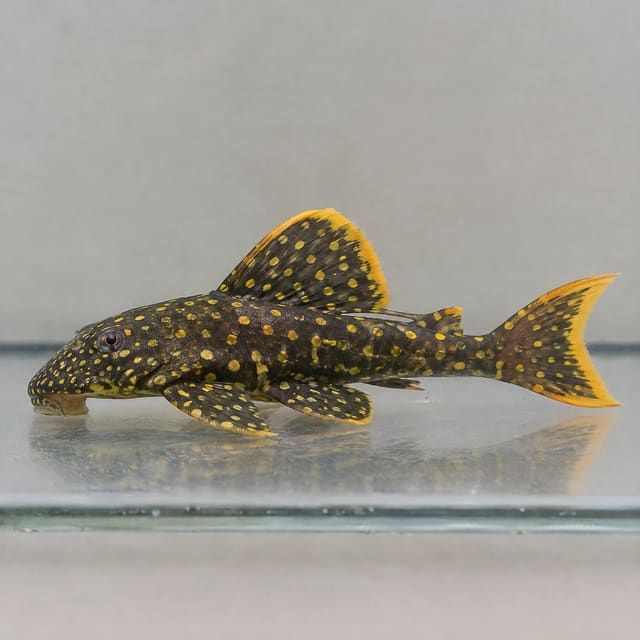
For related plecos with similar care, see the L134 Leopard Frog Pleco, the L075 Para Pleco and the L006 Pleco, or browse our L-number plecos, the wider South American catfish range, all catfish and plecos and our rare and collector fish. Check a planned mix with our tank mates tool.
OATA describes a healthy fish as having clear, bright eyes, undamaged fins, no ulcers or bumps, normal swimming and steady breathing, and lists clamped fins, flicking against décor and shimmying as warning signs. A newly imported pleco should have a rounded belly and eyes that are not sunken.
| If you see | Do this |
|---|---|
| A hollow belly or sunken eyes | Feed sinking vegetable food after dark beside its cave and check for competition |
| Rapid breathing | Test ammonia, nitrite and temperature and increase aeration |
| Frayed fins or scratches | Look for a bullying tank mate or sharp décor |
| White spots or fluffy patches | Test the water and seek fish-health advice before treating |
| Not seen for several days | Look with a dim torch after lights-out |
Test the water before deciding anything. Most changes in a pleco's behaviour start with water quality, and the fix is usually a water change and better filtration rather than medication.
Planet Catfish records that it has been bred in aquariums, and its photo gallery includes eight-day-old fry in a cave, but no detailed breeding report has been published. Sexing adults is possible: ScotCat says males have a longer, broader head with longer bristles behind the gill cover and on the pectoral-fin spines, and mature males grow fine odontodes on the plates of the rear body.
L141 is Ancistomus snethlageae (Steindachner, 1911), a suckermouth catfish from the Rio Tapajós basin in Brazil. Planet Catfish confirms that L141 and L215 are the same fish; ScotCat also calls it the white-edged pleco.
The species has been placed in several genera since 1911, including Ancistrus, Lasiancistrus, Peckoltia and Hemiancistrus. Armbruster, Werneke and Tan recognised Ancistomus as a valid genus in 2015, with this fish as its type species.
Larger than many shop labels suggest. Planet Catfish gives 220 mm standard length, FishBase 22 cm total length and ScotCat 18 cm. Plan for a fish of about 18–22 cm.
No minimum is published for this species. Seriously Fish recommends a 120 × 45 cm base for the 16 cm snowball pleco, and the L141 grows bigger, so treat that as the minimum and give each pleco its own cave and floor area.
Planet Catfish gives 23–27°C and ScotCat 25–30°C with pH 6.0–7.2, so we suggest 25–27°C, where both agree, in soft to medium-hard water.
ScotCat describes a mainly vegetarian diet with added tablet foods and small to medium live or frozen foods such as mosquito larvae and brine shrimp. Feed sinking vegetable foods as the base, with frozen foods a few times a week.
Yes. The IUCN Red List rates it Endangered (assessed 2018), mainly because planned dams could affect about half of its known range in the Tapajós and Jamanxim rivers. Aquarium collection is not considered a significant threat.
One live fish of the standard size currently available. Sex is not chosen or guaranteed.
No reviews for this item yet. Bought one? Honest reviews only, good or bad.
What customers say about ordering from us
Easy website plenty of info on fish your buying great to pick a time slot
TRACEY DURRANT · 7 Oct 2026
Got some lovely fish thank you
Kevin Mackie · 7 Oct 2026
Reviews of our shop, collected by Judge.me, an independent third-party review collector. Newest first.
Moved by UK carriers licensed to handle live animals
Hand-packed with oxygen bags, poly box, heat pack
Email photos the same day; an optional unboxing video helps us review problems faster — claim terms apply
Klarna & PayPal Pay in 3 at checkout