Moderate
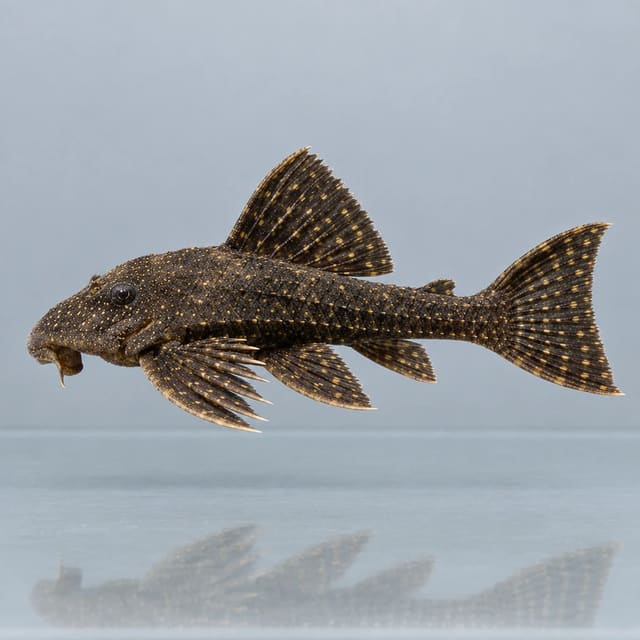
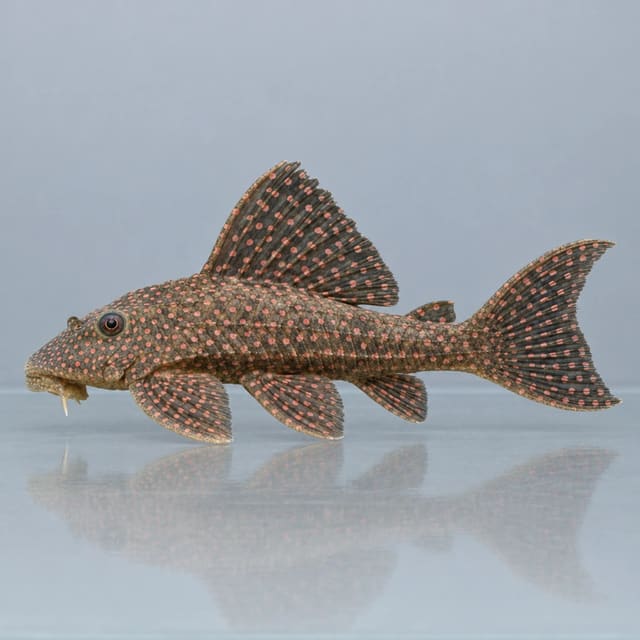
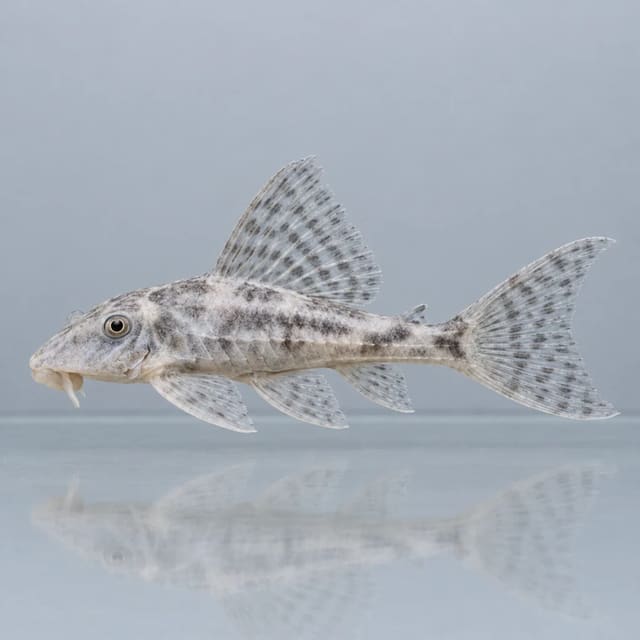
L141 Ghost Pleco (Ancistomus snethlageae)
pH 6–7.2
£40.89
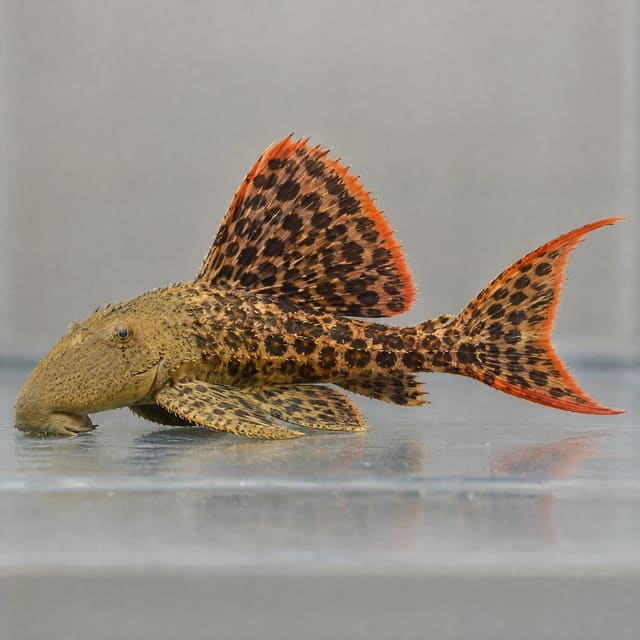
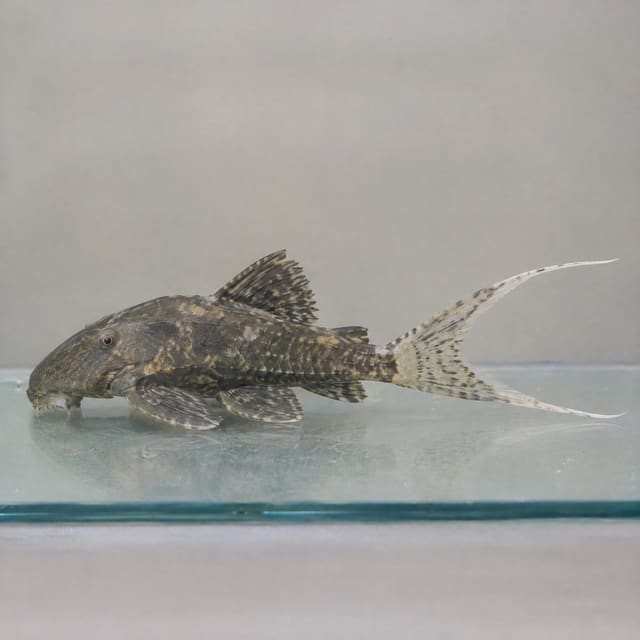
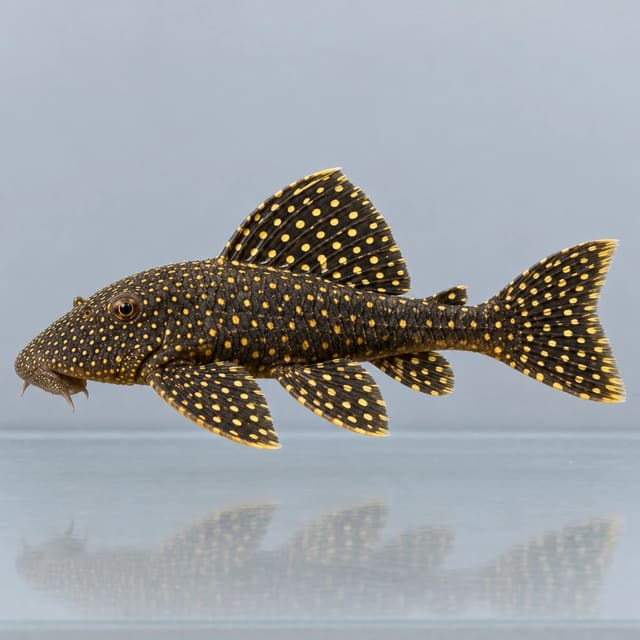
The L012 Gainsboro Pleco (Ancistomus feldbergae, also L013 when young) is a peaceful suckermouth catfish from the rocky rapids of the Rio Xingu in Brazil, with dark spots and orange-edged dorsal and tail fins. It grows to about 17–20 cm and needs warm (26–29°C), oxygen-rich, flowing water with rocks and caves. Sold individually as one live fish.
Ancistomus feldbergae
The L012 Gainsboro Pleco (Ancistomus feldbergae, also L013 when young) is a peaceful suckermouth catfish from the rocky rapids of the Rio Xingu in Brazil, with dark spots and orange-edged dorsal and tail fins. It grows to about 17–20 cm and needs warm (26–29°C), oxygen-rich, flowing water with rocks and caves. Sold individually as one live fish.
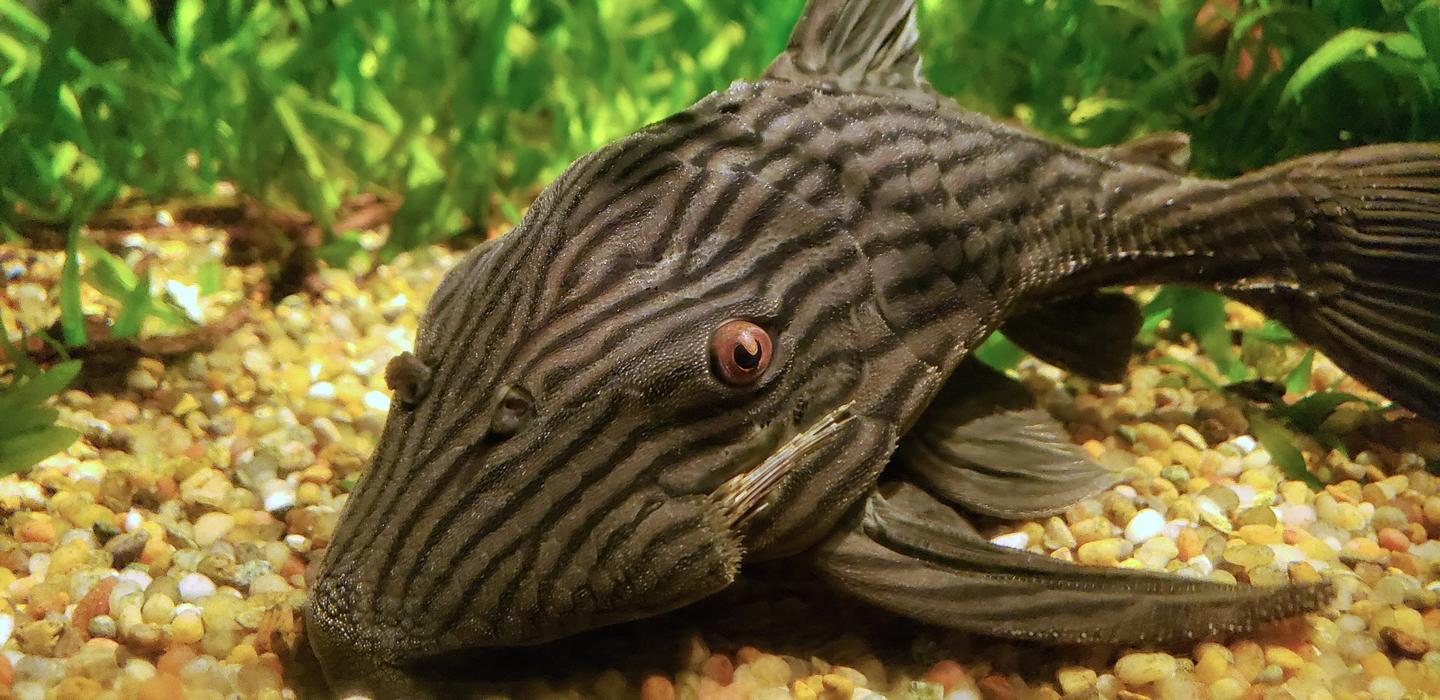
‘Pleco’ is a loose aquarium-trade label, not one species or one care sheet. Before buying, confirm the scientific name or defensible L-number, adult size and measurement method, required footprint, temperature and water, diet, social plan and source. No universal pleco tank size, menu or algae result is honest.
Read the full care guidance when planning conditions for your aquarium.
The L012 Gainsboro Pleco is Ancistomus feldbergae, a suckermouth catfish from the rocky rapids of the Rio Xingu in Pará, Brazil. Brazilian scientists described it in 2012 as Peckoltia feldbergae from Ilha de Babaquara, upstream of Altamira, and three years later it was moved to the genus Ancistomus. Planet Catfish lists the common name Gainsboro Pleco, after a pale grey shade, and notes that the trade code L013 is simply a young L012.
The species honours Dr Eliana Feldberg of the Instituto Nacional de Pesquisas da Amazônia, for her work on the cytogenetics of Amazon fish. For a UK fishkeeper the L012 is a peaceful, mid- to large-sized pleco of about 17–20 cm that wants warm, oxygen-rich, flowing water, rock piles and wood, and a territory of its own.
| Name or code | What it means |
|---|---|
| L012 Gainsboro Pleco | The trade code and common name used by UK shops |
| L013 | A young L012, according to Planet Catfish and ScotCat |
| Ancistomus feldbergae | The current scientific name |
| Peckoltia feldbergae | The name it was described under in 2012, still found on older labels |
In 2015 Armbruster, Werneke and Tan, writing in ZooKeys, recognised Ancistomus as a valid genus and moved this species into it alongside the L141 Ghost Pleco, Ancistomus snethlageae. Its former genus-mates are in our Peckoltia plecos category.
The original description, summarised by FishBase, identifies it by dark brown dots over the whole body, an orange band on the outer edge of the dorsal and tail fins, and thin dark stripes in the dorsal-fin membranes, parallel to the fin rays, that break up into small dots in larger fish. Planet Catfish photographs show a pale beige-grey to yellowish body with these dark spots.
The sources disagree about its look-alikes. Planet Catfish says L012 and L013 are both very similar to L163 from the Rio Tocantins. Seriously Fish places L163 in the Rio Pará, treats L013 as a separate undescribed fish, and says the two are only easily told apart as they mature, because L163 keeps its spots while L013 becomes duller. Buy by the code and the scientific name together, and expect the pattern to change as the fish grows.
FishBase, drawing on the original description, records it in shallow river rapids with a bottom of small to medium-sized flat rocks, up to about 50 cm across, over coarse sand and pebbles. The fish hide under the rocks by day and come out at night to graze the film of algae and tiny organisms on the upper surfaces of the stones. The IUCN Red List rates it Least Concern (2018): as ScotCat summarises, it is widespread and abundant in the Xingu basin upstream of Belo Monte, and the Belo Monte dam affects only about 12% of its range.
One purchase supplies one live L012 Gainsboro Pleco. The size option is "Standard": the fish is sent at the size currently available, normally a juvenile well below the adult size, which is why some young fish are still sold as L013. Sex is not chosen or guaranteed.
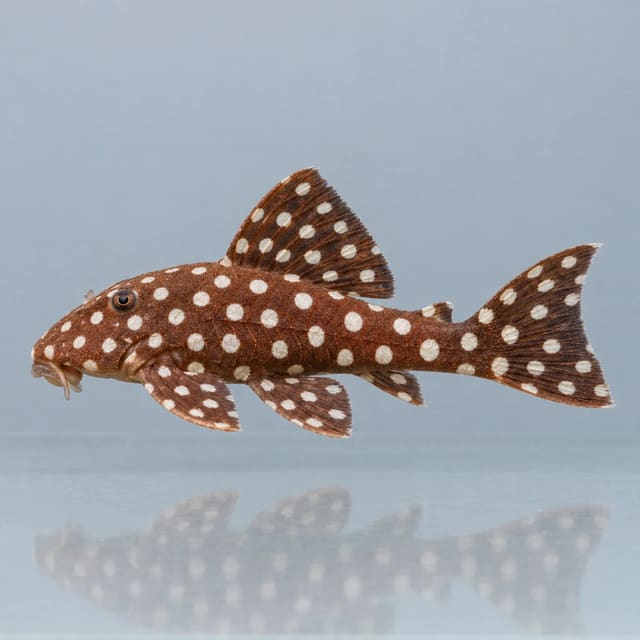
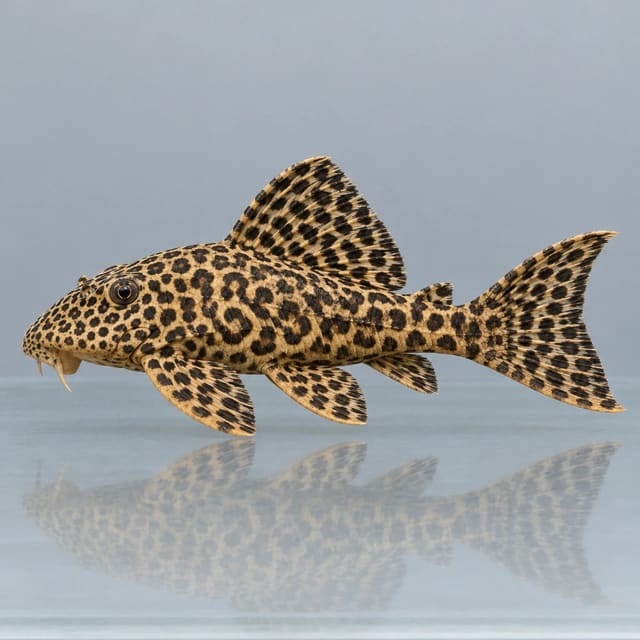
The photographs show the species, not the individual you will receive. Spotting, background colour and the orange fin edges vary between fish and change as they grow.
Before you order, read our delivery and Live Arrival Guarantee information, and have the aquarium matured, heated and furnished with caves before the fish arrives.
FishBase gives a maximum of 17.1 cm standard length and ScotCat 17 cm; Planet Catfish gives 200 mm standard length. Standard length excludes the tail fin, so plan for a solid pleco of about 17–20 cm plus tail.
No minimum aquarium size has been published for this species. Planet Catfish's guide of about a 30 cm (12 in) square of floor per fish, well broken up with décor, is the best species-specific rule. For overall size, Seriously Fish recommends a base of 120 × 45 cm, about 243 litres, for the 16 cm snowball pleco; the L012 grows a little larger, so treat that as a minimum.
Keep the tank away from radiators, windows and draughts, fit a lid, and run a heater all year round.
Planet Catfish recommends rock piles and wood tangles and says plants are not vital. That suits the wild habitat: flat stones to hide under, wood for shade and grazing, and a soft floor of sand or fine gravel. Well-fed fish do not damage most plants, Planet Catfish adds, so you can add greenery if you like.
| Area | Purpose |
|---|---|
| Flat stones raised on smaller rocks | Shaded gaps to hide under by day, as in the wild |
| Caves sized for an adult | A private retreat and a spawning site for each fish |
| Wood tangles | Broken lines of sight between territories and soft wood to rasp |
| Open sand and pebbles | A feeding area that is easy to siphon |
Use sand or fine gravel, because OATA notes that catfish barbels are sensitive and need a soft bottom. Stand the bottom rocks on the glass before adding sand so the stacks stay stable, and check that no flat stone can slip and trap a fish underneath.
Keep the lighting soft and leave shaded areas, so the fish feels safe enough to come out in the evening.
Planet Catfish gives 25–30°C. ScotCat gives 25–29°C and pH 6.0–7.5 and says the species should be kept slightly warmer than average and needs a higher oxygen level. We suggest 26–29°C, inside both ranges, with strong aeration.
| Reading | Target |
|---|---|
| Temperature | 26–29°C (published ranges 25–30°C and 25–29°C) |
| pH | 6.0–7.5 (ScotCat) |
| General hardness | Not published; soft to medium water suits a clearwater river fish |
| Ammonia | 0 mg/l |
| Nitrite | 0 mg/l |
| Nitrate | No more than 20 mg/l above your tap water (OATA) |
UK tap water differs from region to region, so test yours rather than guess. If it is hard and alkaline, blend it with reverse-osmosis water to bring the pH into range, and then keep the blend the same at every change: a stable reading matters more than a perfect one. Treat every water change with a conditioner to remove chlorine or chloramine. Our water matcher checks your readings against this fish's range, and our water chemistry guide explains each value.
ScotCat's note about a higher oxygen requirement is the key to filtration. Seriously Fish's guidance for rapids plecos is a filter turning over four to five times the tank volume each hour, extra water movement from a powerhead or air stone where needed, and weekly water changes of 30–50%.
In summer, when the room warms up, check the temperature more often: warm water holds less oxygen, and an oxygen-hungry pleco feels it first. Our aquarium filtration guide explains how to combine filters and powerheads.
The wild diet and the aquarium advice differ. FishBase reports that diatoms made up 83% of the stomach contents of two wild fish, with sponge fragments and fine sediment, and that the very long intestine, nearly 11 times the standard length, points to a mainly herbivorous diet. In aquariums, Planet Catfish describes it as omnivorous with a tendency towards meaty foods and not an effective algae eater, while ScotCat lists vegetable food, tablets and pellets, insect larvae, zooplankton and soft wood. Feed both kinds of food, and do not rely on it to clean algae.
Watch the belly from the front glass: well fed, it is gently rounded. If it looks hollow, feed later and closer to the fish's cave before adding more food.
Add the fish only to a filtered aquarium that has run long enough to process waste, with zero ammonia and nitrite and the temperature already in range. Our pleco care guide covers the general set-up for suckermouth catfish.
OATA recommends acclimatising with the lights off: float the sealed bag for about 10 minutes, add small amounts of aquarium water over up to 20 minutes, and release the fish with as little bag water as possible. Catfish should travel double-bagged because their fin spines can pierce a bag. Our acclimatisation guide covers each step.
| Checkpoint | What to do |
|---|---|
| Before arrival | Test the water, set 26–29°C, lay flat stones and caves and boost aeration |
| Arrival | Acclimatise in the dark and release the fish beside cover |
| First evening | Offer a small sinking tablet after lights-out |
| Days 2–7 | Check the belly and eyes and remove leftovers each morning |
| End of week | Retest the water and do the usual water change |
Hiding for the first days is normal. Rapid breathing or gasping at the surface is not: test the water, increase aeration and check the temperature at once.
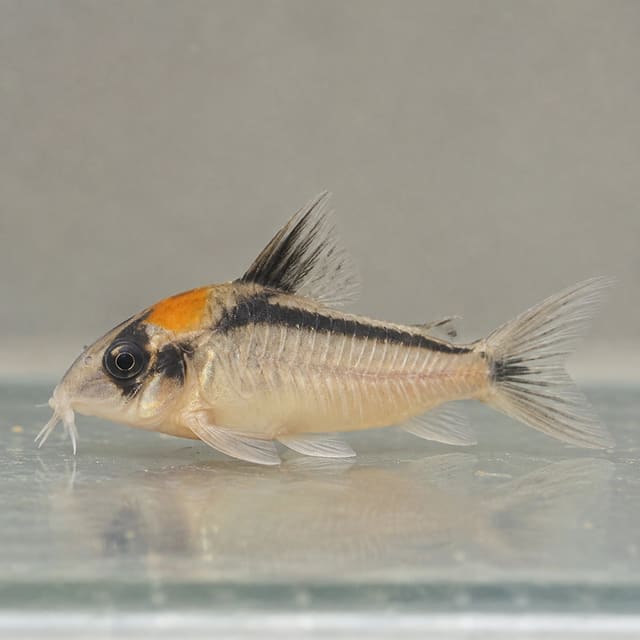
Planet Catfish calls the L012 peaceful if a little territorial. For the very similar Ancistomus L163, Seriously Fish recommends a South American set-up with characins, peaceful cichlids and catfish such as Corydoras and other loricariids, and warns that several plecos need a refuge each.
| Suits | Avoid |
|---|---|
| Characins such as many tetras that like warm water | Several plecos crowded without separate territories |
| Peaceful South American cichlids | Aggressive cichlids that chase bottom dwellers |
| Other loricariids, each with its own cave | Fish that need cool or still water |
| Calm midwater fish | Greedy bottom feeders that take all the food |
For plecos with similar care, compare the L134 Leopard Frog Pleco, the L075 Para Pleco, the L103 Pleco and the grey L128 Blue Phantom Pleco, or browse our L-number plecos, the wider South American catfish range, all catfish and plecos and our rare and collector fish. Check a planned mix with our tank mates tool.
OATA describes a healthy fish as having clear, bright eyes, undamaged fins, no ulcers or bumps, normal swimming and steady breathing, and lists clamped fins, flicking against décor and shimmying as warning signs. Seriously Fish advises checking newly imported Ancistomus for a rounded belly and eyes that are not sunken, the classic signs that a loricariid is feeding well.
| If you see | Do this |
|---|---|
| A hollow belly or sunken eyes | Feed after dark beside its cave and check for competition |
| Rapid breathing or gasping | Increase aeration and flow, test the water and check the temperature |
| Torn fins or scratches | Look for a territorial neighbour or sharp edges on stones |
| White spots or fluffy patches | Test the water and seek fish-health advice before treating |
| Not seen for several days | Look under the flat stones with a dim torch after lights-out |
Test first, then act. Low oxygen and poor water quality cause most problems in rapids plecos, and both are fixed by maintenance rather than medicine.
Planet Catfish and ScotCat both describe it as a cave spawner, but no breeding report has been published. Adults can be sexed: Planet Catfish says males develop small tooth-like odontodes on the leading pectoral-fin rays and on the back half of the body, while females stay unadorned and are wider across the body, most clearly just behind the pectoral fins when seen from above.
L012 is Ancistomus feldbergae, a suckermouth catfish from the Rio Xingu basin in Pará, Brazil. It was described in 2012 as Peckoltia feldbergae and moved to Ancistomus in 2015. Planet Catfish lists L013 as a young L012.
The original description, summarised by FishBase, gives dark brown dots over the whole body, an orange band on the outer edge of the dorsal and tail fins, and thin dark stripes in the dorsal-fin membranes that break into small dots in larger fish.
FishBase and ScotCat give about 17 cm and Planet Catfish 200 mm standard length. Plan for a pleco of about 17–20 cm without the tail.
No minimum is published. Planet Catfish suggests about a 30 cm square of floor, broken up with rocks and wood, for each fish. For comparison Seriously Fish recommends a 120 × 45 cm base for the smaller snowball pleco, a sensible minimum here.
Warm, clean, oxygen-rich water with a current. Planet Catfish gives 25–30°C and ScotCat 25–29°C with pH 6.0–7.5; ScotCat adds that it needs a high oxygen level. We suggest 26–29°C.
Not reliably. Wild fish feed mainly on diatoms scraped from rocks, but Planet Catfish says aquarium fish lean towards meaty foods and are not effective algae eaters. Feed both plant-based and meaty sinking foods.
Yes. Planet Catfish calls it peaceful if a little territorial, so give every fish its own area and cave and avoid crowding several plecos together.
One live fish of the standard size currently available. Sex is not chosen or guaranteed.
No reviews for this item yet. Bought one? Honest reviews only, good or bad.
What customers say about ordering from us
Easy website plenty of info on fish your buying great to pick a time slot
TRACEY DURRANT · 7 Oct 2026
Got some lovely fish thank you
Kevin Mackie · 7 Oct 2026
Reviews of our shop, collected by Judge.me, an independent third-party review collector. Newest first.
Moved by UK carriers licensed to handle live animals
Hand-packed with oxygen bags, poly box, heat pack
Email photos the same day; an optional unboxing video helps us review problems faster — claim terms apply
Klarna & PayPal Pay in 3 at checkout