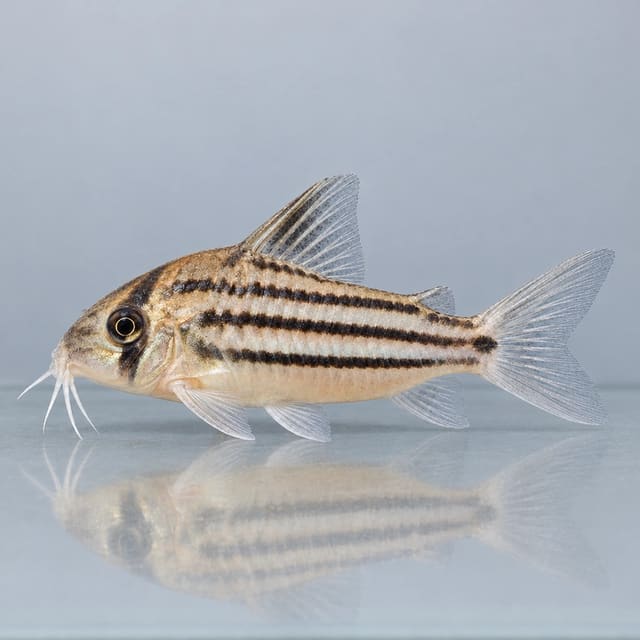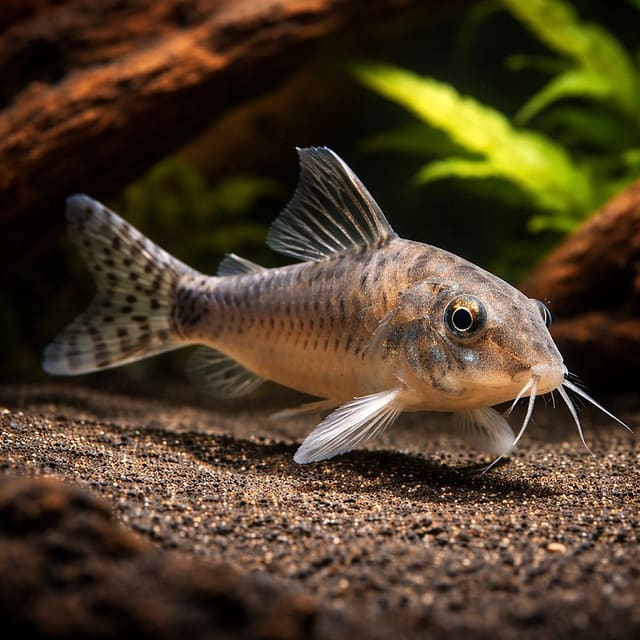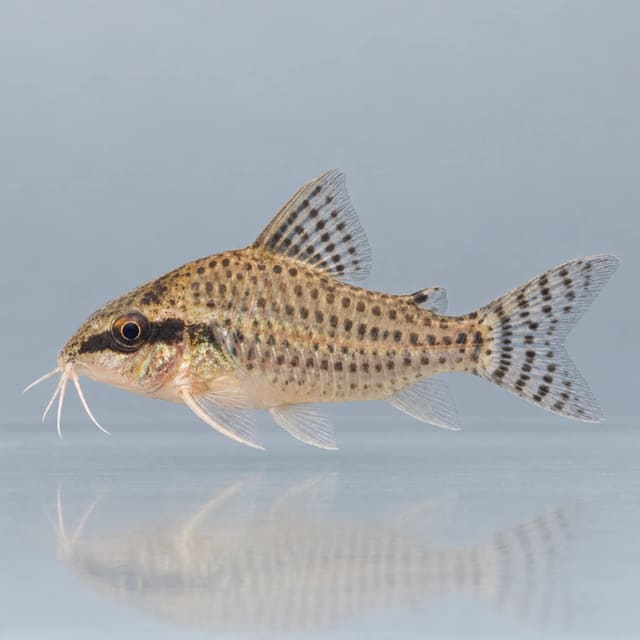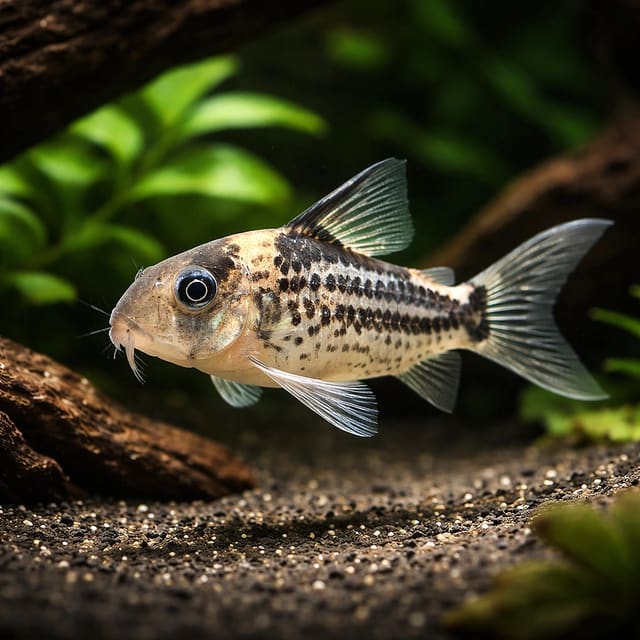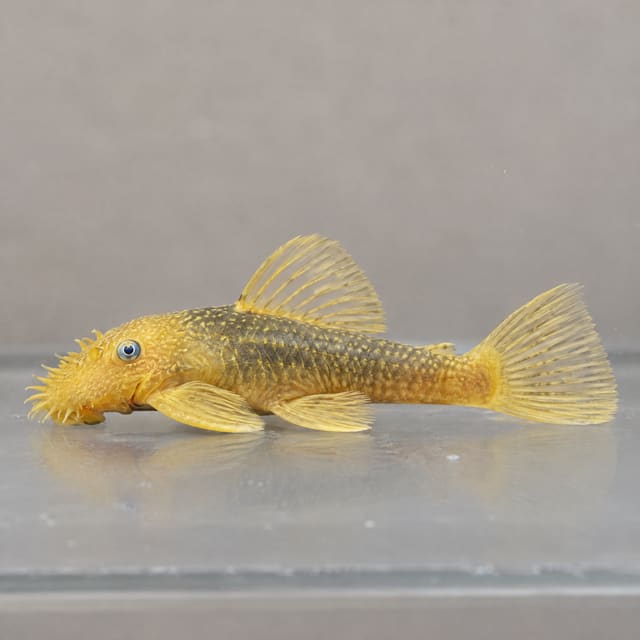
Lemon Blue-Eye Bristlenose Pleco (Ancistrus sp. 4) 3 cm
22–27°C · pH 6–8
£15.99
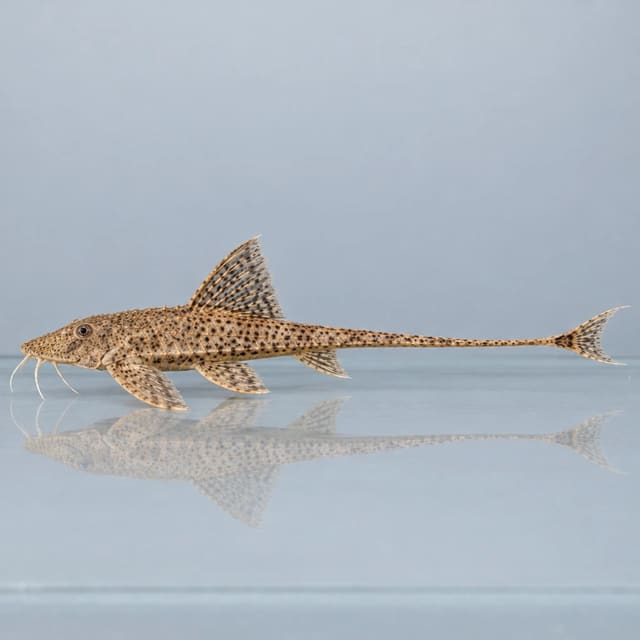
The L017 Wolverine Pleco (Hopliancistrus wolverine) is a dark olive to black suckermouth catfish covered in small greenish-yellow dots, from the fast, rocky rapids of the Rio Xingu in Brazil. It grows to about 13–18 cm, is peaceful, and needs warm (26–30°C), clean, strongly flowing water and a cave. Sold individually as one live fish.
Hopliancistrus wolverine
The L017 Wolverine Pleco (Hopliancistrus wolverine) is a dark olive to black suckermouth catfish covered in small greenish-yellow dots, from the fast, rocky rapids of the Rio Xingu in Brazil. It grows to about 13–18 cm, is peaceful, and needs warm (26–30°C), clean, strongly flowing water and a cave. Sold individually as one live fish.
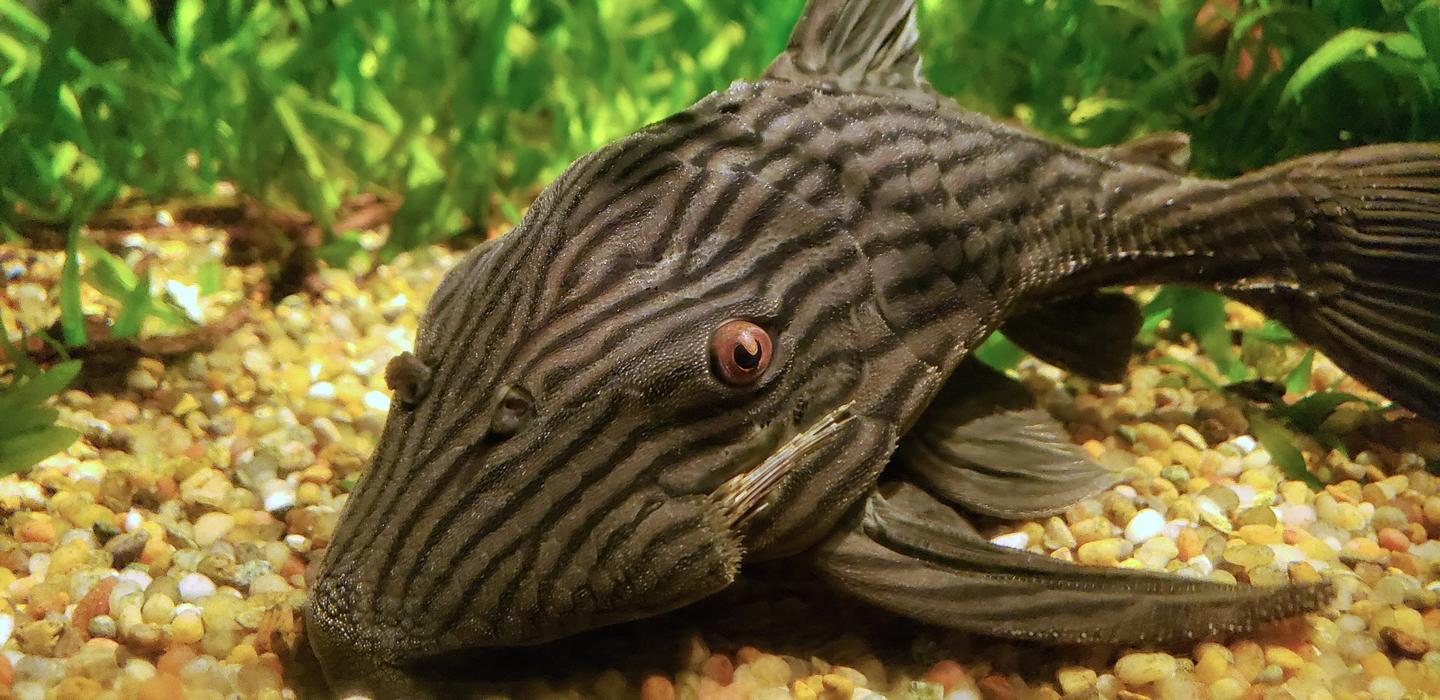
‘Pleco’ is a loose aquarium-trade label, not one species or one care sheet. Before buying, confirm the scientific name or defensible L-number, adult size and measurement method, required footprint, temperature and water, diet, social plan and source. No universal pleco tank size, menu or algae result is honest.
Read the full care guidance when planning conditions for your aquarium.
The L017 Wolverine Pleco (Hopliancistrus wolverine) is a suckermouth catfish from the middle Rio Xingu and the lower Rio Iriri in Pará, Brazil. Its body is dark olive to black and covered in small greenish-yellow dots of a similar size on the head, the body and every fin. For years it was sold only under trade codes, until Brazilian scientists revised the genus in 2021 and described it, with three other new species, in the journal PLOS ONE.
The name explains its defence. Hopliancistrus means "weapon hook": every species in the genus carries stout, curved odontodes (tooth-like bristles) in the cheek area. The 2021 revision reports that when disturbed these fish resolutely flick out the hooked cheek plates and clip the aggressor. The species name refers to the wolverine, Gulo gulo, for its blunt build, strong claws and ferocity. In the aquarium, though, ScotCat describes the Wolverine Pleco as a peaceful inhabitant.
| Name or code | What it means |
|---|---|
| Wolverine Pleco, L017 | The common name and trade code used by UK shops |
| LDA15 | A second trade code for the same fish in some aquarium publications |
| Hopliancistrus wolverine | The scientific name since 2021 (de Oliveira, Zuanon, Rapp Py-Daniel, Birindelli and Sousa) |
| Hopliancistrus sp., H. cf. tricornis | Names used before 2021, still seen on stock lists |
| Tricornis pleco, "alicate", "ancistrus-de-unha" | Trade names for the genus in Brazil, meaning pliers and clawed ancistrus |
The L017 code has a muddled history. ScotCat and the 2021 revision explain that it was first coined for a Pseudancistrus, today P. asurini, which was later renumbered L067; the then unnumbered Hopliancistrus took over L017. Planet Catfish notes that both fishes show yellow in the tail, which helped the mix-up. Our L067 Pleco is that other fish, so check the code and the scientific name together when you compare listings.
The original description, summarised by FishBase, separates it from the other four Hopliancistrus by its even pattern of small dots on head, trunk and fins (the others have small spots on the head but large whitish-yellow spots or blotches towards the tail), by five branched rays in the anal fin (four in H. tricornis from the Tapajós) and by a long pectoral-fin spine of 32.1–38.4% of the standard length. In life, young fish show a yellow band across the tip of the tail that narrows with age and in adults may shrink to a blotch on each tail lobe or disappear. The underside is light grey to yellowish-white, usually without dots, and the density, size and brightness of the dots vary considerably between fish.
ScotCat notes that the genus looks similar to the familiar bristlenose plecos (Ancistrus). Planet Catfish adds that male Hopliancistrus grow very stout, recurved odontodes at the corners of the snout, unlike the thin, whisker-like ones of Lasiancistrus.
One purchase supplies one live L017 Wolverine Pleco. The size option is "Standard": the fish is sent at the size currently available, normally a juvenile or young adult well below its full size. Sex is not chosen or guaranteed.
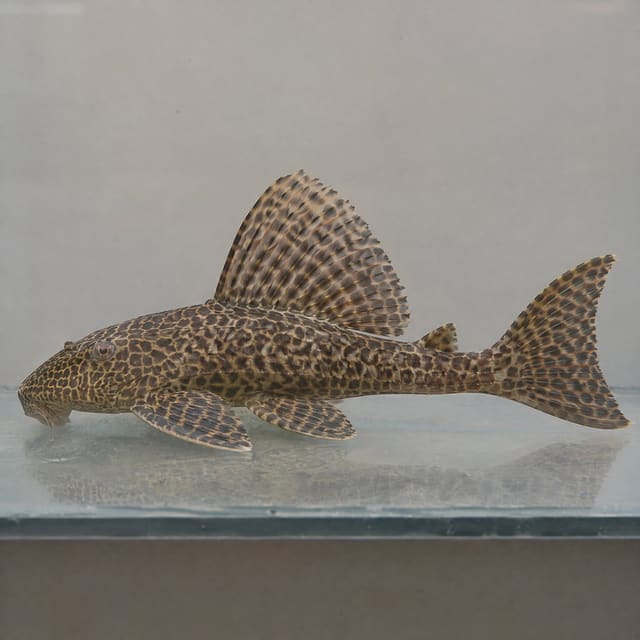
The photographs show the species, not the individual you will receive. Expect differences in dot size and density and in the yellow on the tail, which the 2021 revision describes as variable and fading with age.
Before you order, read our delivery and Live Arrival Guarantee information, and have the aquarium running, heated and matured before the fish arrives.
Published sizes differ. Planet Catfish gives 130 mm standard length and ScotCat 15 cm, while FishBase records 18.2 cm standard length, the largest specimen measured for the original description; the type specimen measures 134.3 mm. Standard length excludes the tail fin, so plan for a solid, broad-headed pleco of roughly 13–18 cm plus tail.
No minimum aquarium size has been published for this species. OATA gives 80 litres as the starting point for the smaller pleco species, which is the absolute floor here. For comparison, Seriously Fish recommends a base of 120 × 45 cm, about 243 litres, for another rapids pleco of similar length, the 16 cm snowball pleco. Because the Wolverine Pleco can reach 18 cm and needs room for a strong current as well as caves, plan towards that larger base.
Keep the aquarium away from radiators, windows and draughts, fit a lid, and use a heater all year round. This is a warm-water fish, and our guide to tropical tank temperature explains how to keep a steady reading.
The 2021 revision reports that all Hopliancistrus were collected only in fast-flowing, well-oxygenated clear water over rocky bottoms. The Wolverine Pleco is known from the middle Rio Xingu, from just downstream of Belo Monte village through the Volta Grande to near São Félix do Xingu, and from the Rio Iriri upstream of its junction with the Xingu as far as the mouth of the Rio Curuá. ScotCat confirms that it likes a current in the aquarium.
| Area | Purpose |
|---|---|
| Flat and rounded rocks in stacks | Crevices to hide in by day and surfaces to graze |
| Slate or ceramic caves | A private retreat for each fish, placed in the current |
| Sand or fine gravel | A soft floor for the barbels and belly, and a place to find sinking food |
| Open water above the rocks | Room for the current to run and for any midwater companions |
Choose caves the fish can enter and turn round in easily, and place them where the current runs past the entrance. Use smooth sand or fine gravel, because OATA notes that catfish barbels are sensitive and need a soft bottom, and stand the bottom rocks on the glass before adding the sand so the stacks stay stable.
Plants are optional. Tough species tied to rock or wood cope best with flow and shade; the fish itself needs rocks, caves and moving water more than greenery.
Planet Catfish gives 25–30°C. ScotCat gives 26–30°C and pH 6.0–7.0, says the species likes a higher temperature and adds that it needs frequent water changes to stay in good health. Aim for 26–29°C, inside both published ranges and easier to share with suitable tank mates.
| Reading | Target |
|---|---|
| Temperature | 26–29°C (published ranges 25–30°C and 26–30°C) |
| pH | 6.0–7.0 (ScotCat) |
| General hardness | Not published; soft to medium water suits a clearwater river fish |
| Ammonia | 0 mg/l |
| Nitrite | 0 mg/l |
| Nitrate | No more than 20 mg/l above your tap water (OATA) |
Much of the UK has hard, alkaline tap water, so a pH reading above 7.0 is common. If yours is well above the range, blend tap water with reverse-osmosis water to bring it down gradually, then keep it stable: steady water is better than water that swings with every adjustment. Treat every water change with a conditioner to remove chlorine or chloramine. Your water company's postcode checker gives your hardness, and our water matcher compares your readings with this fish's needs.
A fish from rapids depends on clean, oxygen-rich water. For a comparable rapids pleco, Seriously Fish recommends weekly water changes of 30–50%, plenty of dissolved oxygen, water movement from power filters, powerheads or air stones, and a filter turning over four to five times the tank volume each hour. ScotCat makes the same point for this species: frequent water changes keep it healthy.
Keep the surface rippling so oxygen is constantly replaced; warm water holds less oxygen than cool water. Our aquarium filtration guide explains how to combine a filter with a powerhead for a river-style current.
ScotCat describes the Wolverine Pleco as an omnivore and lists vegetable foods such as lettuce, spinach, cucumber and vegetable tablets, plus live and frozen foods such as Cyclops, Daphnia and brine shrimp. No stomach-content study has been published for this species, so a varied diet built around vegetable foods with regular small frozen foods is the safest approach.
Check the belly from the front glass. A well-fed pleco has a gently rounded underside; a hollow belly means it is not getting enough, often because faster fish find the food first.
Add the fish only to a filtered aquarium that has run long enough to process waste, with zero ammonia and nitrite and the temperature already in range. Our pleco care guide covers the general set-up for suckermouth catfish.
OATA recommends acclimatising with the lights off: float the sealed bag for about 10 minutes, add small amounts of aquarium water over up to 20 minutes, then release the fish with as little bag water as possible. Our step-by-step acclimatisation guide shows each stage. Let the fish swim out of the bag or a container rather than netting it, because of its cheek hooks.
| Checkpoint | What to do |
|---|---|
| Before arrival | Test the water, set 26–29°C, place caves in the current and lower the lighting |
| Arrival | Acclimatise in the dark and release the fish near a cave |
| First evening | Offer a small sinking tablet after lights-out |
| Days 2–7 | Check the belly, remove leftovers and confirm the flow still reaches the caves |
| End of week | Retest the water and do the first full water change |
Hiding for several days is normal for a new pleco. Rapid breathing, gasping or lying on its side is not: test the water at once and increase aeration.
ScotCat describes it as peaceful, and its hooks are a defence rather than a weapon for attack. The main limits on tank mates are its needs: 26–30°C, strong flow and clean water. Choose companions that enjoy the same conditions, leave the bottom dwellers alone and do not take all the food.
| Suits | Avoid |
|---|---|
| Peaceful fish that like warm, flowing water | Fish that need cool or still water |
| Active midwater characins | Boisterous bottom feeders that take all the food |
| Plecos from other genera, each with its own cave | Large predatory fish |
| Calm dwarf cichlids that tolerate the temperature | Fish that nip at or pester resting bottom dwellers |
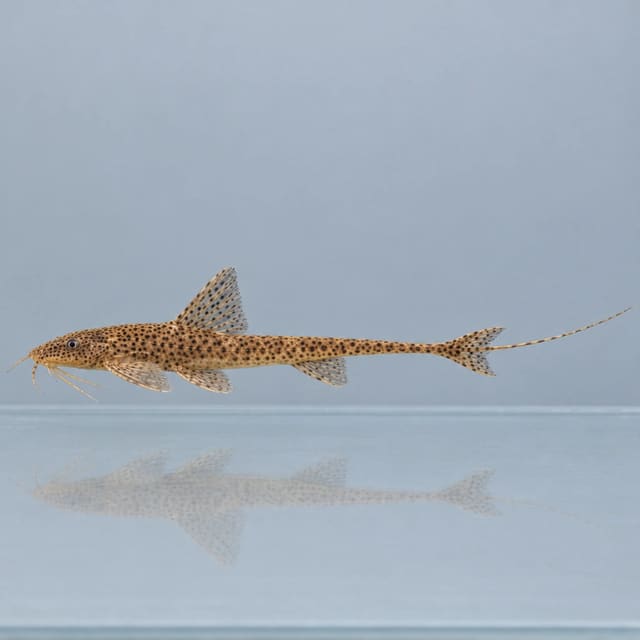
If you like the look but want an easier fish, compare it with the Bristlenose Pleco and our bristlenose pleco care guide, the dotted Pearl Sucker Pleco L059 or other Ancistrus bristlenose plecos. For other collector plecos see the L046 Zebra Pleco, our L-number plecos, the wider South American catfish range, all catfish and plecos and our rare and collector fish. Check any mix with our tank mates tool.
OATA describes a healthy fish as having clear, bright eyes, undamaged fins, no ulcers or bumps, normal swimming and steady breathing, and lists clamped fins, flicking against décor and shimmying as warning signs. Newly imported plecos should have a rounded belly and eyes that are not sunken.
| If you see | Do this |
|---|---|
| A hollow belly | Feed after dark beside its cave and look for competition |
| Rapid breathing or gasping | Test ammonia, nitrite and temperature and increase flow and aeration |
| Torn fins or a damaged snout | Check for sharp décor, a net injury or a bullying tank mate |
| Cheek hooks constantly flared | The fish feels threatened: look for a pestering tank mate and give more cover |
| White spots or fluffy patches | Test the water and seek fish-health advice before treating |
| Not seen for several days | Look with a dim torch after lights-out |
Most problems start with water quality, so test first, write down the readings and any recent changes, and act on the cause rather than a single symptom.
Planet Catfish lists the Wolverine Pleco as unreported in the aquarium: no published account of a spawning exists yet. Sexing is possible in adults. ScotCat says males have a broader head and more prominent bristles along the edge of the snout, and Planet Catfish notes the very stout, recurved odontodes that male Hopliancistrus grow at the corners of the snout.
Most of its relatives that breed in aquariums spawn in caves with the male guarding the eggs, but until a spawning is reported that remains an expectation rather than a fact for this species.
It is Hopliancistrus wolverine, a suckermouth catfish (family Loricariidae) from the middle Rio Xingu and the lower Rio Iriri in Pará, Brazil. It is dark olive to black with small greenish-yellow dots and has stout hooks hidden in its cheeks. It was described in 2021.
The scientists named it after the wolverine, Gulo gulo, for its blunt build, strong claws and ferocity. The "claws" are the stout, curved odontodes in its cheeks, which it flicks out when disturbed.
L017 and LDA15 are both used for this fish. L067 is different: the L017 code was first given to a Pseudancistrus, now P. asurini, which was later renumbered L067, and the Hopliancistrus took over L017.
Planet Catfish gives 130 mm standard length and ScotCat 15 cm. FishBase records 18.2 cm standard length, the largest specimen in the original description, so plan for a fish of 13–18 cm without the tail.
Warm, clean, fast-flowing and well-oxygenated water. Planet Catfish gives 25–30°C and ScotCat 26–30°C with pH 6.0–7.0. ScotCat adds that it needs frequent water changes.
ScotCat describes it as an omnivore: vegetable foods such as spinach, cucumber and vegetable tablets, plus live or frozen foods such as Cyclops, Daphnia and brine shrimp.
No. Despite its name, ScotCat describes it as a peaceful aquarium fish. The cheek hooks are for defence, so handle it gently and give it a cave of its own.
One live fish of the standard size currently available. Sex is not chosen or guaranteed.
No reviews for this item yet. Bought one? Honest reviews only, good or bad.
What customers say about ordering from us
Easy website plenty of info on fish your buying great to pick a time slot
TRACEY DURRANT · 7 Oct 2026
Got some lovely fish thank you
Kevin Mackie · 7 Oct 2026
Reviews of our shop, collected by Judge.me, an independent third-party review collector. Newest first.
Moved by UK carriers licensed to handle live animals
Hand-packed with oxygen bags, poly box, heat pack
Email photos the same day; an optional unboxing video helps us review problems faster — claim terms apply
Klarna & PayPal Pay in 3 at checkout