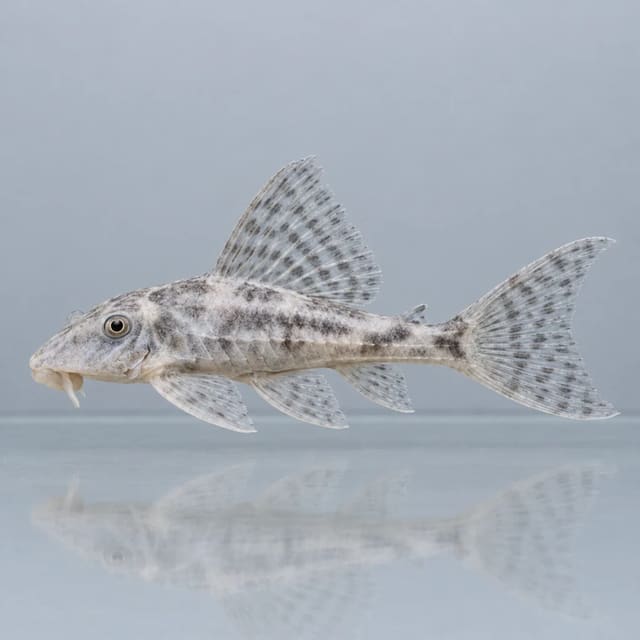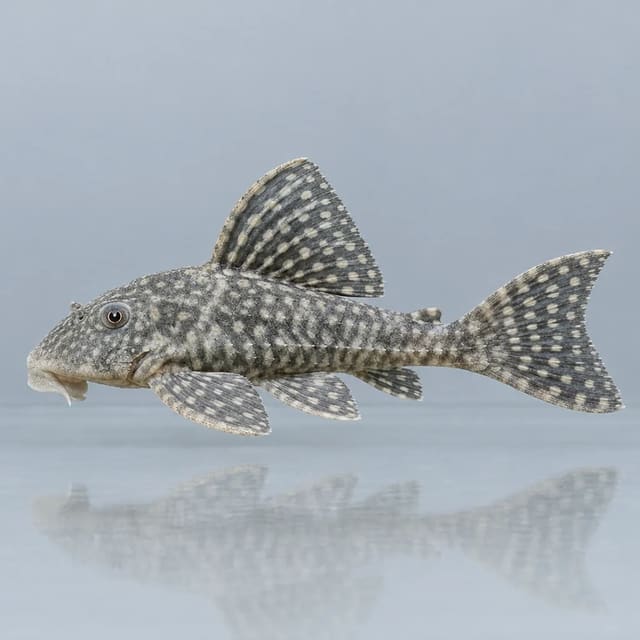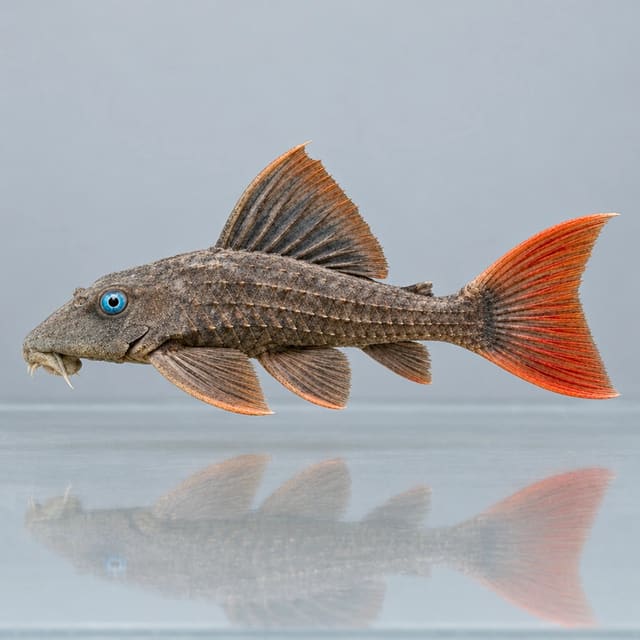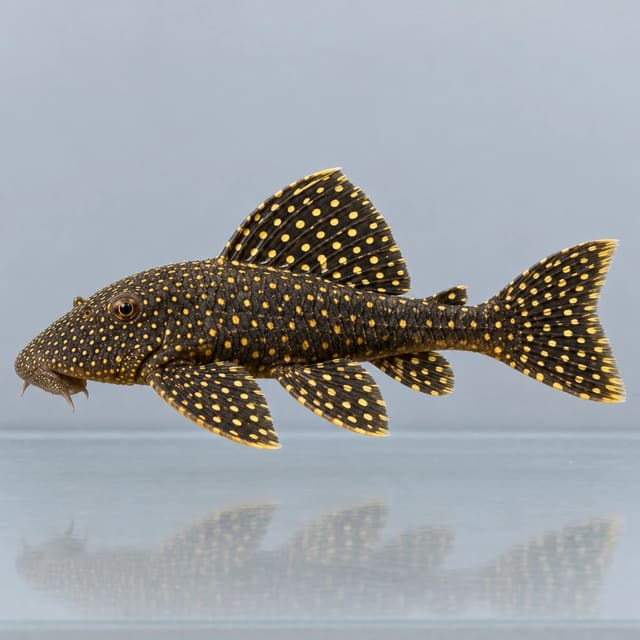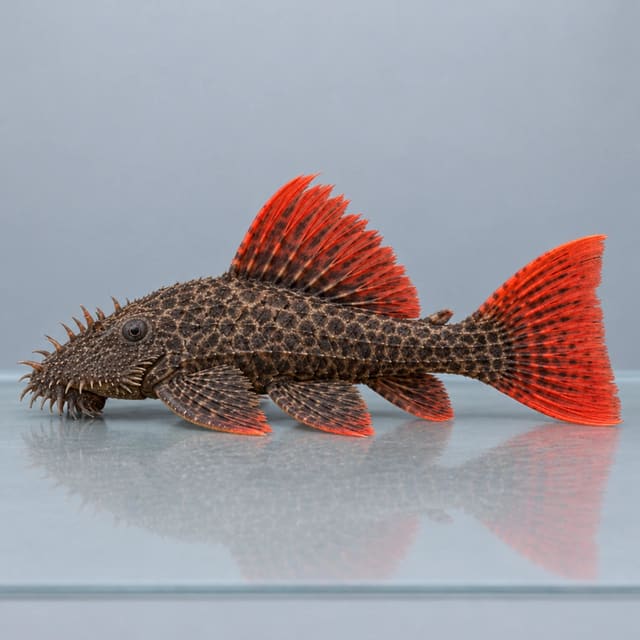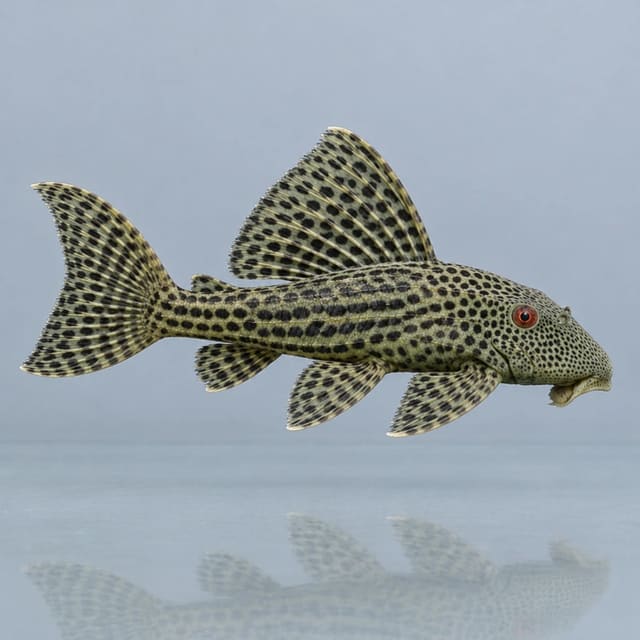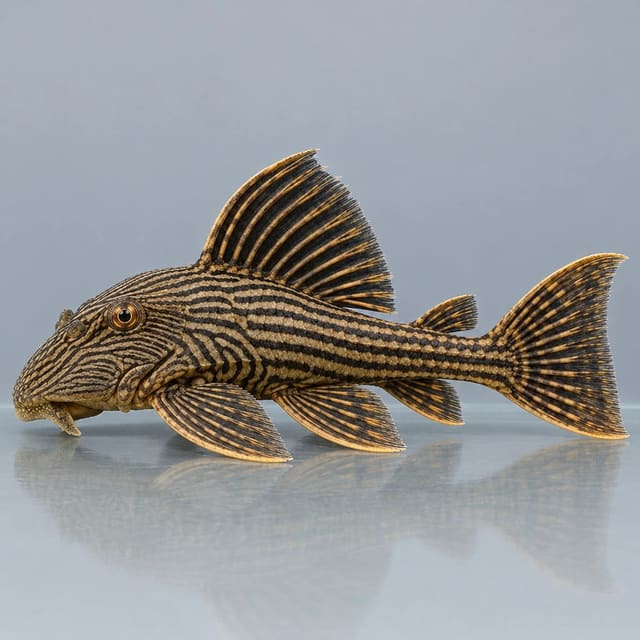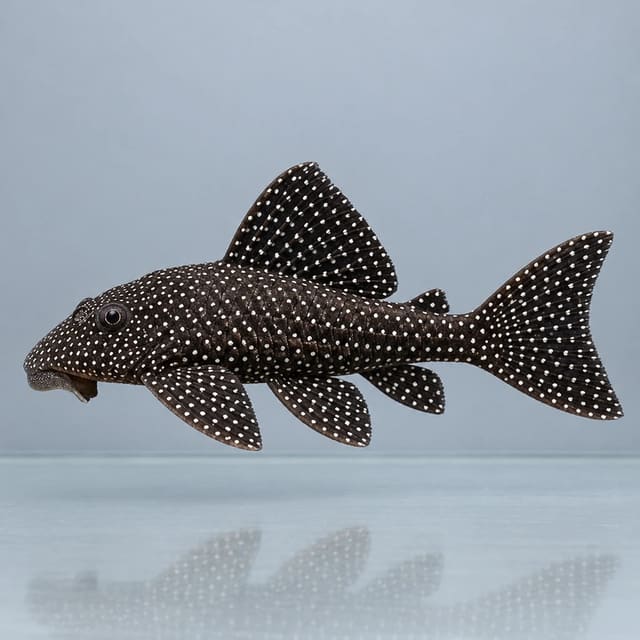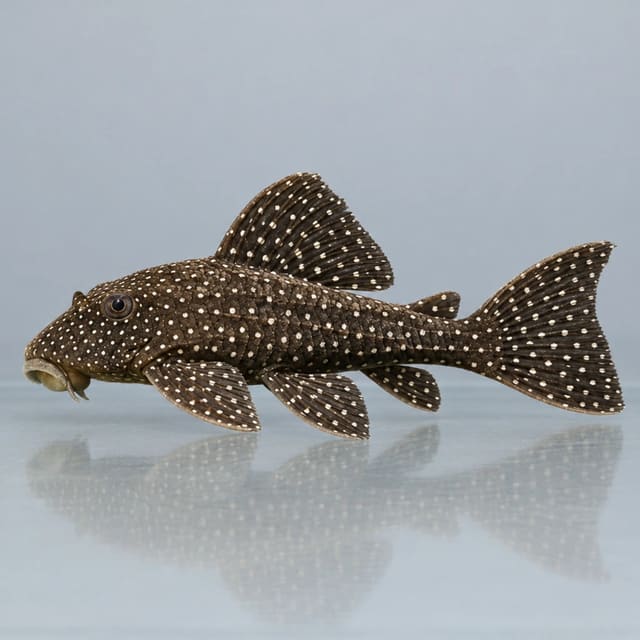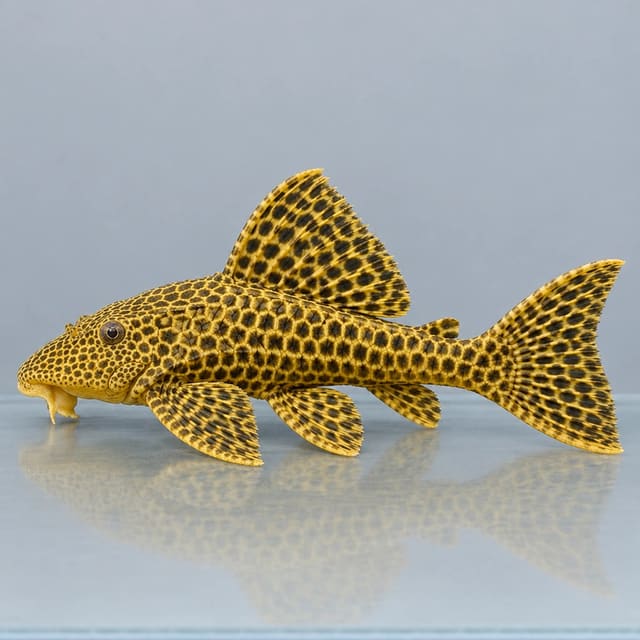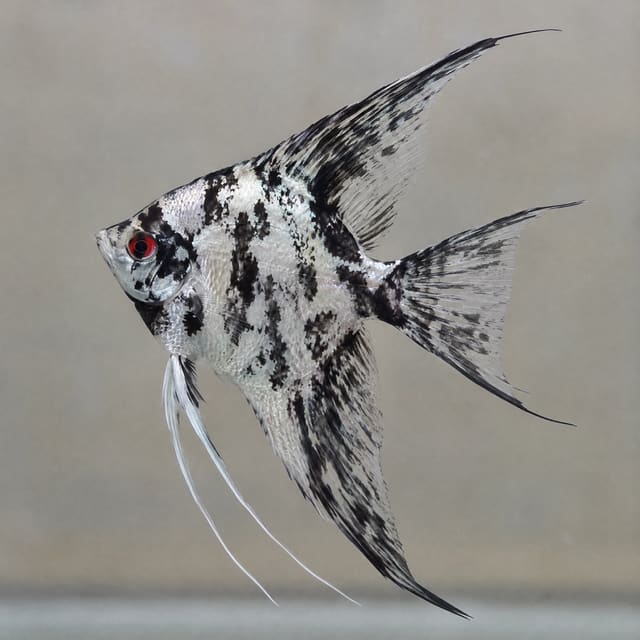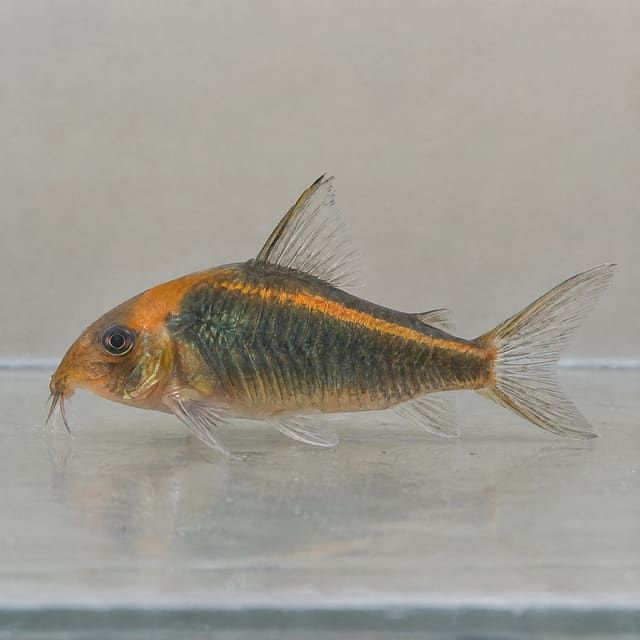
Gold Laser Cory (Osteogaster sp.) — CW010
22–27°C · pH 6–8
£24.99
Ageneiosus magoi, the Unicorn Catfish, is an active driftwood catfish from the Orinoco basin in Venezuela that reaches about 18 cm standard length. It needs a long aquarium with open water, driftwood and a strong current at 24–26°C, meaty carnivore foods and tank mates too large to swallow. One live fish per purchase.
Adult size is the maximum length this species reaches at full maturity (scientific sources). The livestock you receive will be younger and smaller. Product-photo provenance and any image-specific limitations are stated on the listing.
Ageneiosus magoi
Ageneiosus magoi, the Unicorn Catfish, is an active driftwood catfish from the Orinoco basin in Venezuela that reaches about 18 cm standard length. It needs a long aquarium with open water, driftwood and a strong current at 24–26°C, meaty carnivore foods and tank mates too large to swallow. One live fish per purchase.
Adult size is the maximum length this species reaches at full maturity (scientific sources). The livestock you receive will be younger and smaller. Product-photo provenance and any image-specific limitations are stated on the listing.
Read the full care guidance when planning conditions for your aquarium.
Ageneiosus magoi is a long, active catfish from the Orinoco basin in Venezuela, sold in the UK as the Unicorn Catfish and sometimes simply as a driftwood catfish. It belongs to the Auchenipteridae, the family that fishkeepers call driftwood catfishes or woodcats because many of its members wedge themselves into sunken wood by day. This one is different: Planet Catfish notes that, unlike most of its relatives, it can be very active during the day, swimming in open water against the current.
It is a fish for an experienced keeper with a long aquarium. It grows to about 18 cm standard length, it is a carnivore that will swallow any fish that fits in its mouth, and it needs clean, moving water. In return it is one of the more striking and unusual catfish you can keep, with a bold spotted pattern and a remarkable breeding display.
| Item | Detail |
|---|---|
| Scientific name | Ageneiosus magoi Castillo & Brull G., 1989 |
| Common names | Unicorn Catfish, Duck Catfish, Slopehead Catfish (Planet Catfish) |
| Family | Auchenipteridae, the driftwood catfishes |
| Type locality | Esteros de Camaguán, Guárico State, Venezuela |
| Named after | Francisco Mago-Leccia, a Venezuelan ichthyologist; said "ma-go-eye" |
| Adult size | 181 mm (about 18 cm) standard length |
The genus name comes from the Greek for "without a beard". Planet Catfish explains that Ageneiosus species do have barbels, but the maxillary pair is so short it is almost invisible, and the chin (mental) barbels are absent altogether. A fish with long, trailing whiskers is not an Ageneiosus. The head is long and slopes down to a broad, flattened snout, which gives the names Duck Catfish and Slopehead Catfish.
Planet Catfish describes the species as easily recognised by its black-and-white pattern, which varies a great deal between fish. Julian Dignall, who netted one in the Venezuelan llanos, describes white flanks with a half line of big black spots and golden fins. Wild fish often show yellow on the body and fins, and Planet Catfish notes that this fades after some time in an aquarium.
| Feature | What to look for |
|---|---|
| Head | Long, sloping, with a wide, flattened snout |
| Barbels | Very short maxillary barbels only; none under the chin |
| Pattern | Pale flanks with black spots and dashes, varying between fish |
| Fins | A spined dorsal fin, a long anal fin and a forked tail |
| Colour in wild fish | Some yellow on body and fins, fading in the aquarium |
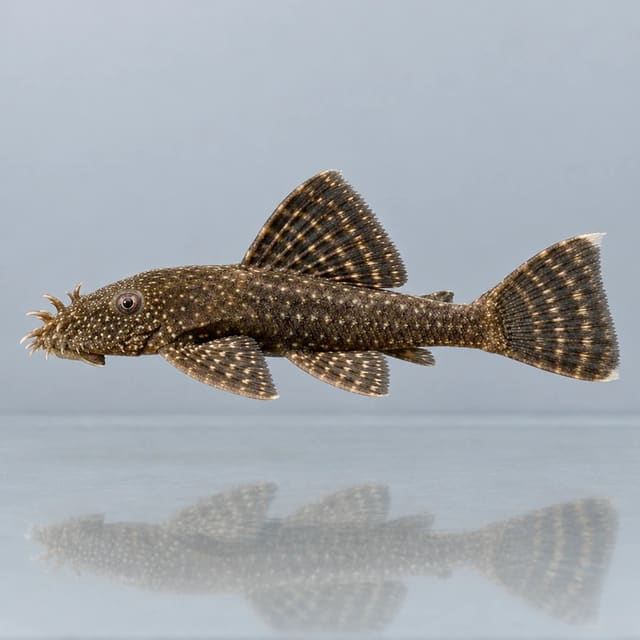
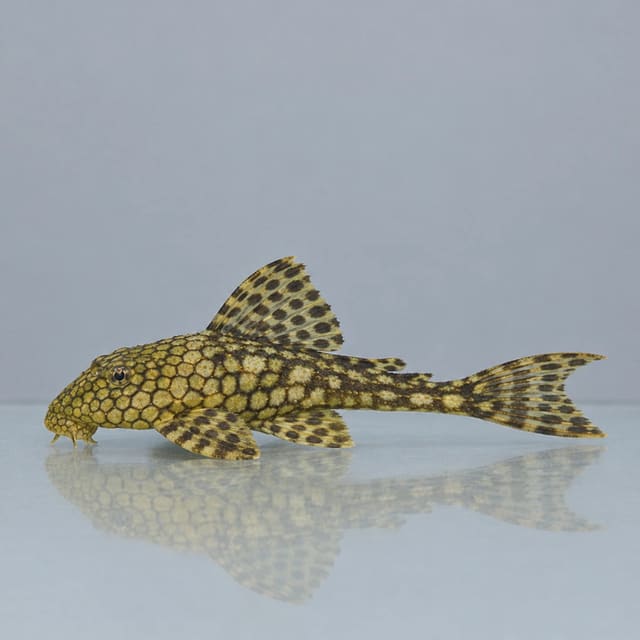
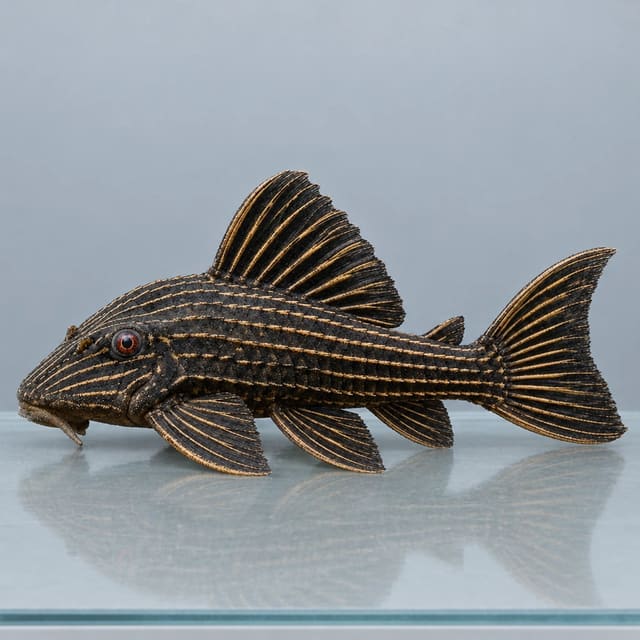
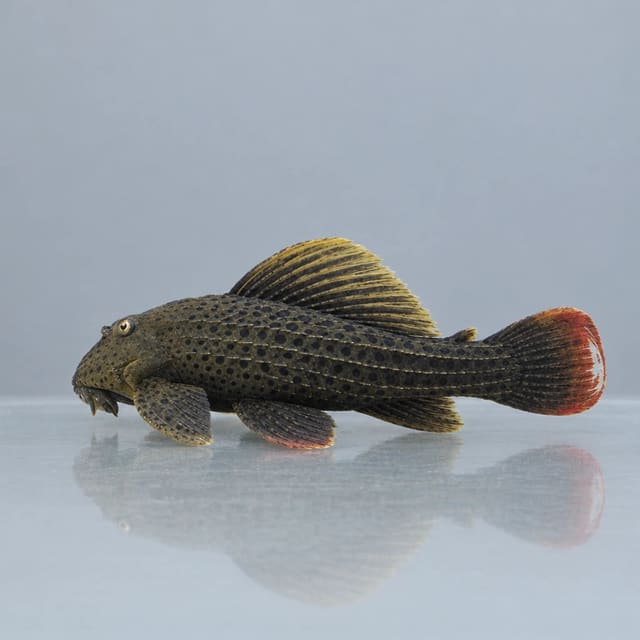
One purchase supplies one live Ageneiosus magoi in the standard size we receive. Sex is not specified, and it is hard to tell outside the breeding season. The price is for one fish. The gallery images are representative of the species; the pattern of spots differs from fish to fish, so yours will not match them exactly.
This species is peaceful towards fish too large to eat, and our sources describe keeping several together. Ginny Eckstein, whose 1994 article is summarised by Planet Catfish, bought a group of at least five and spawned them. Seriously Fish suggests four or more of the related A. marmoratus where space allows. A single fish also does well in a suitable large community.
Read our delivery and Live Arrival Guarantee policy before ordering, and have the aquarium running and tested before the fish arrives. More unusual species are in our rare and collector fish range.
Planet Catfish gives a maximum of 181 mm standard length, and FishBase gives the same 18.1 cm, measured without the tail fin, so a full-grown fish is noticeably longer overall. Some sellers quote 25–30 cm; we have found no source for that figure and use the published one.
None of our sources gives an aquarium size for this species. Seriously Fish recommends a base of at least 150 × 60 cm, about 540 litres, for Ageneiosus marmoratus, a close relative of the same size (185 mm), and warns that it is active, sometimes skittish and may injure itself by swimming into the glass. Planet Catfish asks for lots of swimming space for A. magoi. We therefore treat 150 × 60 cm as the minimum footprint for one fish and go larger for a group. Our tank volume calculator converts your tank's measurements into litres.
Planet Catfish asks for a few pieces of driftwood as hiding places, lots of swimming space and a strong current, noting that this species loves to swim against the flow and that a large pump is essential. Seriously Fish describes a similar set-up for A. marmoratus: soft sand, dim lighting, driftwood and roots, and plenty of open water. Keep the décor at the back and sides so the middle and front stay clear.
Use soft sand as the substrate; OATA recommends sand or fine gravel for all catfish to protect the barbels and underside. Secure every piece of wood and rock so a fast-moving fish cannot dislodge it, and protect the heater, as OATA advises for large fish.
| Area | Purpose |
|---|---|
| Long open channel along the front and middle | Swimming space against the current |
| Driftwood and roots at the back | Shelter and shade, used more by day in new fish |
| Strong pump or filter outlet at one end | A steady flow along the length of the tank |
| Soft sand floor | Safe resting and feeding surface |
| Floating plants or dim lighting | A calmer fish that is less likely to dash into the glass |
Planet Catfish gives the water values for this species. FishBase gives none beyond "tropical". The OATA catfish guide gives broad values for catfish as a group, and Seriously Fish gives values for the related A. marmoratus. The target column uses the band where these overlap.
| Value | Planet Catfish (A. magoi) | OATA (catfish in general) | Seriously Fish (A. marmoratus) | Our target |
|---|---|---|---|---|
| Temperature | 23–30°C | 22–27°C | 22.5–26°C | 24–26°C |
| pH | 6.4–7.0 | Not given | 6.0–7.0 | 6.5–7.0 |
| General hardness | Not given | 4–18 dGH | 3–10 dGH | 4–10 dGH |
UK tap water ranges from soft to very hard depending on where you live, and much of it is above pH 7. Test your own water before the fish arrives. If it is hard and alkaline, mixing in reverse osmosis water brings it into range; our water matcher and water chemistry guide explain how. Change values slowly; a stable, slightly soft and slightly acidic tank is better than one that swings.
Temperature, pH and hardness describe the habitat. Ammonia, nitrite and nitrate describe waste. OATA's targets are zero ammonia, zero nitrite and nitrate no more than 20 mg per litre above your tap water. A large carnivore produces a lot of waste, so test weekly and after every change to stocking or feeding.
Seriously Fish recommends efficient filtration, such as a large external canister or a sump, for A. marmoratus, and weekly water changes of 30–50%. It also warns that the fish is sensitive to organic pollution and should never go into a newly set-up tank. Plan the same for A. magoi. The filter return doubles as the current Planet Catfish asks for. Our guide to aquarium filtration covers mechanical, biological and chemical stages.
Planet Catfish calls this species a voracious feeder that eats anything that fits in its mouth, including large frozen foods and pellets, and warns that a diet of feeder goldfish is both one-sided and a disease risk. Ginny Eckstein's group adapted readily to prepared foods such as freeze-dried krill. Seriously Fish describes the related A. marmoratus as an obligate carnivore: new imports may at first take only live fish, but most can be weaned onto thawed whitebait or shellfish, and some onto carnivore pellets. It advises against mammal or bird meat.
We recommend thawed frozen foods and pellets rather than live feeder fish. OATA's rule for catfish is to feed what is eaten within a few minutes, once a day, and to remove leftovers.
| Food | Role | How often |
|---|---|---|
| Thawed krill, mysis or prawn | Main meaty food, easy to accept | Most days |
| Thawed whitebait or lancefish pieces | A fish-based food without live-feeder risks | Two or three times a week |
| Sinking carnivore pellets | Balanced nutrition once the fish accepts them | Alternate days |
| Earthworms or large bloodworm | Tempting food for a new or shy fish | Occasionally |
Feed in the evening at first, close to the driftwood, and move feeding towards open water as the fish settles. If other catfish take most of the food, add a second feeding point.
Many fish of this kind are wild-caught. OATA's advice is to switch off the aquarium lights, float the sealed bag for about 10 minutes so the temperatures match, then add small amounts of tank water over about 20 minutes before releasing the fish with as little bag water as possible. For sensitive or wild-caught fish, OATA describes a slower drip method. OATA also recommends that catfish are double-bagged because of their spines, so handle the bag with care. Our guide to acclimatising new fish walks through both methods.
| When | Check | Action |
|---|---|---|
| Day 1 | Fish hiding by the wood, lights off | Leave it alone; do not feed until the next evening |
| Days 2–3 | Breathing steady, fins open | Offer a small meal of thawed krill or mysis at dusk |
| Days 4–5 | Ammonia and nitrite still zero | Test daily; change water if either rises |
| Days 6–7 | Swimming in the current, eating well | Increase to normal meals and introduce pellets |
Planet Catfish puts it simply: this catfish ignores fish it cannot swallow. It suggests larger catfishes such as other auchenipterids, doradids and loricariids, and non-aggressive characins such as Metynnis. Seriously Fish lists similar company for A. marmoratus, adding eartheaters such as Geophagus. Our tank mates tool checks any combination you are considering.
| Suits | Avoid |
|---|---|
| Deep-bodied silver dollars such as the Striped Silver Dollar and Spotted Red-Cheek Silver Dollar | Tetras, rasboras, corydoras and any fish small enough to swallow |
| Robust doradids such as the Striped Raphael Catfish | Small woodcats such as Tatia, which share the family but would be eaten |
| Larger plecos such as the Leopard Sailfin Pleco; see our pleco care guide | Aggressive cichlids that chase or corner it |
| Peaceful large characins such as the Silver Prochilodus | Shrimp, snails and fin-nipping fish |
Check each companion's adult size and water needs as well as its body size; they should all suit a long, flowing, slightly soft tank at 24–26°C. More ideas are in our catfish and plecos range, the South American catfish category and our centrepiece fish.
OATA lists the signs of a healthy fish as clear eyes, undamaged fins, no ulcers or bumps, normal swimming and steady breathing. Changes in swimming, appearance or appetite are the earliest warnings. Like other driftwood catfishes, this species has strong spines in the dorsal and pectoral fins; use a large, soft net or a container and avoid lifting it by hand.
| You see | Likely cause | Action |
|---|---|---|
| Yellow tones fading over weeks | Normal for wild fish, as Planet Catfish notes | No action needed |
| Rapid breathing at the surface | Low oxygen or rising ammonia | Test, change water, increase surface movement |
| Scrapes on the snout or head | Dashing into glass or décor | Dim the lights, add cover, clear the swimming lane |
| Refusing food for more than a few days | Stress or unfamiliar food | Offer earthworm or thawed krill at dusk; check water |
| White spots, cloudy eyes or frayed fins | Infection after stress | Test water first, then treat with a suitable remedy |
Driftwood catfishes breed by internal fertilisation. Planet Catfish and FishBase explain that the male's anal fin forms a mating organ, and that breeding males change shape: the dorsal-fin spine becomes longer, curved and serrated, and the short barbels become stiff, bony and toothed, so the male can clasp the female. After breeding these features shrink back. FishBase records that the type of spawning is still unknown.
Ginny Eckstein's 1994 account, summarised by Planet Catfish, describes her group developing these changes after about six months, within six to eight days, and an alpha male changing in 24 hours. Subordinate males flicked their dorsal spines fully forward and back, the display behind the name Unicorn Catfish. Spawning happened about twice a year and lasted around ten days; the fry were not reported, and Planet Catfish has no breeding report on file.
It is Ageneiosus magoi, a slender, active catfish of the family Auchenipteridae (the driftwood catfishes or woodcats) from the Orinoco basin in Venezuela. Planet Catfish lists Unicorn Catfish, Duck Catfish and Slopehead Catfish as its common names.
Planet Catfish and FishBase both give 181 mm, about 18 cm, standard length, which is measured without the tail fin. Some sellers quote 25–30 cm; we have not found a source for that and use the published figure.
No source gives a figure for this species. Seriously Fish recommends a base of at least 150 × 60 cm for Ageneiosus marmoratus, a close relative of the same size, and Planet Catfish asks for plenty of swimming space and a strong current, so we plan on that footprint as a minimum.
Planet Catfish gives 23–30°C and pH 6.4–7.0. We suggest holding 24–26°C and pH 6.5–7.0, inside every published range, with zero ammonia and nitrite and very low nitrate.
It is a carnivore that eats anything that fits in its mouth. Aim for a diet of thawed frozen foods such as krill, mysis, prawn and pieces of whitebait, plus sinking carnivore pellets. Planet Catfish warns against a diet of feeder goldfish.
It will eat any fish small enough to swallow and ignores fish it cannot swallow. Keep it only with fish that are clearly too big for its mouth, such as silver dollars, robust doradids and larger plecos.
Yes, if the tank is large enough. Ginny Eckstein kept and spawned a group of at least five, and Seriously Fish suggests four or more of the related A. marmoratus. One fish is also fine in a suitable community.
Outside the breeding season it is difficult; females are fuller in the body. Breeding males grow a longer, curved, serrated dorsal spine and stiff, toothed barbels, and their anal fin forms a mating organ. These changes fade after spawning.
No reviews for this item yet. Bought one? Honest reviews only, good or bad.
What customers say about ordering from us
Easy website plenty of info on fish your buying great to pick a time slot
TRACEY DURRANT · 7 Oct 2026
Got some lovely fish thank you
Kevin Mackie · 7 Oct 2026
Reviews of our shop, collected by Judge.me, an independent third-party review collector. Newest first.
Moved by UK carriers licensed to handle live animals
Hand-packed with oxygen bags, poly box, heat pack
Email photos the same day; an optional unboxing video helps us review problems faster — claim terms apply
Klarna & PayPal Pay in 3 at checkout