Advanced
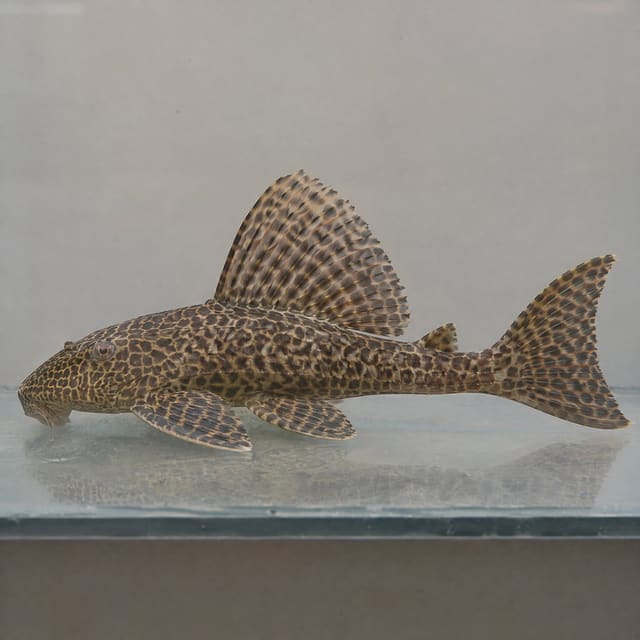
L600 Leopard Cactus Pleco (Pseudacanthicus leopardus)
25–29°C · pH 6–7.5
£115.39
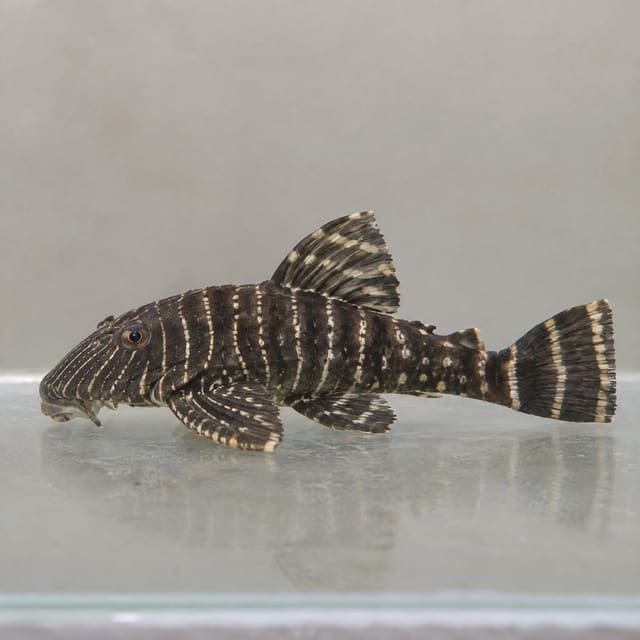
The L025 Scarlet Cactus Pleco (Pseudacanthicus pirarara) is a giant spiny pleco from Brazil's Rio Xingu with a dark, black-spotted body and scarlet fins. It reaches 40–45 cm, eats a meaty diet and is fiercely territorial, so it needs a very large, heavily filtered river aquarium as the centrepiece fish. Sold individually as one live fish.
Adult size is the maximum length this species reaches at full maturity (scientific sources). The livestock you receive will be younger and smaller. Product-photo provenance and any image-specific limitations are stated on the listing.
Pseudacanthicus pirarara
The L025 Scarlet Cactus Pleco (Pseudacanthicus pirarara) is a giant spiny pleco from Brazil's Rio Xingu with a dark, black-spotted body and scarlet fins. It reaches 40–45 cm, eats a meaty diet and is fiercely territorial, so it needs a very large, heavily filtered river aquarium as the centrepiece fish. Sold individually as one live fish.
Adult size is the maximum length this species reaches at full maturity (scientific sources). The livestock you receive will be younger and smaller. Product-photo provenance and any image-specific limitations are stated on the listing.
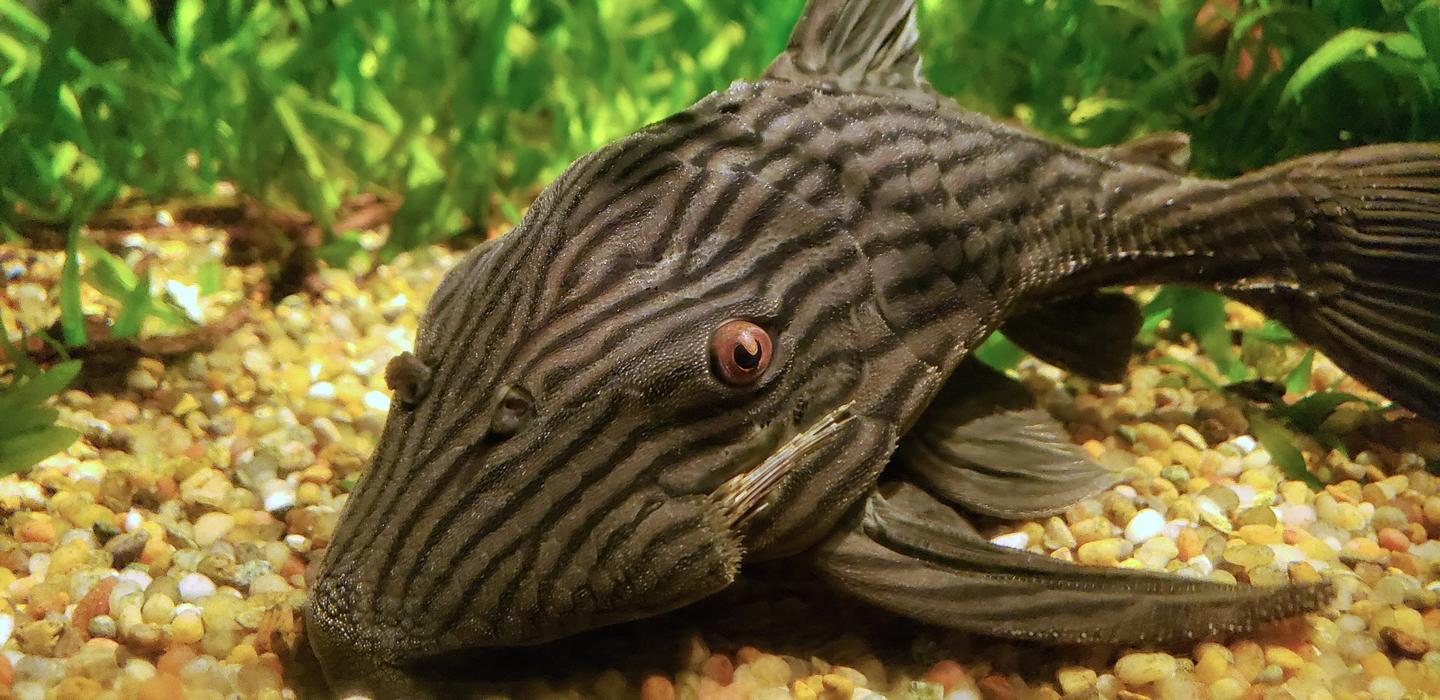
‘Pleco’ is a loose aquarium-trade label, not one species or one care sheet. Before buying, confirm the scientific name or defensible L-number, adult size and measurement method, required footprint, temperature and water, diet, social plan and source. No universal pleco tank size, menu or algae result is honest.
Read the full care guidance when planning conditions for your aquarium.
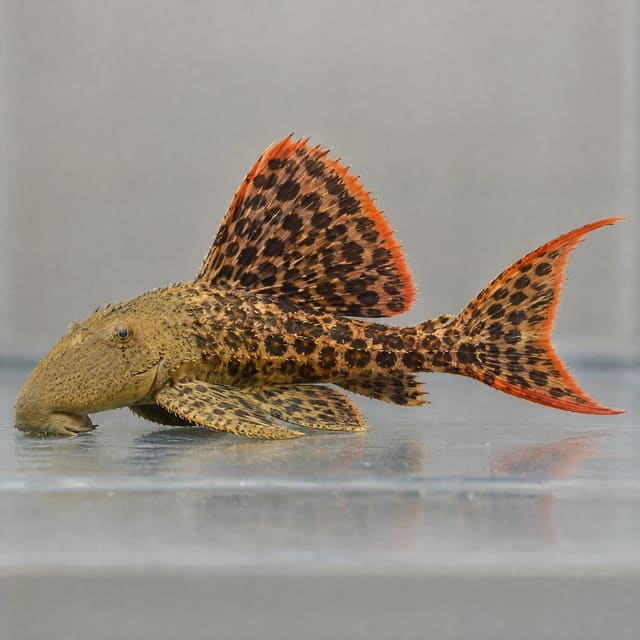
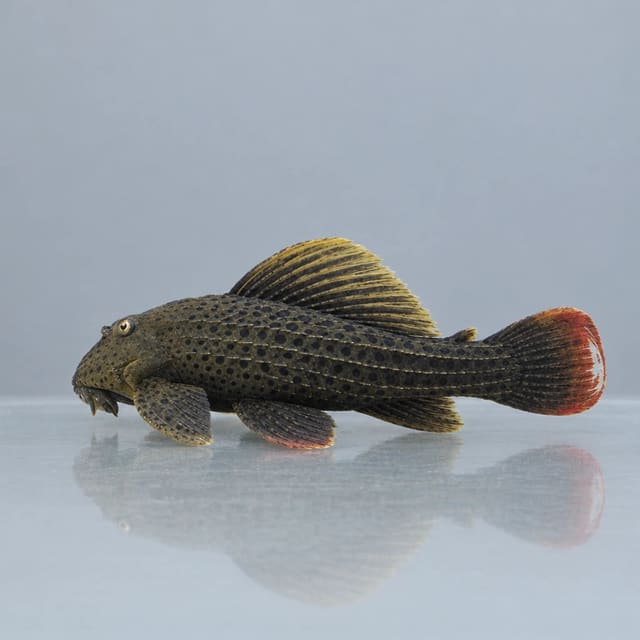
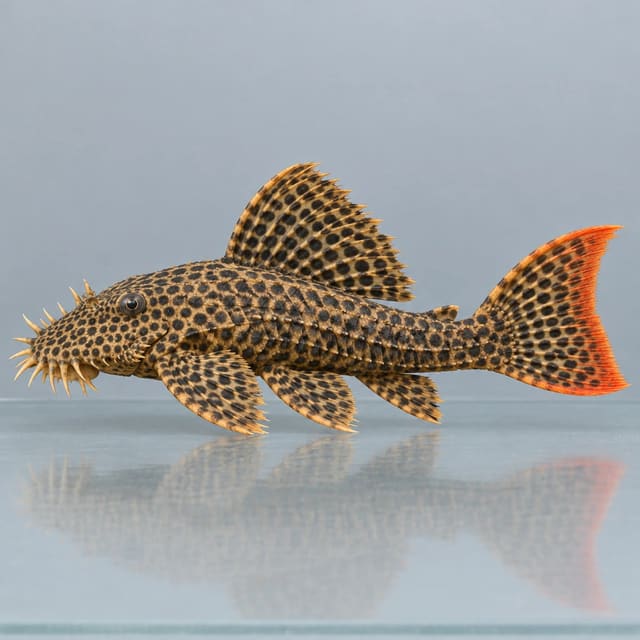
The L025 Scarlet Cactus Pleco (Pseudacanthicus pirarara) is one of the most dramatic suckermouth catfish in the hobby and one of the largest. Its dark brown body is covered in black spots and studded with rows of pointed odontodes, the tooth-like bristles that give cactus plecos their name, while the dorsal fin, tail and the edges of the other fins glow red to scarlet. It comes from the lower and middle Rio Xingu in Brazil and its tributaries, the Rio Bacajá and the Rio Iriri.
It was traded for decades as L025 before Chamon and Sousa described it scientifically in 2016 as Pseudacanthicus pirarara. Planet Catfish explains the name: local fishermen call it "assacu-pirarara", where pirarara refers to the reddish fins (it is also the Brazilian name of the red tail catfish) and assacu is a rainforest tree whose bark is covered in conical spines. This is a fish for an experienced keeper with a very large aquarium.
| Name | What it means |
|---|---|
| L025 (also written L25 or L-025) | The trade code this fish carried before it had a scientific name |
| Scarlet Cactus Pleco | The English trade name used by Planet Catfish, from the red fins and spiny body |
| Pseudacanthicus pirarara Chamon & Sousa, 2016 | The scientific name, described from the Rio Xingu at Senador José Porfírio |
| Cactus pleco | A name for the whole genus Pseudacanthicus, so check the L-number as well |
Planet Catfish places Pseudacanthicus in the Acanthicus group of plecos, which share rows of keels of pointed odontodes along the sides of the body, eight or more dorsal-fin rays and enlarged odontodes along the edge of the snout. Pseudacanthicus also has a narrow upper jaw with a small number of long, curved teeth. Compared with L024, L025 shows considerably more red in the fins and more pronounced black spots, and its eyes give it a hooded, almost "evil" look. Browse its relatives in our Acanthicus plecos range, every coded catfish in our L-number plecos category, the wider South American catfish range, our centrepiece fish or the full catfish and plecos collection.
One purchase supplies one live L025 Scarlet Cactus Pleco at the standard size offered on this listing. Whatever its length on arrival, it is the same species that reaches 40–45 cm, so make every decision about the aquarium for the adult fish.
Sex is not specified. Planet Catfish describes mature males as carrying considerably more odontodes on most fin rays, especially the pectoral fins, while females fill out much more than the slender males. These differences only show in large, mature fish.
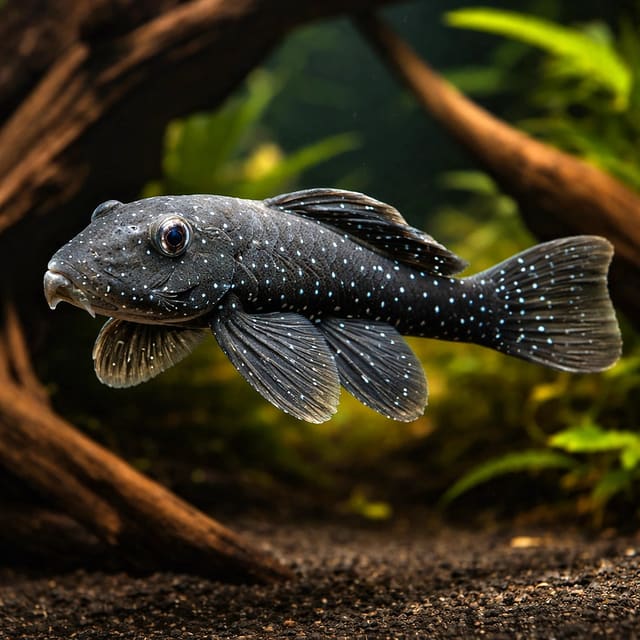
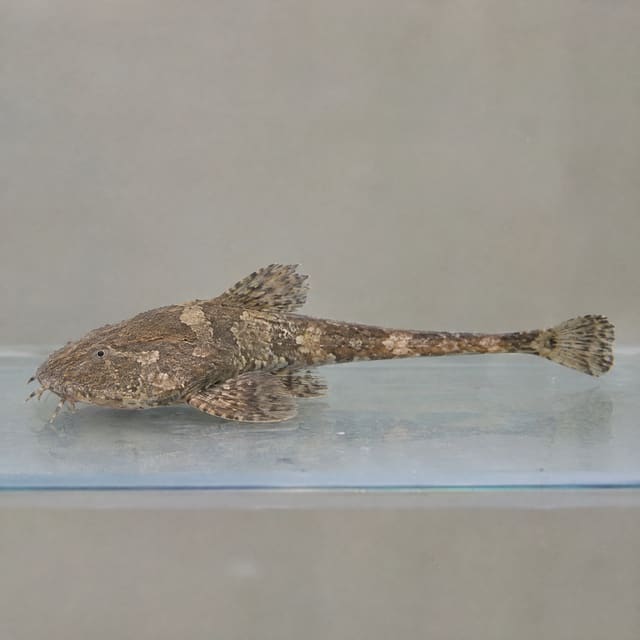
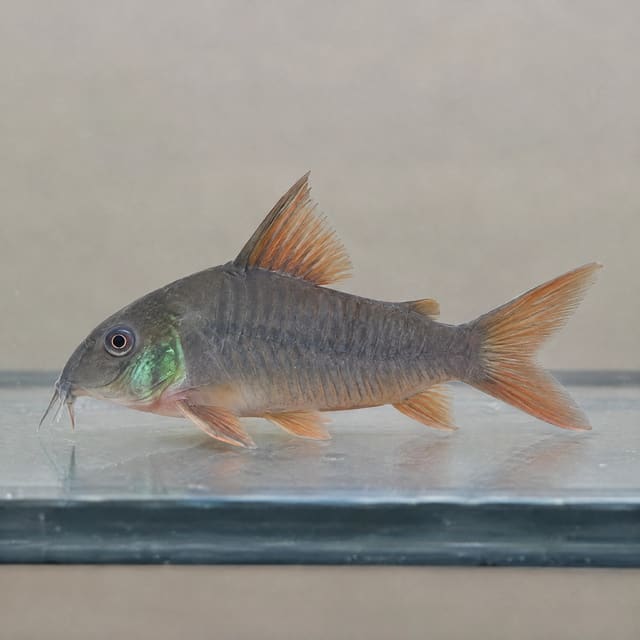
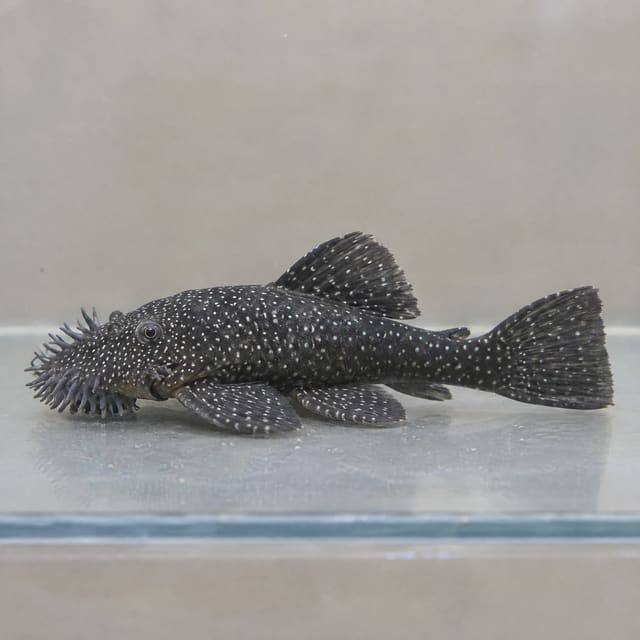
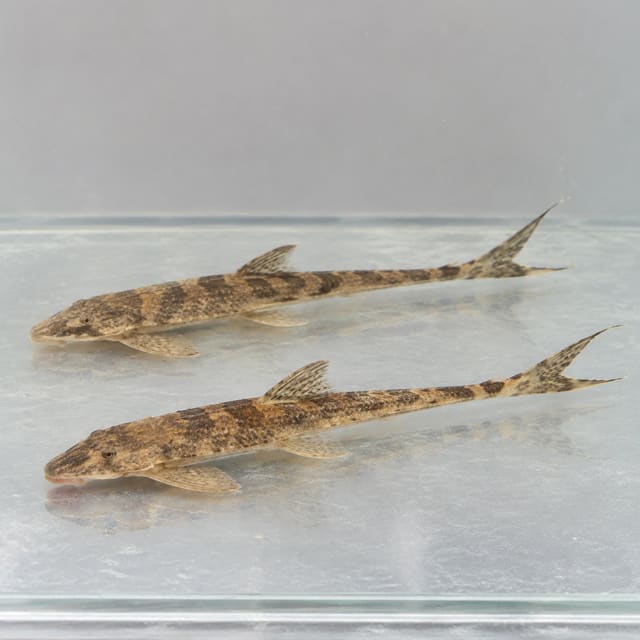
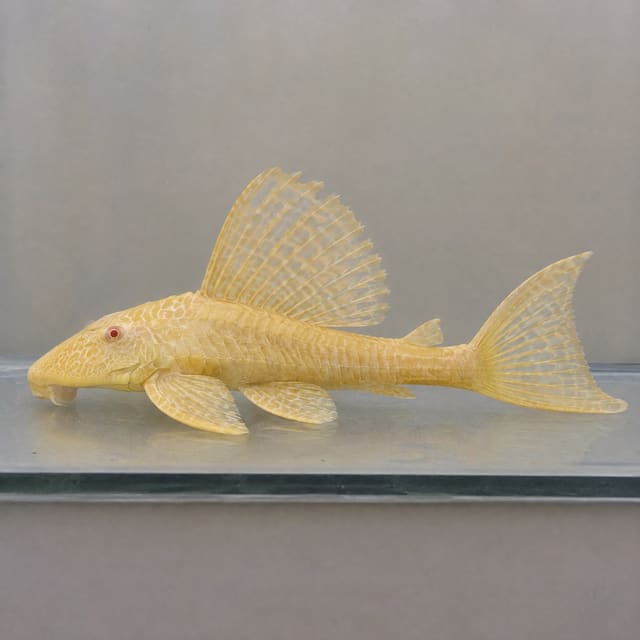
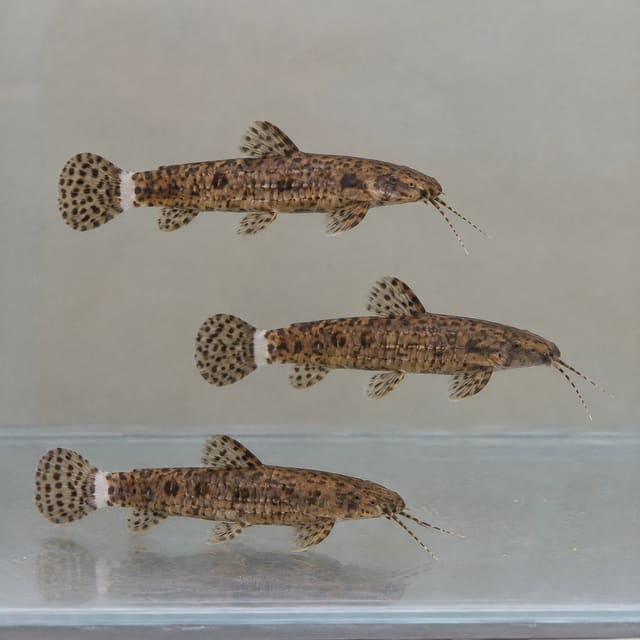
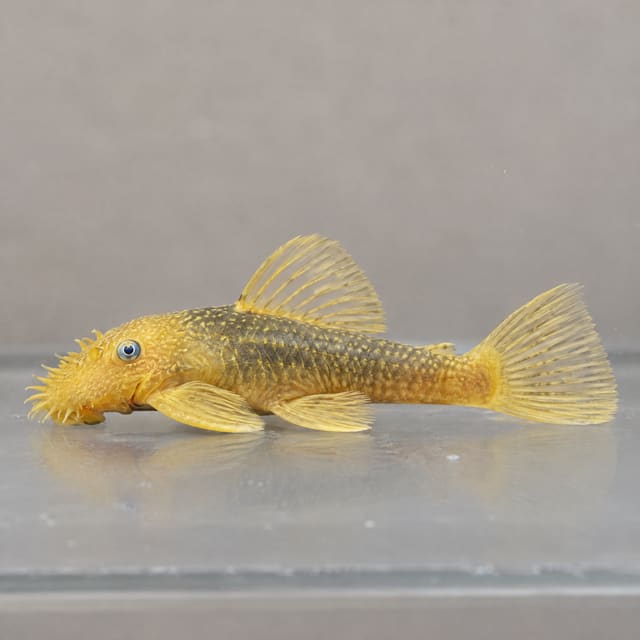
The photographs show the species, not the individual you will receive. The amount of red in the fins, the density of the black spots and the body shade vary between fish and with mood and lighting, so expect some difference from the pictures.
Before ordering, read our delivery and Live Arrival Guarantee information and have the aquarium running and mature, so the fish goes straight into stable water.
No source publishes a minimum aquarium size for L025 itself, so we work from its relatives and from keepers. Seriously Fish asks for a base of at least 180 × 60 cm, about 648 litres, for the L114 leopard cactus pleco, which grows to only 250 mm. OATA's guidance on very large fish says such species need an exceptionally large aquarium, often well over 500 litres, and that an off-the-shelf tank is unlikely to be big enough in the long term. The keeper who spawned L025 for Planet Catfish kept three adults of 30–35 cm standard length in a 1,600-litre aquarium.
Take 180 × 60 cm as the absolute floor while the fish is young, and plan a larger tank for the adult. As with all big plecos, floor area matters more than height: this fish spends its life on the bottom and in caves, so a long, deep tank serves it far better than a tall one of similar volume.
Our tank volume calculator turns your tank's dimensions into litres, and our stocking calculator helps you see how much of a tank's capacity one large pleco uses before you add anything else.
Planet Catfish describes L025 as fairly reclusive and says it needs robust decoration and cover to hide in. It adds a warning: make sure no other fish tries to dispute ownership of that cover, because this pleco will fight for its territory. Seriously Fish recommends a flowing-river layout for its relative L114: variably sized rocks, sand and fine gravel with some water-worn boulders, plus driftwood branches and terracotta pipes arranged into nooks and shaded spots with broken lines of sight.
| Area | Purpose |
|---|---|
| Large cave or pipe | Its home base; the keeper who spawned L025 describes a cave 50 cm deep |
| Boulders and rock piles | Heavy, stable structure it can push against without anything moving |
| Sand and fine gravel | A floor that is kind to its underside and easy to siphon |
| Driftwood and shade | Broken lines of sight, which reduce clashes with tank mates |
| Open midwater | Swimming room for the midwater fish that share the tank |
OATA warns that large fish can knock over décor, so bed every rock and cave directly on the glass before adding sand and check that nothing can topple. Fit a secure, fish-proof cover, as OATA advises for very large fish, which can be jumpy when they arrive in a new tank.
Planet Catfish gives 24–26°C and pH 6.0–7.4 for L025, and stresses clear, well-oxygenated water. The sources are thin here and do not fully agree: the keeper who spawned it reports a tank of around 28°C, a temporary drop to 24°C during the water changes that seem to have triggered spawning, and fry that only fed well at 28°C. No hardness range is published for L025; Seriously Fish gives 1–15 dGH and 24–30°C for its relative L114. We suggest staying within 24–28°C, the span those reports cover, and holding the temperature steady.
| Reading | Target |
|---|---|
| Temperature | 24–26°C (Planet Catfish); breeding reported near 28°C |
| pH | 6.0–7.4 |
| General hardness | Not published for L025; 1–15 dGH for the related L114 |
| Ammonia | Zero mg/l |
| Nitrite | Zero mg/l |
| Nitrate | No more than 20 mg/l above your tap water |
The waste limits come from OATA's catfish care sheet. In a tank with a large carnivore they are the readings that go wrong first, long before pH or hardness drift.
UK tap water varies a great deal from region to region. Soft and moderately hard supplies suit this fish well, while very hard water in parts of southern and eastern England may need blending with reverse-osmosis water. Your water company publishes the hardness for your postcode. Always treat tap water with a conditioner that removes chlorine and chloramine. Our water matcher compares your readings with this fish's range, and our water chemistry guide explains each reading.
Planet Catfish is blunt: Pseudacanthicus are big, messy carnivores and, like all large plecos, produce vast amounts of waste, so housing one with other large fish would need monumental filtration. OATA agrees that very large fish may need several large aquarium filters or even a pond filter to deal with the solid waste. For the 648-litre tank it recommends for L114, Seriously Fish suggests two filters each rated at roughly 1,295–1,620 litres per hour, four to five turnovers an hour in total, and about 150–225 W of heating across four heaters, assuming a room near 20°C.
Add strong water movement and aeration: Planet Catfish asks for clear, well-oxygenated water, and the keeper who spawned it ran a Xingu river tank. OATA advises protecting heaters from damage in tanks with large fish, so fit guards or place heaters in a sump.
The published spawning began after a nitrate spike forced three 400-litre water changes in three days, a reminder of how quickly waste builds up in a big-fish tank and how well this species responds to large volumes of fresh water.
Planet Catfish describes L025 as a carnivore, although not a predator. It names prawns and chopped mussel as favourites that promote good growth, and says some vegetable food should also be offered to balance the diet. Seriously Fish's advice for L114 fills in the detail: sinking dried foods, frozen daphnia, mosquito larvae and bloodworm, prawn or shrimp, plus some fresh fruit and parboiled potato, or a home-made, gelatine-bound mix of seafood, vegetables and Spirulina.
Remove anything uneaten the next morning. Meaty foods foul the water quickly, so feed what is cleared and no more, and watch the belly: rounded is right, hollow means it is not getting its share.
Add the fish only to an aquarium with a mature filter, ammonia and nitrite at zero and the temperature already set. OATA recommends the floating-bag method: switch the aquarium lights off, float the sealed bag for about 10 minutes so the temperatures match, then add small amounts of tank water to the bag over up to 20 minutes before releasing the fish with as little bag water as possible. Our guide on how to acclimatise new fish walks through each step.
Handle it with care. Its odontodes and fin spines snag in nets and can puncture bags, which is why OATA advises double-bagging catfish and handling them carefully. Guide it into a container rather than lifting it in a net, and keep your hands clear of its spines.
| Checkpoint | What to do |
|---|---|
| Before release | Test ammonia, nitrite, temperature and pH, and make sure its cave is already in place |
| First evening | Keep the lights off and offer a small meaty meal near the cave |
| Days 2–3 | Expect it to hide; check at dusk for signs that food is being taken |
| Day 4 | Retest ammonia and nitrite, because meaty feeding adds load quickly |
| End of week | Do the normal water change and watch how tank mates behave near its cave |
Planet Catfish calls L025 aggressively territorial and warns that it may cause problems with similar-sized night-active fish. It notes that big, tough plecos are often kept with large, brutish fish such as oscars, but advises against it for Pseudacanthicus: the combined waste would demand monumental filtration. Its recommendation is to treat the cactus pleco as the centrepiece and stock the tank with medium-sized, preferably omnivorous fish, adding that barbs of all sizes work surprisingly well.
From our barbs, the Denison Barb and the Clown Barb are active, medium-sized midwater fish of that kind. Check each species' own temperature and water range against this pleco's with our tank mates tool before mixing.
| Suits | Avoid |
|---|---|
| Medium-sized, preferably omnivorous midwater fish | Similar-sized night-active fish |
| Barbs of all sizes, as Planet Catfish suggests | Other large plecos and bottom dwellers that would contest its cave |
| Robust characins that stay off the floor | Large, messy predators that double the waste load |
| Fish that share its water range | Shrimps, snails and small, slow bottom fish |
If you are choosing between cactus plecos, compare it with the L114 Leopard Cactus Pleco, the L273 Titanicus Pleco and the related Adonis Pleco. They are alternatives, not tank mates: two spiny giants in one tank will fight over territory.
OATA's warning signs for catfish apply: clamped fins, flicking against gravel or décor, shimmying, changes in breathing or appetite and long spells of hiding. With a large carnivore, poor water from waste and leftover food is the most likely cause of trouble, so test before you treat.
| If you see | Do this |
|---|---|
| Fast breathing or resting near the surface | Test ammonia and nitrite at once and increase aeration and flow |
| Hollow belly after the first week | Feed meaty foods near the cave after dark and check tank mates are not taking it |
| Clamped fins, flicking or rubbing on décor | Test the water, do a water change and look closely for parasites |
| White spots or fluffy growths | Test the water and follow our white spot guidance |
| Torn fins on tank mates | Look for clashes at the cave and add cover or rehome the fish involved |
| Cloudy or smelly water | Remove leftovers, cut the feed and change water; check the filter |
Do not diagnose from one sign alone; similar behaviour can follow poor water, low oxygen, bullying or hunger. If white spots appear, our white spot treatment guide explains the next steps; read any medicine's label for warnings about catfish before using it. Our pleco care guide covers the routine checks that apply to every suckermouth catfish.
Planet Catfish's data sheet still describes breeding as unknown but almost certainly in caves, yet it also links to a detailed hobby spawning. In that 2009 account, a keeper bought three mature wild adults and housed them in a 1,600-litre Xingu-style aquarium with other river fish. After a nitrate spike he made three large water changes, mostly with rainwater, and the temperature fell to 24°C. The male was soon seen fanning inside a deep cave with a second fish that later proved to be a female, and a week later the pair spawned in another cave, the male guarding a large clutch by covering it with his body and fins.
When a predatory cichlid began raiding the cave, the keeper removed the eggs to a hastily set-up 54-litre nursery. Many were lost; hatching began six days after spawning rather than the eight days he expected at 28°C. The fry only fed well once the nursery was covered and warmed from about 25–26°C to 28°C, and 32 fry were still alive at 30 days. He concluded that the clutch had been moved too early and that a bare-bottomed nursery with daily water changes stopped the losses.
It is L025, Pseudacanthicus pirarara, a large spiny pleco from the lower and middle Rio Xingu and its tributaries the Rio Bacajá and Rio Iriri in Brazil. It has a dark body with black spots, rows of pointed odontodes along its sides and red to scarlet fins. It was known only by its L-number until it was described in 2016.
Very big. Planet Catfish gives 450 mm standard length and notes that individuals over 40 cm have been imported; FishBase gives a maximum of 40.5 cm total length and 950 g. Plan for a fish of 40–45 cm.
No minimum is published for L025 itself. Seriously Fish asks for at least 180 × 60 cm (about 648 litres) for the smaller 25 cm L114 cactus pleco, OATA says very large fish often need well over 500 litres, and the breeder who spawned L025 kept his adults in 1,600 litres. Treat 180 × 60 cm as the floor and plan larger for an adult.
Meaty foods. Planet Catfish calls it a carnivore, though not a predator, with prawns and chopped mussel as favourites, plus some vegetable matter to balance the diet. Sinking carnivore pellets and frozen bloodworm make good everyday foods.
It is aggressively territorial over its cave. Planet Catfish warns that it will fight for territory and, with its spines and hooks, can cause serious damage, especially to similar-sized night-active fish. Keep it as the only large bottom dweller.
Planet Catfish gives 24–26°C and pH 6.0–7.4 with clear, well-oxygenated water; the published spawning took place near 28°C. Keep ammonia and nitrite at zero and nitrate within 20 mg/l of your tap water.
No. Planet Catfish says L025 is similar to L024 but has considerably more red in the fins, more pronounced black spots and a distinctive hooded, almost "evil" look to the eyes.
Yes, rarely. Planet Catfish published a 2009 account of a spawning in which the male guarded a large clutch deep inside a cave and 32 fry were raised. It is a cave spawner with male brood care.
No reviews for this item yet. Bought one? Honest reviews only, good or bad.
What customers say about ordering from us
Easy website plenty of info on fish your buying great to pick a time slot
TRACEY DURRANT · 7 Oct 2026
Got some lovely fish thank you
Kevin Mackie · 7 Oct 2026
Reviews of our shop, collected by Judge.me, an independent third-party review collector. Newest first.
Moved by UK carriers licensed to handle live animals
Hand-packed with oxygen bags, poly box, heat pack
Email photos the same day; an optional unboxing video helps us review problems faster — claim terms apply
Klarna & PayPal Pay in 3 at checkout