Moderate
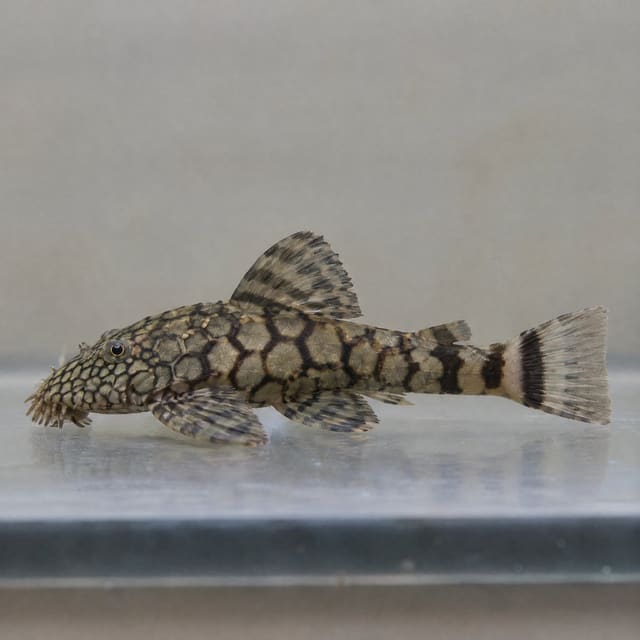
L519 Rio Itenez Honeycomb Bristlenose Pleco (Ancistrus sp.)
22–27°C · pH 6–8
£47.99
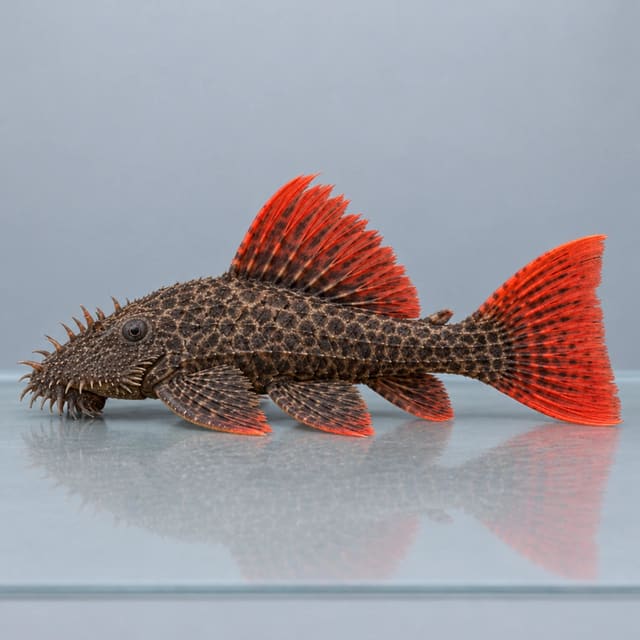
The L024 Redfin Cactus Pleco, Pseudacanthicus pitanga, is a large, spiny pleco from the Rio Tocantins basin in Brazil with a grey-brown body and red-tinted fins. A territorial carnivore that grows to 30–35 cm, it needs an aquarium at least 150 cm long, rock caves, strong filtration and a meaty diet. One live fish per purchase.
Pseudacanthicus pitanga
The L024 Redfin Cactus Pleco, Pseudacanthicus pitanga, is a large, spiny pleco from the Rio Tocantins basin in Brazil with a grey-brown body and red-tinted fins. A territorial carnivore that grows to 30–35 cm, it needs an aquarium at least 150 cm long, rock caves, strong filtration and a meaty diet. One live fish per purchase.
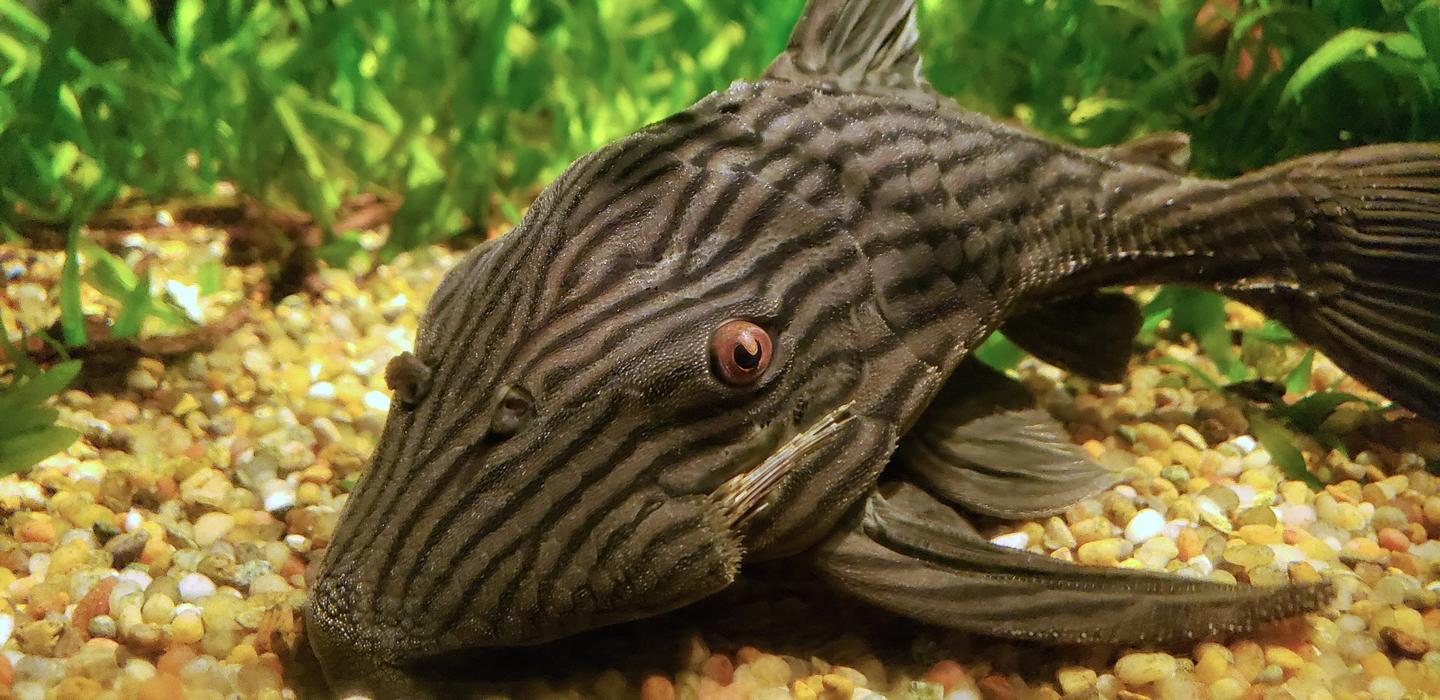
‘Pleco’ is a loose aquarium-trade label, not one species or one care sheet. Before buying, confirm the scientific name or defensible L-number, adult size and measurement method, required footprint, temperature and water, diet, social plan and source. No universal pleco tank size, menu or algae result is honest.
Read the full care guidance when planning conditions for your aquarium.
The L024 Redfin Cactus Pleco is Pseudacanthicus pitanga, a large, spiny pleco from the Rio Tocantins basin in the Brazilian state of Pará. Carine Chamon described it scientifically in 2015 from bedrock in the rio Itacaiúnas, in the Serra dos Carajás. Its species name is the Tupi-Guarani word for red, chosen for the colour of its fins. Cactus plecos take their common name from the odontodes, small tooth-like skin spines, that cover the body and run in rows of pointed keels along the flanks. Planet Catfish also lists the trade name Flame Pleco for this fish.
The Tocantins is unusual among South American rivers: Scotcat notes that it is the only one where three Pseudacanthicus live together, P. pitanga, P. major and the undescribed L079. Every member of the genus is a carnivore with a small mouth and a few long, curved teeth, a strong territorial streak and a large appetite. An L024 therefore suits a keeper who plans a big aquarium around one star fish rather than one who wants an extra pleco for a busy community tank.
| Fish | How to recognise it |
|---|---|
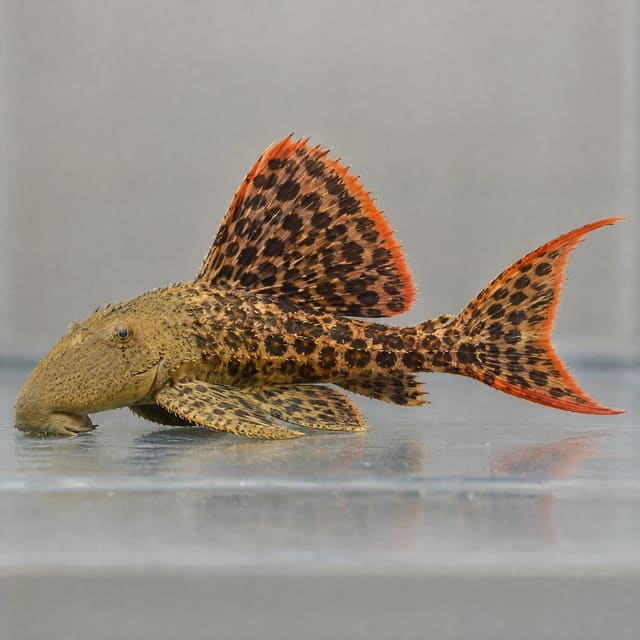
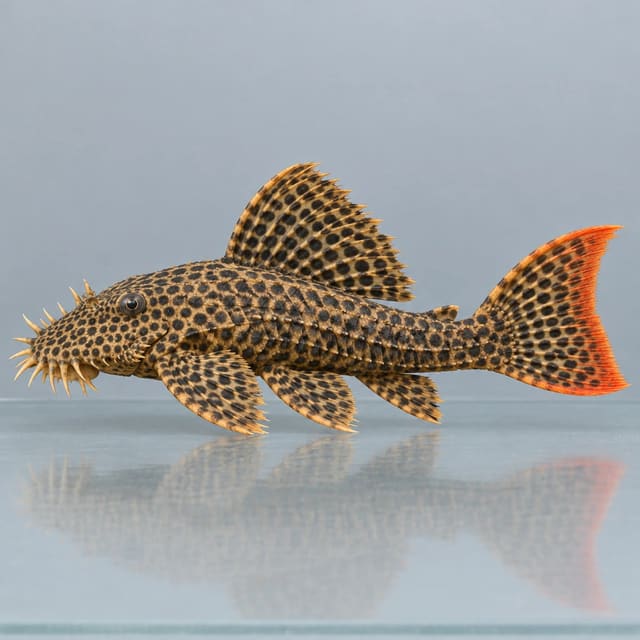
| L024, P. pitanga, Rio Tocantins | Grey to brown body with pale red fins carrying brown spots, except the tail (Planet Catfish); dark blotches that join into zigzag bands along the keels, and no blotches on the belly (Scotcat) |
| L024 from the upper Tocantins | Brighter fins and a snout covered in orange blotches, almost bright enough to suggest a separate species |
| L025, Pseudacanthicus sp., Rio Xingu | Bright red fins when small, fading to orange-red in adults |
| P. leopardus | Separate, conspicuous dark blotches, large dark blotches on the belly, and red only on the dorsal and tail fins |
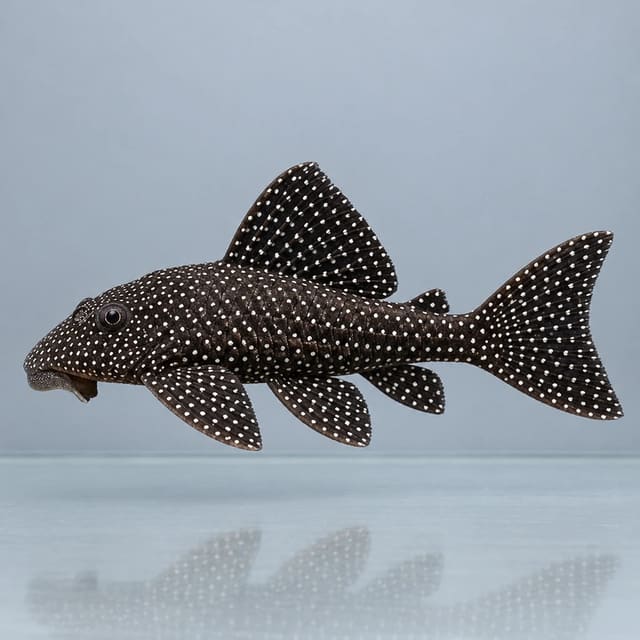
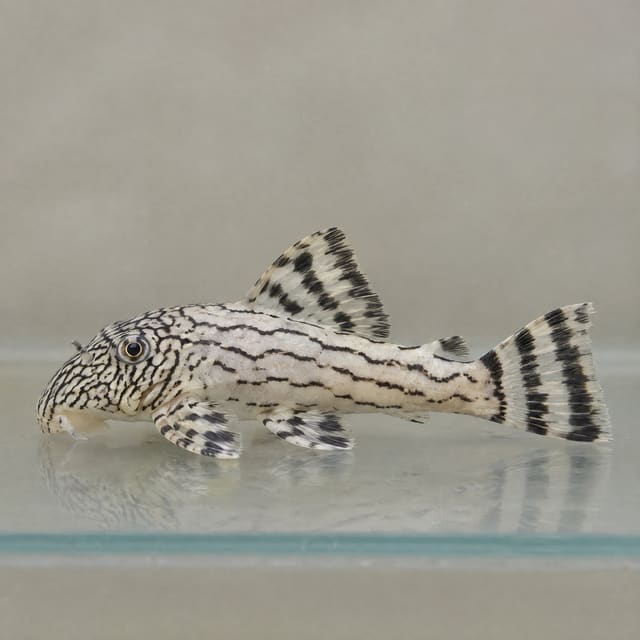
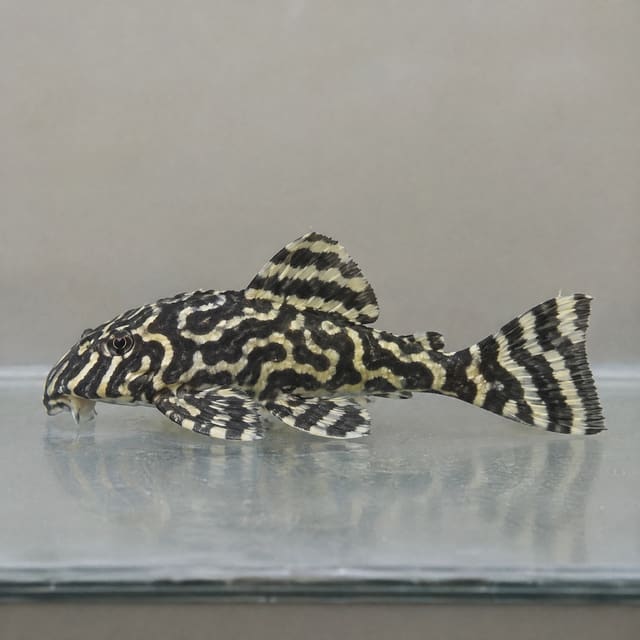
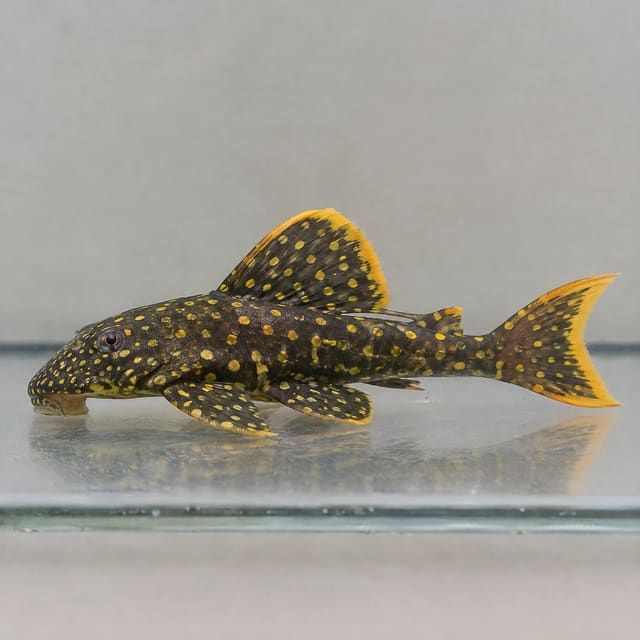
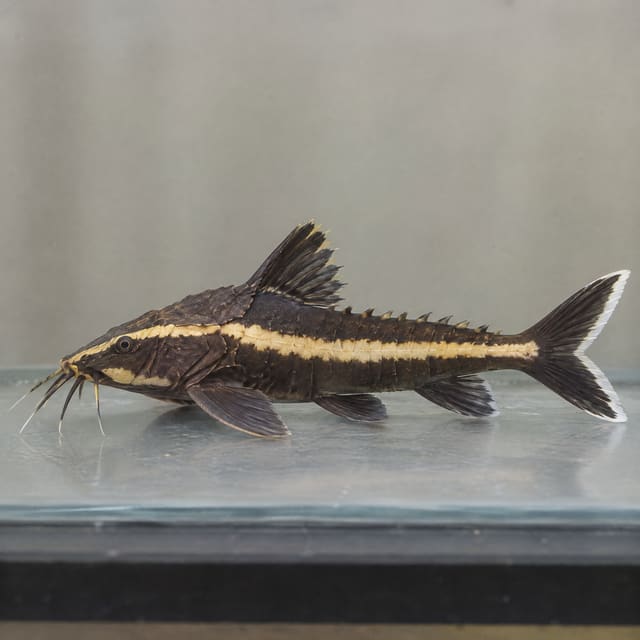
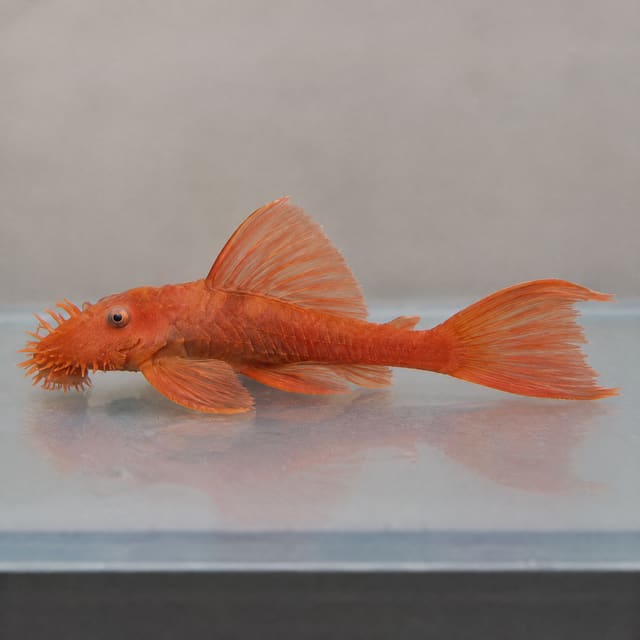
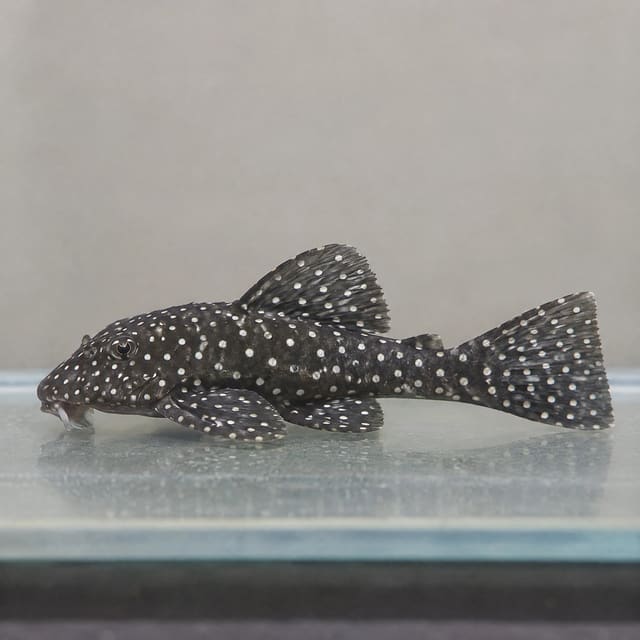
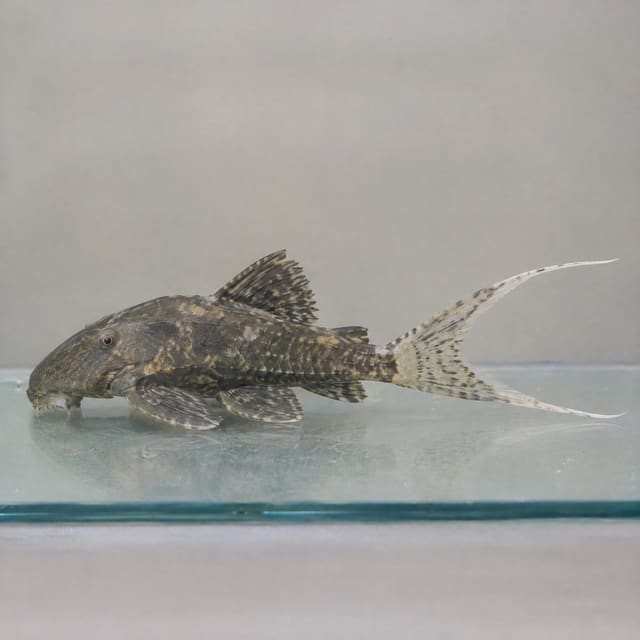
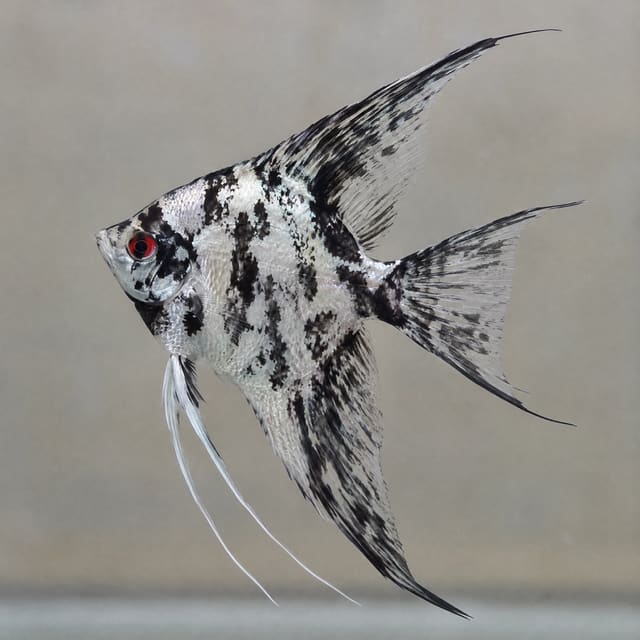
Young cactus plecos are hard to tell apart, and red-finned L024 and L025 are often confused in the trade. The gallery images are representative, prepared from a reference photograph, and do not show the exact fish supplied; fin colour in particular varies with origin and age.
| Suits | Not suited to |
|---|---|
| An aquarium at least 150 cm long built around rock caves | A small or crowded community tank |
| A keeper happy to feed frozen seafood and to clean up after it | Anyone looking for an algae-eating pleco |
| Medium-sized midwater fish such as barbs | Other big night-active bottom fish competing for caves |
One purchase quantity supplies one live L024 Redfin Cactus Pleco in the standard size offered. Sex is not specified. Planet Catfish notes that mature males grow far more odontodes on their fin rays, especially on the pectoral fins, while females fill out considerably compared with the slender males; young fish show neither difference, so they cannot be sexed by eye.
The fish supplied is a young fish, not an adult. Expect it to grow into a 30–35 cm catfish, and set up the aquarium, filters and caves for that size from the start.
Read our delivery information for dispatch days and packing before you order.
The sources give slightly different adult sizes, all measured as standard length without the tail: Planet Catfish 340 mm, Scotcat 35 cm and FishBase 30 cm. Add the tail and a full-grown fish is longer again. Scotcat recommends an aquarium of at least 150 cm (5 ft), because cactus plecos can be highly territorial, especially as adults.
OATA groups the larger plecos with the very large aquarium fish it calls tankbusters, which often need more than 500 litres, and warns that an off-the-shelf aquarium is rarely large enough for them in the long term. As an example, a tank of 150 × 60 × 60 cm holds 540 litres before decor. Our tank volume calculator converts your own measurements into litres.
If your aquarium is smaller, choose a smaller species from our L-number plecos.
The species was described from fish on river bedrock, and a layout of rock, sand and a few caves suits it well. Planet Catfish notes that L024 is not as shy as some of its relatives but still needs a shady retreat. Scotcat advises plenty of shelters and, if more than one cactus or similar pleco shares the tank, barriers that break the line of sight between their territories.
Stack flat rocks and slate into caves that rest directly on the glass, before adding the sand, so that a strong fish cannot dig under them or knock them over; OATA warns that large fish tend to dislodge decor, and that heaters need protecting. Use smooth sand or fine gravel, which OATA recommends for catfish. Wood is welcome as extra cover but, unlike for wood-eating plecos, it is not part of the diet.
| Area | Purpose |
|---|---|
| One large rock cave or pipe at the back | The pleco's main territory and daytime refuge |
| Rock piles and wood at the sides | Shade and broken sight lines for other fish |
| Open sand along the front | A feeding station you can see and clean |
| Upper and middle water | Swimming space for barbs and other companions |
To compare cactus plecos with their spiny relatives, browse our Acanthicus plecos and Leporacanthicus plecos, which belong to the same group of spiny loricariids.
| Value | Planet Catfish | Scotcat | Target |
|---|---|---|---|
| Temperature | 23–27°C | 25–29°C | 25–27°C |
| pH | Not given | 6.0–7.5 | 6.0–7.5 |
| General hardness | Not given | Not given | Within OATA's general catfish range of 4–18 dGH |
Neither source publishes a hardness figure for this species, so the last row uses OATA's general guide for aquarium catfish. Hardness and pH of UK tap water vary from region to region; your water company publishes figures for your postcode, and our water matcher compares them with this fish. Keep the temperature steady within 25–27°C: our guide to tropical tank temperature explains heater sizing, and our water chemistry guide explains every other reading.
| Reading | Target |
|---|---|
| Ammonia | Zero mg/l |
| Nitrite | Zero mg/l |
| Nitrate | No more than 20 mg/l above your tap water |
OATA sets these waste limits for aquarium catfish. A meaty diet raises the waste load quickly, so a tank can drift out of safe limits even when temperature and pH are perfect. Test both kinds of reading every week.
Planet Catfish describes Pseudacanthicus as big, messy carnivores that, like all large plecos, produce vast amounts of waste. It warns that keeping one alongside other large fish would need monumental filtration. Seafood left in the tank breaks down fast, so filtration and housekeeping matter even more than for a vegetable-eating pleco. For very large fish OATA suggests several large aquarium filters, or even a pond filter, to cope with solid waste. Our guide to aquarium filtration explains how to combine mechanical and biological stages.
Planet Catfish calls L024 a carnivore, although not a predator, and names prawns and chopped mussel as favourites that promote good growth. It adds that some vegetable food balances the diet. Scotcat lists frozen Artemia, mosquito larvae, mysis and shrimp, plus pellet and tablet foods. The mouth is small, with only a few long teeth, so cut seafood into small pieces rather than offering large chunks.
Adjust the amount so that the food is gone by morning and the pleco's belly stays gently rounded, not hollow.
Add an L024 only to a mature aquarium with zero ammonia and nitrite, the temperature at 25–27°C and its cave already in place. Cactus plecos are covered in spiny odontodes, and OATA recommends double bagging catfish so that spines cannot puncture the bag. Those same spines snag easily in nets, so guide the fish into a container rather than lifting it in a fine net.
Acclimatise it with the floating bag method that OATA describes: lights off, float the bag for about 10 minutes, then add small amounts of tank water over up to 20 minutes before releasing the fish with as little bag water as possible. Our guide to acclimatising new fish walks through each step.
| Checkpoint | What to do |
|---|---|
| Before arrival | Test the water, build and secure the caves, guard the heater |
| Release | Lights off and no food that evening, so the fish can find its cave |
| First meals | A small portion of chopped seafood at the feeding station after dark |
| Every day | Check the fish's breathing and belly, and remove leftovers |
| End of the week | Full water test and a water change |
Planet Catfish describes L024 as generally peaceful but territorial from a young age, and some large fish become aggressively territorial towards other large night-active fish. Expect the pleco to claim its cave and the area around it. OATA's warning signs for catfish apply as well: hanging at the surface, erratic swimming, colour change, more hiding or aggression, faster or slower breathing, white spots or fluffy growths, damaged fins, weight change and reduced appetite.
| If you see | Do this |
|---|---|
| The pleco guarding its cave and chasing visitors away | Normal; add more rock cover for the other fish |
| Repeated attacks on another bottom-dweller | Separate them; the tank is not big enough for both |
| A hollow belly | Feed after dark and make sure other fish are not taking its food |
| Fast breathing or hanging near the surface | Test ammonia, nitrite and temperature at once and increase aeration |
| White spots, fluffy growths or damaged fins | Test the water and seek fish-health advice |
Planet Catfish advises thinking of Pseudacanthicus as the centrepiece of the aquarium and stocking the rest of the tank with medium-sized, preferably omnivorous fish, adding that barbs of all sizes work surprisingly well. Keeping a cactus pleco with other large, tough fish multiplies the waste and therefore the filtration needed.
| Suits | Avoid |
|---|---|
| Medium-sized, preferably omnivorous midwater fish | Other large night-active bottom fish, including big plecos, unless the tank is very large |
| Barbs of all sizes | A second cactus pleco without separate caves and broken sight lines |
| Fish that share 25–27°C and pH 6.0–7.5 | Large, boisterous fish that add to an already heavy waste load |
From our range, consider the Denison Barb, the Black Ruby Barb or, in a tank large enough for a school, the Tinfoil Barb; browse all our barbs for more choice. Check every mix with our tank mates tool.
For other large spiny plecos, compare the L114 Leopard Cactus Pleco, the L273 Titanicus Pleco, the Adonis Pleco and the L264 Sultan Pleco, but keep them in separate aquariums unless you have a great deal of space. You can also browse all our catfish and plecos, South American catfish and centrepiece fish, and read our pleco care guide for the basics.
Planet Catfish lists aquarium breeding of L024 as unknown, though the fish is almost certainly a cave or pipe spawner, so a well-sized cave is the place to start if you ever keep a pair. FishBase records that the species is caught and bred for the aquarium trade and exported to several countries, especially in Europe and to the USA. It has not been evaluated on the IUCN Red List.
It is Pseudacanthicus pitanga, a large, spiny pleco from the Rio Tocantins basin in Brazil, described in 2015. Its species name is the Tupi-Guarani word for red, after its fins. Planet Catfish also lists the trade name Flame Pleco.
Planet Catfish gives 340 mm standard length, Scotcat 35 cm and FishBase 30 cm, all without the tail. Plan for a fish of 30–35 cm body length.
Scotcat recommends at least 150 cm (5 ft), because cactus plecos become highly territorial as adults. A larger tank makes it easier to add other fish.
It is a carnivore, although not a predator of other fish. Planet Catfish names prawns and chopped mussel as favourites, and Scotcat adds frozen Artemia, mosquito larvae, mysis, pellets and tablets. Offer some vegetable food too.
It is generally peaceful towards fish that stay out of its way but territorial from a young age, and some large adults defend their space aggressively against other large night-active fish, including other big plecos.
Aim for 25–27°C and pH 6.0–7.5, where Planet Catfish (23–27°C) and Scotcat (25–29°C, pH 6.0–7.5) overlap. Keep ammonia and nitrite at zero and nitrate no more than 20 mg/l above your tap water.
Planet Catfish describes L024 from the Rio Tocantins as having pale red fins with brown spots, except the tail. L025 comes from the Rio Xingu and has bright red fins when small, fading to orange-red in adults.
Planet Catfish lists aquarium breeding as unknown, although it is almost certainly a cave or pipe spawner. FishBase records that the species is both caught and bred for the aquarium trade.
No reviews for this item yet. Bought one? Honest reviews only, good or bad.
What customers say about ordering from us
Easy website plenty of info on fish your buying great to pick a time slot
TRACEY DURRANT · 7 Oct 2026
Got some lovely fish thank you
Kevin Mackie · 7 Oct 2026
Reviews of our shop, collected by Judge.me, an independent third-party review collector. Newest first.
Moved by UK carriers licensed to handle live animals
Hand-packed with oxygen bags, poly box, heat pack
Email photos the same day; an optional unboxing video helps us review problems faster — claim terms apply
Klarna & PayPal Pay in 3 at checkout