Advanced
Albino Tinfoil Barb (Barbonymus schwanefeldii)
22–26°C · pH 6.5–7.5 · 756L
£10.99

Large, active silver shoaling fish with red fins. One unsexed fish per selected quantity; plan the adult shoal and a very spacious mature aquarium.
Adult size is the maximum length this species reaches at full maturity (scientific sources). The livestock you receive will be younger and smaller — pick a size above for the actual shipping size. Product-photo provenance and any image-specific limitations are stated on the listing.
Shoaling fish: kept in a group they feel safer, stay calmer and show their best colour.
Large, active silver shoaling fish with red fins. One unsexed fish per selected quantity; plan the adult shoal and a very spacious mature aquarium.
Adult size is the maximum length this species reaches at full maturity (scientific sources). The livestock you receive will be younger and smaller — pick a size above for the actual shipping size. Product-photo provenance and any image-specific limitations are stated on the listing.
Maintain these water conditions for optimal health and vibrant colors
Tinfoil Barbs are large, active silver cyprinids with red fins and true shoaling behaviour. The accepted name is Barbonymus schwanefeldii; older references and this supplier use the familiar spelling schwanenfeldii. They are a long-term large-aquarium commitment, not a small community fish.
Each selected quantity is one unsexed fish, not two fish or a breeding pair. The current 4–8 cm option combines supplier children 4061 (4–5 cm) and 4062 (6–8 cm); the separate 7–8 cm and XL variants retain their own labels. Select the actual available option, not an adult-size figure. Gallery views are representative, not individually measured dispatch fish or a colour/sex guarantee.
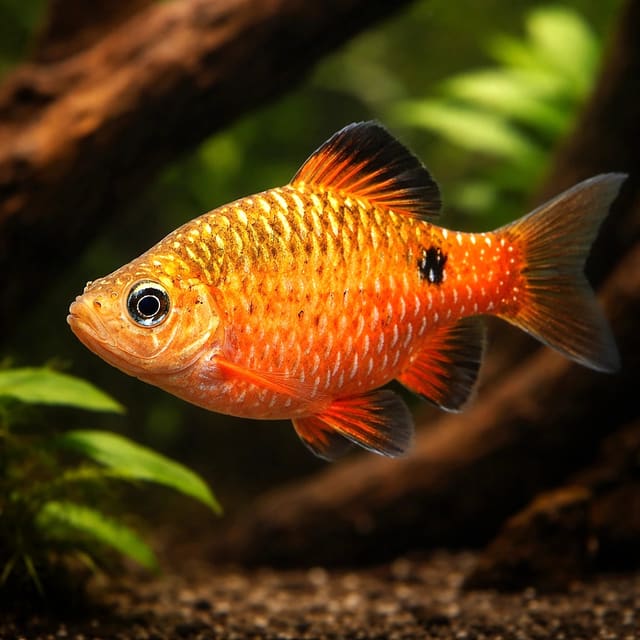
Barbonymus is a group of large Asian cyprinids, and the Tinfoil Barb is among the best known in the aquarium trade. Older literature may place it under Barbus or similar historic names, but modern classification recognises it as Barbonymus schwanefeldii. In the hobby, it sits very differently from smaller barbs such as Long Fin Cherry Barbs or Rosy Barbs, because it is a true large-growing river fish rather than a compact community species.
The natural tinfoil barbs habitat is spread across parts of Southeast Asia, including river systems in Thailand, Cambodia, Laos, Vietnam, Sumatra, Borneo, and the Malay Peninsula. In the wild, these fish are found in rivers, streams, canals, flooded fields, and other flowing freshwater environments. Their bodies are built for movement in open water, which is why they behave very differently from species that prefer roots, caves, or dense cover.
Seasonal flooding gives these fish access to plant matter and other foods. A varied diet helps explain why they readily accept aquarium foods but may also graze plants or consume very small tank mates.
They naturally swim in groups. Plan at least six compatible conspecifics with sufficient adult space; buying one can top up an existing appropriate shoal. Stable water and gradual acclimation matter more than abruptly changing the aquarium to a printed number.
Mimicking the natural habitat improves confidence and colour. A long tank with open swimming lanes, steady current, high oxygen, and a secure shoal produces calmer fish with stronger feeding response and less skittish behaviour.
Plan the aquarium around the adults and the entire shoal. Seriously Fish recommends a base of at least 210 × 60 cm; a retailer nominal-gross example is 756 litres if a 60 cm height is assumed (210 × 60 × 60 ÷ 1,000). The footprint is the source recommendation; the height and volume calculation are not a published species minimum. Décor, actual fill height and unusable space reduce working volume. Neither litres nor footprint alone guarantee that every adult group fits. A 100-litre aquarium is unsuitable as their long-term home.
Published size reaches 35.5 cm standard length, excluding the tail. This is a species size record and adult planning context, not a measurement of this stock, dispatch grade or guaranteed individual maximum. Leave broad turning space and unobstructed swimming lanes.
Seriously Fish gives 20–28°C, pH 6.0–8.0 and 2–15 dGH. The dated supplier lists 22–25°C, pH 6.5–7.3 and 5–20 dGH, so published guidance differs. These are not current holding measurements or proof of tolerance at every endpoint. Ask about holding water, match companions carefully and avoid sudden temperature, pH or hardness manipulation.
Because of their size and appetite, Tinfoil Barbs need powerful filtration with strong mechanical and biological capacity. Large external canisters or sump systems are ideal. Aim for total turnover of roughly 6-10 times tank volume per hour, depending on stocking. Moderate to strong current suits them well, provided calmer zones remain available. This is one reason they are often paired with robust, open-water species rather than delicate fish.
Use reliable heating and substantial filtration suited to the complete stocking plan. Compare other barbs by their actual adult requirements; a shared trade group does not imply the same tank size.
Use smooth gravel or sand with rounded décor. These fish are not substrate specialists, but open floor space helps them manoeuvre. Driftwood branches and large stones can define lanes without crowding the tank. Many people ask about tinfoil barbs for planted aquarium systems and do tinfoil barbs eat plants. The honest answer is that they often nibble or uproot softer plants, especially as they mature. So while a heavily aquascaped layout looks attractive, it is rarely the most practical long-term tinfoil barbs tank setup.
If you want greenery, protect tougher plants or attach them to stable hardscape. Expect soft plants to be sampled or disturbed; greenery cannot replace open adult swimming space.
Use lighting suited to the aquarium and plants, with shaded retreat areas while new arrivals settle. Intense lighting is not necessary simply to display their reflective scales.
Only add fish after the aquarium is biologically mature and measured ammonia and nitrite remain controlled. A fixed number of weeks alone does not demonstrate cycling.
A balanced tinfoil barbs diet is easy to provide because these fish are enthusiastic omnivores. If you are asking what do tinfoil barbs eat, the answer is: almost anything suitable for tropical freshwater fish, provided it is varied and offered in sensible portions. In the wild they consume plant matter, algae, insects, worms, crustaceans, and occasional small fish. In aquariums, the best tinfoil barbs feeding guide includes a quality staple pellet plus vegetable matter and occasional protein-rich extras.
The core diet should be a high-quality floating or slow-sinking pellet sized for medium to large tropical fish. Spirulina-based foods are useful because these fish appreciate plant content. This is not the place to rely on tiny nano flakes. A good staple keeps growth steady, supports fin colour, and reduces random plant grazing.
Blanched spinach, courgette, shelled peas, lettuce, and algae wafers can all be used as part of the weekly rotation. Protein foods such as bloodworm, krill, chopped prawn, daphnia, and mosquito larvae can be offered a few times per week.
Very small fish and invertebrates are at risk of being eaten. Do not treat a generally non-aggressive temperament as safety for animals that fit in an adult fish’s mouth.
Avoid fatty mammal meats, bread, and overuse of freeze-dried foods without soaking. Also avoid dumping in large amounts of protein every day, which can foul the water quickly in warm tanks.
| Time | Food | Amount |
|---|---|---|
| Morning | Large tropical pellets with plant content | What the group eats in 1-2 minutes |
| Evening | Vegetables or frozen protein food | Small second feed, fully consumed |
Choose staple pellets with spirulina or mixed omnivore formulas for steady growth, better colour, and less plant damage from hunger-driven grazing.
Overfeeding causes ammonia spikes, cloudy water, and fatty build-up in fast-growing fish. Tinfoil Barbs beg confidently, but that does not mean they need extra meals. Keep portions tight and remove uneaten vegetables promptly.
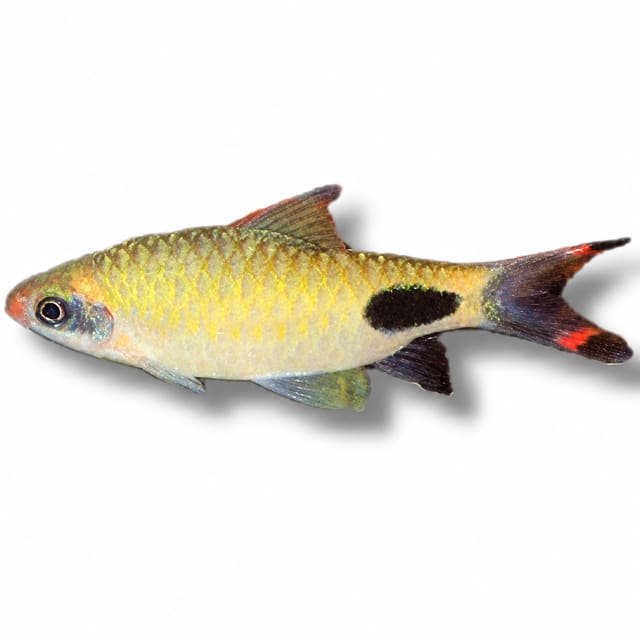
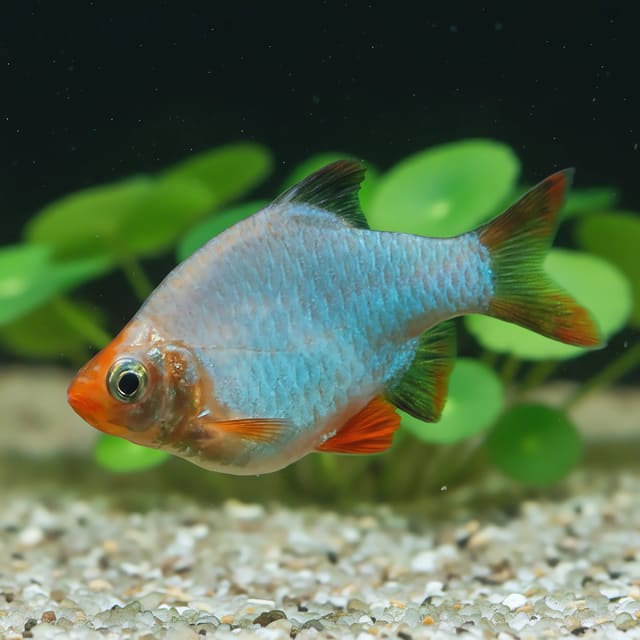
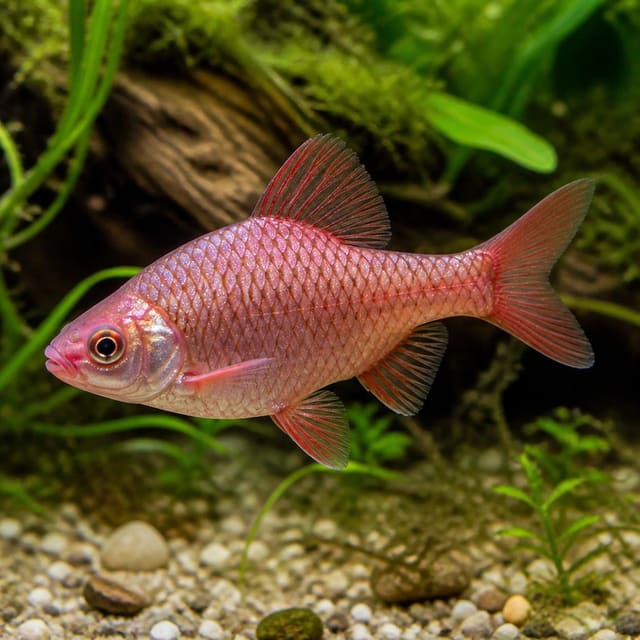
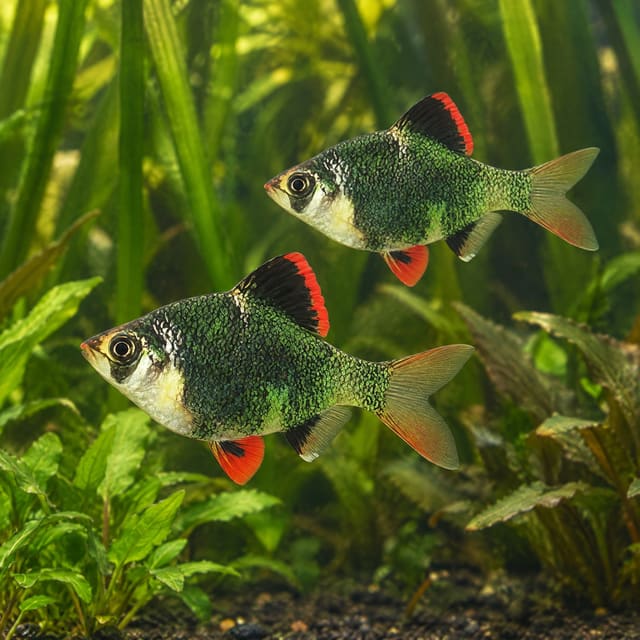
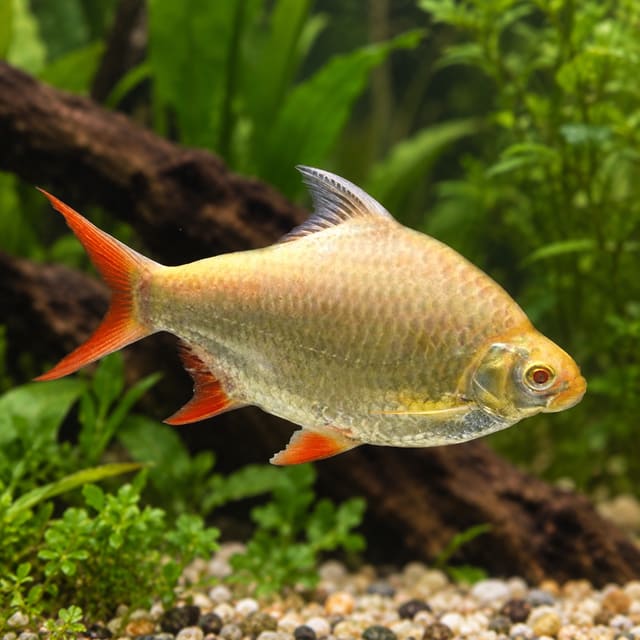
The classic Tinfoil Barb has a deep, laterally compressed silver body that flashes like polished metal under aquarium lighting. This reflective sheen is why the species earned its common name. Adult tinfoil barbs size is the feature most often underestimated: they can reach a published 35.5 cm SL, far beyond the scale of most community barbs. If you have ever compared them to silver dollar fish size, that is a useful reference point for overall visual impact, although the body shape and behaviour are different.
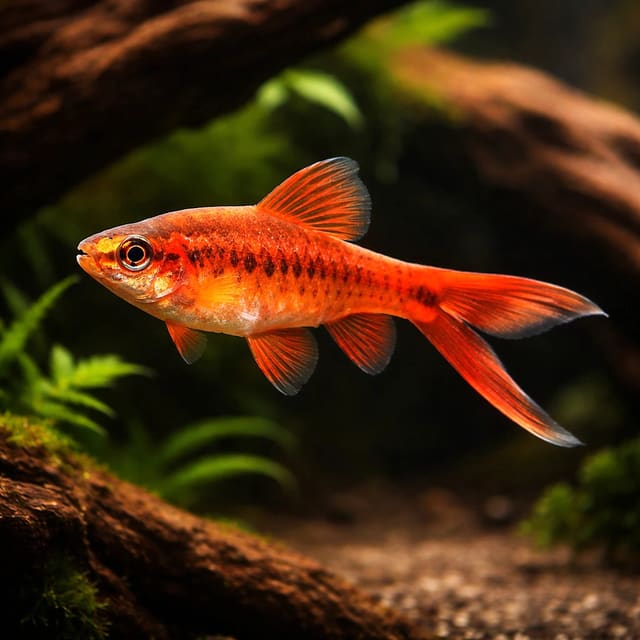
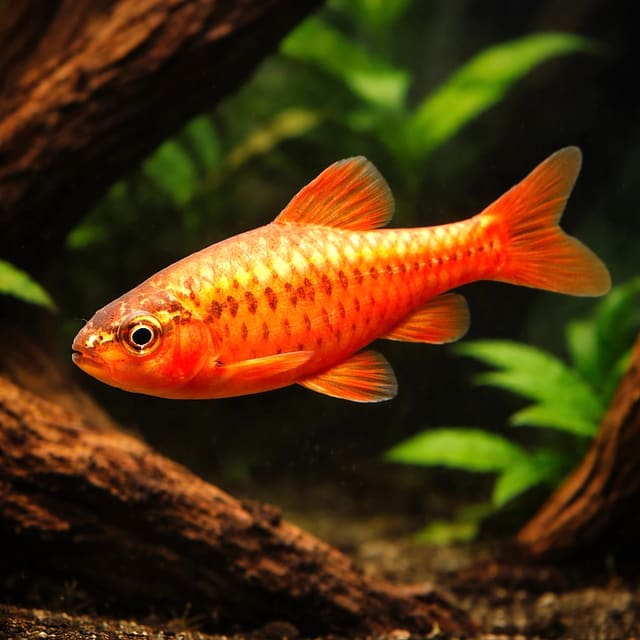
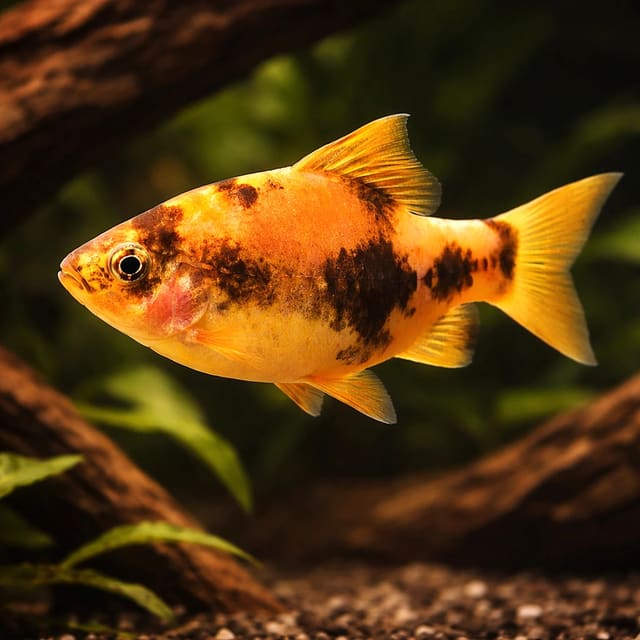
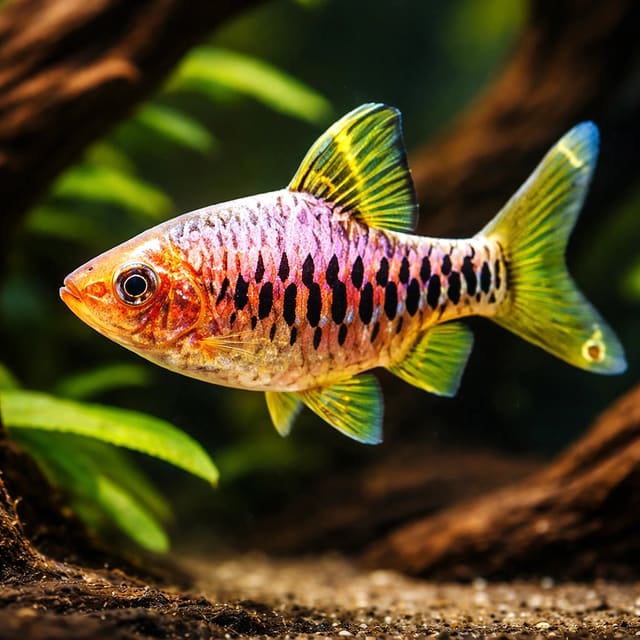
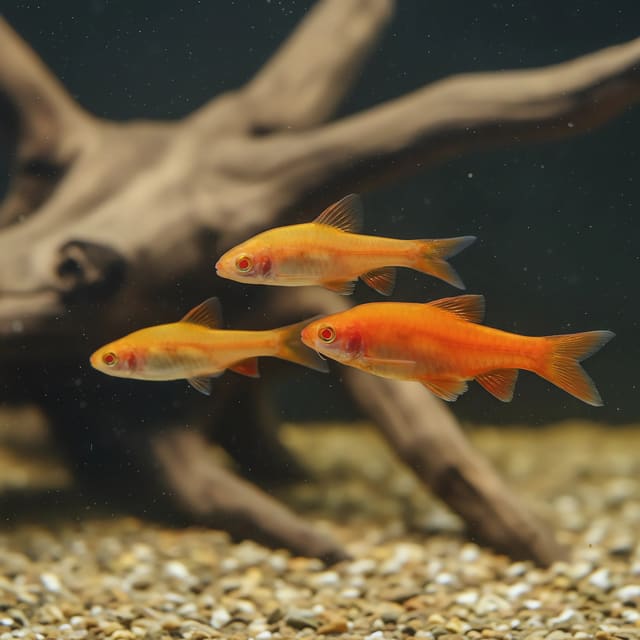
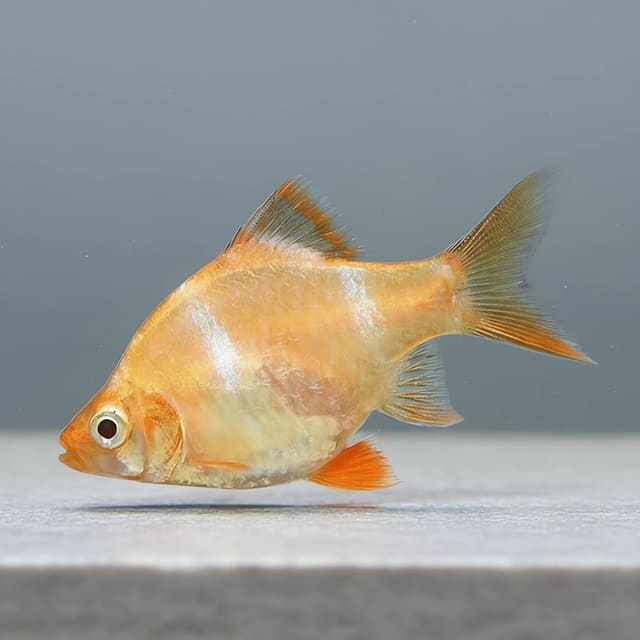
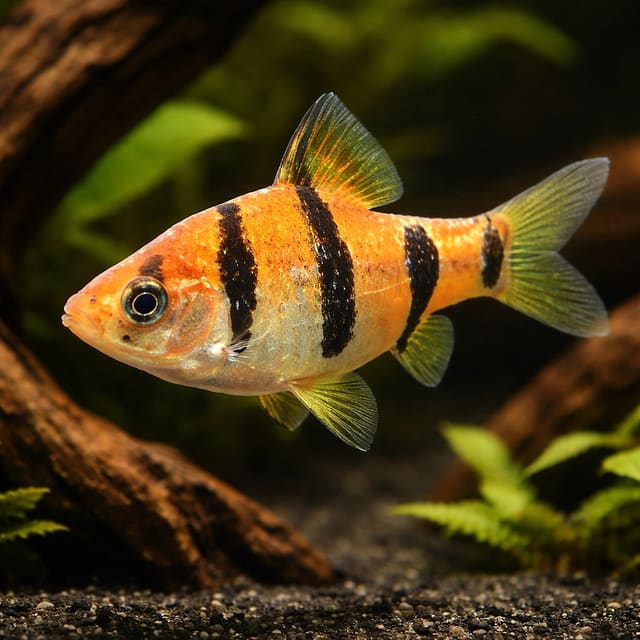
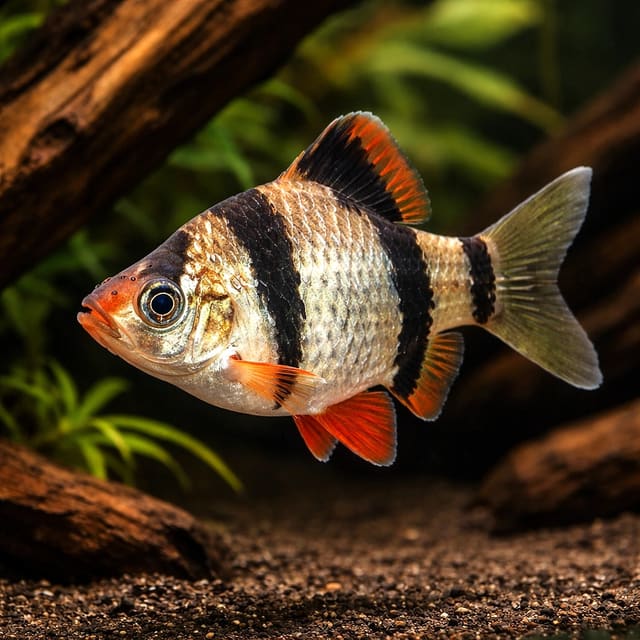
The natural silver form has red fins and dark caudal-lobe margins. Other ornamental forms also exist, but they are separate buying choices; this listing does not promise an albino form or certify exact image provenance.
Mature females are usually fuller-bodied when egg-laden, while external sexing otherwise remains subtle. The species scatters eggs rather than giving birth to live young.
Reduced colour can accompany stress or poor condition. Check water, oxygenation, feeding access and harassment rather than diagnosing a disease from colour alone.
Tinfoil Barbs are often described as peaceful, but size changes the meaning of peaceful. They are not usually fin-nippers or deliberate bullies, so in that sense they can be called tinfoil barbs peaceful community fish. However, they are also fast, strong, and large enough to intimidate slow fish or swallow very small ones. That is why tinfoil barb fish tank mates must be chosen by adult size and activity level, not by juvenile appearance in the shop.
A shoal is a behavioural requirement, not an optional display effect. At least six should be planned in an appropriately large aquarium; a lone fish may be nervous. Keep a practical separation plan if persistent conflict or feeding exclusion occurs.
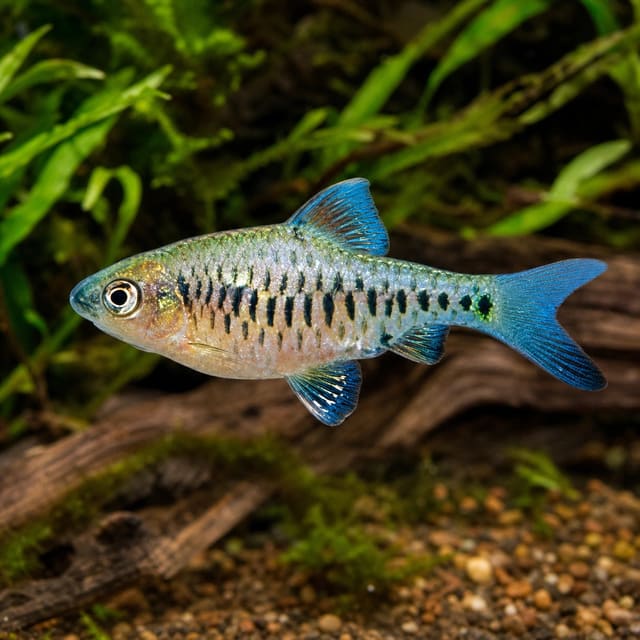
Choose robust, similarly sized companions with compatible long-term water and feeding needs. Smaller cherry, rosy and Odessa barbs are alternatives for differently sized aquariums, not automatic companions for adult Tinfoils.
Large rainbowfish, bigger gourami species, bala sharks in very spacious aquariums, silver dollars, and some larger peaceful cichlids can work. This is why people often ask about tinfoil barb with oscar. It can work in a huge tank if the oscar is not hyper-aggressive and both species have enough room, but it is not a casual community pairing.
Avoid tiny tetras, guppies, endlers, dwarf shrimp and delicate or persistently outcompeted fish. Assess the adult community, not just whether juveniles coexist today.
Another common question is can tinfoil barbs live with goldfish or tin foil fish with goldfish. In practice, this is not recommended. Goldfish prefer cooler water, produce a different style of waste load, and many fancy forms are too slow. Tropical tinfoil barbs temperature needs do not align well with long-term goldfish care.
Size, constant movement and food competition are usually more important than deliberate aggression. Every individual still needs observation after introduction.
| Species | Compatible? | Notes |
|---|---|---|
| Rosy Barbs | ⚠️ Caution | Not a reliable adult companion; size gap and competition require caution |
| Silver Dollars | Assess individually | Potential size/activity match; assess exact species and adult stocking |
| Fancy Goldfish | ❌ Avoid | Temperature mismatch and slow swimming style |
| Oscar Cichlid | ⚠️ Caution | Possible in huge tanks with carefully matched temperaments |
| Dwarf Shrimp | ❌ Avoid | Likely to be eaten |
Always quarantine new arrivals for 2-4 weeks before adding them to a large display. Big shoaling fish spread parasites quickly through fast-moving groups, and catching problems early is much easier in a separate tank.
Home breeding is not a routine expectation. Published accounts describe commercial hormone-assisted production, but that does not establish the origin or production method of this stock.
An attempted breeding project would require exceptional adult space, egg protection and a realistic plan for raising and rehoming many young. Do not manipulate temperature or chemistry according to an unsupported spawning recipe.
Mature females may be deeper-bodied, especially when egg-laden, but external sexing is subtle. These retail options do not promise sexed fish or a breeding pair.
This species scatters eggs and provides no parental care. That reproductive pattern is not proof that a purchased pair will breed.
Any successful project needs facilities for protected eggs and very small fry. Obtain specialist guidance before attempting it; routine display-tank care does not supply a complete breeding protocol.
Adult space, suitable facilities and a responsible outlet for offspring are substantial barriers to home breeding.
Maintain varied feeding and stable measured water for general health. No seasonal temperature or pH trigger is prescribed for this stock.
Comparison matters because Tinfoil Barbs are often bought by people who really wanted the look of a large silver shoaler but did not realise the final size. If you love barbs but do not have an adult-size aquarium meeting the footprint recommendation, a smaller species may be the better long-term choice.
| Feature | Tinfoil Barbs | Rosy Barb |
|---|---|---|
| Max Size | Published 35.5 cm SL | About 10-15 cm |
| Care Level | Moderate | Easy to moderate |
| Temperature | 20-28°C | 18-24°C |
| Best For | Huge active displays | Standard community aquariums |
| Feature | Tinfoil Barbs | Cherry Barb |
|---|---|---|
| Max Size | Published 35.5 cm SL | 4-5 cm |
| Care Level | Moderate | Easy |
| Temperament | Peaceful but too large for nano fish | Gentle community species |
| Tank Size | Retailer gross example: 756 L at assumed 60 cm height; footprint first | 60-90 litres+ |
| Best For | Large shoaling displays | Planted community tanks |
Choose Tinfoil Barbs if you want a bold, metallic, fast-moving shoal in a very large aquarium and you can meet the true tinfoil barbs tank size requirement. Choose Long Fin Cherry Barbs, Rosy Barbs, or Odessa Barbs if you want barb character in a much smaller setup.
Good tinfoil barbs health starts with space, oxygen, stable water, and a varied diet. Healthy fish swim strongly in the open, feed eagerly, hold fins well, and show clean metallic sheen with red fin edges. Because they are so active, they often reveal water-quality problems quickly through clamped fins, dull colour, hanging near returns, or sudden skittish dashing.
Like many cyprinids, they can suffer from ich, bacterial infections, fin damage, and stress-related secondary problems after transport or poor acclimation. Another common concern is tinfoil barb losing scales, which is often caused by collision injuries in cramped tanks, rough décor, or panic dashing when startled. Because these fish are powerful swimmers, physical damage is more common in undersized aquariums.
First response should always be testing water, improving oxygen, and isolating the cause. Large water changes, increased aeration, and quarantine are often more effective than immediately reaching for medication. If treatment is needed, match the medicine to the diagnosis and remove carbon where required. Avoid random medication stacking.
Tinfoil Barbs are cyprinids, not cichlids. Some robust cichlids may coexist in very large systems, but a generic family label is not a compatibility guarantee.
NEVER use copper-based medications in mixed systems containing shrimp or other sensitive invertebrates. While Tinfoil Barbs are usually not kept with dwarf shrimp long term, quarantine tanks and shared equipment can still create accidental exposure.
Tinfoil Barbs are classic open-water shoalers. They are among the most impressive tinfoil barbs active aquarium fish available for large freshwater displays because they rarely sit still for long. Most of their time is spent cruising the midwater and upper-middle levels, especially when kept in a proper group.
Plan at least six conspecifics with adequate space. A larger group is not permission to exceed filtration, usable footprint or compatible stocking capacity.
They are not usually territorial, but they are greedy at feeding time and can dominate slower species. Their behaviour is best described as peaceful, energetic, and opportunistic. Small species such as Cherry Barbs or Odessa Barbs are better admired separately unless the aquarium is exceptionally large and carefully planned.
Before buying, check adult dimensions, shoal needs and the exact selected size. Ask for help if the available aquarium or complete stocking plan is uncertain.
Use the live option selector for current price and availability. Juvenile price is not the main cost of a long-term large-fish setup.
Read the current delivery and live-arrival conditions, including receiving and reporting requirements. Follow the parcel’s acclimation instructions rather than assuming temperature matching also matches water chemistry.
Buy only with a credible adult-size and shoal plan. A smaller species is the better choice when the required space, filtration or long-term maintenance cannot be provided.
Browse the current Barbs collection to compare different species and sale units. See the Catalog of Fishes accepted-name record and Seriously Fish species profile for the name, published adult size and husbandry context. These references do not certify this stock’s provenance, genetics or current holding water.
Independently collected by Judge.me from customers who bought this item. All reviews are shown.
Hi the tinfoil barbs are brilliant,thanks.
Reply from Tropical Fish Co
<p>Thanks David, glad they're doing well. Tinfoils are a fish people tend to underestimate - they get big, they're fast, and they're much happier in a group of five or six in a long tank than in a small huddle. Sounds like yours have landed somewhere they can stretch out. - Tropical Fish Co</p>