Easy
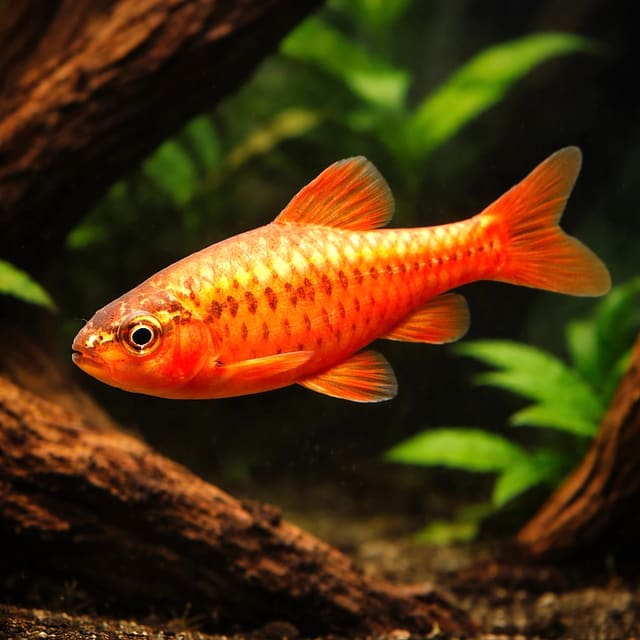
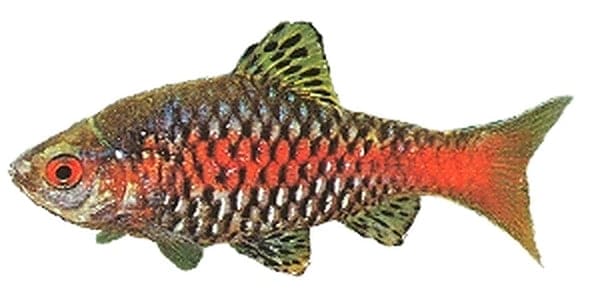
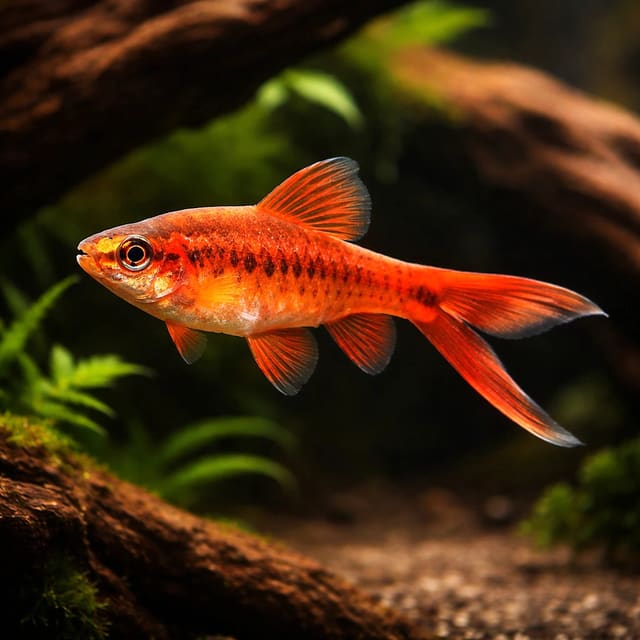
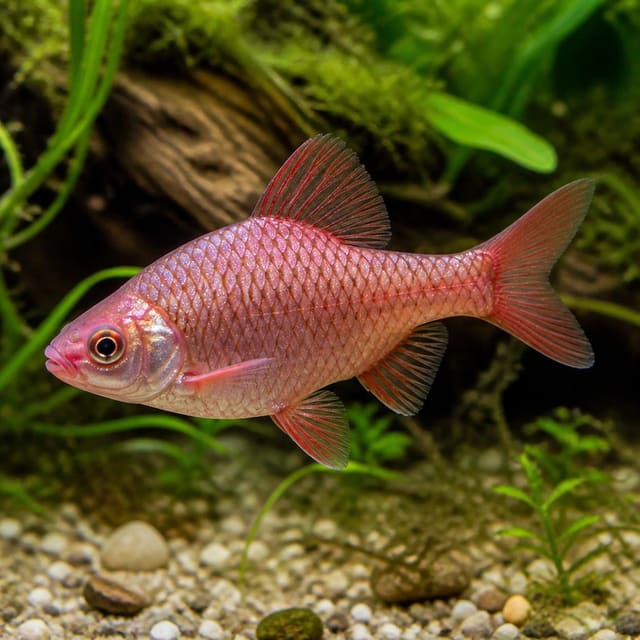
Albino Cherry Barb (Rohanella titteya)
20–27°C · pH 6–8 · 54L
£2.99

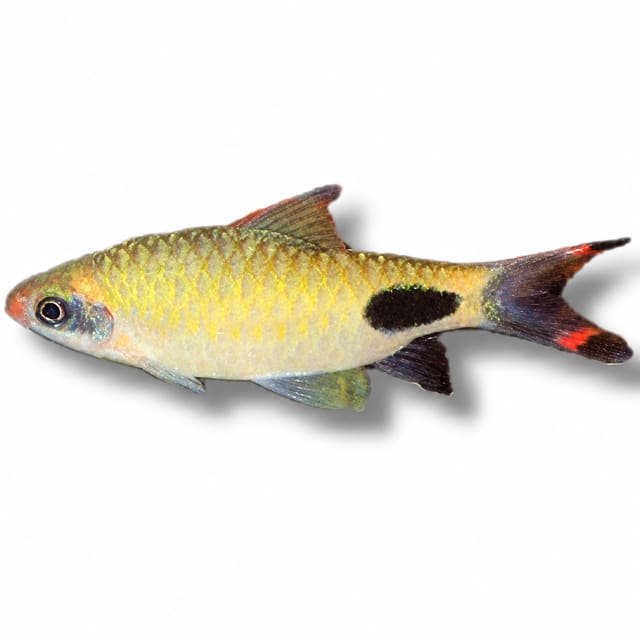
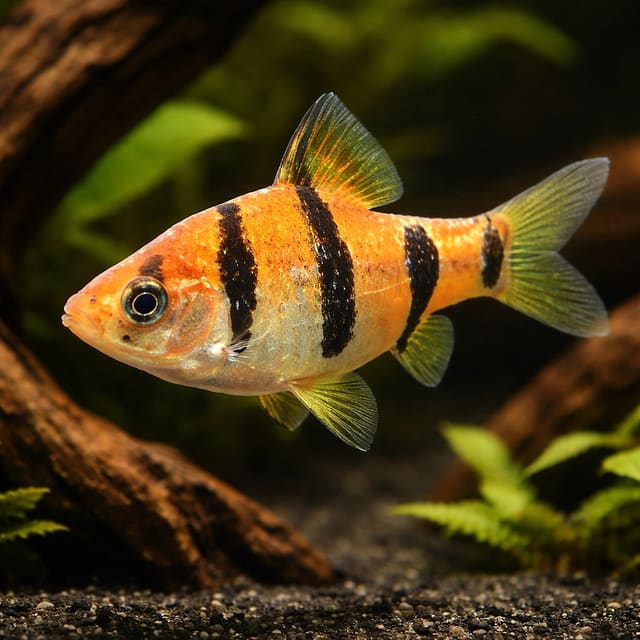
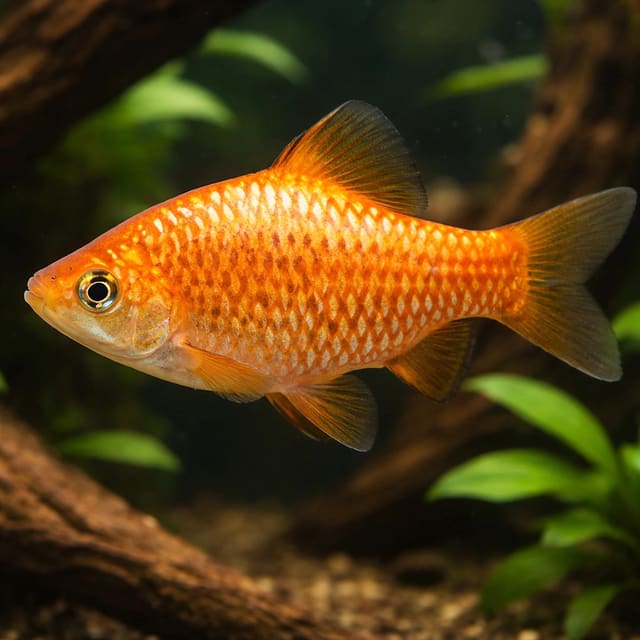
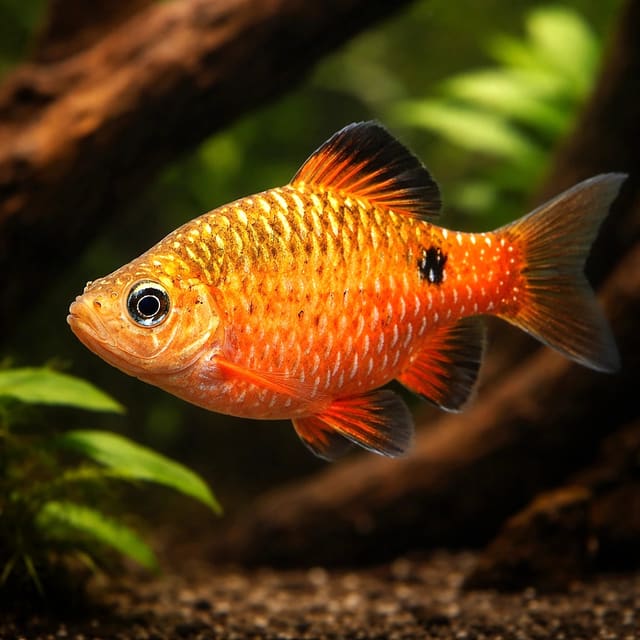
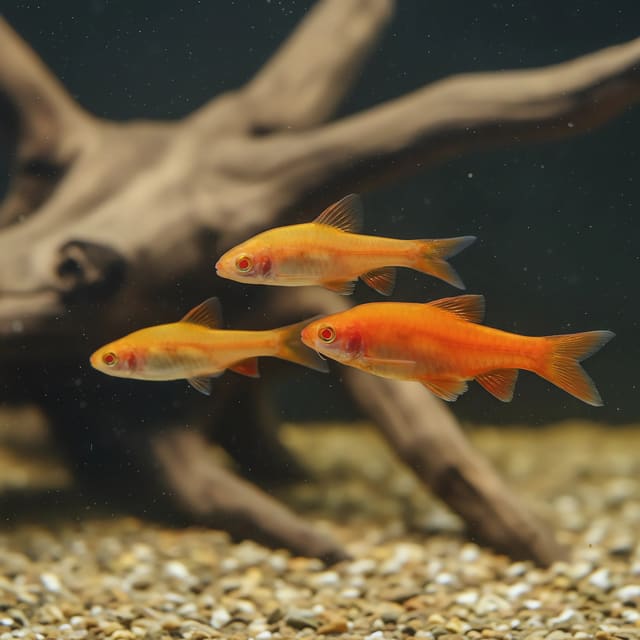
The Chequer Barb, gold (Capoeta oligolepis) is a freshwater cyprinid from Sumatra, Indonesia, that reaches 5 cm. It suits a well-researched peaceful community; Seriously Fish advises 6–10 fish in at least 68 litres at 18–25°C, pH 5.5–7.5 and 2–12 dGH. Sold individually in 3–3.5 cm and 3.5–4 cm sizes.
Adult size is the maximum length this species reaches at full maturity (scientific sources). The livestock you receive will be younger and smaller — pick a size above for the actual shipping size. Product-photo provenance and any image-specific limitations are stated on the listing.
Capoeta oligolepis
Shoaling fish: kept in a group they feel safer, stay calmer and show their best colour.
Minimum of 2 per order.
The Chequer Barb, gold (Capoeta oligolepis) is a freshwater cyprinid from Sumatra, Indonesia, that reaches 5 cm. It suits a well-researched peaceful community; Seriously Fish advises 6–10 fish in at least 68 litres at 18–25°C, pH 5.5–7.5 and 2–12 dGH. Sold individually in 3–3.5 cm and 3.5–4 cm sizes.
Adult size is the maximum length this species reaches at full maturity (scientific sources). The livestock you receive will be younger and smaller — pick a size above for the actual shipping size. Product-photo provenance and any image-specific limitations are stated on the listing.
Maintain these water conditions for optimal health and vibrant colors
The Chequer Barb, gold (Capoeta oligolepis) is a small freshwater cyprinid from Sumatra, Indonesia, that reaches a recorded maximum of 5 cm total length. FishBase now lists it as Oliotius oligolepis and places it in Cyprinidae, the minnow and carp family. It suits a keeper prepared to maintain a complete shoal in a mature, filtered aquarium and to research every member of a peaceful community. The gold wording identifies the trade form, while Chequer Barb, checker barb, checkerboard barb and island barb are established names associated with the species.
This small barb combines active group behaviour with the generally peaceful temperament needed for a carefully planned community aquarium. You can compare it with other fish in our barbs collection, but choose by adult needs rather than appearance alone. Its freshwater, benthopelagic identity separates it from unrelated barbs that may require very different space, water or social arrangements.
Choose this fish when you can provide a mature, filtered aquarium, keep a proper group and check every community member against the same water range. Its peaceful character does not remove the need for planning: a group uses more biological capacity than one small fish, and active swimming requires a suitable footprint. The key buying decisions are therefore group number, adult size, aquarium base, water chemistry and the behaviour of existing occupants.
| Suits | Not suited to |
|---|---|
| Keepers prepared for a group of 6–10 | A plan to keep one fish alone |
| A peaceful, well-researched community | Communities whose water needs do not overlap |
| An aquarium with at least a 75 × 30 cm base | Aquariums below the required footprint |
| A mature aquarium with biological filtration | A new aquarium without an established filter |
Do not use the dispatch measurement as the space calculation. FishBase records a maximum of 5 cm total length, while Seriously Fish records 45 mm standard length. Use the 5 cm figure consistently for adult-size planning and check the aquarium footprint, group size and community capacity together.
Use the live size selector to choose between the 3 - 3,5 cm and 3,5 - 4 cm dispatch sizes. One purchase supplies one animal of the selected option. If you are building a group from this page, set the quantity to the number of individual fish required rather than treating a single selection as a pack.
The size you select is the size supplied, not the adult size. A fish from either size choice therefore needs the same adult aquarium plan. The smaller size does not justify a smaller permanent home, and the larger size is not an adult-size promise. Use the live selector for the size choice shown on the page.
| Decision | What to do |
|---|---|
| Purchase unit | Count one selected fish per purchase. |
| Dispatch size | Select either 3 - 3,5 cm or 3,5 - 4 cm. |
| Social plan | Prepare for 6–10 Chequer Barbs rather than one fish. |
| Permanent space | Use the adult planning size and at least a 75 × 30 cm base. |
Sex is guaranteed only when the selected option explicitly states male or female. This Chequer Barb, gold listing has no sex-guaranteed option.
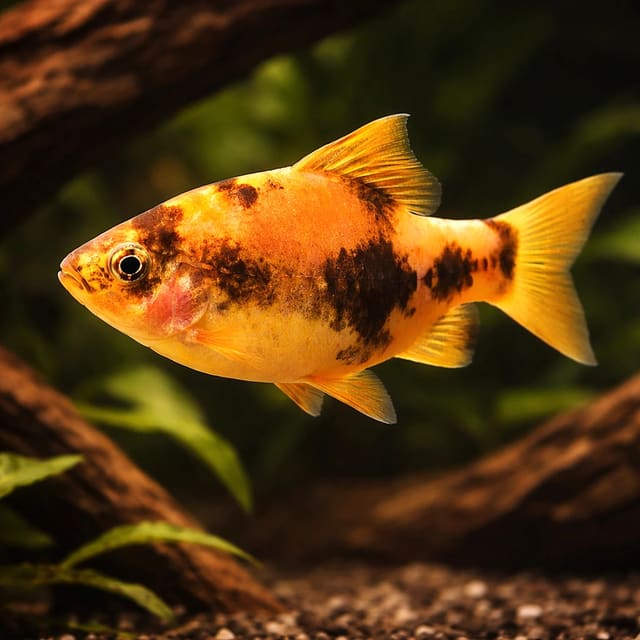
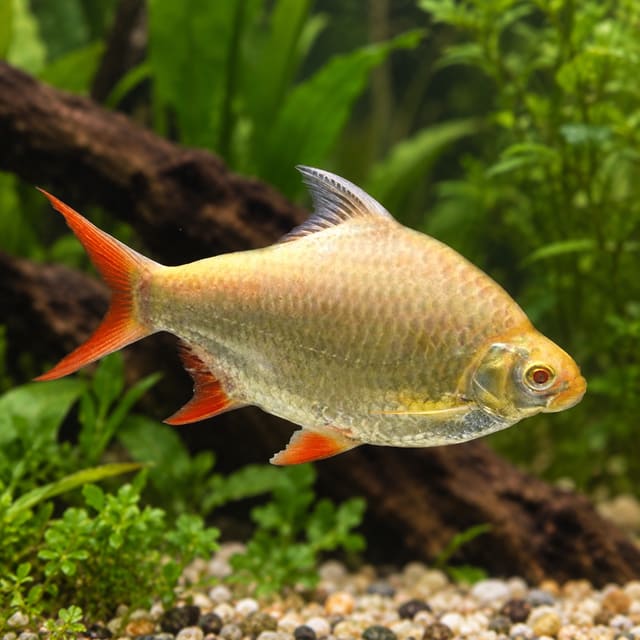
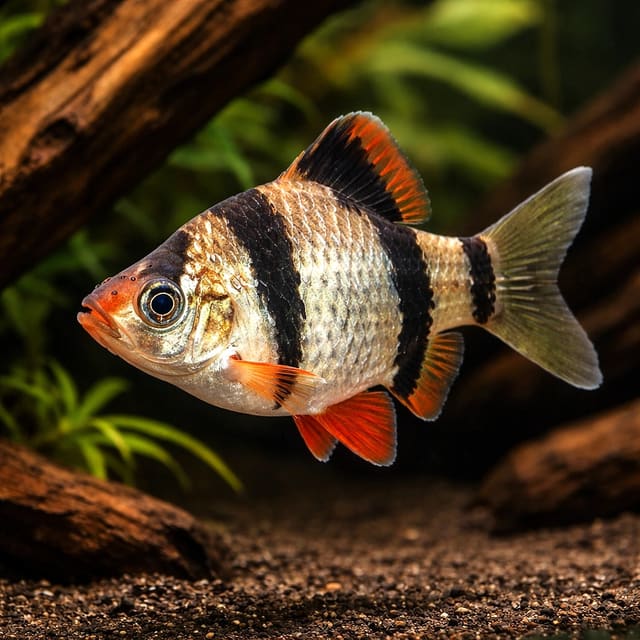
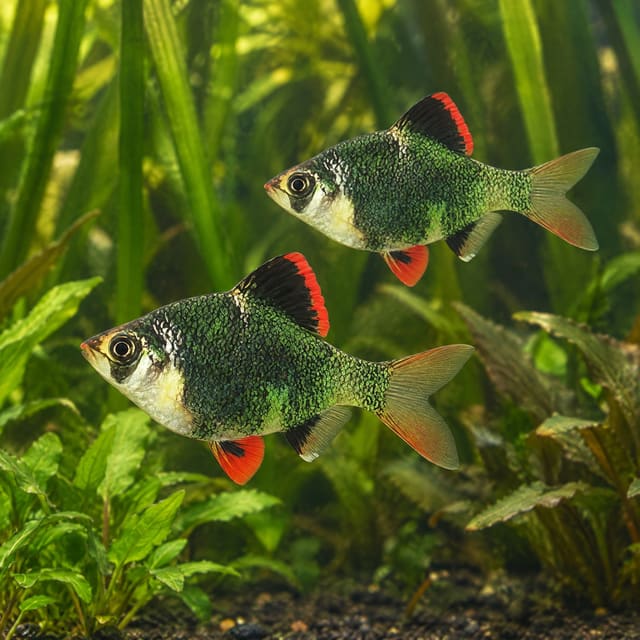
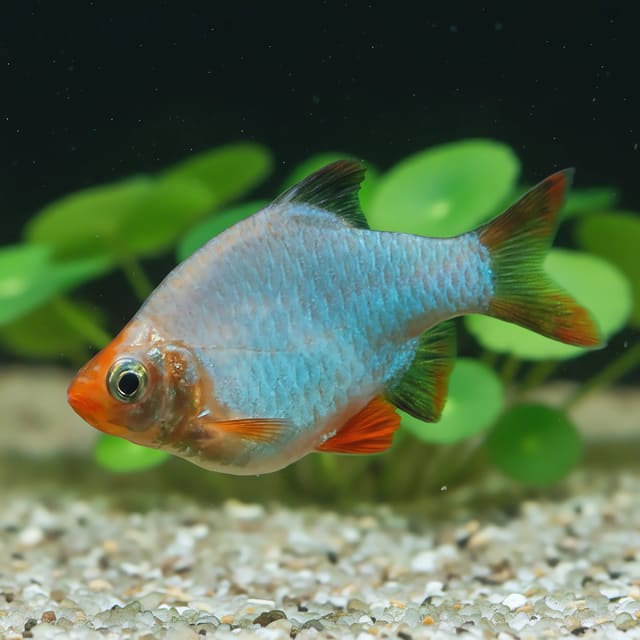
The gallery images are representative, based on reference photographs of this species, so colours can look slightly different from the live animal.
Before placing an order, read the current delivery and Live Arrival Guarantee policy for the receiving, filming and acclimatisation procedure.
Seriously Fish gives the Chequer Barb an aquarium range of 18–25°C, pH 5.5–7.5 and 2–12 dGH. It requires an aquarium measuring 75 × 30 × 30 cm or larger, with an approximate volume of 68 litres. Treat both the footprint and volume as minimum checks: a tall aquarium with the same volume but a shorter base does not meet the stated 75 × 30 cm swimming area.
| Planning value | Requirement |
|---|---|
| Maximum recorded length | 5 cm total length |
| Aquarium base | At least 75 × 30 cm |
| Approximate volume | At least 68 litres |
| Group | 6–10 fish |
| Temperature | 18–25°C |
| pH | 5.5–7.5 |
| General hardness | 2–12 dGH |
A worked check is straightforward. A 75 × 30 × 30 cm aquarium reaches the cited base and approximate volume. A 60 cm-long aquarium may hold a similar volume if it is unusually tall, but it still misses the stated 75 cm length. Conversely, a 75 cm aquarium should still be checked for a 30 cm front-to-back dimension and sufficient working volume after substrate and décor are fitted.
Plan for the complete group and any resident fish at the same time. The 68-litre figure is the species minimum, not an automatic promise that every proposed community will fit. More fish increase waste production, while décor and planting reduce unobstructed swimming room. If the aquarium is already populated, assess its footprint, filter capacity and adult stocking before adding the shoal.
Build the aquarium around a clear horizontal route, then add cover around it. Floating or overhanging vegetation and driftwood roots or branches are particularly suitable features for this species. A well-decorated aquarium may also help it show better colour, but the arrangement should not turn the 75 × 30 cm base into a maze with no continuous group-swimming space.
A useful layout starts with the hardscape before water is added. Position roots or branches so their ends cannot trap a fish against the glass, then view the aquarium from above and from the front. Trace a route at least the length of the tank. If branches divide that route into several short pockets, simplify the structure. Place plants where they add shelter without enclosing the entire surface or obstructing the filter.
Décor is less important than function. The species does not depend on one prescribed ornamental theme, so use aquarium-safe materials that let you maintain the tank properly. A dramatic layout that traps debris or prevents inspection works against water quality. Every item should either provide cover, define a sheltered edge or contribute to a coherent display without taking away the required swimming base.
Allow for growth when positioning narrow gaps. A fish dispatched at 3–3.5 cm is being planned around a recorded maximum of 5 cm total length. Openings that appear generous on arrival can become restrictive later. Check that all group members can turn comfortably and that weaker fish are not forced to remain beside the filter intake or in a dead-flow corner.
A functioning biological filter is essential. The RSPCA explains that fish release toxic ammonia; established filter bacteria convert it first to toxic nitrite and then to safer nitrate. A new-looking aquarium is therefore not ready merely because it contains clear water. The filter needs time and a managed process to establish the bacteria that handle livestock waste.
Prepare the aquarium in advance with our first tropical tank guide. Confirm that ammonia and nitrite both test at zero before the fish are introduced. This matters especially when adding a shoal because several fish begin producing waste together, even though each individual is small.
For the cited approximate 68-litre aquarium, the species guidance uses a turnover of four to five times the aquarium volume per hour and gives a filter rating of about 270–340 litres per hour. Read the filter’s rated output, then account for the fact that media, pipework and accumulated debris can reduce actual movement. The aim is effective circulation and biological filtration without forcing the fish to struggle continuously in one high-flow channel.
| Filter checkpoint | Required response |
|---|---|
| Before introduction | Confirm ammonia and nitrite are zero. |
| During operation | Check the intake and outlet for blockages. |
| Reduced flow | Inspect pipework and media rather than increasing food or livestock. |
| Media cleaning | Rinse lightly in removed aquarium water, not under the tap. |
Chlorine or chloramine in tap water can harm the bacterial population in filter media. When cleaning is necessary, use water removed during a partial water change and avoid stripping every component at the same time. The purpose is to clear obstruction while retaining the biological community that processes waste.
Increase the total aquarium population slowly. Each increase in fish and feeding requires the bacterial population to process more waste. A staged stocking plan gives the filter time to respond and reduces the risk of new tank syndrome.
Set the aquarium within 18–25°C, pH 5.5–7.5 and 2–12 dGH, then favour stability over repeated attempts to chase a particular point inside those limits. FishBase also records a natural-environment range of 20–24°C, pH 6.0–6.5 and hardness up to 10 dH. Those environmental figures describe where the species is recorded; use the aquarium range above for routine husbandry planning.
Measure the aquarium and tap water before choosing this fish. Our water chemistry guide explains what the main values mean, while the water matcher lets you compare measured values with the stated range. Testing first is safer than trying to force unsuitable water into range after the group arrives.
OATA’s broad barb guidance sets ammonia and nitrite at zero mg per litre and says nitrate should not exceed 20 mg per litre above the normal tap-water level. Test at least weekly and whenever behaviour, breathing, colour or appetite changes. A pH reading alone cannot show whether toxic nitrogen waste is accumulating.
| Reading | Decision |
|---|---|
| Temperature | Keep within 18–25°C and prevent abrupt swings. |
| pH | Keep within 5.5–7.5. |
| General hardness | Keep within 2–12 dGH. |
| Ammonia | Maintain zero mg/l. |
| Nitrite | Maintain zero mg/l. |
| Nitrate | Keep within 20 mg/l above the tap-water level. |
If ammonia or nitrite appears, treat the reading as an immediate husbandry warning. Check stocking pace, uneaten food, filter flow and recent maintenance. Carry out an appropriate partial water change with conditioned replacement water and continue testing while the biological filter recovers.
For an aquarium of about 68 litres in a room around 20°C, the species guidance estimates roughly 50 W of heating to hold 18–25°C. Heater selection still needs to account for aquarium dimensions and room conditions; use a thermometer to check the actual result rather than relying only on the heater dial.
Chequer Barbs are omnivorous. In nature they probably feed mainly on aquatic invertebrates, with smaller amounts of plant material and organic detritus. In the aquarium, use a good-quality flake or suitably sized granule as the regular dried food and add small live or frozen foods such as Daphnia, Artemia and chironomid larvae or bloodworm for variety.
Once-daily feeding is the OATA group schedule for barbs. Portion control is more useful than a fixed number of flakes because food size, group number and appetite vary. Start with a modest amount, observe how quickly it disappears and adjust the next meal. Food repeatedly reaching the substrate uneaten indicates that the portion is too large, poorly sized or being delivered where the fish are not taking it.
Variety supports condition and colour without requiring an uncontrolled increase in total food. For example, one meal can use quality granules, while later days rotate Daphnia, Artemia or small bloodworm. A varied menu does not mean combining every item at every feeding. Keep each portion within the few-minute limit.
Use appetite as an observation tool. One fish consistently hanging back may be stressed, outcompeted or showing an early health change. Spread food across more than one point if a dominant cluster blocks access, but keep the total portion controlled. A sudden group-wide loss of interest should trigger water testing rather than an immediate switch to larger meals.
Do not use uneaten food as a standing supply. Leftovers break down and release waste, working directly against the zero-ammonia and zero-nitrite targets. Good feeding therefore supports both nutrition and water quality.
Prepare the aquarium before opening the transport container. Confirm that the filter is established, the temperature is within 18–25°C and the aquarium matches the pH and hardness plan. Test ammonia and nitrite and proceed only when both read zero.
| Checkpoint | What to assess |
|---|---|
| Before release | Temperature, pH, hardness, ammonia, nitrite and filter flow. |
| First observation | Steady breathing, coordinated swimming and access to cover. |
| First feeds | Interest in appropriately sized food and fair access across the group. |
| Daily during week one | Changes in colour, fins, scales, swimming, breathing or hiding. |
| End of week one | Repeat the complete water test and review group behaviour. |
Add other livestock slowly rather than turning one introduction into a rapid sequence of stocking changes. The biological filter must respond whenever fish numbers and feeding rise. If this shoal completes the aquarium’s planned stocking, allow the system to settle instead of adding another group merely because the initial readings remain clear.
During the first feeds, use the same once-daily, few-minute rule that will apply long term. A light, controlled meal lets you assess appetite without loading the aquarium with leftovers. Watch from a short distance as well as close to the glass; fish may alter their behaviour when someone is standing directly in front of them.
Some temporary caution after transfer can occur, but the practical response is consistent: preserve cover, keep conditions stable and observe the whole group. If several fish remain at the surface, sit continuously on the bottom, swim erratically or breathe unusually, test the water immediately. Check temperature and filter operation at the same time because a single normal pH result does not rule out another problem.
Record the starting readings and observations. A simple note of temperature, pH, hardness, ammonia, nitrite, nitrate, feeding response and behaviour makes later change easier to recognise.
At least once every week, carry out a partial water change of 25%. Treat replacement tap water with a suitable conditioner to remove chlorine or chloramine before it enters the aquarium. Match replacement conditions closely enough to prevent a sharp temperature or chemistry change, and add the water without scattering fish or disturbing the entire layout.
A weekly test should cover ammonia, nitrite and nitrate, with regular checks of temperature, pH and hardness. Ammonia and nitrite must remain at zero mg/l. Nitrate should remain no more than 20 mg/l above the normal tap-water level. If the pre-change reading worsens over successive weeks, examine feeding, stocking and filter performance rather than relying on the water change to conceal the trend.
Do not rinse biological media under the tap. Chlorine or chloramine may kill the bacteria that process ammonia and nitrite. Using removed aquarium water clears loose debris while reducing bacterial loss. Avoid replacing all media simultaneously unless a specific product’s safe operation requires a different step.
Use the open route and service area built into the layout. If décor prevents siphoning or hides a blocked intake, reposition it carefully rather than accepting an inaccessible waste trap. Plants and driftwood should provide cover without making basic maintenance impossible.
A monthly review can compare four weekly sets of readings. Stable zero ammonia and nitrite, controlled nitrate, steady appetite and normal group behaviour indicate that the stocking and maintenance rhythm are working together. A gradual nitrate rise or declining flow calls for action before visible illness appears.
Learn the group’s normal pattern during calm periods. Individual fish vary, but a change from their usual swimming, breathing, colour, temperament, body condition or feeding response can provide an early warning. Looking at the whole shoal makes it easier to distinguish one fish being briefly displaced from a problem affecting several animals.
Surface hanging, continuous bottom sitting or erratic swimming needs prompt attention, especially when several fish behave similarly. Faster or slower gill-cover movement can indicate distress. A darker or paler appearance, unusual hiding or a sudden temperament change is also worth comparing with water readings and recent changes to the aquarium.
Do not respond to every symptom by adding a treatment. Different problems can produce similar outward signs, while poor water quality can undermine recovery. Establish the water and equipment position first, then obtain guidance appropriate to the observed condition. Keep notes of readings, visible signs and timing so the advice can be based on a clear sequence.
Appetite is particularly useful because feeding is observed daily. Reduced intake by one fish may show competition or an individual problem; group-wide refusal points towards a broader environmental or health change. Remove leftovers, test the aquarium and confirm filter operation rather than offering repeated extra meals.
Prevention remains practical: keep 6–10 together, maintain stable water, feed controlled portions and complete the weekly routine. These actions reduce avoidable stress and make genuine changes easier to spot.
Chequer Barbs are schooling fish and should be kept as a group of at least 6–10. Maintaining that number makes them less skittish and creates a more natural-looking display. A solitary fish or undersized group will often become stressed, while a proper shoal lets group behaviour take place among its own kind.
Because one purchase supplies one fish, a new group requires at least six individual purchases. If you already keep this exact fish, count the resident animals accurately and plan the final total within the 6–10 guidance. Do not count unrelated barbs as replacements for members of the same-species group.
| Starting position | Planning decision |
|---|---|
| No Chequer Barbs | Prepare aquarium capacity for at least six fish. |
| Small existing group | Assess capacity and raise the same-species total towards 6–10. |
| Existing group of 6–10 | Check whether space and filtration support any increase. |
| Mixed community | Include every resident’s adult size and waste load in the calculation. |
The minimum 68-litre, 75 × 30 cm aquarium is the starting point for this species, not a universal capacity statement for every group of ten plus tank mates. Six fish in a lightly stocked aquarium and ten fish in an established community create different demands. More residents mean more waste, greater feeding competition and less free swimming space.
Watch how the group uses the aquarium. A healthy social plan should let all fish reach food, move through the open route and withdraw to planted or wooded cover. If one individual is continually isolated at an edge, review the group number, layout, feeding distribution and behaviour of every tank mate. Adding fish is not automatically the answer when capacity or compatibility is the real constraint.
Adult males may be smaller, slimmer and more colourful than females, particularly in breeding condition, but visible appearance does not create a sex-guaranteed purchase. Plan the group without depending on a chosen sex ratio.
The Chequer Barb is generally very peaceful and is suited to a well-researched community aquarium. OATA also identifies checker barbs among the smaller barbs that can generally mix with other peaceful species. This is a useful starting point, but it is not a universal tank-mate list: every proposed combination still needs matching water, adult size, activity, feeding behaviour and aquarium capacity.
| Check | Question to answer |
|---|---|
| Water | Can every species live within 18–25°C, pH 5.5–7.5 and 2–12 dGH? |
| Adult size | Will every occupant remain safe as all fish reach adult size? |
| Temperament | Are all occupants peaceful enough for a schooling community? |
| Activity | Can every resident feed and rest without continual disturbance? |
| Capacity | Can the aquarium support the whole Chequer Barb group and every resident? |
OATA warns that semi-aggressive or fin-nipping barb species should not be mixed with slow-swimming, timid or long-finned fish. Seriously Fish describes the Chequer Barb itself as generally very peaceful, so do not transfer the behaviour of every barb species to this fish. Screen the actual animals and aquarium rather than relying on the group’s reputation.
Use adult measurements rather than current shop size when comparing a proposed community. Every resident must fit the aquarium when fully grown, and the filter must support the combined waste load. Recheck the plan whenever another species is added or when current fish approach adult size.
Feeding style matters as much as temperament. Active barbs may reach food quickly, so confirm that other residents receive their share without increasing the total meal until waste accumulates. Distribute food across more than one area and observe who actually eats.
After introduction, watch for persistent chasing, fin damage, continual hiding, exclusion from food or a fish being held at the surface or bottom. If these patterns continue after water and layout checks, separate the incompatible combination rather than accepting chronic stress.
FishBase records a maximum adult size of 5 cm total length. Plan the aquarium around that figure rather than the fish’s dispatch size.
Seriously Fish requires an aquarium measuring at least 75 × 30 × 30 cm, approximately 68 litres. Preserve the 75 × 30 cm base for group swimming and place vegetation or driftwood around an open route.
Seriously Fish advises a same-species group of 6–10. Keeping that number makes the fish less skittish and supports a more natural-looking display.
It suits a prepared keeper who can mature and filter the aquarium, maintain a group of 6–10, test the water and complete weekly maintenance. Choose it only when the aquarium provides at least 68 litres and a 75 × 30 cm base.
Feed a good-quality flake or suitably sized granule, varied with small live or frozen Daphnia, Artemia and bloodworm. OATA’s barb guidance says to feed once daily and offer only what the group finishes within a few minutes.
Seriously Fish gives an aquarium range of 18–25°C, pH 5.5–7.5 and 2–12 dGH. Keep ammonia and nitrite at zero mg/l, and OATA says nitrate should not exceed 20 mg/l above the normal tap-water level.
Seriously Fish describes it as generally very peaceful, and OATA identifies checker barbs as fish that can generally mix with other peaceful species. Keep the complete 6–10-fish shoal and investigate persistent chasing or fin damage promptly.
Consider other peaceful fish whose temperature, pH and hardness needs fit 18–25°C, pH 5.5–7.5 and 2–12 dGH. Check adult size, activity, feeding access, aquarium capacity and individual behaviour before combining them.
Someone must be present to receive the parcel. Start filming every delivery before opening the sealed parcel, continue without a break as it is opened and show the fish still inside the sealed bag; then float the bag for 20–30 minutes before release and never pour the bag water into the aquarium.
No reviews for this item yet. Bought one? Honest reviews only, good or bad.
What customers say about ordering from us
I have a small group of long finned mountain minnows. So was delighted to be able to order ten of this variety to increase the genetics in my tank . The ones I recieved are healthy but it’s to early to give a verdict on wether they are of a long finned type since they are small currently.
Gordon Walker · 23 Sept 2026
100% success travel and "installation". Pleased with quality of purchase. The Siamese fighter a bit "shy" so have not yet seen him at his best yet but looking good. Happy customer. GG
George E Garratt · 21 Sept 2026
Reviews of our shop, collected by Judge.me, an independent third-party review collector. Newest first.