Easy
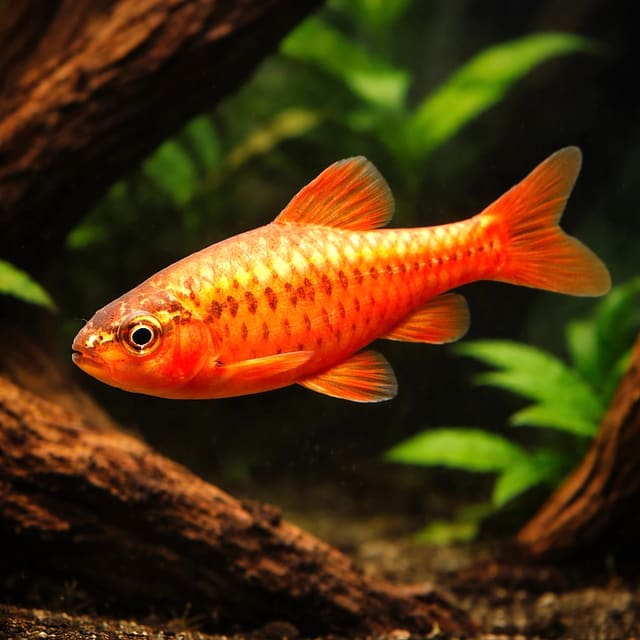
Albino Cherry Barb (Rohanella titteya)
20–27°C · pH 6–8 · 54L
£2.99

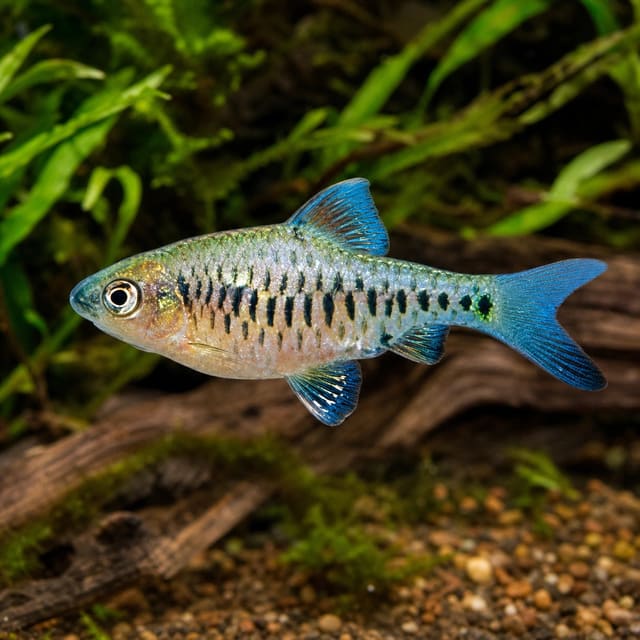
The Odessa Barb (Pethia padamya) is a peaceful freshwater cyprinid from Myanmar that reaches 4.6 cm standard length. It suits a planned community aquarium; keep 8–10 or more at 16–25°C and pH 6.5–8.5 in an aquarium with a base of at least 80 × 30 cm. Sold individually in sizes from 2–2.5 cm to 5–6 cm.
Adult size is the maximum length this species reaches at full maturity (scientific sources). The livestock you receive will be younger and smaller — pick a size above for the actual shipping size. Product-photo provenance and any image-specific limitations are stated on the listing.
Pethia padamya
Shoaling fish: kept in a group they feel safer, stay calmer and show their best colour.
Minimum of 2 per order.
The Odessa Barb (Pethia padamya) is a peaceful freshwater cyprinid from Myanmar that reaches 4.6 cm standard length. It suits a planned community aquarium; keep 8–10 or more at 16–25°C and pH 6.5–8.5 in an aquarium with a base of at least 80 × 30 cm. Sold individually in sizes from 2–2.5 cm to 5–6 cm.
Adult size is the maximum length this species reaches at full maturity (scientific sources). The livestock you receive will be younger and smaller — pick a size above for the actual shipping size. Product-photo provenance and any image-specific limitations are stated on the listing.
Maintain these water conditions for optimal health and vibrant colors
The Odessa Barb, Pethia padamya, is a small freshwater member of the Cyprinidae family. It suits a keeper who wants an active group moving through a planted community aquarium rather than a solitary centrepiece fish. Its social needs, swimming footprint and choice of companions matter more than its compact body length.
FishBase records a maximum of 4.6 cm standard length and places the species in Myanmar. That figure is the decisive adult-size reference for long-term planning; it is separate from the dispatch grade selected when ordering. FishBase describes it as a freshwater, pelagic fish, which supports planning around a usable horizontal swimming area rather than treating a tall but short aquarium as equivalent.
Odessa Barbs spent decades in the aquarium trade before being formally described as a distinct species in 2008. Older aquarium labels associated them with P. ticto and used the genera Barbus or Puntius. The clear identity to use for care planning is Pethia padamya, while “Odessa Barb” remains the established common name.
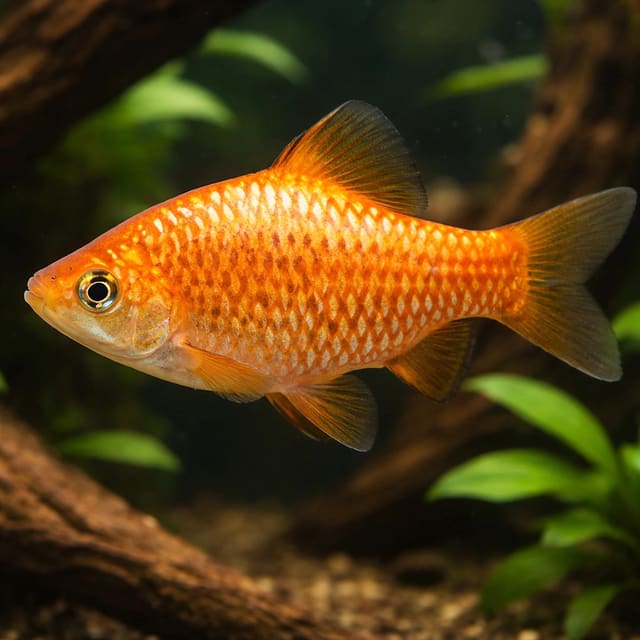
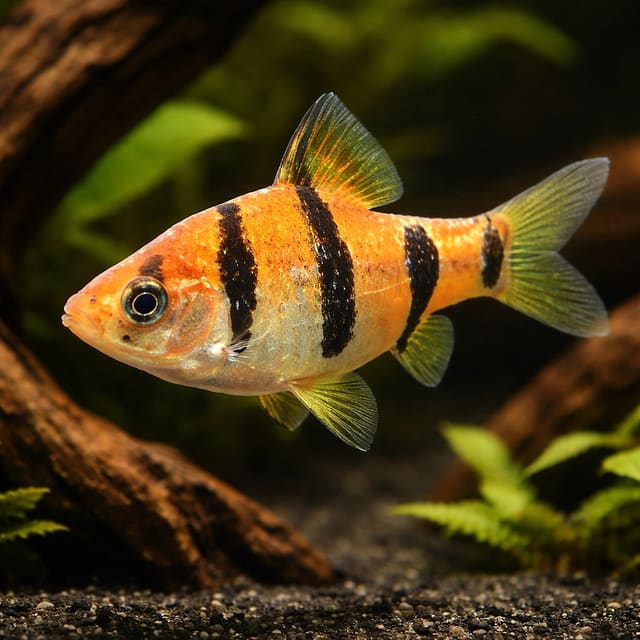
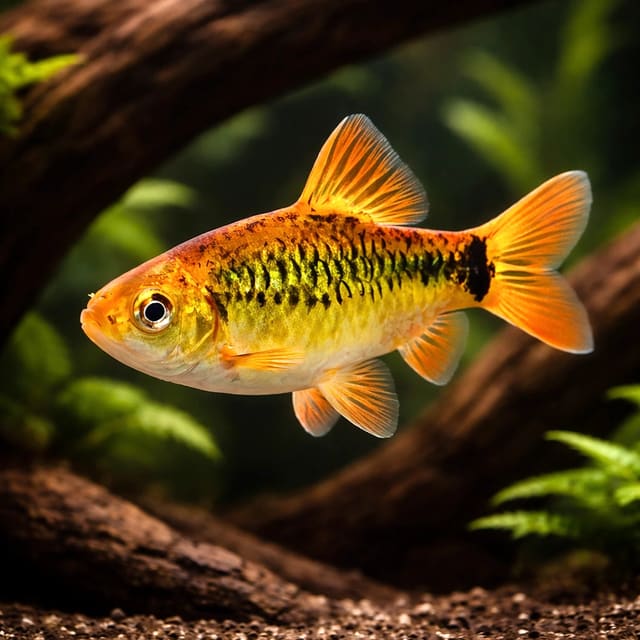
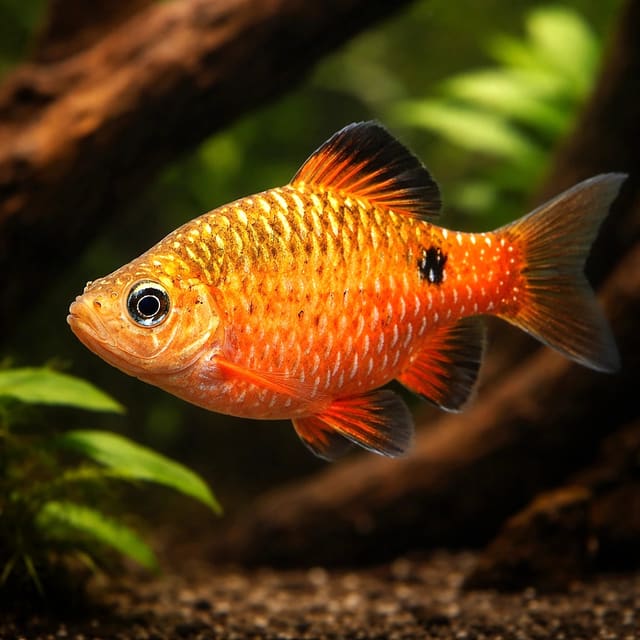
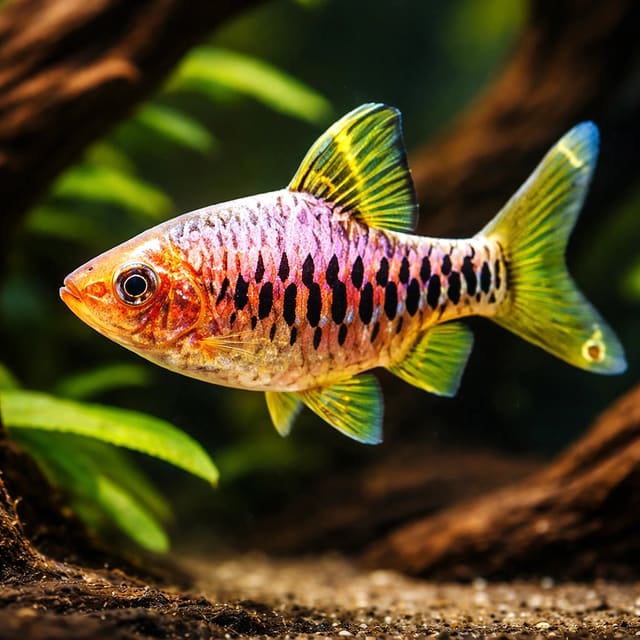
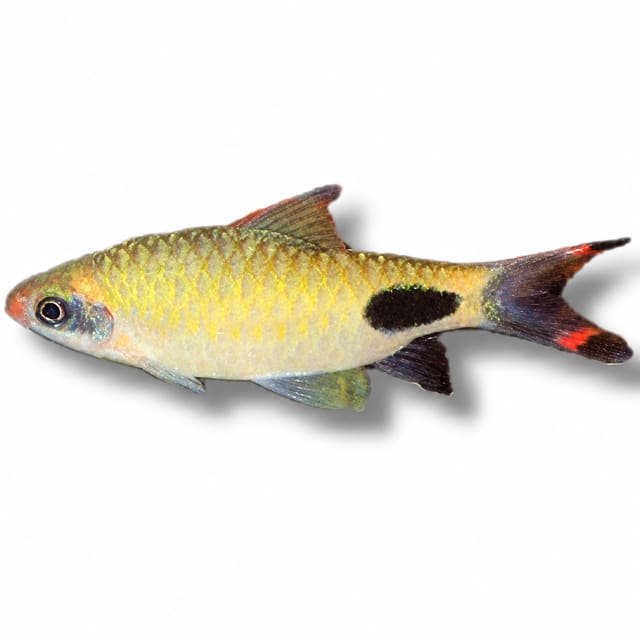
The fish is generally peaceful, but that description assumes a carefully planned community and a proper group of its own kind. Colour and markings also vary with sex and condition. Sexually mature males may carry a thick, bright red-orange band along the flanks with more strongly defined fin markings; mature females are usually thicker-bodied and plainer. These visual differences describe the species and do not determine the sex supplied through an unsexed option.
| Suits | Not suited to |
|---|---|
| A substantial shoal in stable water | Solitary or very small-group keeping |
| An aquarium with at least an 80 × 30 cm base | A short aquarium that misses the minimum base |
| A carefully researched peaceful community | A community with conflicting water or space needs |
For more fish from the same broad aquarium group, browse our current barbs collection. Each species still needs an individual assessment because barb size, behaviour and water requirements vary.
One purchase supplies one Odessa Barb of the option selected. The live size selector is the place to choose among the dispatch sizes: 2–2.5 cm, 2.5–3 cm, 3–4 cm, 4–4.5 cm, 4.5–5 cm and 5–6 cm. The size you select is the size supplied, not the adult size.
Use the selector for the fish being dispatched and the 4.6 cm standard-length record for long-term planning. Those figures use different listing contexts, so do not turn the upper dispatch grade into an assumed adult target or treat the smallest grade as a separate miniature form. Aquarium dimensions, group size and compatible stocking should be decided before choosing a grade.
Seriously Fish gives an aquarium base of at least 80 × 30 cm or equivalent, corresponding to about 72 litres, for this species. It also recommends a group of at least 8–10 specimens. A greater water volume can improve stability, but extra height does not replace the stated horizontal footprint. Compare the aquarium’s actual base measurements rather than relying only on the volume printed on its packaging.
| Decision | Planning reference |
|---|---|
| Sold unit | One animal of the selected option |
| Dispatch grades | 2–2.5 cm through 5–6 cm |
| Recorded maximum | 4.6 cm standard length |
| Group | At least 8–10 specimens |
| Aquarium base | At least 80 × 30 cm or equivalent |
| Approximate volume | About 72 litres |
Plan the whole group rather than treating one fish as a complete stocking choice. If the aquarium already contains livestock, account for the combined waste load and swimming requirements before deciding how many animals it can support. The minimum base is a starting boundary, not permission to crowd a community.
Sex is guaranteed only when the selected option explicitly states male or female. This Odessa Barb listing has no sex-guaranteed option.
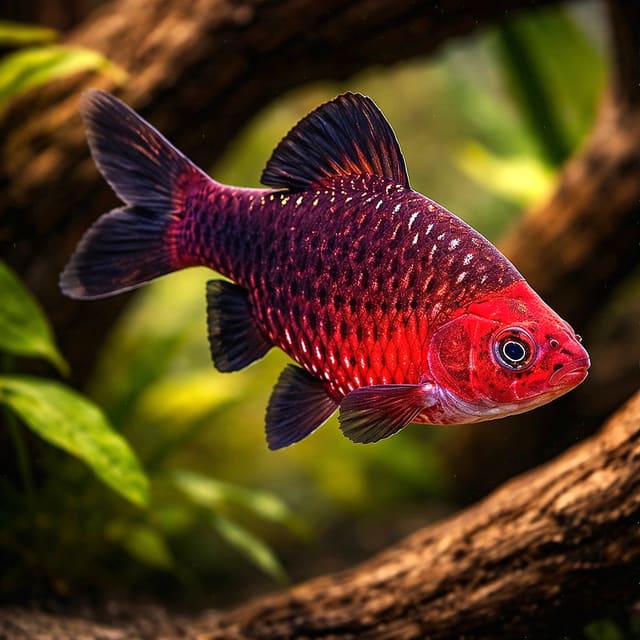
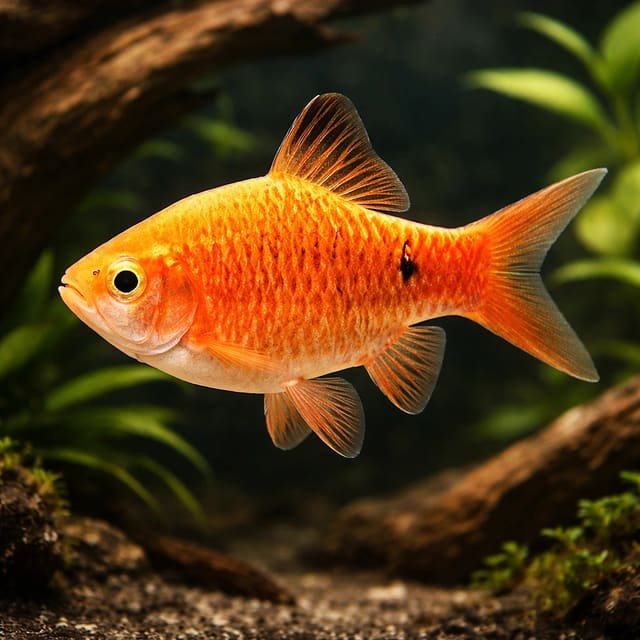
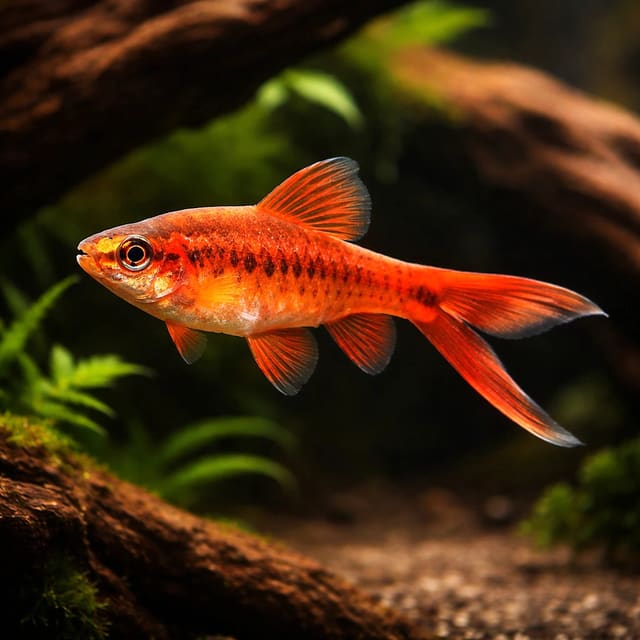
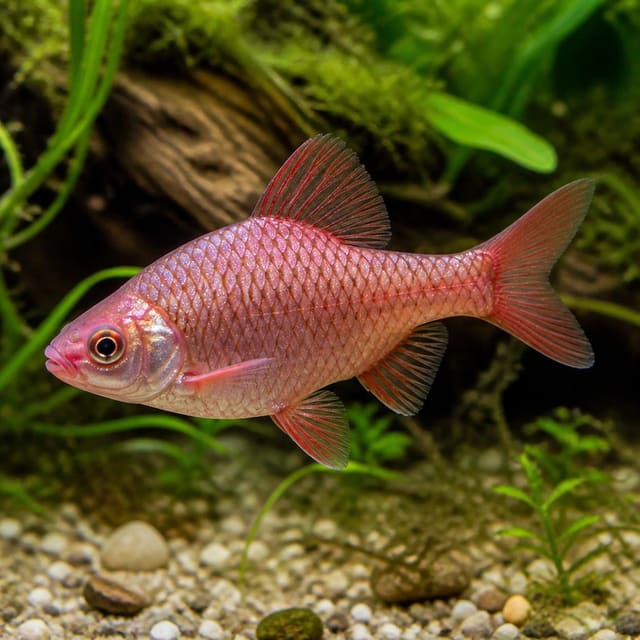
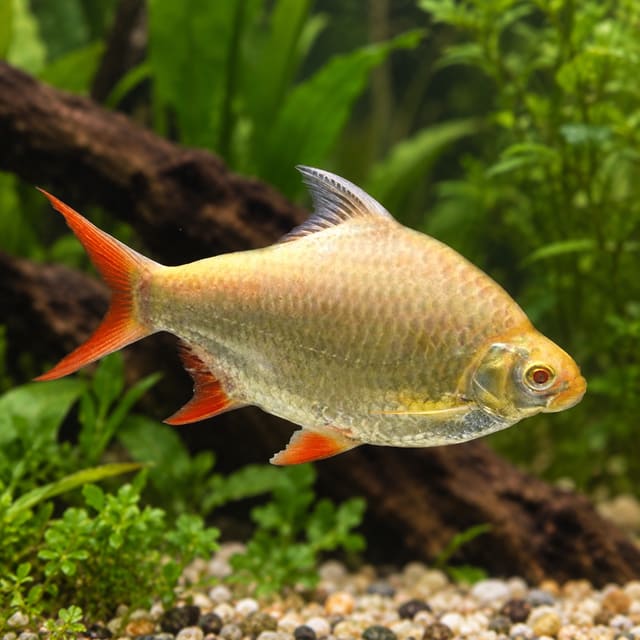
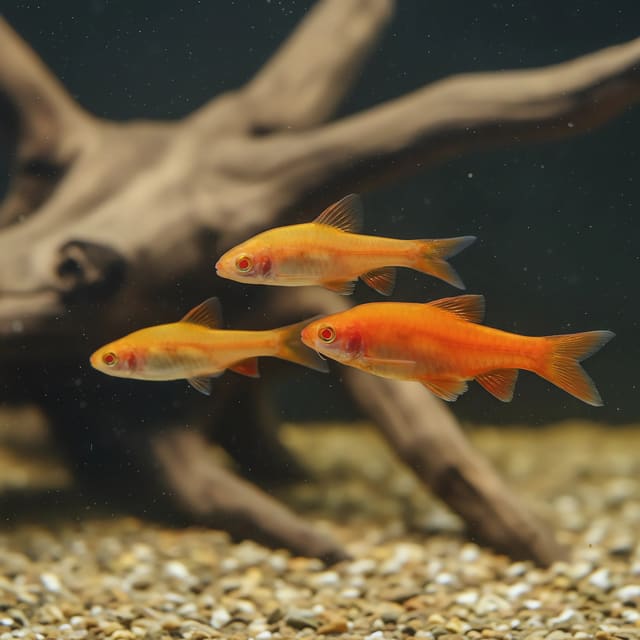
Some gallery images have been digitally enhanced to improve image quality. They show the listed type of animal rather than guaranteeing the exact markings of the individual supplied, so natural colour and pattern can vary.
Base the purchase decision on identity, dispatch grade and husbandry needs rather than expecting the exact colour balance shown in a representative image. Individual appearance can differ, and the selected size does not establish sex or life stage.
Measure the internal base length and width before planning an Odessa Barb group. The species requirement is at least 80 × 30 cm or an equivalent base, with about 72 litres given as the corresponding volume. A nominal 72-litre aquarium that is shorter than 80 cm should not be accepted on volume alone, because the stated base dimension is part of the requirement.
A simple example shows why both measurements matter. An aquarium may be labelled around the required volume but have a short base and unusual height. It may hold enough water on paper while still missing the 80 cm swimming length. Conversely, a longer aquarium with a suitable base can provide a more useful layout even when decorations reduce the working water volume.
Plants, roots and branches can help the fish settle and display, but they should not consume the entire horizontal footprint. Place taller or denser features where they provide cover while retaining connected swimming room. Check that wood cannot shift into the swimming area and that equipment does not create a narrow bottleneck across the tank.
The aquarium should already be mature enough for its filter to process livestock waste. If this is your first setup, follow our first tropical aquarium guide before choosing fish. Maturation is a biological process: filling a new aquarium and bringing it to temperature does not by itself establish the bacteria needed to process ammonia and nitrite.
Do not use the small dispatch grade to justify a temporary undersized aquarium. Moving a social group later creates another introduction and capacity decision, while the adult plan is already known. Set up the correct footprint, filter and group capacity from the beginning.
Keep Odessa Barbs at 16–25°C, pH 6.5–8.5 and 5–20 dGH. These are species-level aquarium ranges from Seriously Fish, not targets that need to be chased from one end to the other. Choose stable values within all the inhabitants’ overlapping requirements and avoid abrupt changes made solely to reach a preferred-looking number.
| Measurement | Working range or limit |
|---|---|
| Temperature | 16–25°C |
| pH | 6.5–8.5 |
| General hardness | 5–20 dGH |
| Ammonia | 0 mg per litre |
| Nitrite | 0 mg per litre |
| Nitrate | Up to 20 mg per litre above normal tap-water level |
OATA’s barb guidance supplies the ammonia, nitrite and nitrate limits as broad group guidance. Its general barb temperature and chemistry ranges are not a replacement for the narrower species instructions above. Use 16–25°C, pH 6.5–8.5 and 5–20 dGH when assessing this fish.
Test the aquarium and source water first. Our water chemistry guide explains what the principal readings mean, while the water matcher helps compare measured values with the stated ranges. A tank that falls outside a required range needs a deliberate water-management plan before livestock is introduced.
For example, a stable aquarium at 24°C, pH 7.4 and 10 dGH sits within all three species ranges. There is no reason to lower its pH merely to place the value nearer one end of the interval. The more important checks are whether every proposed inhabitant shares those conditions and whether ammonia and nitrite remain at zero.
A working biological filter is essential. The RSPCA explains that fish release toxic ammonia; beneficial bacteria in an established filter convert it first to nitrite, which is also toxic, and then to the safer nitrate. This process is why a warm, clear new aquarium is not necessarily ready for fish.
For a setup of about 72 litres, Seriously Fish uses a turnover of four to five times the aquarium volume each hour and points to a filter rated around 290–360 litres per hour. Treat the manufacturer’s rating as a selection reference, then consider the working volume, filter media, obstructions and required water movement when positioning the unit.
| Example calculation | Result |
|---|---|
| 72 litres × 4 per hour | 288 litres per hour |
| 72 litres × 5 per hour | 360 litres per hour |
| Practical rating range | About 290–360 litres per hour |
The same reference gives roughly 50 W of heating for a tank of this size when the room is around 20°C. That wattage depends on the aquarium and room conditions, so select equipment by the required 16–25°C water range rather than treating 50 W as suitable for every room, tank shape or season.
Test ammonia and nitrite and require zero readings before introduction. Increase aquarium livestock cautiously because the beneficial bacterial population must adapt when fish numbers and feeding rise. Adding more waste than the filter can process can cause new tank syndrome, with harmful ammonia or nitrite accumulating even when the water initially looks clear.
An Odessa Barb group creates a combined biological load. Do not calculate filtration around one purchased animal while planning to keep at least 8–10. Include the existing community, the complete barb group and the feeding routine in the same capacity assessment.
Décor is flexible for Odessa Barbs, but a heavily planted layout with a dark substrate can show their colour effectively. Floating plants and driftwood roots or branches can diffuse incoming light and create a more natural-feeling display. Combine those features with a connected swimming route across the aquarium’s required base.
| Feature | Practical role |
|---|---|
| Dark substrate | Creates a subdued visual background |
| Dense planting | Provides structure and cover |
| Floating plants | Diffuse light entering from above |
| Roots or branches | Add shelter and visual boundaries |
| Open route | Preserves usable horizontal movement |
Place rooted plants and wood securely before fish are introduced. Leave access around the filter intake and enough clearance to siphon waste during weekly maintenance. A beautiful layout that blocks circulation, traps debris or makes routine cleaning impractical works against stable water quality.
Filtration does not need to be exceptionally strong, although the species appreciates a degree of water movement and can also suit a hill-stream-style setup. Use the 290–360 litres-per-hour reference for an aquarium of about 72 litres, then observe whether the outlet distributes flow through the tank without forcing the fish into a single sheltered corner.
Plants are useful but not a substitute for group size. A single fish placed among dense cover still lacks the social arrangement recommended for the species. Likewise, a large group cannot compensate for a base shorter than the stated minimum. Footprint, group, filtration and layout work together.
After planting, allow disturbed debris to settle and confirm that equipment is operating normally. Re-test water before introduction, especially when a redesign has involved moving substrate or filter components.
Odessa Barbs are foraging omnivores. Their likely natural diet includes worms, insects, other small invertebrates, plant material and organic detritus. In the aquarium, use good-quality flakes or granules as the prepared foundation and include some food with plant or algal content.
Small live or frozen foods such as bloodworm, Daphnia and Artemia can add variety. These foods complement rather than displace an appropriate prepared staple. Match particle size to the fish being fed, particularly when a group contains smaller dispatch grades.
Feed once a day and offer only what the fish clear within a few minutes. This schedule comes from OATA’s barb guidance and provides a clear stopping rule: if food remains after the group has had time to feed, the portion was too large. Remove accessible leftovers and reduce the next portion rather than allowing uneaten food to break down.
| Meal choice | Purpose |
|---|---|
| Quality flake | Prepared daily staple |
| Suitable granule | Alternative prepared staple |
| Plant or algal content | Represents the plant component of the diet |
| Bloodworm, Daphnia or Artemia | Small live or frozen variety |
A practical rotation can alternate flakes and granules while substituting a suitable small live or frozen item on selected days. Each day remains one controlled meal; variety does not require adding extra feeds. Watch the whole group so that the quickest fish do not take every item before smaller or less assertive individuals feed.
Do not rely on rich animal foods alone to produce stronger colour. The husbandry reference associates good condition and colour with regular small live or frozen foods alongside quality dried foods, including plant or algal content. Water quality and social conditions still need to be correct.
At least once every week, carry out a 25% partial water change. Treat replacement tap water with an appropriate conditioner to remove chlorine or chloramine before it enters the aquarium. Use a siphon to remove solid waste from accessible areas of gravel or sand while keeping the planned water change controlled.
Record results consistently. A single number has more value when it can be compared with the aquarium’s usual pattern. If ammonia or nitrite appears, treat it as a filter-capacity warning rather than waiting for visible symptoms in the fish.
Check the filter for blockages during maintenance. If the filter needs cleaning, do not run it under the tap. Rinse the media lightly in aquarium water removed during the partial change, as this reduces the amount of beneficial bacteria lost.
Avoid replacing all filter media at once as part of routine tidying. The biological function described in the filtration section depends on bacteria living in the media. Maintenance should restore water flow while retaining that established capacity.
| Change noticed | First action |
|---|---|
| Surface hanging or bottom sitting | Test water and inspect equipment |
| Erratic swimming | Check water values and recent changes |
| Faster or slower gill movement | Test water and observe the whole group |
| Darkening or paling | Review water, social conditions and décor |
| White spots, growths or damaged scales | Separate observations from assumptions and seek guidance |
| Reduced feeding | Test water before changing the diet |
If a health concern continues after immediate water and equipment checks, contact us for guidance. Do not begin a treatment simply because several conditions share a visible symptom; identify the problem and account for every aquarium inhabitant first.
Plan the complete Odessa Barb group before introducing the first fish. The species recommendation is at least 8–10 specimens, while OATA advises increasing aquarium livestock slowly enough for the beneficial filter bacteria to adapt to additional waste and feeding. Reconcile those needs by assessing the mature filter’s capacity for the planned group before ordering rather than leaving one barb alone while an unsuitable tank catches up.
Ask us for a stocking and compatibility assessment if the aquarium already contains several species or its biological capacity is difficult to judge. Provide the aquarium dimensions, measured water values, current livestock and filter details so the decision can address the whole system.
After introduction, observe swimming, breathing, colour, condition and interest in food. Feed one controlled meal daily and check that every fish can reach it. Test water more often when livestock has just increased, because clear water does not rule out ammonia or nitrite.
If either ammonia or nitrite rises above zero, focus on water quality and biological capacity immediately. Do not respond by increasing food, adding more livestock or making several unrelated chemistry changes. Inspect filter flow, check the accuracy of the feeding portion and carry out appropriate conditioned water changes while monitoring results.
Continue the weekly 25% water change and at least weekly testing. Record typical feeding behaviour, group distribution and water values. This baseline makes later changes easier to recognise and prevents a gradual decline from being mistaken for normal behaviour.
Review the current delivery and Live Arrival Guarantee policy separately before dispatch. The policy page is the place for current dispatch days, receiving requirements and claim instructions; care planning should be complete before the fish travels.
Odessa Barbs are generally peaceful and can suit a well-researched community aquarium. That description is conditional: there is no universal tank-mate list that replaces checking water, adult dimensions, activity, feeding behaviour and the space occupied by every species.
Seriously Fish identifies comparably sized, open-water cyprinids from similar environments as useful candidates for assessment. It also mentions balitorid, cobitid and nemacheilid loaches, plus benthic cyprinids such as compatible Crossocheilus and Garra species. These are starting points for research, not automatic approvals: each candidate still needs matching conditions and enough space.
OATA warns that some barbs may nip fins and says slow-swimming, timid or long-finned fish should not be mixed with barb species that show that behaviour. Odessa Barbs are described as generally peaceful, so use observation and group planning rather than assigning the behaviour automatically. A proper shoal gives social attention an appropriate outlet, while too few barbs can increase stress across the group.
| Candidate characteristic | Decision |
|---|---|
| Matching water and comparable activity | Continue the assessment |
| Very slow, timid or long-finned | Use caution and examine interaction risk |
| Conflicting temperature or chemistry | Do not combine the requirements |
| Insufficient room for both groups | Reduce the stocking plan or choose another aquarium |
| Unclear adult size or temperament | Research the candidate before purchase |
A shared “peaceful” label is not enough. Two peaceful species can still be a poor pairing when one needs warmer water, a different current, a large group or a feeding pace the other cannot tolerate.
Keep at least 8–10 Odessa Barbs together. A proper group supports their shoaling behaviour and reduces the stress associated with keeping barbs singly or in numbers that are too small. Count the fish actually housed together; other schooling species do not replace companions of the same species.
Normal daily observation should cover swimming position, breathing, colour, temperament, condition and feeding. Look for patterns rather than judging one brief movement in isolation. A fish that repeatedly hides, misses food or separates from the group needs a check of water values, social pressure and physical condition.
| If you see | Do this first |
|---|---|
| One fish repeatedly isolated | Test water and review group interactions |
| Persistent chasing | Check group number, footprint and companion behaviour |
| Timid fish missing meals | Reassess feeding competition and compatibility |
| Group concentrated by the outlet | Inspect circulation and water quality |
| Sudden paling or darkening | Check water, décor changes and social pressure |
| Reduced appetite across the group | Test ammonia, nitrite and temperature |
Do not assume stronger male colour is the only sign of successful care. The species reference links good condition and colour with suitable foods, while water quality, space and social organisation remain essential. Mature females are naturally plainer, and individual appearance should not be used to promise a particular sex.
Compatibility is not finished on introduction day. Adding fish changes waste production, feeding competition and use of space. Continue weekly testing and maintenance, and watch whether a new group causes another species to hide, lose access to food or abandon its normal area.
If the aquarium cannot support at least 8–10 Odessa Barbs alongside its present livestock, do not solve the problem by keeping only one or two. Choose a different stocking plan that respects the shoaling requirement. Likewise, do not exceed the aquarium’s biological or spatial capacity merely to reach the group number.
Use the adult dimensions and requirements of every species in the calculation. Dispatch size can help plan food particle size and careful introduction, but it does not reduce the permanent space, group or compatibility requirements.
It is a peaceful, shoaling freshwater cyprinid from Myanmar. FishBase records a maximum of 4.6 cm standard length, while its active social behaviour calls for a properly planned group and horizontal swimming space.
One purchase supplies one animal of the size selected through the live selector. Plan the full group before ordering because this fish should be kept with at least 8–10 of its own kind.
The dispatch sizes run from 2–2.5 cm through 2.5–3 cm, 3–4 cm, 4–4.5 cm, 4.5–5 cm and 5–6 cm. Consult the live selector for the choices presented.
Use an aquarium with a base of at least 80 × 30 cm or equivalent, corresponding to about 72 litres. Provide a mature filter, plants or wood for cover and usable swimming room.
No. Keep at least 8–10 specimens together. Barbs kept singly or in groups that are too small will often become stressed, and the aquarium must support the complete group’s space and biological load.
Keep it at 16–25°C, pH 6.5–8.5 and 5–20 dGH. Ammonia and nitrite should remain at 0 mg per litre, with stable values preferred over repeated chemical adjustments.
Feed one daily portion cleared within a few minutes. Use quality flakes or granules with some plant or algal content, supplemented by suitably small bloodworm, Daphnia or Artemia.
Introduce it only after confirming a mature filter, suitable water and ammonia and nitrite at 0 mg per litre. Increase livestock cautiously and monitor water more often after the biological load changes.
Approve a combination only when temperature, pH, hardness, adult dimensions, activity, temperament, group needs and space all align. Use added caution with slow, timid or long-finned companions.
No reviews for this item yet. Bought one? Honest reviews only, good or bad.
What customers say about ordering from us
I have a small group of long finned mountain minnows. So was delighted to be able to order ten of this variety to increase the genetics in my tank . The ones I recieved are healthy but it’s to early to give a verdict on wether they are of a long finned type since they are small currently.
Gordon Walker · 23 Sept 2026
100% success travel and "installation". Pleased with quality of purchase. The Siamese fighter a bit "shy" so have not yet seen him at his best yet but looking good. Happy customer. GG
George E Garratt · 21 Sept 2026
Reviews of our shop, collected by Judge.me, an independent third-party review collector. Newest first.