Easy
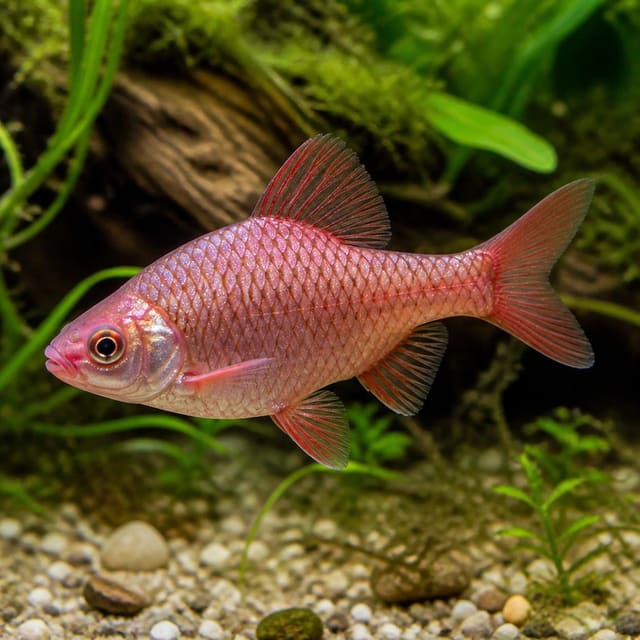
Albino Cherry Barb (Rohanella titteya)
20–27°C · pH 6–8 · 54L
From £3.99Some sizes on sale

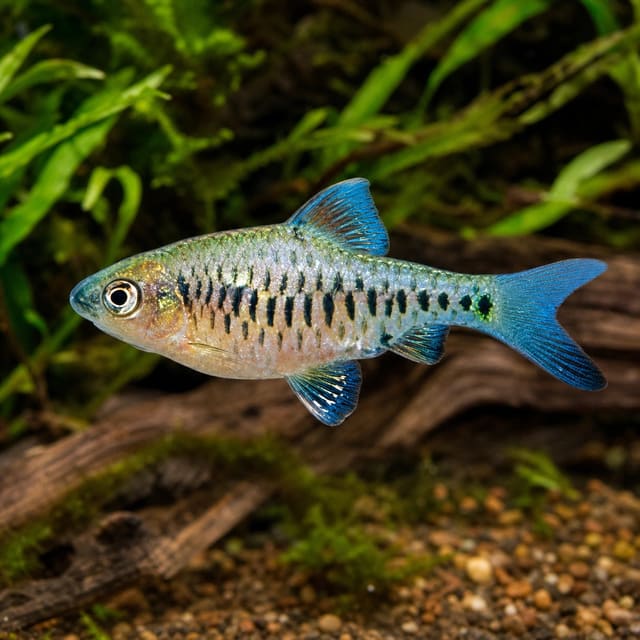
The Cherry Barb (Capoeta titteya) is a peaceful cyprinid from Sri Lanka that reaches 5 cm. It suits planted community aquariums; the Seriously Fish species profile gives a group of at least 6–10, 20–27°C and pH 6.0–8.0. Sold individually in sizes from 1–1.5 cm to >4 cm.
Adult size is the maximum length this species reaches at full maturity (scientific sources). The livestock you receive will be younger and smaller — pick a size above for the actual shipping size. Product-photo provenance and any image-specific limitations are stated on the listing.
Barbus Capoeta titteya
Shoaling fish: kept in a group they feel safer, stay calmer and show their best colour.
Minimum of 2 per order.
The Cherry Barb (Capoeta titteya) is a peaceful cyprinid from Sri Lanka that reaches 5 cm. It suits planted community aquariums; the Seriously Fish species profile gives a group of at least 6–10, 20–27°C and pH 6.0–8.0. Sold individually in sizes from 1–1.5 cm to >4 cm.
Adult size is the maximum length this species reaches at full maturity (scientific sources). The livestock you receive will be younger and smaller — pick a size above for the actual shipping size. Product-photo provenance and any image-specific limitations are stated on the listing.
Maintain these water conditions for optimal health and vibrant colors
The Cherry Barb is a small freshwater member of the Cyprinidae family from Sri Lanka. FishBase now lists it as Puntius titteya and treats Capoeta titteya as a synonym. Its documented distribution runs from the Kelani to Nilwala basins, and FishBase gives a maximum length of 5 cm total length for male or unsexed fish.
This is a shoaling species rather than a fish to plan around as a solitary centrepiece. Its calm behaviour, modest adult size and willingness to use planted cover make it a strong candidate for a carefully researched community aquarium. The keeper still needs enough footprint for a proper group, a mature biological filter and companions selected by adult size, behaviour and overlapping water requirements.
| Suits | Not suited to |
|---|---|
| Planted freshwater aquariums that can accommodate at least 6–10 together | Plans based on keeping one Cherry Barb alone |
| Aquariums with a base of at least 60 × 30 cm or an equivalent footprint | Aquariums with less than the required footprint |
| Peaceful community plans with overlapping water requirements | Combinations that do not share suitable water conditions |
| Mature aquariums with working biological filtration | New or unfiltered aquariums with detectable ammonia or nitrite |
Its natural range and Vulnerable conservation classification make responsible long-term care especially important. Never release aquarium fish or aquarium water into natural waterways. To compare this species with other cyprinids while planning the aquarium, browse our barbs collection.
One purchase supplies one Cherry Barb from the size selected. Size choices are 1-1.5 cm, 1.5-2 cm, 2-2.5 cm, 2,5 - 3 cm, 3 - 3,5 cm, 3.5-4 cm and > 4 cm. Use the live size selector to see which choices can be selected when ordering.
The size you select is the size supplied, not the adult size. A 2.5–3 cm choice, for example, describes the fish at dispatch; aquarium space must still be planned around the species reaching up to 5 cm total length. The open-ended over-4 cm size is also a dispatch category rather than a promise that every fish will reach or exceed a particular final measurement.
Sex is guaranteed only when the selected option explicitly states male or female. This Cherry Barb listing has no sex-guaranteed option.
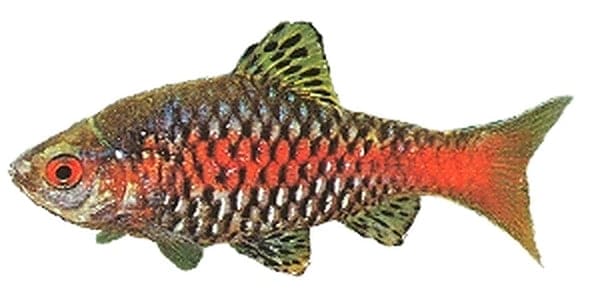
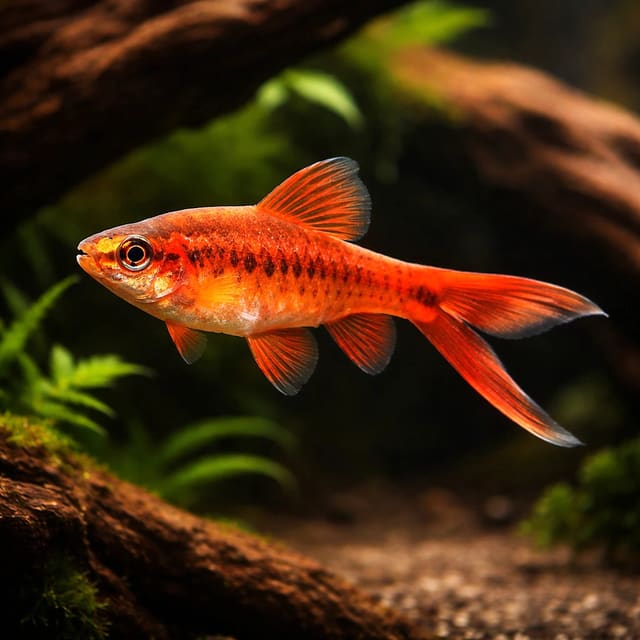
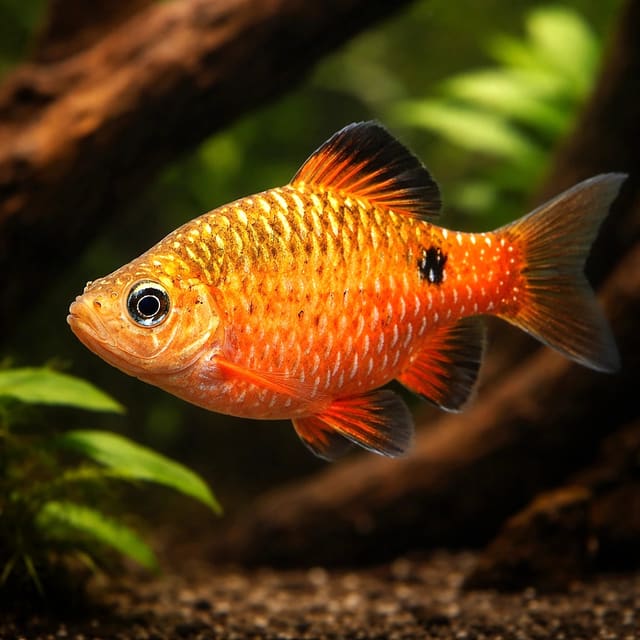
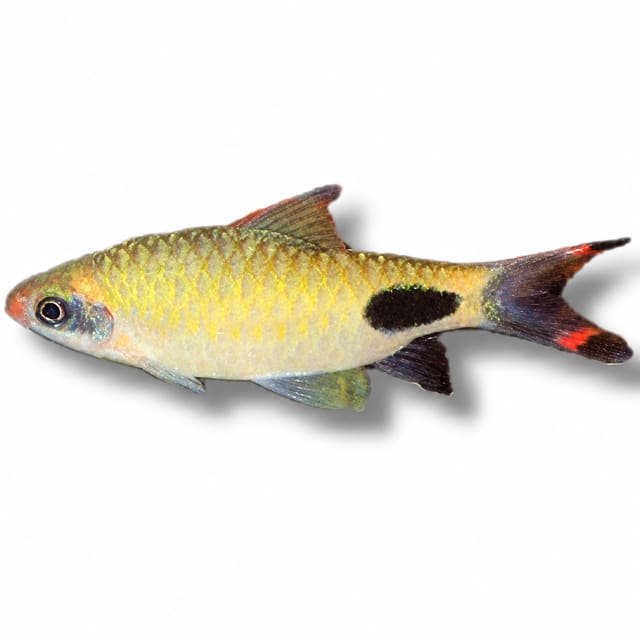
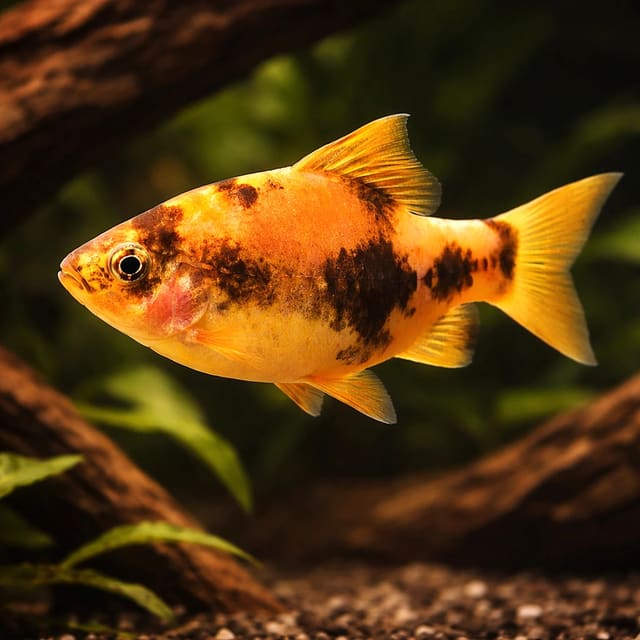
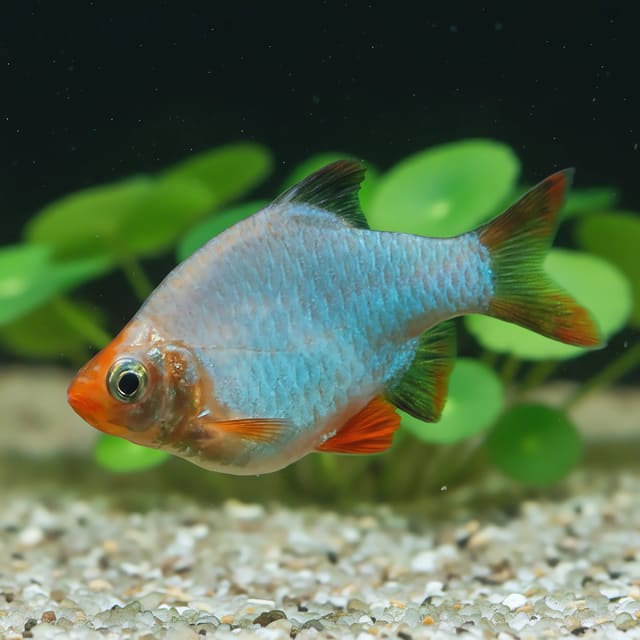
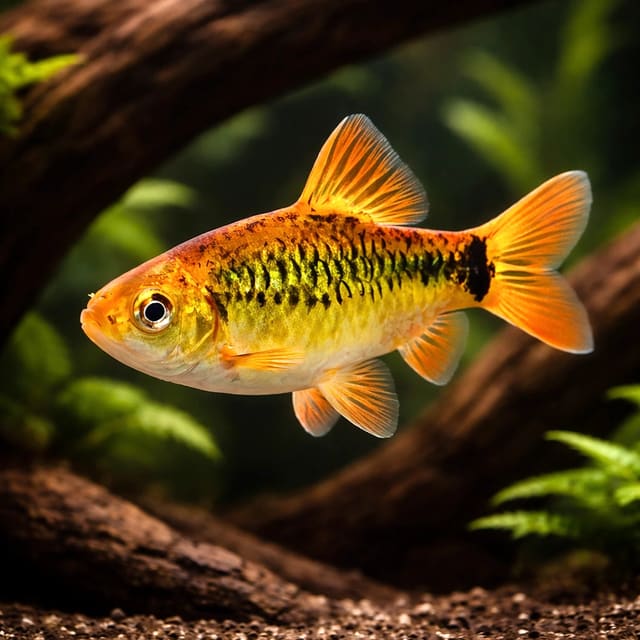
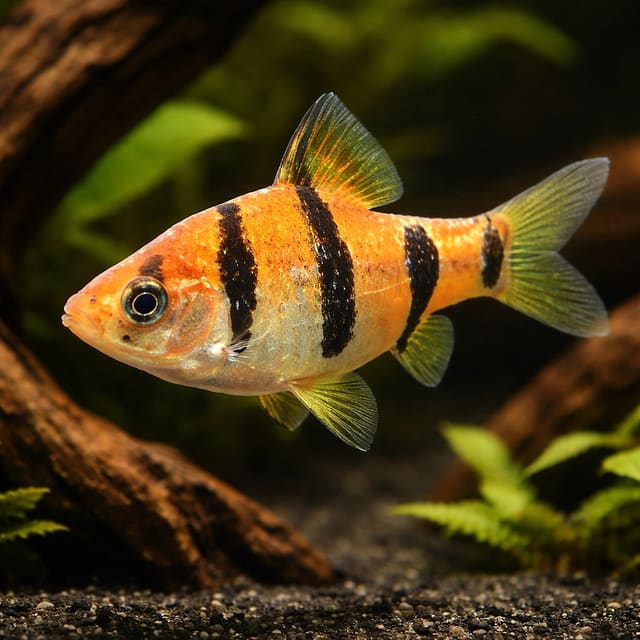
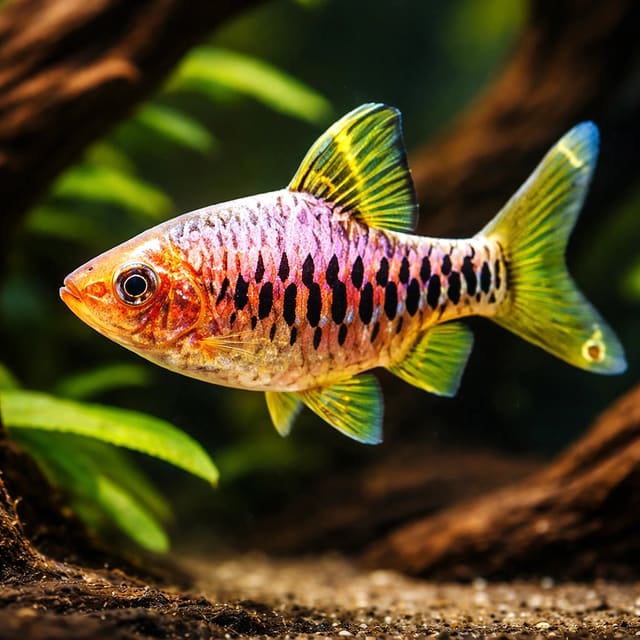
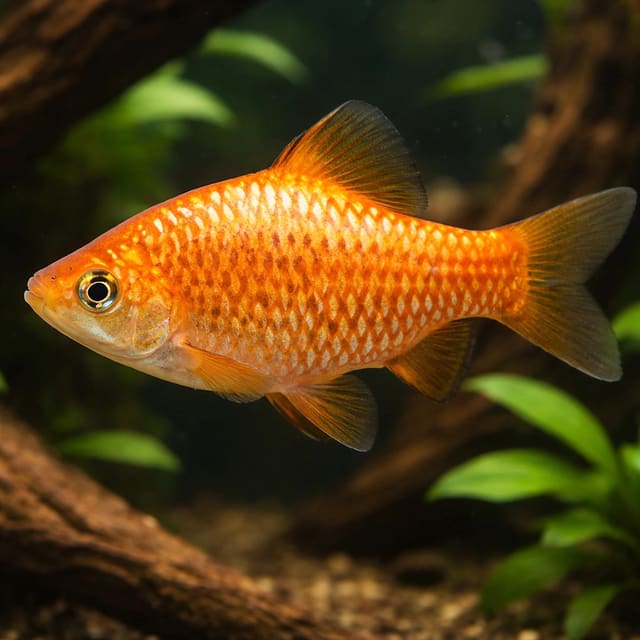
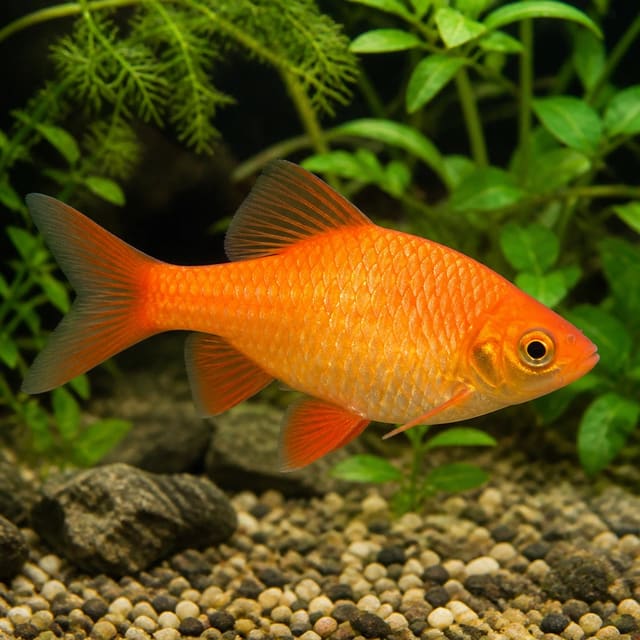
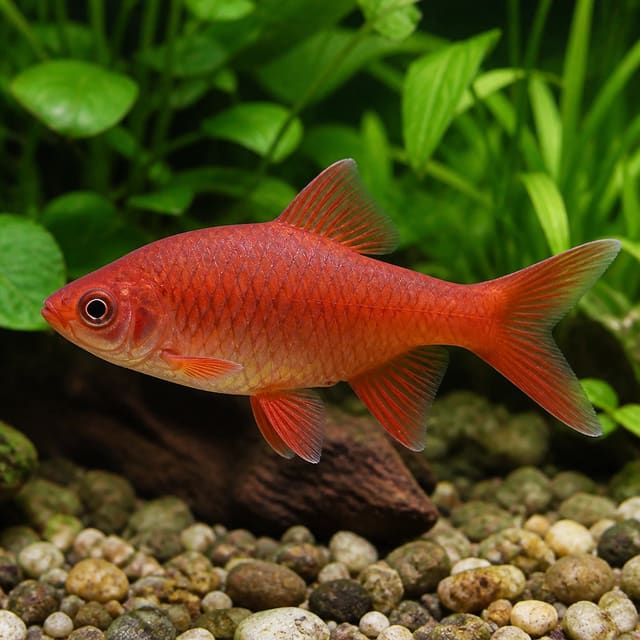
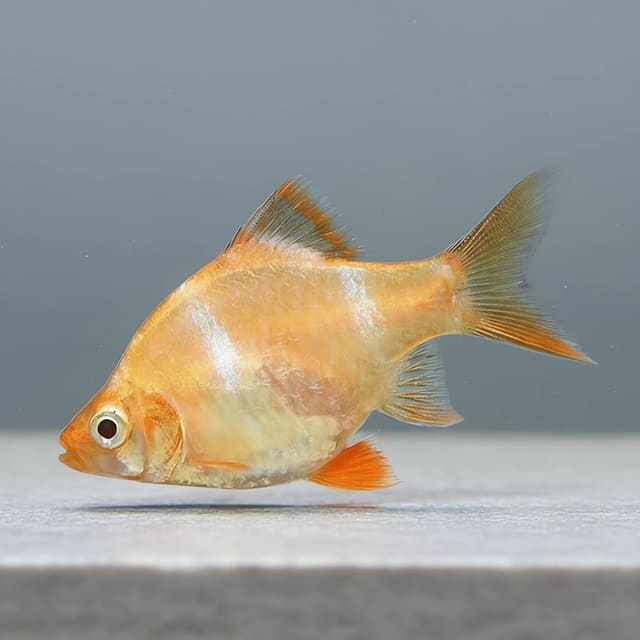
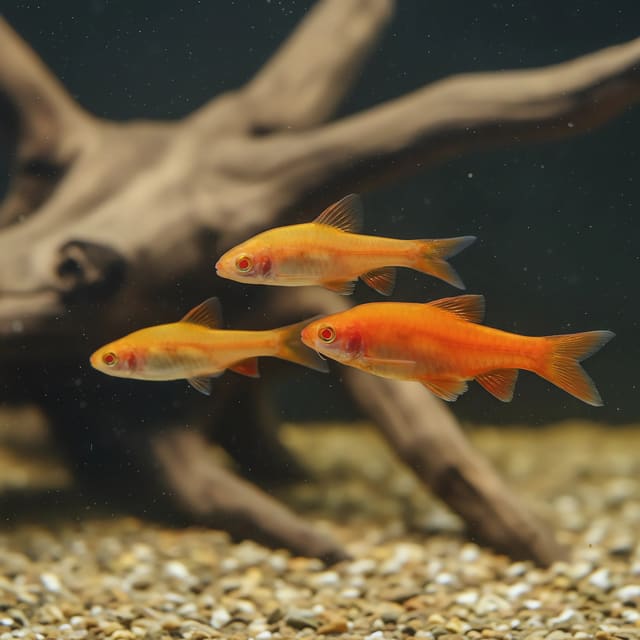
The gallery images are representative, based on reference photographs of this species, so colours can look slightly different from the live animal.
This order prevents a common planning error: multiplying the purchase quantity without first confirming that the aquarium has enough mature filtration, footprint and planted cover for the completed group.
The Seriously Fish species profile gives an aquarium range of 20–27°C, pH 6.0–8.0 and 2–20 dGH. It calls for base dimensions of at least 60 × 30 cm or an equivalent footprint, associated with a volume of about 54 litres. It also recommends keeping at least 6–10 together.
| Planning decision | Figure to use |
|---|---|
| Maximum length | 5 cm total length |
| Aquarium footprint | At least 60 × 30 cm or equivalent |
| Reference volume | About 54 litres |
| Group | At least 6–10 fish |
| Temperature | 20–27°C |
| pH | 6.0–8.0 |
| General hardness | 2–20 dGH |
The footprint is the firm spatial instruction: a tall aquarium with similar litres but a shorter base is not an equivalent substitute. Group size, décor and any community companions also consume usable space, so use a larger aquarium when the intended stocking plan cannot fit comfortably within the minimum footprint.
These ranges describe acceptable aquarium conditions, not a target to move between. Test the aquarium and tap water, choose a stable point within the overlapping needs of every resident, and avoid abrupt changes made simply to chase the middle of a range. Temperature, pH and hardness must work together with zero ammonia, zero nitrite and a mature biological filter.
Begin with a base measuring at least 60 × 30 cm or an equivalent footprint. The associated reference volume is about 54 litres, but dimensions remain the more useful minimum because they determine how much horizontal room the group can use. Increase the footprint when adding another shoal, bottom-dwelling fish or substantial décor.
Cherry Barbs tend to show stronger colour in a heavily planted aquarium with a dark substrate. Floating plants can soften the light, while driftwood roots, branches and leaf litter add cover and a more natural structure. Arrange these elements securely so they cannot shift onto the fish or obstruct the filter.
Dense planting should create several sheltered areas rather than one crowded corner. Spread cover across the aquarium so a fish can move away from attention without becoming trapped. Leave access around the filter intake, heater and viewing areas so equipment can be checked and waste can be removed during maintenance.
Filtration does not need to be especially strong, but this species appreciates some water movement and can also be maintained in a hill stream-style arrangement. In an aquarium of about 54 litres, the species profile recommends turnover of four to five times the aquarium volume each hour and points to a filter rated around 215–270 litres per hour.
Treat the filter rating as a planning reference rather than a guaranteed flow at every point. Media, pipework and décor affect circulation. Watch the group after the aquarium is running: fish should be able to hold position, feed and use planted areas without being pinned into one sheltered corner. If the current dominates the layout, redirect the outlet or spread the flow while retaining effective filtration.
Maintain Cherry Barbs at 20–27°C, pH 6.0–8.0 and 2–20 dGH. Farm-raised fish are described as adaptable within that chemistry range, while wild fish are expected to favour slightly acidic to neutral water and the softer end. Do not assume the origin of an individual fish; use stable aquarium conditions within the stated range.
For a roughly 54-litre aquarium in a room around 20°C, the species profile gives a heater-planning reference of about 50–75 W. Select and position equipment for the real room temperature, aquarium volume and manufacturer’s instructions. Check the aquarium temperature with a separate thermometer rather than relying only on the heater setting.
Use our water chemistry guide to understand pH, hardness and nitrogen-cycle readings, then compare measured values with the care range using the water matcher. A stable result already inside the full range is preferable to repeated adjustments that create rapid swings.
The OATA barb sheet gives group guidance of zero mg/l ammonia, zero mg/l nitrite and nitrate no more than 20 mg/l above the normal tap-water level. These waste limits complement the aquarium range rather than replacing it.
| Test result | Decision |
|---|---|
| Ammonia above zero | Pause further stocking and investigate filtration, feeding and waste. |
| Nitrite above zero | Pause further stocking and protect water quality while the biological filter is assessed. |
| Rising nitrate | Review water-change frequency, stocking and feeding before it exceeds the stated limit. |
| Stable pH within 6.0–8.0 | Avoid unnecessary adjustment. |
| Hardness within 2–20 dGH | Check that every intended companion shares an overlapping range. |
Retest after a significant stocking increase, an unexplained behaviour change or maintenance that may have disturbed filtration. Record results so gradual movement is visible before it becomes a larger problem.
Prepare the aquarium and biological filter before introducing the group. Our first tropical aquarium guide explains the preparation sequence. Do not use a fixed number of days as proof that a new aquarium is ready; test for zero ammonia and zero nitrite and confirm that the filter is operating properly.
The RSPCA explains why a working aquarium filter is vital: fish waste releases toxic ammonia, biological filtration converts it to nitrite, and established bacteria then convert nitrite to the safer nitrate. A filter therefore needs continuous operation, appropriate media and maintenance that preserves its bacterial population.
Match replacement water closely enough to avoid an abrupt environmental change. Add it in a controlled way that does not uproot plants, scatter accumulated debris or expose the heater while it is operating.
When filter media needs cleaning, rinse it lightly in aquarium water removed during the partial water change. Do not run it under the tap because chlorine or chloramine may kill beneficial bacteria. Avoid replacing all mature media at once unless the equipment manufacturer’s safety instructions make replacement unavoidable.
If flow drops, inspect for blocked intakes, trapped plant matter and clogged mechanical media before choosing a more powerful filter. Restoring the intended 215–270 litres-per-hour rating for a roughly 54-litre setup may be a maintenance task rather than an equipment problem.
After cleaning, confirm that the filter has restarted, the heater remains correctly submerged and water is circulating around the aquarium. Test again if the filter stopped unexpectedly, media dried out or a substantial amount of waste was disturbed.
Cherry Barbs are straightforward omnivorous feeders. In nature they forage on diatoms, algae, organic detritus, small insects, worms, crustaceans and other zooplankton. In the aquarium, build the diet around good-quality dried flakes or granules, with at least some food containing plant or algal material.
Regular small live or frozen foods such as Daphnia, Artemia and bloodworm can add variety and support condition and colour. Choose pieces that the fish can take easily, distribute food where the group can reach it, and avoid allowing larger or faster companions to consume the whole portion.
OATA’s feeding schedule for barbs is once a day, offering only what the fish can eat within a few minutes. This gives a practical starting point for the group while limiting leftovers. Remove or siphon uneaten food rather than leaving it to break down and add waste to the aquarium.
| Food decision | Practical use |
|---|---|
| Flake | Use a good-quality product in pieces the group can take readily. |
| Granules | Choose an appropriately small size and watch that every fish feeds. |
| Plant or algal content | Include it in at least part of the dried-food rotation. |
| Daphnia, Artemia or bloodworm | Offer small live or frozen portions as regular variety. |
| Leftovers after a few minutes | Remove them and reduce the next portion. |
A settled group should show interest when food is offered. Watch the entire shoal rather than the boldest fish. If one animal repeatedly misses food, check whether it is hiding, being displaced or struggling with the particle size.
A sudden reduction in appetite can accompany stress, deteriorating water quality or illness. Test ammonia and nitrite before adding richer food or increasing the portion. Overfeeding cannot compensate for a fish that is not feeding normally and may worsen water quality through uneaten food and additional waste.
Colour should be supported through varied nutrition, secure group conditions and planted cover rather than excessive feeding. Adult males may become more colourful in the presence of rivals, but colour intensity varies and is not a reliable way to identify the sex of the animal supplied.
Introduce Cherry Barbs only to a mature, filtered aquarium that already meets the planned temperature, pH and hardness range. Test immediately before introduction and proceed only when ammonia and nitrite are both zero. Confirm that the aquarium base, planted cover and intended completed group have been planned together.
Increase the aquarium population gradually. Every added fish increases waste and feeding, so the biological bacteria must adjust to the greater load. Adding too many animals too quickly can contribute to new tank syndrome, in which ammonia or nitrite rises because the bacterial population cannot yet process the waste.
Observe the group after introduction without repeatedly disturbing the aquarium. Healthy signs include clear, bright eyes, intact scales, undamaged fins, appropriate swimming and interest in food. Some initial use of planted cover can occur, but each fish should be included in the daily headcount and should become accessible for observation.
Feed according to the once-daily rule and remove leftovers. Keep the established lighting and maintenance routine stable instead of making several changes at once. Check temperature daily during the settling period, and test ammonia and nitrite whenever behaviour, respiration or appetite changes.
| If you see | Do this first |
|---|---|
| Food remains after a few minutes | Remove it and reduce the next portion. |
| Reduced filter flow | Check for blockages and trapped plant matter. |
| Any ammonia or nitrite | Pause additional stocking and address water quality. |
| One fish repeatedly isolated | Check water readings, group interactions and physical condition. |
| Rapid breathing or surface hanging | Test water immediately and seek specialist guidance. |
Learn the settled group’s normal swimming, colour, breathing, temperament and feeding response. Daily observation makes a change easier to recognise than an occasional close inspection. Count the fish, check that each animal can swim normally, and look for damage before feeding.
Start with measured water values. Check temperature, ammonia, nitrite and nitrate, then compare pH and hardness with previous results. A zero reading for ammonia and nitrite is required; even small amounts can stress barbs. Inspect filter operation and look for uneaten food, a blocked intake or missed maintenance.
A white spot, swollen body, damaged fin or altered swimming pattern can have different causes. Do not choose medication from a single symptom or treat the display aquarium automatically. Seek qualified aquatic-health or retailer guidance when the cause is unclear, a fish deteriorates, or several animals are affected.
Protect water quality while guidance is sought: maintain filtration, remove uneaten food and avoid adding further livestock. Do not make several abrupt changes to temperature or chemistry, because a second environmental stress can make the fish harder to assess.
Write down test results, maintenance, feeding changes and unusual behaviour. A simple dated record helps distinguish a one-off event from a trend. For example, gradually rising nitrate points towards the balance between waste, feeding and water changes, while a sudden ammonia reading calls for an immediate check of filtration and recent stocking.
Body shape and colour also vary naturally between individuals and sexes. Adult males are generally slimmer and more colourful, while females are fuller-bodied. Compare each fish with its own recent condition rather than assuming every difference is illness or using appearance to assign the sex supplied.
Cherry Barbs are generally peaceful and suit a well-researched community aquarium. The species profile describes successful combinations with other small cyprinids, tetras, livebearers, rainbowfishes, anabantoids, catfishes and loaches. These are candidate groups, not automatic pairings: every intended combination still needs its own adult-size, water and behaviour assessment.
OATA notes that Cherry Barbs can generally be mixed with other peaceful species. Its wider barb advice also warns that some barbs can be semi-aggressive or nip fins, so do not transfer the behaviour of another barb species to this one without checking the exact animal. Equally, the word peaceful is not a guarantee that every individual or aquarium combination will work.
| Candidate | Screening decision |
|---|---|
| Other small cyprinids | Consider when water ranges, adult size and total group space overlap. |
| Tetras, livebearers or rainbowfishes | Consider peaceful species after checking water and space requirements. |
| Anabantoids | Assess the exact species, adult behaviour and shared water range. |
| Catfishes or loaches | Consider when footprint, feeding access and water needs remain suitable. |
| Fish needing different water | Choose a different combination rather than compromising both species. |
For a stocking and compatibility assessment, provide the aquarium dimensions, measured water values, filtration, mature residents and intended numbers. A species name alone is not enough to judge the full plan.
Keep at least 6–10 Cherry Barbs together. A proper group reduces skittishness, creates a more natural display and allows social attention to remain among their own kind. Males may also develop stronger colour when other males are present.
Do not solve a community-space problem by cutting the shoal below its social requirement. If the aquarium cannot accommodate the full group alongside its existing residents, choose a larger aquarium or revise the wider stocking plan.
Brief social movement within the group is different from one fish being persistently excluded, damaged or prevented from feeding. Planting, floating cover, roots and branches can provide separation, but décor cannot compensate for an undersized footprint, too many residents or an unsuitable companion.
A 60 × 30 cm base and roughly 54 litres describe the species profile’s starting point, not permission to add an unlimited mixture. A single-species group uses space differently from a community containing several shoals and bottom-dwelling fish. Account for adult size, territory use, feeding competition and filter capacity across the complete population.
Introduce further fish slowly only after the filter has adjusted to the existing population and ammonia and nitrite remain at zero. Observe established residents after each change. Compatibility is an ongoing welfare decision rather than a one-time label applied before purchase.
If one combination is uncertain, choose the lower-risk plan: retain the Cherry Barb group, preserve its water range and omit the questionable companion. This keeps the known social and environmental needs intact while avoiding a trial that may leave either species stressed.
FishBase records a maximum length of 5 cm total length for the Cherry Barb. Plan the aquarium around that adult figure rather than the smaller dispatch size.
The Seriously Fish species profile requires a base of at least 60 × 30 cm or an equivalent footprint, associated with about 54 litres. Use a mature, filtered aquarium with planting and some water movement.
Keep at least 6–10 Cherry Barbs together. Seriously Fish gives this species-level group recommendation because a proper shoal reduces skittishness and produces more natural behaviour.
Yes. Seriously Fish describes the Cherry Barb as a choice for beginners, but it still needs a mature biological filter, an aquarium base of at least 60 × 30 cm and a group of at least 6–10.
Feed good-quality flakes or small granules, including some plant or algal content, with small live or frozen Daphnia, Artemia or bloodworm for variety. OATA’s group feeding guidance is to offer only what the fish eat within a few minutes once a day.
Keep the Cherry Barb at 20–27°C and pH 6.0–8.0, with hardness of 2–20 dGH. These are the aquarium ranges in the Seriously Fish species profile; keep the chosen values stable.
This fish is generally peaceful. OATA says Cherry Barbs can generally be mixed with other peaceful species, while Seriously Fish describes them as suitable for a well-researched community aquarium; monitor persistent chasing, fin damage or unequal feeding access.
Seriously Fish names other small cyprinids, tetras, livebearers, rainbowfishes, anabantoids, catfishes and loaches as candidate companions. Check the exact species for compatible adult size, peaceful behaviour, sufficient space and water needs overlapping 20–27°C, pH 6.0–8.0 and 2–20 dGH.
Have someone present to receive the parcel. Film every delivery continuously from the sealed parcel before it is opened, showing the parcel being opened and the fish still inside the bag. Float the bag for 20–30 minutes before releasing the fish, and never pour the bag water into the aquarium.
No reviews for this item yet. Bought one? Honest reviews only, good or bad.
What customers say about ordering from us
I have a small group of long finned mountain minnows. So was delighted to be able to order ten of this variety to increase the genetics in my tank . The ones I recieved are healthy but it’s to early to give a verdict on wether they are of a long finned type since they are small currently.
Gordon Walker · 23 Sept 2026
100% success travel and "installation". Pleased with quality of purchase. The Siamese fighter a bit "shy" so have not yet seen him at his best yet but looking good. Happy customer. GG
George E Garratt · 21 Sept 2026
Reviews of our shop, collected by Judge.me, an independent third-party review collector. Newest first.