Easy
Albino Cherry Barb (Rohanella titteya)
20–27°C · pH 6–8 · 54L
£2.99

The Five-Banded Barb (Desmopuntius pentazona) is a peaceful schooling cyprinid sold as one animal in the size selected. Keep at least 8–10 in an aquarium with a base of at least 80 × 30 cm, around 72 litres, gentle filtration and planted or root-filled cover.
Adult size is the maximum length this species reaches at full maturity (scientific sources). The livestock you receive will be younger and smaller — pick a size above for the actual shipping size. Product-photo provenance and any image-specific limitations are stated on the listing.
Desmopuntius pentazona
Shoaling fish: kept in a group they feel safer, stay calmer and show their best colour.
Minimum of 2 per order.
The Five-Banded Barb (Desmopuntius pentazona) is a peaceful schooling cyprinid sold as one animal in the size selected. Keep at least 8–10 in an aquarium with a base of at least 80 × 30 cm, around 72 litres, gentle filtration and planted or root-filled cover.
Adult size is the maximum length this species reaches at full maturity (scientific sources). The livestock you receive will be younger and smaller — pick a size above for the actual shipping size. Product-photo provenance and any image-specific limitations are stated on the listing.
Maintain these water conditions for optimal health and vibrant colors
The Five-Banded Barb, Desmopuntius pentazona, is a freshwater cyprinid for a planted, peaceful community aquarium. One purchase supplies one animal from the option selected, so build the required school by choosing the appropriate quantity rather than expecting a fixed pack.
| Suits | Not suited to |
|---|---|
| A planted or root-filled peaceful community aquarium | A solitary-fish plan |
| A school of at least 8–10 fish | An aquarium with a base shorter than 80 × 30 cm or equivalent |
| Soft water with gentle filtration | Boisterous or very vigorous tank mates |
Use the live size selector to choose a dispatch grade. The size you select is the size supplied, not the adult size. Every grade therefore needs the same permanent aquarium plan, including room for the complete adult school and any other inhabitants. A smaller grade can require smaller food particles, but it is not a way to make the species suitable for a smaller permanent aquarium.
Sex is guaranteed only when the selected option explicitly states male or female. This Five-Banded Barb listing has no sex-guaranteed option. Plan the group without assuming a particular ratio, and do not use dispatch size as a guide to sex or life stage.
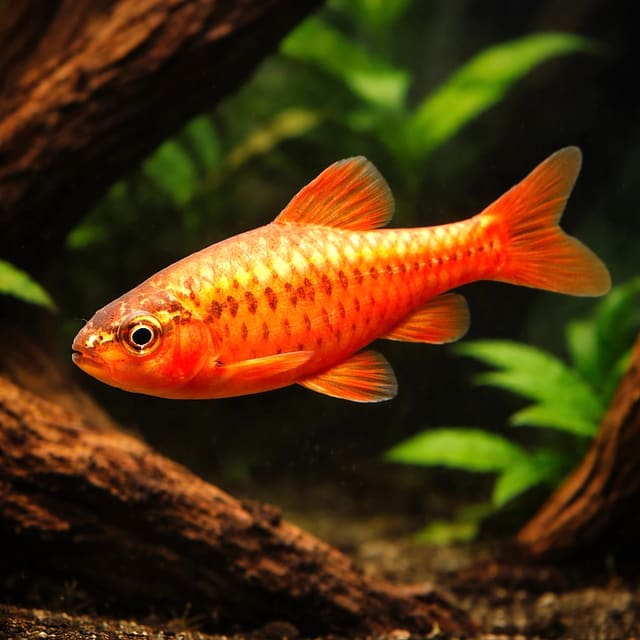
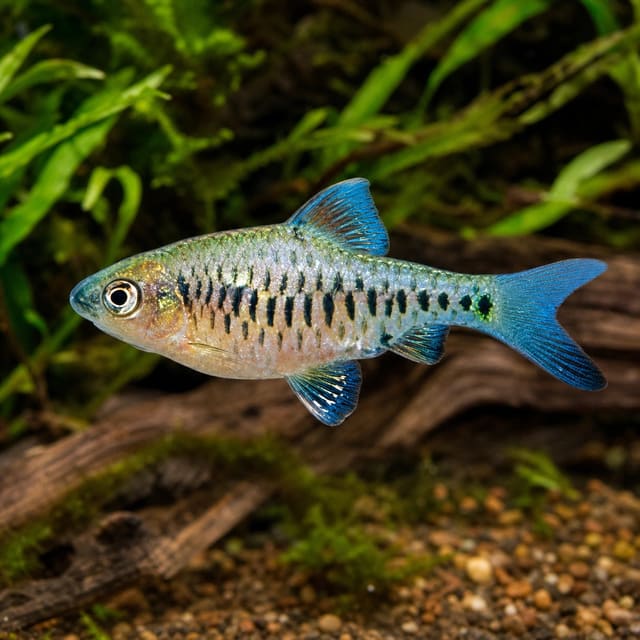
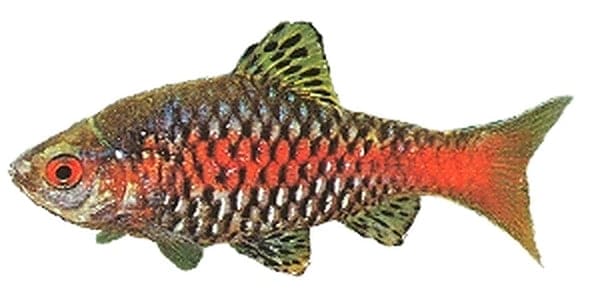
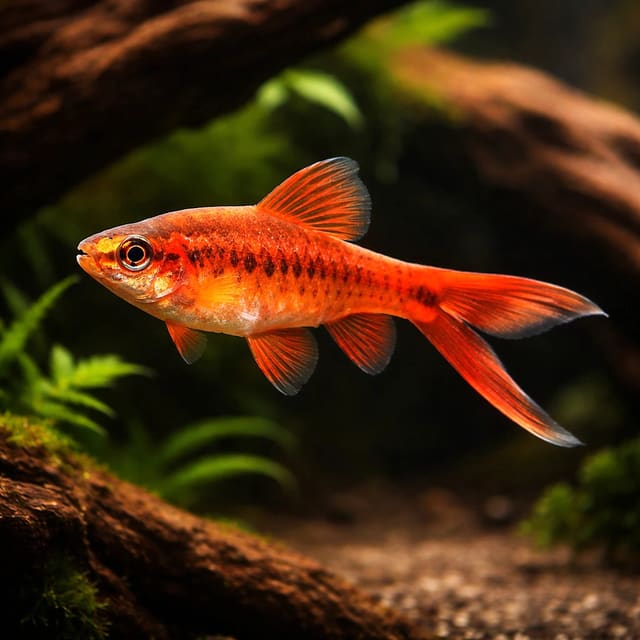
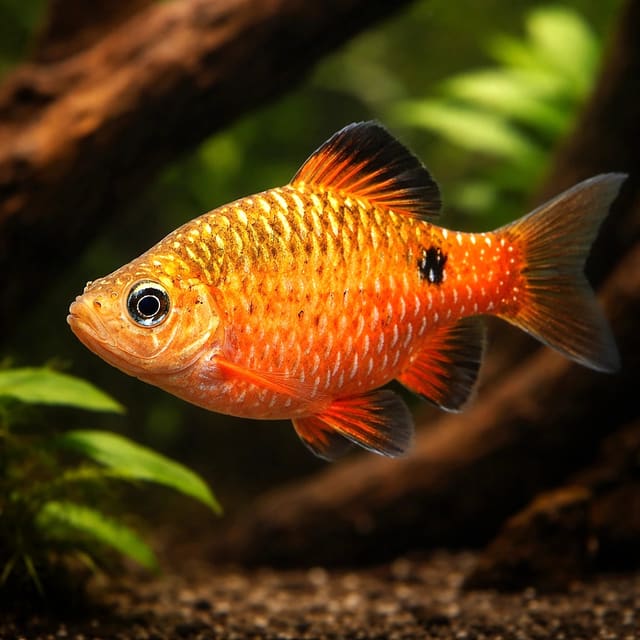
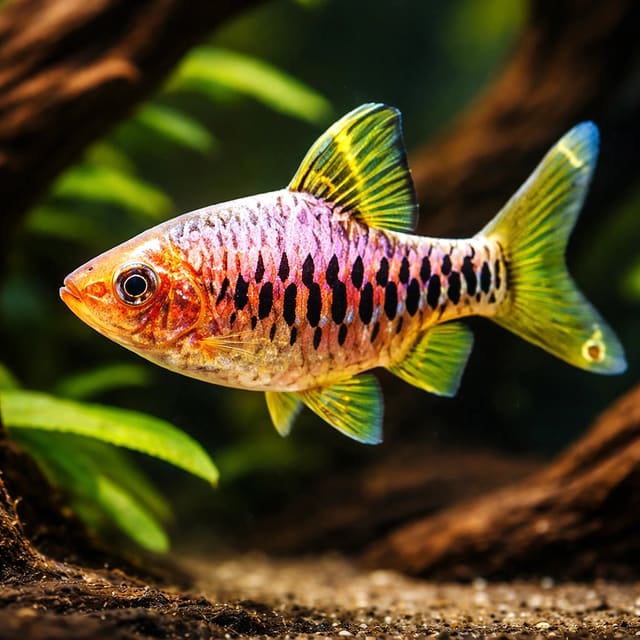
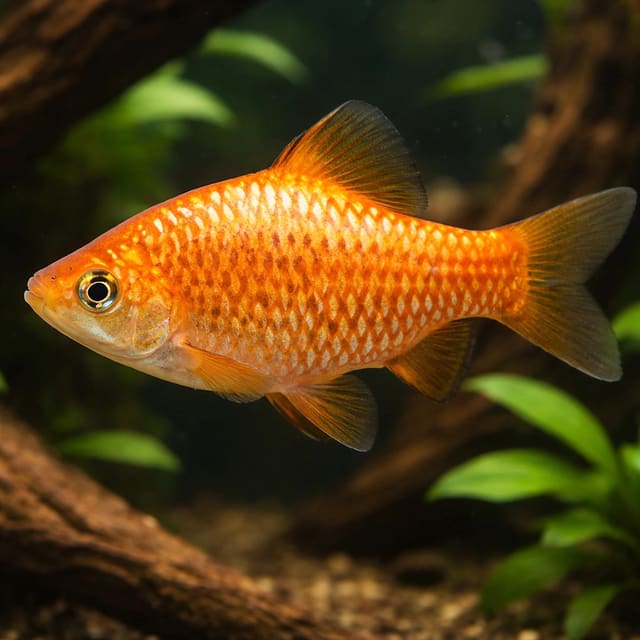
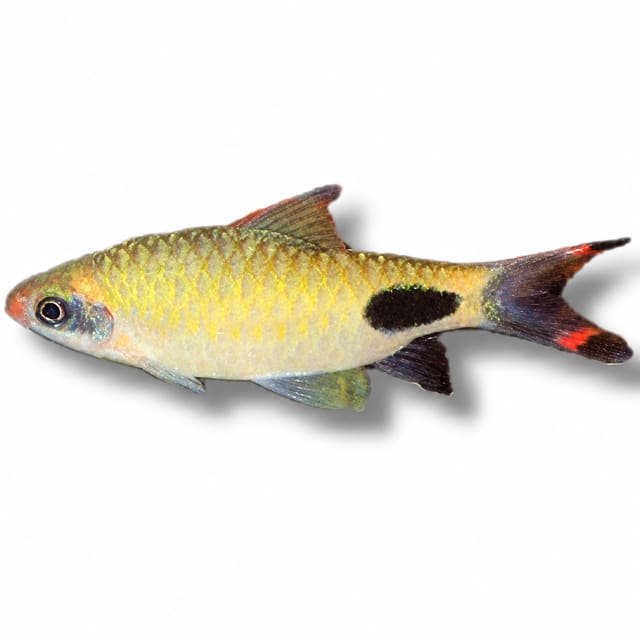
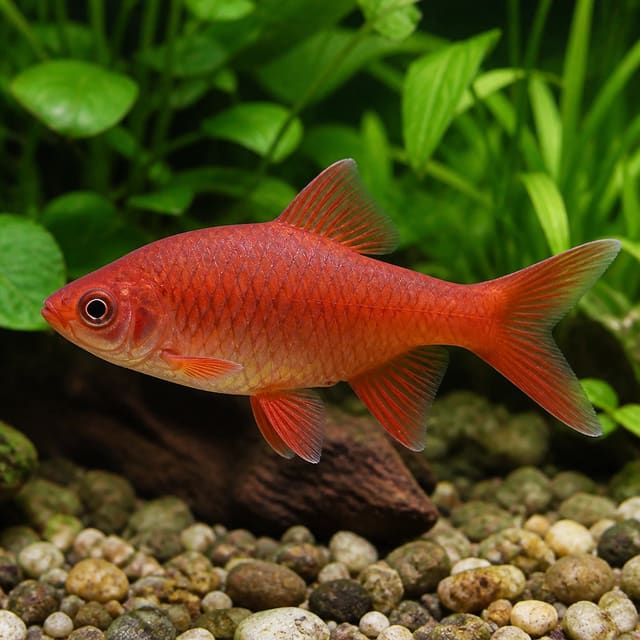
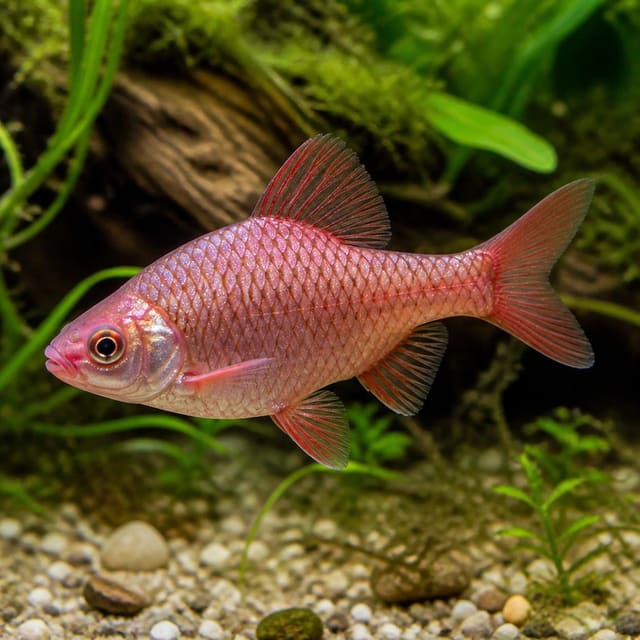
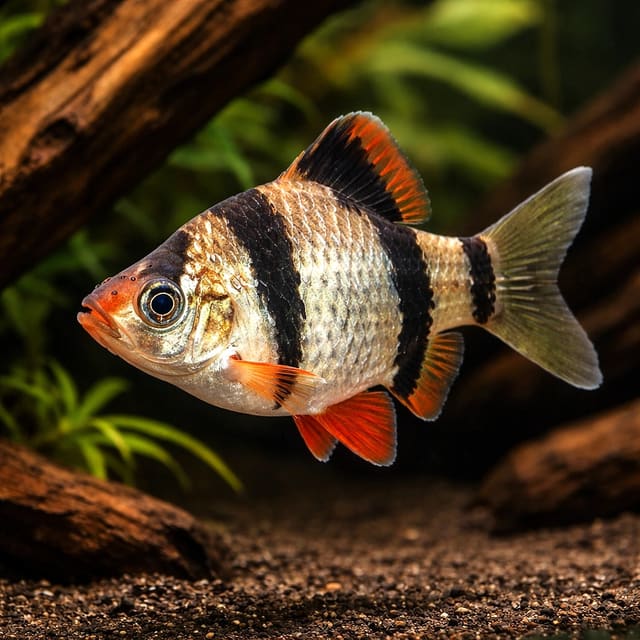
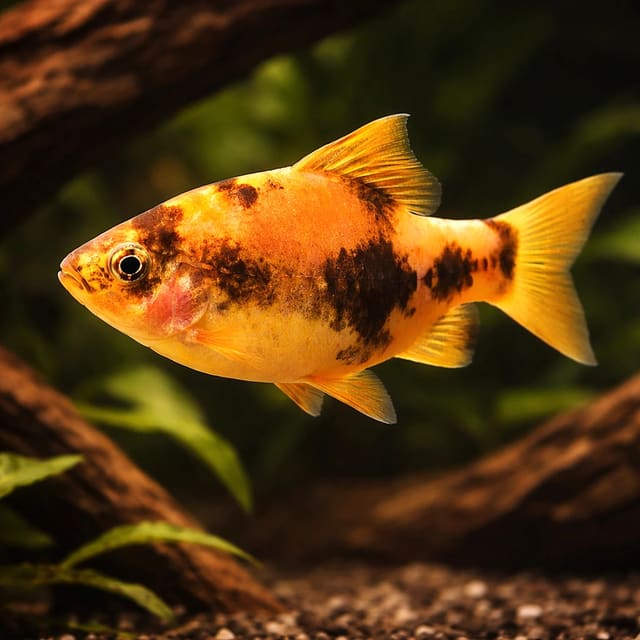
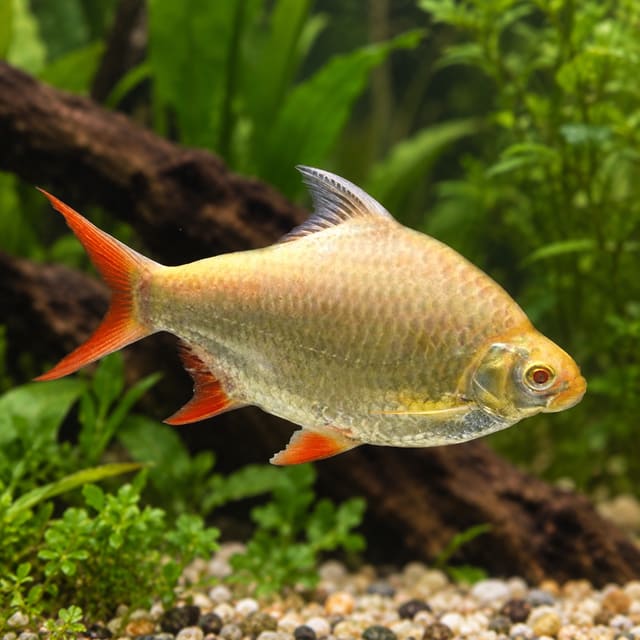
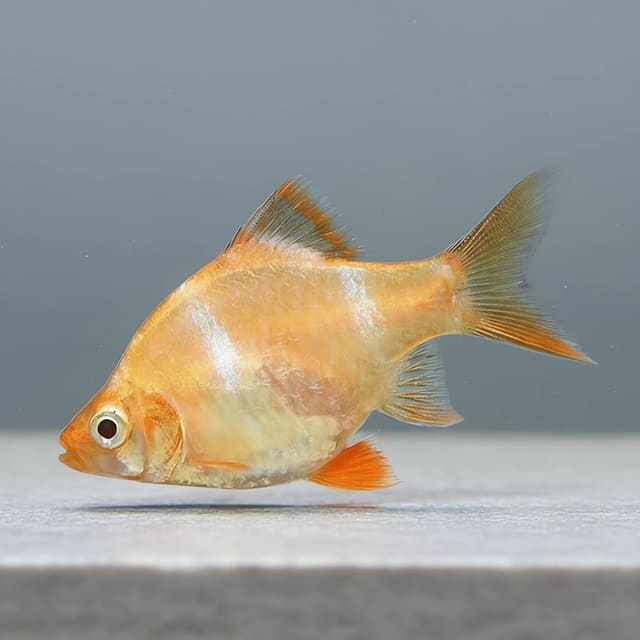
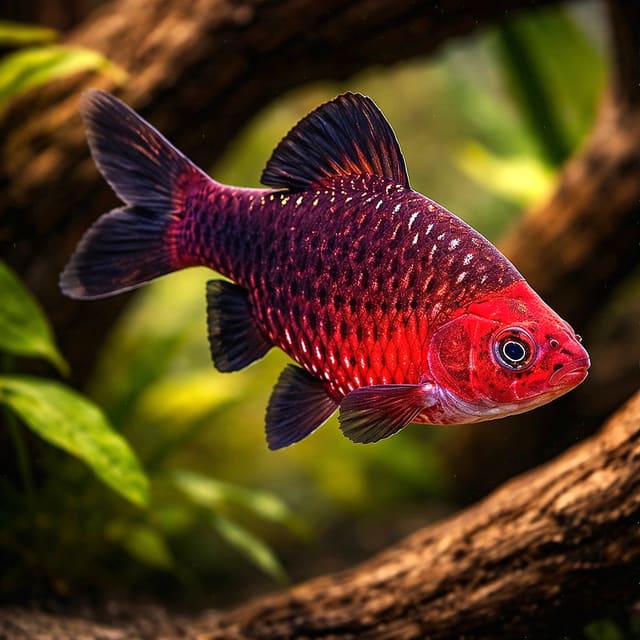
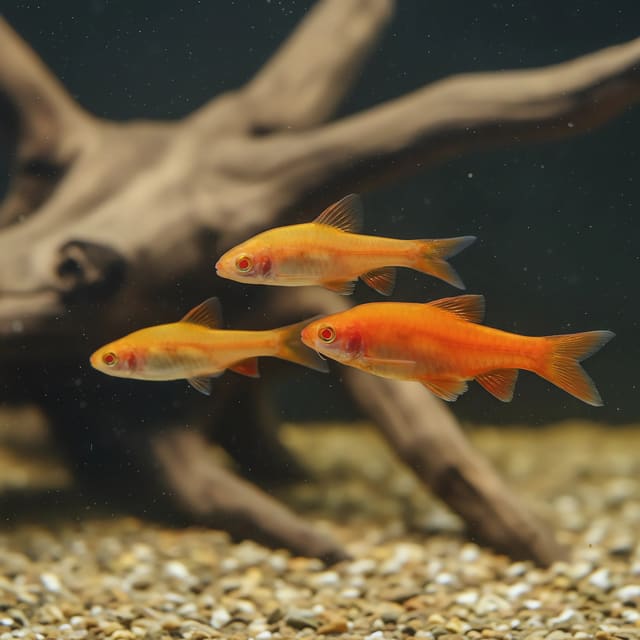
The gallery images are representative illustrations of this type of animal, not photographs of the animal supplied, so pattern and colours can differ from the live animal.
The trade name “Five-Banded Barb” identifies this fish clearly for aquarium keepers. Older combinations involving Barbus or Barbodes belong to its naming history, while the accepted binomial used here is Desmopuntius pentazona. Aquarium-trade confusion with the similar D. hexazona is well documented, so band count alone should not be used to relabel a fish.
FishBase records a maximum of 8.8 cm total length for Desmopuntius pentazona. That maximum is the safer figure for long-term stocking decisions.
Seriously Fish gives the aquarium requirements for this species as a base of at least 80 × 30 cm or equivalent, approximately 72 litres, 21–26°C, pH 4.0–7.0 and hardness of 1–5 dGH. It recommends keeping at least 8–10 together. These are the working figures to use when deciding whether the aquarium is suitable.
| Planning point | Decisive figure |
|---|---|
| Maximum recorded length | 8.8 cm total length |
| Minimum aquarium base | At least 80 × 30 cm or equivalent |
| Approximate volume reference | 72 litres |
| Temperature | 21–26°C |
| pH | 4.0–7.0 |
| General hardness | 1–5 dGH |
| School | At least 8–10 fish |
This combination suits an aquarist prepared to maintain soft water, gentle filtration and a proper school. It is a poor fit for a short aquarium, a solitary-fish plan or a community whose established chemistry falls outside the stated range. Measure the aquarium before choosing quantity: nominal litres cannot compensate for a base shorter than 80 cm.
Start with a base of at least 80 × 30 cm or an equivalent footprint. The base matters because the fish school through the water column and need horizontal room to move away from disturbance. Keep the complete adult community in mind before filling that footprint with wood, stone or dense plant growth.
A heavily planted arrangement or a forest-stream style layout both fit the stated husbandry. For the latter, use a soft substrate with dim lighting, roots, branches and leaf litter. Suitable planting named for these conditions includes Microsorum, Taxiphyllum and Cryptocoryne. Place structure around the rear and sides while preserving a connected swimming route through the aquarium.
Dim lighting is part of the forest-stream option, but the layout still needs to be practical. If planting blocks the entire base, thin it selectively rather than removing all shelter. If every fish remains pressed into one corner, check lighting intensity, flow, companions and water quality before changing the whole arrangement.
Filtration does not need to be particularly strong because the species is associated with sluggish water. In an aquarium of about 72 litres, the cited worked example uses four to five turnovers per hour, corresponding to a filter rated around 290–360 litres per hour. Filter ratings are planning figures: the final current also depends on media, pipework, outlet position and obstruction from the layout.
Direct the outlet so that water circulates without turning the full swimming route into a forceful jet. Watch the school after any filter adjustment. Fish using the whole aquarium and reaching food readily indicate a more usable arrangement than fish continually sheltering behind one object to escape the return.
For a room near 20°C, the same aquarium example pairs 21–26°C with roughly 50–75 W of heating. Room temperature, aquarium volume and heat loss all affect heater selection, so use a dependable thermometer to confirm the result rather than treating wattage alone as a temperature control.
For a worked example, a tank with an 80 × 30 cm base and roughly 72 litres meets the stated starting dimensions for one school when the rest of the stocking plan also fits. Adding another open-water school creates a different decision because both groups need swimming room, feeding access and filter capacity. A taller aquarium with the same litres but a much shorter base does not offer equivalent horizontal space.
Make the permanent decision from adult length, base dimensions and social needs together. The smallest dispatch grade still grows into the same species, while the largest grade still needs companions. Choosing a larger aquarium gives more room to arrange plants and roots without losing the open water used by the school.
A working biological filter must be established before livestock is introduced. The RSPCA’s general aquarium welfare advice explains the nitrogen process: fish waste produces toxic ammonia, bacteria convert it to toxic nitrite and further bacteria convert nitrite to the safer nitrate. The aquarium is ready only when that process is functioning reliably under the intended load.
If this is your first aquarium, follow our guide to preparing and maturing a first tropical tank before choosing livestock. A heater making the water warm does not establish the bacterial population, and clear water can still contain harmful ammonia or nitrite.
| Check | Action |
|---|---|
| Ammonia | Confirm 0 mg/L before introduction |
| Nitrite | Confirm 0 mg/L before introduction |
| Nitrate | Track the trend and maintain it within the stated limit |
| Filter flow | Confirm circulation without excessive current |
| Temperature | Confirm 21–26°C with a thermometer |
OATA’s barb guidance is broad rather than an optimum for this fish. It sets ammonia and nitrite at 0 mg/L and nitrate at no more than 20 mg/L above the normal tap-water level. It also recommends testing at least weekly and increasing fish numbers slowly so the bacterial population can respond to the added waste and feeding.
For a planned school, aquarium capacity must be assessed before introduction even when fish are added in stages. Adding slowly protects the filter, but it does not turn an undersized footprint into an adequate permanent home. Reserve enough base area and biological capacity for at least 8–10 of these fish from the start.
Check the filter for blockages during routine maintenance. When media needs cleaning, do not run it under the tap. Instead, rinse it lightly in aquarium water removed during a water change.
If ammonia or nitrite appears, reduce the immediate pollution pressure, test again and investigate feeding, stocking, dead organic matter and filter performance. Treat the reading as a water-quality problem that needs prompt action rather than waiting for visible illness.
Maintain the aquarium at 21–26°C, pH 4.0–7.0 and 1–5 dGH. These values form a range, not a set of targets that must all be chased towards one point. Choose conditions within all three limits and keep the routine consistent.
Temperature, pH and hardness describe different parts of the environment. Temperature controls heat, pH describes acidity or alkalinity, and general hardness measures dissolved calcium and magnesium. Read our guide to aquarium water chemistry before changing a value whose cause is unclear.
The water matcher can compare measured aquarium values with this range. Enter actual test results. A label such as “soft water” is useful only when the hardness measurement agrees with it.
FishBase associates the species with natural water of 26–29°C, pH 5.0–6.0 and 5–12 dH. Those environmental figures answer a different question from the aquarium husbandry range, so do not combine their outer endpoints into a new care range. Use 21–26°C, pH 4.0–7.0 and 1–5 dGH for aquarium planning.
Carry out a partial water change of about 25% at least weekly, using replacement water treated to remove chlorine or chloramine. Match the replacement water sensibly to the aquarium, especially where the tank is maintained near a temperature or chemistry boundary. Siphon accessible solid waste without dismantling every established part of the layout.
Test at least weekly and after any event that may change filter performance or waste production. If readings drift, find the cause before making repeated corrections. Feeding more, adding fish or allowing filter flow to fall can change water quality even when temperature, pH and hardness remain steady.
In nature, this fish acts primarily as a micropredator, taking small insects, worms, crustaceans and other zooplankton. In the aquarium it accepts suitably sized dried food, but dried food should not be the entire diet. Daily small live or frozen foods such as Daphnia and Artemia support condition and colour.
Use particles that every member of the school can swallow. Smaller dispatch grades need finer pieces than larger fish, so inspect the food in water rather than relying only on the label. Crush an appropriate dried food when necessary and avoid pieces that repeatedly pass the smallest fish untouched.
| Food role | Practical choice |
|---|---|
| Dried component | Suitably sized flake or granule |
| Live or frozen variety | Small Daphnia or Artemia |
| Portion limit | Only what is eaten within a few minutes |
| Observation | Confirm every fish reaches food |
OATA advises feeding barbs once a day and limiting the ration to what they consume within a few minutes. That gives a practical ceiling for the whole aquarium. Uneaten food breaks down into waste, increasing the pressure on the biological filter and making it harder to maintain ammonia and nitrite at zero.
Spread a modest ration across the school’s feeding area instead of dropping it into one concentrated point. This reduces the advantage held by the quickest fish and gives quieter individuals more than one route to food. Stop adding food once the measured portion has been consumed.
Watch the group from the first mouthful to the last. A fish that approaches but repeatedly fails to take a particle may need a smaller food size. One that remains behind cover may be losing out to the speed or behaviour of companions. Review the community and feeding position rather than compensating with a large excess ration.
Remove accessible leftovers after the meal. Food trapped under wood or among dense plants still contributes waste even when it is out of sight. If leftovers become routine, reduce the portion, improve how the food is distributed and check whether the chosen particles are actually being accepted.
This is a schooling fish by nature and should be kept in a group of at least 8–10. Maintaining a proper number makes the fish less skittish and creates a more natural display. The group requirement applies to every dispatch grade and should be included in the aquarium plan before the first fish is chosen.
Do not substitute a collection of unrelated community fish for companions of the same species. Other peaceful fish may share the aquarium, but they do not meet the Five-Banded Barb’s schooling need. Equally, adding more of this species cannot compensate for an aquarium whose base is shorter than the required 80 × 30 cm or equivalent.
A school needs both cover and room to move. Packing the aquarium with structure until no connected route remains can fragment the group, while a bare and brightly lit arrangement removes the shelter associated with the recommended setup. Adjust one feature at a time so the effect on behaviour can be seen.
Short display movements within the group are part of its social presentation. Focus on access to space and food rather than trying to prevent every interaction. A different response is required when one individual remains excluded, cannot feed or shows a continuing change in breathing or swimming.
Plan the number together with the full adult community. At least 8–10 is the social starting point, not permission to ignore filtration or footprint. If the tank cannot house that number at up to 8.8 cm total length alongside its other inhabitants, redesign the stocking plan before purchase.
Complete the aquarium before the fish arrive. Establish the filter, hold temperature at 21–26°C and confirm pH 4.0–7.0, hardness 1–5 dGH, ammonia 0 mg/L and nitrite 0 mg/L. Arrange the 80 × 30 cm minimum base with both cover and a usable swimming route.
OATA advises increasing aquarium populations slowly because beneficial bacteria need to respond when fish waste and feeding increase. Use that advice to protect the filter while keeping the permanent social plan intact. Staged introduction is a biological-load decision, not a reason to leave the fish as a long-term singleton.
For dispatch arrangements, claim steps and guarantee terms, read the current delivery and Live Arrival Guarantee policy. Check those instructions before the dispatch date so the required actions and time limits are understood in advance.
During acclimation, move the fish only into the prepared aquarium whose temperature and chemistry have already been checked. Avoid trying to solve unsuitable water at the point of introduction. Add livestock without rapidly increasing the waste load, then observe swimming, breathing and group cohesion once the fish enter the aquarium.
| Checkpoint | What to do |
|---|---|
| First observation | Check balance, breathing and obvious injury |
| First feeding | Offer a small suitable food and identify non-feeders |
| Daily | Count the group and check swimming and respiration |
| After added feeding | Test for ammonia and nitrite |
| End of week | Review behaviour, water results and filter flow together |
Temporary reserve does not justify immediate heavy feeding. Start with a controlled portion and confirm that food is accepted. If a fish cannot compete, change food distribution or reassess its companions rather than adding more food than the aquarium can process.
Learn the group’s normal swimming, breathing, colour and feeding pattern. Regular observation makes a change easier to recognise than an occasional close inspection. Count the fish at feeding time and watch long enough to see whether every individual approaches and swallows food.
OATA identifies changes in swimming, colour, temperament, breathing, appearance, body condition and feeding as reasons for closer attention. Examples include hanging at the surface, sitting on the bottom, erratic movement, unusual hiding, faster or slower gill movement, white spots, fluffy growths, damaged fins or scales, weight change and reduced appetite.
| What you see | First action |
|---|---|
| Rapid or unusual breathing | Test water and inspect circulation and filter flow |
| Loss of appetite | Check food size, competition and water quality |
| Persistent hiding | Review lighting, current, group size and companions |
| Erratic swimming | Test ammonia, nitrite and temperature promptly |
| Visible spots or damaged tissue | Record the change and seek appropriate health guidance |
A visible sign is a starting point, not a diagnosis. Several water-quality, environmental and health problems can alter behaviour in similar ways. Test ammonia and nitrite first, compare temperature with 21–26°C and review recent changes to feeding, stocking, filtration or maintenance.
If ammonia or nitrite is above 0 mg/L, treat water quality as an immediate priority. Check for excess food, blocked flow and an increase in biological load. Continue measuring the result rather than assuming one intervention has restored the filter.
For a fish that misses food, observe the whole feeding event. Smaller particles or wider distribution can solve a simple access problem, while continuing weight loss or lack of interest needs further investigation. Do not mask a feeding problem by adding repeated excess portions.
Contact us for guidance when a health change continues or the correct response is unclear. Provide the aquarium volume and base dimensions, temperature, pH, hardness, ammonia, nitrite, recent additions and a concise description of the behaviour. Those details make the next decision more useful than colour alone.
This species is suited to a peaceful community when companions share its water conditions and do not overwhelm it at feeding time. Seriously Fish identifies comparably sized, open-water cyprinids, cobitids and certain anabantoids as possible choices. These are conditional categories rather than universal pairings.
Avoid boisterous or very vigorous tank mates because they may outcompete the school for food. That warning covers more than overt aggression: a fish can be peaceful yet still feed so quickly or move so forcefully that the barbs remain hidden or repeatedly miss meals.
| Screen | Passing condition |
|---|---|
| Water | Comfortable at 21–26°C, pH 4.0–7.0 and 1–5 dGH |
| Adult size | Comparable enough for a peaceful community plan |
| Temperament | Calm rather than boisterous or very vigorous |
| Feeding pace | Allows every barb to reach small food |
| Use of space | Leaves a connected route for the school |
| Total load | Fits the footprint and established filter capacity |
Cobitids using lower areas may reduce direct competition for open-water space, but they still add waste and need compatible water. Anabantoids require individual assessment because the family category alone does not decide adult size, behaviour or environmental fit. Apply the complete screen rather than relying on one shared geographical label.
No named pairing is guaranteed to behave identically in every aquarium. Layout, numbers, adult size, individual behaviour and feeding method all affect the result. Observe a new combination closely and be prepared to change the arrangement if the barbs stop using the aquarium, cannot feed or remain persistently withdrawn.
Do not use another species as a substitute for the required school. The first stocking commitment is at least 8–10 Five-Banded Barbs; compatible community fish are considered only after that group, the minimum base and the biological load have been accommodated.
Begin with the adult Five-Banded Barb group and work outwards. Use up to 8.8 cm total length for each fish, at least 8–10 members and a base of at least 80 × 30 cm or equivalent. Then add the space and biological needs of every proposed companion rather than treating the 72-litre reference as an unlimited community allowance.
An 80 × 30 cm base can meet the stated starting dimensions, but it does not automatically suit every combination. Two full open-water schools may compete for the same horizontal area even when their water values overlap. A larger footprint gives more freedom to separate cover, feeding points and swimming routes.
Use adult dimensions for all inhabitants. Dispatch size describes the animal selected now, while compatibility lasts for the life of the community. A mix that appears spacious with small fish can become crowded as body size and feeding demand increase.
Observe access rather than relying only on total numbers. If the barbs stop approaching food when another species is introduced, the community has failed an important compatibility test even if there is no chasing. Repositioning the feeding point may help, but continuing exclusion means the stocking plan needs to change.
When comparing alternatives, browse the current barbs collection and open the care details for each fish separately. Shared family membership does not make water values, adult size, schooling requirements or temperament interchangeable.
A successful community leaves the school visible, able to feed and able to retreat without being confined to one corner. Keep checking those outcomes after layout changes, maintenance and additions because compatibility is an ongoing observation rather than a one-time label.
It is Desmopuntius pentazona, a freshwater cyprinid from Asia. FishBase gives a maximum recorded length of 8.8 cm total length.
One quantity buys one Five-Banded Barb in the dispatch-size option selected. Build the school by choosing the appropriate quantity; one purchase is not a fixed pack.
The selector covers dispatch grades of 1–1.5 cm, 1.5–2 cm, 2–2.5 cm, 2.5–3 cm, 3–3.5 cm and over 3.8 cm. Use the live selector to choose a grade and plan every grade for an adult length of up to 8.8 cm total length.
Use a base of at least 80 × 30 cm or equivalent, approximately 72 litres, with gentle filtration, a connected swimming route and planted or root-filled cover. Keep the aquarium at 21–26°C.
Keep at least 8–10 Five-Banded Barbs together. Other community fish do not replace companions of their own species, and a proper school still requires the stated footprint and filter capacity.
Maintain 21–26°C, pH 4.0–7.0 and hardness of 1–5 dGH. Keep ammonia and nitrite at 0 mg/L, test at least weekly and carry out a partial water change of about 25% at least once a week.
Offer suitably sized dried food with daily small live or frozen foods such as Daphnia and Artemia. Feed once daily, limiting the portion to what the group eats within a few minutes.
Prepare a filtered aquarium at 21–26°C, pH 4.0–7.0 and 1–5 dGH before arrival. Confirm ammonia and nitrite are 0 mg/L, introduce livestock without rapidly increasing the biological load, then observe swimming, breathing and feeding.
Consider peaceful, comparably sized open-water cyprinids, compatible cobitids and certain compatible anabantoids. Avoid boisterous or very vigorous tank mates that may outcompete it for food, and assess every proposed mix by water, adult size, feeding pace and available space.
No reviews for this item yet. Bought one? Honest reviews only, good or bad.
What customers say about ordering from us
I have a small group of long finned mountain minnows. So was delighted to be able to order ten of this variety to increase the genetics in my tank . The ones I recieved are healthy but it’s to early to give a verdict on wether they are of a long finned type since they are small currently.
Gordon Walker · 23 Sept 2026
100% success travel and "installation". Pleased with quality of purchase. The Siamese fighter a bit "shy" so have not yet seen him at his best yet but looking good. Happy customer. GG
George E Garratt · 21 Sept 2026
Reviews of our shop, collected by Judge.me, an independent third-party review collector. Newest first.