Easy
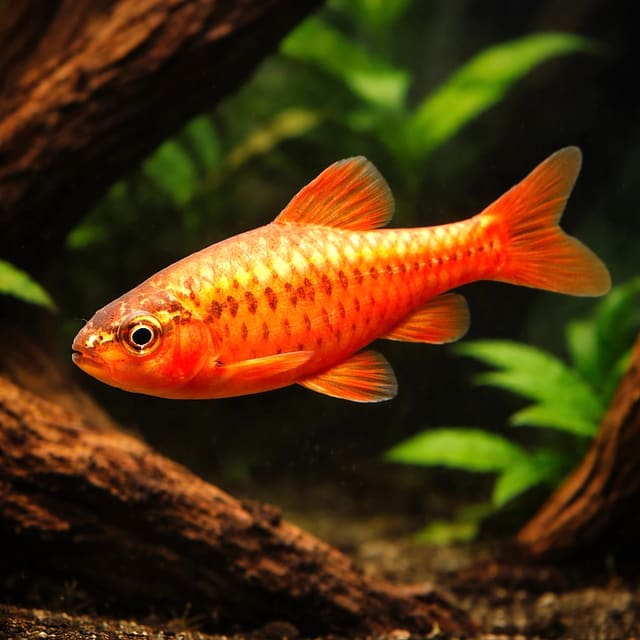
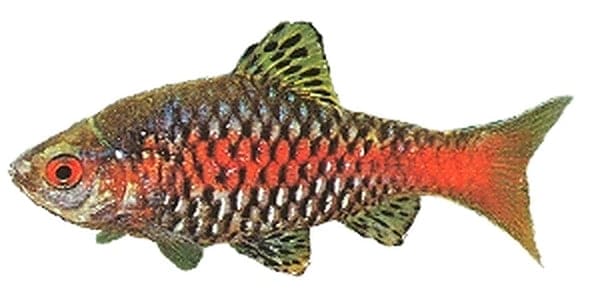
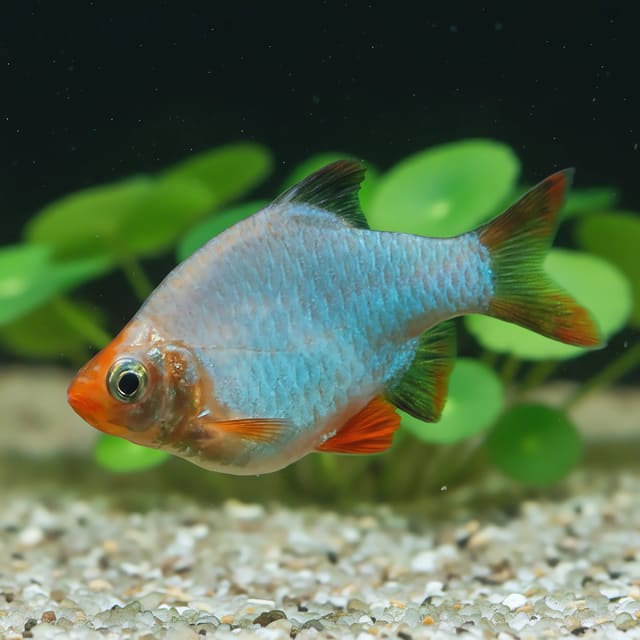
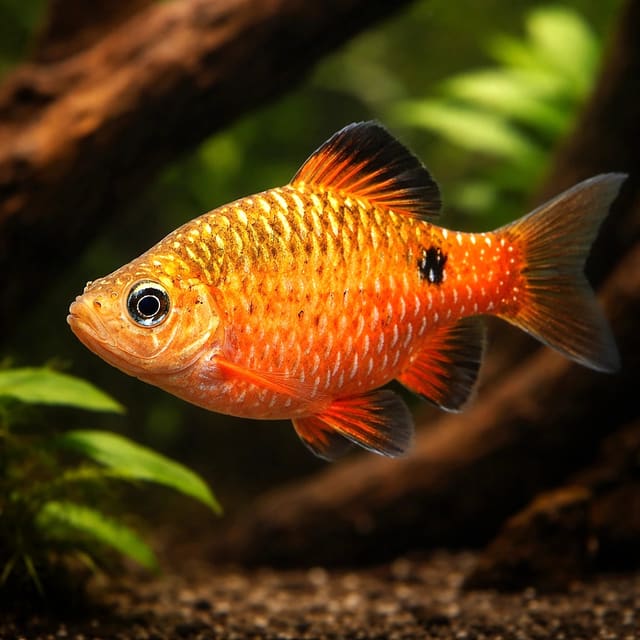
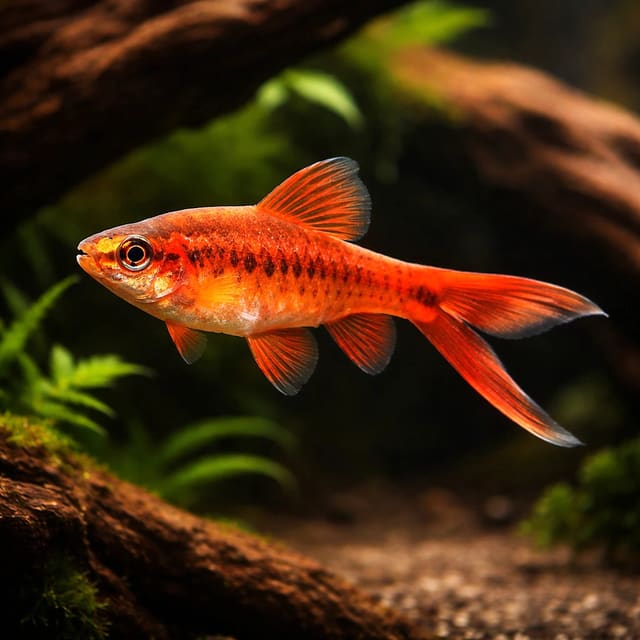
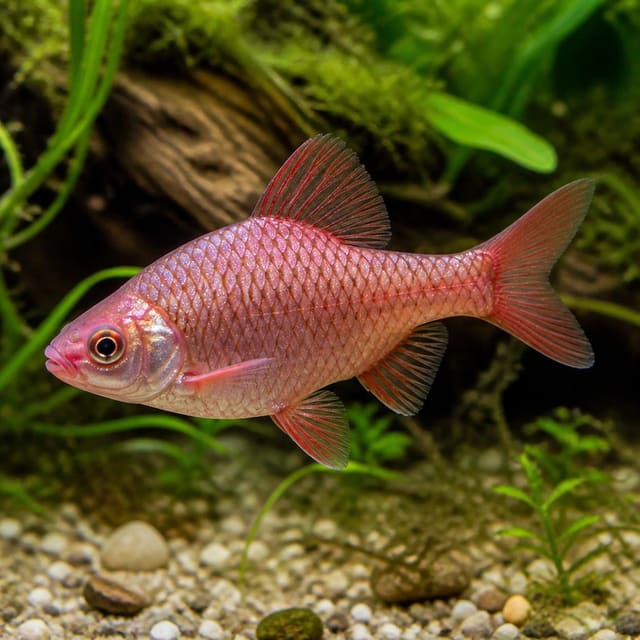
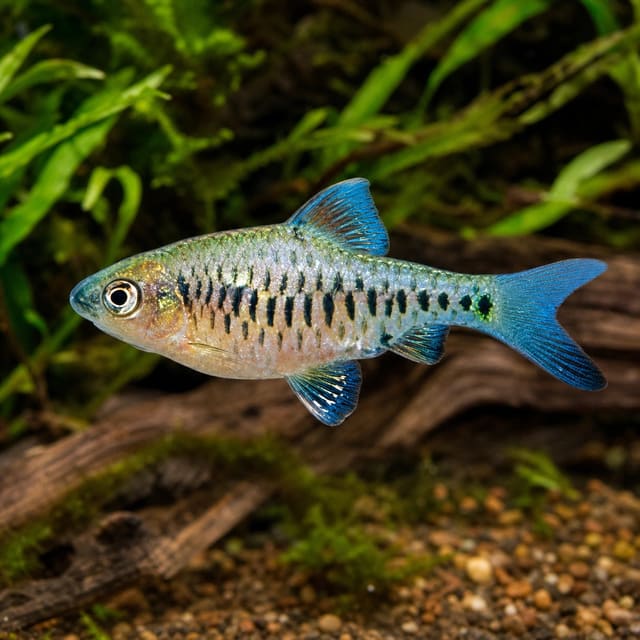
Albino Cherry Barb (Rohanella titteya)
20–27°C · pH 6–8 · 54L
£2.99
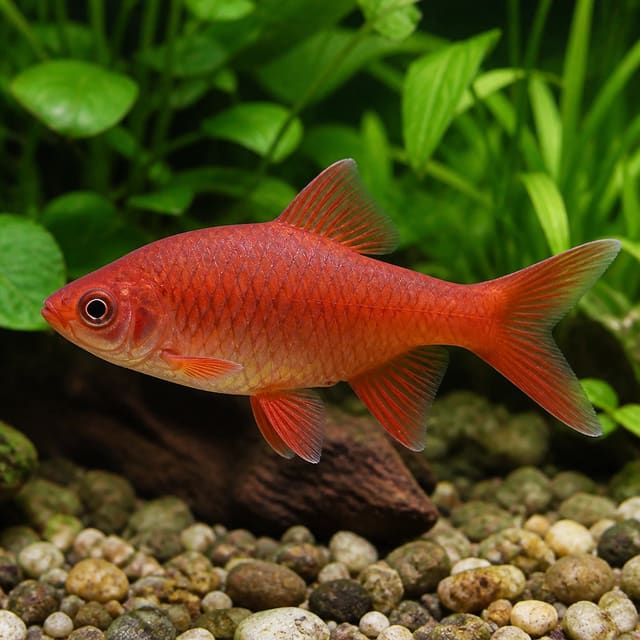
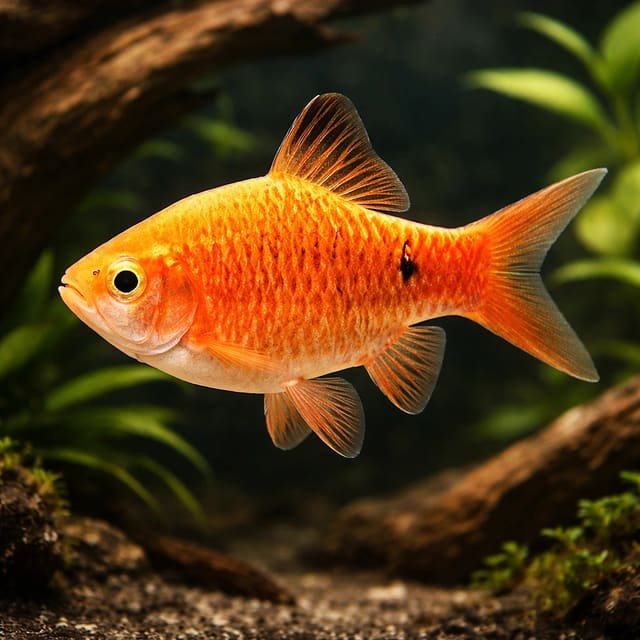
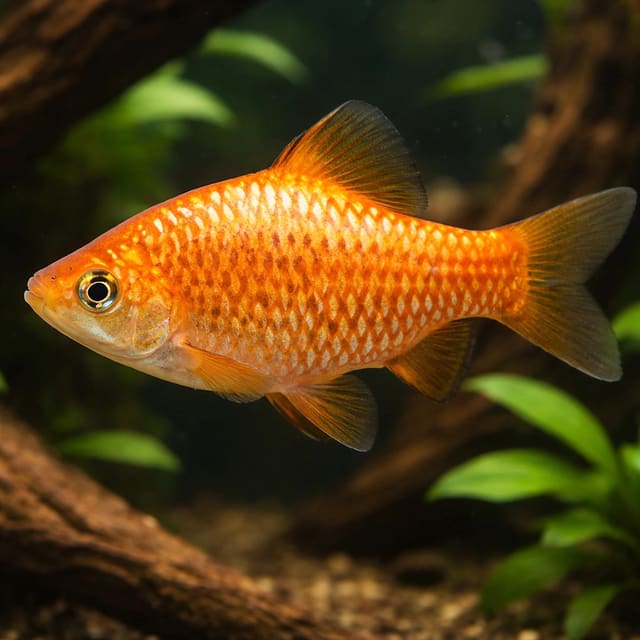
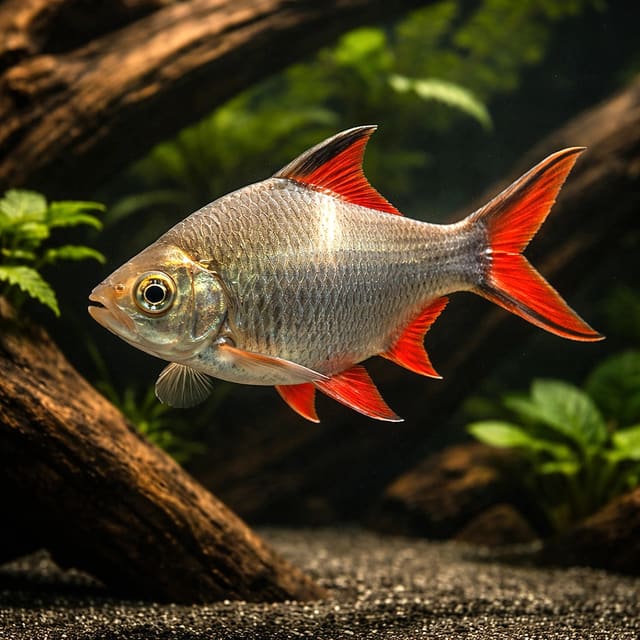
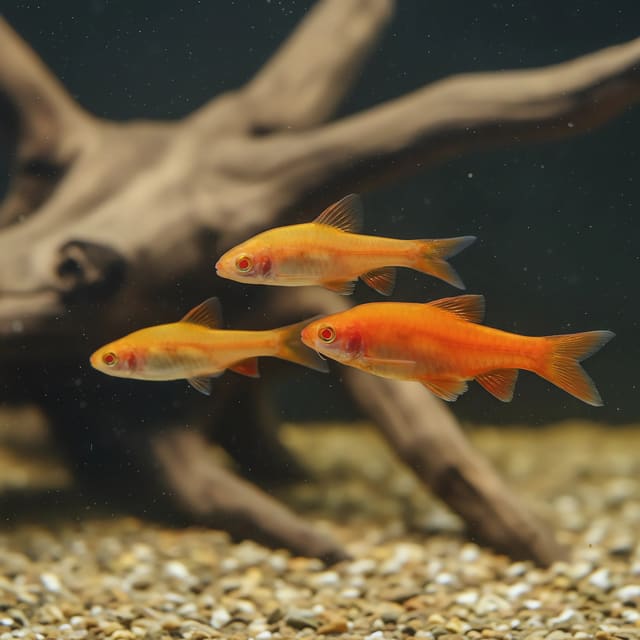
Orange Pethia conchonius is a peaceful, active Rosy Barb for a spacious, well-researched community aquarium. Keep 8–10 in a tank with a base of at least 100 × 30 cm, feed a varied omnivorous diet, and choose companions that suit its energetic shoaling style.
Adult size is the maximum length this species reaches at full maturity (scientific sources). The livestock you receive will be younger and smaller — pick a size above for the actual shipping size. Product-photo provenance and any image-specific limitations are stated on the listing.
Pethia conchonius
Shoaling fish: kept in a group they feel safer, stay calmer and show their best colour.
Minimum of 2 per order.
Orange Pethia conchonius is a peaceful, active Rosy Barb for a spacious, well-researched community aquarium. Keep 8–10 in a tank with a base of at least 100 × 30 cm, feed a varied omnivorous diet, and choose companions that suit its energetic shoaling style.
Adult size is the maximum length this species reaches at full maturity (scientific sources). The livestock you receive will be younger and smaller — pick a size above for the actual shipping size. Product-photo provenance and any image-specific limitations are stated on the listing.
Maintain these water conditions for optimal health and vibrant colors
Pethia conchonius in its orange trade form is a lively Rosy Barb for keepers who enjoy an active, visible shoal rather than a single centrepiece fish. It is a freshwater cyprinid with a broad South Asian distribution, and generations of aquarium keeping have made the Rosy Barb familiar as a robust community species. The orange form adds warm colour without changing the essential needs of the species: room to swim, a proper group, clean water and companions able to live comfortably alongside its brisk daily movement.
This parent offers one live fish per purchase in several dispatch grades. The size you select is the size supplied, not the adult size. The listed grades run from 2–2.5 cm through 3–3.5 cm and 3.5–4.5 cm to a grade above 4.5 cm. These are arrival sizes, not promises about eventual length, sex or maturity. Plan the aquarium for the adult fish and for the full shoal before choosing the smaller grade. The live size control on the page should be used for the current choice; permanent catalogue grades are described here without making a static claim about availability.
Older aquarium material may call the species Puntius conchonius. The accepted name used here is Pethia conchonius, as shown by the FishBase species account and the specialist aquarium profile. FishBase records a maximum of 14 cm total length, while the aquarium profile gives 100 mm standard length. Those measurements use different conventions and describe different parts of the size picture, so a prudent buyer plans for a substantial, fast-moving barb rather than treating the dispatch grade as a final size.
| Suits | Think carefully about |
|---|---|
| A 100 × 30 cm footprint or equivalent, with roughly 90 litres or more | Nano tanks or short tanks that restrict sustained group swimming |
| A group of 8–10 fish, with more space for a larger shoal | Keeping one fish or a token pair, which removes normal schooling choice |
| Temperatures of 16–24°C, pH 6.0–8.0 and 5–20 dGH | Mixing fish before checking that their water ranges genuinely overlap |
| Generally peaceful, active community fish of compatible size and pace | Very slow or long-finned companions where constant activity may be stressful |
| Quality dried foods plus small live or frozen foods and plant-rich ingredients | A narrow meat-only or plant-only menu |
A group is not decorative excess. Rosy Barbs use one another to school, display and spread ordinary chasing. Seriously Fish recommends 8–10, a stronger species-level recommendation than the broad five-fish floor found in more general material. In a suitable group the fish are less nervous and males can display more naturally. Space still matters: adding fish without adding swimming room and filtration capacity is not a substitute for a correctly proportioned aquarium.
The aquarium can be planted, but leave a clear route for the shoal to move along the length of the tank. A dark substrate, areas of planting, floating cover and driftwood can show the colour well while breaking up a completely open layout. The species is flexible about décor and can also suit a stream-influenced arrangement with a degree of water movement. The important point is to combine visual cover with uninterrupted swimming space rather than filling every centimetre with ornament.
This is a sensible beginner fish when the keeper is ready to meet the adult-space and group requirements. “Hardy” should mean forgiving within a well-run aquarium, not suitable for an uncycled tank. If this is your first shoaling-fish setup, the barbs collection is useful for comparing adult size and activity across related choices before deciding which species belongs in the tank.
Sex is guaranteed only when the selected option explicitly states male or female. This Barbus Puntius conchonius orange listing has no sex-guaranteed option.
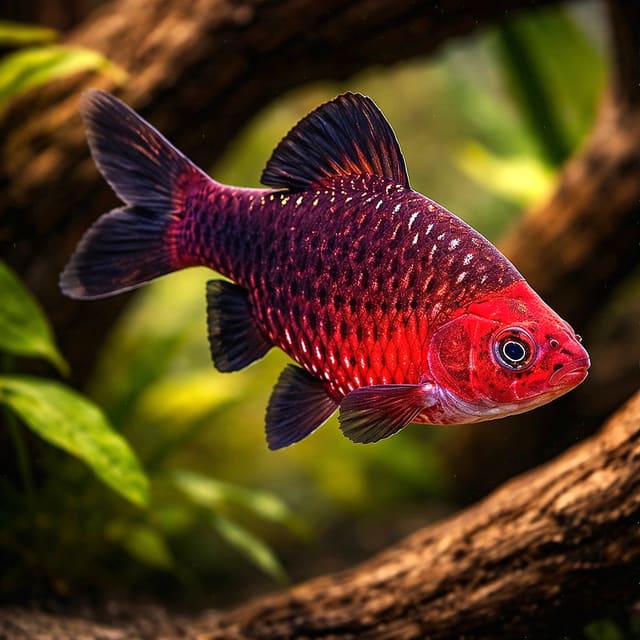
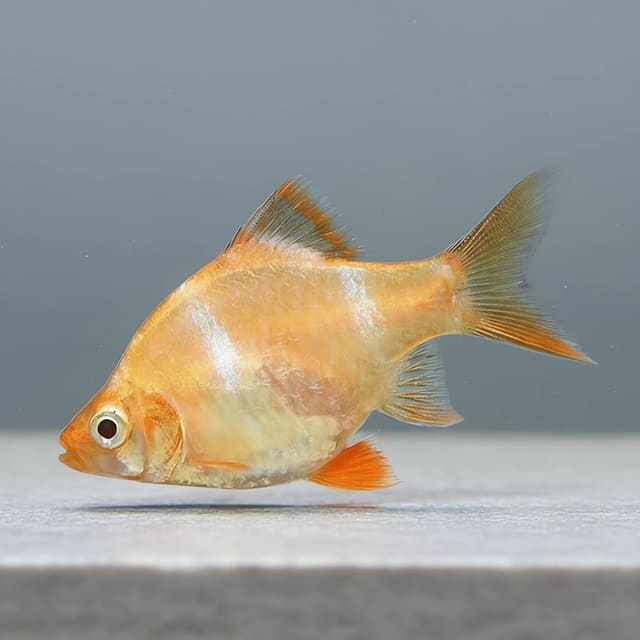
Gallery images have been digitally enhanced to improve image quality. Natural colour, pattern, size and maturity can vary between live animals.
The most useful planning figure for this species is the aquarium base. The Seriously Fish profile for Pethia conchonius gives a minimum base of 100 × 30 cm or an equivalent footprint and associates that with about 90 litres. Length matters because a shoal spends much of its day moving through open water. A tall aquarium with the same nominal volume but a short base does not offer the same swimming route, so compare dimensions as well as litres.
Plan for 8–10 fish from the beginning. This does not mean adding the whole group to an immature biological filter at once. Mature the aquarium, confirm that the filter processes waste, and make stocking decisions around the filter's real capacity. The first tropical tank guide explains the setup sequence for keepers building a new aquarium. For an established tank, check the available footprint, actual water readings and present livestock rather than assuming that an empty-looking midwater zone has unlimited capacity.
Décor is flexible. A heavily planted aquarium with a dark substrate can bring out the orange body colour, and floating plants or driftwood can soften strong overhead light. Leave open lengthways swimming space between planted areas. The species occurs in varied habitats, from flowing hill streams and river tributaries to lakes, ponds and swamps, so there is no need to imitate one narrow scene. An aquarium can use a modest degree of current or a more conventional planted-community layout as long as oxygenation, water quality and swimming room remain sound.
Use a secure lid because broad barb guidance notes that these active fish may jump. Position intakes and outlets so that the fish can choose between moving water and calmer resting areas. Filtration need not turn the whole tank into a torrent; the species profile specifically says very strong filtration is unnecessary, though some water movement is appreciated. Keep heater guards, sharp rock edges and narrow gaps out of the shoal's main route. Those practical choices reduce avoidable collisions without cluttering the tank.
The room around the tank affects the conditions inside it. OATA advises placing an aquarium away from direct sunlight, draughts, heat sources and loud or sudden vibration. Direct sun can warm the water unevenly and encourage algae; a cold draught or nearby radiator can create repeated temperature changes. A solid, level stand must support the filled aquarium, and there should be enough access above and behind it for safe lid, cable and filter maintenance.
Check the position before filling because a running aquarium should not be dragged to a better corner later. Keep electrical connections arranged with drip loops and protect plugs from splashes. Leave the lid secure after every feed or water test. Rosy Barbs are active swimmers, and the broad barb guidance specifically treats jumping as a reason for a well-fitting cover rather than as an unlikely accident.
Light should suit the plants and provide a reliable day-and-night rhythm without turning the tank into an exposed bright box. Floating leaves, taller planting and wood can give the group a choice of shade while the central route remains open. The result should feel structured but not crowded: sheltered edges for pause and observation, plus a clear length for the full shoal to move together.
For routine aquarium planning, use the species-level range of 16–24°C, pH 6.0–8.0 and 5–20 dGH. These are deliberately presented together because temperature, acidity and mineral content all affect compatibility. The aquarium water parameters guide explains how to measure them, while the water matcher can help compare measured tap and tank values with this range.
| Reading | Working guidance for Pethia conchonius |
|---|---|
| Temperature | 16–24°C for routine aquarium care |
| pH | 6.0–8.0 |
| General hardness | 5–20 dGH |
| Ammonia | 0 mg/l |
| Nitrite | 0 mg/l |
| Nitrate | No more than 20 mg/l above the normal tap-water level in the broad OATA barb guidance |
FishBase also lists an environmental range of 18–22°C, pH 6.0–8.0 and 5–19 dH. That record helps describe the species in the field; it is not a reason to compress the aquarium range or chase a daily midpoint. Seriously Fish's 16–24°C aquarium range is the practical target used here. Stability within a suitable part of the range is better than repeated adjustment, and any companion must fit the same temperature and chemistry rather than merely survive at an extreme.
The OATA barb care sheet is broader than the species profile, but it adds essential water-quality context: ammonia and nitrite should be zero, and nitrate should not exceed 20 mg/l above the normal tap-water level. The comparison with tap water matters. Test the source water as well as the aquarium so that the nitrate result is interpreted correctly, then investigate any upward trend rather than waiting for stressed behaviour.
A working biological filter is essential. The RSPCA aquarium guidance describes how beneficial bacteria convert toxic ammonia first to nitrite and then to safer nitrate. A clear tank can still have dangerous invisible waste, so appearance never replaces testing. Test ammonia, nitrite, nitrate, pH and hardness weekly, and test again after adding fish, changing feeding or dealing with a filter interruption.
OATA recommends a partial water change of 25% at least once every week. Treat replacement tap water with a conditioner that handles chlorine or chloramine before it reaches the fish. Match temperature sensibly and avoid sudden chemistry swings. Siphon settled waste from accessible areas, particularly where the current gathers food and detritus, but retain planted cover and the open route the shoal uses.
Check the filter for blockage during maintenance. When filter material needs cleaning, rinse it lightly in aquarium water removed during the water change rather than under the tap; disinfectant in tap water can damage the bacterial population. Do not confuse a stronger current with a cleaner aquarium. Flow, biological capacity, feeding and maintenance work together, and a filter rated generously still needs regular observation.
Pethia conchonius is a generalised omnivore. Field accounts include worms, insects, crustaceans, plant matter and organic detritus. In the aquarium, build variety around good flakes or granules, including some with plant or algal content, and add suitably sized live or frozen foods such as bloodworm, Daphnia and Artemia. The goal is a balanced rotation, not one “colour food” or an endless supply of rich frozen food.
Broad OATA barb guidance says to feed what the fish consume within a few minutes once a day. Watch the whole shoal rather than the boldest individual. Spread food across the swimming area if one fish dominates a single feeding point, and reduce the portion if material reaches the substrate uneaten. Remove persistent leftovers because decomposition adds waste. Body condition, eagerness to feed and the behaviour of the quietest fish are more useful than automatically increasing the ration.
Plant material in the diet does not mean that a planted tank can feed the fish by itself. Equally, an omnivore does not need an exclusively animal-based menu. Alternating a reliable prepared food with smaller supplementary live or frozen items provides broad nutrition while keeping portions manageable. New fish may feed cautiously on the first day; assess them over time while watching water quality and the behaviour of established companions.
Look at the fish before opening the food. OATA's health checks cover swimming, colour, temperament, breathing, general appearance, body condition and feeding. For this species, that means noticing whether the group moves normally through its usual route, whether any individual hangs apart, whether breathing appears unusually rapid and whether one fish repeatedly misses food. A single observation does not diagnose a disease, but a change from the group's normal pattern is a reason to examine the aquarium promptly.
Compare both sides of each fish when possible. Look for clamped or damaged fins, spots, swelling, sores, cloudy eyes and a body that is becoming noticeably thin. Also check the social setting: an intact fish that is continually cornered, prevented from feeding or unable to rest still has a welfare problem. Because normal male display can be lively, focus on persistence, injury and access to food rather than reacting to every short chase.
When something changes, test ammonia, nitrite, nitrate, pH and temperature before reaching for a treatment. Review the most recent water change, filter work, new livestock and feeding change. Poor water or a sudden shift can affect the whole group and can make other health problems harder to manage. If readings are unsuitable, correct them safely without causing another abrupt swing; if the cause is unclear or a fish continues to decline, seek advice from an experienced aquatic retailer or aquatic veterinary professional.
A brief weekly note makes gradual change easier to see. Record the date, core readings, water-change volume and any unusual behaviour. Note which fish failed to feed and whether the behaviour persisted after the group settled. This is more useful than relying on memory and helps distinguish a one-off reaction to maintenance from a repeated pattern. Keep the record short enough that it becomes part of the routine rather than a task that is soon abandoned.
Prepare replacement water and equipment before starting. A consistent weekly water change is easier on fish than long gaps followed by a very large correction. Clean only the areas that need attention: remove visible debris, keep the main swimming route clear and leave useful cover in place. Do not overhaul substrate, filter media and décor together unless an emergency makes it necessary, because multiple large changes make the biological and behavioural response harder to judge.
After maintenance, confirm that the filter has restarted, the outlet is flowing normally, the lid is closed and the heater or thermometer is behaving as expected. Watch the shoal for a few minutes before walking away. The useful finish is not simply clearer glass; it is stable equipment, treated water, normal swimming and a tank ready to be observed again at the next feed.
Prepare the aquarium before delivery: confirm suitable temperature, zero ammonia and nitrite, secure the lid and leave enough biological capacity for the group addition. Read the store's delivery and Live Arrival Guarantee policy before the parcel arrives so that the evidence and contact steps are understood in advance.
If there is a Live Arrival Guarantee concern, contact Tropical Fish Co on the day of arrival with the order number and continuous unboxing video. The video is claim evidence, not an animal-care technique; the water-matching steps begin only after the parcel and fish have been recorded in their sealed state.
Pethia conchonius is generally peaceful, but peaceful does not mean motionless. A group patrols open water, feeds quickly and produces visible social display. That energy is part of the appeal, yet it should shape companion choice. Fish that share the same broad water range but spend their time hovering slowly under long fins may experience the aquarium very differently from active tetras, cyprinids or loaches.
Start compatibility planning with the Rosy Barb group itself. Keep 8–10, provide the full swimming footprint and avoid creating one cramped feeding station. A proper group makes the fish less nervous and gives routine chasing more recipients and more space. OATA's broad barb sheet notes that too-small groups can be stressed and that larger groups help reduce fin-nipping behaviour. For this species, the specialist profile's 8–10 recommendation is the better practical target.
The species profile describes Pethia conchonius as suitable for a well-researched community and names other small cyprinids, tetras, livebearers, rainbowfishes, anabantoids, catfishes and loaches as possible companion groups. These are categories for further checking, not an automatic approval of every member. A tiny tetra, a large rainbowfish and a territorial anabantoid can differ dramatically even though each belongs to a named group.
Bottom-dwelling catfish or loaches still need suitable substrate, cover and their own social arrangement. Livebearers need water chemistry appropriate to the exact species. Anabantoids include fish with very different temperaments and fin shapes. The useful rule is to research the exact companion rather than turn a family name into a universal match.
General barb guidance warns that some barbs can nip fins, especially when kept in inadequate groups. The species account for Pethia conchonius is more reassuring and calls it generally peaceful. Both points can be true when used at the right scope. A large, settled shoal in adequate space is a better community candidate than one or two restless fish in a short, crowded aquarium.
Be cautious with slow fish and exaggerated long fins, particularly where the tank gives them no quiet route away from the shoal. Watch whether every fish reaches food without being chased continually and whether fins remain intact. If persistent harassment appears, address group size, space and stocking choices rather than assuming it is harmless play. Compatibility is an ongoing welfare observation, not a one-time checklist completed on stocking day.
Plants can create sheltered zones for quieter companions while the barbs use the open lane. Floating cover and wood help soften a fully exposed layout, but the aquarium should not be divided into narrow dead ends. A moderate degree of water movement can suit the Rosy Barb; companions still need the ability to rest. Arrange outlet direction and planting so fish can choose where to sit in the flow.
During feeding, observe different levels of the aquarium. Fast midwater fish can intercept most food before slower or bottom-dwelling animals receive it. Place appropriate food where each species naturally feeds without turning every meal into excess. Uneaten food is a water-quality problem, so “feeding everyone” means targeted distribution and observation rather than simply adding more.
A companion is not suitable merely because both profiles include 24°C. Compare the complete temperature range, pH and hardness, then choose a stable area that is comfortably inside both sets of guidance. A narrow edge shared by two species gives less room for ordinary seasonal or maintenance variation. If one animal needs the soft end of the Rosy Barb range and another needs the hard end, the apparent overlap may not make a good long-term community.
Make the same comparison for space and behaviour. The barb minimum belongs to the barb shoal; it is not a promise that a second active shoal will also fit. Add the adult body size, normal group size, swimming level and feeding pace of every planned species. Two peaceful groups can still compete if both need the same open midwater route or rush the same food before quieter animals can reach it.
Territory matters even when the Rosy Barbs do not defend one. A cave-dwelling or nesting companion may claim an area that the moving shoal repeatedly crosses. Provide routes around defended sites and enough cover that one fish cannot control every retreat. For bottom dwellers, choose substrate and hiding places for their needs rather than assuming the barbs' open-water layout automatically serves the aquarium floor.
Observe the aquarium at quiet times as well as during feeding. Check where each species rests, whether the barbs monopolise the open lane and whether shy fish emerge when the room is calm. At meals, confirm that fast, slow and bottom-feeding animals all receive suitable food without leaving a surplus to decay. A community that looks colourful for five minutes can still fail if one animal never settles or feeds properly.
New behaviour can appear as fish mature. Retain space for adult growth and reassess if fins become damaged, one individual is repeatedly isolated or a territorial fish expands its defended area. The first response should be to examine stocking density, shoal size, layout, water quality and the exact species involved. Moving one ornament rarely fixes a fundamental mismatch in space or pace.
If the planned combination only works by keeping one species at an edge of its range, reducing a social group or accepting persistent harassment, choose a different companion or keep the Rosy Barb shoal alone. A simpler tank that meets every animal's needs is a stronger result than a crowded list of species held together by compromise.
A single-species display is worth considering when the available footprint only just meets the Rosy Barb minimum, when water requirements of planned companions overlap poorly, or when the keeper wants to see the orange group display without competing movement. Species-only does not mean solitary: the defining requirement remains an 8–10 fish shoal. It can also make feeding, health observation and adult-space planning easier for a newer keeper.
If building a mixed community, add complexity slowly. Confirm stable water after each change and retain room for adult growth. The final stocking plan should work when every fish is mature, every social species has its proper group and the filter is dealing with the full feeding load.
FishBase records a maximum of 14 cm total length, while the specialist aquarium profile gives 100 mm standard length. Plan for a substantial, active barb and treat the dispatch grade as the size supplied, not the adult size.
Use a base of at least 100 × 30 cm or an equivalent footprint, which the species profile associates with about 90 litres. The length and width matter because an 8–10 fish shoal needs a continuous swimming route.
Keep 8–10. That species-level recommendation supports calmer behaviour, natural schooling and display; a larger group needs proportionally more swimming space and filtration capacity.
Yes, for a beginner who can provide a mature filtered aquarium, the full group and adult swimming space. Its reputation for hardiness does not make it suitable for an uncycled or undersized tank.
Offer quality flakes or granules, including some plant or algal content, with small live or frozen foods such as bloodworm, Daphnia and Artemia. Feed only what the group consumes within a few minutes once a day.
Use 16–24°C and pH 6.0–8.0 for routine aquarium care, with general hardness of 5–20 dGH. Keep ammonia and nitrite at zero and favour stable values within the range over repeated adjustment.
The species is generally peaceful, but an undersized group or cramped layout can make barb behaviour harder on companions. Keep 8–10 and be cautious with very slow or long-finned fish.
The species profile names other small cyprinids, tetras, livebearers, rainbowfishes, anabantoids, catfishes and loaches as possible community groups. Check the exact species for adult size, water, pace and social needs before combining them.
Tropical Fish Co hand-packs live animals for a licensed live-animal courier. Be present for delivery and start a continuous unboxing video while the parcel is sealed; for a Live Arrival Guarantee concern, contact the team on the day of arrival with the order number and video.
The accepted name, distribution, 14 cm total-length record and field environmental figures come from FishBase. The aquarium footprint, approximate volume, 16–24°C range, pH, hardness, diet and 8–10 fish group come from the Seriously Fish species profile. OATA supplies broad UK barb guidance on water quality, weekly maintenance, feeding and introduction. RSPCA explains the biological filter's role. Tropical Fish Co's current policy is the authority for packing, courier and Live Arrival Guarantee wording.
FishBase's 18–22°C figure describes an environmental record; the routine aquarium range used on this page is the species profile's 16–24°C. FishBase's 14 cm TL maximum and Seriously Fish's 100 mm SL profile figure are retained with their different measurement labels. The orange form and dispatch grades belong to this exact shop offer and do not establish a separate wild population, sex or adult size.
No reviews for this item yet. Bought one? Honest reviews only, good or bad.
What customers say about ordering from us
Easy website plenty of info on fish your buying great to pick a time slot
TRACEY DURRANT · 7 Oct 2026
Got some lovely fish thank you
Kevin Mackie · 7 Oct 2026
Reviews of our shop, collected by Judge.me, an independent third-party review collector. Newest first.