Easy
Albino Cherry Barb (Rohanella titteya)
20–27°C · pH 6–8 · 54L
£2.99
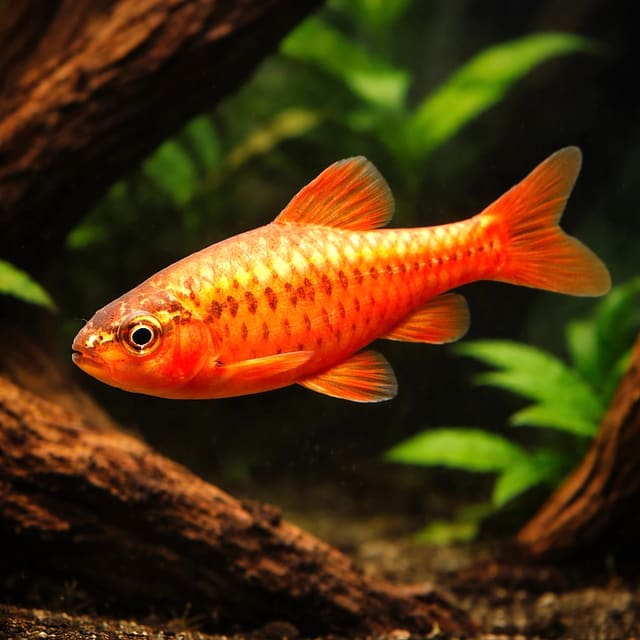
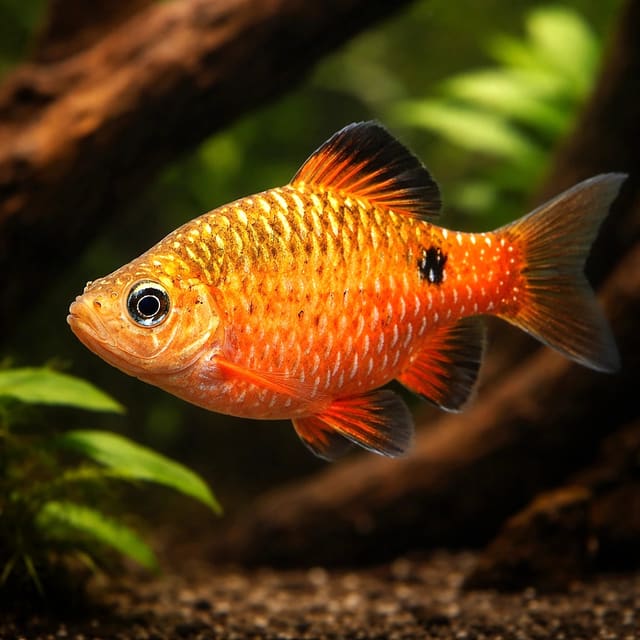
Barbus Puntius conchonius rosy is the Rosy Barb (Puntius conchonius), an active Cyprinidae fish from Afghanistan, Pakistan, India, Nepal and Bangladesh, also reported from Myanmar, that reaches 14 cm. It suits newcomers with a mature aquarium of at least 100 × 30 cm or equivalent; Seriously Fish recommends at least eight, and its species ranges overlap OATA’s barb guidance at 20–24°C, pH 6.0–7.5 and 5–12 dGH. Sold individually as one live fish per purchase.
Adult size is the maximum length this species reaches at full maturity (scientific sources). The livestock you receive will be younger and smaller. Product-photo provenance and any image-specific limitations are stated on the listing.
Puntius conchonius
Shoaling fish: kept in a group they feel safer, stay calmer and show their best colour.
Barbus Puntius conchonius rosy is the Rosy Barb (Puntius conchonius), an active Cyprinidae fish from Afghanistan, Pakistan, India, Nepal and Bangladesh, also reported from Myanmar, that reaches 14 cm. It suits newcomers with a mature aquarium of at least 100 × 30 cm or equivalent; Seriously Fish recommends at least eight, and its species ranges overlap OATA’s barb guidance at 20–24°C, pH 6.0–7.5 and 5–12 dGH. Sold individually as one live fish per purchase.
Adult size is the maximum length this species reaches at full maturity (scientific sources). The livestock you receive will be younger and smaller. Product-photo provenance and any image-specific limitations are stated on the listing.
Maintain these water conditions for optimal health and vibrant colors
The Rosy Barb (Puntius conchonius) is an active freshwater member of the Cyprinidae family from Afghanistan, Pakistan, India, Nepal and Bangladesh, with reports from Myanmar. It reaches a maximum recorded length of 14 cm and suits newcomers who can provide a mature aquarium with a base of at least 100 × 30 cm or equivalent, a school of at least eight and stable routine water at 20–24°C, pH 6.0–7.5 and 5–12 dGH. Its generally peaceful nature can suit a carefully researched community, but its energetic schooling behaviour, adult space and companion screening must be planned from the beginning. FishBase now lists it as Pethia conchonius, with Puntius conchonius treated as a synonym.
FishBase describes the wild Rosy Barb as inhabiting lakes and fast-flowing hill streams. It feeds on worms, crustaceans, insects and plant matter. Those varied foods explain why aquarium meals should combine animal and plant-based ingredients rather than rely on one food alone.
One purchase supplies one animal at a dispatch size of 3.5–4 cm. That measurement describes the fish when dispatched, not its eventual adult length. Plan the aquarium for a complete group rather than treating one purchase as a shoal.
Sex is guaranteed only when the selected option explicitly states male or female. This Barbus Puntius conchonius rosy listing has no sex-guaranteed option.
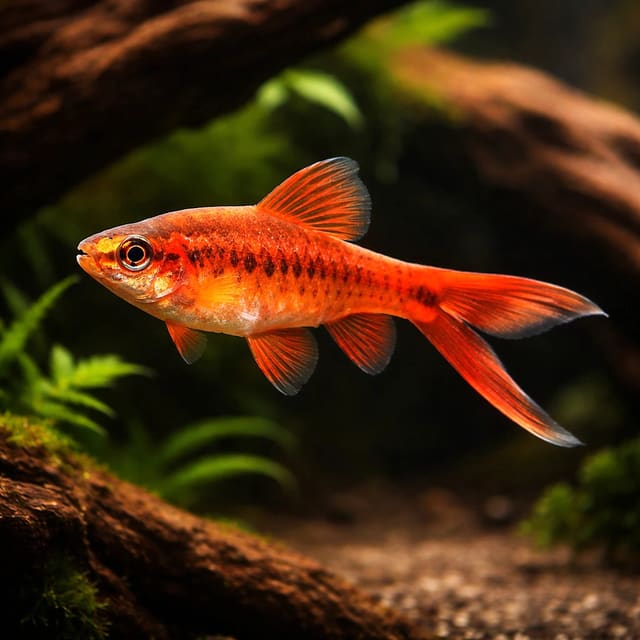
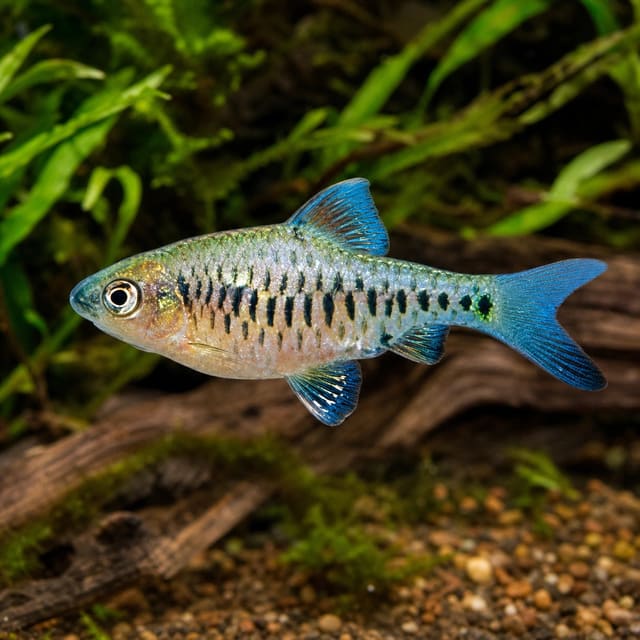
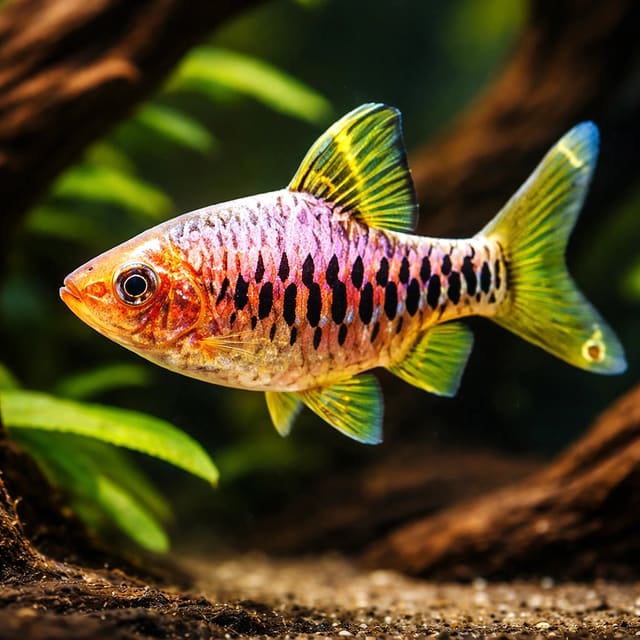
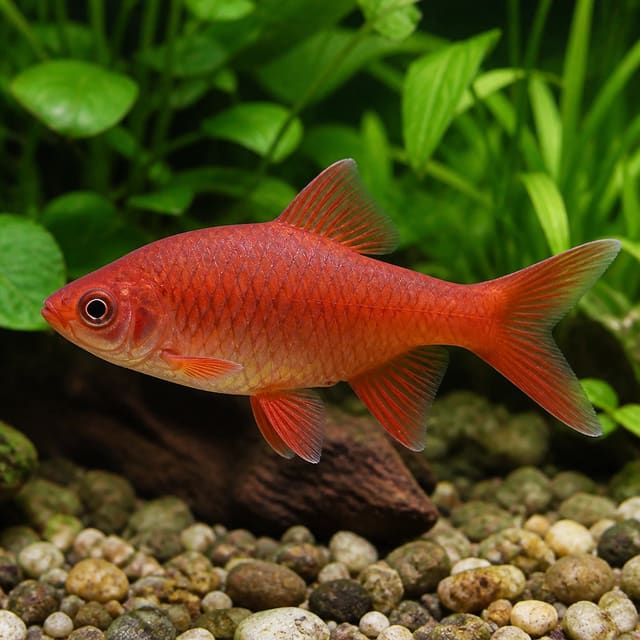
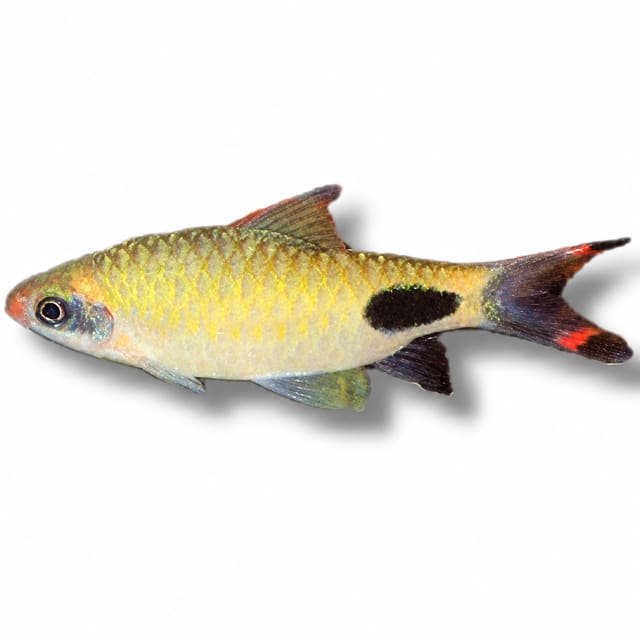
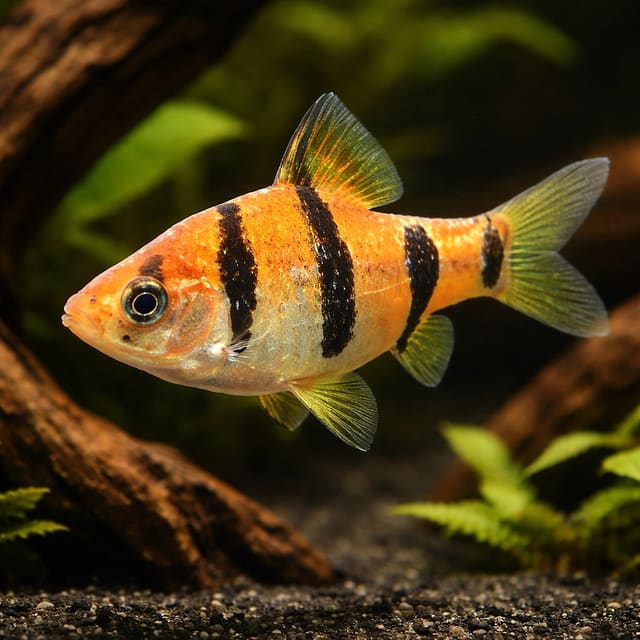
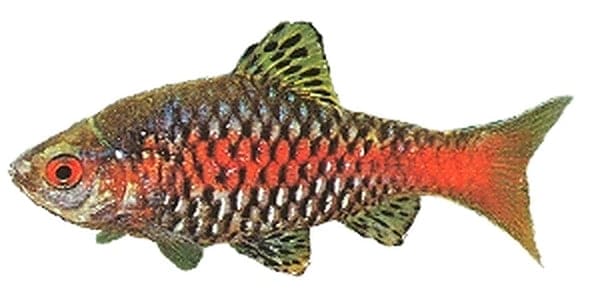
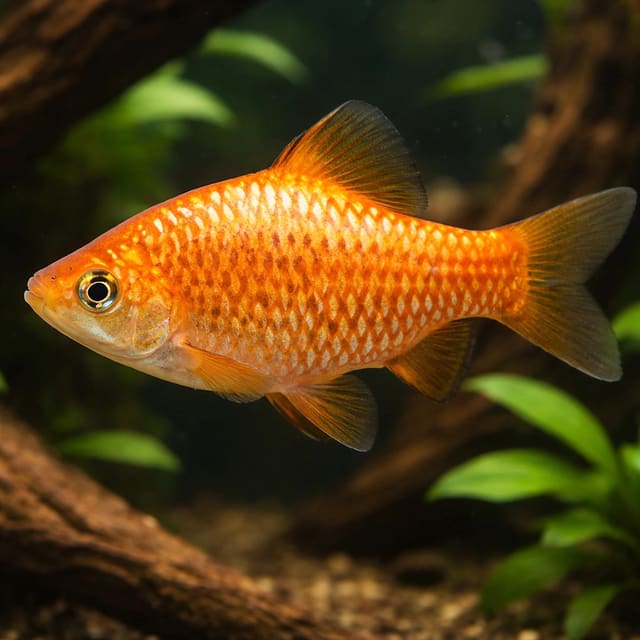
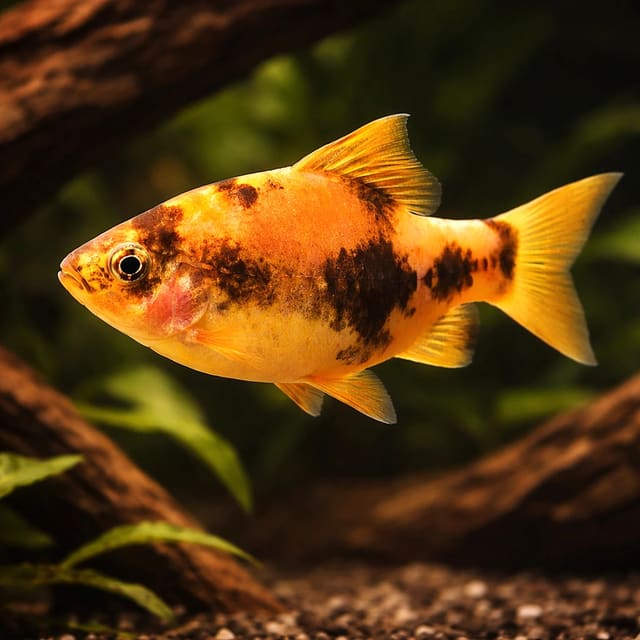
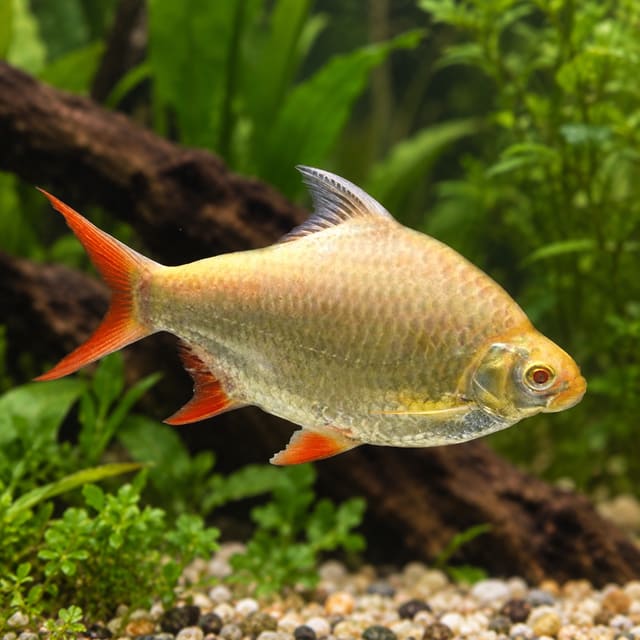
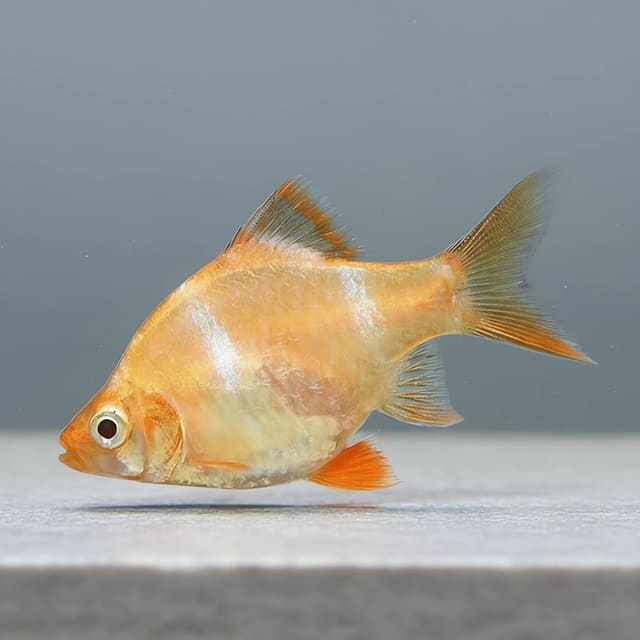
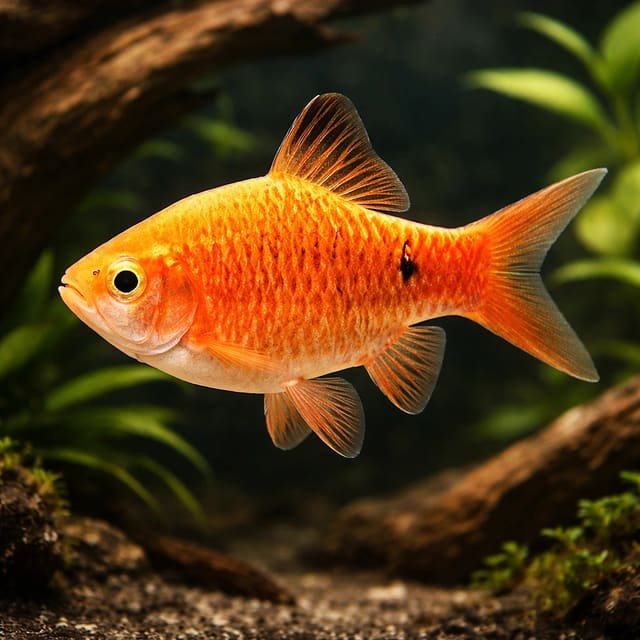
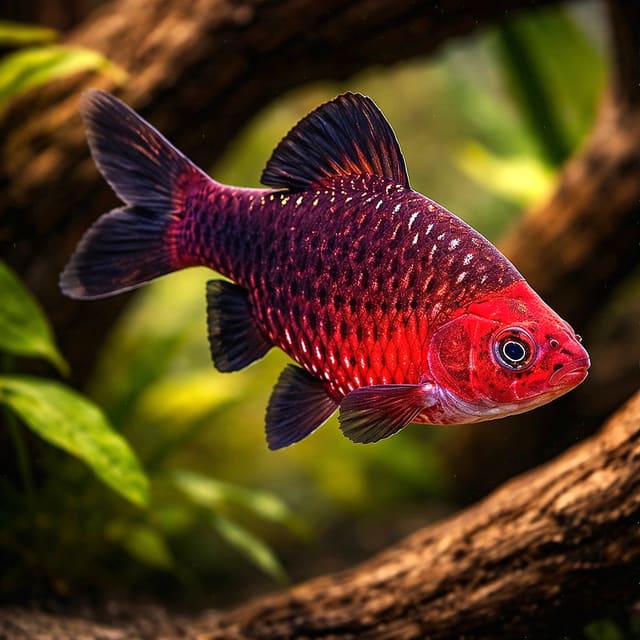
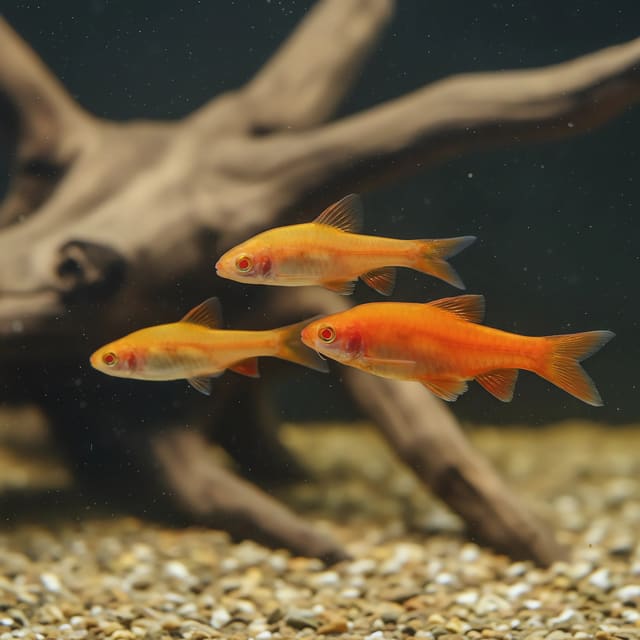
The gallery images are representative of this type of animal rather than photographs of the exact animal supplied, so colours can look slightly different from the live animal.
If you are comparing this fish with other active cyprinids, browse the current barbs collection. Compare adult dimensions, group needs and water ranges before choosing by colour alone.
Dispatch length is only the starting point. FishBase records a maximum of 14 cm total length, while the Seriously Fish Rosy Barb profile gives a 10 cm standard-length planning reference. Use the 14 cm maximum when checking clearances, companions and the long-term swimming space.
The aquarium should have a base of at least 100 × 30 cm or equivalent. The cited profile associates that footprint with approximately 90 litres. The base dimensions are the decisive requirement because this is an active schooling fish that needs horizontal room for coordinated movement, changes of direction and space between the group and other residents.
| Planning point | Use this figure |
|---|---|
| Dispatch size | 3.5–4 cm |
| Maximum recorded length | 14 cm total length |
| Aquarium base | At least 100 × 30 cm or equivalent |
| Associated volume | Approximately 90 litres |
| Social group | At least 8 fish |
| Suits | Not suited to |
|---|---|
| A mature, filtered aquarium with open swimming room | An uncycled aquarium or a tank without a maintained filter |
| A school of at least eight Rosy Barbs | Solitary keeping or a group too small for normal schooling |
| A base of at least 100 × 30 cm or equivalent | A short aquarium planned around the dispatch size |
| A researched community of compatible fish | Companions chosen without checking water, adult size and activity |
Do not use the small dispatch measurement to justify a short aquarium or a temporary community that will become crowded. Check the tank’s internal footprint after allowing for thick backgrounds, large wood pieces and equipment. Leave an uninterrupted swimming route along the long face while retaining planted cover around the margins.
Stocking capacity also depends on the filter, established biological capacity and the other animals already using the space. A tank that meets the dimensions can still be unsuitable if its residents create crowding, incompatible activity or excessive waste. Treat the footprint, mature filtration and complete stocking plan as one decision.
We rate the Rosy Barb as easy when its group, adult space and water quality are planned from the outset. Seriously Fish describes it as generally peaceful and suitable for newcomers, but beginner-friendly does not mean suitable for an uncycled aquarium, a small solitary setup or companions chosen without comparison.
A planted community with open swimming room can meet these needs well. Dense planting, floating plants and wood can diffuse light and provide visual shelter, while a clear central or front route lets the group swim without constantly meeting obstacles. The fish does not require forceful flow, although a degree of water movement suits it.
Choose another plan if the only aquarium is too short, the filter is newly installed, or the intended companions are consistently slow and delicate. Those limitations matter more than the Rosy Barb’s reputation for hardiness. Good care comes from matching the fish to the aquarium it will inhabit as an adult, not asking adaptability to compensate for preventable constraints.
Start with the required base of at least 100 × 30 cm or equivalent, then divide the footprint between uninterrupted swimming room and secure cover. Seriously Fish notes that décor is not especially critical, but the Rosy Barb tends to show better colour in a heavily planted setup with a dark substrate. Floating plants and driftwood roots or branches can diffuse the light and create a more natural-looking environment.
A dark substrate can help the fish’s reflective and rosy tones stand out, but colour should remain secondary to cleanliness and safe construction. Use aquarium-suitable materials, keep unstable décor from shifting, and ensure openings cannot trap a 14 cm adult fish.
Filtration need not create an especially strong current. A degree of water movement is suitable, and a hill-stream-style layout can work, but the fish should still be able to hold position and use calmer areas without continual effort. Aim the outlet to circulate water through the tank rather than blasting the group across its swimming route.
Inspect the finished arrangement from both ends before adding fish. If plants, wood or equipment block the long view completely, move them towards the margins. The result should combine cover, diffused light and open horizontal space rather than choosing one of those needs at the expense of the others.
Keep routine conditions at 20–24°C, pH 6.0–7.5 and 5–12 dGH. Seriously Fish gives species-level aquarium ranges of 16–24°C, pH 6.0–8.0 and 5–20 dGH, while OATA’s barb guidance gives 20–27°C, pH 6.0–7.5 and 4–12 dGH for the group; the routine figures are the overlap of those ranges. OATA also gives 3–10 dKH for carbonate hardness.
| Value | Routine target |
|---|---|
| Temperature | 20–24°C |
| pH | 6.0–7.5 |
| General hardness | 5–12 dGH |
| Carbonate hardness | 3–10 dKH |
| Ammonia | 0 mg/L |
| Nitrite | 0 mg/L |
| Nitrate | No more than 20 mg/L above tap-water level |
Measure the aquarium and source water before making adjustments. Our water chemistry guide explains what the principal readings mean, and the water matcher helps compare measured values with these targets.
OATA expresses nitrate as an increase above the normal tap-water level. If the conditioned tap water measures 10 mg/L nitrate, keep the aquarium at no more than 30 mg/L. If the tap reading changes, recalculate from the new baseline rather than relying on an old ceiling.
Stability within the working range is more useful than repeatedly pushing pH or hardness towards a single point. Record readings at the same stage of the maintenance cycle so changes are easier to interpret. Investigate any drift alongside stocking, feeding, water-change frequency and filter performance instead of treating each number in isolation.
A functioning biological filter is essential. The RSPCA’s aquarium filtration guidance explains that fish release toxic ammonia, which filter bacteria convert first to nitrite and then to the safer nitrate. Both ammonia and nitrite must remain at zero before and after the Rosy Barbs are introduced.
Prepare and mature the aquarium before livestock arrives. If this is your first setup, follow our first tropical tank guide and confirm the cycle with water tests rather than judging readiness from clear-looking water. Clarity cannot show whether the bacterial population can process fish waste.
Seriously Fish uses a turnover of four to five times the aquarium volume per hour for an approximately 90-litre setup. That works out at a filter rating of 360–450 litres per hour. Treat the manufacturer’s rating as a selection guide, then check actual circulation after media, pipework and décor are installed.
OATA advises increasing aquarium populations slowly because beneficial bacteria must respond whenever fish numbers and feeding increase. Balance that instruction with the Rosy Barb’s social requirement by preparing filtration for the intended group rather than leaving a single fish isolated for an extended period.
Check that the outlet creates circulation without forcing fish to swim continuously against a concentrated jet. Good filtration combines biological capacity, waste capture, oxygen-supporting movement and calm enough areas for normal behaviour.
Wild Rosy Barbs eat worms, crustaceans, insects and plant matter. Aquarium diets should reflect that breadth. Seriously Fish recommends regular meals of small live or frozen foods such as bloodworm, Daphnia and Artemia alongside good-quality dried flakes and granules, with at least some dried food containing plant or algal ingredients.
Observe the whole group during feeding. Food should spread far enough that less assertive individuals have a chance to eat, but it should not be scattered into inaccessible crevices. If one fish repeatedly misses meals, check whether crowding, chasing, poor food size or an emerging health change is preventing normal feeding.
Remove the cause of leftovers rather than compensating with stronger filtration. Uneaten food decomposes and adds waste, raising the burden on the biological filter and pushing nitrate upwards. If food remains after a few minutes, reduce the next portion and siphon accessible debris during maintenance.
Judge the ration by consumption and body condition rather than by a fixed pinch. A larger group may eat more in total, but the same few-minute limit still applies. Changes in appetite are also useful health signals: compare them with swimming, breathing, colour and water-test results.
Use treats to add nutritional variety, not to replace the balanced dried component. Consistent portions, one daily feeding and regular water testing connect diet directly to stable aquarium conditions.
Carry out a 25% partial water change at least once every week, following OATA’s recommendation for barbs. Use a siphon to remove solid waste from accessible substrate areas, especially where the current gathers uneaten food and debris. Treat replacement tap water with conditioner before it enters the aquarium so chlorine or chloramine cannot harm the fish or filter bacteria.
Do not rinse biological filter media under the tap. OATA advises lightly rinsing it in aquarium water removed during the partial change, reducing the loss of beneficial bacteria to chlorine or chloramine. Clean only as needed to restore flow and remove excessive debris; avoid stripping every part of the filter at once.
Use trends to adjust the routine. If nitrate repeatedly approaches the limit of 20 mg/L above tap-water level before the next weekly change, review feeding, stocking and waste removal and increase the effective maintenance response. If ammonia or nitrite is detectable, treat that as an immediate water-quality problem rather than waiting for the usual maintenance day.
The 25% change should happen at least once a week, but test results may call for additional action. A heavily stocked community may need a more responsive schedule, while a stable reading still depends on continued water changes, sensible feeding and maintained filtration. Consistency prevents gradual deterioration that may be missed when the fish still appear active.
Arrange for someone to receive the parcel because live fish must not be left unattended. Have the mature aquarium running within the routine water range before opening the box, with zero ammonia and zero nitrite confirmed. Read the current delivery and Live Arrival Guarantee policy before the delivery window so the receiving and claim requirements are understood in advance.
Prepare access to the aquarium before the parcel arrives so the float and release steps can proceed smoothly. Keep the aquarium within its established temperature, pH and hardness routine rather than changing it on delivery day. A newly adjusted aquarium adds another variable at the moment the fish is adapting to transport and new surroundings. Complete major décor moves and filter maintenance beforehand.
After release, check whether the group can use both open swimming space and cover. Brief caution in a new environment can differ from persistent surface hanging, bottom sitting, erratic movement or unusually rapid breathing. If behaviour remains concerning, test the water immediately and compare all fish in the aquarium rather than assuming transport is the only cause.
Observation is most useful when it is consistent. OATA highlights changes in swimming, colour, temperament, breathing, appearance, body condition and feeding as early warning signs. Establish a simple baseline once the group has settled, then compare each fish with its own usual behaviour and with the rest of the shoal.
| Checkpoint | What to check |
|---|---|
| First day | Swimming position, balance, breathing and response to the group |
| First feeds | Interest in food and whether every fish reaches a portion |
| First week | Ammonia, nitrite, nitrate, colour, fins, scales and hiding |
| First month | Stable body condition, group cohesion and repeatable water readings |
Do not wait for several signs to appear before testing. Ammonia and nitrite can harm fish at low readings, and a filter problem may affect the whole aquarium before obvious external changes develop.
If you are concerned about a health change, test the water, note when the sign began and contact us with the readings and clear observations. Those details are more useful than a general description that the fish looks unwell. Continue routine monitoring after the immediate concern passes so any recurrence can be linked to water, feeding or interactions.
The Rosy Barb is a schooling fish and should not be planned as a solitary centrepiece. Seriously Fish recommends at least 8–10 specimens; use eight as the minimum and increase the group only when the aquarium footprint, filtration and complete community can support the added adults.
Larger groups can make the fish less nervous and produce a more natural display. OATA also notes that barbs kept singly or in groups that are too small will often become stressed, while larger groups can help reduce fin-nipping behaviour across the group.
Do not calculate the shoal around the 3.5–4 cm dispatch size. Each fish must be accommodated against the 14 cm maximum recorded total length, even though the species profile uses 10 cm standard length for aquarium planning. The complete school therefore needs the full adult footprint from the beginning.
If the aquarium cannot support eight adults plus the intended companions, reduce the wider community plan or choose a different fish rather than keeping too few Rosy Barbs. Social security, swimming room and filter capacity must all be achieved together.
Seriously Fish describes the Rosy Barb as generally peaceful and lists other small cyprinids, tetras, livebearers, rainbowfishes, anabantoids, catfishes and loaches among possible community companions. These are categories to assess, not universal approvals. Compare the exact species for adult size, water range, activity, social needs and aquarium footprint.
| Screen | Decision |
|---|---|
| Water | Both species must thrive within 20–24°C, pH 6.0–7.5 and 5–12 dGH |
| Adult size | No resident should be treated as prey or be able to swallow another |
| Activity | Companions must cope with an energetic schooling fish |
| Space | The tank must hold every full adult group without crowding |
OATA’s broad barb guidance warns that some barbs can nip fins and that slow-swimming, timid or long-finned fish require caution around nippy species. Apply that caution here by watching early interactions closely. If a companion cannot feed, spends more time hiding, develops fin damage or is repeatedly chased, the combination is not working and should be separated.
Fast movement alone is not proof of aggression. Look for repeated targeting, blocked access to food, persistent hiding, damaged fins or a fish being driven away from cover. At the same time, do not dismiss continuing harm as play simply because Rosy Barbs are generally peaceful.
Community outcomes vary with individual behaviour, group size, layout and stocking pressure. If you want a stocking assessment, contact us with the aquarium dimensions, measured water values, current species, group numbers and adult sizes. That allows the entire community to be screened rather than approving one name in isolation.
Barbus Puntius conchonius rosy reaches a maximum recorded length of 14 cm total length according to FishBase; plan all clearances and companions around that adult figure.
Use an aquarium with a base of at least 100 × 30 cm or equivalent, associated by Seriously Fish with approximately 90 litres, plus mature filtration and open swimming space.
Keep at least eight Barbus Puntius conchonius rosy together; Seriously Fish recommends a group of at least 8–10 to reduce nervousness and support a more natural display.
Barbus Puntius conchonius rosy suits newcomers when kept in a mature, filtered aquarium with the full adult footprint, a group of at least eight and stable water quality.
Feed Barbus Puntius conchonius rosy quality flakes or granules containing some plant or algal material, varied with small live or frozen Daphnia, bloodworm or Artemia, once daily in a portion eaten within a few minutes.
Keep the Rosy Barb at 20–24°C, pH 6.0–7.5 and 5–12 dGH; these routine values are the overlap between the Seriously Fish species ranges and OATA’s barb-group guidance.
The Rosy Barb is generally peaceful, but OATA notes that barbs kept in groups that are too small will often become stressed and that larger groups can help reduce fin nipping; keep at least eight and watch for repeated chasing or fin damage.
Consider compatible small cyprinids, tetras, livebearers, rainbowfishes, anabantoids, catfishes or loaches only when water, adult size, activity, social needs and total space align; use caution with slow, timid or long-finned fish.
The Tropical Fish Co delivery policy requires someone to receive the parcel in person. Film every delivery continuously from the sealed parcel as it is opened, with the fish still in the sealed bag, then float the bag for 20–30 minutes and release the fish without pouring the bag water into the aquarium.
No reviews for this item yet. Bought one? Honest reviews only, good or bad.
What customers say about ordering from us
Easy website plenty of info on fish your buying great to pick a time slot
TRACEY DURRANT · 7 Oct 2026
Got some lovely fish thank you
Kevin Mackie · 7 Oct 2026
Reviews of our shop, collected by Judge.me, an independent third-party review collector. Newest first.