Easy
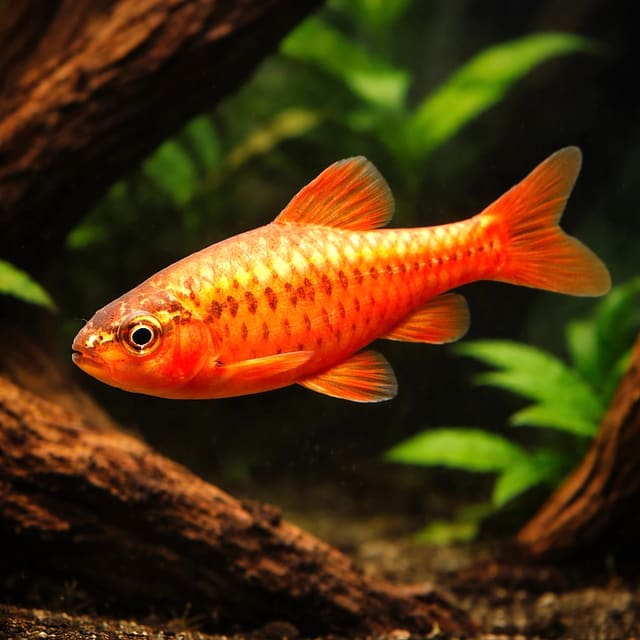
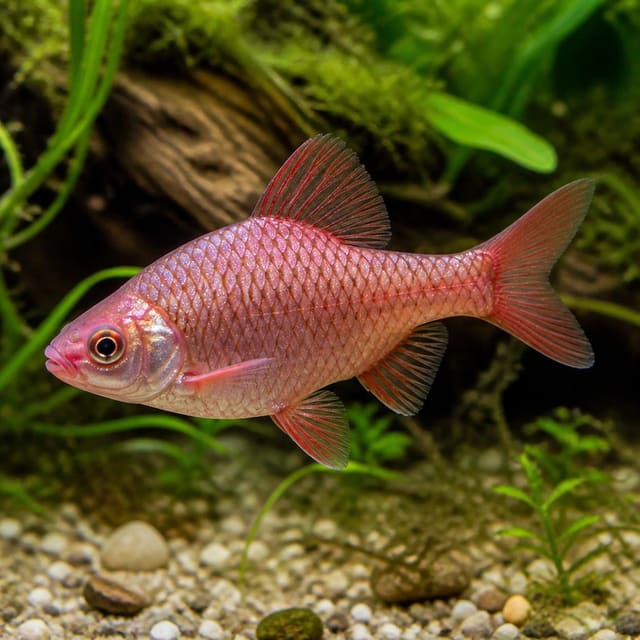
Albino Cherry Barb (Rohanella titteya)
20–27°C · pH 6–8 · 54L
£2.99

The Longfin Cherry Barb (Barbus titteya) is a freshwater cyprinid from Sri Lanka that reaches 5 cm. It suits beginners prepared to keep 6–10 in an aquarium with a base of at least 60 × 30 cm, around 54 litres, at 20–27°C and pH 6.0–8.0. Sold individually in dispatch sizes from 2–2.5 cm to more than 4 cm.
Adult size is the maximum length this species reaches at full maturity (scientific sources). The livestock you receive will be younger and smaller — pick a size above for the actual shipping size. Product-photo provenance and any image-specific limitations are stated on the listing.
Barbus titteya
Shoaling fish: kept in a group they feel safer, stay calmer and show their best colour.
Minimum of 2 per order.
The Longfin Cherry Barb (Barbus titteya) is a freshwater cyprinid from Sri Lanka that reaches 5 cm. It suits beginners prepared to keep 6–10 in an aquarium with a base of at least 60 × 30 cm, around 54 litres, at 20–27°C and pH 6.0–8.0. Sold individually in dispatch sizes from 2–2.5 cm to more than 4 cm.
Adult size is the maximum length this species reaches at full maturity (scientific sources). The livestock you receive will be younger and smaller — pick a size above for the actual shipping size. Product-photo provenance and any image-specific limitations are stated on the listing.
Maintain these water conditions for optimal health and vibrant colors
Barbus titteya long fin is the long-fin ornamental form of the Cherry Barb, a small freshwater cyprinid associated with planted community aquariums. FishBase now lists it as Puntius titteya and treats Barbus titteya as a synonym. The species belongs to Cyprinidae and is recorded from the Kelani to Nilwala basins of Sri Lanka. FishBase describes it as freshwater and benthopelagic, records a maximum of 5.0 cm total length for male or unsexed fish, and gives its IUCN category as Vulnerable.
The adult measurement is the decisive planning figure. A smaller dispatch size does not make a smaller adult fish, so leave enough room for the selected animal to reach the recorded 5 cm maximum while living within a proper social group. The long fins also make calm surroundings and careful companion screening important: the aim is a peaceful display in which neither the Cherry Barbs nor their companions are chased, crowded or exposed to known fin-nippers.
Seriously Fish describes the Cherry Barb as an unreserved choice for beginners and generally very peaceful in a well-researched community. Its aquarium guidance calls for a base of at least 60 × 30 cm or equivalent, a volume of around 54 litres, 20–27°C, pH 6.0–8.0 and hardness of 2–20 dGH. It also recommends keeping 6–10 specimens rather than treating this social fish as a solitary feature animal.
| Suits | Not suited to |
|---|---|
| Beginners prepared to establish and maintain a filtered aquarium | An unprepared or unfiltered aquarium |
| A group of 6–10 Cherry Barbs | Keeping one fish as a solitary feature animal |
| A base of at least 60 × 30 cm or equivalent | An aquarium without the required footprint |
| A carefully researched peaceful community | Documented aggressive or fin-nipping companions |
This combination suits a keeper prepared to establish biological filtration, test the water, maintain a weekly routine and feed varied small foods. The fish’s modest length does not remove those responsibilities; its welfare depends on the whole group, the usable aquarium footprint and stable water rather than body size alone.
One purchase supplies one animal of the selected option. Use the live size selector to choose among these labels: 2–2.5 cm, 2.5–3 cm, 3–3.5 cm, 3.5–4 cm and more than 4 cm. The open-ended label means more than 4 cm; it does not promise a particular upper measurement. The size you select is the size supplied, not the adult size.
Treat size and quantity as two separate choices. First choose the dispatch size that suits your stocking plan. Then set the purchase quantity so that the aquarium contains a group of 6–10 Cherry Barbs, allowing for any of the same species already living there. For example, a keeper starting a new group would plan six or more animals, while a keeper with four compatible Cherry Barbs already established would calculate how many additions bring the total into the recommended range. Check the complete biological load before increasing the group.
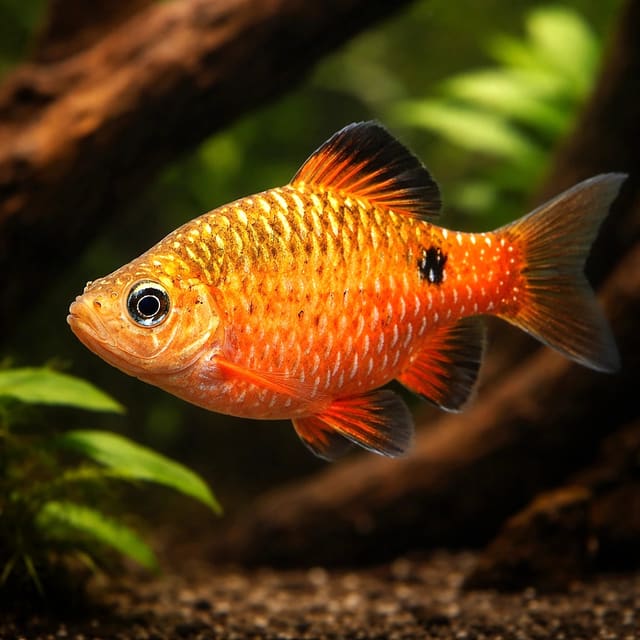
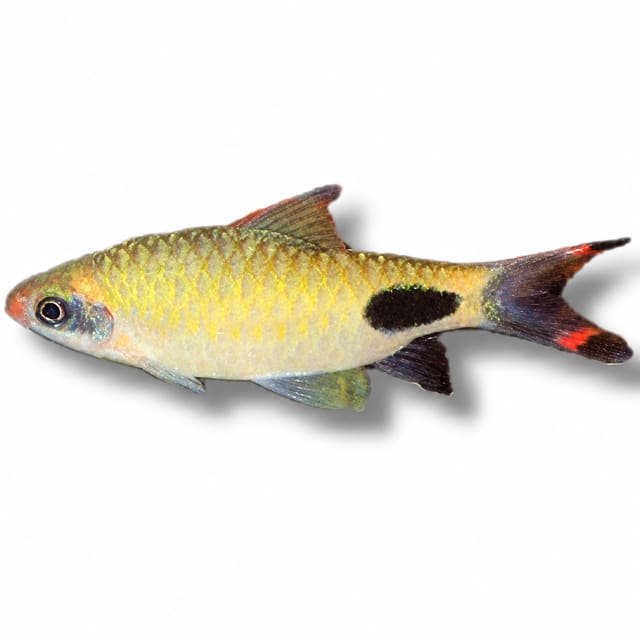
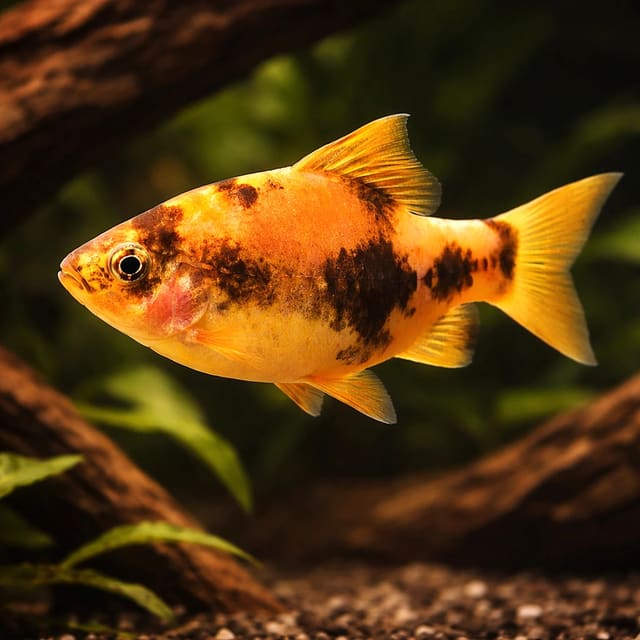
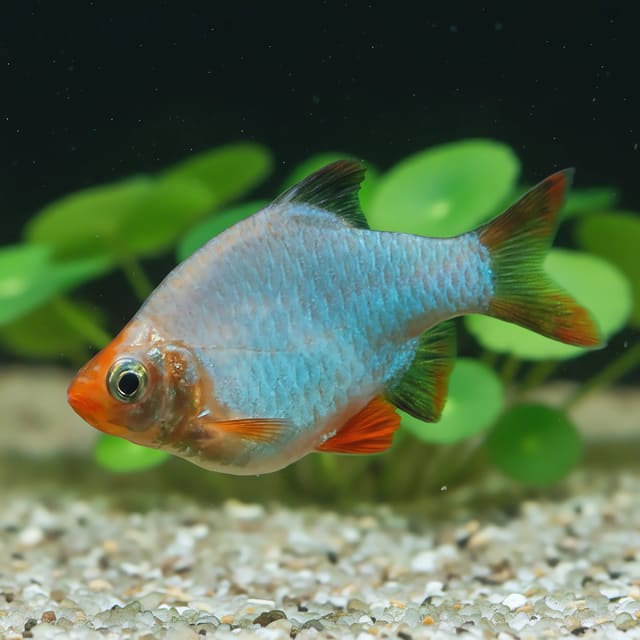
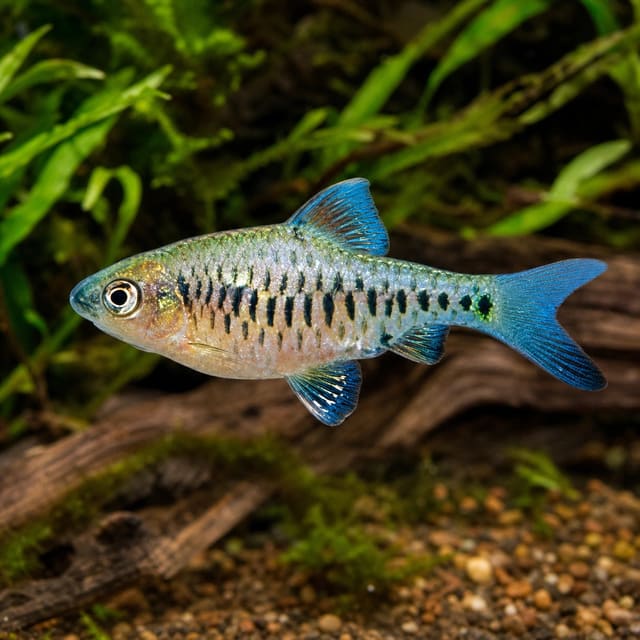
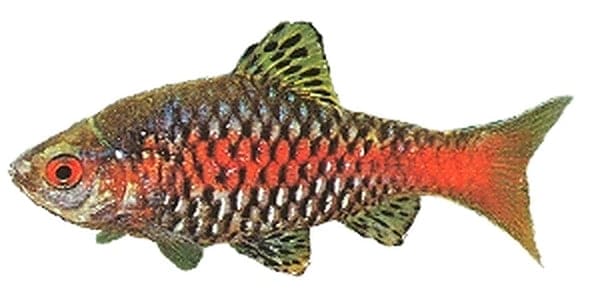
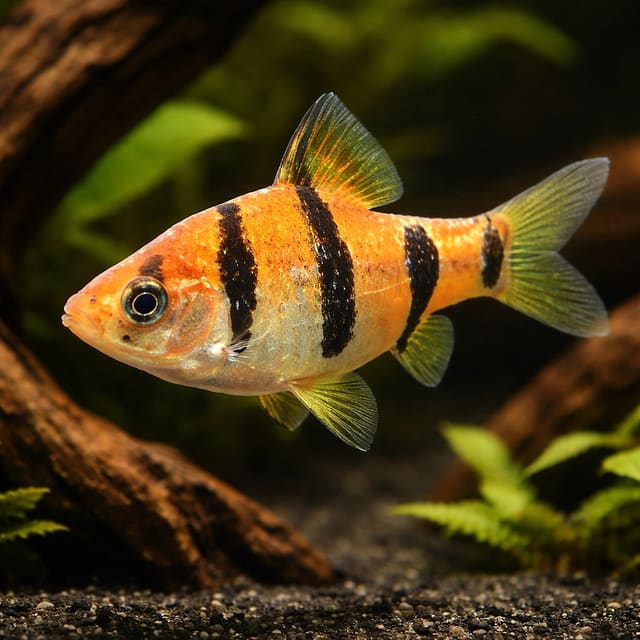
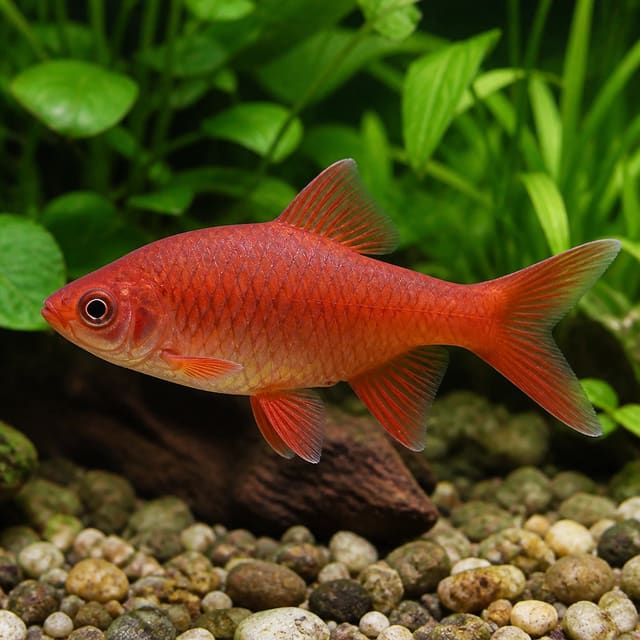
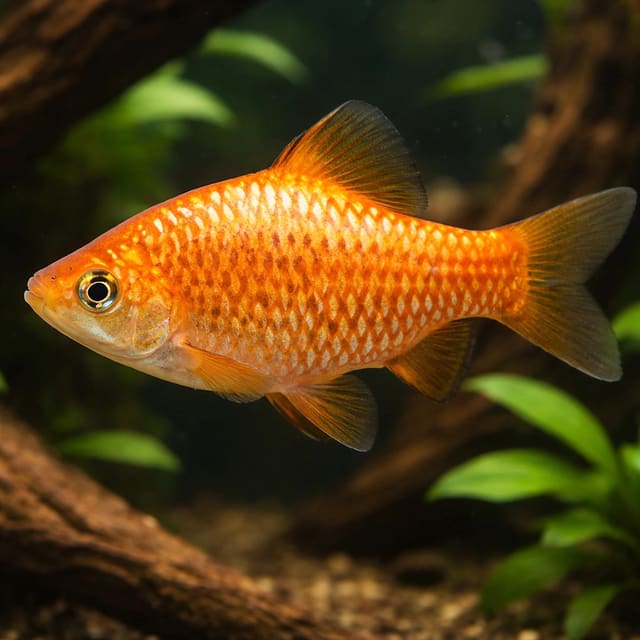
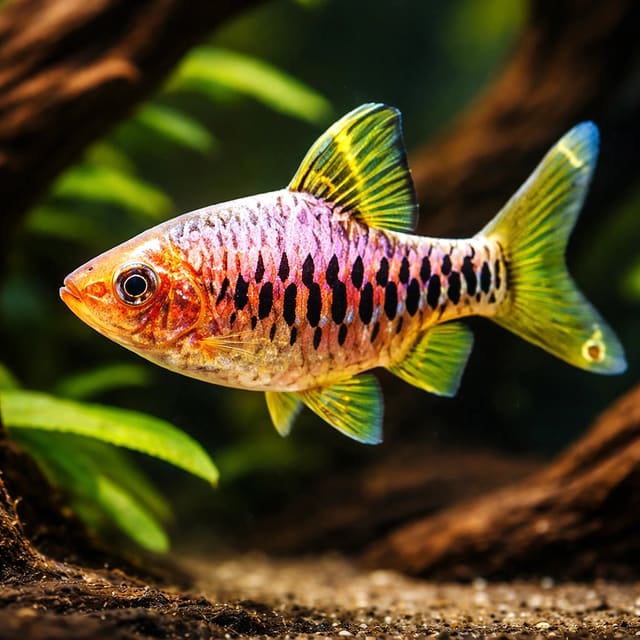
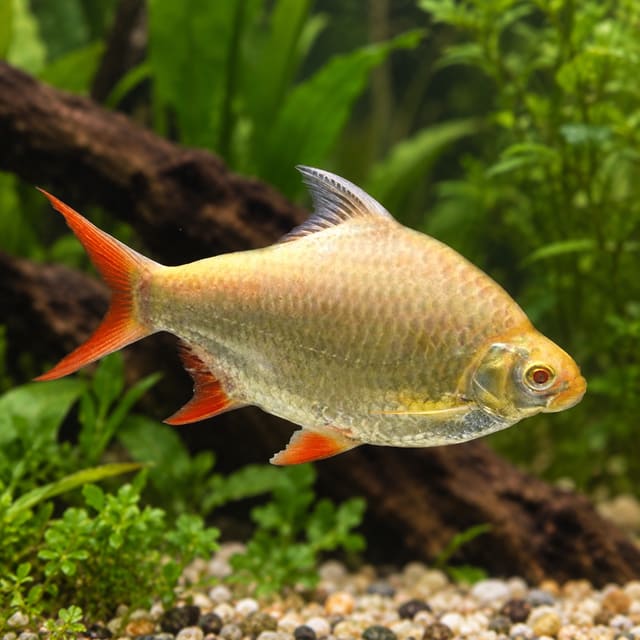
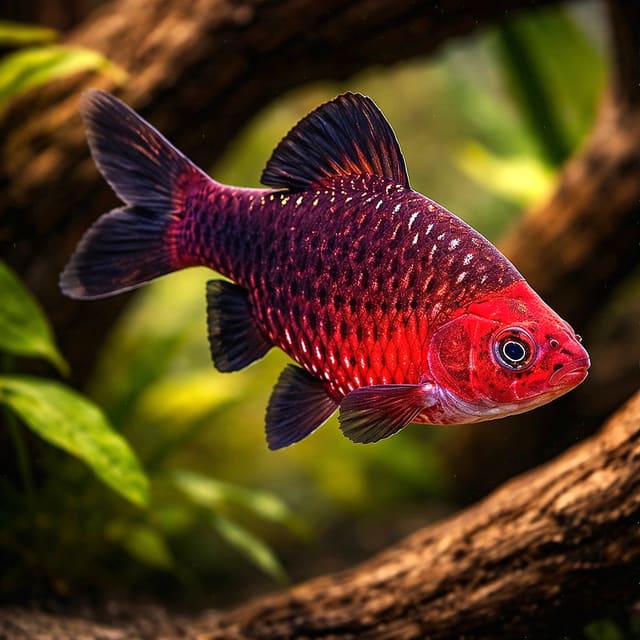
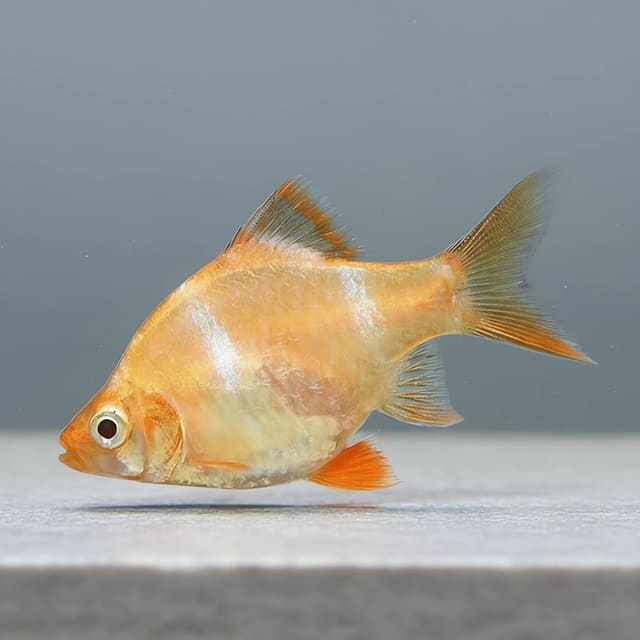
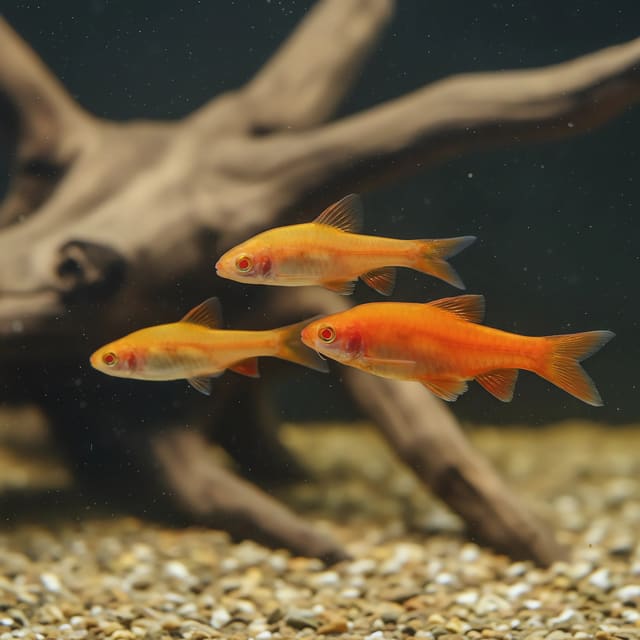
These representative gallery images have been digitally enhanced for presentation, so colours can look slightly different from the live animal.
Sex is guaranteed only when the selected option explicitly states male or female. This Barbus titteya long fin listing has no sex-guaranteed option.
The minimum footprint and approximate volume are starting points for a Cherry Barb group, not permission to fill every remaining space. Plants, wood, other fish and the filter all affect usable room and biological load. Work from the adult 5 cm planning length, a group of 6–10 and the needs of every other resident. A larger footprint can make planting, open swimming room and territorial separation easier without changing the species’ water limits.
Review our delivery and Live Arrival Guarantee policy before the animal arrives.
Start with a base of at least 60 × 30 cm or an equivalent footprint and around 54 litres. Use this minimum base guidance while ensuring that the final aquarium accommodates the complete group, décor, equipment and any peaceful companions. A tall aquarium with little horizontal room should not be treated as equivalent merely because its nominal volume looks similar.
Use planting and structure to provide security while retaining open room through which the group can move. Seriously Fish notes that décor is not especially critical, but Cherry Barbs tend to show better colour in a heavily planted arrangement with a dark substrate. Floating plants, driftwood roots or branches and leaf litter may also be appreciated and add a natural feel.
A useful layout places much of the cover around the edges and rear while preserving connected open areas. Do not turn the aquarium into a solid wall of plants, and do not leave the fish exposed in a bare box. The practical balance is enough structure for an unsettled fish to retreat, enough open space for 6–10 specimens to move, and clear access for maintenance.
| Layout choice | Decision test |
|---|---|
| Base area | At least 60 × 30 cm or equivalent |
| Planting | Dense enough for cover without blocking all movement |
| Wood and litter | Secure, aquarium-safe and reachable for cleaning |
| Open space | Continuous room for the full group to move |
Nominal volume alone cannot settle stocking. A 60 × 30 cm aquarium of around 54 litres meets the cited starting dimensions, but a densely furnished community may need a larger aquarium to retain usable room. Conversely, removing every plant to create apparent space would take away useful cover. Choose the larger aquarium when the intended layout or companion stock makes either requirement difficult.
Finish the hardscape before the fish arrive, make sure every item is stable and leave access to the filter intake, heater and substrate. This avoids disruptive rebuilding while the group is settling and makes weekly waste removal easier.
Maintain the aquarium at 20–27°C, pH 6.0–8.0 and 2–20 dGH. These are aquarium ranges for Puntius titteya, not targets to chase from one edge to the other. Choose a stable point within all residents’ overlapping needs, measure it and avoid sudden changes. If the existing aquarium falls outside any part of the overlap, change the stocking plan rather than forcing rapid chemical adjustments.
Use our water chemistry guide to understand the measurements, then compare your results with the stated range using the aquarium water matcher. Test the aquarium itself rather than relying only on a regional tap-water report, because substrate, décor, maintenance and biological activity can alter the water after it enters the tank.
OATA’s barb sheet gives zero ammonia, zero nitrite and nitrate no more than 20 mg per litre above normal tap-water levels for the group; these are broad waste-control thresholds rather than a Cherry Barb optimum. Apply them alongside the species’ temperature, pH and hardness range. A pH reading within 6.0–8.0 does not make water safe if ammonia or nitrite is present.
| Reading | Required decision |
|---|---|
| Temperature | Hold steadily within 20–27°C |
| pH | Keep within 6.0–8.0 |
| Hardness | Keep within 2–20 dGH |
| Ammonia | Zero mg per litre |
| Nitrite | Zero mg per litre |
| Nitrate | No more than 20 mg per litre above tap water |
When a reading moves unexpectedly, repeat the test correctly, check temperature and examine the aquarium for uneaten food, waste or equipment problems. Do not compensate for one poor value by changing several others at once. Restore waste control through filtration and maintenance while keeping the species range stable.
Record results with dates. A simple log shows whether a value is steady, drifting or linked to feeding and water-change days. That pattern is more useful than a single isolated reading when deciding whether the aquarium is ready for additional animals.
Every aquarium for this fish needs a well-established, maintained filter. The RSPCA explains that biological filtration supports beneficial bacteria which convert toxic ammonia to toxic nitrite and then to the safer nitrate. A running filter is not automatically biologically ready; the decision to add fish rests on testing that shows zero ammonia and zero nitrite.
If this is your first aquarium, follow our first tropical aquarium guide before choosing livestock. Prepare the tank, establish its filter and confirm the water values before the Cherry Barbs arrive. Adding the group to an unprepared aquarium risks a waste load that the bacterial population cannot process.
For an aquarium of around 54 litres, the species profile uses a turnover of four to five times the aquarium volume per hour and points to a filter rated at approximately 215–270 litres per hour. Treat this as a worked reference for that volume. The flow should not be especially strong, although a degree of water movement is appreciated.
The same profile estimates roughly 50–75 W of heating to hold 20–27°C in a tank of that size when the room is around 20°C. Select equipment for the real aquarium, room and target temperature, then confirm performance with measured water temperature. A wattage label cannot replace regular checks.
| Equipment check | Action |
|---|---|
| Filter | Run continuously and test for zero ammonia and nitrite |
| Turnover example | About 215–270 lph for around 54 litres |
| Flow | Provide movement without excessively strong current |
| Heating example | Roughly 50–75 W when the room is around 20°C |
| Thermometer | Confirm that the water remains within 20–27°C |
Place equipment so the aquarium circulates without pinning the fish into one sheltered corner. Check that plants and décor do not obstruct the intake or stop water moving through the aquarium. If the group persistently struggles against the current, review the flow arrangement while preserving effective filtration.
Carry out a 25% partial water change at least once a week. Use a siphon to remove solid waste from the substrate, and treat replacement tap water with a suitable conditioner to remove chlorine or chloramine before adding it. Keep the replacement water compatible with the established temperature and chemistry so the weekly routine improves cleanliness without creating abrupt swings.
Test ammonia and nitrite at least weekly and keep both at zero. Check nitrate against the threshold of no more than 20 mg per litre above the normal tap-water level. Testing before or at the same stage of the weekly routine helps you judge how the aquarium performs across the full maintenance interval rather than only just after fresh water has been added.
Inspect the filter for blockages. When the media needs cleaning, rinse it lightly in aquarium water removed during the partial change rather than under the tap. Chlorine or chloramine present may kill part of the beneficial bacterial population, reducing the filter’s ability to process waste.
Do not combine every disruptive job on the same day without a reason. Heavy substrate disturbance, major décor changes and excessive filter cleaning can remove cover and interfere with biological stability together. The regular aim is modest waste removal while preserving the established filter and familiar layout.
Use the test log to decide whether the routine is keeping pace with the complete stock. Detectable ammonia, detectable nitrite or a repeated nitrate rise beyond the stated threshold requires action before more fish are added. Review feeding, waste removal, filter condition and total stocking rather than treating a water change as a substitute for finding the cause.
A larger aquarium can offer more environmental stability, but it still needs the same disciplined checks. Volume slows some changes; it does not remove fish waste, clear a blocked filter or condition replacement water.
Offer a good-quality dried flake or granule as the regular food, with at least some products containing plant or algal material. Add appropriately small live or frozen foods such as Daphnia, bloodworm and Artemia for variety. Seriously Fish describes Cherry Barbs as readily fed in aquaria and says regular meals combining small live or frozen foods with good dried foods support their condition and colour.
In nature, Cherry Barbs are described as probable foragers taking diatoms, algae, organic detritus, small insects, worms, crustaceans and other zooplankton. That varied probable wild diet explains why one narrow aquarium food should not carry the whole menu. It does not mean collecting insects, worms or detritus from uncontrolled outdoor places; use aquarium foods intended for fish.
Feed once a day and offer only what the fish can eat within a few minutes. This schedule comes from OATA’s guidance for barbs and gives a clear starting routine for the group. Watch all 6–10 fish during the feeding period so shy individuals are not consistently excluded and dominant feeders do not take the whole portion.
| Food role | Suitable choice |
|---|---|
| Regular dried food | Good-quality flake or small granule |
| Plant component | Dried food containing plant or algal material |
| Live or frozen variety | Daphnia, small bloodworm or Artemia |
| Portion limit | Only what is eaten within a few minutes |
If food remains after the feeding period, remove the excess and reduce the next portion. Uneaten food breaks down and adds waste, increasing pressure on biological filtration. The correct portion is therefore judged by what the complete group finishes, not by a fixed pinch or spoon that ignores fish number and food type.
Change variety deliberately rather than adding several foods at once. A dried staple with plant content can form the base, while suitable live or frozen items provide variation. Keep every item small enough for the fish to take readily. Check that feeding interest remains consistent, because reduced intake can be an early sign that water quality, social pressure or health needs attention.
Do not use colour as the only feeding measure. Adult males may become more colourful in the presence of rivals, and appearance also changes with condition and surroundings. Judge the routine through steady feeding, body condition, behaviour and clean water together.
Before adding any Cherry Barb, confirm that the aquarium is large enough for the planned group and complete community. Test the water and proceed only when ammonia and nitrite are zero, temperature is within 20–27°C, pH is within 6.0–8.0 and hardness is within 2–20 dGH. Check these values in the aquarium where the fish will live.
Increase the aquarium population slowly. Every additional animal and every increase in feeding adds waste, so the beneficial bacteria in the filter must process a larger load. Adding too many fish too quickly can create new tank syndrome, in which ammonia or nitrite rises because the biological filter cannot keep pace.
Use observation to decide whether another stocking step is sensible. A group that is feeding consistently, moving without persistent harassment and living in water with zero ammonia and nitrite gives a better basis for the next decision than the passage of a fixed number of days. Continue to consider the filter’s biological load and the adult size of every resident.
Do not rebuild the whole aquascape immediately after introduction unless a clear safety problem requires it. Familiar cover helps reduce unnecessary disturbance, while open areas let you see whether all animals are moving and feeding. Make small corrections when a plant blocks circulation, a decoration becomes unstable or one area receives excessive flow.
If the aquarium already contains fish, assess the complete community before the new group enters. Shared temperature, pH and hardness are only the first screen; feeding competition, group space and temperament must also work. A water match cannot compensate for aggressive behaviour or crowding.
Keep the first maintenance actions consistent with the established weekly routine. Large reactive changes made without a measured reason can create extra instability. Test, identify the problem and take the smallest effective action that restores safe water and secure behaviour.
Learn the group’s normal feeding, swimming, colour and use of cover so a change is easy to recognise. OATA recommends watching for fish hanging at the surface, sitting on the bottom, swimming erratically, hiding more than normal or showing a change in temperament. Slower or faster gill-cover movement, reduced feeding and an increase or decrease in body condition also deserve attention.
Physical warning signs include white spots, fluffy growths, loss of fins or scales, ulcerations and bumps. These observations identify that action is needed; they are not a diagnosis by themselves. Begin with water testing because ammonia and nitrite must remain at zero and poor waste control can stress fish quickly.
Do not select medication from one symptom or add a treatment as a substitute for testing. Different problems can produce similar changes in breathing, colour, appetite or swimming, and treatment instructions must match the diagnosed problem and the aquarium’s other inhabitants. Keep the focus on observation, safe water and appropriately guided next steps.
Social stress also needs a practical response. Check whether the group totals 6–10, whether open movement and planted cover are both present, and whether another resident is chasing or nipping. Correct the source of repeated pressure rather than assuming that hiding or poor feeding is a fixed personality trait.
Fin condition matters particularly in a long-fin form. Inspect the outline during the daily feed without chasing the fish around the aquarium. A new change in fin condition, combined with aggression or altered water readings, gives clear directions for reviewing companions, filtration and maintenance.
Keep dated notes of visible changes and test results. A sequence showing when appetite changed, when a new fish entered or when a filter blockage occurred is more useful for decision-making than a vague recollection. Continue the weekly routine after the immediate concern is resolved so the same conditions do not recur unnoticed.
Keep 6–10 Cherry Barbs together. Seriously Fish describes the species as schooling by nature and explains that maintaining this number makes the fish less skittish, produces a more natural display and allows males to develop better colour in the presence of rivals. The social group is therefore a core requirement rather than decoration added after other stocking has been decided.
One purchase supplies one fish, so calculate the order quantity against the number of the same species already established. Do not count unrelated barbs or similarly coloured fish towards the Cherry Barb group. A mixed community may contain several social species, but each species still needs its own suitable number and enough room.
| Observation | Decision |
|---|---|
| One fish or a very small group | Plan towards the recommended 6–10 |
| Persistent skittishness | Check group number, cover and companion pressure |
| Repeated chasing | Check space, group structure and the fish responsible |
| Unequal feeding | Make sure every group member reaches suitable food |
Do not promise a particular sex ratio. Adult males are described as noticeably smaller, slimmer and more colourful than females, especially in spawning condition, but an animal’s dispatch size, colour or gallery appearance does not guarantee sex. Build the group without relying on a visual estimate that the offer does not promise.
The minimum base of 60 × 30 cm and approximate 54-litre volume are given for this species, but adding companions increases the space and filtration demands. Work from the adult 5 cm maximum and the complete biological load. A tank that houses the Cherry Barb group alone may need to be enlarged before another schooling species, bottom-dwelling group or territorial fish can be accommodated responsibly.
Group size also cannot repair unsuitable water. Every fish in the community must share a workable overlap within 20–27°C, pH 6.0–8.0 and 2–20 dGH, while ammonia and nitrite remain zero. Settle that overlap before comparing colour, swimming level or visual appeal.
Cherry Barbs are generally very peaceful and can suit a carefully researched community. Seriously Fish names other small cyprinids, tetras, livebearers, rainbowfishes, anabantoids, catfishes and loaches as possible companion groups. These are starting categories, not universal approvals: assess the exact species, adult size, temperament, social number, feeding behaviour and water range before combining it with the long-fin Cherry Barb.
Begin with water overlap. Every proposed resident must be able to live within 20–27°C, pH 6.0–8.0 and 2–20 dGH without being held at an unsuitable edge of its own range. Then check the aquarium footprint, adult biological load and each species’ group requirement. A shared temperature alone does not make an overcrowded or behaviourally mismatched community safe.
OATA notes that Cherry Barbs can generally mix with other peaceful fish without problems, while warning that some other barb species may be aggressive or notorious fin-nippers. That distinction matters: “barb” is not a single temperament. Compare the individual behaviour profile rather than assuming every fish in the group is interchangeable. You can browse our barbs collection to compare identities, then return to each animal’s own adult-size, water and behaviour requirements.
| Screen | Question to settle |
|---|---|
| Water | Do the complete ranges overlap safely? |
| Space | Can every species reach its adult size and social number? |
| Temperament | Is each animal peaceful enough for long fins? |
| Feeding | Can all residents take appropriate food? |
| Layout | Are both cover and open movement preserved? |
No common name or category settles all five questions. If a proposed combination remains unclear after checking the exact species, contact us with the aquarium dimensions, measured water values, current stock and intended numbers for a stocking assessment.
FishBase records a maximum of 5.0 cm total length for the Cherry Barb, listed there as Puntius titteya. Plan the aquarium around this adult measurement rather than the dispatch size.
Barbus titteya long fin needs a base of at least 60 × 30 cm or equivalent and around 54 litres. Provide a maintained filter, planted cover, open movement space and water movement that is not especially strong.
Keep 6–10 together. Seriously Fish describes the Cherry Barb as a schooling species and says this number makes the fish less skittish while producing a more natural display.
Seriously Fish describes Barbus titteya long fin as an unreserved choice for beginners. It still needs an established filter, weekly testing and maintenance, a group of 6–10 and stable water.
Feed good-quality flakes or small granules, including some plant or algal content, and vary them with small live or frozen Daphnia, bloodworm or Artemia. Feed once daily, offering only what the group eats within a few minutes.
Seriously Fish gives 20–27°C, pH 6.0–8.0 and hardness of 2–20 dGH for the species. Keep ammonia and nitrite at zero, with nitrate no more than 20 mg per litre above the normal tap-water level under OATA’s barb guidance.
The Cherry Barb is generally very peaceful, and OATA says it can generally mix with other peaceful species without problems. Avoid barb species documented as semi-aggressive or fin-nipping when choosing companions for this long-fin form.
Possible companion groups include peaceful small cyprinids, tetras, livebearers, rainbowfishes, anabantoids, catfishes and loaches. Screen each exact species for compatible water, adult size, social needs, feeding behaviour and temperament.
Someone must be present to receive the parcel. Film every delivery continuously from the sealed parcel as it is opened, showing the fish still in the bag; float the bag for 20–30 minutes before release, and never pour the bag water into the aquarium.
No reviews for this item yet. Bought one? Honest reviews only, good or bad.
What customers say about ordering from us
I have a small group of long finned mountain minnows. So was delighted to be able to order ten of this variety to increase the genetics in my tank . The ones I recieved are healthy but it’s to early to give a verdict on wether they are of a long finned type since they are small currently.
Gordon Walker · 23 Sept 2026
100% success travel and "installation". Pleased with quality of purchase. The Siamese fighter a bit "shy" so have not yet seen him at his best yet but looking good. Happy customer. GG
George E Garratt · 21 Sept 2026
Reviews of our shop, collected by Judge.me, an independent third-party review collector. Newest first.