−14%
Rosy Barb (Barbus Puntius conchonius)
16–24°C · pH 6–8 · 90L
£2.57£2.99
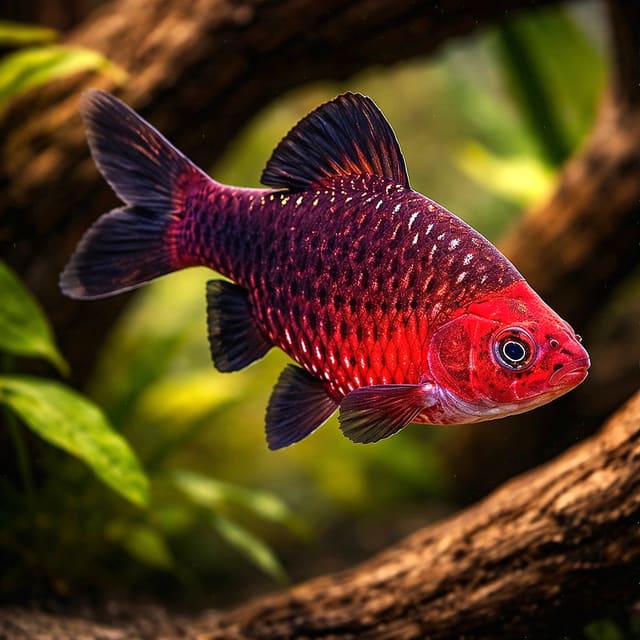
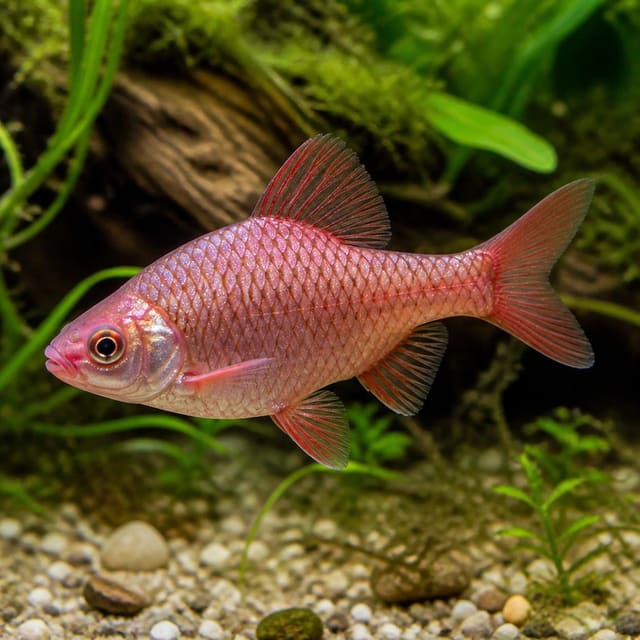
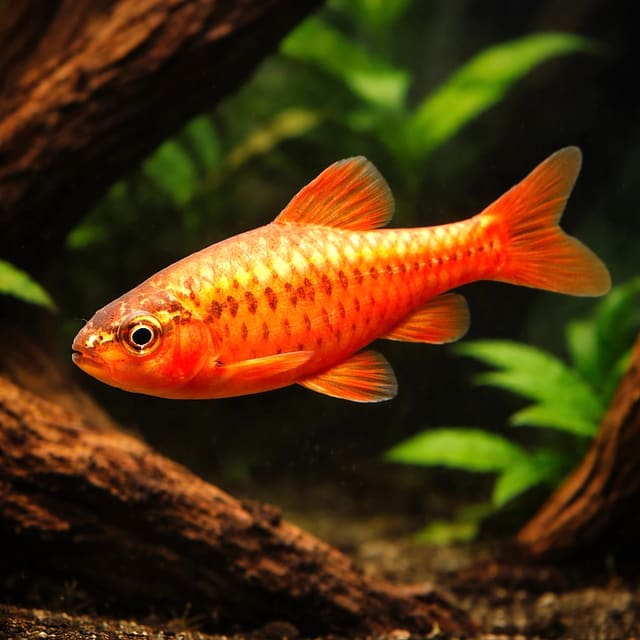
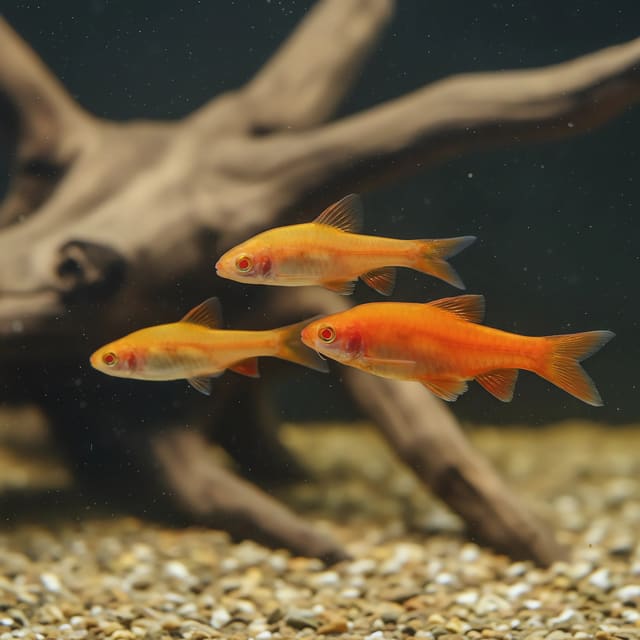
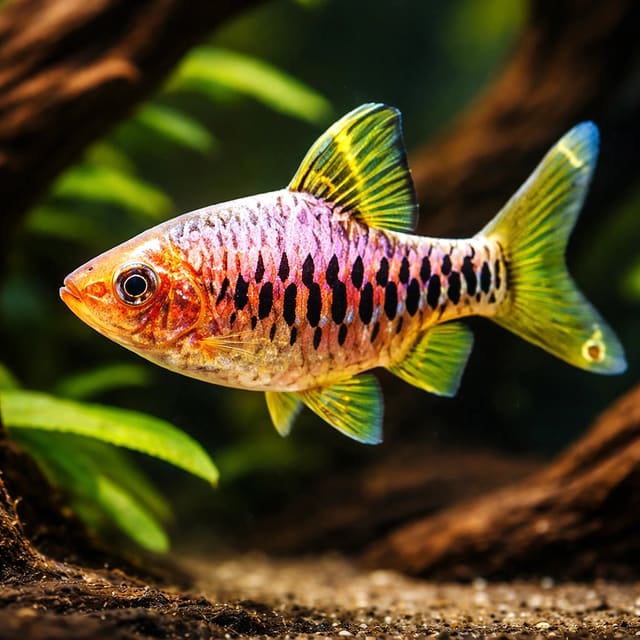
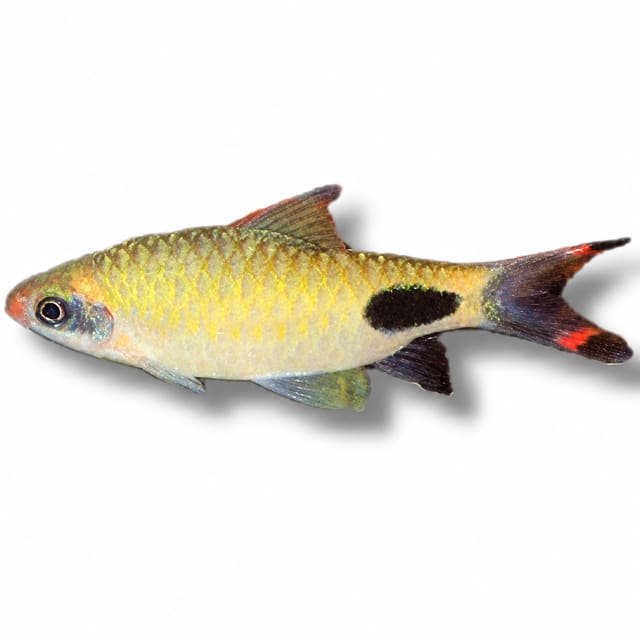
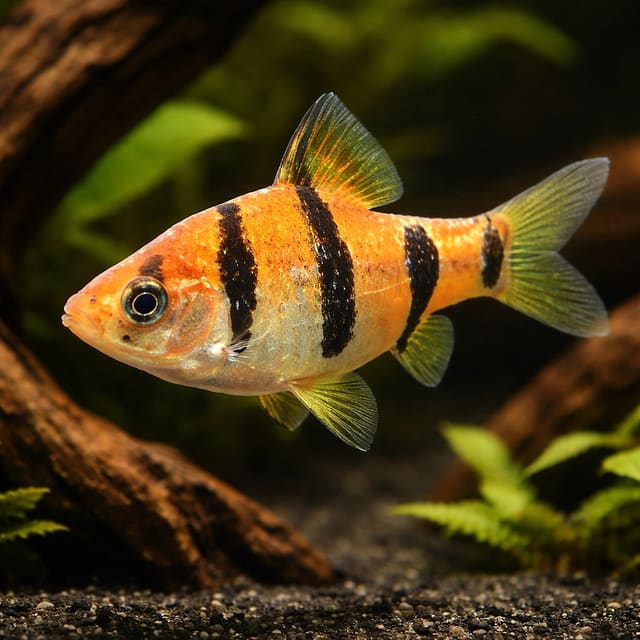
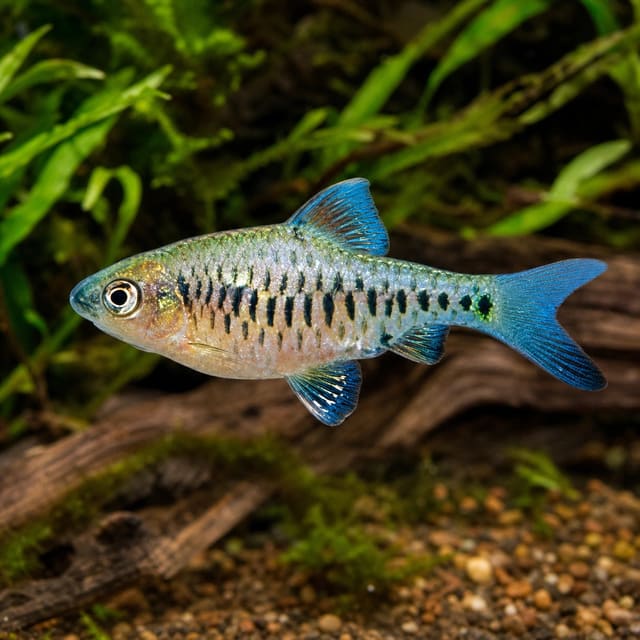
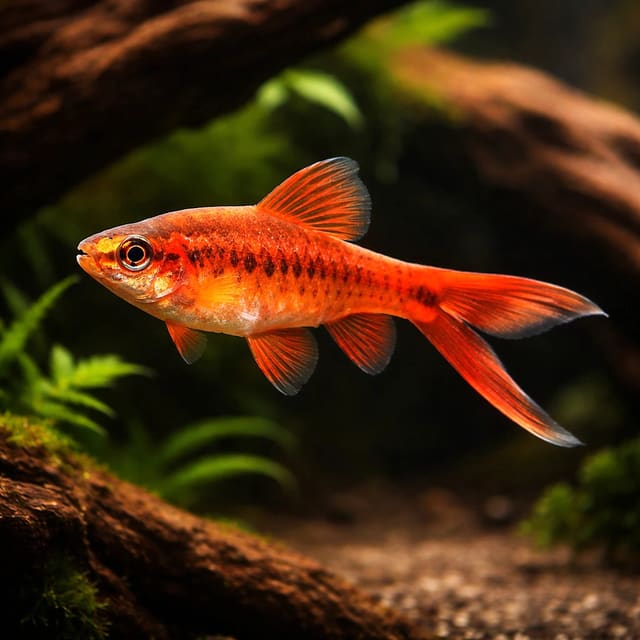
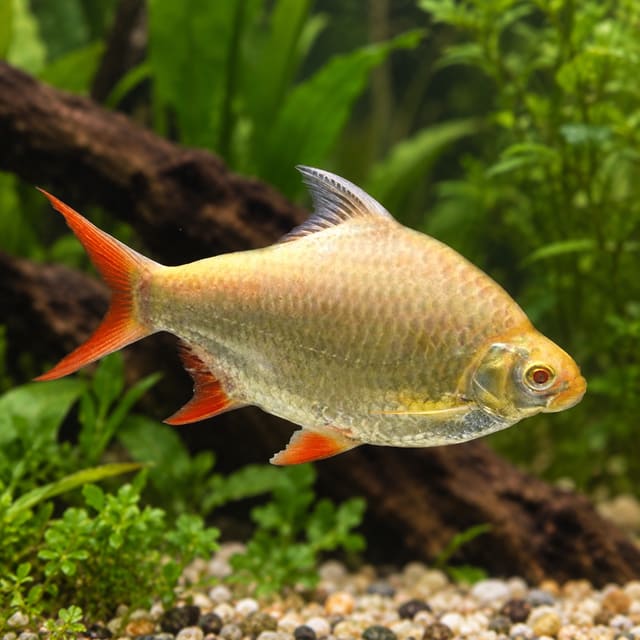
Rosy Barb Diamond (Pethia conchonius) is an active, schooling barb sold as one fish in the chosen 2–2.5 cm, 3–4 cm or 4–5 cm dispatch grade. Plan a mature, spacious aquarium for a group of eight to ten or more.
Adult size is the maximum length this species reaches at full maturity (scientific sources). The livestock you receive will be younger and smaller — pick a size above for the actual shipping size. Product-photo provenance and any image-specific limitations are stated on the listing.
Pethia conchonius
Shoaling fish: kept in a group they feel safer, stay calmer and show their best colour.
Minimum of 2 per order.
Rosy Barb Diamond (Pethia conchonius) is an active, schooling barb sold as one fish in the chosen 2–2.5 cm, 3–4 cm or 4–5 cm dispatch grade. Plan a mature, spacious aquarium for a group of eight to ten or more.
Adult size is the maximum length this species reaches at full maturity (scientific sources). The livestock you receive will be younger and smaller — pick a size above for the actual shipping size. Product-photo provenance and any image-specific limitations are stated on the listing.
Maintain these water conditions for optimal health and vibrant colors
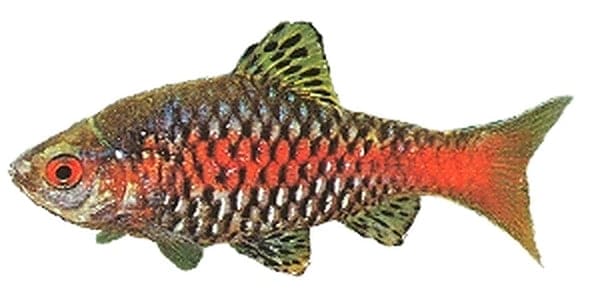
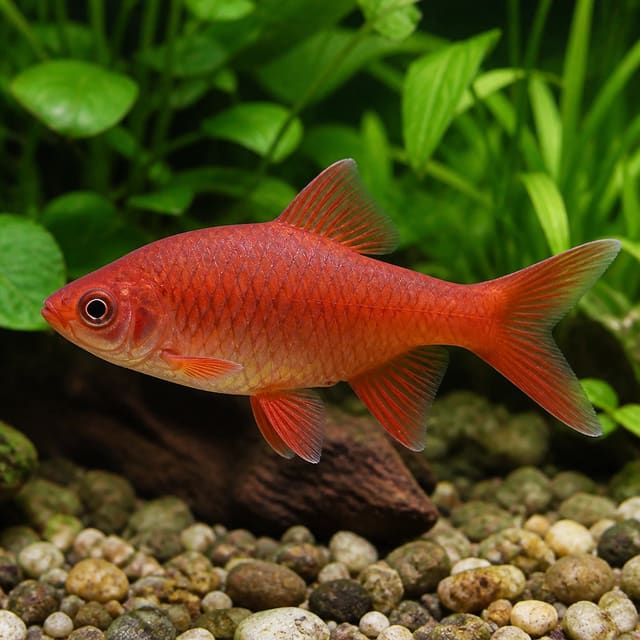
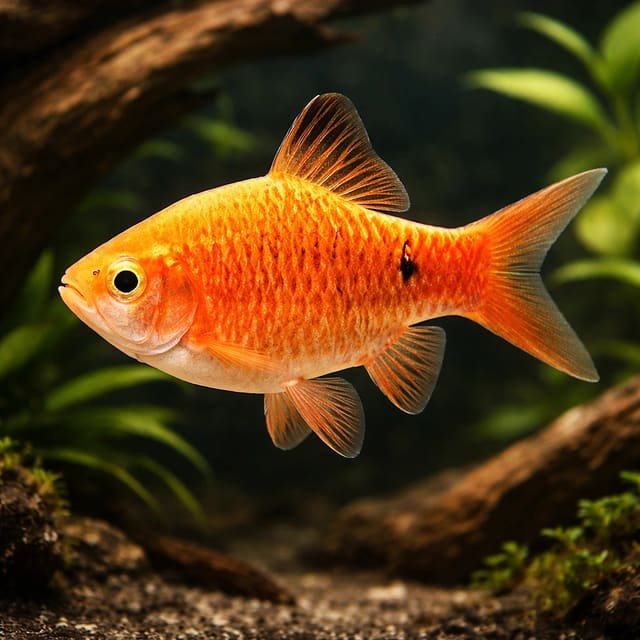
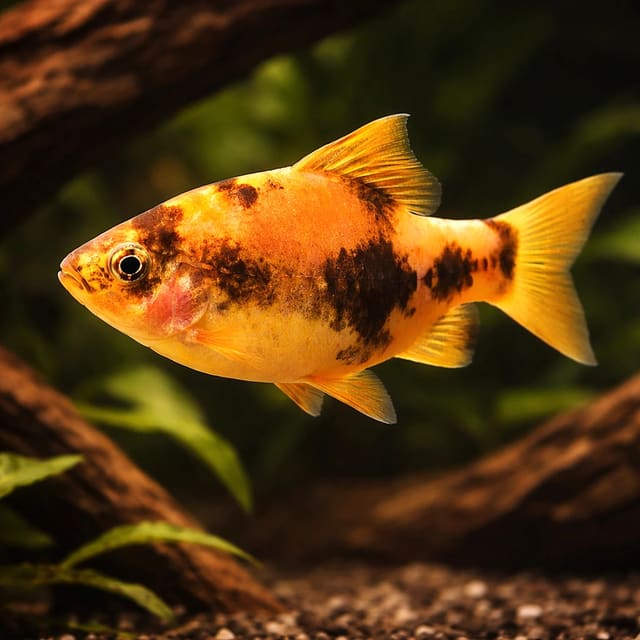
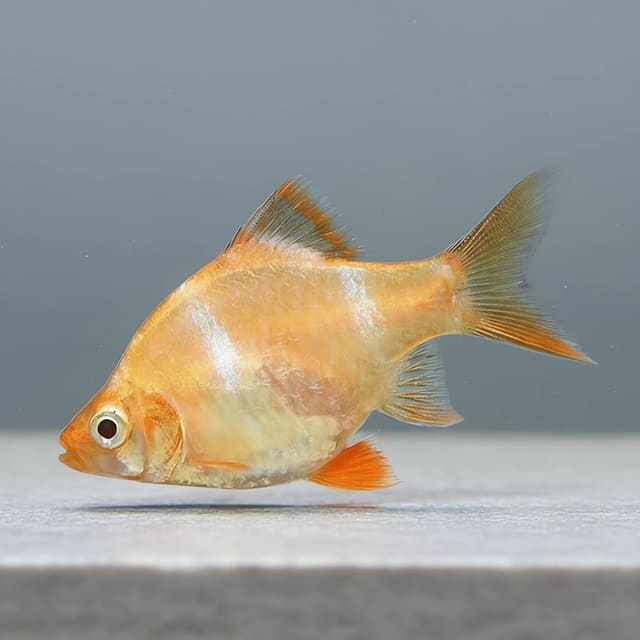
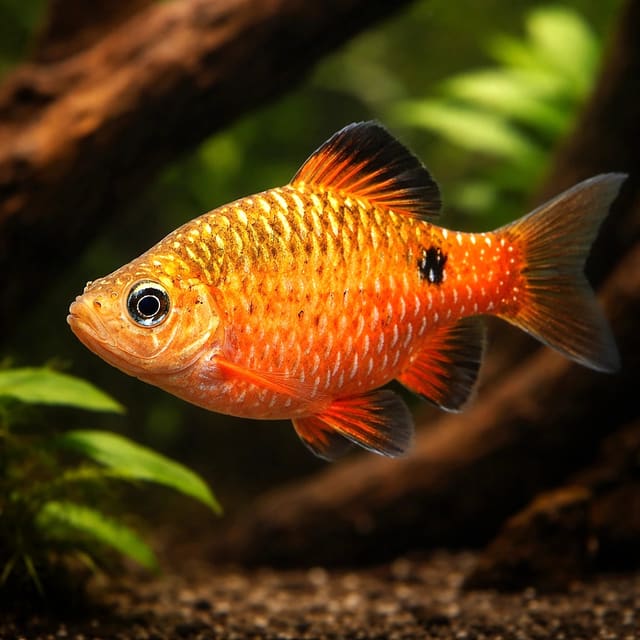
Rosy Barb Diamond is a traded diamond form of the rosy barb, Pethia conchonius. It brings movement and a reflective appearance to a well-planned group aquarium. One purchase supplies one fish of the selected size. The configured dispatch grades are 2–2.5 cm, 3–4 cm and 4–5 cm; the live size selector shows which choice can be ordered. The size you select is the size supplied, not the adult size. A small newcomer will grow, and the aquarium needs to suit the mature species and the full shoal, not merely the animal's arrival measurement.
Start the buying decision with swimming room and numbers. Seriously Fish describes this species as schooling and recommends at least eight to ten individuals for a natural display and less nervous behaviour. Its aquarium guidance calls for a base of at least 100 × 30 cm or equivalent. The fish is generally peaceful, yet it is active enough that a cramped tank or an undersized group changes how it behaves. A larger, established aquarium with open water, planted retreats and suitable filtration is more useful than a list of species that are peaceful in isolation.
Diamond refers to the supplier's trade form. The exact supplier identity uses the older Puntius conchonius combination; FishBase treats that as a synonym of accepted Pethia conchonius. The trade name does not establish a separate species, a special care regime, a named genetic lineage or a collection locality for the fish being sold. The scientific name belongs to the species; the visual form belongs outside its parentheses.
Sex is guaranteed only when the selected option explicitly states male or female. This Rosy Barb Diamond listing has no sex-guaranteed option. Do not use the image, colour intensity or selected size as a sexing promise. In the species, adult males and females may differ in build and colour, particularly around breeding, but a mixed individual purchase should be planned without assuming which sex arrives. If you need a specific sex composition, arrange that requirement before buying a group.
If this is your first shoal, prepare the aquarium before ordering. Establish the filter, confirm temperature and water tests, and decide how many fish the whole aquarium can support. Our first tropical tank guide explains the preparation. Rosy barbs can suit a newcomer who has done that groundwork; their robust reputation should never stand in for it.
Two respected references report different kinds of maximum measurement. FishBase records a maximum of 14 cm total length for male or unsexed P. conchonius. Total length includes the tail. Seriously Fish lists 100 mm, or 10 cm, standard length on its species care profile. Standard length stops at the base of the tail. Neither value says that every Diamond individual reaches the record, and the figures cannot be compared as though they used the same ruler. Their practical message is that the fish needs space well beyond its 2–5 cm dispatch grades.
Keep the care plan tied to the species. Seriously Fish gives a 100 × 30 cm minimum base or equivalent, a cooler 16–24°C species care range, pH 6.0–8.0 and hardness 5–20 dGH. OATA's broader barb sheet gives group-level parameters that cover many different barb species; it explicitly asks keepers to check the species. Use the species profile for a rosy barb decision and measured local water for the final fit. A fish's hardy reputation does not make extreme water changes, a newly set-up filter or a crowded aquarium sensible.
The diamond finish is best judged in a healthy group, where fish can swim and interact normally. Colour can change with age, lighting, condition and social context. Choose the form because you like the appearance, and choose the aquarium because it gives the species an appropriate life. Other barb products may provide a different visual option, but they are not automatically companions for this shoal.
Rosy barbs use horizontal space. Seriously Fish calls for at least a 100 × 30 cm base or an equivalent footprint for this species, with an example volume around 90 litres. The footprint is the key detail: a tall tank with the same water volume can leave less room for an active shoal to travel. OATA's general barb sheet mentions 60 litres for a small group of smaller barbs, but that is broad group guidance and should not displace this species-specific footprint. Count the group you intend to keep, the other residents, the layout and the filter's actual performance before deciding the aquarium is large enough.
Make an open route through the tank rather than filling every part with rocks and stems. Planting along the sides and back, or groups of plants that leave lanes between them, gives the fish places to retreat while keeping the shoal visible. Seriously Fish notes that planting, darker substrate, floating vegetation and wood can show the fish well and diffuse hard light. These are options for a functioning layout, not a prescribed decorative shopping list. If floating plants cover the surface, leave enough open area for exchange of air and practical feeding. Remove decaying plant matter as part of ordinary maintenance.
Flow should offer some movement without turning the entire tank into a current the fish must resist all day. The species is recorded from lakes and fast-flowing hill streams, and Seriously Fish says it can do well in a hill-stream style setup while strong filtration is not essential in every layout. That variety does not imply that a newly delivered small fish should be placed straight into a forceful jet. Arrange the outlet so there are swimming lanes and quieter areas, then observe whether the group uses the whole space comfortably. Surface movement and a well-maintained filter remain important for oxygen and waste processing.
Check lids, pipe gaps and heater placement before the shoal arrives. An active fish needs an aquarium that contains it safely and equipment it cannot become trapped against. Leave practical access for cleaning glass, removing waste and trimming plants. A beautiful arrangement that cannot be maintained will deteriorate. When selecting substrate, favour a surface you can keep clean while leaving areas of cover and open midwater; there is no reason to promise that one special substrate transforms this hardy species.
As the selected fish grows, revisit the total stocking rather than relying on the aquarium plan made at the smallest dispatch grade. A group of eight to ten mature barbs is a different biological load from eight to ten tiny arrivals. Introduce livestock in a way that the established filter can support and test after changes. The aquarium's length, water volume, filter and maintenance routine work together; no single printed minimum settles every stocking choice.
Seriously Fish gives 16–24°C, pH 6.0–8.0 and 5–20 dGH for Pethia conchonius in aquarium care. These are species-level ranges, and it is sensible to maintain a stable point that suits every resident rather than moving between their ends. This fish is often grouped with tropical community animals, but the cooler upper limit matters: a permanent warm tank chosen for a very different species may offer little or no overlap. Measure the water instead of judging it by the heater setting alone. Allow for room-temperature changes and check that the tank remains stable through the day.
FishBase describes an 18–22°C environmental range and pH 6.0–8.0, 5–19 dH in the species record. Those are reported environmental values, not a full set of daily aquarium targets. OATA's barb care sheet suggests 20–27°C, pH 6.0–7.5 and 4–12 dGH, but explicitly describes these as general guidance across barbs and notes that some live cooler. For a Diamond rosy barb, the species-specific Seriously Fish range is the clearer planning reference. The wider sources help explain why a generic barb care card can mislead when applied without its scope.
In a mature aquarium, ammonia and nitrite should test at zero. OATA also advises keeping nitrate no more than 20 mg per litre above the normal tap-water level. Take readings before delivery and after adding a group, particularly if feeding and waste production increase. A biological filter converts toxic ammonia to nitrite and then nitrate; a clear tank can still have unsafe dissolved waste before the filter has matured. Our water chemistry guide explains the common tests, and the water matcher can help compare measured values with care guidance.
Do not chase a perfect pH by pouring in corrections without understanding the source water. Rapid shifts can be more stressful than a stable, suitable value. Use conditioned replacement water and make changes gradually when tap water differs from the aquarium. If a measurement moves unexpectedly, check test technique, filter operation, feeding and the source water before treating the number alone. If different community species require incompatible temperatures or mineral levels, revise the stocking plan; trying to compromise at a value unsuitable for both makes the tank harder to care for.
Keep a small record of temperature and test results. That makes trends visible and gives context if the shoal becomes unusually still, loses appetite or breathes more rapidly. Testing is most useful when paired with observation: normal swimming, feeding and social behaviour are part of the water-quality picture. Do not infer that the water is safe merely because the fish is still colourful.
Seriously Fish recommends a group of at least eight to ten rosy barbs. It notes that decent numbers reduce nervousness and make for a more effective natural display. FishBase's aquarium note names five or more, and OATA gives five as a broad minimum for barbs, with more preferred. We recommend planning for the larger, species-specific eight to ten or more when space, filtration and other livestock allow. A lone Diamond fish is one unit of sale, not a complete social arrangement. Buy only when you can support an appropriate group now or have a clear, timely plan to complete one.
The shoal needs enough length to spread out and enough cover to avoid constant contact. When numbers are too low, one fish may be persistently followed or a timid individual may stay hidden. At a suitable group size, interactions can be spread across more fish and normal schooling becomes easier to see. Do not use the group recommendation as an automatic instruction to add ten fish to an unprepared aquarium in one day. Check the filter's capacity and add responsibly, especially where other residents already occupy the water.
This offer does not promise a male or female. Seriously Fish describes males as generally slimmer and more colourful in the species, especially around spawning, but domestic forms and individual maturity complicate visual impressions. Keepers should not assume a particular sex ratio from colour or grade, and should expect that mixed groups can breed. Rosy barbs are egg scatterers; a mature planted aquarium may occasionally produce fry. Do not buy them on a promise of breeding success or use an uncertain sex guess to engineer a precise breeding plan.
At feeding time, watch whether every fish has access. A healthy shoal can still contain a smaller member that is repeatedly pushed away, especially when grades are mixed. Spread small amounts of food where the group can reach them, then observe. Check for repeated fin damage or one animal being isolated. Brief display or jostling is different from sustained pursuit that stops a fish feeding or resting. More cover, appropriate numbers and adequate space help, but an individual under pressure may need separation in a properly prepared tank.
Group behaviour is a better guide than a still photograph. A shoal moving normally through the tank, resting without panic and feeding readily tells you more about its welfare than a single moment of strong colour. Keep the environment predictable and avoid frequent large changes to decoration or water chemistry while a new group settles.
Rosy barbs are generalist omnivores. FishBase describes worms, crustaceans, insects and plant matter in their diet; Seriously Fish also discusses small invertebrates, plant material and detritus, with aquarium fish accepting quality prepared foods. Use a complete flake or granule suited to their mouth size as the reliable staple. Add appropriate variety, including small live or frozen foods such as Daphnia or Artemia where these are safely sourced, and offer dried foods with some plant or algal content. The aim is balanced condition, not a constant succession of treats.
Feed modest portions that are taken promptly and notice how the shoal distributes itself. A fast group may take food before a slower community resident gets any; a new smaller grade may also hang back. Spread the portion thoughtfully rather than simply adding more. If food is left to sink and decay, remove it and reduce the next feed. Excess food increases waste and can strain the filter, particularly soon after adding a group. OATA's broad barb guidance suggests feeding only what the fish consume within a few minutes and warns against overfeeding.
Varying texture and particle size can help a group that contains different dispatch grades, but there is no need to assume each fish needs a separate specialist diet. Watch body condition over time rather than judging a single enthusiastic meal. A fish that stops eating, becomes thin or loses normal swimming behaviour may be facing competition, water trouble or illness. Test the water and watch the group before deciding that a new food alone will solve the problem.
Keep food sealed and dry as appropriate, use clean feeding tools and avoid bringing water from another aquarium into the display. If several people care for the fish, agree a feeding routine so that the group is not accidentally fed twice. Consistency makes water tests and behaviour easier to interpret. A good staple, safe variety and restraint are enough to provide a sound diet for this species.
Weekly observation and partial water changes are practical foundations. OATA's barb sheet strongly recommends a weekly 25% partial change and regular testing, while the exact amount your aquarium needs should be judged against measured water and its stocking. Treat tap water to remove chlorine or chloramine before adding it. Match the replacement water reasonably to the aquarium temperature and avoid abrupt chemistry changes. Use the water change to remove visible waste and check that the filter intake, outlet and heater are working as intended.
Do not run biological filter media under the tap. The useful bacteria that process ammonia and nitrite live on filter surfaces and can be damaged by chlorine or aggressive cleaning. OATA recommends a light rinse in removed aquarium water when media is blocked. Keep enough media and flow working that the filter recovers quickly. A newly installed, thoroughly cleaned or failed filter may need special attention even if the fish look normal at first. Test ammonia and nitrite after a problem rather than waiting for visible distress.
Observe the fish during routine care. Compare appetite, colour, swimming, breathing, fin edges and how the group spreads through the tank. A change can be the first sign that water, food or social balance has shifted. One fish hanging at the surface, refusing food or hiding continuously needs a closer look. Test before guessing a diagnosis, and seek qualified advice for persistent or severe symptoms. Do not medicate the whole community on the strength of a single vague sign.
Maintain the aquascape without removing every shelter at once. Trim plants to preserve swimming lanes, clear accumulated waste and ensure that floating cover does not block all surface exchange. As the group matures, reassess the filter and available space. A maintenance routine that fits your household is more reliable than a complicated schedule that is soon abandoned.
Before delivery, confirm that the aquarium is mature and that temperature, ammonia and nitrite readings are suitable. Arrange for someone to receive live animals and set aside unhurried time for inspection and introduction. Tropical Fish Co's delivery and Live Arrival Guarantee policy gives the current packing, receiving and claim conditions. If there is a delivery problem, its continuous sealed-parcel unboxing video requirement is claim evidence, separate from the care steps that help a healthy fish settle.
The store advises slow acclimatisation, including floating the sealed bag for 20–30 minutes before release. Keep the bag away from prolonged heat or cold, keep the tank calm and avoid pouring transport water into the aquarium. Introduce the fish gently when ready. Observe whether the existing shoal allows it to swim and whether other residents interfere. Avoid a large feed or a series of other introductions at the same time; both can make it harder to judge the new fish and the filter's response.
A small dispatch grade joining larger fish may need particular attention at first meals. Watch for a route to food, normal swimming and a place to rest. If several Rosy Barb Diamond fish are being added as a group, consider the total change in biological load and test the water in the days afterwards. A stressed new fish should not be assumed to need medication. First check measured water, temperature, flow and whether it is being chased or outcompeted.
Where a properly matured quarantine aquarium is available, it can help protect a larger collection and make observation easier. An uncycled spare container is not a safe substitute. Keep nets and tools clean between tanks and seek appropriate professional guidance if concerning signs persist. A careful arrival is the first chapter of keeping this active shoal, not a one-off ritual that replaces ongoing monitoring.
Seriously Fish describes Pethia conchonius as generally peaceful and suitable for a well-researched community. Its examples include other small cyprinids, tetras, livebearers, rainbowfishes, anabantoids, catfishes and loaches. These are categories to investigate, not blanket approvals. Species within each category differ in adult size, temperature, water chemistry, feeding speed and behaviour. Check the exact fish you intend to combine with a Rosy Barb Diamond shoal, and give all residents enough space to use their normal swimming areas.
Temperature is an immediate filter on the decision. A species needing permanently warm water may not fit the rosy barb's 16–24°C species care range, even if both are called peaceful community fish. Compare the ranges at a stable temperature that suits both, then compare pH and hardness. Look beyond a brief overlap at one extreme of each range. A group of active barbs can also be a poor match for very slow, timid or elaborate-finned fish, especially if the aquarium is small or the barbs are kept in too few numbers. OATA warns that some barbs nip fins and that social group size influences the problem; observe the actual shoal rather than assuming this individual form is always harmless.
Avoid putting tiny fry where larger, feeding barbs can readily take them. Do not combine a group with an aggressive cichlid merely because a broad community list includes many fish types. Consider the feeding interaction: a fast midwater shoal can dominate food meant for a shy bottom resident unless the keeper deliberately feeds both. Cover and an open lane together help neighbours avoid constant contact. If an existing fish hides or misses meals after the barbs arrive, the combination needs attention.
Related barb products are useful comparisons of appearance and care, but a cherry barb is not automatically an ideal addition to a rosy barb shoal. It has its own social needs and water preferences. Build one coherent stocking plan with each species' adult requirements, rather than collecting single attractive barbs. You can browse the barb collection to compare choices, then return to the exact care needs of the fish you select.
Stay near the aquarium for the first introduction and watch it again at later feeds. Brief inspection by an established resident is different from repeated chasing, fin damage or preventing a new barb from reaching food. Likewise, a barb group that repeatedly harasses an elaborate-finned neighbour is not a successful match simply because no injury appears on day one. Be prepared to separate fish in a suitable established space or adjust the stocking plan if pressure continues.
Observe the shoal itself. A good group should be able to spread, regroup and feed without one fish constantly excluded. If the fish rush one corner whenever another resident moves, review the cover and companions. If they crowd the outlet or remain at the surface, test water and check oxygen, temperature and flow. Normal behaviour has variation, so compare with the group's established pattern rather than relying on one moment.
Keep a margin in the aquarium for growth. The smallest selectable fish will not stay 2–2.5 cm, and the FishBase total-length record is much larger than any dispatch grade. Other community animals may grow too. Reassess crowding and filtration before it becomes a crisis. A stable community is one in which the fish have suitable water, adequate food and space to show normal behaviour at adult size.
FishBase records a 14 cm total-length maximum for male or unsexed rosy barbs; Seriously Fish lists 10 cm standard length for the species. The methods differ, and neither number is a promised final length for an individual fish.
Seriously Fish calls for a base of at least 100 × 30 cm or equivalent for this active species. Plan for the full shoal and other livestock, rather than choosing by volume or a small dispatch grade alone.
Plan for at least eight to ten rosy barbs where the aquarium can support them. FishBase and OATA mention five or more, while Seriously Fish gives the larger species-specific group for a less nervous, more natural display.
Yes, for a prepared keeper with a mature filtered aquarium, suitable cooler water and space for a real shoal. Robust does not mean comfortable in a new, crowded or poorly tested tank.
Feed a quality complete flake or granule with suitable variety, including modest portions of safe small live or frozen foods and some plant-containing dried food. Remove leftovers before they affect the water.
Seriously Fish gives 16–24°C and pH 6.0–8.0 for the species, with 5–20 dGH hardness. Keep a stable point that also suits every other fish in the community.
The species is generally peaceful, but active barbs need an adequate group and space. Watch for persistent nipping, particularly around slow or long-finned neighbours, and change the combination if it continues.
Seriously Fish names small cyprinids, suitable tetras, livebearers, rainbowfishes, anabantoids, catfishes and loaches as possible community groups. Check each exact species for matching temperature, water, size and pace.
Tropical Fish Co's delivery policy describes the live-animal packing, receiving conditions and Live Arrival Guarantee. Arrange for someone to receive the parcel, acclimatise the fish slowly and use the current policy for any claim requirements.
FishBase supplies the accepted-name bridge, native distribution and 14 cm total-length record. Seriously Fish supplies the species aquarium footprint, water ranges, 10 cm standard-length profile and larger shoal advice. OATA's barb sheet gives broad UK group-level welfare guidance; its ranges and small-barb tank example are not a substitute for the rosy barb species profile. Keep the source and measurement scopes in mind when comparing a short care card with your actual aquarium.
No reviews for this item yet. Bought one? Honest reviews only, good or bad.
What customers say about ordering from us
Easy website plenty of info on fish your buying great to pick a time slot
TRACEY DURRANT · 7 Oct 2026
Got some lovely fish thank you
Kevin Mackie · 7 Oct 2026
Reviews of our shop, collected by Judge.me, an independent third-party review collector. Newest first.