Goldfish & Coldwater · Buying Guide

Cold Water Fish for Sale UK: The Complete 2026 Buying Guide

Buy cold water fish online UK — goldfish, white cloud mountain minnows, rosy barbs, pearl danios and the 10 best no-heater species, with live delivery.
Connor BoyleBy Connor BoyleUpdated 18 April 202610 min read
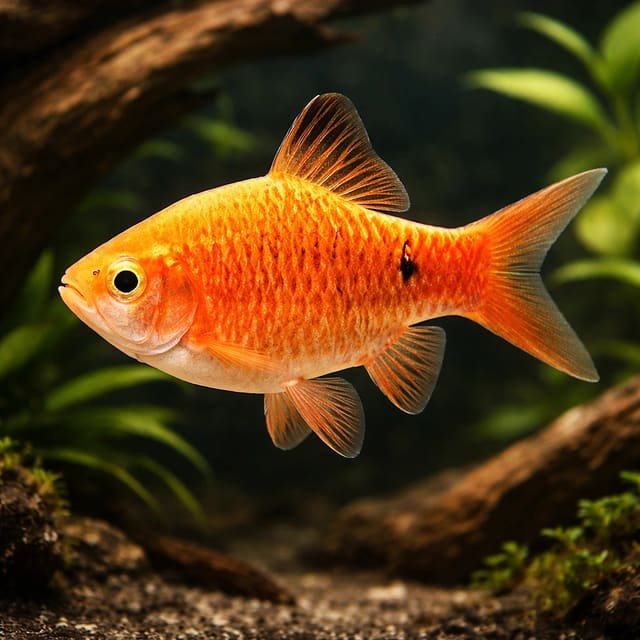
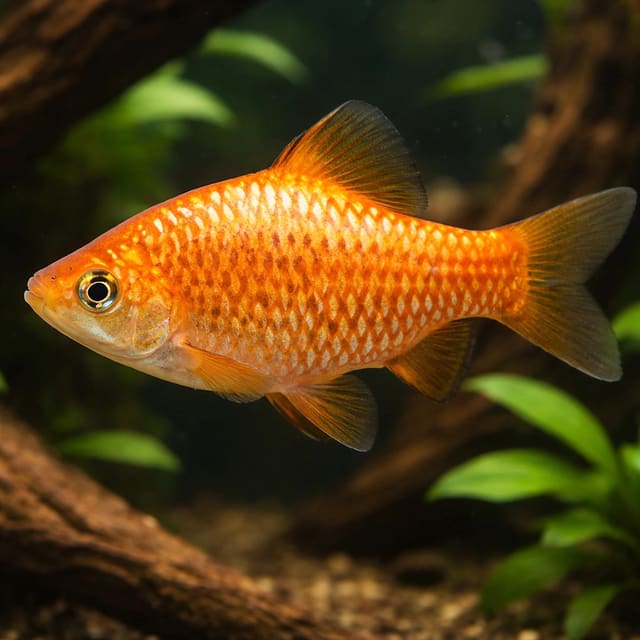
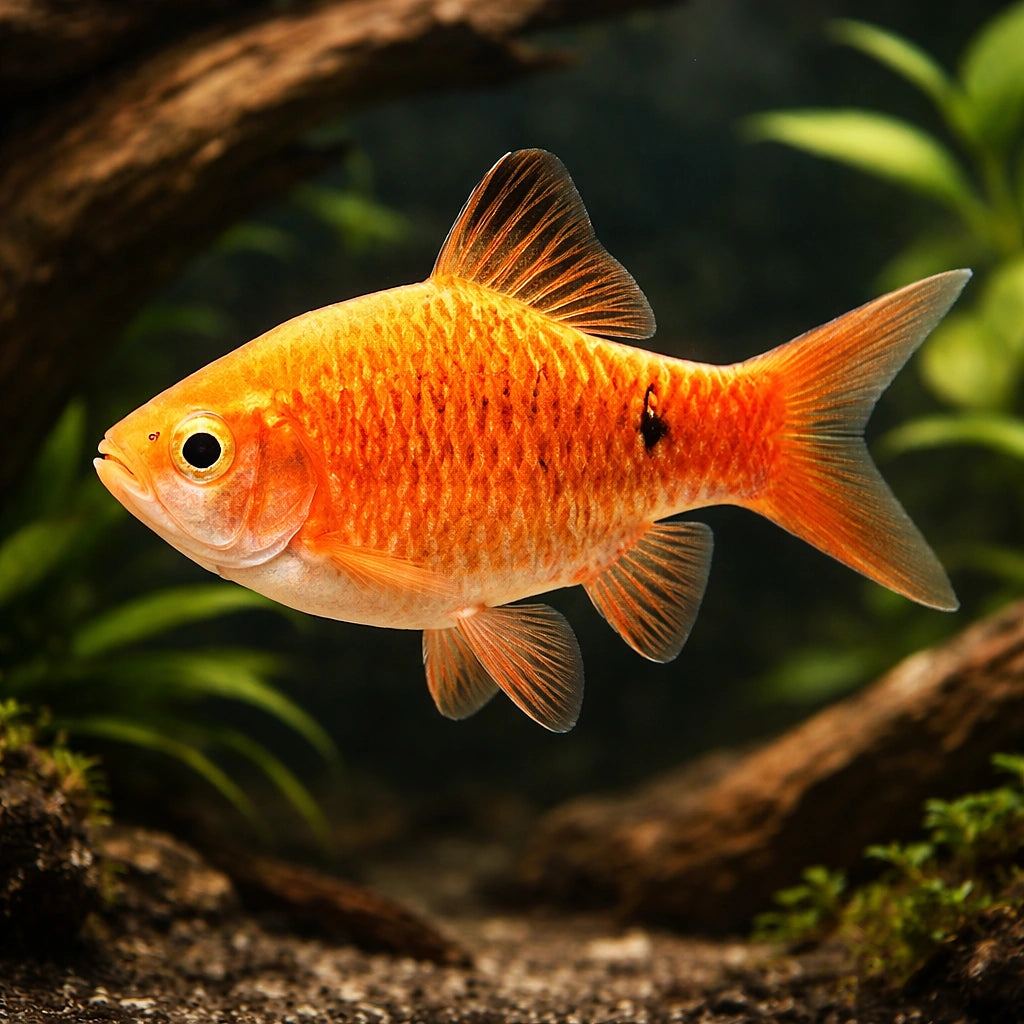
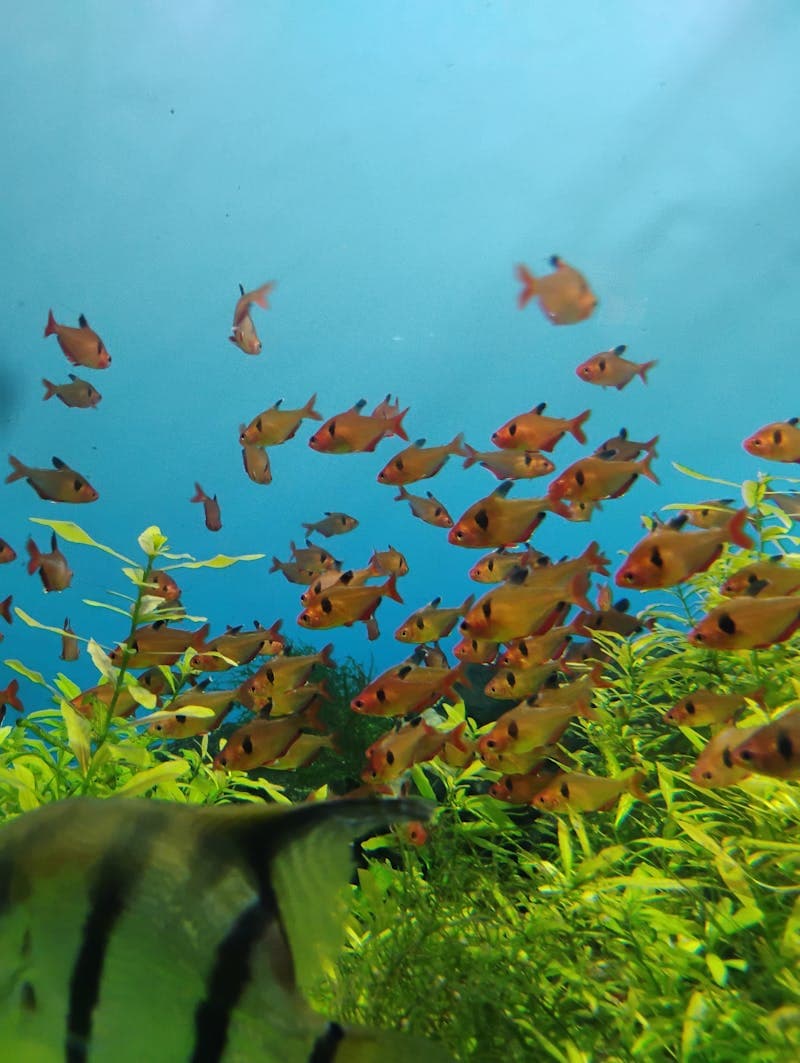
A Rosy Barb Gold (Pethia conchonius) — one of the UK's classic cool-water schoolers
Product photo · Tropical Fish Co warehouse· Own

The quick version

  • "Cold water" in the UK hobby usually means 16–22 °C — not freezing. Species like zebra danios and rosy barbs tolerate this range; true temperate fish (goldfish, native UK species) are happier at 14–20 °C.
  • No heater means your tank temperature tracks room temperature. A UK flat at 18–22 °C year-round suits most temperate species perfectly; unheated garage or conservatory setups are harder.
  • Goldfish and coldwater tropicals don't mix long-term — same temp range but different waste outputs, feeding behaviours, and predator pressures.
Live arrival guarantee
Every fish
UK tracked delivery
Licensed live courier
Expert-packed
By UK aquarists
Reviewed by real buyers
Google Business Profile
Established 2019
UK family-run

6 products in stock today

At a glance

Category range
16–22 °C (temperate + sub-tropical)
Heater needed?
Usually no, in a typical UK home
Minimum tank for small schoolers
60 L
Minimum tank for goldfish
120 L (single-tail), 200 L+ (fancy)
Water change frequency
Same as tropical — weekly 20%
UK-native OK?
Some species — check Environment Agency rules
Lifespan range
3–20 years depending on species
Best for beginners
Yes — hardier than most tropicals
Breeding difficulty
Easy (rosy barbs, danios) to moderate (goldfish)
UK winter management
Minimal — rooms stay warm enough
Short on time?

Let our fishkeeping AI read this guide to you — or just ask it

Our trained assistant knows this cold water fish for sale page inside out. Ask it anything — water parameters, tank mates, how many to buy — or have it read the guide aloud while you set up your tank.

Why "cold water fish" isn't what you think it is

Most newcomers to UK aquaristics see "cold water fish" and imagine goldfish in a bowl. That's three decades out of date. The modern interpretation: species that thrive at 16–22 °C without a heater, suitable for unheated UK home aquariums.

I'm Connor. I haven't owned an aquarium heater in seven years and my fish are all perfectly happy. This guide covers the species that actually work in a UK unheated setup, the tank sizing you need, and the compatibility rules that separate this from tropical community keeping.
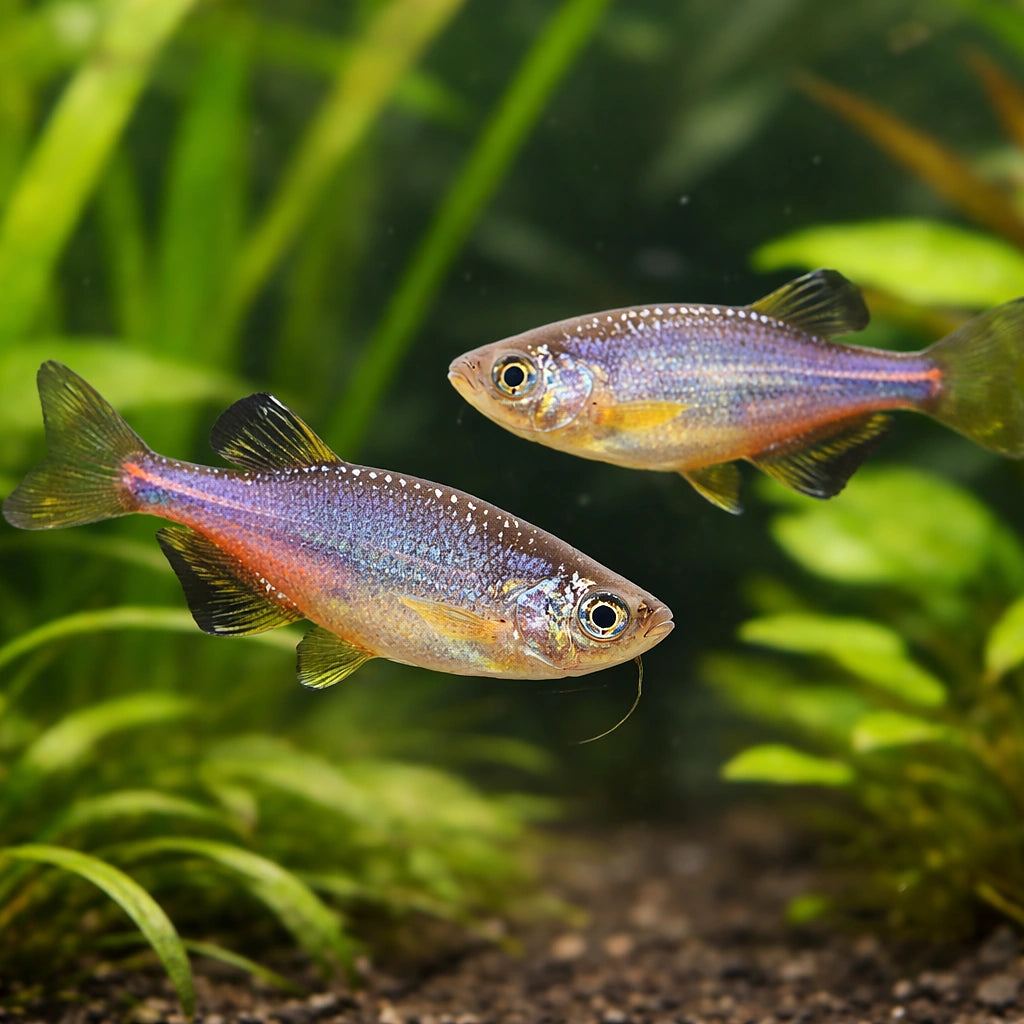
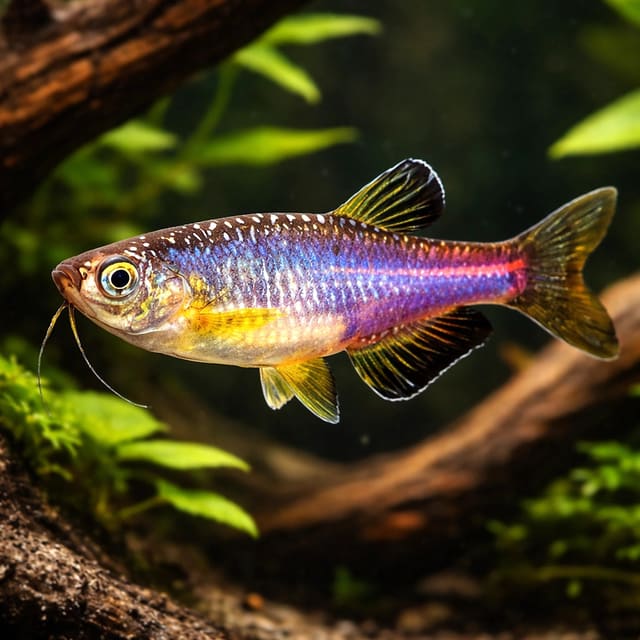
A Pearl Danio (Danio albolineatus) — a less-famous cool-water schooler

A Pearl Danio. One of the four most-available cool-water schoolers in the UK trade, and arguably the most graceful. Silvery body with a subtle iridescent sheen. Photo: Tropical Fish Co warehouse.

Five things most "cold water fish" guides get wrong

  • "Cold water" in UK aquaristics means 16–22 °C, not actually cold. The category is more accurately called "temperate" or "sub-tropical". True cold-water fish (trout, native UK stream species) need 10–16 °C and chillers [5].
  • UK homes are warm enough for most "cold water" species without heating. Average UK living room sits at 18–22 °C year-round which is ideal for rosy barbs, white clouds, pearl danios. Only conservatories and unheated garages are problematic [5].
  • White Cloud Mountain Minnow is Critically Endangered in the wild. But 99% of UK stock is tank-bred, making it one of the most sustainable wild-threatened species to buy [3]. Buying from the ornamental trade does NOT harm wild populations.
  • Goldfish need 120 L minimum per fish. The small-bowl goldfish image common in UK culture pre-1990s is incompatible with modern animal welfare standards. Goldfish Society of Great Britain standards recommend 120 L for singletails, 200 L+ for fancies [6].
  • UK native fish are legal to keep with Environment Agency compliance. Minnows, sticklebacks, bullheads, three-spined sticklebacks — all can be legally kept in aquariums, but stocking from the wild requires awareness of the Wildlife & Countryside Act [4].

The 10 cool-water species in UK stock

Head-to-head: the cool-water species in UK trade

SpeciesScientific nameMin tankTemp rangeUK price
Rosy BarbPethia conchonius60 L16–24 °C£1–£3
White Cloud Mountain MinnowTanichthys albonubes40 L14–22 °C£2–£3
Pearl DanioDanio albolineatus60 L16–24 °C£2–£4
Zebra DanioDanio rerio60 L15–24 °C£2–£3
Blue DanioDanio kerri40 L18–24 °C£3–£4
Common GoldfishCarassius auratus120 L14–22 °C£4–£15
Fancy Goldfish (oranda, ryukin)Carassius auratus200 L+16–22 °C£15–£80
Paradise FishMacropodus opercularis60 L16–26 °C£5–£12
Hillstream LoachMultiple genera90 L20–24 °C£9–£25
Metallic TopminnowGirardinus metallicus40 L20–25 °C£3–£4

Rosy barbs + white clouds + danios are the three easiest entry-level choices. Goldfish need a dedicated setup.
The unheated-tank setup

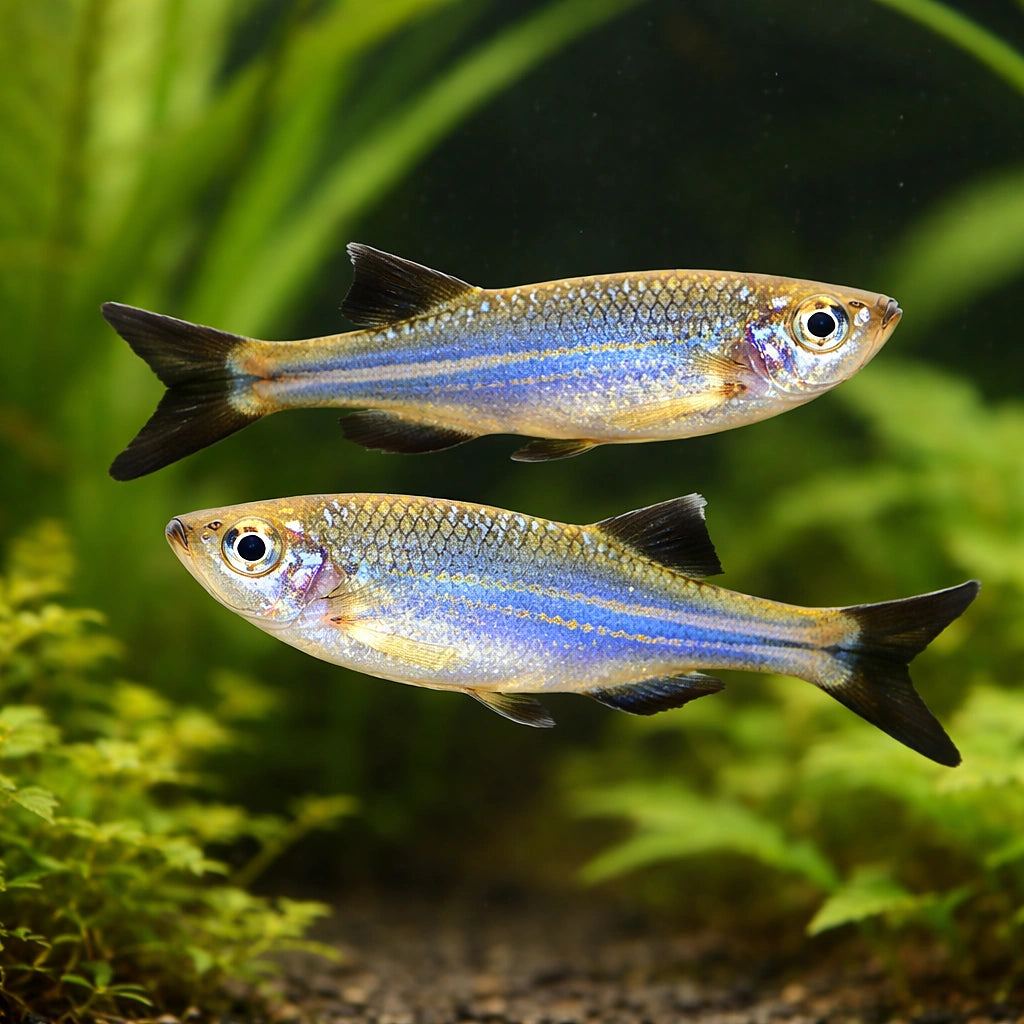
A Blue Danio (Danio kerri) in a planted tank

A Blue Danio. Zebra's lesser-known cousin — more subtle colouration, similar schooling behaviour, equally cool-tolerant. Photo: Tropical Fish Co warehouse.

Hardware differences vs a tropical tank

  1. No heater — main difference from tropical setups
  2. Thermometer still required — to confirm room-temp tracks tank-temp properly
  3. Standard filtration — 4–6× turnover per hour, no change
  4. Lighting + planting — identical to a tropical setup
  5. Substrate — same options; choose based on fish preference (goldfish like rounded gravel, barbs don't care)

Tank-size planning

  • 60 L — 6–8 rosy barbs + 6 cherry shrimp
  • 90 L — 8 rosy barbs + 8 white cloud minnows + 6 shrimp
  • 120 L — single common goldfish + invertebrates
  • 200 L — pair fancy goldfish + invertebrates
  • 400 L+ — community goldfish group (3+ fancies) or stream biotope (white clouds + hillstream loaches + corydoras)

Goldfish — their own category

Goldfish need their own rulebook because they share nothing husbandry-wise with tropical community fish:

Goldfish tank sizing (Goldfish Society standards)

  • Common + comet goldfish (single-tail): 120 L single, +80 L per additional fish. Grow to 20–30 cm.
  • Fancy goldfish (oranda, ryukin, fantail, ranchu): 200 L minimum. Slower-swimming, can't compete with single-tails for food, keep fancies separate.
  • Never a bowl. Bowls are incompatible with goldfish welfare — insufficient filtration, insufficient oxygen surface area, insufficient volume [6].

Goldfish-specific differences

  • Filtration: 8–10× turnover per hour (double the tropical standard) because of waste output
  • Feeding: high-protein pellets + vegetables (blanched peas, courgette) — NOT flake food alone
  • Plants: live plants get eaten. Use java fern + anubias tied to hardscape only.
  • Tank mates: single-tails with other single-tails; fancies with other fancies; mixing single-tails and fancies leads to fancy starvation

Watch: an unheated temperate community tank

A 120 L temperate community tank — rosy barbs + white clouds + pearl danios + hillstream loach + cherry shrimp. No heater. Room temperature tracks tank temperature around 19 °C.

Tank mates across the cool-water species

The three cool-water species that school together reliably:

  • Rosy barbs + pearl danios + white clouds — classic UK-unheated community, all peaceful, similar water parameters
  • Hillstream loaches + white clouds + zebra danios — the Asian stream biotope combo
  • Blue danios + pearl danios + metallic topminnow — a subtler-colour community for aquascape display

Plus shrimp: Amano and neocaridina cherry shrimp both tolerate cool-water tanks. Nerite snails work. Mystery snails can too.

Buying cold water fish from UK shops

Cool-water fish are stocked more widely than most specialist tropicals — but the husbandry gap between a well-kept shop tank and a poorly-kept one is bigger than for tropicals. Cold water forgives more mistakes but exposes neglect faster.

Welfare check before any cold-water purchase

MarkerGoodBad
SubstrateSmooth gravel or sandSharp crushed quartz
Stocking density< 1 cm fish per 2 LOvercrowded, cloudy water
Shared water systemSpecies-isolatedCentral sump across all tanks
Fish behaviourActive mid-water swimmingHanging at surface or bottom
Goldfish size8+ cm well-finned4 cm pinched specimens
Staff knowledgeNames the species at genus"Just a goldfish"
Tank cyclingEstablished 6+ weeksNew-feeling, clear glass everywhere

Use this for any shop — ours included. The best retailer for cold-water fish is the one that passes the welfare check, not the one with the biggest sign or the lowest prices.

APHA + Environment Agency — the UK rules most buyers don't know

Species categoryUK legal to keep?Notes
Goldfish varieties✓ YesWelfare rules apply; pond licence for large outdoor stock
White cloud minnows (tropical)✓ YesTank-bred trade only
Common native UK fish (sticklebacks, minnows, bullheads)✓ Yes with careEnvironment Agency guidance applies [4]
Non-native species listed on EU IAS✗ NoSome catfish + fish formerly in the trade now banned
Wild-caught UK native fish✓ with conditionsCheck local Wildlife & Countryside Act restrictions
Koi carp✓ YesImport + movement rules apply via APHA
Piranha + other banned species✗ NoMulti-species Dangerous Wild Animals Act restriction

Before buying any unusual cold-water species, check the current Environment Agency + APHA lists — the "banned species" register updates occasionally and a dealer stocking a banned species is operating outside the law.

UK coldwater + native-fish community

  • Goldfish Society of Great Britain — UK's primary goldfish organisation, show standards + husbandry guides
  • UK Aquatic Plant Society — though plant-focused, has active temperate-fish keepers
  • Native Fish Project — UK native species interest group
  • Practical Fishkeeping Pond Features — goldfish + koi coverage
  • Reddit r/goldfish — international but UK-active

When your cool-water fish arrive — delivery protocol

Cool-water fish ship better than most tropicals because lower metabolic rates produce less ammonia in the bag.

  1. Float bag 20 minutes sealed — temperature equalisation
  2. Drip-acclimate 30 minutes (shorter than tropical — cool species tolerate pH/TDS shifts better)
  3. Check bag water temperature against tank — release if within 2 °C, otherwise re-float
  4. Net into tank (not pour)
  5. Lights off 2 hours
  6. No feeding 24 hours

Ready for more?

For broader beginner coverage, see our best beginner tropical fish guide — some of those species overlap with cool-water tolerance.

For setup basics, the first tropical tank care guide and the water chemistry care guide apply directly to cool-water tanks.

Shopping the full range? The goldfish & coldwater hub has every species in stock today, including fancy goldfish varieties not listed above.

Related categories

Visual route into the rest of our UK live-fish range.
Frequently asked questions

Species that thrive at 16–22 °C — not truly cold (5–10 °C) but cooler than standard tropical. Most UK homes sit at 18–22 °C year-round, making this the natural range for an unheated tank. True coldwater species (native UK fish, some subarctic species) prefer 10–16 °C and usually need a chiller.
Yes — all aquarium fish need biological filtration regardless of temperature. Cold water slows bacterial metabolism slightly, so cycling a cold tank takes 6–8 weeks vs 4–6 for tropical. Filter sizing is identical: 4–6× tank volume/hour flow rate.
Not long-term. Goldfish are high-waste output fish that need large-volume + aggressive filtration; tropical community fish are generally smaller and have different feeding behaviours. A single common goldfish produces more waste than 10 tropical tetras. Temperature tolerance overlaps but husbandry styles don't [6].
No — they're famously cool-tolerant (14–22 °C range) [2]. In a standard UK flat, white clouds thrive at room temperature. They're one of the two textbook 'first unheated aquarium fish' species alongside rosy barbs.
120 L minimum for a single common goldfish, 200 L+ for a pair or a fancy goldfish (orandas, ryukins, fantails) [6]. Goldfish grow to 15–30 cm and produce significant waste. The 'small bowl' goldfish image is outdated and welfare-problematic.
Rosy barbs (Pethia conchonius). Hardy, tolerant of 14–26 °C, peaceful community fish, eat anything, show bright colouration, and come in several colour strains (gold, diamond, long-fin). A group of 6 in a 60 L unheated tank is the classic UK starter setup [5].
Yes, with care. Sticklebacks (Gasterosteus aculeatus), minnows (Phoxinus phoxinus), bullheads, and several other UK natives are legal to keep with the right Environment Agency compliance [4]. They're generally best in species-specific biotope tanks rather than mixed community setups. Native-fish keeping is a specialist niche within UK aquaristics.
They tolerate cool water (15–24 °C) but aren't truly coldwater — they're tropical fish with an unusually wide thermal range. In a UK room-temperature tank they'll thrive without a heater; in a 5 °C conservatory they won't. The distinction matters when planning an unheated setup.
Usually not. Cool water holds more dissolved oxygen than warm water, so well-filtered cold tanks rarely have oxygen issues. The exception: heavily stocked goldfish tanks, where waste load consumes oxygen fast — add an airstone if you keep fancy goldfish at 200 L+ density.
Critically Endangered [3], yes — but farm-bred for the ornamental trade in volumes that make them the most common coldwater community fish in UK shops. Almost every white cloud you'll find in the UK is tank-bred, not wild-caught. Conservation status is a wild-populations issue, not a trade-supply one.

Sources & further reading

Material factual claims cite the sources below; store policy and cautious inference are labelled in the article. Sources are grouped by type so you can judge their weight at a glance.

Scientific database (2)

  1. [1]
    Froese, R. and D. Pauly (Eds.) (2024). Carassius auratus — Goldfish. FishBase. View source

    Source for goldfish water parameters, size, and lifespan data.

  2. [2]
    Froese, R. and D. Pauly (Eds.) (2024). Tanichthys albonubes — White Cloud Mountain Minnow. FishBase. View source

    Temperate-fish parameter reference.

Conservation authority (1)

  1. [3]
    (2023). White Cloud Mountain Minnow — IUCN status. IUCN. View source

    Conservation context — Critically Endangered in wild, farm-bred trade abundant.

Hobbyist reference (2)

  1. [5]
    Nathan Hill (2023). Coldwater fish for unheated tanks — UK guide. Practical Fishkeeping. View source

    UK hobbyist perspective on coldwater species selection.

  2. [6]
    (2023). Goldfish Society of Great Britain — husbandry standards. Goldfish Society of Great Britain. View source

    UK goldfish breeder standards — cited on fancy goldfish tank sizing.

Expert video (1)

  1. [7]
    Mark Dos (2023). Setting up a temperate aquarium — no heater needed. MD Fish Tanks (YouTube). View source

    Video reference for temperate tank setup.

Government / regulatory (1)

  1. [4]
    (2024). Keeping native fish species — UK regulations. Environment Agency. View source

    UK regulatory reference on native species keeping.

Spotted something that needs a fix?

Fishkeeping moves fast and we want every guide spot-on. If you think something here is wrong, out of date, or could be clearer, tell us — our team reads every message and updates the page.

Suggest an edit
Connor Boyle
Written by

Connor Boyle

Marine & Coldwater Specialist · 9+ years in the hobby

Connor kept a reef aquarium for four years before switching to coldwater native fish and goldfish — he now runs a 400-litre river-community tank modelled on the Thames chalk streams. He writes Tropical Fish Co's coldwater, native-UK, and future marine guides.

Coldwater freshwater (native UK)Goldfish (single-tail, fancy)Stream biotope aquariumsTemperate invertebratesMarine fish-only (legacy)