Easy
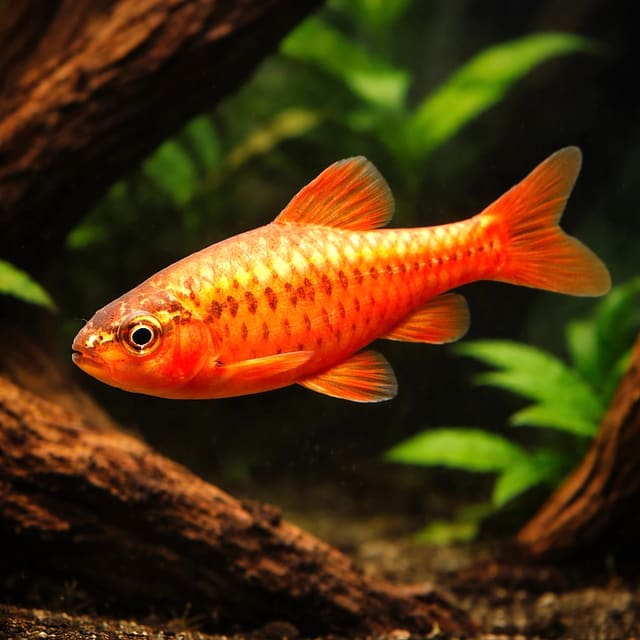
Albino Cherry Barb (Rohanella titteya)
20–27°C · pH 6–8 · 54L
£2.99
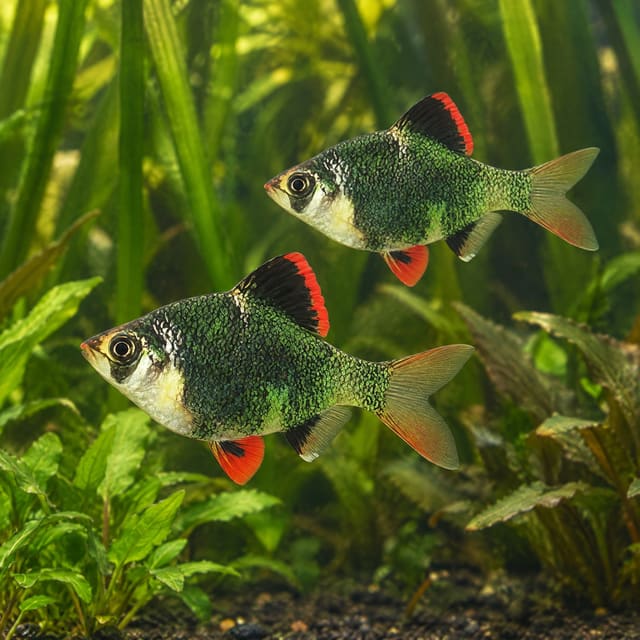
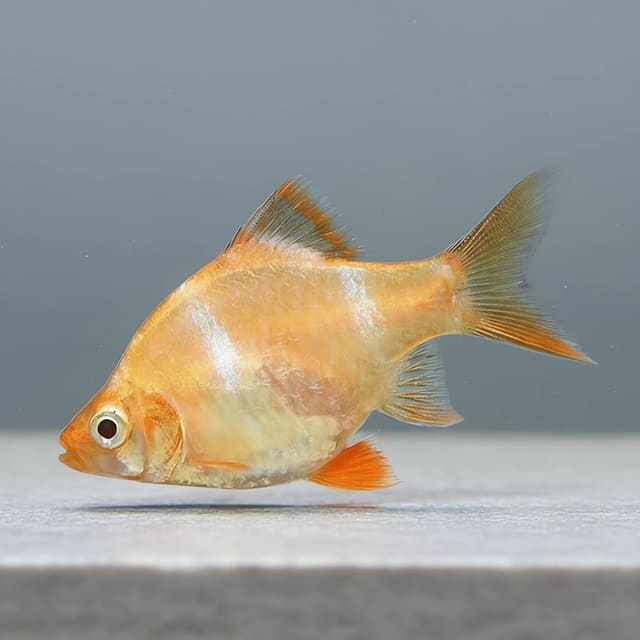
The Barbus tetrazona platinum green (Barbus tetrazona) is a platinum-green tiger barb in Cyprinidae from Sumatra and Borneo that reaches 7 cm total length. It suits keepers prepared for at least five active fish, an 80 × 30 cm aquarium base and the 20–26°C, pH 6.0–8.0 and 5–19 dGH overlap of FishBase and Seriously Fish. Sold individually in 1.8-2.5 cm, 2,5 cm, 3 - 4 cm and XL sizes.
Adult size is the maximum length this species reaches at full maturity (scientific sources). The livestock you receive will be younger and smaller — pick a size above for the actual shipping size. Product-photo provenance and any image-specific limitations are stated on the listing.
Shoaling fish: kept in a group they feel safer, stay calmer and show their best colour.
Minimum of 2 per order.
The Barbus tetrazona platinum green (Barbus tetrazona) is a platinum-green tiger barb in Cyprinidae from Sumatra and Borneo that reaches 7 cm total length. It suits keepers prepared for at least five active fish, an 80 × 30 cm aquarium base and the 20–26°C, pH 6.0–8.0 and 5–19 dGH overlap of FishBase and Seriously Fish. Sold individually in 1.8-2.5 cm, 2,5 cm, 3 - 4 cm and XL sizes.
Adult size is the maximum length this species reaches at full maturity (scientific sources). The livestock you receive will be younger and smaller — pick a size above for the actual shipping size. Product-photo provenance and any image-specific limitations are stated on the listing.
Maintain these water conditions for optimal health and vibrant colors
The Barbus tetrazona platinum green (Barbus tetrazona) is an ornamental platinum-green tiger barb, a lively freshwater member of the carp and minnow family from Sumatra and Borneo. It suits a keeper prepared to maintain at least five active fish, provide purposeful swimming space and avoid vulnerable companions. FishBase now lists it as Puntigrus tetrazona, with Barbus tetrazona treated as a synonym.
FishBase records a maximum of 7 cm total length for male or unsexed fish. Treat that 7 cm figure as the decisive adult planning reference rather than judging the aquarium from the smaller dispatch size. Keep at least five, using an aquarium base of at least 80 × 30 cm or equivalent. For routine care, use 20–26°C, pH 6.0–8.0 and 5–19 dGH; these values are the overlap of FishBase’s recorded environment and Seriously Fish aquarium guidance.
| Suits | Not suited to |
|---|---|
| A group of at least five | Keeping one fish alone |
| An 80 × 30 cm base or larger | Aquariums below the smallest stated footprint |
| Robust fish able to match its pace | Timid or slow-moving fish |
| Open swimming room with structured cover | Long-finned companions |
Seriously Fish recommends an 80 × 30 cm base or equivalent as the smallest considered, corresponding to about 72 litres, and gives a separate 6 cm standard-length figure. Use the FishBase 7 cm maximum for adult scale and the 80 × 30 cm footprint for practical housing.
This is a gregarious, boisterous barb that forms loose hierarchies. Its energetic social behaviour requires more planning than its modest body length might suggest. You can compare it with other fish in our current barbs collection, but assess each species separately rather than assuming all barbs behave alike.
One purchase supplies one animal in the size selected on the page. The live size selector lists 1.8-2.5 cm, 2,5 cm, 3 - 4 cm and XL. Use that selector to make the final size choice without treating a dispatch label as an adult-size claim.
The size you select is the size supplied, not the adult size. A 2,5 cm fish therefore still needs an aquarium planned around the recorded 7 cm maximum, a group of at least five and the behaviour of every companion. The 1.8-2.5 cm and 3 - 4 cm labels are bounded dispatch ranges. XL is a named dispatch size, so base the housing decision on the adult planning values rather than converting that label into an assumed measurement.
Sex is guaranteed only when the selected option explicitly states male or female. This Barbus tetrazona platinum green listing has no sex-guaranteed option.
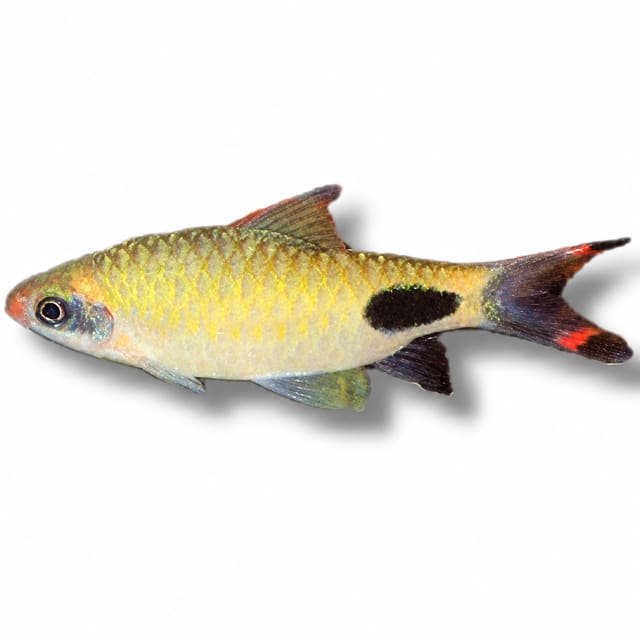
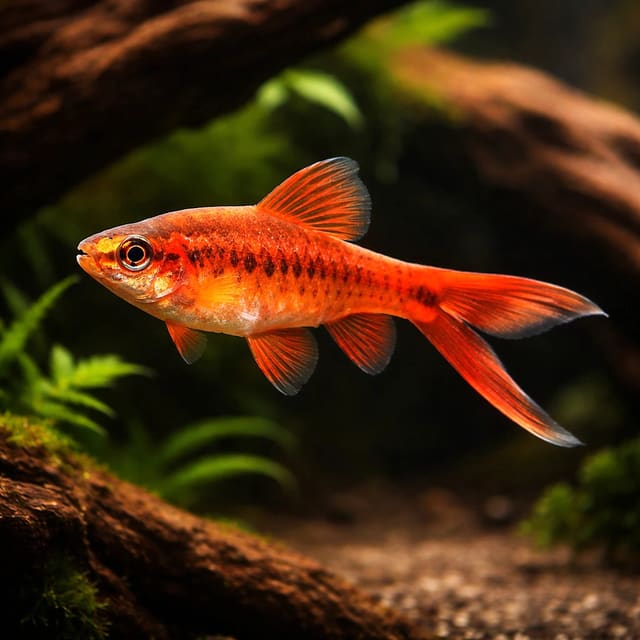
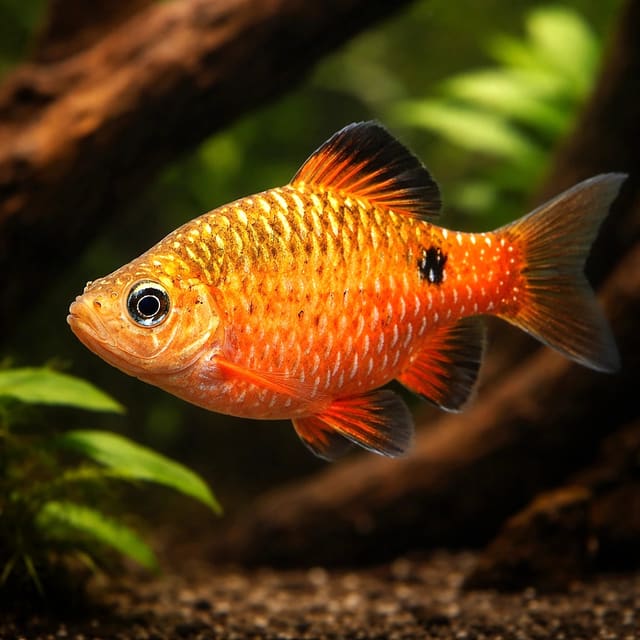
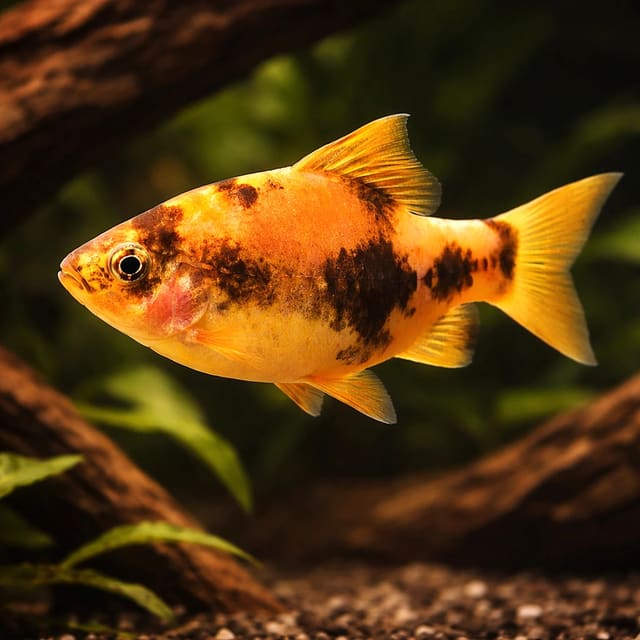
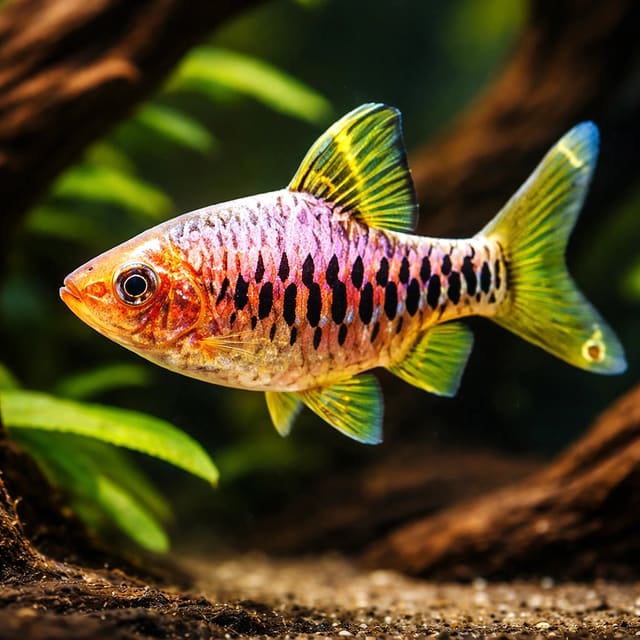
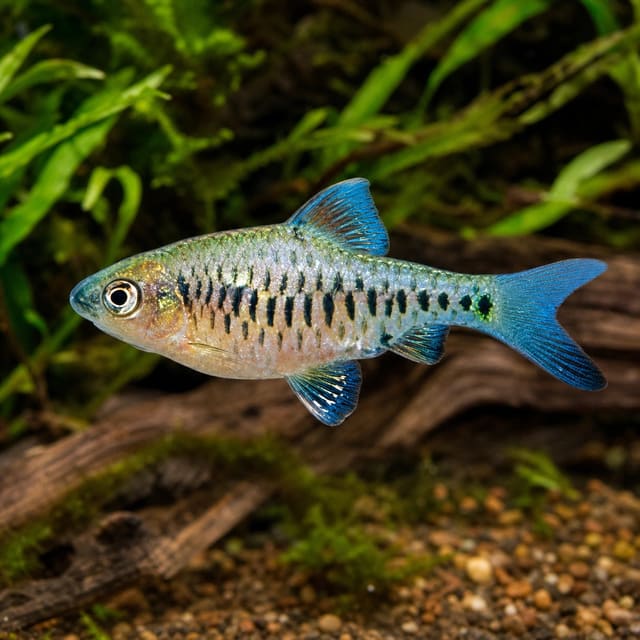
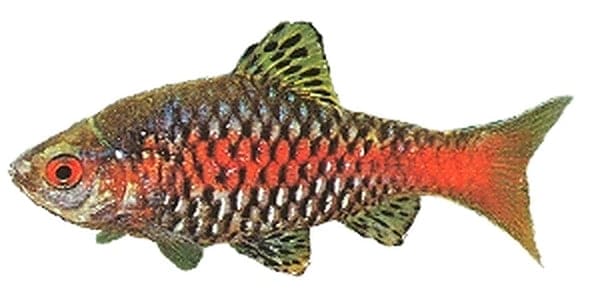
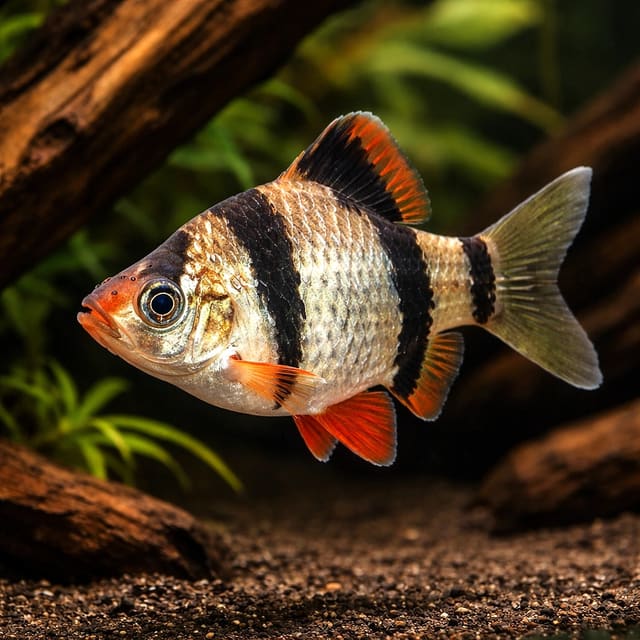
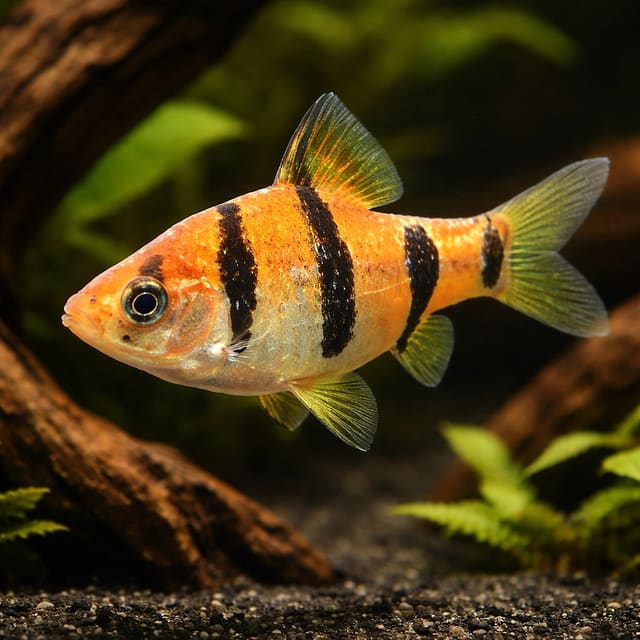
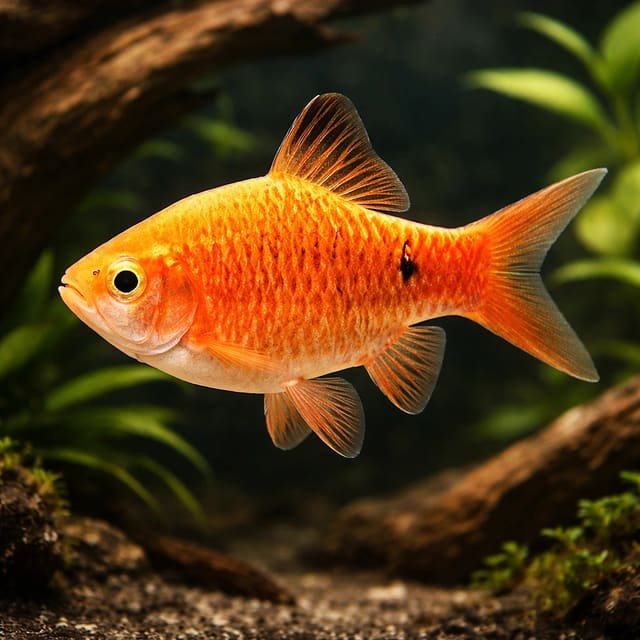
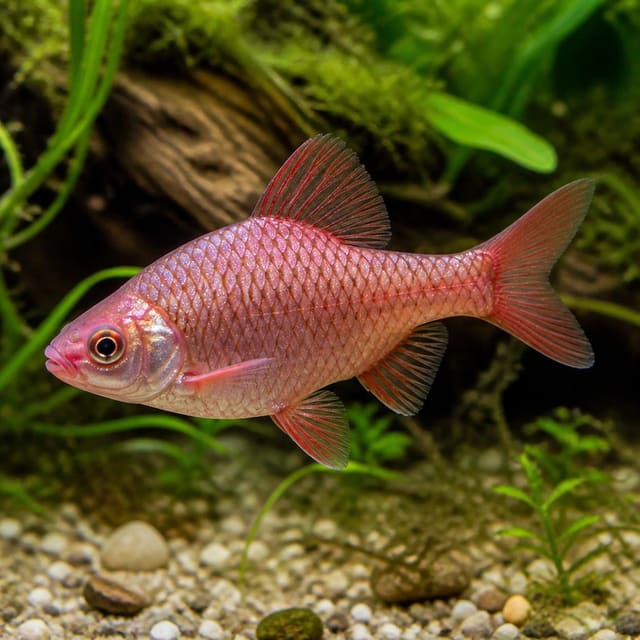
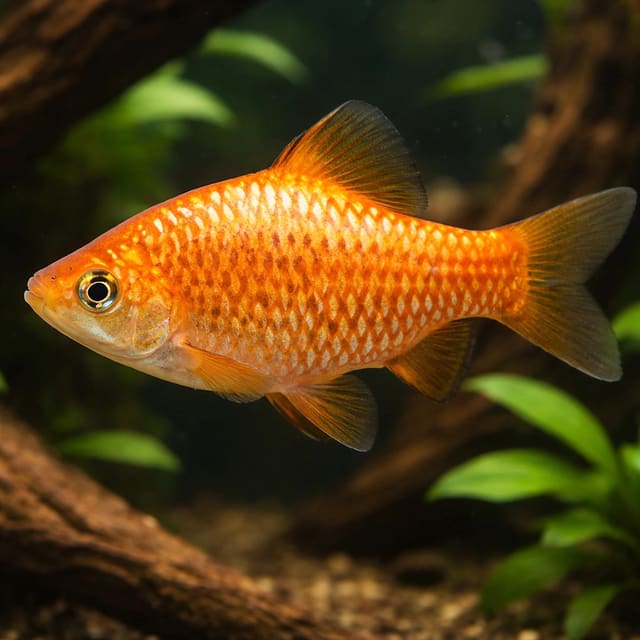
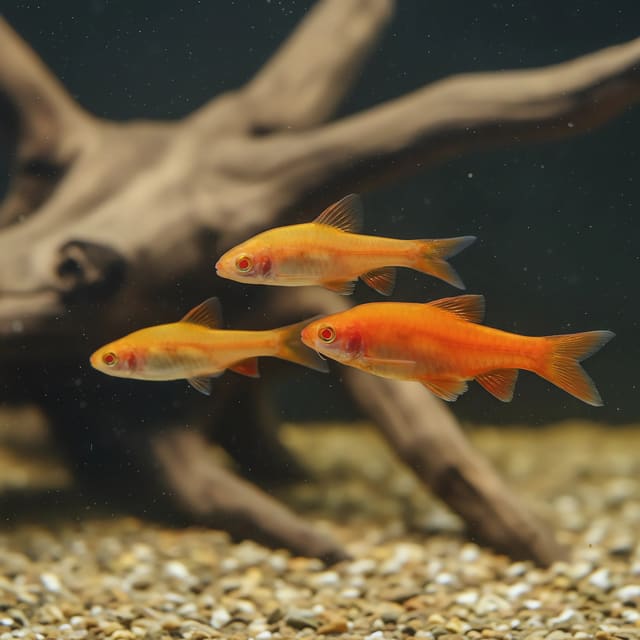
The gallery images are representative of this type of animal rather than photographs of the exact animal supplied, so colours can look slightly different from the live animal.
Keep the visual reference, sex terms and purchase quantity as separate decisions: the image illustrates the type of fish, the live selector defines the dispatch size, and one purchase supplies one animal. For dispatch days, Live Arrival Guarantee terms and claim steps, read our delivery and Live Arrival Guarantee policy before ordering.
Start with horizontal room. A base measuring at least 80 × 30 cm, or an equivalent footprint, gives this active barb usable swimming length and sets the smallest practical reference at about 72 litres. Volume alone can hide an unsuitable shape: a tall aquarium may hold the same number of litres while offering less uninterrupted horizontal space.
| Area | What to provide |
|---|---|
| Swimming route | A clear horizontal path across the aquarium |
| Cover | Floating or overhanging vegetation |
| Structure | Driftwood roots or branches |
| Filter flow | Turnover suited to the full aquarium volume |
Décor style is flexible, but a well-decorated aquarium tends to show the fish’s colour more effectively. Floating or overhanging plants and driftwood roots or branches are particularly useful because they add visual structure without filling every part of the swimming route. Arrange them around the edges or towards the rear, then look through the aquarium from end to end. The fish should be able to move through open water without repeatedly meeting a wall of ornaments.
Use the footprint as a floor, not as a target that overrides stocking. A worked example is a tank with an 80 × 30 cm base and about 72 litres: that meets the smallest dimensions considered for the species, but the finished stocking must still leave room for at least five barbs and any companions. Adding more fish, bulky décor or territorial species may justify a larger aquarium even though the basic footprint has been reached.
Plan the entire group at adult scale before buying the first member. Mark out the proposed base dimensions if necessary, list the adult sizes of existing fish, and identify which areas they occupy. This practical check exposes crowding that a simple litre total can miss. It also helps preserve the combination this barb needs: open movement, planted or woody cover and enough separation for individuals to move through their loose hierarchy.
For routine aquarium care, hold Barbus tetrazona platinum green between 20 and 26°C, at pH 6.0–8.0 and hardness of 5–19 dGH. This is the overlap of FishBase’s recorded environment and Seriously Fish aquarium guidance. Choose a stable point within every resident’s requirements and keep the aquarium there.
Begin with measured tap and aquarium water. If an established aquarium remains at 24°C, pH 7.2 and 10 dGH, all three readings sit inside the stated overlap. That makes stability and community compatibility the next decisions. Moving pH simply to reach the middle of the range would add change without creating a clear care benefit.
| Reading | Action |
|---|---|
| 20–26°C | Hold a steady value shared by every resident |
| pH 6.0–8.0 | Compare the measured value with the whole community |
| 5–19 dGH | Use the actual hardness when selecting companions |
| Ammonia or nitrite detected | Pause additions and address filtration and water quality |
Commercial strains tend to be adaptable across the wider chemistry range described by Seriously Fish. Check actual measurements rather than relying on regional descriptions such as soft or hard water. Our water chemistry guide explains what the main readings mean, while the water matcher lets you compare measured aquarium values with the care range.
Temperature, pH and hardness are only part of the decision. Ammonia and nitrite should remain at zero because both are toxic. A test result outside the intended range calls for a measured response: confirm the reading, inspect the filter and review recent stocking or feeding changes. Avoid making several rapid adjustments at the same time, because simultaneous changes make it harder to identify the cause and expose fish to extra instability.
A well-set-up biological filter is essential. The RSPCA explains that fish release toxic ammonia; beneficial filter bacteria convert it to nitrite and then to the safer nitrate. That biological process must be established before this barb group is introduced and protected throughout routine maintenance.
Seriously Fish uses turnover of four to five times the aquarium volume per hour for this species. In the approximately 72-litre example, that works out at 288–360 litres per hour, rounded in its guidance to a filter rated around 290–360 lph. Apply the same calculation to the actual aquarium volume rather than copying the example to every tank.
| Aquarium volume | Four to five turnovers |
|---|---|
| About 72 litres | About 290–360 lph |
| Your aquarium | Volume × 4 to volume × 5 each hour |
Rated flow is a selection aid, while installed performance depends on the finished system. Filter media, pipework and blockages can reduce circulation. Watch for areas where waste settles, check that water moves through the filter and keep the swimming route usable. The aim is effective filtration and circulation, not forcing the group to struggle constantly against an excessive current.
Mature the filter before adding livestock. Our first tropical aquarium guide sets out the preparation sequence. Confirm zero ammonia and zero nitrite before introduction, then increase the fish population gradually so the bacterial colony can adjust as feeding and waste rise.
Protect those bacteria during cleaning. If filter media needs attention, rinse it lightly in water removed from the aquarium; do not run it under the tap. Check for blockages as part of the weekly routine and avoid replacing all biological media together. A stable filter is the working foundation beneath every other care decision on this page.
Puntigrus tetrazona is probably omnivorous in nature, feeding mainly on aquatic invertebrates with smaller amounts of plant material and organic detritus. In the aquarium, build its diet around good-quality dried flakes or granules and add small live or frozen foods such as bloodworm, Daphnia and Artemia. Include dried foods with plant content rather than relying on one animal-based item.
| Food role | Examples |
|---|---|
| Regular dried food | Good-quality flakes or granules |
| Live or frozen variety | Bloodworm, Daphnia or Artemia |
| Plant contribution | Dried food containing additional plant material |
Variety serves two purposes: it reflects the mixed diet and helps maintain condition and colour. It does not mean offering every item at every feed. Rotate suitable choices while keeping the regular dried food dependable. Match particle size to the dispatch size and make sure several fish can reach food without all pieces landing in one crowded spot.
For a conservative portion benchmark, OATA’s tetra and pencilfish guidance gives broad group guidance for small aquarium fish: feed once daily and offer only what can be eaten within a few minutes. Use that benchmark while watching this barb group’s response. Uneaten food should not be left to decay because it adds avoidable waste to the filter.
Observe the whole group during feeding rather than judging the first fish to reach the food. If one area attracts all activity, distribute small portions across more than one point. If food remains after the group loses interest, reduce the next portion. If a fish repeatedly hangs back, check its swimming, breathing, body condition and position within the hierarchy before simply adding more food.
Keep feeding changes controlled. Introduce one new food at a time, retain a dependable staple and watch both acceptance and waste. This makes it easier to distinguish preference from a wider health or water-quality change.
Use the same weekly sequence so small changes are noticed before they become large ones. Test the water, inspect the fish, remove settled waste, change part of the water and check the filter for blockages. Record results when possible; a sequence of readings is more useful than trying to remember whether a value has shifted.
Keep replacement conditions reasonably aligned with the aquarium’s established routine. The objective is a useful partial water change without turning maintenance into a sudden environmental swing. Add the treated replacement water carefully and check that equipment resumes normal operation afterwards.
Nitrate management belongs in this routine as well. OATA’s benchmark is that nitrate should not exceed 20 mg per litre above the normal tap-water level. Compare aquarium water with the source water used for changes; the difference shows what is accumulating inside the system. Rising nitrate, visible waste or repeated filter blockage calls for a review of feeding, stocking and maintenance regularity.
Do not clean every surface and all filter media aggressively on the same day. Preserve the established biological filter while removing accumulated debris. A repeatable moderate routine protects stability more effectively than waiting for the aquarium to look dirty and then performing a disruptive overhaul.
Prepare the aquarium before the fish arrives. The filter should be established, temperature should sit within 20–26°C, and pH 6.0–8.0 and hardness of 5–19 dGH should suit every resident. Test ammonia and nitrite and proceed only when both read zero.
| Checkpoint | Ready condition |
|---|---|
| Footprint | At least 80 × 30 cm or equivalent |
| Filter | Established and operating normally |
| Ammonia | 0 mg per litre |
| Nitrite | 0 mg per litre |
| Temperature | Stable within 20–26°C |
| Community | Screened for pace, fins and adult space |
Increase the aquarium population gradually. Every addition raises feeding and waste, and the beneficial bacteria need to adjust to the greater load. Adding too many fish too quickly can leave the filter unable to process ammonia and nitrite effectively. The correct pace is therefore set by water tests and filter performance, not by how much open water appears to remain.
Plan a group of at least five before introduction. This species forms loose hierarchies, and fin-biting becomes more pronounced when numbers are insufficient or space is limited. Avoid a sequence that leaves one fish isolated for an extended period. At the same time, do not exceed the aquarium’s biological or spatial capacity merely to complete the group. If those requirements conflict, enlarge or prepare the aquarium before proceeding.
During the first week, compare behaviour with the fish’s active, boisterous baseline. Check that individuals swim normally, join feeding, breathe evenly and can move away from rivals. Test water promptly if several fish change behaviour together, because a shared change can point to the environment. Keep feeding measured while the filter adjusts, and avoid adding further livestock until readings and behaviour remain steady.
Daily observation should be brief but deliberate. Look at the group before feeding so appetite does not hide other behaviour. Healthy assessment is comparative: learn how these fish normally swim, breathe, colour up, feed and interact, then respond when that pattern changes.
| Change | First action |
|---|---|
| Hanging at the surface | Test water and inspect filtration |
| Sitting on the bottom | Check water, breathing and interactions |
| Erratic swimming | Test water and review recent changes |
| Faster or slower gill movement | Check water quality promptly |
| Darker or paler colour | Compare behaviour, stress and water readings |
| Reduced appetite | Check condition, hierarchy and water quality |
| White spots or fluffy growth | Seek qualified guidance before treatment |
| Fin or scale loss | Review aggression and physical condition |
Separate observation from diagnosis. A single sign can have more than one cause, so begin with measurements and recent events. Ask whether a new fish was added, feeding changed, the filter was cleaned or aggression increased. Check ammonia and nitrite first because both should remain at zero and both can harm fish.
Fin damage deserves both a health check and a compatibility review. This species has a reputation for fin-biting, particularly where group numbers are below five or space is limited. Identify whether damage is appearing on one vulnerable companion, among the barbs themselves or across several residents. That pattern helps direct the response towards stocking, layout, space or wider water quality.
Avoid selecting medication from appearance alone. Confirm water conditions and obtain appropriate professional guidance for disease concerns. If behaviour, breathing, appetite or visible condition changes and the cause remains unclear, contact us with the aquarium volume, current stocking, test readings and a description of the change.
Compatibility starts with behaviour, not a generic community label. Puntigrus tetrazona is relatively boisterous and is known for biting fins. That behaviour becomes more pronounced when fewer than five are kept or space is limited, so maintaining the group and providing the required footprint are part of protecting every resident.
Seriously Fish identifies many livebearers, cichlids and anabantoids as examples among the timid, slow-moving or long-finned forms that make poor companions. Keep these vulnerable forms under the avoid decision. An individual species from a broad family still needs its adult size, speed, fin shape, water range and normal temperament checked.
Comparably sized, robust pelagic cyprinids are among the stronger candidates. Balitorid, cobitid and nemacheilid loaches, along with benthic cyprinids such as Crossocheilus or Garra, are also identified as options. Many rainbowfishes and tetras may work where geography is not the organising theme, but each choice requires research before purchase.
A tank-mate name alone is never a guarantee. Screen the exact species and the particular aquarium, then watch how individuals use space after introduction. For a stocking assessment, contact us with the aquarium dimensions, volume, current residents, intended group and measured water values.
The smallest 80 × 30 cm base is a starting point for this barb, not automatic approval for every proposed community. Compatibility can fail through crowding even when each species fits the water range. Add together adult scale, social-group needs, swimming style, feeding pace and the amount of structure occupying the tank.
Use a worked comparison rather than relying on labels. A robust, comparably sized fish that shares the water range and moves confidently passes the first screen. It still needs enough adult space and must not create a feeding or territorial conflict. A peaceful but slow long-finned fish fails earlier because its pace and fin shape match the known risk factors.
Observe the group’s hierarchy as well as interactions with other species. Rival barbs may battle continually within their loose hierarchy. Space allows a fish to leave an encounter, while vegetation and branches can interrupt direct lines of sight. Neither layout nor extra volume replaces the need for at least five, but both reduce the pressure created when every fish is forced into the same route.
After any addition, check feeding access, fin condition, hiding and use of the swimming area. Persistent retreat, repeated chasing or new fin damage means the combination needs prompt reassessment. Pause further additions while you review group structure, space and the vulnerable fish’s needs.
Barbus tetrazona platinum green reaches a recorded maximum of 7 cm total length according to FishBase. Plan its aquarium around that adult figure rather than its smaller dispatch size.
Barbus tetrazona platinum green needs a base of at least 80 × 30 cm or equivalent, corresponding to about 72 litres, with an established filter and open horizontal swimming room.
Keep at least five Barbus tetrazona platinum green together. FishBase gives five or more for aquarium keeping, and insufficient numbers can make fin-biting more pronounced.
This fish suits a keeper who can maintain at least five active barbs, provide an 80 × 30 cm base or larger, keep water stable and avoid timid, slow-moving or long-finned companions.
Feed Barbus tetrazona platinum green good-quality flakes or granules, including some plant content, with small live or frozen foods such as bloodworm, Daphnia and Artemia. Offer measured portions once daily that the group eats within a few minutes.
Keep it at 20–26°C, pH 6.0–8.0 and 5–19 dGH; these routine values are the overlap of FishBase’s recorded environment and Seriously Fish aquarium guidance. Ammonia and nitrite should remain at 0 mg per litre.
Barbus tetrazona platinum green is boisterous and has a reputation for fin-biting, especially when fewer than five are kept or space is limited. Avoid timid, slow-moving and long-finned fish.
Consider comparably sized robust pelagic cyprinids, balitorid, cobitid or nemacheilid loaches, Crossocheilus or Garra species, and carefully screened rainbowfishes or tetras. Every choice must share its water range and match its pace.
Someone must be present to receive it. Start filming every delivery before opening the sealed parcel, continue while it is opened and show the fish still inside the sealed bag; then float the bag for 20–30 minutes before release and never pour the bag water into the aquarium.
Independently collected by Judge.me from customers who bought this item. All reviews are shown.
Healthy and doing well
Reply from Tropical Fish Co
Thank you Tracey. The platinum green tigers keep that pale metallic look best under decent lighting, and like all tiger barbs they're far better behaved in a group of six or more - in small numbers they turn their attention to other fish's fins. Glad they're doing well. - Tropical Fish Co