Easy
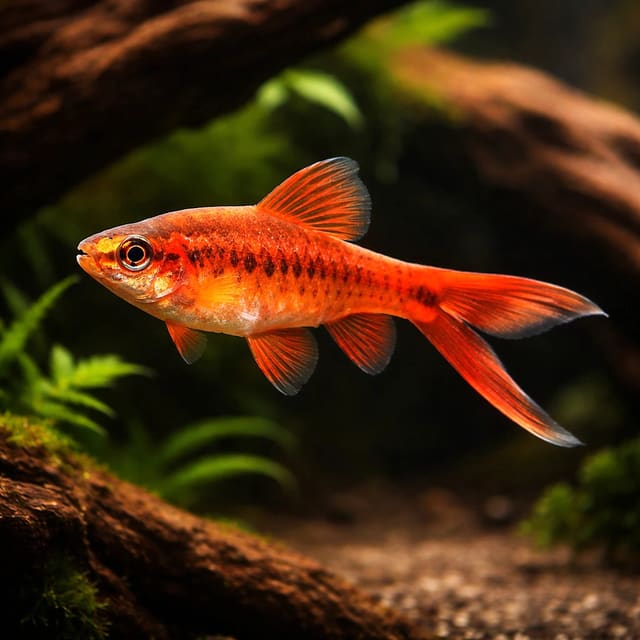
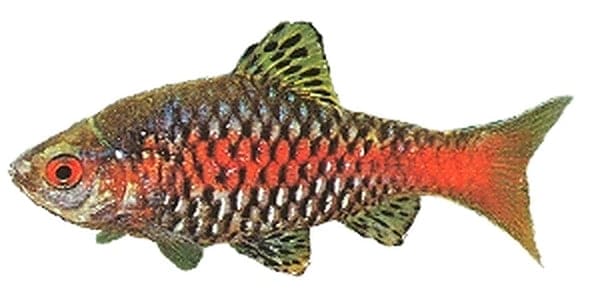
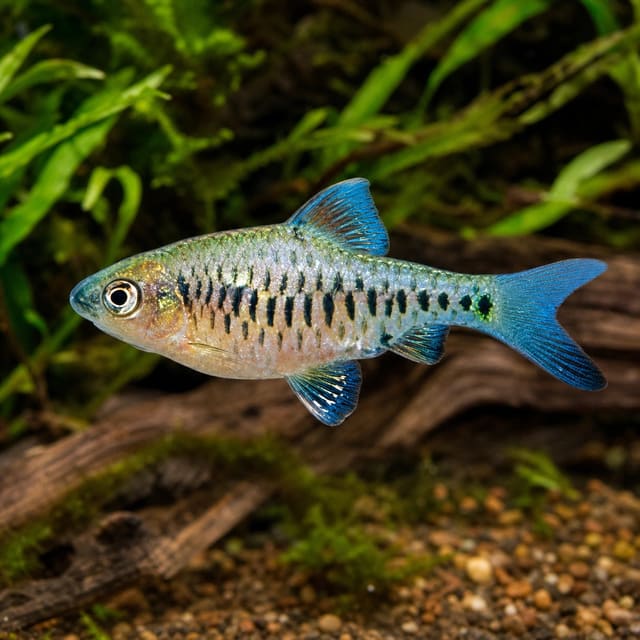
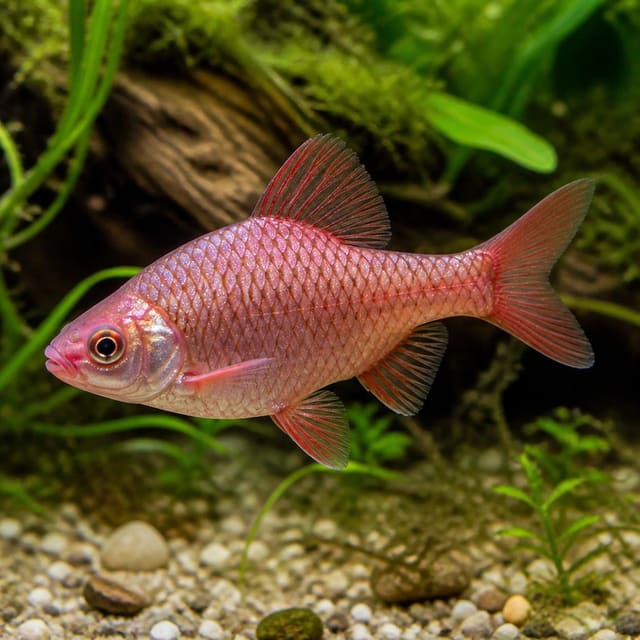
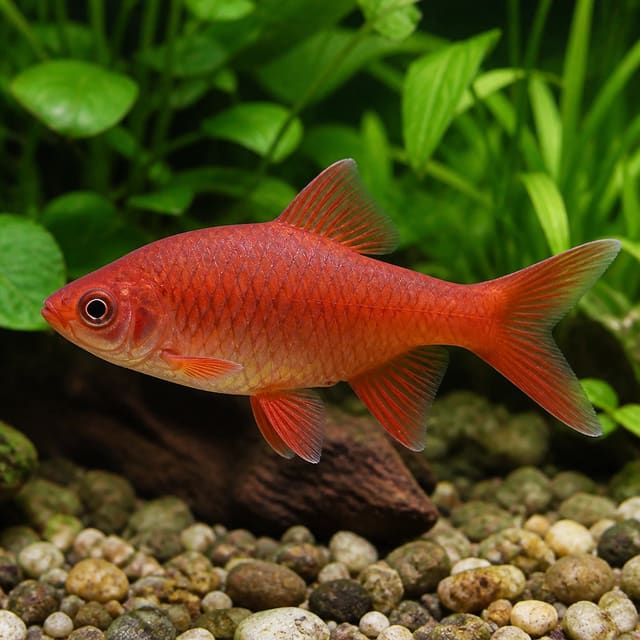
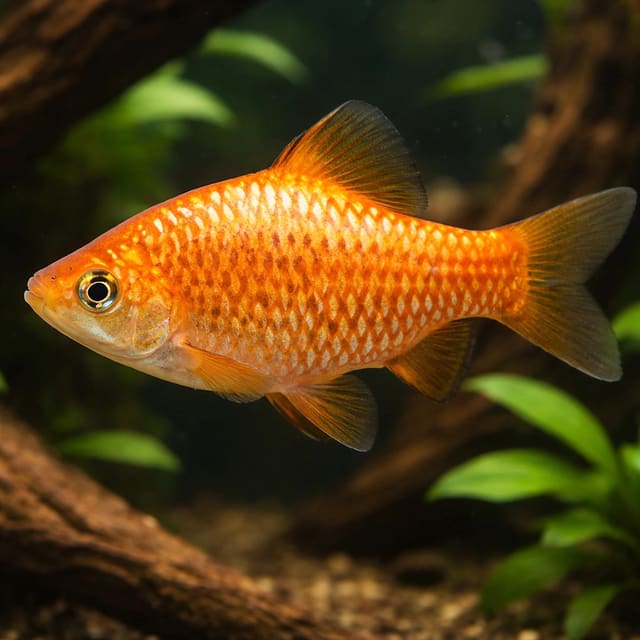
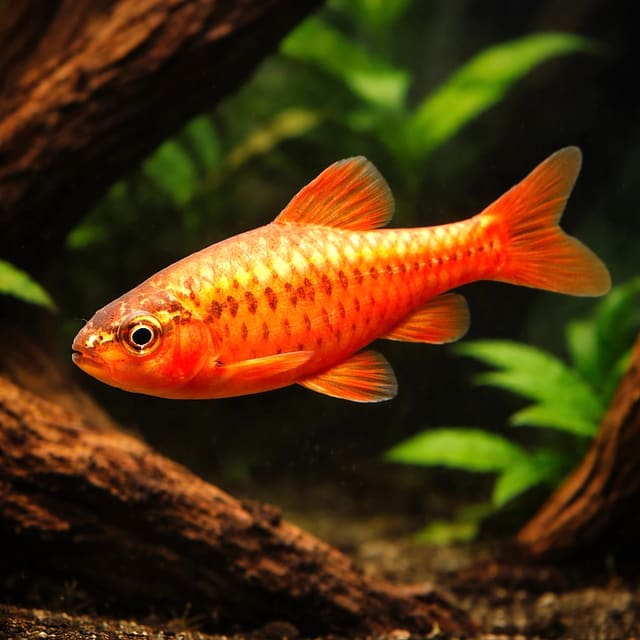
Cherry Barb (Barbus Capoeta titteya)
20–27°C · pH 6–8 · 54L
From £3.43Some sizes on sale

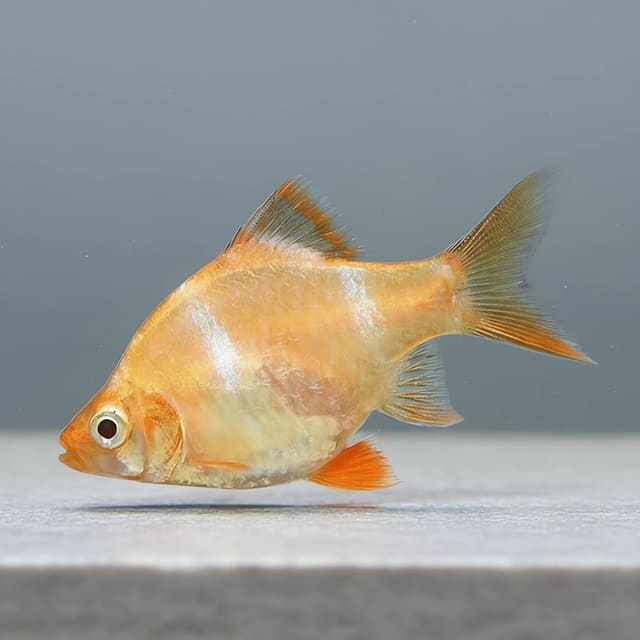
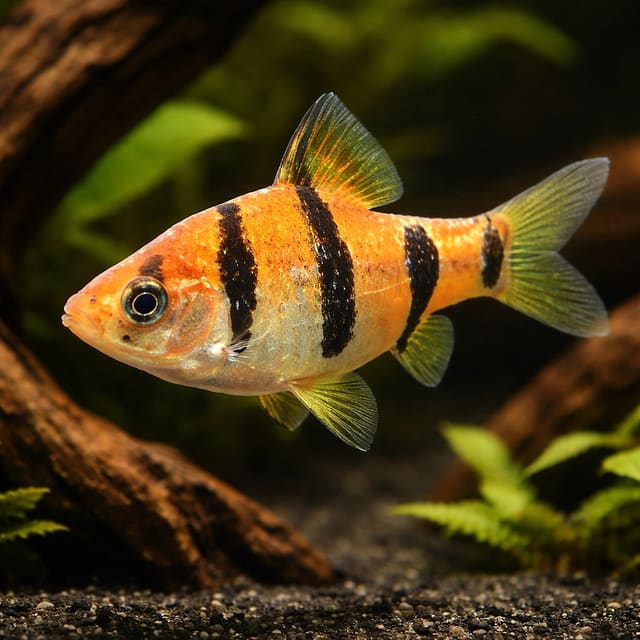
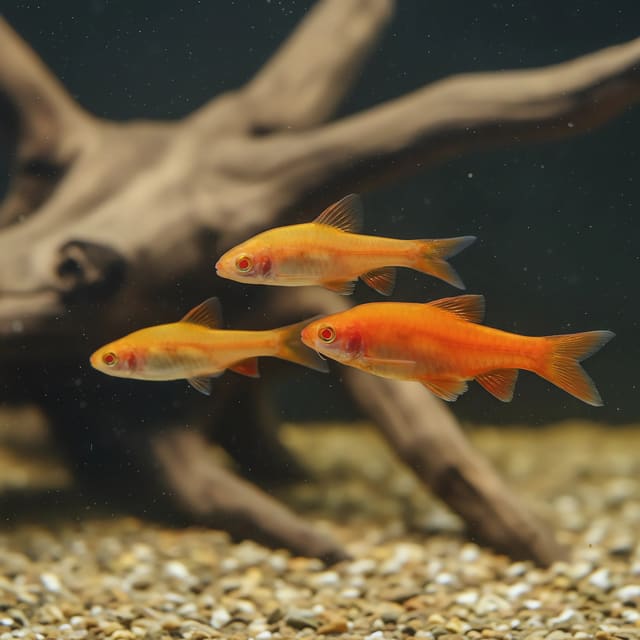
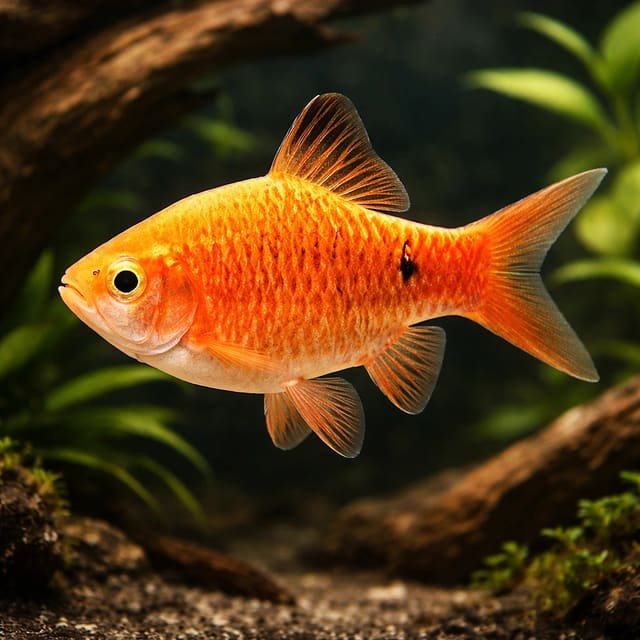
Tiger Barb (Puntigrus tetrazona) has bold stripes and lively schooling behaviour. Keep a group of at least eight in a mature aquarium of at least 80 litres, with open swimming space and companions chosen to avoid fin-nipping.
Adult size is the maximum length this species reaches at full maturity (scientific sources). The livestock you receive will be younger and smaller — pick a size above for the actual shipping size. Product-photo provenance and any image-specific limitations are stated on the listing.
Shoaling fish: kept in a group they feel safer, stay calmer and show their best colour.
Minimum of 2 per order.
Tiger Barb (Puntigrus tetrazona) has bold stripes and lively schooling behaviour. Keep a group of at least eight in a mature aquarium of at least 80 litres, with open swimming space and companions chosen to avoid fin-nipping.
Adult size is the maximum length this species reaches at full maturity (scientific sources). The livestock you receive will be younger and smaller — pick a size above for the actual shipping size. Product-photo provenance and any image-specific limitations are stated on the listing.
Maintain these water conditions for optimal health and vibrant colors
If you want a lively shoal that instantly adds movement, contrast, and personality to a freshwater setup, the Tiger Barb is an active shoaling fish. Puntigrus tetrazona is a bold, striped cyprinid from Sumatra and Borneo, famous for its black vertical bands, orange-red fins, and constant midwater activity. In a suitable aquarium, this species reaches around 7 cm, lives for roughly 6 years, and can suit a carefully chosen planted community.
This is not a fish for a tiny bowl or a random mixed community. Keep Tiger Barbs in an adequately sized group with stable water and plenty of swimming room; this helps spread chasing and reduce fin nipping. They can suit a prepared keeper who understands their lively behaviour and chooses compatible tank mates.
The Tiger Barb is a classic Southeast Asian barb long established in the aquarium trade. It belongs to the carp and minnow family rather than the African predator group that includes Hydrocynus vittatus or Hydrocynus goliath. That distinction matters because many online searches for “tiger fish” mix up peaceful-to-boisterous barbs, Siamese tigerfish, and larger predatory fish. In the aquarium hobby, Puntigrus tetrazona is valued for colour, movement, and social behaviour rather than sheer predatory power.
Puntigrus tetrazona comes from Southeast Asia, especially Sumatra and Borneo, where it inhabits shallow streams, floodplain margins, and calm areas connected to forest waterways. This Indonesian cyprinid is distinct from the much larger African fishes sometimes called tigerfish.
In the wild, they are found in clear to slightly turbid waters with moderate flow, leaf litter, submerged roots, and dense marginal vegetation. This explains why a planted aquarium works so well in captivity. These fish use plants and hardscape as visual breaks, but they still need open swimming space in the centre of the tank. Their natural waters can vary seasonally, which helps explain why they are fairly adaptable, though they still show their best colour and behaviour in stable conditions.
In the aquarium, give Tiger Barbs cover and a clear swimming lane, with stable water suited to the group.
Mimicking the natural habitat of Tiger Barbs improves health and reduces sparring. Use a planted layout with side and rear cover, a darker substrate, and a clear midwater swimming lane. This gives the group structure without making the tank feel cramped.
Successful Puntigrus tetrazona care starts with space, numbers, and flow. Do not judge aquarium size by the size of one fish. Although each fish is modest in size, they are fast, social, and constantly on the move. The practical tiger barb minimum tank size is 80 litres, but a larger setup of 100-120 litres is much better for a settled group and gives you more options for tiger barb tank mates.
Aquarium size depends on the whole group. A school of 8 is the baseline, and many keepers prefer 10 or more because this spreads chasing within the group. For that reason, the recommended tiger barb tank size is not just about adult body length; it is about swimming room and social structure. If you are planning a mixed community aquarium, think in terms of footprint as much as litres. Longer tanks work better than tall tanks because these fish occupy the middle region and race back and forth all day.
Choose a tank with enough length for the whole group. A larger aquarium is more stable, gives subdominant fish escape routes, and makes this species much more enjoyable to watch.
Stable tropical conditions are essential. The recommended water temperature is 23-27°C, with the sweet spot for most groups around 24-26°C. The normal temperature range is broad enough for flexibility, but sudden drops can dull colour and stress the fish.
For chemistry, aim for pH 6.0-8.0, though slightly acidic to neutral water often brings the best colour and behaviour. Tiger barb water conditions should be clean, well oxygenated, and low in nitrate. Suitable tiger barb water hardness is 5-19 dGH. Keep the water stable rather than chasing a single number.
Use efficient filtration with gentle to moderate circulation. An external canister or a quality internal filter works well, provided it turns over the tank volume several times per hour without blasting the fish into the glass. Because Tiger Barbs are energetic and feed enthusiastically, they produce more waste than many similarly sized tetras. Good mechanical and biological filtration helps keep the tiger fish aquarium stable.
A dark sand or fine gravel substrate shows off the stripes and red fins beautifully. Driftwood, branchy roots, and dense planting around the edges help break lines of sight. A planted layout works especially well with hardy plants such as Java fern, Anubias, Cryptocoryne, Vallisneria, and floating cover to soften the light. Leave the centre open so the fish can school properly.
Before adding Tiger Barbs, mature the biological filter and use water tests to confirm ammonia and nitrite have fallen to zero mg per litre and remain there; a fixed number of weeks does not prove readiness. Increase stocking gradually and keep checking both readings. In new systems, ammonia spikes often trigger stress, washed-out colour, and extra chasing. A mature filter makes this species far easier to keep.
The Tiger Barb is an omnivore with a broad appetite. they need a mixed diet of quality dry foods plus regular frozen or live supplements. A balanced tiger barb diet keeps them active, improves colour, and helps reduce food-related aggression.
In nature, the diet includes small invertebrates, organic debris, algae film, and plant matter. In captivity, the best routine is a varied omnivore menu: high-quality flakes or micro pellets as the staple, with daphnia, bloodworm, brine shrimp, and occasional blanched vegetable matter as extras. This is the easiest way to support healthy feeding behaviour without overloading the filter.
Feed a quality tropical flake or small pellet once or twice daily. Choose a food that sinks slowly or remains suspended in midwater, because these fish feed actively in the centre of the tank.
Frozen bloodworm, brine shrimp, daphnia, and mosquito larvae are excellent 2-4 times per week. These foods bring out stronger colour and help condition adults for spawning.
A little spirulina flake or blanched spinach can be useful. Avoid fatty mammal meats and oversized foods that the fish cannot swallow.
Healthy adult Tiger Barbs do not normally hunt tank mates, but they may harass weak fish, nip fins, or eat very tiny fry if given the chance. That is another reason to keep them in proper groups and with suitable companions.
| Time | Food | Amount |
|---|---|---|
| Morning | Quality tropical flake or micro pellet | Only what the group eats in 30-60 seconds |
| Evening | Frozen daphnia, brine shrimp, or bloodworm | Small portion, fully consumed within 1-2 minutes |
Ideal if you want to expand an existing school and maintain natural group behaviour.
A practical choice for keepers building a proper shoal from the start instead of keeping too few fish.
Overfeeding causes ammonia spikes, cloudy water, and increased aggression at mealtimes. Tiger Barbs are greedy feeders, so small portions are safer than one large dump of food.
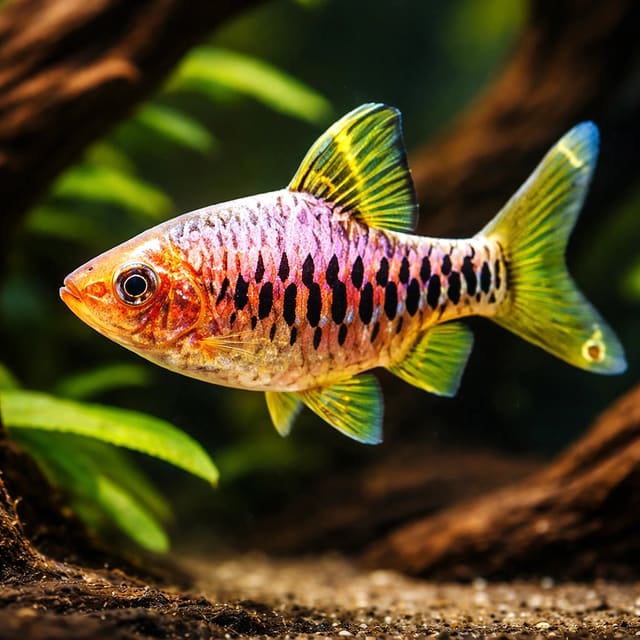
the Tiger Barb is easy to recognise. It has a deep, laterally compressed body, a pointed snout, and four bold black bars over a silver-gold to warm tan base colour. The fins and snout often show orange to red highlights, especially in settled males.
For adult planning, FishBase records a maximum length of 7.0 cm total length for male or unsexed Tiger Barbs. The Tiger Barb is a small aquarium cyprinid, not a large African tigerfish.
Sexing adults is fairly straightforward. Differences between males and females are most obvious when mature: males are slimmer and usually show brighter red on the nose and fins, while females are deeper-bodied with a fuller belly. Its scales and compact fins suit an active midwater fish.
Tiger Barbs can be boisterous and may nip fins, especially in undersized groups. Their reputation comes from fin nipping, chasing, and pecking-order behaviour, especially when kept in groups that are too small. Good tiger barb compatibility depends on numbers, tank size, and choosing fish that can handle their pace.
The best rule is to keep them as a proper school. The tiger barb school size minimum should be 8, and many aquarists find 10-12 even better. In a larger group, they focus on each other rather than pestering tank mates. This is why they are often recommended as active shoaling displays and why they remain one of the most popular schooling fish that keepers choose for busy tropical communities.
The best tiger barb tank mates are quick, robust, and not long-finned. Compatible fish include danios, many rasboras, rainbowfish, some loaches, and active bottom dwellers. They also work well with other robust barbs if the tank is large enough and the species have similar temperaments.
Long-finned fish are a poor match. Avoid bettas, fancy guppies, angelfish, and most slow gouramis. Goldfish and fancy guppies are poor tank mates: their long fins invite nipping, and goldfish also have different temperature and waste-management needs.
Tiger Barbs should live in a suitable group, with well-oxygenated water and mature filtration.
In an 80-100 litre tank, keep a species group of 8-10 Tiger Barbs. In 120 litres or more, you can build a suitable community aquarium with 10 Tiger Barbs plus a group of active bottom fish. In larger aquariums, carefully chosen robust schooling companions can be considered.
| Species | Compatible? | Notes |
|---|---|---|
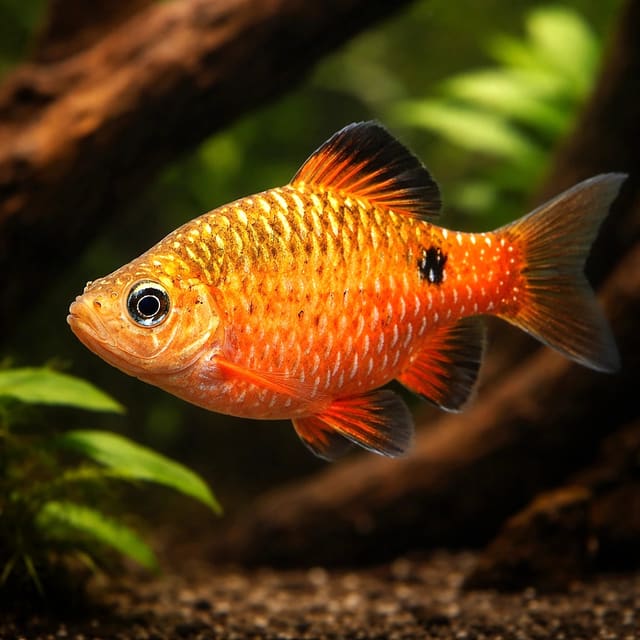
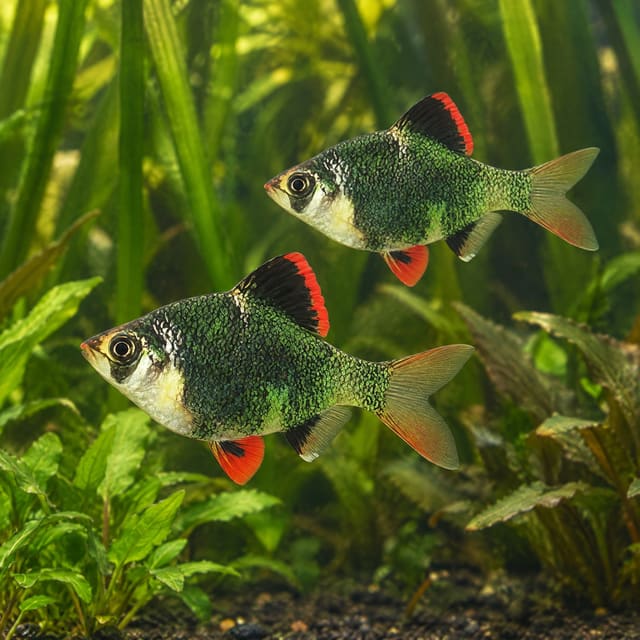
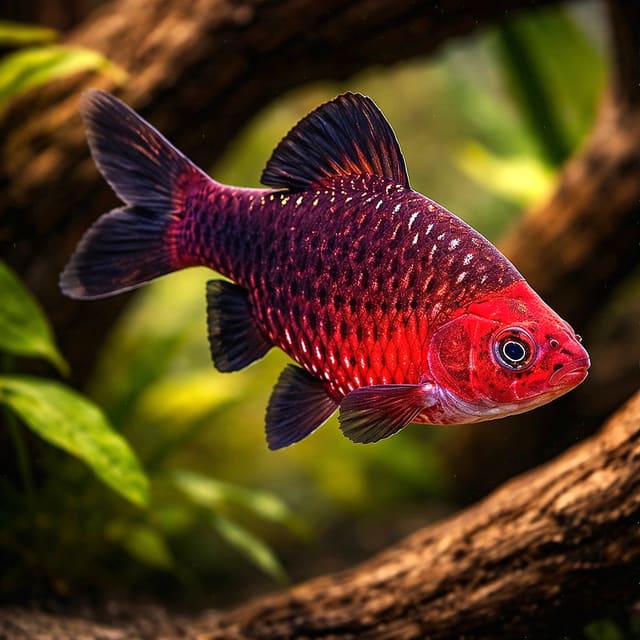
| Green Tiger Barb | ✅ Yes | Same species group behaviour; great for a mixed colour shoal in a large tank. |
| Ruby Barb | ⚠️ Caution | Possible in larger tanks with careful observation; match activity levels and avoid overcrowding. |
| Fancy Guppy | ❌ Avoid | Long fins trigger nipping and stress. |
| Goldfish | ❌ Avoid | Different temperature needs and high risk of fin damage. |
Always quarantine new arrivals for 2-4 weeks before adding them to a Tiger Barb tank. New fish that arrive stressed or weak are much more likely to be singled out by an established group.
Tiger barb breeding is very achievable for aquarists willing to use a separate spawning setup. This species is an egg scatterer, and adults will happily eat the spawn if you leave them with it. A mature female can produce several hundred eggs, although actual output varies.
Use a separate 40-60 litre breeding tank with soft to moderately soft water, slightly acidic to neutral pH, and a temperature near the upper end of the normal tiger barb temperature range. Fine-leaved plants, spawning mops, or a mesh base help protect the tiger barb eggs from hungry adults. Condition pairs or a small group on a rich tiger barb diet of frozen and live foods beforehand.
Spawning behaviour includes chasing, circling, and repeated passes through plants or mops. Males intensify in colour, especially around the snout and fins. Females become noticeably fuller with roe. This is the clearest way to distinguish male and female Tiger Barbs before spawning.
After spawning, remove the adults immediately. The eggs are adhesive and usually hatch quickly in warm water. Hatching often occurs within about 24-48 hours depending on temperature. Once free swimming, the fry need infusoria, liquid fry food, or newly hatched brine shrimp.
For better survival rates, dim the breeding tank after spawning and use a marbled or mesh base so the eggs fall out of reach. This simple change often improves the number of fry you raise because Tiger Barbs are enthusiastic egg eaters.
The term “tiger fish” causes confusion because it can refer to several very different fish. Some buyers mean Tiger Barbs, others mean Siamese tigerfish such as Datnioides microlepis or Datnioides undecimradiatus, and some mean African predators like Hydrocynus vittatus. For a home tropical tank, these are completely different choices.
| Feature | Tiger Barb | Siamese Tigerfish |
|---|---|---|
| Max Size | About 7 cm | Much larger, often 30 cm+ |
| Care Level | Moderate | Advanced |
| Temperature | 23-27°C | Warm tropical, species dependent |
| Best For | Active community aquariums | Large specialist predator displays |
| Feature | Tiger Barb | Green Tiger Barb |
|---|---|---|
| Max Size | About 7 cm | About 7 cm |
| Care Level | Moderate | Moderate |
| Temperament | Semi-aggressive | Semi-aggressive |
| Appearance | Classic striped gold body | Darker green-black sheen |
| Best For | Traditional barb displays | Modern, high-contrast planted tanks |
Good care is mostly about prevention. A healthy Tiger Barb is alert, fast, well coloured, and constantly engaged with the group. Observe each fish daily so changes in condition are noticed early.
Bright eyes, intact fins, strong appetite, stable schooling, and clear body stripes are all good signs. Males often show stronger red around the snout and fins. Fish that hover in corners, clamp fins, fade in colour, or breathe rapidly need attention.
Tiger Barbs can be prone to stress-related issues such as ich, fin damage from sparring, and bacterial infections in poor water. They are also reported to be somewhat susceptible to columnaris in warm, dirty systems. Because they are active feeders, deteriorating water quality can sneak up quickly if maintenance slips.
Start with water quality: test ammonia, nitrite, nitrate, temperature, and pH. Correct any issue before reaching for medication. Use a quarantine tank for sick fish when possible. Stable pH, clean water, and a varied diet do more for long-term health than reactive treatments alone.
Never medicate the display tank carelessly, especially if it contains invertebrates. Copper-based medications can be lethal to shrimp and may stress sensitive tank mates. Always confirm the diagnosis first.
Tiger Barbs are classic midwater social fish with a strong pecking order. Their natural behaviour is restless, inquisitive, and highly interactive. In a proper group, they spend much of the day weaving through plants, sparring briefly, and regrouping in loose formation. That makes them rewarding aquarium fish for people who enjoy movement rather than static display fish.
Understanding behaviour helps keepers plan the group. Keep them in groups of 8 or more, provide open swimming lanes, and avoid very timid or long-finned tank mates. This turns a potentially nippy fish into a far more balanced shoaler. In short, they are not random bullies; they are social fish that behave best when their environment matches their instincts.
When settled, they become one of the most entertaining options for a tropical community. They can suit keepers who plan stocking around the group's behaviour, not just the size of one fish.
This listing supplies one Tiger Barb per selected unit. Plan a suitable group of at least eight to ten fish; a pair or trio is not a substitute for a shoal.
Check the current livestock delivery and acclimation information before ordering. Transport can temporarily affect colour and behaviour, so settle new fish into a prepared, stable aquarium.
Order your Tiger Barbs today with confidence if you want a bold, active shoal that brings real movement to a planted tropical setup.
Independently collected by Judge.me from customers who bought this item. All reviews are shown.
Not such a good outcome with this fish. It died after 3 days.
Reply from Tropical Fish Co
<p>Marianne, I'm sorry - losing a fish three days in is exactly what we work hard to avoid. Tiger Barbs are normally robust, so a loss that early usually points to transit stress rather than anything that was wrong with the fish long term. That's still ours to put right. Please email <a target="_blank" rel="nofollow noopener" href="mailto:hello@tropicalfishco.co.uk">hello@tropicalfishco.co.uk</a> with your order number, or WhatsApp +44 7464 593131, and we'll arrange a replacement on your next shipment. We also help with anything that shows up in the first 48 hours, so please don't hesitate next time. - Reza, Tropical Fish Co</p>