Moderate
Denison Barb (Dawkinsia denisonii)
20–25°C · pH 6.8–7.5
£8.29

A striking, active Indian shoaling barb with a vivid red stripe and golden body that thrives in spacious, well-oxygenated aquariums. Moderate care, peaceful. 18-26C, pH 6.5-7.8.
Adult size is the maximum length this species reaches at full maturity (scientific sources). The livestock you receive will be younger and smaller — pick a size above for the actual shipping size. Product-photo provenance and any image-specific limitations are stated on the listing.
Puntius denisonii
Shoaling fish: kept in a group they feel safer, stay calmer and show their best colour.
Confirm your email, then we’ll send an availability message for this exact item if it returns within 180 days.
This request is only for this product—no newsletter or other promotions. A mail-provider retry may very rarely duplicate the same availability message. Unconfirmed addresses are removed after 48 hours. See our privacy policy.
A striking, active Indian shoaling barb with a vivid red stripe and golden body that thrives in spacious, well-oxygenated aquariums. Moderate care, peaceful. 18-26C, pH 6.5-7.8.
Adult size is the maximum length this species reaches at full maturity (scientific sources). The livestock you receive will be younger and smaller — pick a size above for the actual shipping size. Product-photo provenance and any image-specific limitations are stated on the listing.
Maintain these water conditions for optimal health and vibrant colors
Freshwater fish UK aquarists seeking an active, colorful shoaling species will find few fish as striking as Puntius denisonii, commonly known as the Denison barb or roseline shark. This spectacular cyprinid originates from fast-flowing hill streams in southwestern India, where it inhabits clear, oxygen-rich waters among rocks and submerged vegetation. Available for sale UK in sizes from 4-8cm, the species reaches approximately 12cm at maturity, displaying a vivid red horizontal stripe bordered by black along the body. Peaceful temperament, energetic swimming behavior, and compatibility with a wide range of community fish make this species highly desirable, though its specific water quality and space requirements demand attention. Moderate care level suits aquarists with some experience maintaining larger, active schooling fish.
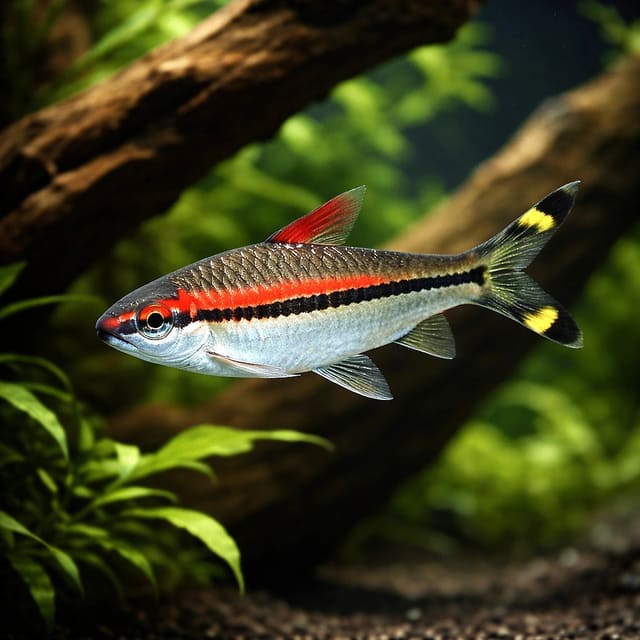
Puntius denisonii showcases one of the most eye-catching color patterns in freshwater fishkeeping. A brilliant red stripe runs horizontally from the snout through the eye to mid-body, bordered above and below by bold black lines. The body is torpedo-shaped and streamlined, colored silver-gold with metallic reflections. The dorsal fin features a striking red patch with black tips, creating a small "flag" effect. The caudal fin is deeply forked with yellow-green central rays bordered by black. Mature males develop slightly more intense coloration and marginally larger size than females, though sexual dimorphism is subtle. Juveniles display less vibrant red tones that intensify with maturity and optimal diet. Stress or poor water quality causes the red stripe to fade and the body to appear duller, making coloration an excellent health indicator. Overall, the sleek body and brilliant markings create a captivating display, especially when a group moves in synchronized formation.
This species inhabits fast-flowing hill streams, rivers, and rapids in the Western Ghats of Kerala and Karnataka, southwestern India. Natural habitats feature rocky substrates with cobbles, pebbles, and boulders, along with submerged wood and marginal vegetation. Water is clear, cool to warm (15-25°C), highly oxygenated, and ranges from slightly acidic to neutral. Current is moderate to strong, especially during monsoon seasons when water levels rise dramatically. During the dry season, fish concentrate in deeper pools with reduced flow but maintained oxygen levels. The species forms loose shoals that patrol open water and mid-depth zones, feeding on insects, insect larvae, crustaceans, and plant matter. Natural populations are threatened by habitat destruction and over-collection, making responsible sourcing and captive breeding efforts important for conservation.
A minimum 300-litre aquarium with a footprint emphasizing length (minimum 180cm) over height provides appropriate space for a shoal of 6-10 Denison barbs. This species is an exceptionally fast, active swimmer requiring ample open swimming areas alongside structured zones. Use fine sand or smooth gravel substrate and arrange smooth river rocks, rounded cobbles, and driftwood to replicate hillstream environments. Provide moderate to strong water flow using powerheads or filter outlets positioned to create current without excessive turbulence. Ensure high dissolved oxygen through strong water movement and surface agitation, as the species originates from well-oxygenated hillstream habitats. Robust, well-anchored plants such as Vallisneria, Anubias, and Java fern tolerate the current and provide visual interest without impeding swimming space. Lighting can be moderate to bright. Ensure tight-fitting lids, as these active fish occasionally jump when startled or during enthusiastic feeding.
Expert Tip: Maintain a shoal of at least 6 individuals. Solitary or paired Denison barbs become timid, lose coloration, and display stressed behavior. Groups of 8-10+ exhibit the most natural, confident swimming and color intensity.
Maintain temperatures between 18-26°C, with 22-24°C representing optimal conditions. Notably, this species tolerates and even benefits from cooler temperatures compared to most tropical fish, reflecting its hillstream origins. Avoid sustained temperatures above 26°C, which stress the fish and reduce oxygen availability. pH should range from 6.5-7.8, with neutral values (6.8-7.2) ideal. Water hardness can vary from soft to moderately hard without issue, though moderate hardness suits the species well. Ammonia and nitrite must remain at zero, while nitrates should stay below 30 ppm through efficient biological filtration and weekly water changes of 30-40%. The species is sensitive to poor water quality and requires pristine conditions with high dissolved oxygen. Strong water circulation replicates natural habitat and ensures adequate oxygenation throughout the tank.
Puntius denisonii is an omnivore with a preference for varied foods. Offer high-quality sinking or floating pellets and flakes as the dietary foundation, supplemented with frozen and live foods such as bloodworms, brine shrimp, daphnia, and mosquito larvae. Regular vegetable matter—blanched spinach, zucchini, cucumber, or spirulina-based foods—ensures balanced nutrition and supports digestive health. Feed 1-2 times daily in amounts consumed within 2-3 minutes, ensuring food reaches all individuals in the shoal. This species is an enthusiastic feeder but can be outcompeted by faster tankmates during feeding time, so monitor closely. A varied diet enhances coloration, particularly the intensity of the red stripe, and supports overall health and breeding condition.
Denison barbs are highly active, fast-swimming shoaling fish that constantly patrol the aquarium in loose, coordinated groups. The species is entirely peaceful toward tankmates and displays no aggression or territorial behavior. Within the shoal, individuals occasionally engage in harmless chasing or posturing, particularly during feeding or spawning condition, but no injury occurs. The fish occupy mid-water zones, rarely settling on the substrate except briefly during rest periods. Activity levels remain high throughout the day, with the most vigorous swimming occurring during feeding times. The species is sensitive to water quality and stress, responding to poor conditions with faded coloration, lethargy, or increased hiding. In optimal conditions, the shoal moves confidently and displays vivid coloration, creating a mesmerizing display of synchronized swimming and flashing red stripes.
Puntius denisonii thrives in peaceful community aquariums alongside other active, similarly sized species. Excellent companions include rainbowfish (Melanotaenia, Glossolepis), peaceful barbs (rosy, odessa, gold), rasboras, danios, larger tetras (Congo, diamond), and botiid loaches that appreciate similar conditions. Bottom-dwelling species such as Corydoras and medium plecos coexist without conflict. Avoid housing with aggressive cichlids, fin-nippers, very small fish that may be intimidated by the barbs' size and speed, or highly territorial species. While Denison barbs are peaceful, their fast, active swimming may stress slow-moving or timid fish. The species' specific water quality requirements (high oxygen, strong flow, cooler temperatures) should guide tankmate selection toward species that appreciate similar conditions.
Breeding Puntius denisonii in home aquariums is uncommon and generally challenging. Successful spawning requires a large tank, excellent water quality, well-conditioned adults in a sizable group, and environmental cues such as cooler water temperatures followed by gradual warming to simulate seasonal changes. Spawning typically occurs among fine-leaved plants or spawning media, where eggs are scattered and immediately abandoned. Adults may consume eggs, so removal of parents or transfer of spawning media to a rearing tank is necessary. Eggs hatch in 24-48 hours, and fry require microscopic foods such as infusoria initially, transitioning to newly hatched brine shrimp within a week. Rearing fry to maturity demands exceptional water quality, frequent small feedings, and careful monitoring. Most specimens in the trade are wild-caught or farm-raised, with captive breeding remaining rare among hobbyists.
Tropical Fish Co supplies healthy, vibrant Denison barbs with intense red striping and excellent body condition. We carefully select active, confident specimens feeding well on prepared foods and displaying strong shoaling behavior. Our expert team provides comprehensive care guidance covering tank size, water parameters, the importance of group housing, and suitable tankmate selection. With fast, reliable UK delivery using specialist livestock couriers, your fish arrive safely in insulated packaging with oxygen. We are committed to responsible fishkeeping, including supporting sustainable sourcing and advising customers on proper husbandry. Trust Tropical Fish Co for quality livestock and ongoing customer support to help you succeed with this stunning species.
No reviews for this item yet. Bought one? Honest reviews only, good or bad.
What customers say about ordering from us
I have a small group of long finned mountain minnows. So was delighted to be able to order ten of this variety to increase the genetics in my tank . The ones I recieved are healthy but it’s to early to give a verdict on wether they are of a long finned type since they are small currently.
Gordon Walker · 23 Sept 2026
100% success travel and "installation". Pleased with quality of purchase. The Siamese fighter a bit "shy" so have not yet seen him at his best yet but looking good. Happy customer. GG
George E Garratt · 21 Sept 2026
Reviews of our shop, collected by Judge.me, an independent third-party review collector. Newest first.