Easy
Pethia conchonius — Orange
16–24°C · pH 6–8 · 90L
£4.99

The Cherry Barb (Capoeta titteya) is a freshwater cyprinid from Sri Lanka that reaches 5 cm. It suits beginners planning at least six fish in a 60 × 30 cm aquarium; OATA’s barb guidance gives 20–27°C, pH 6.0–7.5 and 4–12 dGH within the Seriously Fish species ranges. Sold as a pack of five live fish.
Adult size is the maximum length this species reaches at full maturity (scientific sources). The livestock you receive will be younger and smaller. Product-photo provenance and any image-specific limitations are stated on the listing.
Barbus/Capoeta titteya
The Cherry Barb (Capoeta titteya) is a freshwater cyprinid from Sri Lanka that reaches 5 cm. It suits beginners planning at least six fish in a 60 × 30 cm aquarium; OATA’s barb guidance gives 20–27°C, pH 6.0–7.5 and 4–12 dGH within the Seriously Fish species ranges. Sold as a pack of five live fish.
Adult size is the maximum length this species reaches at full maturity (scientific sources). The livestock you receive will be younger and smaller. Product-photo provenance and any image-specific limitations are stated on the listing.
Maintain these water conditions for optimal health and vibrant colors
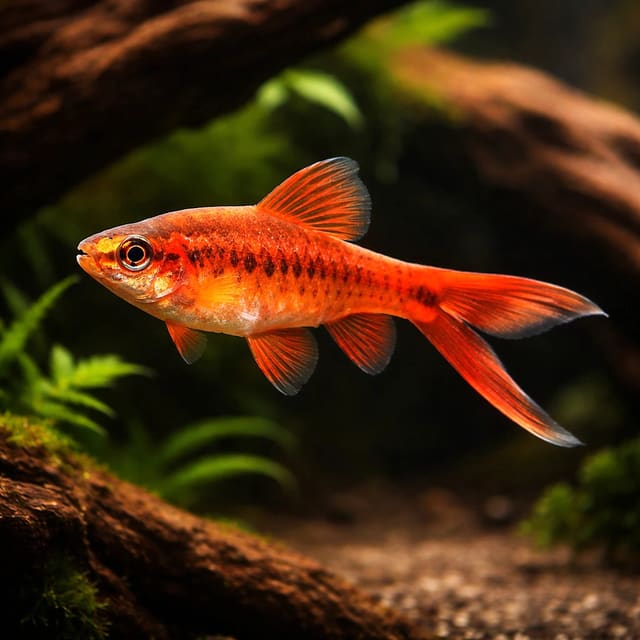
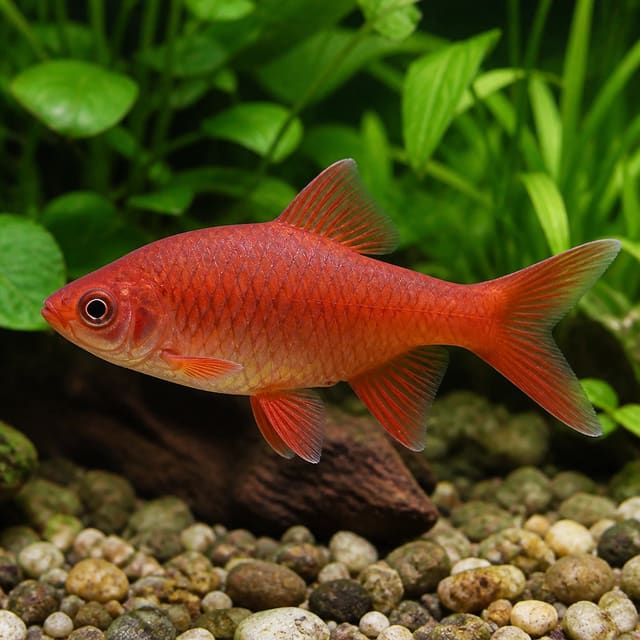
The Cherry Barb (Capoeta titteya) is a small freshwater cyprinid from Sri Lanka that reaches 5 cm. It suits beginners prepared to maintain a proper shoal, a mature biological filter and stable water in a planted community aquarium. These fish have slim bodies, forked tails and bronze-to-red colouring. Adult males are typically smaller, slimmer and more colourful than adult females, particularly when displaying, but colour and body shape must not be used as a guarantee of the fish supplied.
FishBase records Cherry Barbs from heavily shaded streams and rivulets in Sri Lanka’s Kelani to Nilwala basins. They favour shallow, slow-flowing water with silt and leaf debris, while their natural food includes detritus, algae, diatoms, small insects and other animal matter. FishBase now lists the species as Puntius titteya and treats Capoeta titteya as a synonym.
That natural setting points towards a planted aquarium with shaded areas, visual cover and space to move between plants. A dark substrate, floating plants, driftwood branches and leaf litter can create this structure without filling every swimming route. Keep open water between planted areas so the group can forage and display without losing nearby cover.
This is a peaceful species for a carefully planned community rather than an isolated display fish. Its manageable adult length does not make it suitable for an unfiltered bowl or a cramped aquarium.
One purchase supplies five Cherry Barbs. This pack is best used to begin a planned shoal or to increase an established compatible group, because the species should be kept in a group of at least six and preferably six to ten. Count every Cherry Barb already in the aquarium when working out how many more are needed.
The adult planning length is up to 5 cm. Build the aquarium around that adult length, the complete group and any other residents rather than around the fish’s size on arrival.
Sex is guaranteed only when the selected option explicitly states male or female. This 5 × Cherry Barbs listing has no sex-guaranteed option.
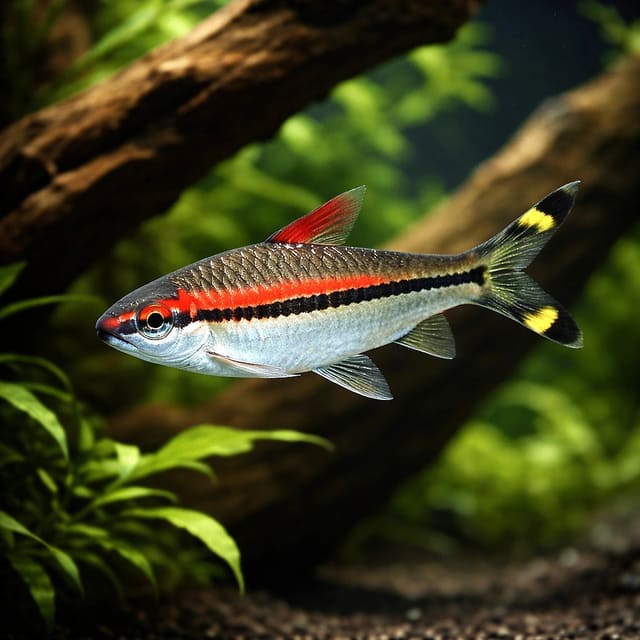
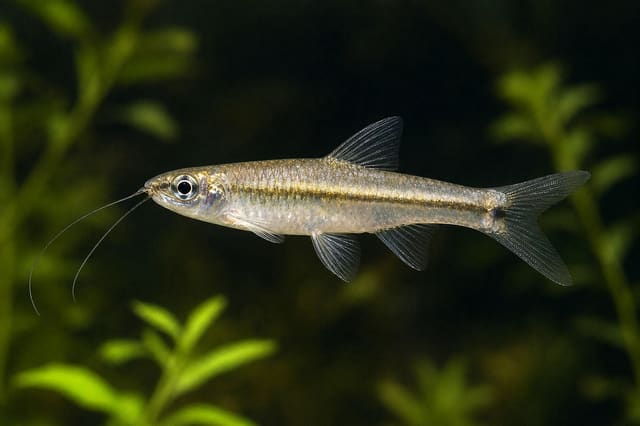
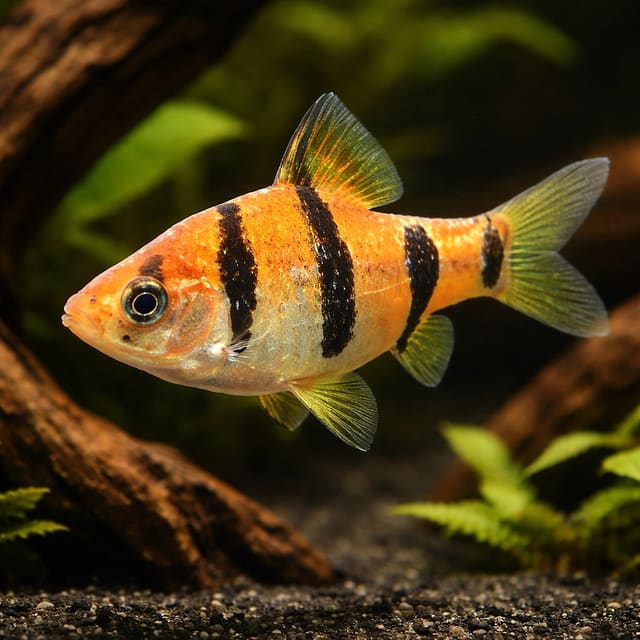
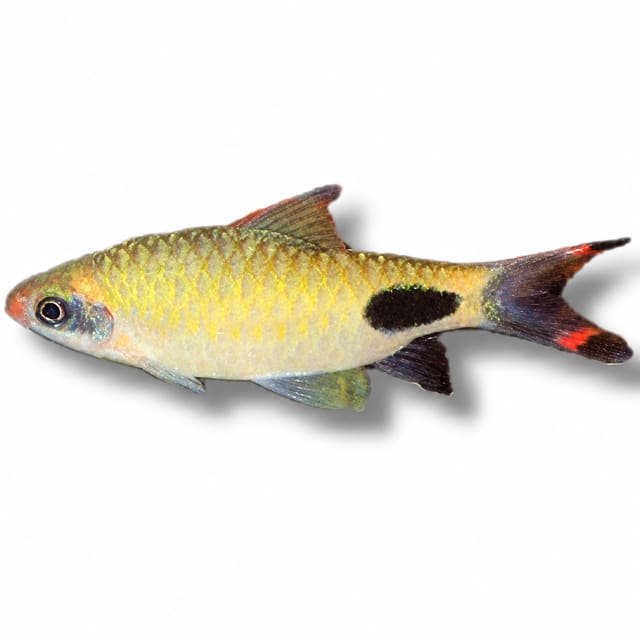
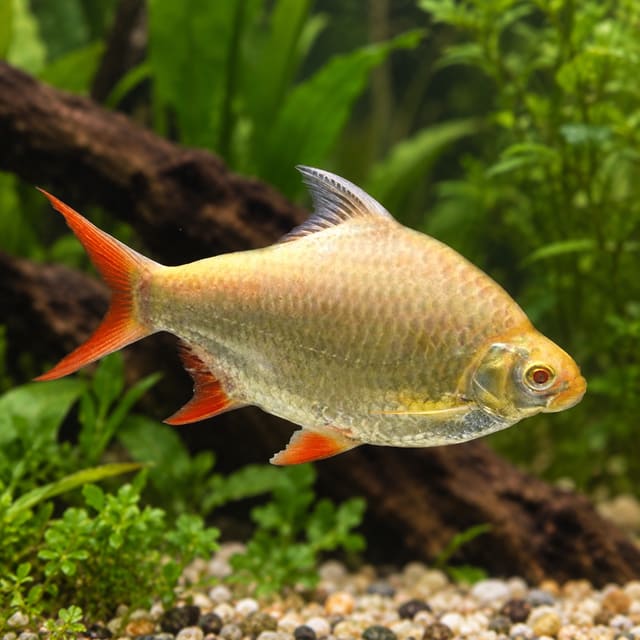
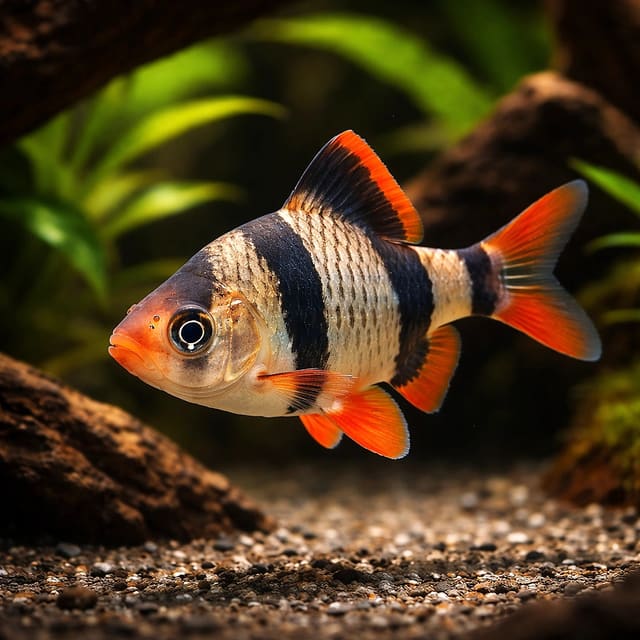
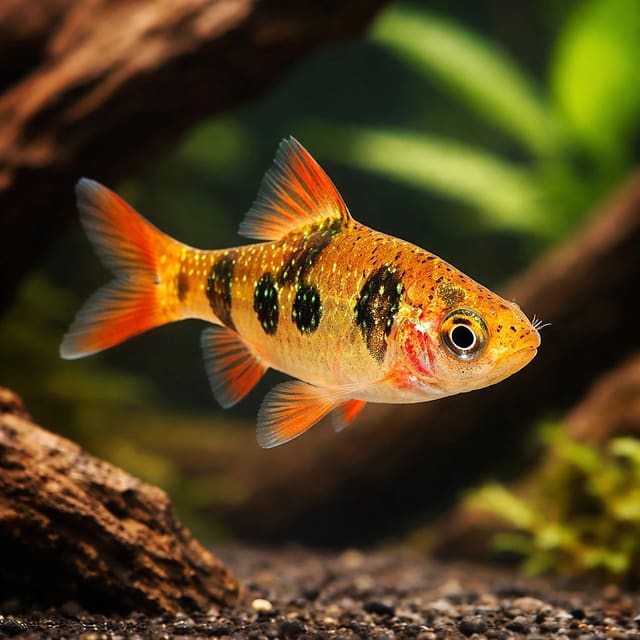
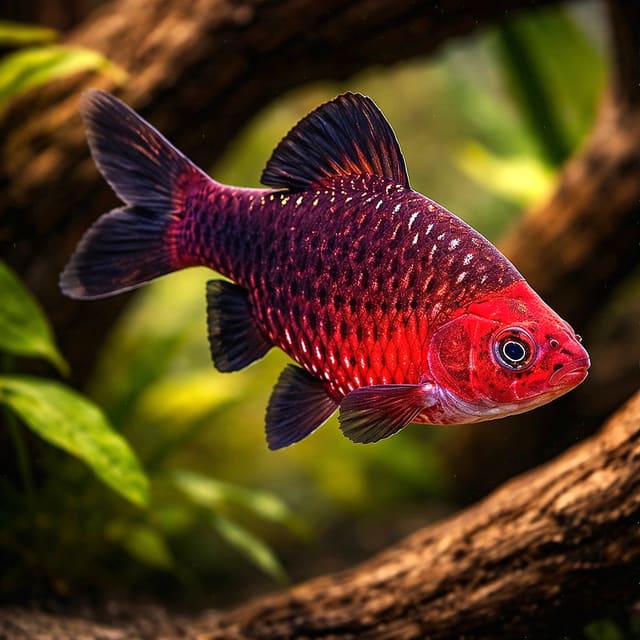
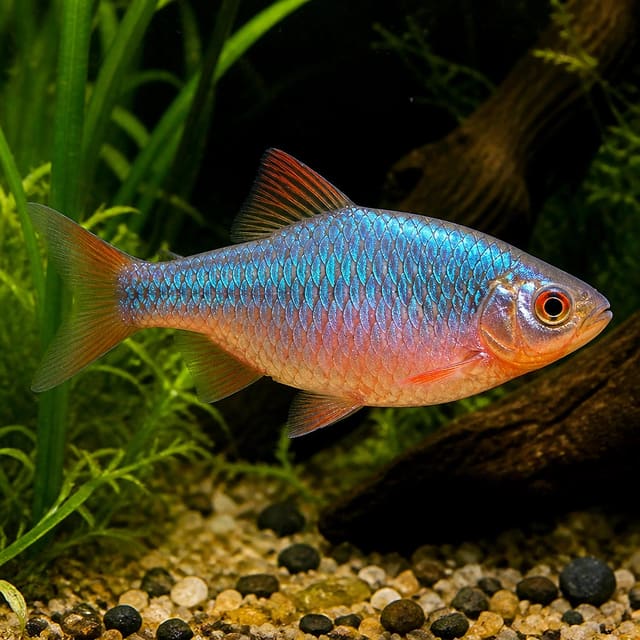
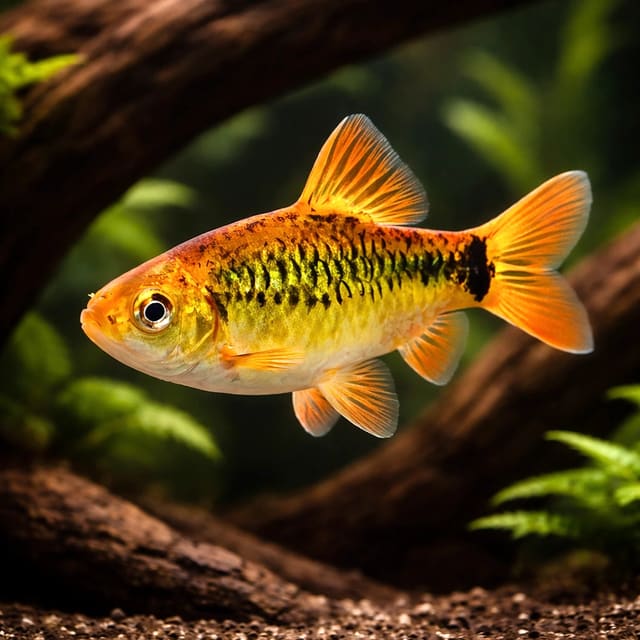
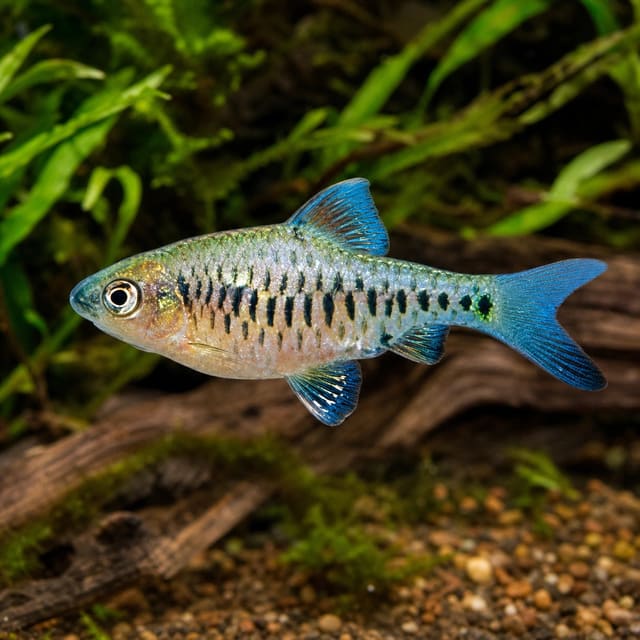
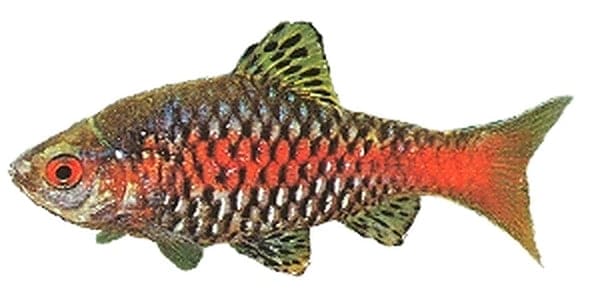
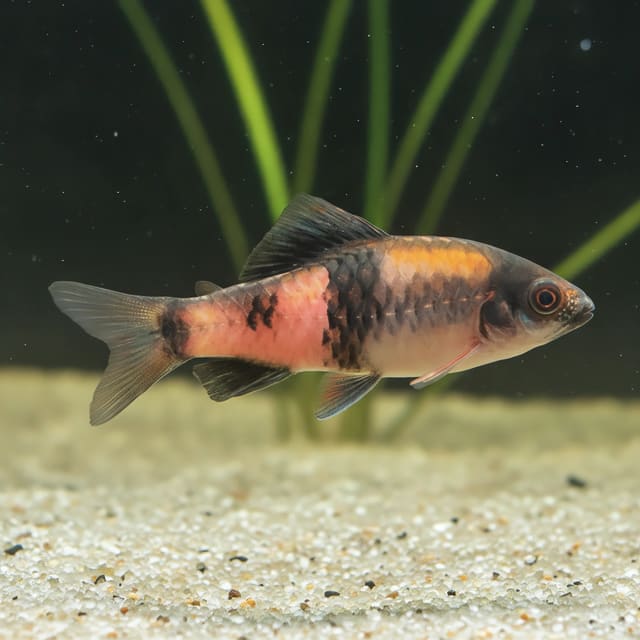
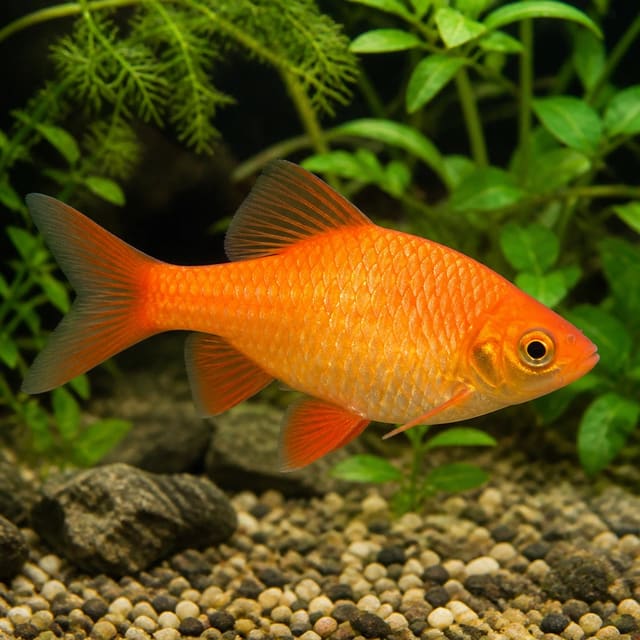
The gallery images are representative of this type of animal rather than photographs of the exact animal supplied, so colours can look slightly different from the live animal.
The gallery shows several fish together because social behaviour and group appearance are useful to see. The number visible in an image does not change the offer: this product supplies five fish per purchase.
Seriously Fish gives a maximum standard length of 5 cm and requires base dimensions of at least 60 × 30 cm or equivalent, with an approximate volume of 54 litres. The footprint matters because these active fish need horizontal room as well as planted cover. A taller aquarium with a much smaller base is not an equivalent substitute.
| Planning decision | Requirement |
|---|---|
| Adult length | Up to 5 cm |
| Group | At least 6; preferably 6–10 |
| Base | At least 60 × 30 cm or equivalent |
| Approximate volume | 54 litres |
| Routine temperature | 20–27°C |
| Routine pH | 6.0–7.5 |
| Routine hardness | 4–12 dGH |
| Suits | Not suited to |
|---|---|
| A planted, peaceful community aquarium | Keeping as a solitary fish |
| A shoal of at least six fish | A long-term group of fewer than six |
| A base of at least 60 × 30 cm or equivalent | An aquarium with a smaller base |
| A mature aquarium with stable, filtered freshwater | An unfiltered bowl or immature aquarium |
| Beginners prepared to test and maintain the water | A setup without regular water testing and maintenance |
Five fish therefore form a pack, not the preferred complete group when kept alone. For a new Cherry Barb aquarium, plan to reach at least six without overcrowding the filter. In a community aquarium, include the adult size and activity of every species when assessing space.
The species is described as an approachable choice for beginners, but success still depends on completing the preparation before the fish arrive. The decisive tasks are maturing the filter, measuring the aquarium water, maintaining the shoal and selecting peaceful companions with overlapping requirements.
Start with an aquarium whose base is at least 60 × 30 cm or equivalent. Around 54 litres is the corresponding planning volume, but base dimensions remain the minimum test. Increase the space when the aquarium will hold a larger Cherry Barb group or additional species.
Use aquarium sand or gravel across the base. A darker substrate can provide visual contrast, while leaf litter and driftwood roots or branches add structure associated with the shaded, debris-rich streams used by wild Cherry Barbs. All wood, stones and ornaments must be intended for aquarium use and positioned securely.
Plant in groups rather than forming one solid wall. Dense stems, floating plants and low cover can produce shaded retreats, while gaps between them preserve horizontal swimming room. This arrangement gives less confident fish somewhere to withdraw without separating them permanently from the shoal.
Filtration need not be especially strong, although a degree of water movement is suitable. Watch how the fish use the tank after introduction. They should be able to hold position, forage and move into open water without being pushed continually into one corner. If every fish shelters from the outlet, redirect or diffuse the flow while maintaining filtration.
Look across the aquarium near the middle and lower swimming levels. There should be more than one route between cover and open water, with no single ornament dividing the shoal or trapping a fish beside the filter intake. If planting leaves only a narrow corridor, move one group of plants rather than removing all cover. The goal is a sequence of sheltered and open areas across the full footprint.
Lighting can be moderated with floating plants and planted shade. Do not rely on dimness alone: the aquarium still needs clean water, a functioning filter and enough visible open space for daily observation.
Keep the aquarium at 20–27°C, pH 6.0–7.5 and 4–12 dGH. Seriously Fish gives species ranges of 20–27°C, pH 6.0–8.0 and 2–20 dGH. OATA’s barb sheet gives group guidance of 20–27°C, pH 6.0–7.5 and 4–12 dGH, so these narrower routine values remain inside the species ranges.
| Measurement | Routine target |
|---|---|
| Temperature | 20–27°C |
| pH | 6.0–7.5 |
| General hardness | 4–12 dGH |
| Ammonia | 0 mg/l |
| Nitrite | 0 mg/l |
| Nitrate | No more than 20 mg/l above the tap-water level |
Measure the tap water and aquarium water rather than choosing a value from guesswork. Our water chemistry guide explains what each reading means, while the water matcher helps compare measured values with this routine range.
Suppose the aquarium measures 24°C, pH 7.2 and 8 dGH. Every reading sits within the routine targets, so the correct action is to preserve that stability rather than adjust towards a chosen midpoint. If a reading changes between tests, check the test method, replacement water and recent maintenance before making a correction. Repeating a surprising test is safer than reacting to one isolated result.
Stability matters within the range. Do not chase an exact midpoint by making abrupt chemical changes. If the aquarium is already stable within the routine targets, maintain that consistency through regular testing and conditioned replacement water.
A heater may be needed to hold the chosen temperature in a cool room. Seriously Fish estimates about 50–75 W for an aquarium near 54 litres when the room is around 20°C, but heater selection must also account for the actual aquarium volume and room conditions.
A working biological filter is essential. RSPCA aquarium guidance explains that fish release toxic ammonia, which filter bacteria convert first to nitrite and then to the safer nitrate. The filter must be established and processing waste before the Cherry Barbs enter the aquarium.
Prepare a new system with the steps in our first tropical tank guide. Confirm with tests that ammonia and nitrite are both 0 mg/l. Clear-looking water is not enough because ammonia and nitrite cannot be judged by appearance.
For an aquarium of about 54 litres, Seriously Fish suggests turnover of four to five times the volume each hour. That corresponds to roughly 215–270 litres per hour. Treat the manufacturer’s rating as a starting point and arrange the outlet so the group has gentle movement without struggling against the current.
Each added fish and each increase in feeding creates more waste. The bacterial population must grow to meet that load, so do not add several unrelated groups at the same time. Test after stocking and slow the plan if ammonia or nitrite appears.
Check the filter for reduced flow or blockage. Do not run it under the tap. Any chlorine or chloramine present may kill the beneficial bacterial population that has established in the media. If the filter needs cleaning, rinse it lightly in aquarium water removed during a partial water change.
Before adding the pack, record temperature, ammonia, nitrite and nitrate. Test again after introduction and after the feeding load has begun. If ammonia or nitrite remains at 0 mg/l and the fish behave normally, continue the planned routine. If either appears, stop further additions, reduce feeding and use conditioned partial water changes while the filter adjusts. This decision is based on measured waste processing, not simply on how long the aquarium has been running.
Cherry Barbs are omnivorous foragers. In nature they consume detritus, green algae, diatoms, small insects and other animal matter. In the aquarium, use a quality flake or small granule as the staple and include products with plant or algal content.
Offer one meal each day and give only what the group can finish within a few minutes. Watch the whole shoal rather than judging the portion by the fastest fish. Food should be small enough for each fish to take easily, and little or none should remain trapped among plants or on the substrate.
Small live or frozen foods such as daphnia, small bloodworm and Artemia can supplement the dried staple. When using one of these foods, substitute it for part of the normal meal rather than adding an extra full feed. This provides variety while limiting waste.
Begin with a small amount and watch where it travels. If the first food is taken immediately by two fish, place the remainder at a second point rather than increasing the overall quantity. Check the substrate and plant bases after the meal. Repeated leftovers mean the daily portion is too large even when the fish still approach eagerly.
Overfeeding adds organic waste and can undermine water quality. A measured daily portion, varied across suitable foods, is more useful than frequent feeding that leaves residues for the filter to process.
Change 25% of the aquarium water at least once each week. Use a siphon to remove visible waste from open areas of gravel or sand, while leaving enough planted and sheltered structure for the fish. Treat replacement tap water with a conditioner that removes chlorine or chloramine before adding it.
Test ammonia and nitrite at least weekly and keep both at 0 mg/l. Record nitrate alongside them, aiming to keep it no more than 20 mg/l above the level already present in the tap water. A written log makes a rising pattern easier to spot than isolated test results.
| Checkpoint | Action |
|---|---|
| Ammonia above 0 mg/l | Pause further stocking, reduce feeding and make a conditioned partial water change |
| Nitrite above 0 mg/l | Pause further stocking, reduce feeding and make a conditioned partial water change |
| Rising nitrate | Review water-change frequency, feeding and stocking load |
| Reduced filter flow | Check for blockage and rinse media lightly in removed aquarium water if needed |
This order preserves a useful pre-maintenance reading, prevents chlorine or chloramine from reaching the fish and keeps tap water away from filter media.
Keep the weekly routine consistent instead of waiting for cloudy water or unusual behaviour. Water can appear clear while toxic nitrogen compounds are present.
After maintenance, confirm that the heater and filter are operating and that the outlet has not been redirected into a forceful current. Observe the group after disturbed debris has settled; normal swimming and feeding provide a useful comparison for later checks.
Arrange for someone to receive the parcel because live fish cannot be left unattended. Follow our current delivery and Live Arrival Guarantee policy as soon as it arrives.
Keep the continuous unboxing video and order number if a Live Arrival Guarantee claim is needed, then contact us on the day the fish arrive.
Confirm that ammonia and nitrite are 0 mg/l and that the aquarium remains inside the stated temperature, pH and hardness ranges. Give the shoal immediate access to planted cover and open swimming space. Transport can temporarily affect colour, confidence and position in the aquarium, so observe the fish without repeated netting or rearranging the layout.
On the first day, focus on breathing, position and whether the group can reach cover. At the first feeds, confirm that food reaches more than the boldest individuals. Through the first week, compare daily behaviour with the initial observations and record the regular water tests. A gradual increase in open-water use can be normal settling; a fish that becomes increasingly isolated or stops feeding needs an immediate water check.
If ammonia or nitrite rises above 0 mg/l, reduce feeding, make a conditioned partial water change and pause further stocking while the filter catches up. Do not change pH or hardness abruptly simply because the new fish are shy. First confirm that the readings are inside the stated range and stable.
Learn the group’s normal pattern when the fish are settled. Healthy observations include clear eyes, intact scales and fins, appropriate swimming and regular interest in food. Individual colour and confidence can vary, so compare each fish with its own recent behaviour as well as with the rest of the shoal.
Test ammonia, nitrite, nitrate and temperature whenever several fish change behaviour together or one fish becomes unusually withdrawn. Ammonia and nitrite must remain at 0 mg/l. Also check that the filter is running and that no recent cleaning, stocking or feeding change has increased the load.
Note whether the change affects one fish or the whole group, when it began and whether it followed maintenance, feeding or new livestock. Record the measured water values rather than relying on descriptions such as clean or normal. This short timeline helps separate a group-wide environmental change from a problem affecting one individual and makes any later health discussion more precise.
These signs can have different causes, so do not choose a treatment from appearance alone. Correct measurable water-quality problems promptly and contact us about significant health changes before adding medication. Include the aquarium volume, temperature, recent ammonia, nitrite, nitrate and pH readings, the number of affected fish and when the change began.
Daily observation takes only a few minutes when it is built around feeding. It is most useful when combined with regular test results and a stable maintenance routine.
Cherry Barbs are generally peaceful and can suit a well-researched community aquarium. Seriously Fish names other small cyprinids, tetras, livebearers, rainbowfishes, anabantoids, catfishes and loaches as possible companion groups. These categories are starting points rather than automatic approvals.
Barbs as a wider group can include fin-nipping species, although OATA identifies Cherry Barbs among the smaller barbs that can generally mix with peaceful fish. Individual communities and layouts still differ, so screen every proposed companion rather than relying on its broad group name.
A shared temperature alone is not enough. For example, a candidate may tolerate 24°C yet still be unsuitable if it needs a much larger aquarium, is likely to dominate feeding or continually drives peaceful fish from cover. Work through all four checks using adult requirements. If one requirement cannot be met for both species at the same time, choose a different stocking plan.
No pairing is automatic. A heavily planted aquarium may create useful visual breaks, but plants cannot compensate for incompatible water requirements or inadequate space. For a stocking and compatibility assessment, contact us with the aquarium dimensions, volume, measured water values, filter, current residents and intended group sizes.
Introduce livestock gradually so the biological filter can respond to the added waste. Observe the established residents as well as the new group; compatibility means every fish can feed, rest and move normally.
Cherry Barbs are schooling fish and should be maintained in a group of at least six, with six to ten preferred. A group helps reduce skittish behaviour and creates opportunities for normal social display. Males may also show stronger colour in the presence of other Cherry Barbs.
Because this offer supplies five fish, decide before purchase how the minimum group will be reached. Five can increase an established shoal, or they can form most of a new group when at least one additional Cherry Barb is included. Do not leave the group at five as the long-term plan when following the six-to-ten recommendation.
Brief social movement and display can occur within a shoal. Reassess the aquarium when one fish is persistently driven away, cannot feed, hides continuously or develops fin damage. Check the group size, planted cover, usable swimming area and behaviour of every other resident.
A larger shoal may improve confidence, but it also increases the biological load. Before adding fish, confirm that the aquarium has sufficient adult space and that ammonia and nitrite are 0 mg/l. Additions should be gradual enough for the filter bacteria to adjust.
Write down how many Cherry Barbs the aquarium will contain after every planned purchase. An aquarium holding two compatible Cherry Barbs would reach seven after this five-fish pack, while an empty aquarium would still need a route to at least six. In either case, reassess the adult stocking load before adding unrelated species. The group target and the filter’s capacity must be considered together.
Do not promise a particular male-to-female balance from colour or photographs. Adult sex differences can help describe the species, but the offer has no sex-guaranteed option. Build the group around space and social needs rather than an assumed sex ratio.
Cherry Barbs reach a maximum recorded adult length of 5 cm. Plan the aquarium around that adult length, the complete shoal and every other resident.
Use an aquarium base measuring at least 60 × 30 cm or equivalent, corresponding to about 54 litres. Include planted cover, shaded areas and open horizontal swimming routes.
Keep Cherry Barbs in a group of at least six, with six to ten preferred. This pack contains five fish, so plan how it will enlarge an established shoal or become part of a new group that reaches at least six.
Cherry Barbs suit beginners who prepare a mature filtered aquarium, test the water, maintain a proper shoal and complete regular maintenance. Their routine range is 20–27°C, pH 6.0–7.5 and 4–12 dGH.
Feed Cherry Barbs quality flake or small granules with some plant or algal content once daily, giving only what is eaten within a few minutes. Add small live or frozen daphnia, bloodworm or Artemia for variety.
Keep it at 20–27°C and pH 6.0–7.5, with general hardness of 4–12 dGH. OATA’s barb guidance gives these routine values within the wider Seriously Fish species ranges.
Cherry Barbs are generally peaceful, and OATA identifies them among the smaller barbs that can generally mix with other peaceful species. Keep at least six and reassess the group, cover and space if one fish is persistently chased, excluded from food or develops fin damage.
Consider peaceful small cyprinids, tetras, livebearers, rainbowfishes, anabantoids, catfishes or loaches only where adult space, water requirements, temperament and feeding behaviour overlap.
Someone must be present to receive the parcel. Film every delivery continuously from the sealed parcel as it is opened until the fish are visible inside the sealed bag, inspect it the same day, float the bag for 20–30 minutes and never pour the bag water into the aquarium.
No reviews for this item yet. Bought one? Honest reviews only, good or bad.
What customers say about ordering from us
I have a small group of long finned mountain minnows. So was delighted to be able to order ten of this variety to increase the genetics in my tank . The ones I recieved are healthy but it’s to early to give a verdict on wether they are of a long finned type since they are small currently.
Gordon Walker · 23 Sept 2026
100% success travel and "installation". Pleased with quality of purchase. The Siamese fighter a bit "shy" so have not yet seen him at his best yet but looking good. Happy customer. GG
George E Garratt · 21 Sept 2026
Reviews of our shop, collected by Judge.me, an independent third-party review collector. Newest first.