Easy
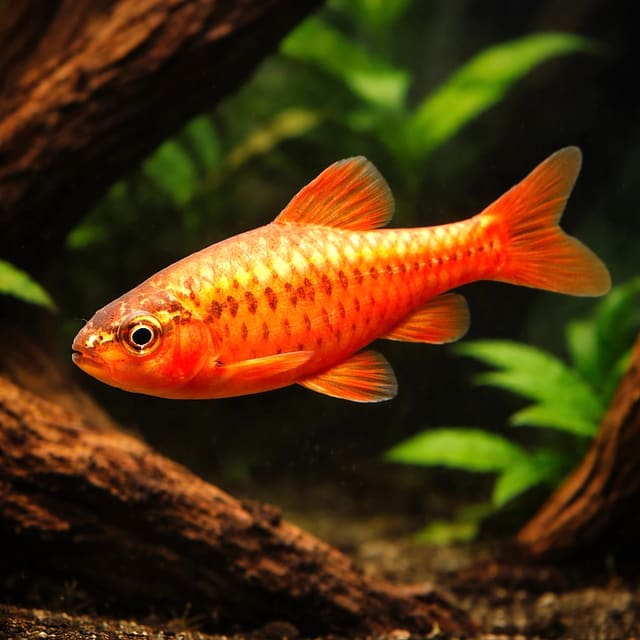
Cherry Barb (Barbus Capoeta titteya)
20–27°C · pH 6–8 · 54L
From £3.43Some sizes on sale

The Neon Golden Barb is a vivid yellow-gold aquarium form of Barbodes semifasciolatus, a hardy subtropical shoaling barb of about 7 cm. Sold as one fish per quantity in 3–5 cm sizes; keep six or more in a 100-litre-plus aquarium at 18–24°C.
Adult size is the maximum length this species reaches at full maturity (scientific sources). The livestock you receive will be younger and smaller — pick a size above for the actual shipping size. Product-photo provenance and any image-specific limitations are stated on the listing.
Barbodes semifasciolatus
Shoaling fish: kept in a group they feel safer, stay calmer and show their best colour.
Confirm your email, then we’ll send an availability message for this exact item if it returns within 180 days.
This request is only for this product—no newsletter or other promotions. A mail-provider retry may very rarely duplicate the same availability message. Unconfirmed addresses are removed after 48 hours. See our privacy policy.
The Neon Golden Barb is a vivid yellow-gold aquarium form of Barbodes semifasciolatus, a hardy subtropical shoaling barb of about 7 cm. Sold as one fish per quantity in 3–5 cm sizes; keep six or more in a 100-litre-plus aquarium at 18–24°C.
Adult size is the maximum length this species reaches at full maturity (scientific sources). The livestock you receive will be younger and smaller — pick a size above for the actual shipping size. Product-photo provenance and any image-specific limitations are stated on the listing.
Maintain these water conditions for optimal health and vibrant colors
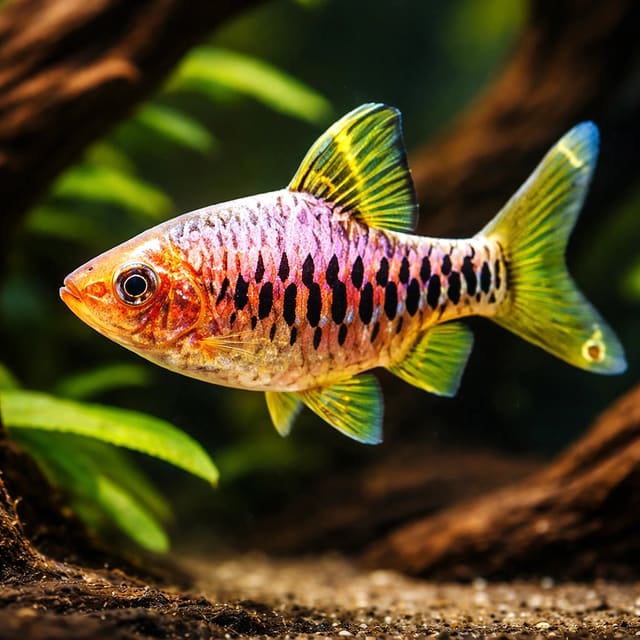
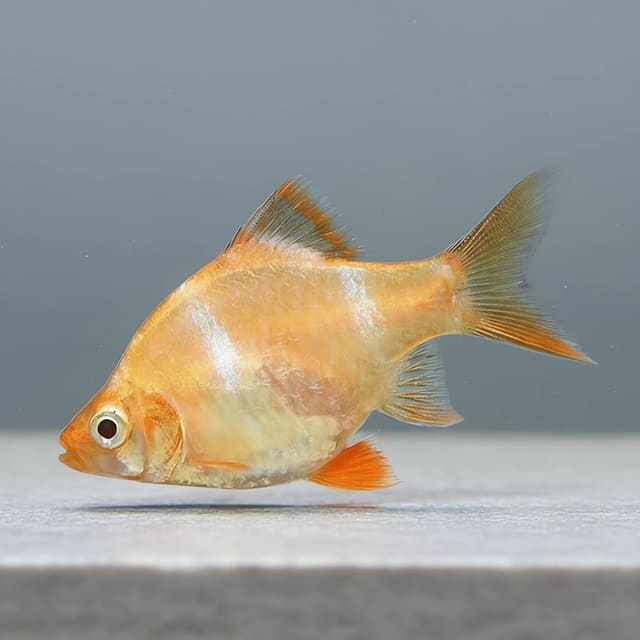
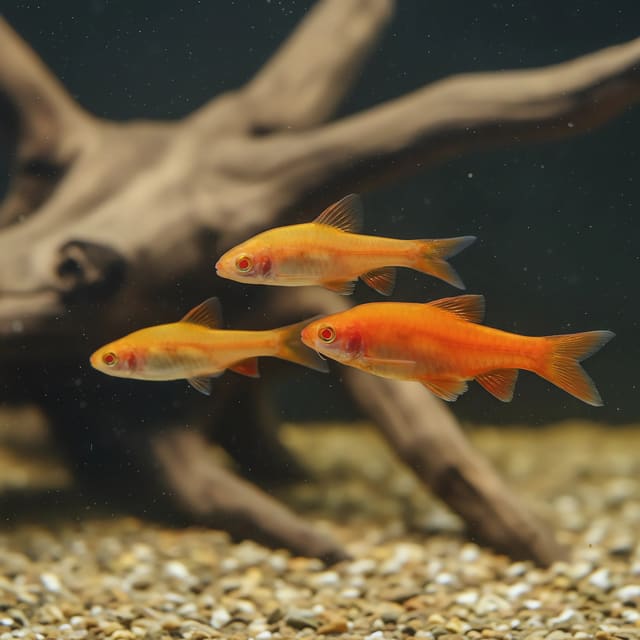
The neon golden barb is an intensely coloured aquarium form of the Chinese barb (Barbodes semifasciolatus), the species behind the well-known gold barb. It shows a vivid yellow-gold body with dark spots and blotches along the flanks and orange-red fins. FishBase gives a maximum length of about 7.6 cm.
This listing is the neon gold form; the natural half-banded form and the standard gold barb are separate listings.
| Scientific name | Barbodes semifasciolatus (neon gold form) |
|---|---|
| Family | Cyprinidae |
| Origin of the species | Southern China and northern Vietnam |
| Adult size | About 7 cm |
| Temperature | 18–24°C |
| pH | 6.0–8.0 |
| Hardness | 2–20 dGH |
| Aquarium | About 100 litres or more for a group |
| Sold as | One fish per quantity, in the size selected |
Choose 3–4 cm or 4–5 cm, then the quantity. One quantity is one live neon golden barb; order six or more to start a shoal.
An active shoaling fish: keep a group of six or more in a mature aquarium of about 100 litres or more, with open swimming space, planted edges and good filtration. It is subtropical and does well a little cooler than many tropical fish: 18–24°C, pH 6.0–8.0 and 2–20 dGH, within the range in Seriously Fish.
An omnivore that accepts most foods: feed a quality flake or small pellet with vegetable content daily, plus small frozen or live foods such as bloodworm, Daphnia and brine shrimp a few times a week.
Peaceful for a barb and best in a group, which keeps any fin-nipping low. Good with other active fish of similar size, such as danios, rasboras, peaceful barbs, platies and Corydoras. Avoid slow fish with long trailing fins.
Tropical Fish Co’s delivery and Live Arrival Guarantee policy explains the packing and arrival procedure. Livestock is hand-bagged in pure oxygen and placed in an insulated poly box, with a heat pack when the weather calls for it. Someone must be at the address to receive the parcel because live animals cannot be left unattended.
If a Live Arrival Guarantee claim is required, contact us on the same day with the order number and the continuous unboxing video. Before the parcel arrives, confirm that ammonia and nitrite read zero and that the aquarium matches the water values on this page.
It is a brighter, more intensely coloured form of the same species, with a vivid yellow-gold body.
A group of six or more; one quantity is one fish.
About 7 cm.
It is subtropical: 18–24°C suits it well.
No reviews for this item yet. Bought one? Honest reviews only, good or bad.
What customers say about ordering from us
I have a small group of long finned mountain minnows. So was delighted to be able to order ten of this variety to increase the genetics in my tank . The ones I recieved are healthy but it’s to early to give a verdict on wether they are of a long finned type since they are small currently.
Gordon Walker · 23 Sept 2026
100% success travel and "installation". Pleased with quality of purchase. The Siamese fighter a bit "shy" so have not yet seen him at his best yet but looking good. Happy customer. GG
George E Garratt · 21 Sept 2026
Reviews of our shop, collected by Judge.me, an independent third-party review collector. Newest first.