−14%
Rosy Barb (Barbus Puntius conchonius)
16–24°C · pH 6–8 · 90L
£2.57£2.99

Long-fin form of the rosy barb (Puntius conchonius) — a hardy, active, easy-care barb with flowing fins for 100 L+ tanks at 20–24 °C.
Adult size is the maximum length this species reaches at full maturity (scientific sources). The livestock you receive will be younger and smaller. Product-photo provenance and any image-specific limitations are stated on the listing.
Pethia conchonius
Shoaling fish: kept in a group they feel safer, stay calmer and show their best colour.
Confirm your email, then we’ll send an availability message for this exact item if it returns within 180 days.
This request is only for this product—no newsletter or other promotions. A mail-provider retry may very rarely duplicate the same availability message. Unconfirmed addresses are removed after 48 hours. See our privacy policy.
Long-fin form of the rosy barb (Puntius conchonius) — a hardy, active, easy-care barb with flowing fins for 100 L+ tanks at 20–24 °C.
Adult size is the maximum length this species reaches at full maturity (scientific sources). The livestock you receive will be younger and smaller. Product-photo provenance and any image-specific limitations are stated on the listing.
Maintain these water conditions for optimal health and vibrant colors
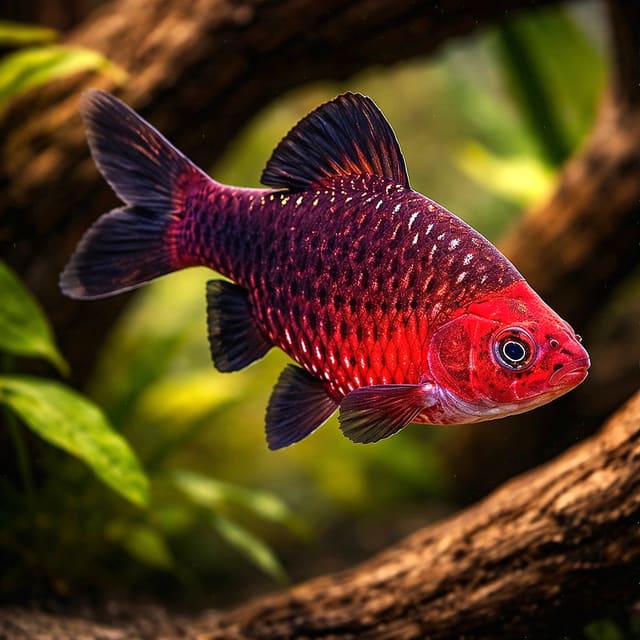
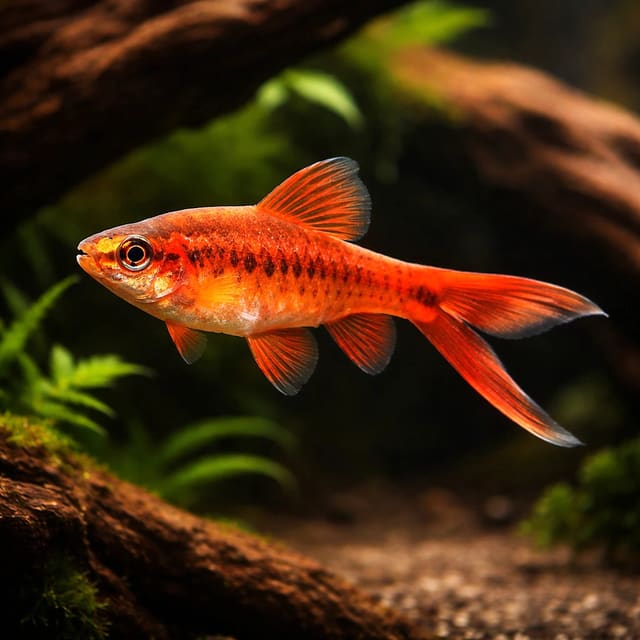
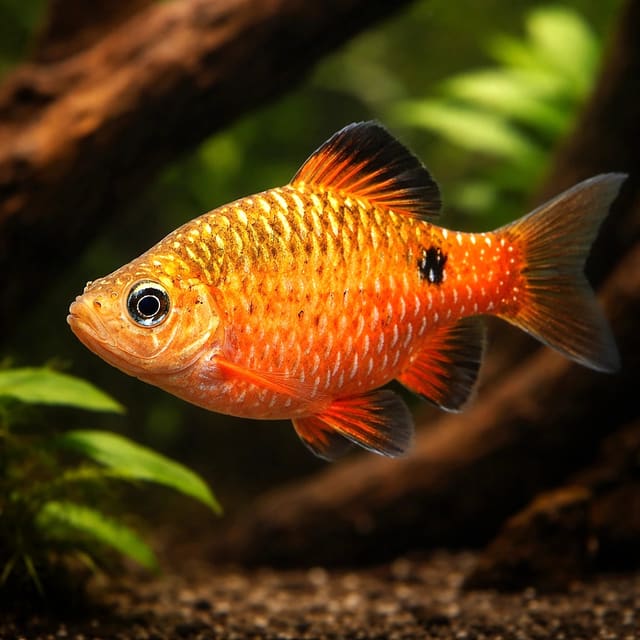
Flowing fins change the whole character of a rosy barb. This long-fin form of Barbus (Puntius) conchonius keeps the species' working-class toughness and adds extended finnage that turns every change of direction into a flourish — the rosy colouring of the standard fish, carried on a far more elegant frame.
Underneath the fins, the care profile is reassuringly simple. The record rates it easy: around 6 cm at adult size, about five years of lifespan, and a 100-litre minimum aquarium. It prefers things cooler than the tropical default — 20 to 24 °C — with pH between 6.5 and 7.8 and hardness from 5 to 15 dGH, which makes it an economical fish to heat as well as an easy one to please. An omnivorous diet means it accepts a wide range of foods without fuss, and it holds the middle region of the tank, where those trailing fins are seen at their very best.
Temperament deserves one line of honesty: the record lists this form as semi-aggressive, with territorial behaviour possible around breeding. Keep it busy among lively tankmates and that energy has somewhere harmless to go. Those extended fins are also the reason the avoid list below reads the way it does: a long-finned fish among nippers loses condition fast, and a semi-aggressive barb among slow tankmates causes the same problem in reverse. Follow the stocking guidance to the letter rather than treating it as a loose suggestion.
Sound companions are active fish of a similar size: danios, rasboras, rainbowfish, Corydoras and loaches. The avoid list matters here — slow-moving fish, long-finned tankmates that invite nipping, very small fish or fry, shrimp and other tiny invertebrates, and aggressive territorial cichlids should all stay off the plan. Your fish are packed for transit with a licensed live-animal courier and travel under a live arrival guarantee.
No reviews for this item yet. Bought one? Honest reviews only, good or bad.
What customers say about ordering from us
I have a small group of long finned mountain minnows. So was delighted to be able to order ten of this variety to increase the genetics in my tank . The ones I recieved are healthy but it’s to early to give a verdict on wether they are of a long finned type since they are small currently.
Gordon Walker · 23 Sept 2026
100% success travel and "installation". Pleased with quality of purchase. The Siamese fighter a bit "shy" so have not yet seen him at his best yet but looking good. Happy customer. GG
George E Garratt · 21 Sept 2026
Reviews of our shop, collected by Judge.me, an independent third-party review collector. Newest first.