Easy
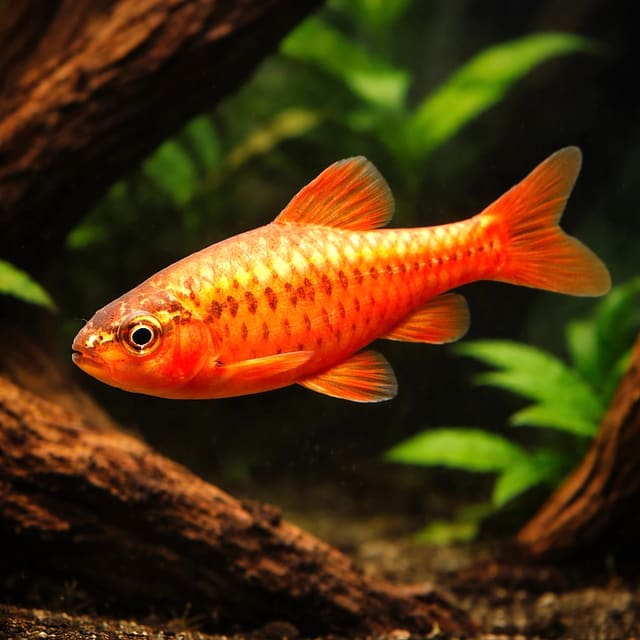
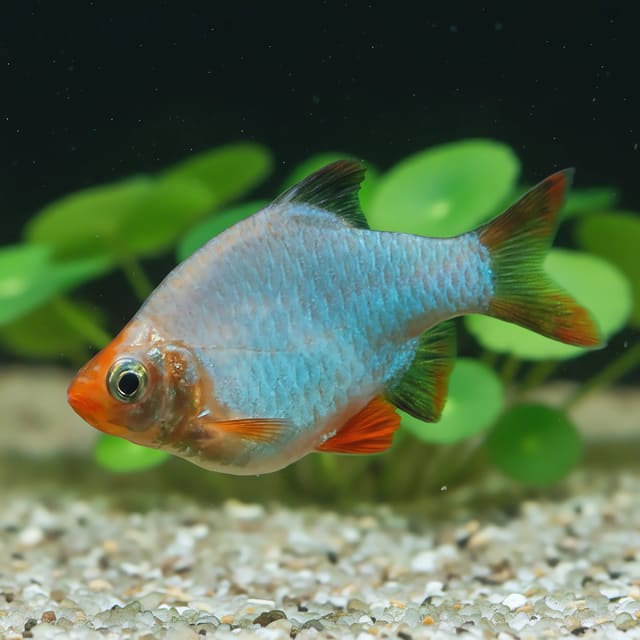
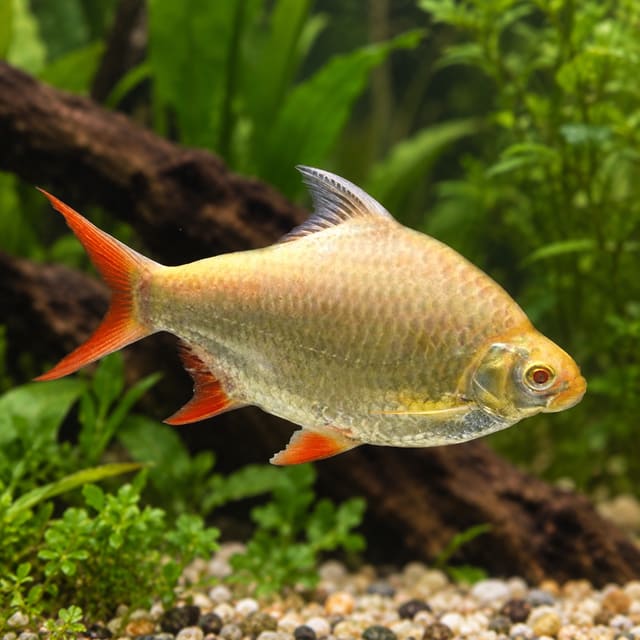
Albino Cherry Barb (Rohanella titteya)
20–27°C · pH 6–8 · 54L
£2.99

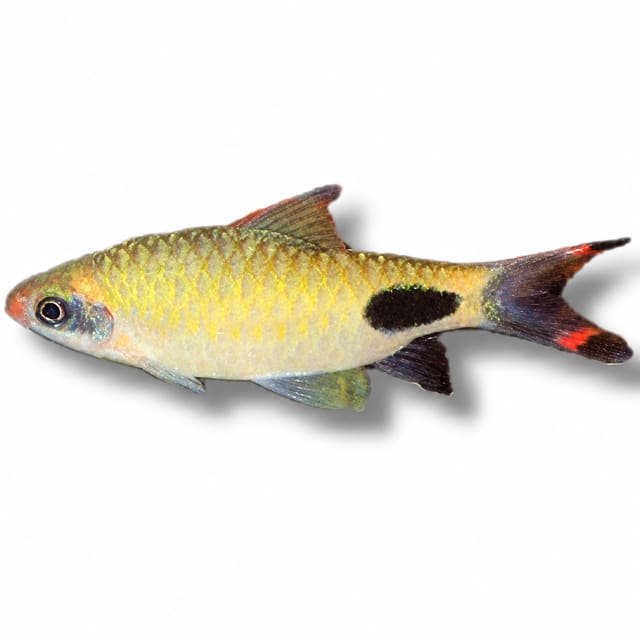
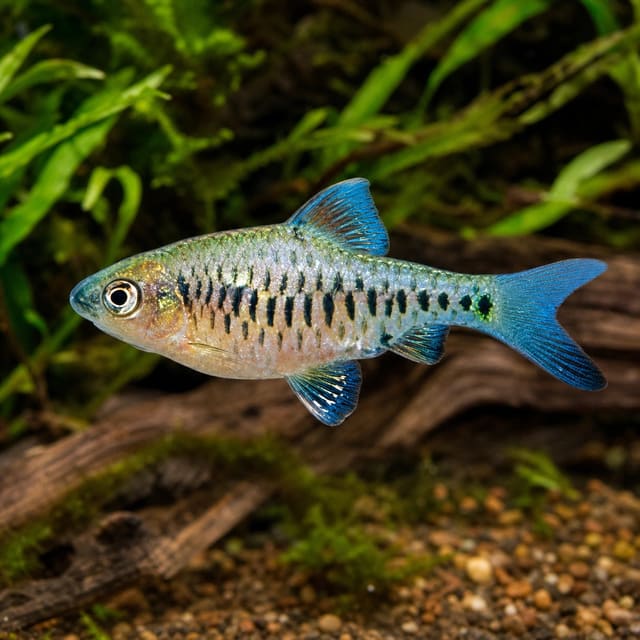
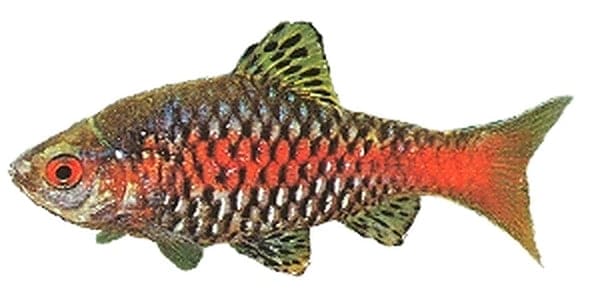
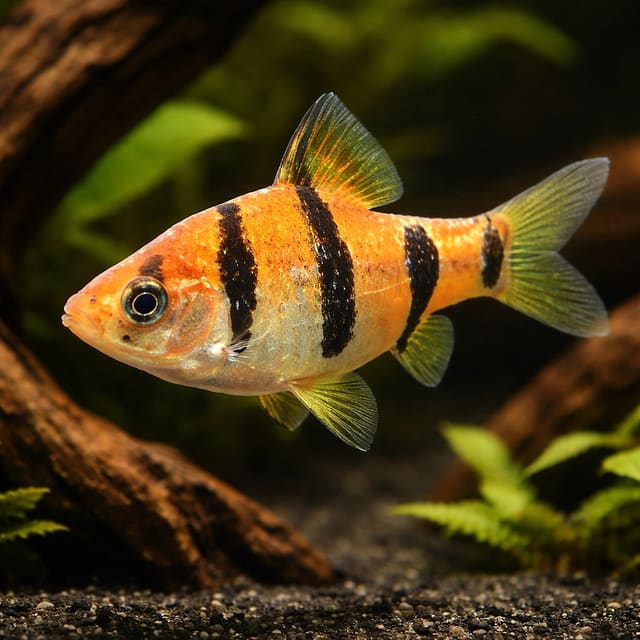
The Panda Barb, Ember Barb (Barbus melanampyx) is a cyprinid fish endemic to India’s Western Ghats that reaches 7.5 cm. It suits a mature, filtered aquarium planned for at least five fish; OATA's barb guidance gives 20–27°C and pH 6.0–7.5. Sold individually in 3–4 cm and 4–5 cm dispatch sizes.
Adult size is the maximum length this species reaches at full maturity (scientific sources). The livestock you receive will be younger and smaller — pick a size above for the actual shipping size. Product-photo provenance and any image-specific limitations are stated on the listing.
Barbus melanampyx
Shoaling fish: kept in a group they feel safer, stay calmer and show their best colour.
Minimum of 2 per order.
The Panda Barb, Ember Barb (Barbus melanampyx) is a cyprinid fish endemic to India’s Western Ghats that reaches 7.5 cm. It suits a mature, filtered aquarium planned for at least five fish; OATA's barb guidance gives 20–27°C and pH 6.0–7.5. Sold individually in 3–4 cm and 4–5 cm dispatch sizes.
Adult size is the maximum length this species reaches at full maturity (scientific sources). The livestock you receive will be younger and smaller — pick a size above for the actual shipping size. Product-photo provenance and any image-specific limitations are stated on the listing.
Maintain these water conditions for optimal health and vibrant colors
The Panda Barb, Ember Barb (Barbus melanampyx) is a freshwater cyprinid fish endemic to India’s Western Ghats. FishBase records it from hill streams between Goa and the southern Western Ghats, including the Nilgiris and Cauvery drainage, and gives a maximum adult length of 7.5 cm total length. It suits a keeper who can plan for an active group, a mature biological filter and consistent weekly maintenance rather than treating it as a single ornamental fish.
FishBase now lists it as Haludaria melanampyx. A Wikipedia account of its natural range likewise places this Indian cyprinid from south Kanara through the Travancore hills to Nagercoil, the Nilgiris and Cauvery drainages. Its hill-stream origin describes the wild fish; aquarium decisions should be based on stable water, sufficient group space and dependable filtration.
OATA’s barb guidance gives the group a usual temperature range of 20–27°C, pH 6.0–7.5 and general hardness of 4–12°dGH. It advises at least five barbs, with more being better, and at least 60 litres for a small group of the smaller barbs around 8 cm. Use those broad planning figures for this 7.5 cm fish and choose a larger aquarium when the community contains additional animals.
| Suits | Not suited to |
|---|---|
| A mature, filtered aquarium planned for at least five | A solitary-fish plan or a group below five |
| 20–27°C, pH 6.0–7.5 and 4–12°dGH | Water outside the barb guidance or with detectable ammonia or nitrite |
| At least 60 litres for a small group, with more space for a community | An aquarium chosen around the fish’s smaller dispatch size |
| A keeper prepared to observe group behaviour | Unscreened slow-swimming, timid or long-finned companions |
Start with the adult length, group requirement and water range together. A tank that meets only one of those needs is not yet a complete plan: the fish must have suitable space, social numbers and stable water at the same time.
One purchase supplies one live fish in the size selected. The live size selector shows 3–4 cm and 4–5 cm; choose the size that fits your stocking plan, then set the purchase quantity for the number of fish required. OATA advises keeping barbs in groups of at least five, with more being better, so a new group should be planned around five or more rather than one fish.
The size you select is the size supplied, not the adult size. Both dispatch sizes are below FishBase’s recorded maximum adult length of 7.5 cm. Aquarium capacity, filtration and long-term stocking therefore need to be calculated around the mature fish and the whole group, not around the space occupied on arrival.
Sex is guaranteed only when the selected option explicitly states male or female. This Panda Barb, Ember Barb listing has no sex-guaranteed option.
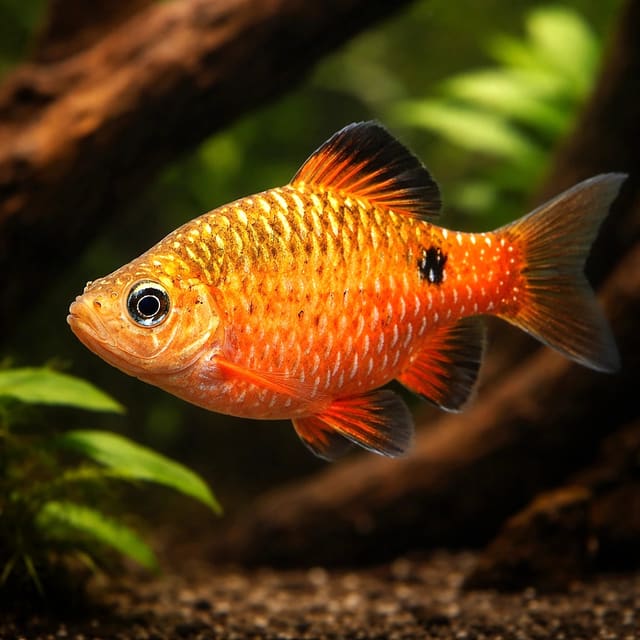
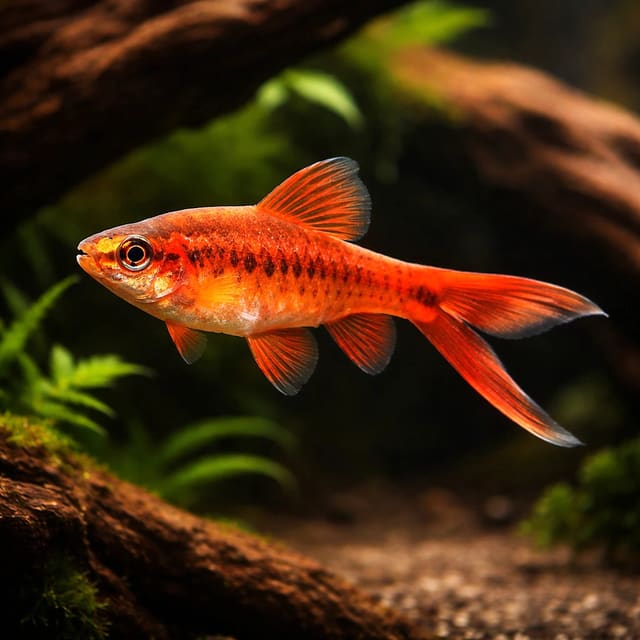
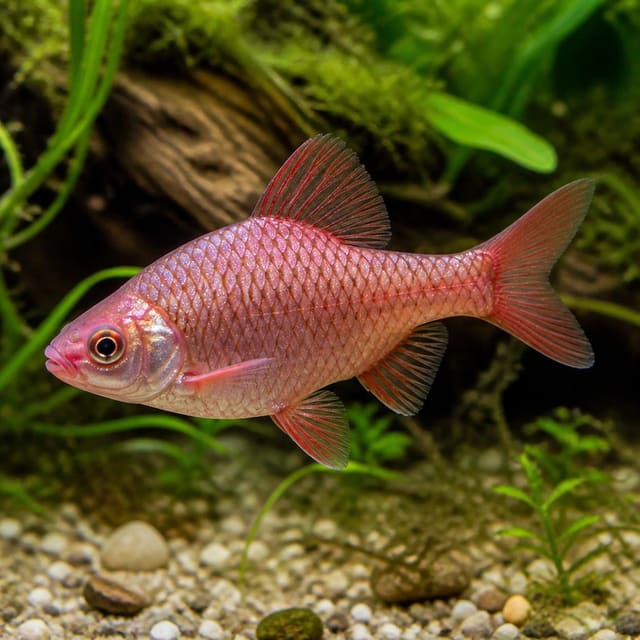
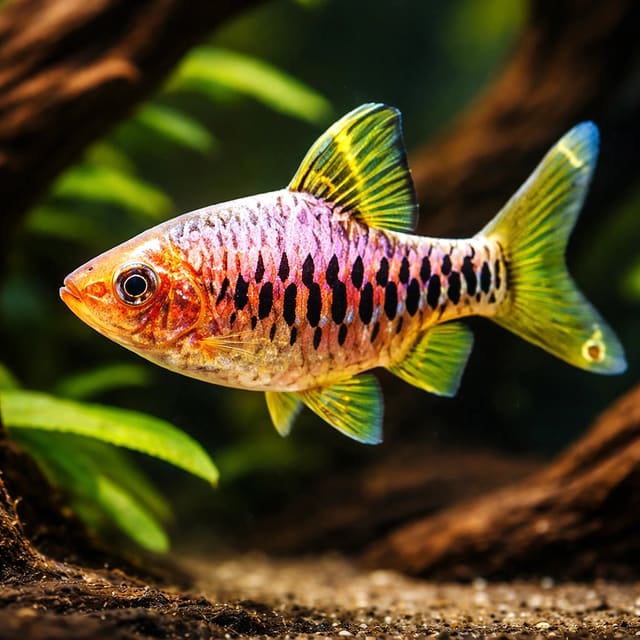
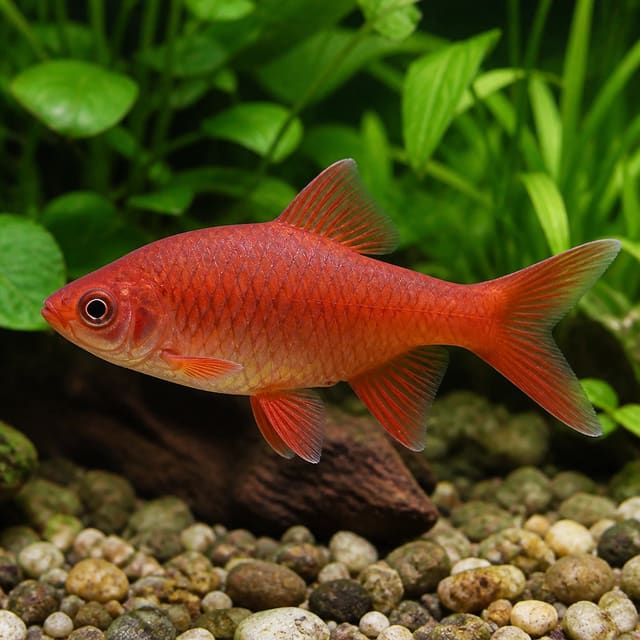
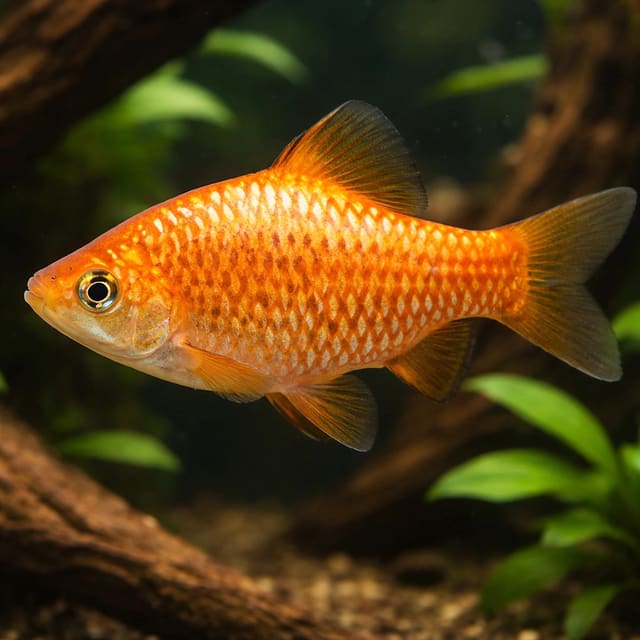
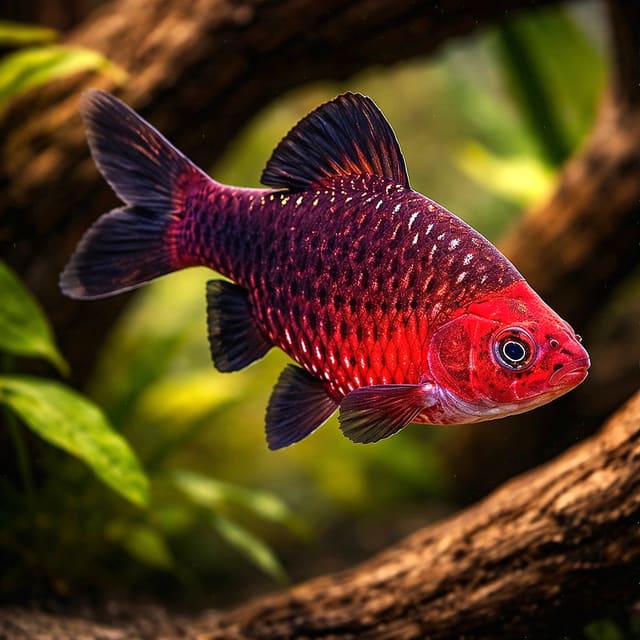
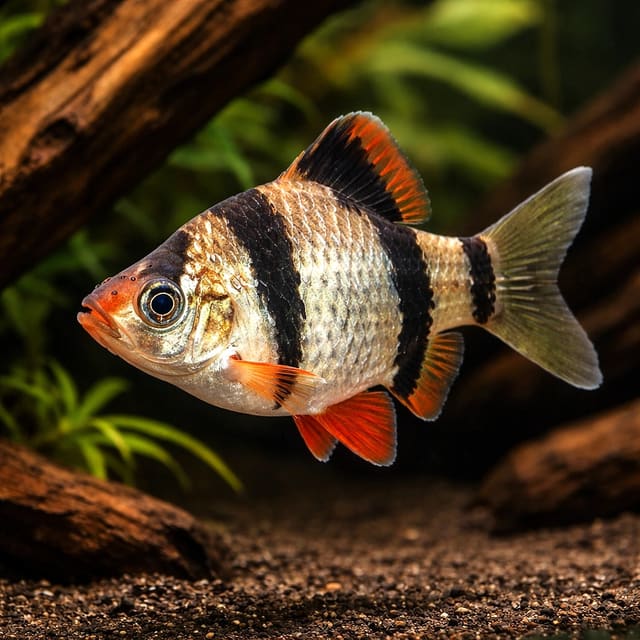
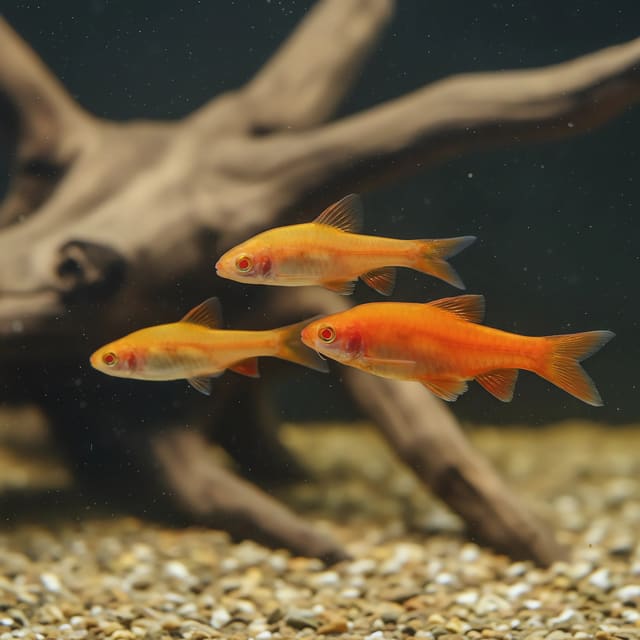
Some gallery images have been digitally enhanced to improve image quality. They show the listed type of animal rather than guaranteeing the exact markings of the individual supplied, so natural colour and pattern can vary.
To compare this fish with other members of the same aquarium group, browse our barbs collection. Treat each species as a separate stocking decision: a shared family name does not make adult size, behaviour or water requirements interchangeable.
Use 7.5 cm total length as the adult planning figure. FishBase presents this as a recorded maximum, so it is the sensible endpoint for judging swimming room, group space and the effect of the fish on filtration. It is a planning reference rather than a promise that every individual will finish at exactly the same length.
For a small group of smaller barbs around 8 cm, OATA recommends an aquarium of at least 60 litres. This fish falls just below that size reference, so at least 60 litres is a practical baseline for its minimum group of five. More space is the better decision when other fish share the aquarium, because the filter and water volume must support the entire community rather than the barbs alone.
| Decision | Planning action |
|---|---|
| Adult length | Allow for 7.5 cm per fish at maturity |
| Social group | Plan for at least five, with more being better |
| Small-group baseline | Use at least 60 litres |
| Community aquarium | Increase space for every additional animal |
For example, a five-fish group reaches the minimum social number, but it still needs the 60-litre baseline, a mature filter and compatible water. Adding several other fish to that same aquarium changes the space and waste load even though the barb group remains five. Choose the larger aquarium before stocking rather than relying on future changes after the community has grown.
A larger body of water also changes more slowly than a small one, helping temperature and water quality remain stable. Do not use volume alone as permission to overstock: check the adult size, group requirement, filtration capacity and needs of every other animal as one plan.
Keep the aquarium at 20–27°C, pH 6.0–7.5 and 4–12°dGH. OATA also gives carbonate hardness of 3–10°dKH for barbs. Choose stable values within these ranges rather than repeatedly moving the water from one end of a range to the other.
Ammonia and nitrite must each remain at 0 mg/L. Nitrate should not rise by more than 20 mg/L above the normal tap-water level. This is a baseline comparison, not a flat 20 mg/L ceiling: if conditioned tap water measures 15 mg/L nitrate, the OATA limit places the aquarium no higher than 35 mg/L. Test the tap supply periodically as well as the aquarium, because the baseline can affect how the result is interpreted.
| Reading | Action |
|---|---|
| Temperature | Keep it steadily between 20 and 27°C |
| pH | Keep it between 6.0 and 7.5 |
| General hardness | Keep it between 4 and 12°dGH |
| Ammonia or nitrite | Expect 0 mg/L; any detectable reading needs attention |
| Nitrate | Keep the rise within 20 mg/L of the tap-water baseline |
Use our water chemistry guide to understand what each measurement represents. Once the aquarium has been tested, the water matcher can help compare the measured values with the ranges above.
Check water at least once a week and whenever swimming, breathing, colour, appetite or behaviour changes. Record the results so that gradual movement is visible before it becomes a larger problem. A single pH or nitrate figure is more useful when it can be compared with the same aquarium’s previous readings.
Condition replacement tap water to remove chlorine or chloramine before it enters the aquarium. Good water preparation protects the biological filter as well as the fish, because disinfectants can damage the bacteria responsible for processing waste.
Use a well-established biological filter before adding the group. The RSPCA explains that fish release toxic ammonia; beneficial bacteria in a working filter convert it first to nitrite, which is also toxic, and then to safer nitrate. A filter is therefore part of the fish’s life-support system rather than an optional device for making the water look clear.
Prepare and mature the aquarium before livestock arrives. Our first tropical tank guide sets out the preparation sequence for a new setup. Confirm ammonia and nitrite are both 0 mg/L before stocking, and make sure the filter can support the planned group rather than a single fish.
OATA warns that stocking too quickly can cause new tank syndrome. This happens when the bacterial population is too small to process the increased waste, allowing ammonia or nitrite to reach unhealthy levels. The safest prevention is to prepare the mature system around the intended group and resist adding unrelated livestock in rapid succession.
Clear water is not, by itself, proof that the biological filter is coping. Ammonia and nitrite are measured through testing, so keep the weekly test routine even when the aquarium looks clean. Likewise, a large aquarium still requires a filter: extra water improves stability but does not replace biological waste processing.
Use aquarium gravel or sand as the substrate and provide cover with live plants where practical. OATA describes barbs as active aquarium fish and recommends plants for shelter, so arrange the aquarium with cover as well as clear room in which the group can move together.
Some barbs may eat live plants. Watch the actual group rather than assuming every plant will remain untouched. If live planting is unsuitable, OATA recommends plastic plants and suitable ornaments such as plant pots or model caves to provide shelter. All décor should leave enough usable water space for the fish and should not reduce the aquarium below the practical capacity needed for the full community.
| If you want | Use |
|---|---|
| A natural planted layout | Gravel or sand with live plants and clear swimming room |
| Cover without live plants | Plastic plants and suitable aquarium ornaments |
| A community layout | Enough shelter for companions without crowding the barb group |
| An easy inspection routine | Access to the substrate, filter and open areas for observation |
Build the layout before the fish arrive so the group enters a complete aquarium rather than one undergoing repeated major rearrangement. Position cover where fish can use it while remaining visible enough for routine checks of fins, scales, breathing and swimming.
Do not treat the gallery scenes as aquarium blueprints. Their purpose is to illustrate the fish’s general appearance, while the care plan should follow the substrate, cover, volume, water and filtration decisions set out here.
Feed a good-quality flake or granule as the regular aquarium food. OATA’s guidance says most barbs are omnivorous and recommends these foods for the group. For smaller barbs, live or frozen daphnia, small bloodworm or tubifex can provide variety.
Offer only what the group can eat within a few minutes, once a day. The correct portion is set by what the fish actually finish, not by filling the surface or following a fixed pinch that ignores group size. Watch the first portion closely; if food remains after a few minutes, reduce the next serving.
Uneaten food breaks down and releases waste into the water. Overfeeding therefore affects ammonia, nitrite and nitrate management as well as body condition. Feeding less accurately cannot be corrected simply by installing a filter or changing extra water later; portion control is the first step.
Use live or frozen foods as dietary variety without turning every meal into a large mixed feed. The once-daily limit and few-minutes portion still apply. Keep the routine simple and measurable by offering one appropriately sized meal each day.
Appetite is also an observation tool. A single fish repeatedly failing to feed deserves closer inspection even when the remainder of the group eats normally. Compare that fish’s position, swimming and body condition with its usual pattern, then check the water values before deciding what further help is needed.
Change 25% of the aquarium water at least once every week. Use a siphon to remove solid waste from the gravel or sand while taking out the old water. In a 60-litre aquarium, 25% is 15 litres; in a larger aquarium, calculate the same proportion from the actual water volume.
Test ammonia, nitrite and nitrate at least weekly. Ammonia and nitrite should remain at 0 mg/L, while nitrate should stay no more than 20 mg/L above the tap-water baseline. Keep the result with the date so that a gradual rise can be spotted and connected with changes in feeding, stocking or filter operation.
A water change and filter check serve different purposes. The water change removes dissolved and solid waste, while the filter supports the bacteria that process ammonia and nitrite. Cleaning the media too aggressively can reduce that bacterial population, so rinse only when needed and use removed aquarium water.
Do not wait for cloudy water or visible dirt before carrying out the routine. Toxic ammonia and nitrite are not judged by appearance, and nitrate can rise in otherwise clear water. Weekly testing and the weekly partial change work together: the test shows the condition of the system, while the change limits waste accumulation.
If stocking or feeding has recently increased, pay particular attention to the next test results. Beneficial bacteria need to match the new waste load, so a stable history before the change does not remove the need to keep checking afterwards.
Learn the group’s normal swimming, colour, feeding and social pattern, then act when that pattern changes. Healthy fish should have clear, bright eyes, undamaged fins, intact scales, appropriate swimming behaviour and no ulcerations or bumps. Observation works best when it is paired with the weekly water record, because behaviour and chemistry can then be compared.
| What you see | First action |
|---|---|
| Hanging at the surface, sitting on the bottom or erratic swimming | Test ammonia, nitrite, nitrate, pH and temperature |
| Faster or slower gill-cover movement | Check water quality and compare other fish |
| Darker or paler colour, extra hiding or altered aggression | Review group behaviour and recent aquarium changes |
| White spots, fluffy growths, damaged fins or missing scales | Inspect the affected fish closely and test the water |
| Reduced feeding or changing body condition | Check portion access, behaviour and water results |
Testing comes first because even small amounts of ammonia or nitrite can stress barbs. Record the result rather than relying on memory, and compare it with the aquarium’s normal readings. Also check whether the filter is blocked, whether feeding has increased or whether new livestock has recently changed the waste load.
Do not select a treatment from appearance alone. Similar outward changes can occur alongside different water or social problems, and an unsuitable treatment may add further stress. If you are concerned about a health change, test the water and contact us with the readings, aquarium volume, group size and a clear description of what has changed.
During the first week, pay particular attention to swimming, breathing and feeding. The useful comparison is the fish’s developing normal pattern: an individual that consistently separates from the group, misses food or breathes differently should be checked even when the other fish appear settled.
Arrange for someone to be home when the parcel is delivered, because live fish must not be left unattended. The fish is hand-bagged in pure oxygen and placed in an insulated poly box, with a heat pack when the weather calls for it. Transport is handled by a courier licensed to carry live animals, with tracking and the confirmed delivery date sent by email.
OATA’s barb guidance gives 20–27°C for the aquarium and requires ammonia and nitrite to remain at 0 mg/L. Check these values before delivery so the mature, filtered aquarium is ready for the fish.
After release, follow OATA’s observation advice: check swimming behaviour, breathing, colour and interest in food, and compare the fish with the rest of the group. Test the water if a fish hangs at the surface, sits on the bottom, swims erratically, breathes at a changed rate or shows reduced interest in food.
The continuous unboxing video is required for a Live Arrival Guarantee claim. Full packing, receipt, acclimatisation and claim details are set out in our delivery and Live Arrival Guarantee policy.
Prepare the aquarium, group plan and water checks before delivery so the fish can follow this arrival sequence without an unplanned holding arrangement.
Keep at least five Panda Barbs together, with more being better. OATA describes barbs as shoaling fish and warns that individuals kept alone or in groups that are too small often become stressed. A larger group can also help reduce fin-nipping behaviour by allowing normal interactions to be spread across more fish.
The minimum of five is a floor, not a target that overrides aquarium capacity. Increase the group only when the aquarium volume, mature filter and water quality can support the extra fish. In a community aquarium, count the other animals as part of the total space and filtration decision even though they do not count towards the barb group itself.
| Pattern | Decision |
|---|---|
| A fish is kept alone or below five | Plan a proper group before judging normal behaviour |
| Chasing stays within an active group without damage | Continue observing fins, feeding access and stress |
| One fish hides, misses food or separates repeatedly | Check group size, water quality and aquarium layout |
| Fins become damaged or a fish is persistently targeted | Reassess the group and companion mix promptly |
Do not label the species universally peaceful or aggressive. OATA warns that some barbs can be semi-aggressive and notorious fin nippers, while group size can influence that behaviour. The useful approach is to provide the proper shoal, enough space and cover, then observe the actual fish rather than relying on a blanket temperament label.
Group planning should happen before purchase. If starting from no Panda Barbs, set the quantity for at least five individual fish. If adding to an established group, count the existing fish and consider whether the filter and aquarium can carry the enlarged adult group before selecting the additional quantity.
Screen every proposed companion for water requirements, adult space, swimming style, fin shape and access to food. All animals must fit the aquarium’s stable 20–27°C and pH 6.0–7.5 plan, and the completed community must remain within the capacity of the mature filter.
OATA advises that barbs showing semi-aggressive or fin-nipping behaviour should not be mixed with slow-swimming, timid or long-finned fish. Apply that rule to the behaviour you observe. A fish that cannot move away, feed comfortably or avoid repeated attention is a poor match even when both species fit the same water range.
| Check | Proceed only when |
|---|---|
| Water | Both animals fit 20–27°C and pH 6.0–7.5 |
| Space | The aquarium supports the adult barb group and every companion |
| Movement | Companions are not overwhelmed by the active group |
| Fins and temperament | No fish is being persistently chased or nipped |
| Feeding | Every animal reaches an appropriate share of food |
Do not transfer a compatibility claim from another barb species to this one. OATA names Cherry Barbs, Six-Banded Barbs and Checker Barbs as examples that can generally mix with peaceful fish, but that statement belongs to those named fish. For Panda Barbs, use the screening rules and watch the actual group.
Introduce no additional fish merely to test a guess. Review the adult sizes, total stocking, water ranges and fin shapes first. After introduction, watch feeding and fins closely enough to spot repeated exclusion or damage before it becomes established behaviour.
For a stocking assessment, contact us with the aquarium volume, current livestock, adult sizes, water readings and number of Panda Barbs planned. That information allows the whole community to be considered rather than treating one proposed companion as universally suitable.
FishBase records a maximum adult length of 7.5 cm total length for this fish; use 7.5 cm when planning aquarium space.
OATA recommends at least 60 litres for a small group of smaller barbs around 8 cm. For this 7.5 cm fish, use that as the baseline and choose a larger aquarium when adding other fish.
OATA's barb guidance says keep at least five together, and more is better. A lone fish or a group below five will often become stressed, while a larger group can help reduce fin-nipping behaviour.
It can suit a prepared beginner who starts with a mature, filtered aquarium of at least 60 litres for the group, keeps at least five, tests water weekly and completes weekly partial water changes.
OATA's barb guidance recommends a good-quality flake or granule, with live or frozen daphnia, small bloodworm or tubifex for variety. Feed only what the group eats within a few minutes, once a day.
OATA's barb guidance gives 20–27°C, pH 6.0–7.5 and 4–12°dGH as broad group guidance. Keep ammonia and nitrite at 0 mg/L and nitrate no more than 20 mg/L above the tap-water level.
OATA warns that some barbs may be semi-aggressive or nip fins. Keep at least five, with more being better, and avoid slow-swimming, timid or long-finned fish if this group shows fin-nipping behaviour.
Choose companions that fit 20–27°C and pH 6.0–7.5, have enough space and can feed comfortably alongside an active barb group. Slow-swimming, timid and long-finned fish are poor choices if fin-nipping appears.
The fish is hand-bagged in pure oxygen and packed in an insulated poly box, with a heat pack when the weather calls for it, then carried by a licensed live-animal courier. Someone must be home to receive it. Film the sealed parcel before opening and continue through the unboxing with the fish still in the bag; float the bag for 20–30 minutes before release and never pour bag water into the aquarium.
No reviews for this item yet. Bought one? Honest reviews only, good or bad.
What customers say about ordering from us
I have a small group of long finned mountain minnows. So was delighted to be able to order ten of this variety to increase the genetics in my tank . The ones I recieved are healthy but it’s to early to give a verdict on wether they are of a long finned type since they are small currently.
Gordon Walker · 23 Sept 2026
100% success travel and "installation". Pleased with quality of purchase. The Siamese fighter a bit "shy" so have not yet seen him at his best yet but looking good. Happy customer. GG
George E Garratt · 21 Sept 2026
Reviews of our shop, collected by Judge.me, an independent third-party review collector. Newest first.