Easy
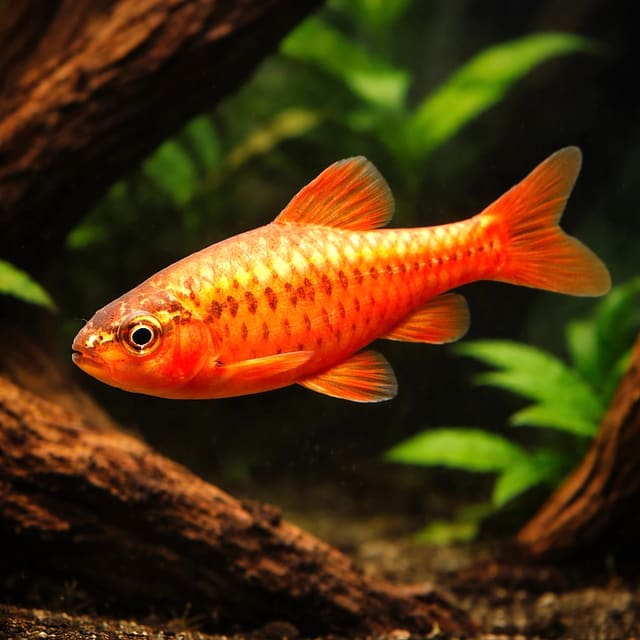
Albino Cherry Barb (Rohanella titteya)
20–27°C · pH 6–8 · 54L
£2.99

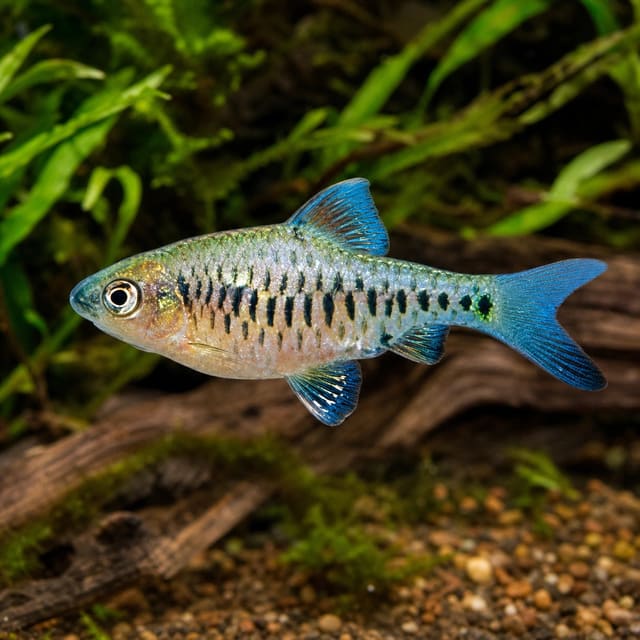
The Rainbow Shiner (Hydrophlox chrosomus) is a freshwater minnow from North America that reaches 8.1 cm total length. It suits keepers with a mature filtered aquarium; OATA’s broad barbs guidance gives at least five fish, 20–27°C, pH 6.0–7.5 and 4–12°dH. Sold individually in sizes from 3–3.5 cm to 5–6 cm.
Adult size is the maximum length this species reaches at full maturity (scientific sources). The livestock you receive will be younger and smaller — pick a size above for the actual shipping size. Product-photo provenance and any image-specific limitations are stated on the listing.
Hydrophlox chrosomus
Shoaling fish: kept in a group they feel safer, stay calmer and show their best colour.
The Rainbow Shiner (Hydrophlox chrosomus) is a freshwater minnow from North America that reaches 8.1 cm total length. It suits keepers with a mature filtered aquarium; OATA’s broad barbs guidance gives at least five fish, 20–27°C, pH 6.0–7.5 and 4–12°dH. Sold individually in sizes from 3–3.5 cm to 5–6 cm.
Adult size is the maximum length this species reaches at full maturity (scientific sources). The livestock you receive will be younger and smaller — pick a size above for the actual shipping size. Product-photo provenance and any image-specific limitations are stated on the listing.
Maintain these water conditions for optimal health and vibrant colors
Rainbow Shiner (Hydrophlox chrosomus) is a freshwater, benthopelagic minnow from North America. The FishBase Rainbow Shiner profile places it in the family Leuciscidae and records a maximum of 8.1 cm total length. It suits keepers who can provide a mature filtered aquarium, maintain measured water values and keep a group rather than a lone fish. That maximum is the decisive size for long-term planning: allow for an 8.1 cm adult even when choosing one of the smaller dispatch sizes.
Its recorded distribution covers the Coosa, Cahaba, Alabama and extreme upper Black Warrior River systems within the Mobile Bay drainage, including parts of north-western Georgia, Alabama and south-eastern Tennessee. FishBase categorises the species as temperate and lists its IUCN category as Least Concern. Treat the temperate classification as natural-history context and use the aquarium values set out below for routine husbandry.
The Rainbow Shiner natural-history summary also identifies it as a North American freshwater ray-finned fish among the shiners, daces and minnows. It is therefore better understood as a minnow than as a true barb, although it sits within our barbs collection for catalogue navigation.
Choose it when you can maintain a filtered aquarium, test water every week, carry out regular partial water changes and accommodate a group rather than a lone individual. The care plan also requires measured water values, food sized for the selected fish and a compatibility check based on adult size and behaviour. These decisions matter more than choosing solely by the fish’s dispatch measurement.
A strong plan begins with three commitments: use the 8.1 cm recorded maximum when judging space, keep at least five under OATA’s group guidance, and introduce livestock only after the biological filter is established. If those conditions fit your aquarium, the live size selector lets you choose the dispatch size without changing the long-term identity or adult-size plan.
One purchase supplies one Rainbow Shiner in the size selected. The live selector lists 3–3.5 cm, 4–5 cm and 5–6 cm. Choose the required dispatch size, then set the purchase quantity to the number of individual fish needed for the group.
The size you select is the size supplied, not the adult size. A 3–3.5 cm fish therefore needs the same adult-size planning as a 5–6 cm fish. Dispatch size describes the animal at fulfilment; it is not a promise about age, sex, maturity, future colour or final length. Use the FishBase maximum of 8.1 cm total length when assessing the completed aquarium.
| Selector size | How to use it |
|---|---|
| 3–3.5 cm | Plan food size, companion size and the aquarium around an individual dispatched within this band. |
| 4–5 cm | Treat this as a dispatch measurement while retaining the full 8.1 cm adult allowance. |
| 5–6 cm | Check that proposed companions and the aquarium remain suitable as the fish approaches the recorded maximum. |
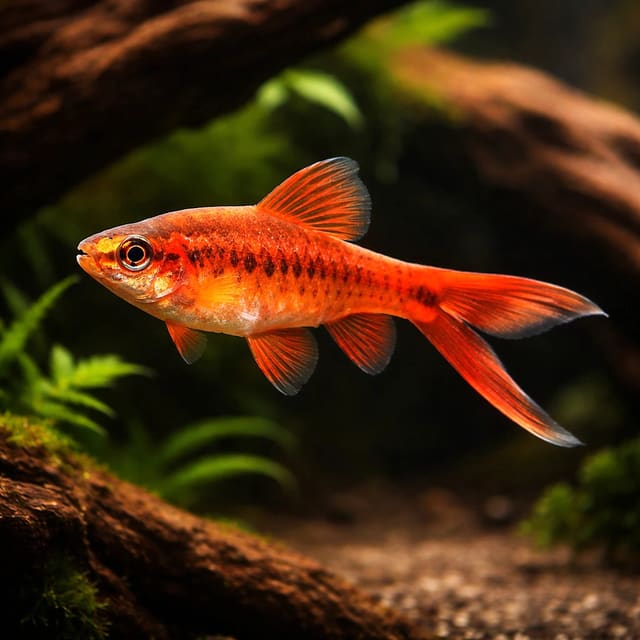
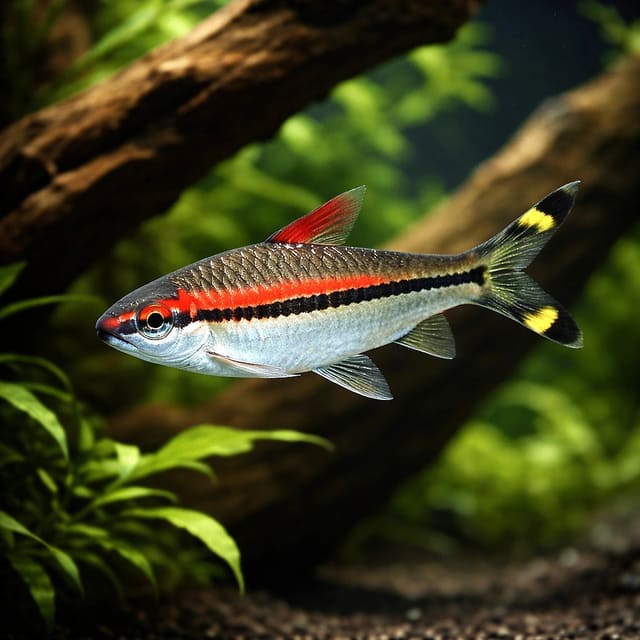
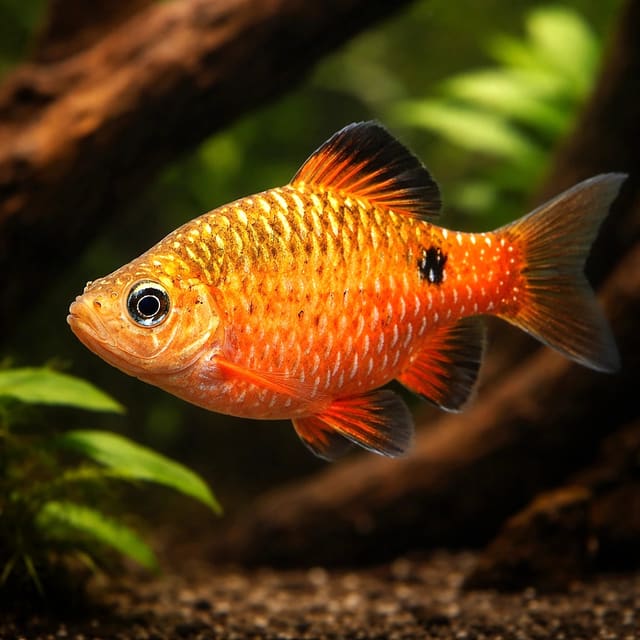
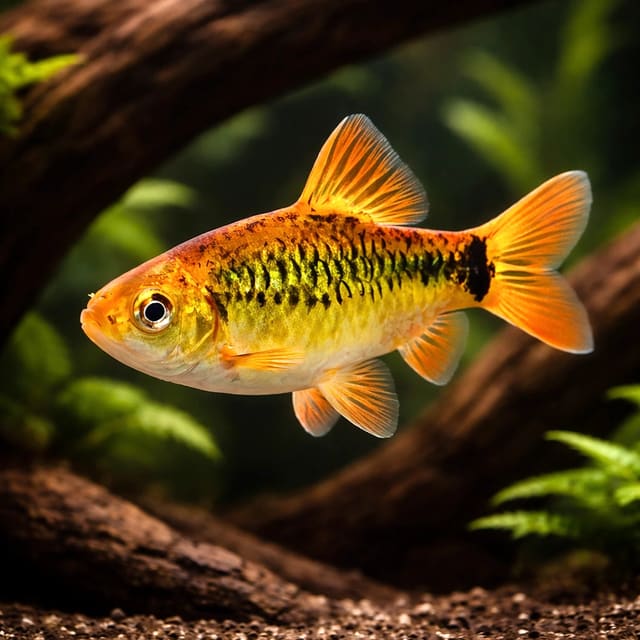
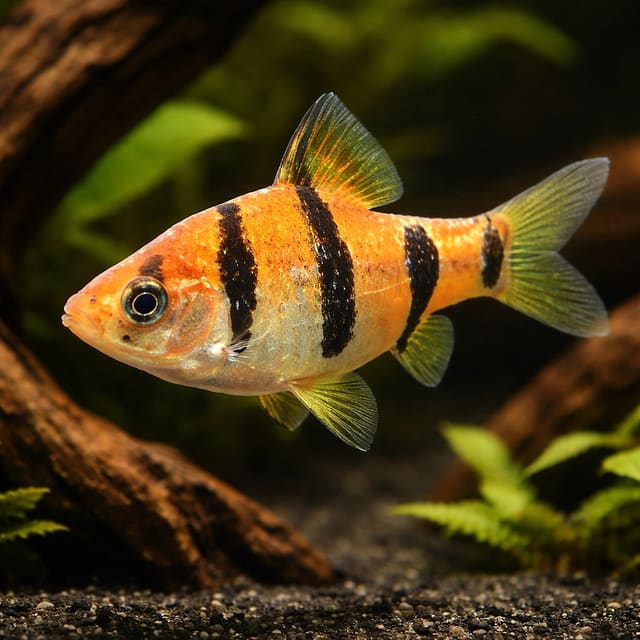
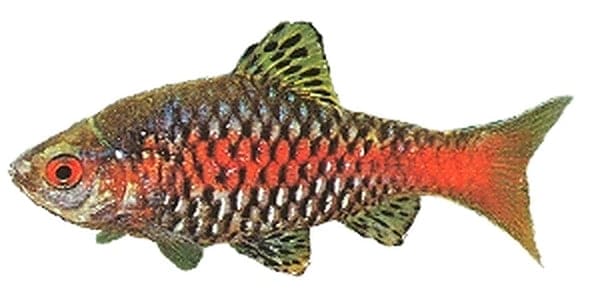
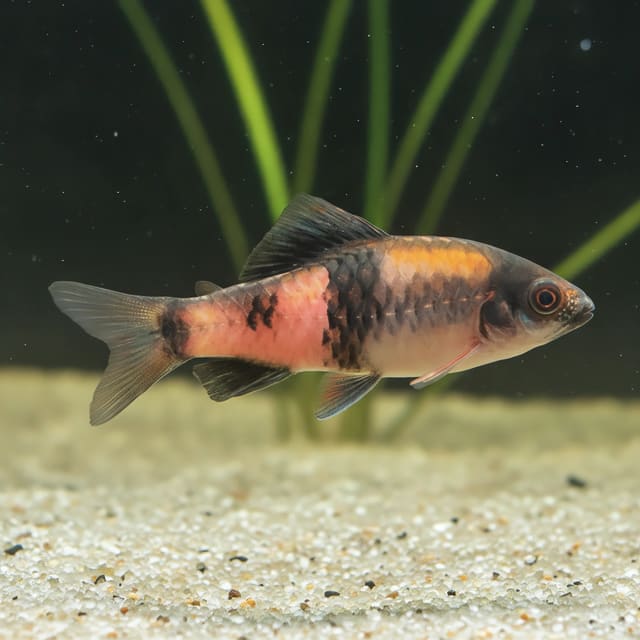
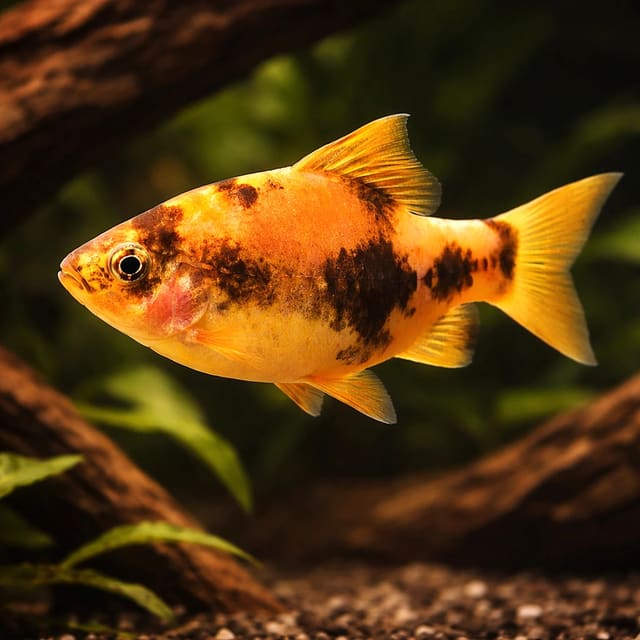
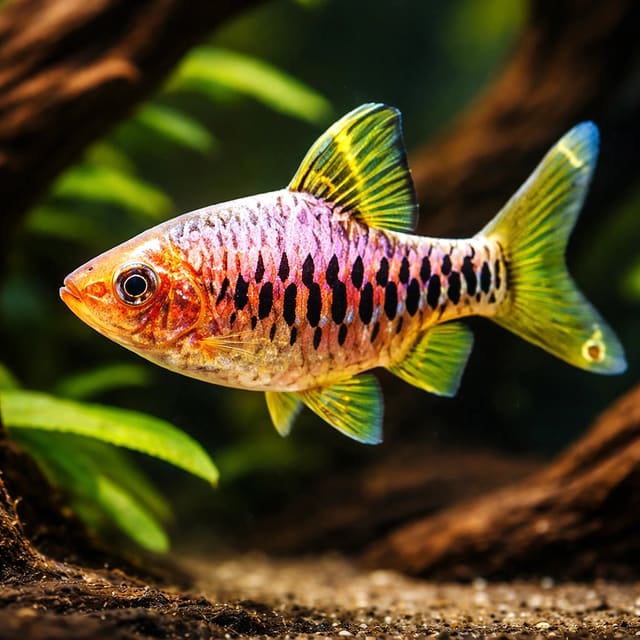
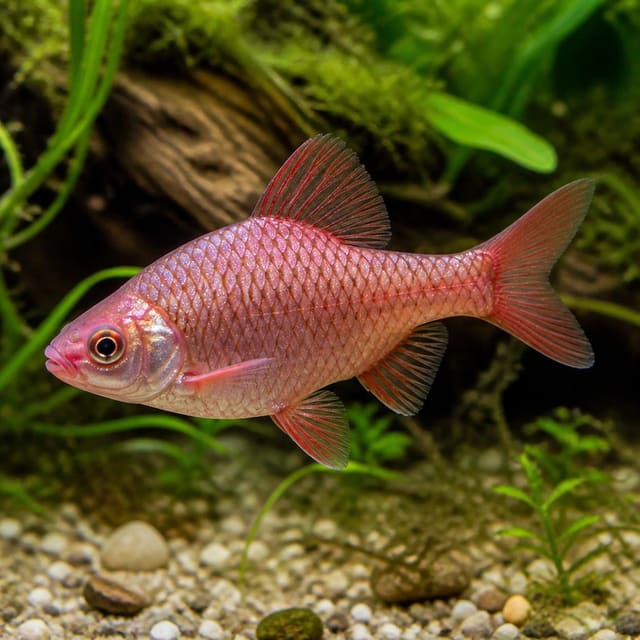
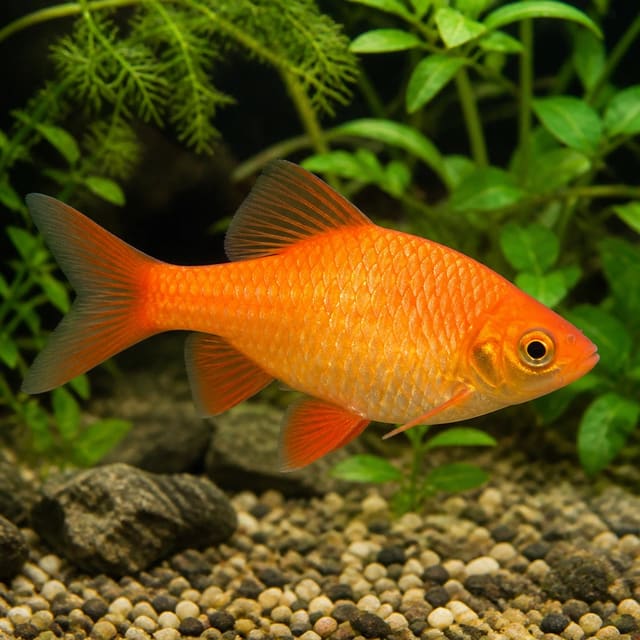
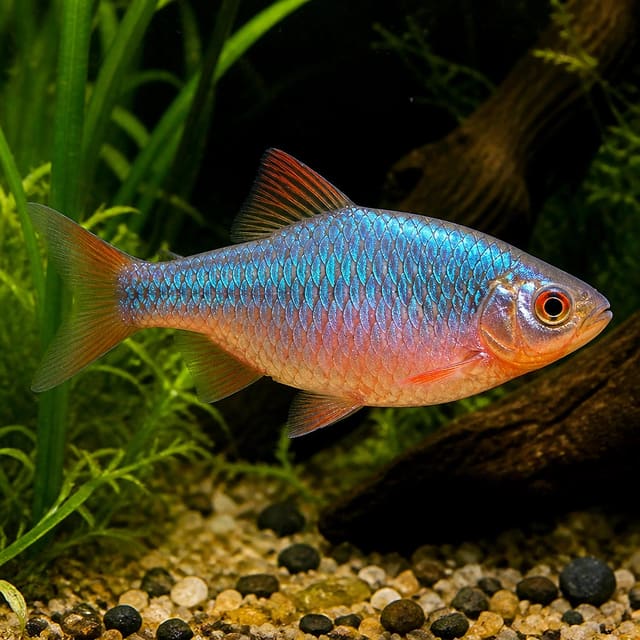
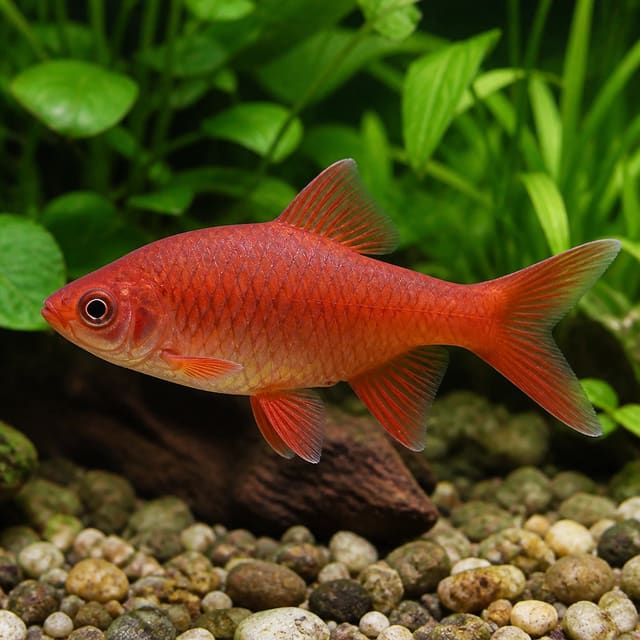
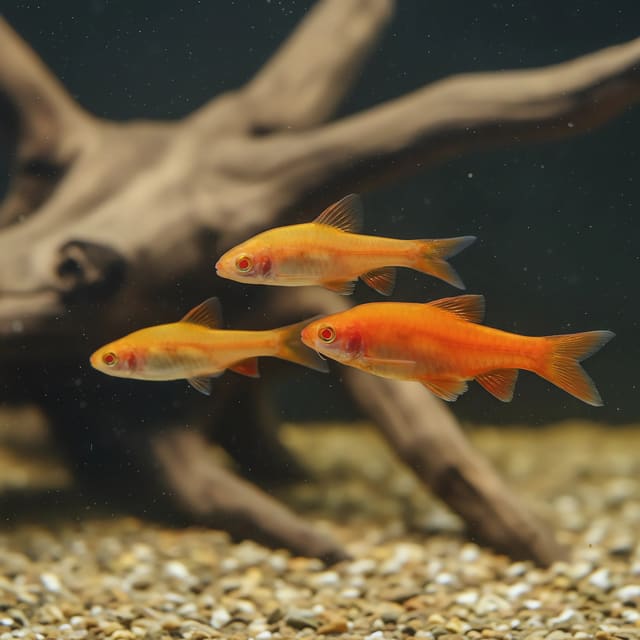
Some gallery images are representative, based on reference photographs of this species, and none shows the exact animal supplied, so colours can look slightly different from the live animal.
Sex is guaranteed only when the selected option explicitly states male or female. This Rainbow Shiner listing has no sex-guaranteed option.
| Suits | Not suited to |
|---|---|
| A mature, filtered freshwater aquarium | An aquarium without an established biological filter |
| A group of at least five, with more where capacity permits | Solitary keeping or a group too small for OATA’s guidance |
| Keepers prepared to test water at least weekly | A setup where ammonia or nitrite remains detectable |
| Measured water within the stated group ranges | Water outside the stated temperature, pH or hardness ranges |
Start with the number of fish the aquarium can support at adult size, not the smallest measurement in the selector. Under the group guidance below, five is the minimum planning number and more is better. Because each purchase supplies one animal, a planned group of five requires a quantity of five in the chosen size. Check the live selector when making the choice rather than relying on static text about a particular size.
OATA’s broad barbs guidance gives 20–27°C, pH 6.0–7.5 and soft-to-medium general hardness of 4–12°dH for the group. It also gives carbonate hardness of 3–10°dKH, ammonia at 0 mg per litre, nitrite at 0 mg per litre and nitrate no more than 20 mg per litre above the normal tap-water level.
For space planning, the same guidance recommends an aquarium of at least 60 litres for a small group of the smaller species represented by an approximately 8 cm example. Use 60 litres as a starting benchmark rather than a universal stocking formula. Choose a larger aquarium when the intended total livestock load, filtration capacity or number of Rainbow Shiners requires more room. Larger aquariums also tend to hold environmental conditions more steadily.
| Decision | Planning figure |
|---|---|
| Recorded maximum length | 8.1 cm total length |
| Group | At least five; more is better |
| Starting aquarium benchmark | At least 60 litres for a small group of smaller, approximately 8 cm fish |
| Temperature | 20–27°C |
| pH | 6.0–7.5 |
| General hardness | 4–12°dH |
| Carbonate hardness | 3–10°dKH |
| Ammonia and nitrite | 0 mg per litre |
Use these figures together. A temperature inside the range does not compensate for detectable ammonia, too few fish or an aquarium that cannot accommodate the adult group. Equally, a large aquarium still requires an established biological filter, weekly testing and controlled feeding.
Proceed only when the aquarium is mature and filtered, ammonia and nitrite both test at zero, and the group can be planned around the adult maximum. If the intended aquarium falls below the starting space benchmark, holds fewer than five, or cannot maintain the stated water values, revise the setup before choosing a dispatch size.
Build the aquarium around biological filtration before introducing fish. The RSPCA’s aquarium welfare guidance explains that fish release toxic ammonia and that a working biological filter supports beneficial bacteria which convert ammonia to nitrite and then to the safer nitrate. A filter is therefore an essential life-support system, not an optional way to make the water look clear.
Follow our first-aquarium preparation guide when establishing a new setup. Maturation means giving the biological filter time to develop before livestock is added. Clear-looking water alone is not the test: use measured ammonia and nitrite values to decide whether the aquarium is ready.
Some fish within the catalogue’s wider barb grouping may eat live plants, so inspect planting after introduction rather than assuming every plant will remain untouched. If damage develops, preserve the required cover with suitable artificial plants or ornaments while adjusting the planting choice.
| Check | Ready when |
|---|---|
| Biological filter | Established, running and free from blockages |
| Ammonia | 0 mg per litre |
| Nitrite | 0 mg per litre |
| Temperature and chemistry | Inside the stated planning ranges |
| Space | The adult group fits the aquarium plan |
| Cover | Plants or suitable ornaments are in place |
Delay introduction if either ammonia or nitrite is detectable. Adding fish increases both waste and feeding, so the filter must be ready to process that extra load. This preparation reduces the risk of new tank syndrome, in which the bacterial population is too small for the waste produced.
Measure the aquarium rather than judging water quality by appearance. Our water-chemistry guide explains the values to test, while the aquarium water matcher helps compare measured results with the planning range. Record results consistently so a gradual change can be seen before it becomes a larger problem.
The nitrate target uses the tap supply as its baseline. If normal conditioned tap water measures 10 mg per litre nitrate, the aquarium should not exceed 30 mg per litre under this calculation. If the baseline is 25 mg per litre, the corresponding ceiling is 45 mg per litre. Record the tap result and aquarium result separately so the comparison remains meaningful.
Ammonia and nitrite are different: their targets remain zero rather than an amount above the tap baseline. A non-zero result is a reason to stop adding livestock, review feeding and check the filter. Do not treat a result as acceptable merely because the fish still appear active.
Test before making changes, then use the measured result to identify which value needs attention. Changing several conditions at once makes it harder to tell which action produced the result. The practical priority is clear: keep ammonia and nitrite at zero, keep nitrate within its relative ceiling, and hold temperature, pH and hardness inside their respective bands.
Check the replacement water as part of the same process. Treat tap water with an aquarium conditioner before it enters the tank so chlorine or chloramine does not harm the fish or the beneficial bacteria. Match routine maintenance to the weekly schedule below rather than waiting for cloudy water or changed behaviour.
Plan at least five Rainbow Shiners, with more being better when the aquarium can support them. OATA advises that fish within this grouping will often become stressed when kept singly or in too small a group. A larger group may also reduce fin-nipping behaviour within fish covered by that guidance.
The minimum of five is a starting social number, not permission to place five fish in any container. Combine it with the 8.1 cm recorded maximum, the at-least-60-litre starting benchmark, the space needed by every other occupant and the aquarium’s biological capacity. Decorations, substrate and equipment also reduce the gross volume to a smaller working water volume.
For example, the 60-litre benchmark divided by five fish equals 12 gross litres per group member. Do not use that arithmetic as a general stocking rule: it simply shows how quickly the starting benchmark is consumed before displacement, companions and filtration are considered. Adding another species without increasing capacity would make the real allowance smaller.
Choosing the 3–3.5 cm size does not create extra permanent capacity. Those fish are still planned at the adult maximum. Likewise, selecting 5–6 cm fish does not establish their sex or maturity; it only identifies the dispatch size band.
More is better only when the aquarium can carry the larger adult group without sacrificing water quality. First allocate space to the intended number at adult size, then assess filtration and the total community. Do not increase the group merely to reach a visual effect if doing so pushes the aquarium beyond the space benchmark or makes zero ammonia and nitrite difficult to maintain.
Introduce any increase slowly. Beneficial bacteria must grow as the fish population and feeding load increase. A staged approach lets each addition be assessed through water tests and behaviour before the next livestock decision is made.
Use a good-quality flake or granule as the routine food under OATA’s group feeding guidance. Smaller fish may also benefit from live or frozen daphnia, small bloodworm or tubifex. Select particles that the chosen dispatch size can take readily, especially when feeding a group containing smaller individuals.
Feed once a day and offer only what the fish can eat within a few minutes. This limit protects the aquarium as well as the fish. Uneaten food breaks down and releases waste, increasing the burden on the biological filter and working against the zero-ammonia and zero-nitrite targets.
The time limit is more useful than a fixed pinch because food density, particle size and the number of fish vary. A portion that works for five 5–6 cm fish may be poorly sized or excessive for five 3–3.5 cm fish. Adjust particle size and amount while keeping the once-daily schedule and few-minutes limit.
| What you see | What to do |
|---|---|
| Food remains after a few minutes | Reduce the next portion and remove excess during maintenance. |
| Some fish cannot take the particles | Choose a smaller flake or granule size. |
| One area receives all the food | Distribute the same controlled portion so more of the group can feed. |
| Interest in food drops | Test water and compare behaviour with the fish’s normal pattern. |
Daphnia, small bloodworm and tubifex can add variety, but they do not remove the need to control the total meal. Count every food offered within the same daily allowance. Do not extend feeding because one item is live or frozen.
Use feeding time to inspect the group. Reduced intake, altered body condition, unusual swimming or increased hiding can be early signs that the aquarium needs attention. Begin with water testing rather than adding extra food to compensate.
Make introduction a water-quality decision. Before adding Rainbow Shiners, confirm that the aquarium is large enough for the intended adult group, that its filter is established, and that ammonia and nitrite both read 0 mg per litre. Temperature, pH and hardness should already sit inside their planning ranges.
Follow the current delivery and Live Arrival Guarantee policy when receiving and acclimatising the fish.
Increase the aquarium population slowly. Each added fish increases waste, and additional feeding creates a further load. The beneficial bacterial population must expand to process that change. Adding too many fish too quickly can lead to new tank syndrome, with ammonia or nitrite rising to harmful levels.
During the first feeds, compare each fish with the healthy signs described by OATA: clear, bright eyes; undamaged fins; intact scales; no ulcers or bumps; and swimming behaviour appropriate for the individual. Observe whether all fish can take the chosen particle size and whether any individual is being prevented from feeding.
Changes in swimming, breathing, colour, body condition, hiding or food intake are reasons to test the water. A fish hanging at the surface, sitting on the bottom or swimming erratically should trigger the same immediate check. Do not add more livestock while a new group is unsettled or while ammonia or nitrite is detectable.
Allow test results and behaviour to guide the next stocking decision rather than following a fixed calendar. The next addition is appropriate only after the filter continues to hold ammonia and nitrite at zero under the increased waste and feeding load.
Carry out a 25% partial water change at least once a week. Use a siphon where helpful to remove solid waste from the gravel, and treat replacement tap water with a suitable conditioner before adding it. This removes harmful chlorine or chloramine and protects both fish and biological filtration.
Test the aquarium at least weekly. Record ammonia, nitrite and nitrate alongside temperature, pH and hardness so results can be compared over time. Ammonia and nitrite must remain at zero; nitrate must not rise more than 20 mg per litre above the normal tap-water baseline.
Check the filter for blockages during maintenance. If the media needs cleaning, rinse it lightly in tank water removed during the partial water change. Do not rinse it beneath the tap, because chlorine or chloramine may kill part of the beneficial bacterial population established in the media.
| Weekly action | Purpose |
|---|---|
| Change 25% at least once a week | Controls accumulated waste and refreshes the aquarium. |
| Siphon solid debris | Removes waste before it breaks down further. |
| Condition replacement water | Removes harmful chlorine or chloramine. |
| Test ammonia and nitrite | Checks that biological filtration is keeping both at zero. |
| Compare nitrate with tap water | Checks the relative 20 mg-per-litre ceiling. |
| Inspect filter flow and blockages | Finds restrictions before filtration is compromised. |
Know the group’s normal swimming, feeding and body condition. Watch for hanging at the surface, sitting on the bottom, erratic swimming, faster or slower gill movement, increased hiding, changed colour, white spots, fluffy growths, missing scales, fin loss, bumps, ulcers, weight change or reduced appetite.
If any of these changes appear, test water quality first and compare the result with the target table. Check recent feeding, the filter and any recent livestock increase. Contact us for health guidance after recording the measured values and observed changes. Do not begin a treatment merely from a symptom list, because the correct response depends on the cause.
Consistent zero ammonia and nitrite show that the filter is processing the present load at the time of testing. A rise after new fish or heavier feeding means the aquarium needs attention before any further addition. Keep the weekly routine even when the fish look normal; visible behaviour is not a substitute for measured water quality.
Compatibility depends on the full aquarium rather than a universal tank-mate list. Compare each proposed companion by adult size, water-range overlap, swimming and feeding behaviour, and the likelihood of fin-nipping or predation. Use adult measurements for both species rather than the Rainbow Shiner’s dispatch size.
OATA warns that some fish within its barb grouping may be semi-aggressive and may nip fins. Those fish should not be mixed with slow-swimming, timid or long-finned companions. Apply that warning whenever a proposed fish has the stated behaviour, while continuing to observe the Rainbow Shiner group rather than assigning every member of a broad catalogue group the same temperament.
| Candidate feature | Decision |
|---|---|
| Could swallow the shiner | Do not combine them. |
| No workable water overlap | Choose a different companion. |
| Slow, timid or long-finned with a semi-aggressive or fin-nipping fish | Do not combine them. |
| Similar adult scale and overlapping water needs | Continue to the behaviour and feeding checks. |
| Unknown adult size or care needs | Pause the decision until those points are clear. |
Ask us for a stocking assessment with the aquarium volume, measured water values, number of Rainbow Shiners and exact identity and adult size of every existing or proposed companion. A useful assessment needs the whole community, not only two common names.
Passing the planning screen is the beginning of compatibility assessment, not the end. Watch the first mixed group for altered swimming, hiding, aggression, damaged fins, changed breathing and reduced feeding. These signs can reveal a behavioural conflict, competition for food or a water-quality problem following the increased biological load.
Test ammonia and nitrite when behaviour changes. An introduction increases waste and feeding, so a non-zero result may point to biological filtration rather than a direct conflict between species. Stop further stocking and address the water result before drawing conclusions from behaviour alone.
If water remains within range, inspect how the animals interact. Repeated pursuit, fin damage or one fish being kept away from food indicates that the mix needs intervention. Increased hiding or a sustained loss of appetite also matters even when there is no visible injury.
| Observation | Next decision |
|---|---|
| Ammonia or nitrite above zero | Stop adding livestock and review filtration, feeding and the recent increase. |
| Repeated fin damage | Reassess the behavioural match and separate the conflicting fish when necessary. |
| One group cannot feed | Review food size, distribution and whether the combination is workable. |
| Companion grows large enough to swallow it | Do not maintain that adult combination. |
| Normal feeding and swimming with zero waste readings | Continue observation and the weekly testing routine. |
A mix that appears workable at dispatch size may change as the fish approach adult dimensions. Repeat the adult-size and feeding checks whenever a companion’s mouth size, activity or access to food changes. The Rainbow Shiner itself must always be assessed against the 8.1 cm recorded maximum.
Keep the group requirement in the calculation. Removing individuals until fewer than five remain may create a social problem even if it reduces total stocking. If a mixed community cannot accommodate at least five Rainbow Shiners at adult size while maintaining the water targets, revise the community rather than treating solitary keeping as the solution.
Do not infer compatibility from shared labels such as community fish, temperate fish or barb. The practical match comes from overlapping measured water conditions, suitable adult dimensions, workable behaviour and fair access to food.
FishBase records the Rainbow Shiner at a maximum of 8.1 cm total length. Plan the aquarium and every compatibility decision around that adult figure rather than the 3–3.5 cm, 4–5 cm or 5–6 cm dispatch size.
OATA’s broad barbs guidance recommends at least 60 litres for a small group of smaller fish represented by an approximately 8 cm example. Treat that as a starting benchmark and choose more space when the total adult group, other occupants or filtration load requires it.
OATA’s group guidance says to keep at least five, with more being better when adult space and filtration allow. Fish in this grouping will often become stressed when kept singly or in too small a group.
It suits a keeper who can prepare a mature filtered aquarium, test the water at least weekly, maintain ammonia and nitrite at 0 mg per litre and plan a group of at least five around the 8.1 cm adult size.
Under OATA’s group feeding guidance, feed good-quality flake or granules once daily and offer only what can be eaten within a few minutes. Smaller fish may also take live or frozen daphnia, small bloodworm or tubifex.
OATA’s broad barbs guidance gives 20–27°C and pH 6.0–7.5, with general hardness of 4–12°dH and carbonate hardness of 3–10°dKH. Keep ammonia and nitrite at 0 mg per litre.
Screen behaviour carefully. OATA warns that some fish in its wider barb grouping can be semi-aggressive and nip fins, so do not mix a fish showing those traits with slow-swimming, timid or long-finned companions.
Choose companions only when their adult size, water needs, behaviour and feeding requirements fit the same aquarium. Avoid fish large enough to swallow it, combinations without workable water overlap, and slow, timid or long-finned animals where semi-aggressive or fin-nipping behaviour is present.
Someone must be present to receive the parcel. Film every delivery continuously from the sealed parcel as it is opened, showing the fish still in the sealed bag; inspect it that day, float the bag for 20–30 minutes before release and never pour the bag water into the aquarium.
No reviews for this item yet. Bought one? Honest reviews only, good or bad.
What customers say about ordering from us
I have a small group of long finned mountain minnows. So was delighted to be able to order ten of this variety to increase the genetics in my tank . The ones I recieved are healthy but it’s to early to give a verdict on wether they are of a long finned type since they are small currently.
Gordon Walker · 23 Sept 2026
100% success travel and "installation". Pleased with quality of purchase. The Siamese fighter a bit "shy" so have not yet seen him at his best yet but looking good. Happy customer. GG
George E Garratt · 21 Sept 2026
Reviews of our shop, collected by Judge.me, an independent third-party review collector. Newest first.