Moderate
6 × Rainbow Shiners (Hydrophlox chrosomus)
£28.99

Five live Rainbow Shiners (Hydrophlox chrosomus) for a mature aquarium with clean water, open swimming space and appropriate flow. Peaceful shoaling fish; plan the total group separately from this five-fish offer. No sex guarantee.
Adult size is the maximum length this species reaches at full maturity (scientific sources). The livestock you receive will be younger and smaller. Product-photo provenance and any image-specific limitations are stated on the listing.
Hydrophlox chrosomus
Five live Rainbow Shiners (Hydrophlox chrosomus) for a mature aquarium with clean water, open swimming space and appropriate flow. Peaceful shoaling fish; plan the total group separately from this five-fish offer. No sex guarantee.
Adult size is the maximum length this species reaches at full maturity (scientific sources). The livestock you receive will be younger and smaller. Product-photo provenance and any image-specific limitations are stated on the listing.
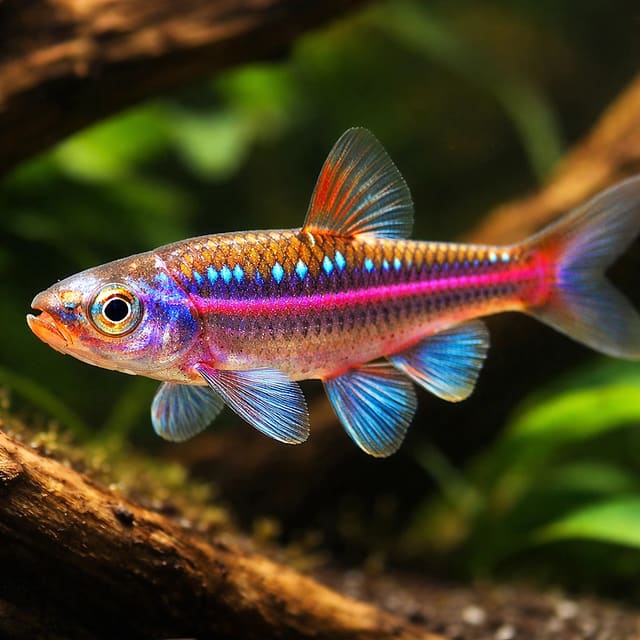
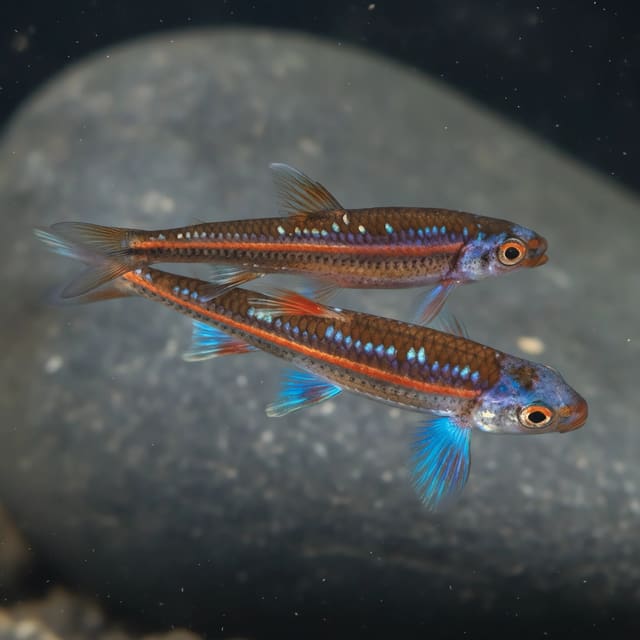
This listing supplies five live Rainbow Shiners (Hydrophlox chrosomus). They are peaceful, active shoaling freshwater fish from southeastern North America, best considered for a mature aquarium with clean water, room to swim and an appropriate flow. Their attraction is movement as well as colour: the display comes from fish moving through the light together, rather than from a single fish sitting in one viewing position.
Think about the final group before choosing the pack. Practical Fishkeeping recommends keeping at least six of this species together. The five fish supplied here are the purchase quantity; they should be considered within your plan for the total shoal. If you already keep this species, assess whether your aquarium has capacity for the additional fish. If you are starting a new group, decide how you will meet its social needs before placing an order.
Sex is guaranteed only when the selected option explicitly states male or female. This Rainbow Shiner listing has no sex-guaranteed option. Colour is also variable: reflected light and breeding condition affect its appearance, so the most striking colour seen at a particular moment is not a fixed specification for every fish. Select the species because its behaviour and care suit your aquarium, with colour as part of its natural appeal.
The accepted scientific name is Hydrophlox chrosomus. Older aquarium literature uses Notropis chrosomus for the same species, so that former combination remains useful when reading established care articles. Rainbow Shiner is the familiar common name. A change in scientific name does not create a different animal or change the five-fish quantity of this offer.
The species belongs to Leuciscidae, a freshwater fish family. Its stream association helps explain why open water, clean conditions and a considered flow are important in the aquarium. A well-arranged planted aquarium can still provide those features: plants and open swimming space need to work together rather than compete for every part of the tank.
Around 8 cm is a reported maximum length in the specialist account, with fish often smaller. Use that as a reason to plan ahead for adult activity, not as a promise that every individual will reach the same size. Recently arrived fish may look less vivid than established fish, and a fish viewed from one angle may look different when it turns. Allow time to observe them under your aquarium’s normal lighting.
If the size at dispatch is important to your plans, ask about current size before ordering. The adult maximum and the size of fish being sent are different questions. A photograph cannot establish the measured size or sex of the animals you will receive. Base a purchase on the live offer, the care needs and a prepared aquarium.
The best use of a five-fish pack starts with an aquarium assessment. Consider the existing fish, the intended final shoal, the available swimming route, the filtration and the feeding routine. An aquarium may look spacious when fish are small yet become crowded as they develop. Similarly, extra water volume does not compensate automatically for a layout that interrupts every swimming route or for residents that repeatedly exclude newcomers.
Tropical Fish Co assesses this species as intermediate in suitability. This is a retailer assessment of the preparation and attention involved, rather than a scientific rating of difficulty. A keeper who already understands water testing, mature filtration and careful stocking will be better placed to provide a settled environment. A newly assembled aquarium should be made ready before the arrival of live fish.
Keep purchase planning separate from assumptions about immediate availability. Use the current product information when ordering and assess the aquarium for the fish you intend to keep over time. The related six-fish pack offers another purchase quantity of the same species; it is a comparison of offers, rather than a recommendation to add more fish regardless of space.
For a quick decision, ask yourself whether the aquarium is mature, whether its conditions suit the whole community, whether the total group has been planned, and whether each fish will have room and access to food. If one of those questions is unresolved, settle it before arranging an introduction. Good preparation makes the five-fish purchase part of a coherent keeping plan.
| Good preparation | What to assess |
|---|---|
| Mature aquarium | Working biological filtration and measured water conditions. |
| Planned shoal | The total keeping group, separate from the five-fish purchase quantity. |
| Usable swimming route | Open water, appropriate flow and accessible cover. |
| Considered community | Peaceful residents with compatible environmental and feeding needs. |
| Sustainable care | Time for testing, maintenance and observing individual fish. |
Rainbow Shiners should enter an aquarium with mature biological filtration and an established maintenance routine. Clear-looking water is not enough to demonstrate readiness. Test results, the aquarium’s history and the way its filter has been maintained give a more useful picture. If you are unsure how maturity is established, the guide to preparing a mature aquarium explains the groundwork before fish are introduced.
Plan filtration for all the fish that will live in the aquarium, including the intended final shoal. Adding a pack changes the amount of feeding and waste the system must manage. A filter that copes with the present residents still needs careful observation after an addition. Keep testing and review feeding as the new fish settle, rather than assuming previous stability will continue without attention.
During routine care, protect the aquarium’s biological filtration while removing accumulated waste. Maintenance should support the existing system, not disrupt everything at once. Use the instructions for your filtration equipment and water treatments appropriately, and keep an account of changes if something becomes unsettled. Knowing what happened recently is often more useful than changing several things in response to a single worrying observation.
These fish need room to move as a group. Look at the usable swimming route through the aquarium, not only its stated volume. Decorations that divide the tank into small pockets can limit the benefit of a larger container. A long route with open areas allows you to see whether the fish can move freely without being forced through narrow gaps whenever they turn.
Keep plants and cover around that route rather than filling the entire water column. Cover makes the aquarium less bare, while open water gives the shoal space to move. The balance can be judged by watching the fish: there should be accessible open areas and places where an individual can pause without being trapped or continually displaced by another resident.
Gravel and sand are part of the habitats described in the specialist account, which includes clear streams, riffles and pools. An aquarium can use this as inspiration without attempting to reproduce every feature of a wild stream. Choose practical materials that you can maintain and arrange them so settled debris can be removed. A decorative river scene still needs working filtration and an accessible cleaning routine.
Aquarium furniture should be secure and suitable for fish. Leave enough access to inspect the filter intake, remove trapped food and see areas where a fish may remain out of view. An attractive layout becomes more useful when you can maintain it without repeatedly dismantling the places the fish use. Think about how the tank will be serviced after the group is established.
Rainbow Shiners appreciate flow, in keeping with their stream habitat. Position the outlet so water moves through useful parts of the aquarium, and observe what the fish do rather than relying solely on an equipment rating. Flow should be considered with the swimming route, cover and the needs of existing residents. A strong current in one corner does not necessarily improve conditions elsewhere.
Watch whether the fish can choose between moving water and quieter areas. They should be able to feed and rest without being pushed constantly against decorations or into one end of the aquarium. If the layout leaves a fish struggling to hold position, reassess the outlet direction and obstructions. The aim is a usable environment, not the strongest current that the equipment can produce.
Clean water and water movement work together, but neither replaces the other. An outlet can move visibly while waste collects behind a decoration. Inspect those places during maintenance. Likewise, a filter can contain appropriate media while an awkward outlet arrangement makes feeding difficult. Consider the aquarium as a system: filtration, movement, space and the feeding routine all contribute to how the shoal lives.
Tropical Fish Co’s aquarium planning guidance is 15–24 °C, pH 6.5–7.5 and hardness of 5–15 dGH. These figures are store planning guidance, rather than demonstrated species-specific optimum values. Use them to discuss a proposed aquarium and to compare its conditions with the needs of the whole community. They do not mean that an abrupt change anywhere within the ranges is harmless.
Measure the aquarium and the water used for maintenance. A remembered tap-water reading may not describe the water in a stocked tank, and a reading from another aquarium is not a substitute for testing this one. The guide to understanding aquarium water chemistry can help you distinguish the measurements and recognise why stability matters.
Temperature should be assessed as part of the aquarium’s actual conditions. Do not decide that equipment is unnecessary simply because the fish are associated with cooler water, or that a warmer community is suitable because the shop sells freshwater fish. Check what the tank does in its room and consider its other residents. The useful question is whether you can maintain suitable, consistent conditions.
Interpret pH and hardness together with the rest of the aquarium plan. Chasing a single reading while overlooking filter maturity, waste or unsuitable companions will not provide a comfortable environment. If the measured water is outside your planned conditions, decide how to address that before introducing fish. Avoid improvised changes made after arrival just to match a number on a care page.
The specialist account describes drift feeding on small invertebrates and plant matter, with flakes and frozen foods accepted in the aquarium. A varied diet is a practical starting point. Choose food that the fish can take readily and offer manageable portions. The response of the fish and the amount left behind are better guides to adjusting feeding than the urge to add more because they appear interested.
Distribute food so the whole group has an opportunity to feed. In moving water, watch where food travels: some may remain accessible while some can lodge in plants or disappear towards the filter. Adjust the feeding position if the same fish repeatedly misses out. A shoal approaching food together is encouraging, but it does not by itself show that every individual has eaten.
Keep an eye on existing residents during feeding as well. A peaceful fish can still compete successfully for food, and an active group may alter the feeding pattern of a community. Make sure quieter residents retain access to their own food. If a combination requires so much extra food that leftovers accumulate, review the arrangement instead of treating excess feeding as the solution.
Remove uneaten food where practical and keep the substrate and filter intake under observation. A more varied diet should not mean a larger total amount of waste. Introduce a new food thoughtfully so you can see whether it is accepted. If a fish loses interest in food, check water quality and its interactions with other fish before assuming that changing flavour will resolve the problem.
Prepare the aquarium and your observation time in advance. Check the filter is running as intended, test the water and make sure the layout is ready. Avoid arranging a major redesign at the same time as adding fish. A settled environment gives you a clearer view of how newcomers respond and reduces the number of changes you need to interpret if something concerns you.
Keep the surroundings calm when fish arrive and follow appropriate gradual introduction guidance. The useful care principles are stable water, reduced disturbance and close observation; there is no single fixed timing on this page that can account for every aquarium and transport situation. Seek appropriate advice if the fish or conditions require a different approach.
Read the current delivery and live arrival information before ordering, including the conditions for an arrival claim. Those terms concern transport and support. The prepared aquarium, measured water and careful introduction are the parts of arrival that you organise at home. Keep the policy accessible so you do not have to search for it while trying to assess the fish.
Once introduced, allow the group space to explore with minimal disturbance. Keep lighting and activity around the aquarium calm initially, as in the existing care guidance, and avoid a heavy first-day feed. Observe breathing, posture, swimming and interest in food. These observations help you judge whether the fish are settling; a bright colour alone is not a complete measure of their condition.
Regular care should include testing, appropriate water changes, removing accumulated waste and checking equipment. Match the routine to the actual aquarium rather than to a fixed calendar copied from a different tank. Keep notes of results and changes where they help you identify a pattern. A steady routine is easier to assess than intermittent large interventions made only when the aquarium looks untidy.
Check the filter intake, outlet and visible flow as part of the same visit. Plants and decorations can shift, and accumulated debris can change where water moves. Look at areas behind the layout as well as the front glass. If one part repeatedly collects food or waste, a small adjustment to feeding or flow may make maintenance more practical without disturbing the whole aquarium.
Use observation to complement testing. The behaviour of the shoal, access to food and relationships with residents tell you things that a water test cannot. Conversely, normal-looking swimming does not replace a test. Keep both kinds of information in view: water quality describes the environment, while the fish show how they are using it.
When a problem appears, first establish what has changed. Consider recent additions, cleaning, feeding, equipment operation and measured conditions. Avoid selecting a medicine or making a drastic water adjustment from a colour change alone. If breathing, posture, appetite or activity remains concerning, seek competent aquatic advice with the observations and test results available.
The aquarium you prepare for small fish must remain suitable as they grow. Reassess the swimming route and community pressure over time. Growth can make a previously comfortable passage restrictive, while a larger appetite can reveal competition that was less obvious at first. This is one reason adult activity belongs in the original aquarium plan even when dispatch size is smaller.
The same principle applies if you intend to build the shoal in stages. Each addition needs space, filtration capacity and appropriate introduction. Meeting a recommended social group is a planning goal, not a reason to overlook a crowded tank. If your aquarium cannot accommodate the intended group comfortably, reconsider the layout, the resident population or the choice of species before adding more fish.
A careful routine need not involve constant interference. Once the aquarium is suitable and stable, spend time watching before deciding something needs adjustment. You are looking for consistent access to space and food, calm interactions and reliable water conditions. Those practical observations provide a firmer basis for long-term care than trying to keep every fish in its most intense display colour.
Walk through an ordinary maintenance visit before adding the fish. Can you reach the places where food collects, inspect the filter intake and remove waste without taking apart the whole layout? Can you see the main swimming area clearly enough to assess each fish? Small changes made during preparation can make later care much easier. If the aquarium is difficult to service, an attractive arrangement may become less useful over time because cleaning is postponed or requires repeated disruption.
Consider where you will observe feeding. A clear view of the front of the aquarium is helpful, but some food may move behind plants or towards an outlet. Choose a place from which you can see both the group and the path the food takes. This lets you distinguish enthusiastic group movement from successful feeding by every fish. When the aquarium contains several kinds of fish, keep each resident's feeding needs in view rather than assuming all are sharing equally.
Prepare a simple record of the aquarium's conditions and existing residents. It need not be elaborate: the purpose is to know what was normal before the addition and what changes afterwards. Measured water conditions, recent maintenance and observations of feeding provide useful context if you later seek advice. A description such as the fish look quiet becomes more informative when it includes whether appetite has changed, how the rest of the shoal behaves and what the water tests show.
Observe the group at different ordinary moments, including quiet viewing and feeding, without continually disturbing the aquarium to provoke a response. A fish that remains behind a plant during one visit may swim openly later. What matters is the pattern: whether it can move, access food and coexist with the other residents. Use repeated calm observation to establish that pattern rather than judging the entire introduction from a brief glimpse.
Compare the newcomers with the established residents too. If all the fish change their behaviour at once, consider the environment and recent changes. If one fish is repeatedly excluded while the others feed normally, focus on its access and interactions as well as water quality. These observations do not provide a diagnosis by themselves, but they help you describe the problem accurately and seek advice without relying only on colour or a single photograph.
Keep maintenance steady while you learn how the new group uses the tank. There may be a practical adjustment to make, such as changing the position from which you offer food or clearing an obstructed swimming route. Make purposeful changes and observe their effect. Several unrelated changes at once make it harder to understand which feature helped. The aim is a routine that supports the whole community and remains manageable after the novelty of the new fish has passed.
The Rainbow Shiner is described as peaceful in the specialist account. That makes it a possible candidate for a suitable community, but peaceful temperament is only one part of the decision. Compare the needs of the actual residents with the conditions and layout you plan for the shoal. Fish cannot be made compatible simply by giving them more hiding places if their basic environmental requirements conflict.
Consider the aquarium at its normal operating conditions, rather than imagining a compromise that sits at the edge of every resident’s preference. Temperature, water chemistry, movement, space and feeding all matter. A mixed community is easier to manage when the conditions make sense for each resident and you do not need to keep changing the arrangement to accommodate competing needs.
Use the existing residents’ adult size and behaviour when assessing the introduction. Small fish at purchase can change the balance as they develop. Likewise, an aquarium that has room for five more fish in a head count may not have the swimming space or feeding access they need. Judge capacity through the environment and the intended final group, not by counting fish alone.
An active shoal changes the movement visible through an aquarium. Think about how residents use that same space. Some may feed readily in open water, while others may depend on an undisturbed feeding location. Watch for repeated displacement, missed food or a resident spending much of its time confined to cover. These are useful reasons to reconsider a combination even when you do not see biting.
A fish labelled peaceful should still be observed in the actual community. No care description can guarantee how every individual will behave in every layout. Give the group access to open swimming areas without forcing it through the only shelter used by another resident. A considered arrangement reduces unnecessary competition for the same passage or feeding position.
Keep the feeding needs of all residents in the plan. The shiners’ willingness to accept flakes and frozen foods is useful, yet sharing a food type does not prove that all fish will receive enough. Observe individual access and adjust where food is offered when needed. Do not solve competition by continually adding more food than the aquarium can manage cleanly.
Before combining animals, compare their adult size, temperament, water requirements and usual use of space. Check whether your flow arrangement suits both, and whether either will be disadvantaged at feeding time. If the only reason for a match is that both are sold as freshwater aquarium fish, gather more information before proceeding.
There is no universal list of guaranteed tank mates on this page. The appropriate decision depends on the fish already present, the mature aquarium you maintain and the group you intend to establish. Avoid treating a shared common description such as community fish as permission to add animals without assessing those details. A specific aquarium plan is more informative than a broad label.
Ask for advice about the actual proposed residents if you are uncertain. Useful details include aquarium dimensions, measured conditions, filtration, current stocking and the intended final group. That information helps move the discussion beyond whether a species is generally peaceful to whether it will fit this particular home. Resolve the decision before buying the additional animals.
Practical Fishkeeping’s recommendation of at least six concerns keeping the species socially. Your aquarium also needs capacity for that group alongside any residents. The five fish sold here may contribute to a larger shoal, but the purchase quantity does not replace that broader assessment. There is no promise that five fish alone provide the complete long-term group.
If you are comparing the five- and six-fish offers, compare the number supplied and the aquarium you intend to stock. The six-fish pack is the same species in a different retail quantity. It does not establish the suitability of your other residents or imply that an additional pack should be ordered for an aquarium that lacks space.
Choose a stocking plan you can maintain rather than starting with an attractive pack and finding space afterwards. Plan the social group, adult activity, feeding and filter capacity together. Once established, keep watching the individuals as well as the group: a coherent shoal should not hide the fact that one fish is repeatedly excluded from food or usable space.
A useful way to assess this purchase is to describe the aquarium you want after the fish have settled. Include the whole shoal, the existing residents and the open space they will share. Then compare that description with the aquarium you actually maintain. If the plan depends on moving established residents, changing conditions or finding more space later, complete those preparations before the addition. This keeps the decision connected to the home the fish will enter.
For an existing shoal, assess the effect of adding five fish as well as the social benefit of a larger group. For a new shoal, choose the total group and the aquarium together. In both cases, the practical questions are the same: usable space, mature filtration, stable appropriate water and fair feeding access. A retail pack makes the purchase quantity clear; your keeping plan supplies the wider context that makes the addition suitable.
A reported maximum is around 8 cm, although fish are often smaller. Allow room for adult activity rather than planning only around the size of newly arrived fish. This is a maximum-length report, not a promised final size.
Choose a mature aquarium with a long, clear swimming route, room for the intended shoal and filtration suited to the whole community. Footprint, layout and existing stocking matter together; a volume figure alone cannot establish suitability.
Practical Fishkeeping recommends at least six for keeping this shoaling species. Plan the total group and aquarium capacity together; the number in a retail pack does not define an adequate long-term shoal.
They can suit a prepared keeper who understands mature filtration, water testing, steady maintenance and community planning. Tropical Fish Co assesses their suitability as intermediate because these conditions need attention before purchase.
They accept flakes and frozen foods. Offer a varied diet with appropriately sized food, including small invertebrate foods, and watch that every fish has an opportunity to feed without leaving excess food in the aquarium.
Tropical Fish Co uses 15–24 °C, pH 6.5–7.5 and 5–15 dGH as aquarium planning guidance. These are store guidance rather than demonstrated species-specific optimum values; assess stable conditions and the requirements of all residents together.
The specialist account describes a peaceful shoaling fish. That is a useful starting point, rather than a guarantee for every mixed aquarium. Observe feeding, swimming space and interactions, and reconsider a combination if any fish is persistently displaced.
Consider peaceful fish with compatible water, space and feeding requirements. Assess the actual animals and aquarium before combining them; peaceful temperament alone does not establish compatibility, and no individual tank-mate species is guaranteed here.
Tropical Fish Co’s delivery information sets out the current delivery and Live Arrival Guarantee policy. Read it before ordering, including the arrival-claim terms, and prepare the aquarium before the fish arrive.
The Catalog of Fishes taxonomic record provides the accepted scientific identity. Matt Clarke’s Practical Fishkeeping Rainbow Shiner article discusses habitat, peaceful shoaling behaviour, food and colour. Its historical scientific name refers to the species described here.
The RSPCA aquarium environment guidance explains general welfare principles, including an appropriate environment and mature filtration. Use these resources to inform preparation and observation alongside the specific needs of your aquarium’s residents.
No reviews for this item yet. Bought one? Honest reviews only, good or bad.
What customers say about ordering from us
I have a small group of long finned mountain minnows. So was delighted to be able to order ten of this variety to increase the genetics in my tank . The ones I recieved are healthy but it’s to early to give a verdict on wether they are of a long finned type since they are small currently.
Gordon Walker · 23 Sept 2026
100% success travel and "installation". Pleased with quality of purchase. The Siamese fighter a bit "shy" so have not yet seen him at his best yet but looking good. Happy customer. GG
George E Garratt · 21 Sept 2026
Reviews of our shop, collected by Judge.me, an independent third-party review collector. Newest first.