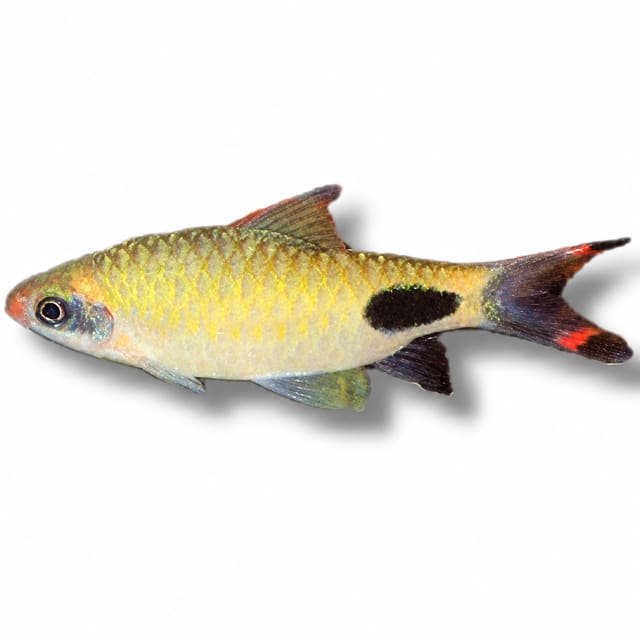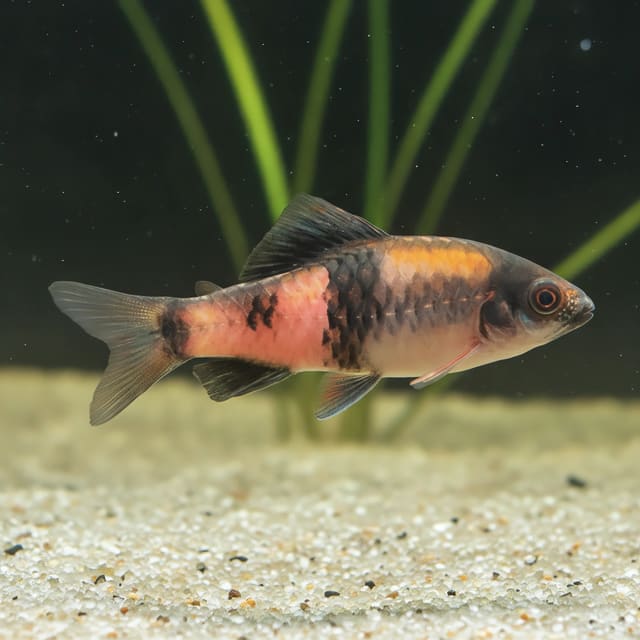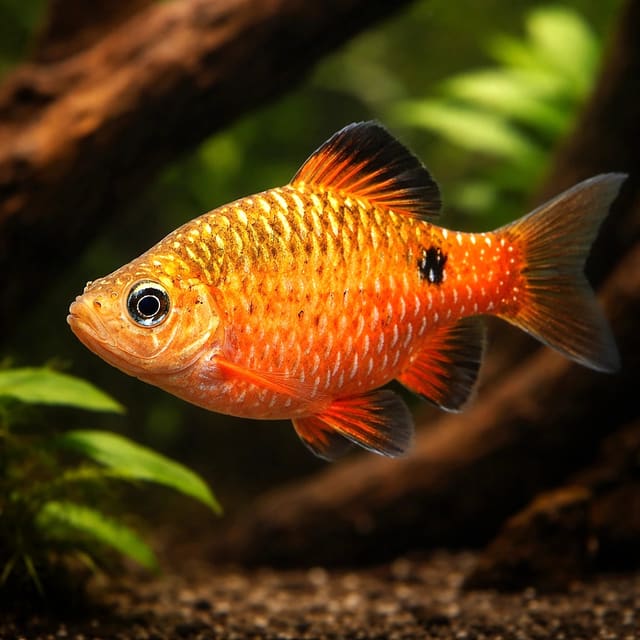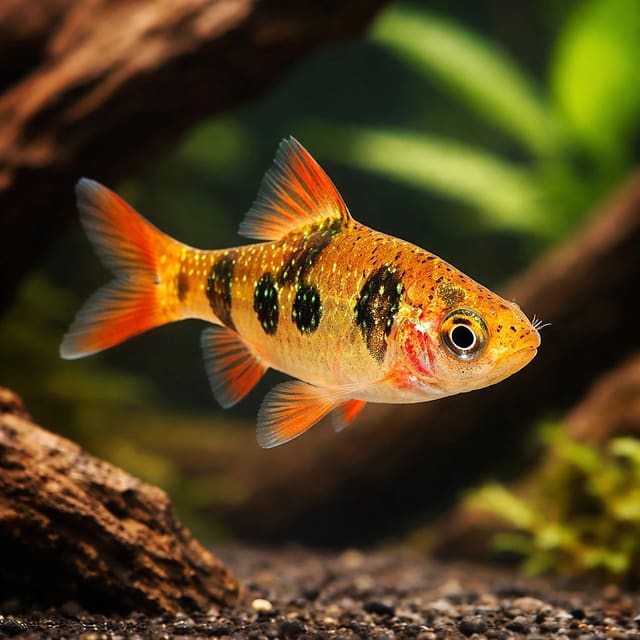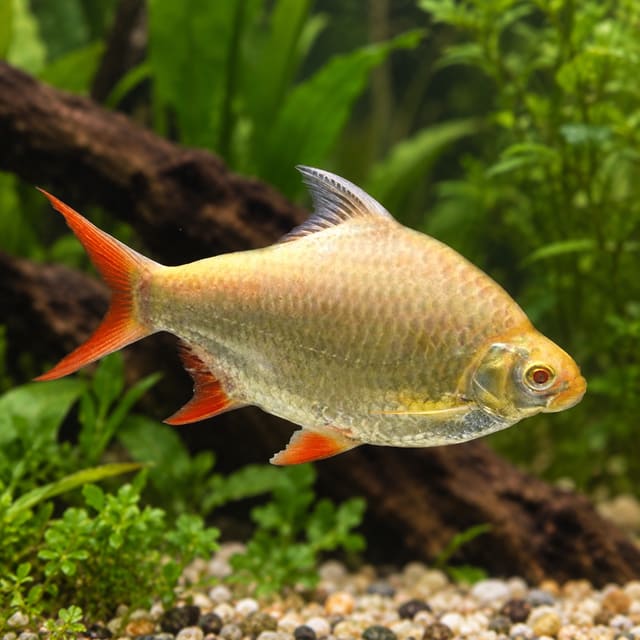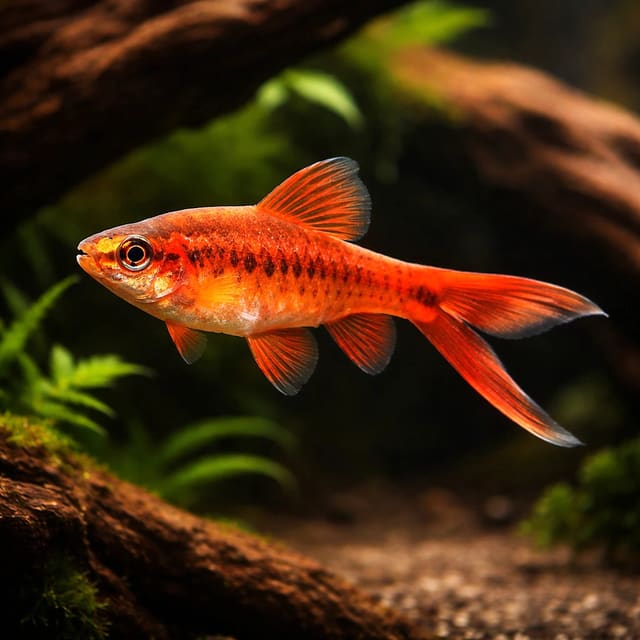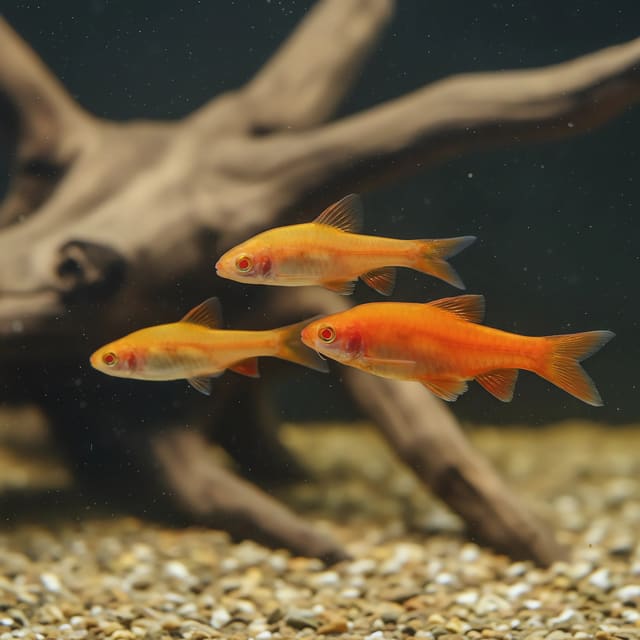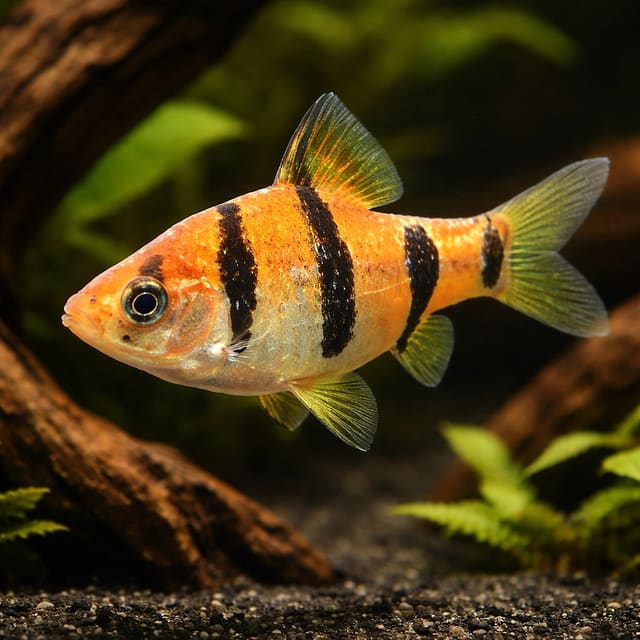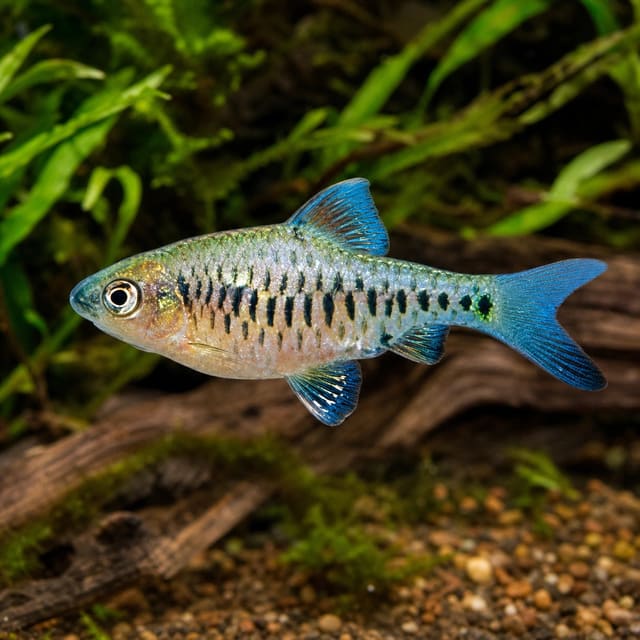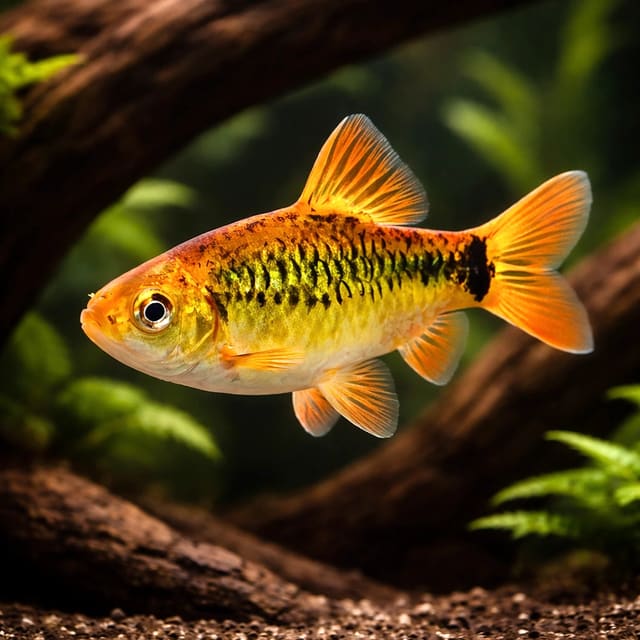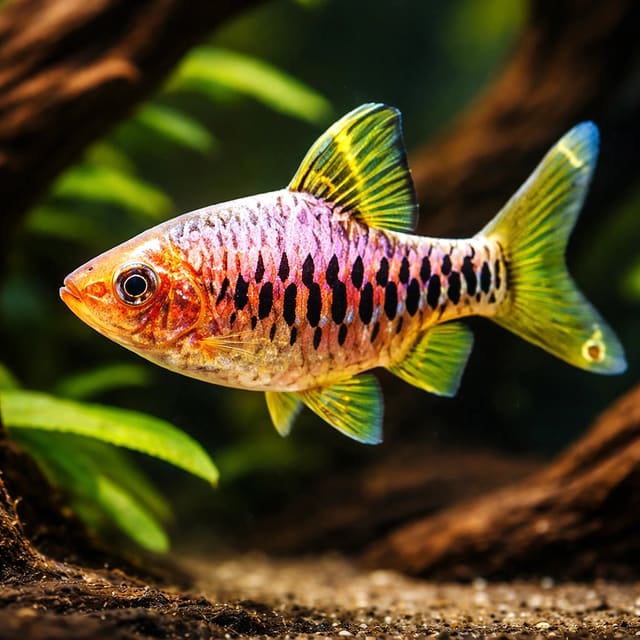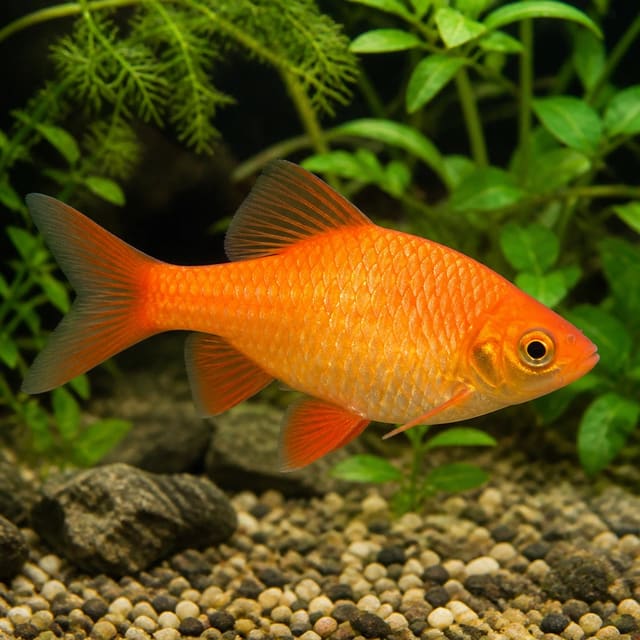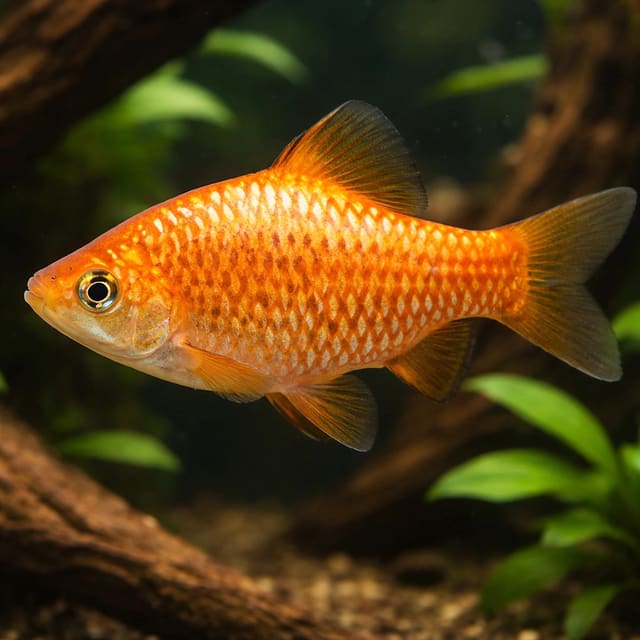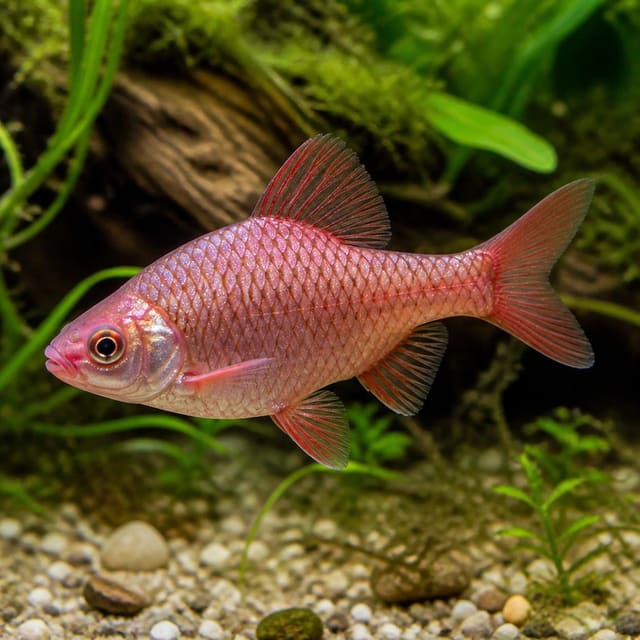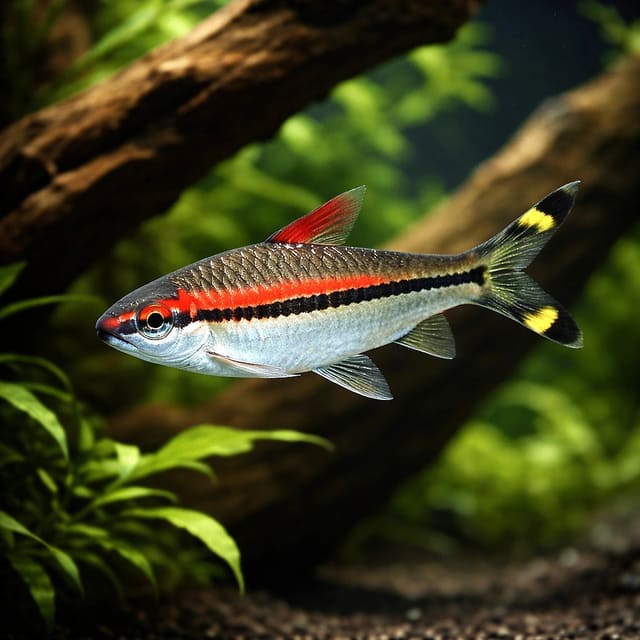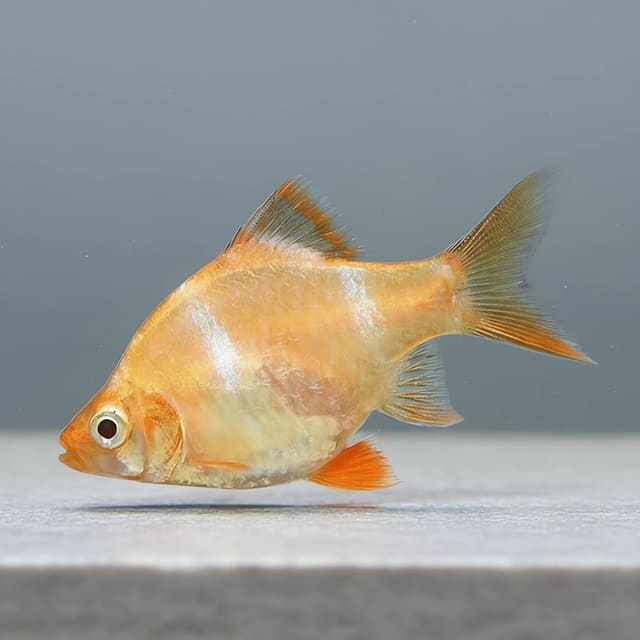
Albino Tiger Barb (Puntigrus tetrazona)
20–26°C · pH 6–8 · 72L
£3.99

Large, peaceful Silver Shark / Bala Shark with bright silver body, black-edged fins and active shoaling behaviour. Best for a long, covered 600L+ aquarium.
Adult size is the maximum length this species reaches at full maturity (scientific sources). The livestock you receive will be younger and smaller — pick a size above for the actual shipping size. Product-photo provenance and any image-specific limitations are stated on the listing.
Balantiocheilos melanopterus
Shoaling fish: kept in a group they feel safer, stay calmer and show their best colour.
Minimum of 2 per order.
Large, peaceful Silver Shark / Bala Shark with bright silver body, black-edged fins and active shoaling behaviour. Best for a long, covered 600L+ aquarium.
Adult size is the maximum length this species reaches at full maturity (scientific sources). The livestock you receive will be younger and smaller — pick a size above for the actual shipping size. Product-photo provenance and any image-specific limitations are stated on the listing.
Maintain these water conditions for optimal health and vibrant colors
The Silver Shark, also called the Bala Shark or Tricolor Sharkminnow, is Balantiocheilos melanopterus, a large, fast-moving cyprinid rather than a true shark. Young fish arrive with a bright silver body, black-edged fins and a confident mid-water swimming style, but this is a long-term large-aquarium species. The listing covers the current size options from 3-3.5 cm through 8-9 cm, while the adult plan should be built around a fish that can reach roughly 30-35 cm.
This is a peaceful schooling fish for aquarists who can provide a long, covered, well-filtered aquarium with open swimming room. It is not a small-tank community filler. Kept properly, a group of Silver Sharks brings constant movement and a clean silver-and-black flash across the middle water. Kept singly, cramped or startled in an uncovered tank, it can become nervous and jumpy.
The appeal is the clean athletic shape. The body is streamlined and metallic silver, the eyes are large, the tail is deeply forked, and the dorsal, caudal, anal and pelvic fins carry dark black margins. Under good aquarium lighting, a moving group creates a bright, coordinated shimmer that suits open planted aquaria and large peaceful community displays. The common name comes from the shark-like silhouette, not from any close relationship to marine sharks.
Source references place this species in large and medium-sized rivers and lakes in Southeast Asia, especially the Malay Peninsula, Sumatra and Borneo. FishBase notes that adults use mid-water habitat and should be kept in groups. That wild open-water habit explains most aquarium requirements: space, oxygen, stable water, a secure lid and tank mates that are not frightened by constant movement.
Silver Sharks are usually peaceful, but their speed and adult size make them a poor match for tiny fish, delicate long-finned species or very timid tank mates. They work best as a visible shoal in a large mature aquarium where other fish are robust, peaceful and fast enough to feed confidently.
Plan the adult aquarium before choosing juveniles. A long 600 litre-plus aquarium is the sensible baseline, and length matters as much as volume because these fish cruise horizontally. Keep hardscape open rather than crowded. Sand or smooth gravel, robust plants, rounded stones and driftwood can all work, but the middle of the tank should stay clear for swimming.
Use strong biological filtration, good surface movement and regular water changes. A tight-fitting cover is essential: Bala Sharks are powerful jumpers, especially after transport, during maintenance or if they are startled by sudden movement. Subdued lighting and a proper group help them settle. Stable water matters more than chasing one exact pH number, but avoid sudden changes and keep oxygen high.
Balantiocheilos melanopterus is omnivorous. Use good quality omnivore pellets or flakes as the staple, then rotate frozen or live foods such as bloodworm, brine shrimp and daphnia. Add vegetable matter through spirulina foods or occasional blanched greens. Feed small portions the group can finish cleanly, because large active fish and heavy feeding quickly punish weak filtration.
Good companions include similar-sized peaceful barbs, larger tetras, rainbowfish, robust loaches, peaceful catfish and other active community fish that enjoy comparable water conditions. Avoid nano fish, fry, tiny shrimp, very slow fancy fish, fin-nippers and aggressive territorial cichlids. The Silver Shark is peaceful, but it is not gentle in movement; the right tank mates are calm, sturdy and not easily outcompeted.
The smaller 3-3.5 cm and 4-5 cm fish are easier to settle into a growing shoal, but they should not be bought for a small aquarium with the idea that the upgrade can wait indefinitely. The 5-6 cm, 6.5-8 cm and 8-9 cm options already show more of the species' confident swimming style and need a mature, stable system from day one. Choose the size that fits your existing group and aquarium capacity, not only the lowest price or the smallest juvenile.
If you are adding to an existing shoal, match new fish carefully by size so smaller individuals are not left behind at feeding time. Feed across a broad area of the tank for the first week so every fish gets food, and watch for pacing, hiding or repeated jumping attempts, which usually point to stress, poor cover, low group numbers or insufficient swimming room.
Because this species is large, active and usually kept in a group, filtration and maintenance need to be planned generously. Aim for a mature biological filter, strong oxygen exchange and a steady routine of partial water changes. Keep nitrate controlled, avoid sharp temperature swings and make sure the outlet gives movement without blasting the fish into one corner. A long tank with clean flow is far more useful than a decorative layout that looks busy but leaves no open lane.
During the first few days after arrival, keep lights gentle and avoid repeated netting or chasing. Bala Sharks often look calmer once they can see their group and cruise without interruption. The best sign is confident mid-water swimming, quick but orderly feeding and no frantic dashing into glass or cover.
This is a good choice for keepers building a proper large community aquarium and wanting a peaceful shoal with movement and presence. It is a poor choice for a temporary grow-out tank, a nano community, an uncovered display, or a tank where delicate fish need slow feeding time. The honest adult-size warning is part of the quality of this listing: Silver Sharks are beautiful fish, but they are only fair to the fish and the keeper when the adult setup is realistic.
If your aquarium is not large enough yet, it is better to choose a smaller barb, rasbora, tetra or peaceful community species now and come back to Silver Sharks when the larger system is ready. That keeps the buying decision responsible while still preserving the species' appeal for the right aquarium.
Your fish are packed for a specialist overnight livestock courier service and covered by our Live Arrival Guarantee. Acclimate slowly in a dim room, keep the aquarium covered before opening the bag, and give the group a quiet settling period after release.
Home breeding is uncommon and not a realistic aim for most keepers. Commercial production is specialist work, while the aquarium keeper's responsibility is to provide enough space, a proper group and long-term care. GBIF currently links the species to an IUCN Vulnerable status, so it is worth treating this fish as a serious long-term commitment rather than an impulse addition.
This care profile was checked against our stock records and original reference photography, FishBase aquarium guidance, GBIF taxonomy/synonym data and Tropical Fish Hobbyist species notes. The accepted spelling used here is Balantiocheilos melanopterus; the older Balantiocheilus melanopterus, Barbus melanopterus and Puntius melanopterus names are retained only as taxonomy and search context.
No reviews for this item yet. Bought one? Honest reviews only, good or bad.
What customers say about ordering from us
I have a small group of long finned mountain minnows. So was delighted to be able to order ten of this variety to increase the genetics in my tank . The ones I recieved are healthy but it’s to early to give a verdict on wether they are of a long finned type since they are small currently.
Gordon Walker · 23 Sept 2026
100% success travel and "installation". Pleased with quality of purchase. The Siamese fighter a bit "shy" so have not yet seen him at his best yet but looking good. Happy customer. GG
George E Garratt · 21 Sept 2026
Reviews of our shop, collected by Judge.me, an independent third-party review collector. Newest first.