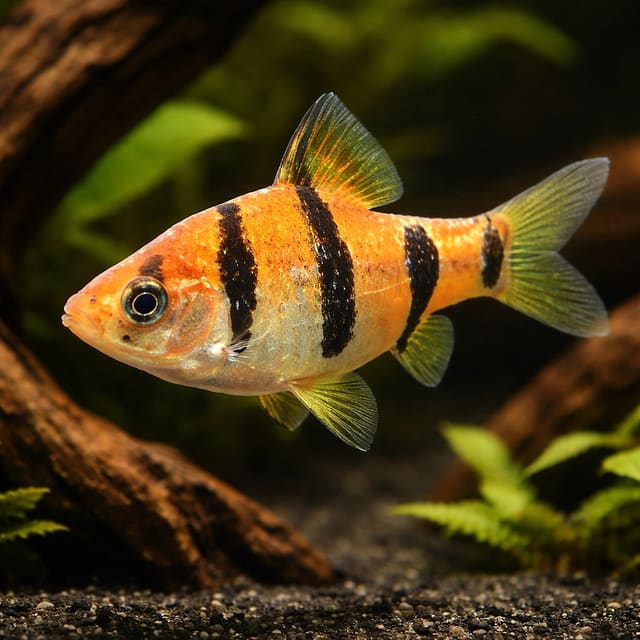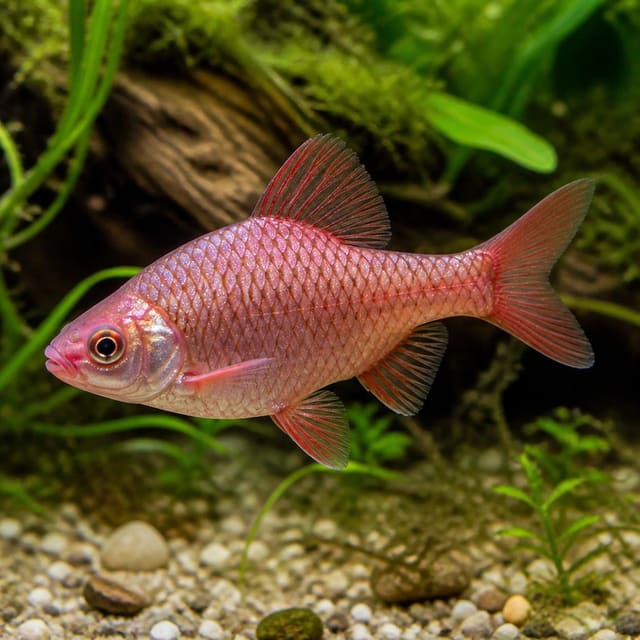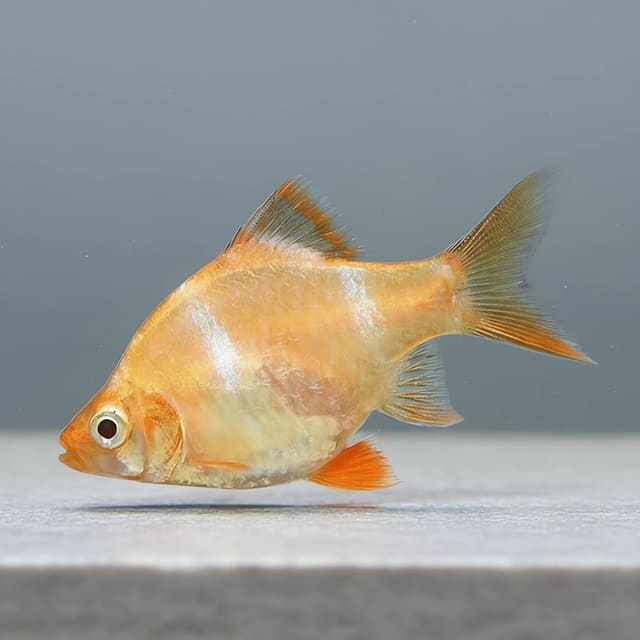
Albino Tiger Barb (Puntigrus tetrazona)
20–26°C · pH 6–8 · 72L
£2.59

Melon Barb (Haludaria fasciata) is an active, peaceful shoaling fish for a mature planted community. Sold individually with size selection; plan a proper group.
Adult size is the maximum length this species reaches at full maturity (scientific sources). The livestock you receive will be younger and smaller — pick a size above for the actual shipping size. Product-photo provenance and any image-specific limitations are stated on the listing.
Haludaria fasciata
Shoaling fish: kept in a group they feel safer, stay calmer and show their best colour.
Melon Barb (Haludaria fasciata) is an active, peaceful shoaling fish for a mature planted community. Sold individually with size selection; plan a proper group.
Adult size is the maximum length this species reaches at full maturity (scientific sources). The livestock you receive will be younger and smaller — pick a size above for the actual shipping size. Product-photo provenance and any image-specific limitations are stated on the listing.
Maintain these water conditions for optimal health and vibrant colors
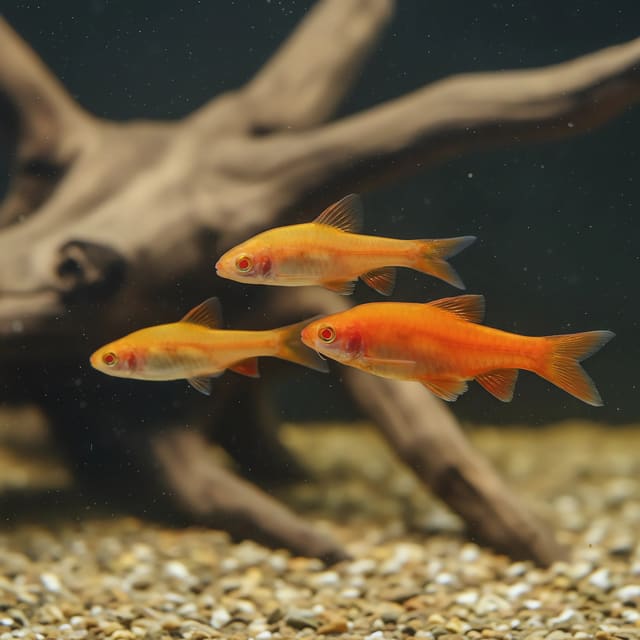
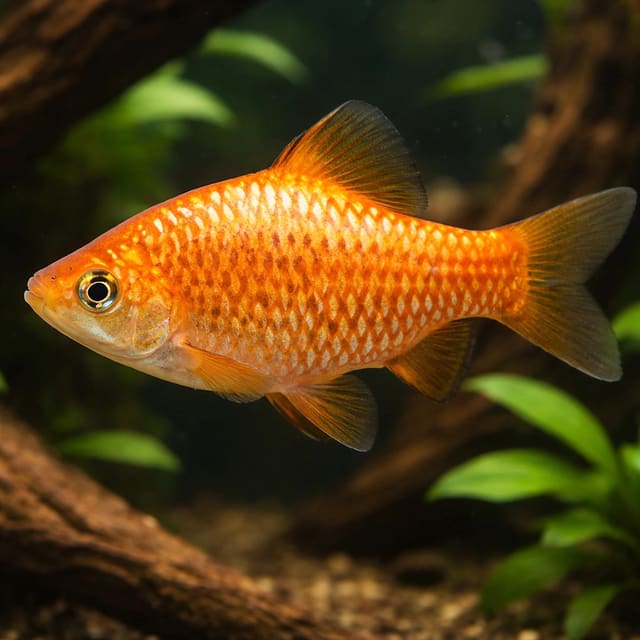
Sold individually, Haludaria fasciata is a small Indian barb with warm copper-orange tones, dark markings and active shoaling behaviour. It suits a mature planted community with suitable water and peaceful companions. Plan a group rather than a lone fish; the current size selector shows the supplied grade, price and availability. Sex is not selectable, and this is not a breeding pair.
Melon Barbs show well over a dark substrate, with planting around the edges and open midwater swimming space. Their colour and behaviour vary with age, individual development and aquarium conditions. Photographs cannot guarantee the exact appearance of fish received.
Haludaria fasciata belongs to the carp and minnow family, a huge group that includes rasboras, danios, and many barbs kept in freshwater aquariums. It is valued as a peaceful community barb UK species rather than a boisterous fin-nipper. Among cyprinid fish UK keepers, it has a strong reputation as a hardy, compact shoaling fish that works especially well in planted community tanks.
Melon barbs come from India, where they inhabit calm freshwater environments with soft current, submerged roots, leaf litter, and seasonal plant growth. In the wild, they are found in smaller streams, marginal pools, and gentle stretches of waterways rather than fast, rocky river channels. That matters in the aquarium because their best behaviour appears when you copy those quieter conditions: broken lines of sight, patches of planting, and open midwater lanes for the group to move together.
Their native waters are usually warm rather than hot, which is why the melon barb ideal temperature range of 22-26°C works so well in home aquariums. Wild habitats vary between slightly soft and moderately mineralised water, so the species is not as fragile as some blackwater fish. A stable melon barb pH level between 6.5 and 7.5 and moderate hardness is usually enough to keep them feeding well and showing good colour. Stable conditions and suitable stocking remain important even for an undemanding community fish.
Because they are a peaceful shoaling species, they are best seen as part of a balanced planted community rather than a single “feature fish.” They are tropical fish that appreciate warmth, oxygen, cover, and clean water, and are not suitable for unheated bowls or tiny desktop tanks.
Mimicking the natural habitat of Melon Barbs with driftwood, fine plants, dimmer lighting zones, and gentle flow usually improves colour, reduces skittishness, and encourages tighter schooling. Settled fish can show richer colour as they become confident enough to spend more time in the open.
The melon barb minimum tank size is 60 litres, and that is the minimum for a proper group. Because this species is social, the real question is not only melon barb tank size, but also how much swimming room the whole school gets. A 60-litre tank works for six juveniles or a carefully planned small group, but 75-90 litres is better if you want stronger behaviour, more stable water, and extra tank mate options. For anyone asking what is a good size fish tank for a beginner, a tank in that 75-litre range is often easier than a tiny aquarium because temperature and water chemistry stay steadier.
As adults, melon barb size reaches about 5 cm, but they are active midwater fish, so the footprint matters more than sheer depth. A longer tank lets the group school naturally, reduces pecking within the shoal, and gives more room for compatible species. The recommended melon barb school size is at least six, though eight to ten often looks better and spreads social pressure more evenly. If you are wondering what size fish should I get for a first peaceful community aquarium, this species is a sensible middle ground: small enough for modest tanks, but large enough to be visible and engaging.
The best melon barb water parameters are stable rather than extreme. Keep the melon barb temperature between 22 and 26°C, with 24°C a very safe everyday target. As a melon barb soft water fish, it appreciates slightly soft to moderate water, but consistency matters more than chasing a perfect number. Weekly water changes of 25-30% help maintain low nitrate and better long-term health.
Use a reliable filter that turns the tank over gently without blasting the fish around. A compact internal filter or a small external canister is ideal. Good mechanical and biological filtration is important because barbs are active feeders and can produce more waste than their size suggests. If you are upgrading a planted setup, a moderate-flow system paired with a quality aquarium heater setup for tropical fish keeps conditions steady.
Dark sand or fine natural gravel helps these fish feel secure and makes their orange body colour stand out. A thin to medium substrate layer is enough unless you are heavily planting the tank. In a melon barb planted tank, nutrient-rich substrate under a cap can support rooted plants while still giving the fish a natural look. This is one reason many keepers rate them among the best barb for planted aquarium designs.
Melon barbs really shine in a planted layout. Use clumps of Vallisneria, Cryptocoryne, Limnophila, Java fern, and floating plants to soften the light. Leave open swimming areas at the front and centre. Driftwood branches and a few rounded stones create visual barriers and reduce stress. If you like similar peaceful barbs, compare them with Checkered Barbs (Oliotius oligolepis) or the elegant Five Banded Pentazona Barb Desmopuntius for another planted-community option.
For aquarists searching phrases like planted aquarium fish UK or small barb for planted tank, this species is one of the most practical choices because it combines movement, colour, and manageable size. It also works well alongside carefully chosen stems and mosses.
Moderate lighting for 6-8 hours a day is enough. Very bright light without floating cover can make the group nervous. In a well-balanced planted tank, slightly subdued lighting often produces better colour contrast, bringing out the warm body tone that develops when fish are kept over darker décor with secure planting.
Cycle the tank and verify that the mature filter can process its waste load before adding Melon Barbs; elapsed weeks alone do not prove readiness. An uncycled aquarium is one of the main causes of early losses in new setups, even when the fish themselves are considered hardy.
The natural melon barb diet is omnivorous. In the wild they graze on tiny insects, crustaceans, organic debris, and plant material. In the aquarium, the best melon barb feeding routine uses a varied staple rather than a single food. A quality micro pellet or fine tropical flake should form the base, with frozen or live foods added several times a week to improve condition, colour, and breeding response.
Use a high-quality omnivore flake, nano pellet, or small granule that sinks slowly enough for midwater feeding. Because these fish feed actively, it helps to spread food across the surface so all individuals get access. The key is not only the food on hand but its particle size and protein balance. Fine foods that soften quickly are easier for this species than oversized pellets.
Offer frozen daphnia, cyclops, bloodworm, and brine shrimp 2-4 times per week. These foods support growth, stronger colour, and natural foraging behaviour. A little vegetable matter, such as spirulina flake or crushed blanched pea once in a while, rounds out the diet. This mixed approach is central to any solid melon barb care guide and to practical Haludaria fasciata care.
Before spawning attempts, increase live or frozen foods. Richer feeding helps females fill with eggs and encourages males to intensify in colour. This is especially useful if you are planning melon barb breeding. Have suitable foods ready before the fish arrive.
Feed small amounts twice daily. Give only what the group can finish in about 30-60 seconds. Juveniles may appreciate a tiny third feeding. Overfeeding is a common mistake in community tanks and can quickly undo the benefits of good filtration. Adjust feeding to appetite, body condition and water quality.
| Time | Food | Amount |
|---|---|---|
| Morning | Fine tropical flake or micro pellet | Only what is eaten in 30-45 seconds |
| Evening | Frozen daphnia, brine shrimp, or quality granule | Small pinch or thawed portion eaten within 1 minute |
Overfeeding causes ammonia spikes, cloudy water, and excess nitrate. Melon Barbs are enthusiastic eaters, so it is easy to give too much. If food reaches the substrate uneaten every day, reduce the portion.
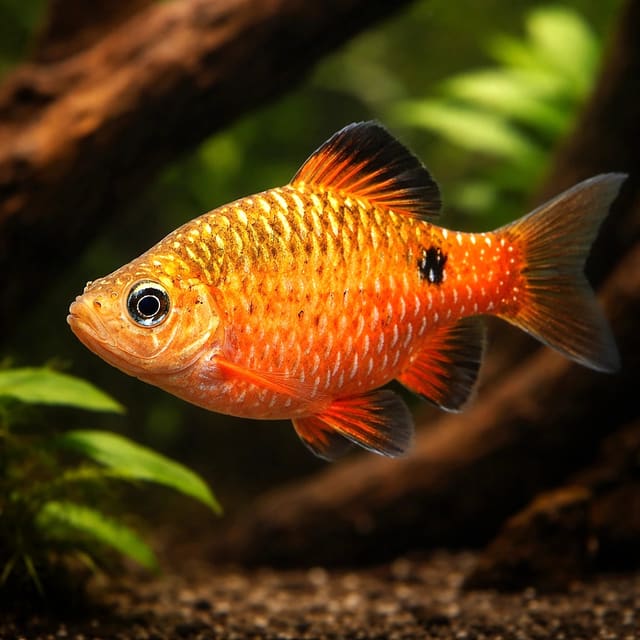
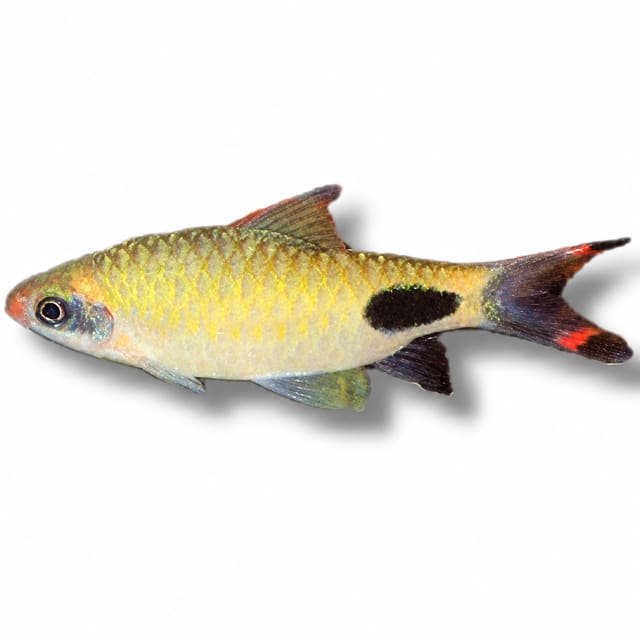
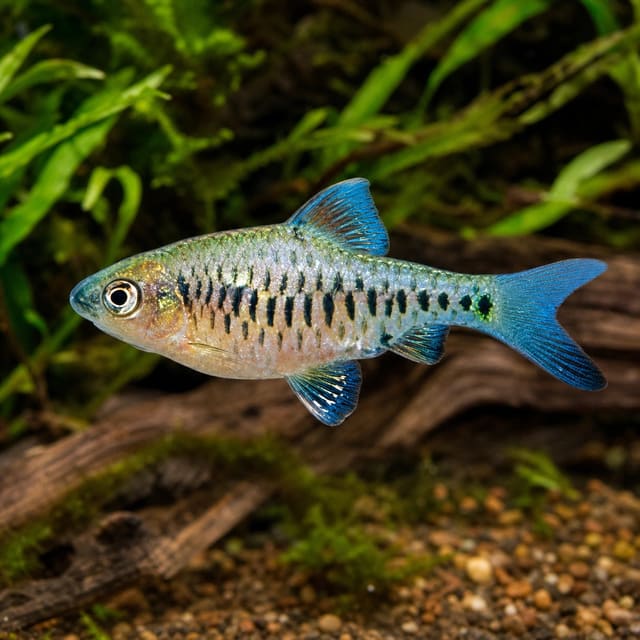
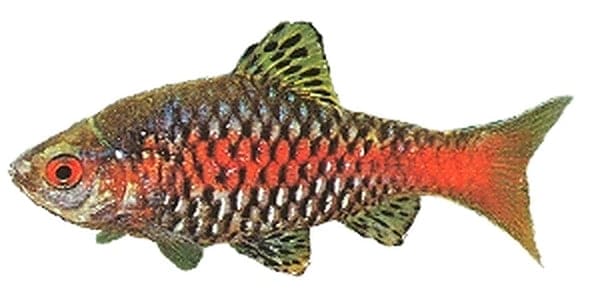
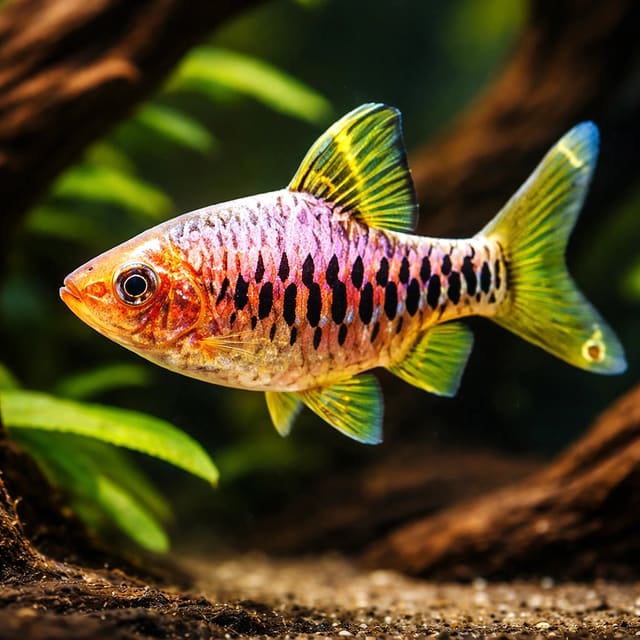
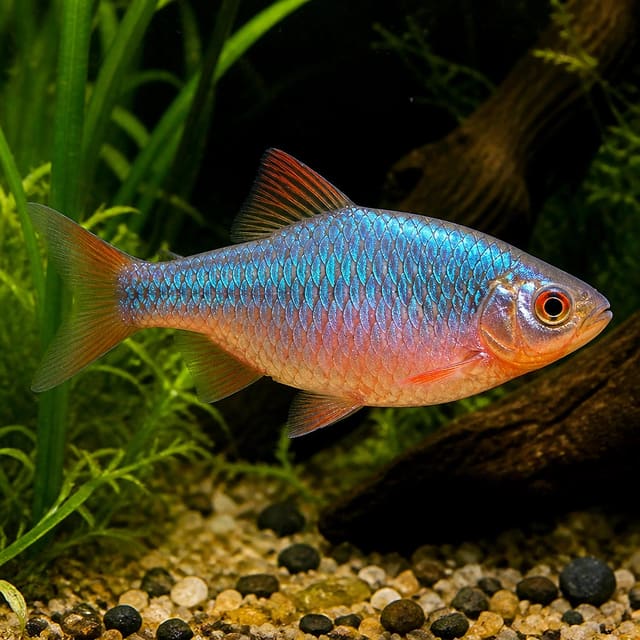
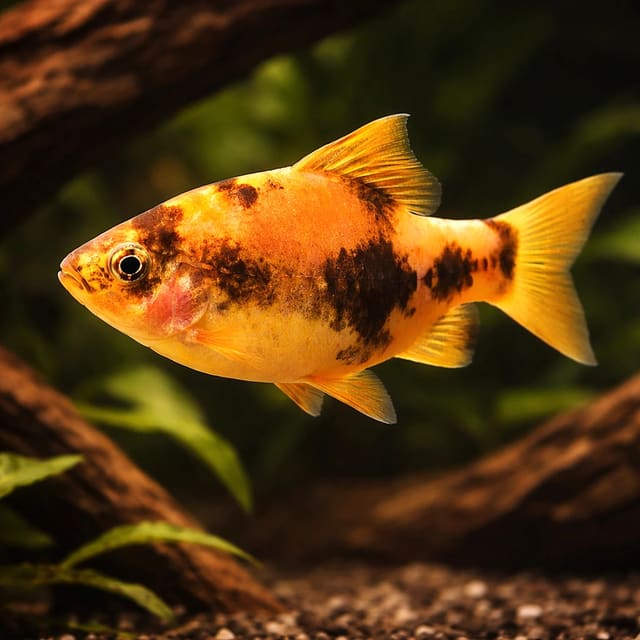
The Melon Barb is a compact, laterally compressed barb with a rounded body, clear to lightly tinted fins, and strong dark vertical markings over a warm orange to copper base. Adult melon barb size is usually around 5 cm, making it ideal for medium community aquariums where you want visible colour without a heavy bioload. The body pattern is what gives them much of their appeal: dark bars or patches contrast sharply against the warmer background, especially in settled adults.
Males are often slimmer and more intensely coloured, particularly when in breeding condition. Females are usually slightly fuller-bodied, especially when carrying eggs. In a calm planted setup, the group shows a richer, cleaner tone than in bare dealer tanks. That is why many aquarists rate them as a top colourful barb species for aquarium display and a very strong candidate for the best barb for planted aquarium category.
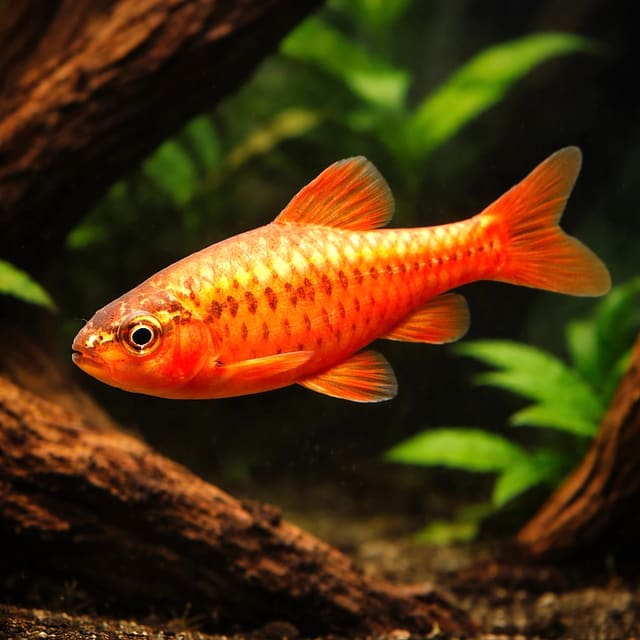
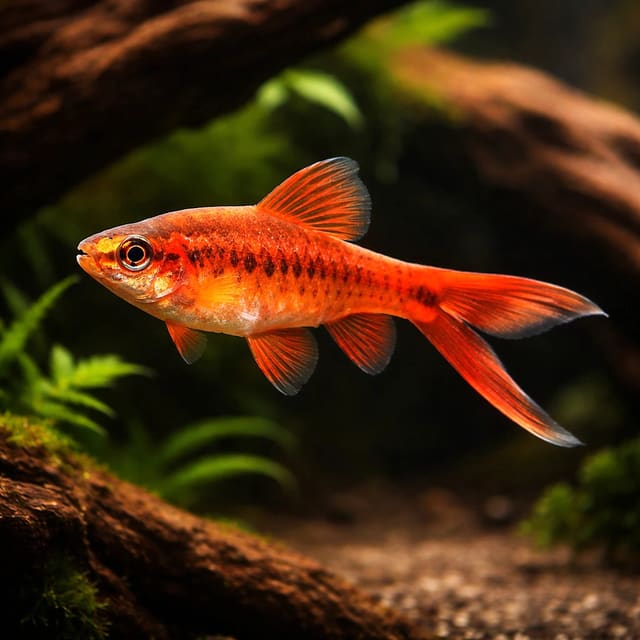
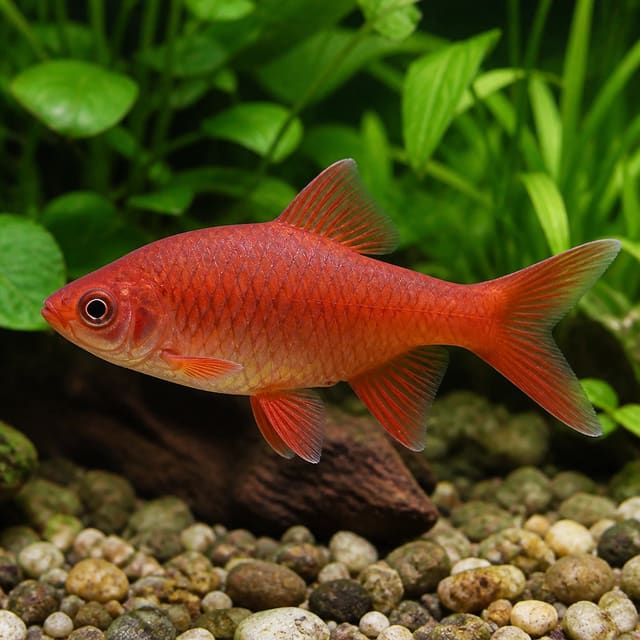
Searches for melon barb vs cherry barb are common because both are peaceful, colourful, and suitable for community tanks. Cherry barbs are often more uniformly red, while Melon Barbs show a more patterned, banded look with a slightly different body profile. Because some panda-named barbs look superficially similar in trade listings, it helps to check the fish carefully and buy from a source that labels them clearly by scientific name.
Colour shows best when fish are kept in a proper group, over darker substrate, with stable water and a varied diet. A stressed specimen in a bright, sparsely decorated tank can look washed out; a settled school in a mature aquarium looks far more impressive.
Melon Barbs are a genuinely peaceful species and one of the easier barbs to place in a community aquarium. Good melon barb tank mates are other small, calm fish that enjoy similar water conditions and will not outcompete them aggressively at feeding time. Because this is a shoaling fish, melon barb schooling behaviour is strongest when they are kept in a proper group first and then paired with similarly peaceful companions.
Excellent companions include rasboras, smaller peaceful tetras, Corydoras, kuhli loaches, and other non-aggressive barbs. Small peaceful tetras can be considered where their water needs and adult space requirements match. A melon barb with neon tetras combination can work nicely in a planted aquarium if temperature and feeding are balanced. This pairing is popular in community tropical fish UK setups because both species use the midwater attractively without serious conflict.
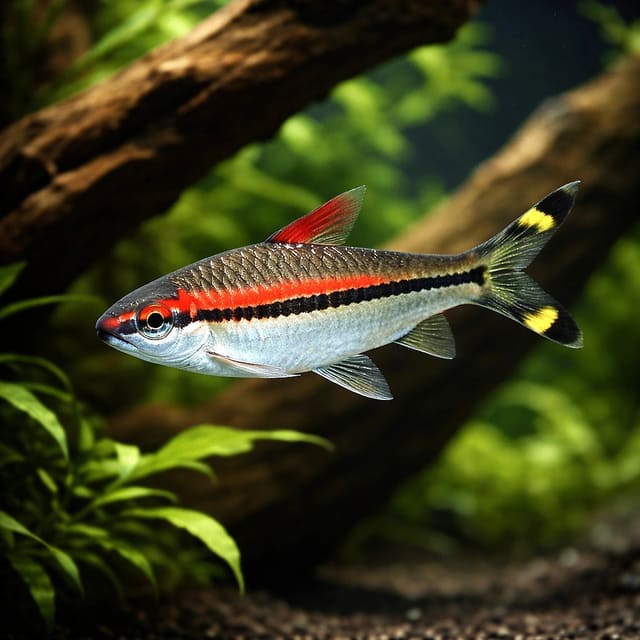
Other barb options can work too. The peaceful Five-Banded Barbs - Desmopuntius Pentazona are a better comparison than tiger barbs if you want a calm mixed shoal. For a different look in the same general category, Checkered Barbs (Oliotius oligolepis) can also suit a thoughtful planted community.
Avoid large, aggressive cichlids and boisterous fin-nippers. Species such as Yellow Elongatus Cichlid - Chindongo Elongatus, Aulonocara Sp Neon Red Calico Peacock, Kiriza Yellow Cichlid - Tropheus Moorii, Orange I Blunthead Cichlid - Tropheus, and Thorichthys Maculipinnis - Elliot'S Cichlid - are not suitable companions for Melon Barbs because of size, temperament, or very different water chemistry needs.
In a 60-litre tank, keep a single group of 6-8 Melon Barbs with perhaps a small bottom group such as pygmy Corydoras if filtration is mature. In a 90-litre tank, 8-10 Melon Barbs can be combined with a shoal of small tetras and a bottom-cleaning species. Stocking should be based on adult size, behaviour, water needs and available swimming room, not package deals.
Adult shrimp may coexist in a dense planted tank, but tiny shrimplets can be eaten. Snails are usually fine. Plan plenty of moss and cover before attempting mixed shrimp and barb housing.
| Species | Compatible? | Notes |
|---|---|---|
| Five-Banded Barbs - Desmopuntius Pentazona | ✅ Yes | Peaceful barb with similar community behaviour in larger planted setups. |
| Neon tetra | ✅ Yes | Good choice for a planted midwater display; monitor feeding competition. |
| Yellow Elongatus Cichlid - Chindongo Elongatus | ❌ Avoid | Too aggressive and unsuitable in water chemistry and temperament. |
Always quarantine new arrivals for 2-4 weeks before adding them to a community aquarium. This protects established fish from parasites and gives you time to confirm that feeding behaviour and temperament are suitable.
For keepers comparing a peaceful barb for community tank, looking for melon barb compatible fish, or planning a panda barb community tank, this species is one of the easiest barbs to include in a calm planted community.
Melon barb breeding is best described as moderate. It is very possible in home aquariums, but it works more reliably when you use a separate spawning setup rather than hoping fry survive in a busy display tank. As with many egg-scattering cyprinids, adults may eat eggs if given the chance.
Use a dedicated 25-40 litre breeding tank with gentle filtration, such as a mature sponge filter, soft to neutral water, and a temperature around 24-26°C. Add fine-leaved plants, spawning mops, or a mesh/egg grate so eggs can fall out of reach. Condition the group or selected pair on frozen and live foods for 1-2 weeks. This is the practical side of Haludaria fasciata care when breeding is the goal.
Males usually intensify in colour and begin displaying around females. Spawning often takes place in the morning, with eggs scattered among plants or over the tank base. A partial cool water change followed by a slightly warmer refill can act as a trigger, especially after heavy conditioning foods.
Once eggs are laid, remove the adults. Depending on temperature, eggs may hatch in roughly 24-36 hours, with fry becoming free-swimming a few days later. Keep the tank dim and very clean. Fungus can be a problem if water quality is poor or eggs are infertile.
Start fry on infusoria, commercial liquid fry food, or very fine powdered foods, then move to baby brine shrimp and microworms as they grow. Frequent small water changes are safer than large ones. Growth is steady when food is varied and water remains clean.
The biggest issues are egg predation, poor first foods, and unstable water. If you end up with extra juveniles, plan grow-out space and a rehoming plan before you start rather than scrambling at the last minute. Responsible breeding means breeding deliberately and at manageable numbers, with proper outlets for healthy, well-grown young fish.
For better egg survival, place a layer of marbles or an egg-crate divider over the tank base beneath spawning mops. Eggs fall through the gaps while adults remain above, which greatly reduces losses in species that scatter and then eat their eggs.
Many aquarists compare Melon Barbs with cherry barbs or five-banded barbs because all three suit peaceful community aquariums. The right choice depends on whether you want stronger patterning, a redder body colour, or a slightly different schooling effect. If you are building a planted display and want a patterned shoal with gentle behaviour, Melon Barbs are often the sweet spot.
| Feature | Melon Barb | Cherry Barb |
|---|---|---|
| Max Size | 5 cm | 5 cm |
| Care Level | Easy/Moderate | Easy |
| Temperature | 22-26°C | 23-27°C |
| Best For | Patterned planted-community shoals | Red colour accents in peaceful tanks |
| Feature | Melon Barb | Five-Banded Barb |
|---|---|---|
| Temperament | Peaceful | Peaceful |
| Schooling Style | Loose to moderate shoal | Tighter shoaling in cover |
| Visual Appeal | Warm orange with dark markings | Gold-orange with strong vertical bands |
| Best Setup | Planted community tank | Dimmer blackwater-style planted tank |
| Who Should Choose It? | Keepers wanting a hardy barb species for beginners | Keepers wanting a slightly more specialist look |
If you are researching melon barb vs cherry barb, the Melon Barb usually wins for pattern and group presence, while cherry barbs win for simple red colour. If you want another peaceful barb with a classic banded look, browse the Five Banded Pentazona Barb Desmopuntius or Five-Banded Barbs - Desmopuntius Pentazona. If your goal is a calm planted display with a small active shoal, Melon Barbs remain one of the best all-round choices.
Healthy Melon Barbs are alert, feed eagerly, hold fins open, and move confidently with the group. Their colours should look clean rather than greyed out, and they should not isolate themselves for long periods. Because they are active schooling fish, one of the earliest warning signs is often behavioural: a fish hanging back, clamping fins, or breathing faster than the rest.
Like many small tropical fish, Melon Barbs can develop white spot, bacterial fin damage, fungal infections on injuries, or stress-related wasting if water quality slips. Skinny fish, flashing, rubbing, or faded colour can point to parasites or poor acclimation. In newly stocked tanks, ammonia and nitrite are often bigger threats than disease itself.
First check water quality. Many problems improve when ammonia and nitrite are zero, nitrate is reduced, and oxygenation is improved. Use a separate hospital tank if medication is needed. If invertebrates share the aquarium, choose treatments carefully, because the long-term cost of a tank is usually fixing preventable water-quality problems rather than the fish themselves.
Quarantine all new fish, avoid sudden temperature swings, feed a varied diet, and maintain the recommended melon barb water parameters. Do not mix them with unsuitable aggressive species: matching temperament matters as much as matching price.
NEVER use copper-based medications in a display aquarium containing shrimp or other sensitive invertebrates. Copper can be lethal even at low doses.
Melon Barbs are active, social, and curious without being hyper-aggressive. True melon barb schooling behaviour is most obvious when the group feels secure, so numbers matter. A pair or trio often looks nervous and scattered; a proper shoal settles faster and explores more confidently. That is why the recommended melon barb school size starts at six and improves further at eight or more where space allows.
They spend most of their time in the middle of the tank, weaving through plants and making short dashes into open water. In a mature melon barb planted tank, they often tighten up briefly when startled and then spread back out once calm. This makes them very enjoyable to watch in a living room aquarium because the group is always in motion but rarely chaotic.
They are a strong choice for keepers seeking a hardy barb species for beginners or a melon barb for beginners option, provided the tank is cycled and the fish are kept in a proper group. Behaviour should be part of any buying decision: a peaceful species that fits your tank is always better than a flashier fish that causes stress for everything else in the aquarium. If you want to plan that first setup, our beginner tropical tank care guide walks through cycling, stocking order, and water testing.
This listing is for individual Melon Barbs, allowing you to plan a suitable shoal. Read the group-size guidance and provide enough adult swimming space before ordering; choosing several fish does not make the listing a preselected or sexed group.
Arrange for someone to receive the order, keep the aquarium ready, and follow the arrival instructions. Confirm current delivery choices through the product page and checkout rather than treating care-guide text as a dispatch promise.
Use the species-specific care notes and compatibility guidance to decide whether Melon Barbs suit your aquarium. If the retail unit or care requirements are unclear, ask before ordering rather than relying on a trade nickname.
A suitable aquarium, accurate species identification and a considered stocking plan matter more than an impulse purchase. Prepare the tank and quarantine arrangements before introducing the group.
If you are building a peaceful planted community, consider adding or comparing a few related options. The Checkered Barbs (Oliotius oligolepis) offer another attractive small barb for mixed tropical tanks. Five-Banded Barbs (Desmopuntius pentazona) are another patterned shoaling species to compare. For feeding, prepare suitable micro pellets and small frozen foods. Our tropical fish care guide can help with a considered community stocking plan.
Browse the freshwater fish selection when comparing suitable alternatives, and check each species' care and adult space needs before combining them.
No reviews for this item yet. Bought one? Honest reviews only, good or bad.
What customers say about ordering from us
I have a small group of long finned mountain minnows. So was delighted to be able to order ten of this variety to increase the genetics in my tank . The ones I recieved are healthy but it’s to early to give a verdict on wether they are of a long finned type since they are small currently.
Gordon Walker · 23 Sept 2026
100% success travel and "installation". Pleased with quality of purchase. The Siamese fighter a bit "shy" so have not yet seen him at his best yet but looking good. Happy customer. GG
George E Garratt · 21 Sept 2026
Reviews of our shop, collected by Judge.me, an independent third-party review collector. Newest first.