Advanced
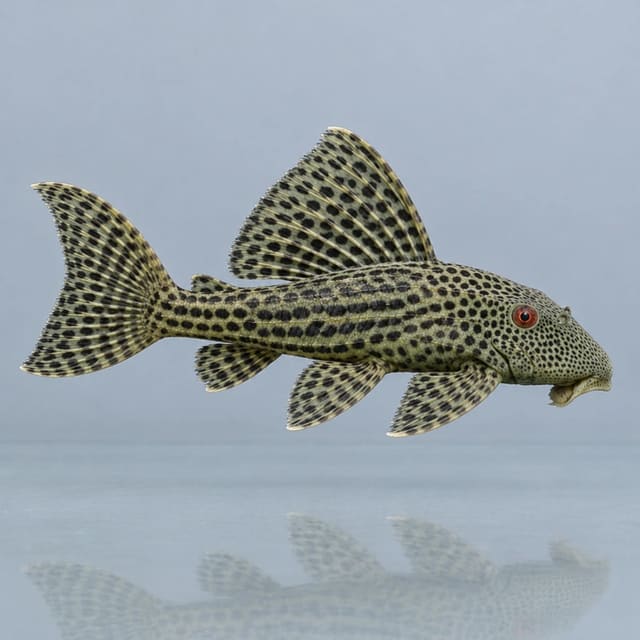
Royal Pleco (Panaque nigrolineatus)
22–26°C · pH 6.5–7.5
£55.99
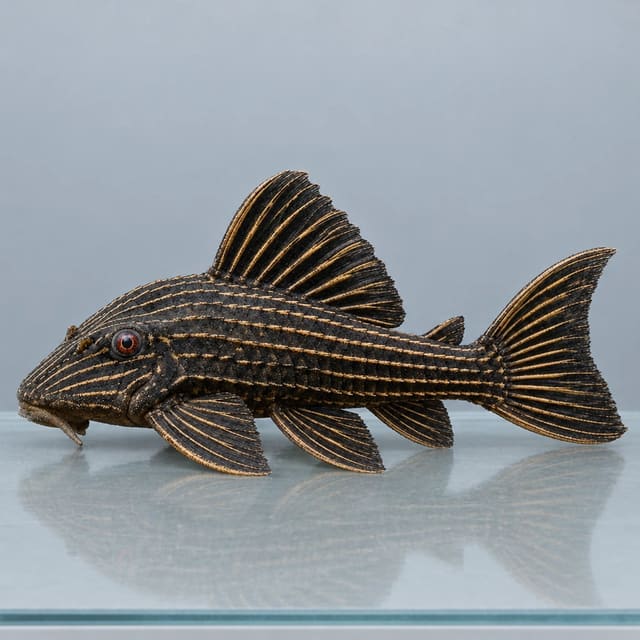
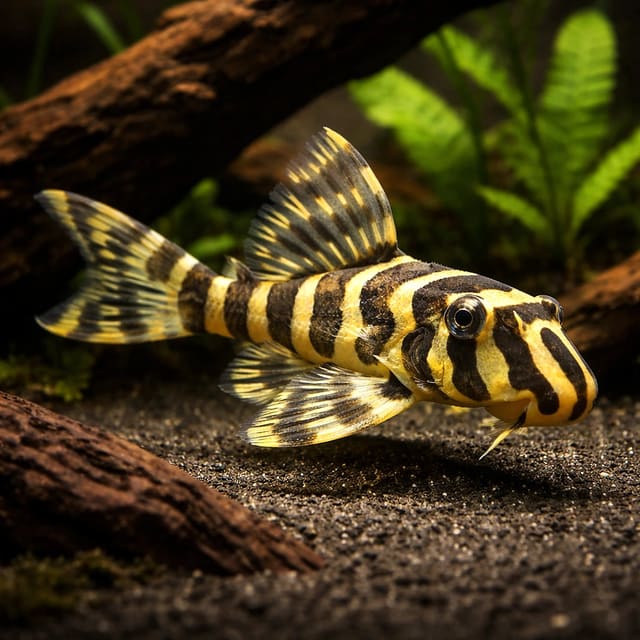
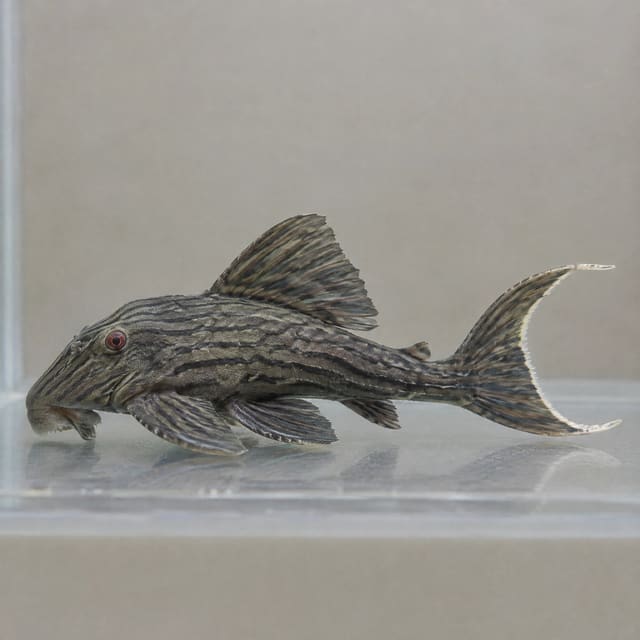
The L027D Tapajos Royal Pleco (Panaque armbrusteri), also called the Thunder Royal Pleco, is a large wood-eating royal panaque from the Rio Tapajós in Brazil, striped lengthwise in dark brown and pale beige. It grows to about 35–40 cm and needs a very large tank full of driftwood at 23–27°C with strong filtration. Sold individually as one live fish.
Panaque armbrusteri
The L027D Tapajos Royal Pleco (Panaque armbrusteri), also called the Thunder Royal Pleco, is a large wood-eating royal panaque from the Rio Tapajós in Brazil, striped lengthwise in dark brown and pale beige. It grows to about 35–40 cm and needs a very large tank full of driftwood at 23–27°C with strong filtration. Sold individually as one live fish.
‘Pleco’ is a loose aquarium-trade label, not one species or one care sheet. Before buying, confirm the scientific name or defensible L-number, adult size and measurement method, required footprint, temperature and water, diet, social plan and source. No universal pleco tank size, menu or algae result is honest.
The L027D Tapajos Royal Pleco is Panaque armbrusteri, a heavy-bodied, wood-eating royal panaque from the Rio Tapajós and its tributaries in Brazil. It was formally described in 2010 by Nathan Lujan, Max Hidalgo and Donald Stewart in a revision of the royal plecos published in the journal Copeia, and named in honour of the ichthyologist Jonathan W. Armbruster. The type specimen, 344.7 mm long, came from the Teles Pires River in Mato Grosso, part of the Tapajós system.
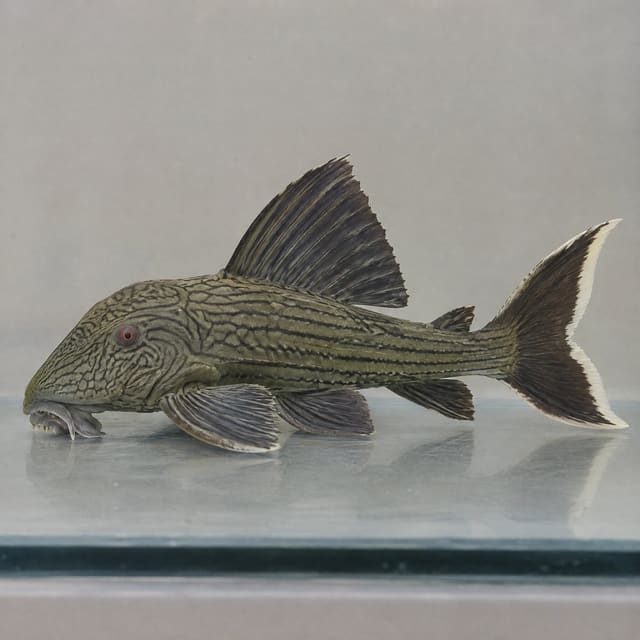
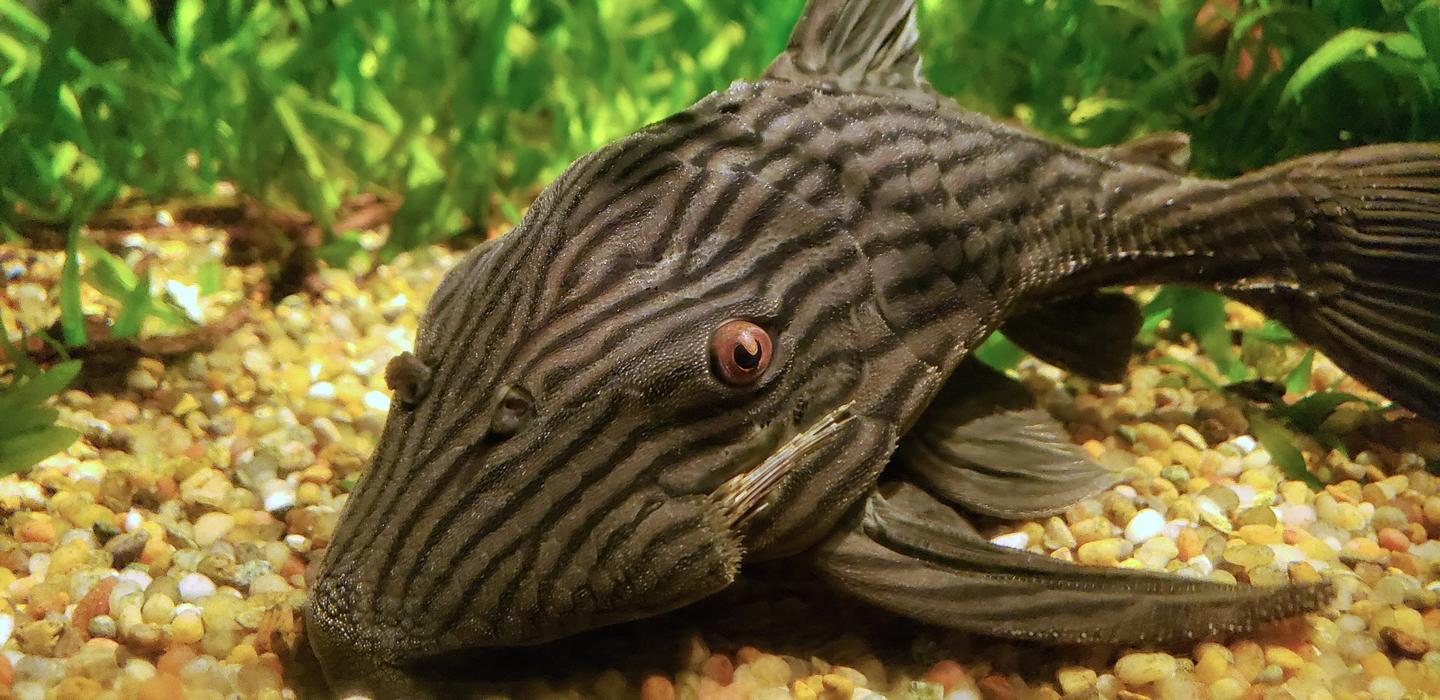
Its pattern is its signature: alternating dark brown-to-black and paler beige-to-grey stripes run lengthwise from the snout to the tail, and the fins are striped like the body. Planet Catfish describes the base colour as brownish black with beige stripes, and explains its other trade name, the Thunder Royal Pleco: it comes from a Japanese word covering both lightning and thunder, a nod to the lightning-like pale stripes seen especially on larger fish.
| Name | What it means |
|---|---|
| L027 and LDA077 | The codes Planet Catfish lists for P. armbrusteri; L027 is also used for related royal plecos from other rivers |
| L27D (L027D) | A UK trade label for the Tapajós fish; the letter is not part of an official scheme |
| Tapajos Royal Pleco, Thunder Royal Pleco | English trade names for this species |
| Panaque armbrusteri Lujan, Hidalgo & Stewart, 2010 | The scientific name, one of three new royal plecos described in the 2010 revision |
The 2010 revision separates P. armbrusteri from its relatives by a modest hump behind the head, more teeth in each jaw, relatively short pectoral and pelvic spines and a flared bone below the eye. It also found something unique among plecos: as the fish grows, the left and right tooth rows open out from about 90 degrees in fish under 172 mm to about 120 degrees in fish over 200 mm. Young fish under about 114 mm have a clear "window" in the dark tail fin, which shrinks until the adult tail is fully dark; the tail sometimes has a yellow-orange rear edge.
| Royal pleco | River | Quick identification from Planet Catfish |
|---|---|---|
| P. armbrusteri (this fish) | Rio Tapajós basin | Brownish black with beige stripes; young with a clear window in the tail |
| P. cf. armbrusteri "Xingu" | Rio Xingu | Young with rusty fin patches; adults near-black with dark green stripes and very large fins |
| P. cf. armbrusteri "Tocantins" | Rio Tocantins | Young very pale with black lines and an all-black tail; adults green with black lines |
| P. cf. armbrusteri "Teles Pires" (LDA107) | Rio Nhandu, Teles Pires | Always some spots in the tail fin |
The authors of the revision note that the Xingu, Tocantins and Araguaia populations may be the same species but kept them out of their study, which is why those fish still carry "cf.". Browse every species in our Panaque category, all coded catfish in our L-number plecos range, the wider South American catfish category, our centrepiece fish or the full catfish and plecos collection.
One purchase supplies one live L027D Tapajos Royal Pleco at the standard size offered on this listing. Expect a young fish, possibly still showing the clear window in its tail, and plan the aquarium for an adult of around 35–40 cm.
Sex is not specified. Planet Catfish describes males with heavy odontode growth on the pectoral fins and long cheek spines; the 2010 description shows these hooked cheek odontodes can be flared out to about 90 degrees. These differences only develop in large, mature fish.
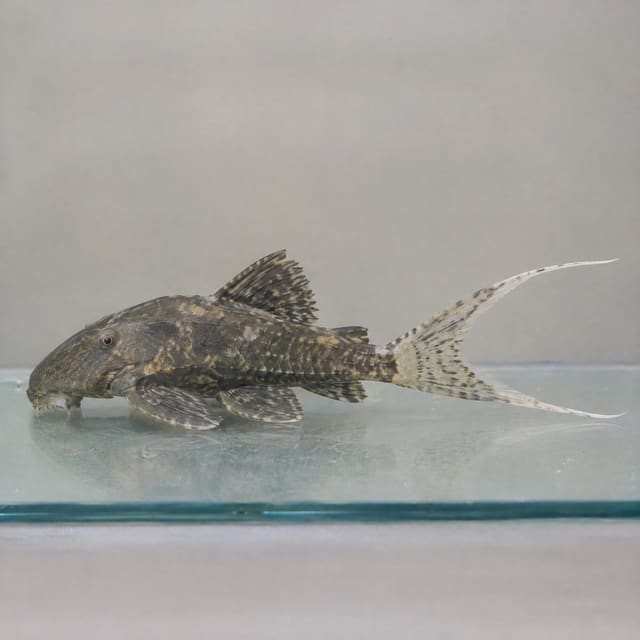
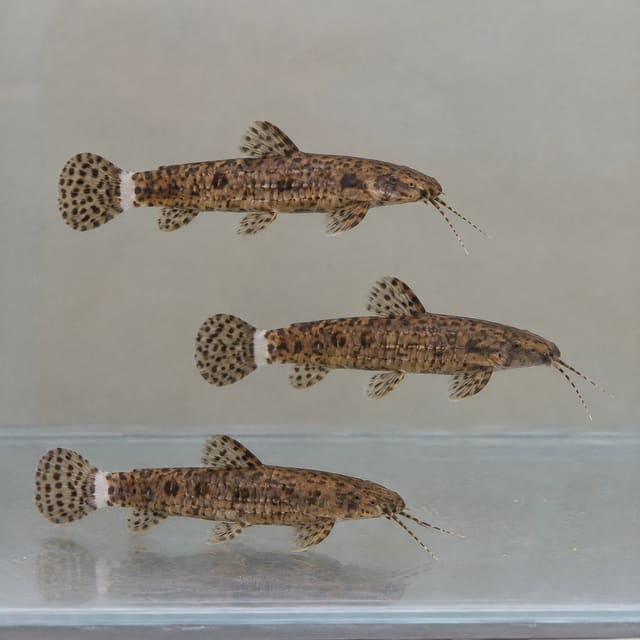
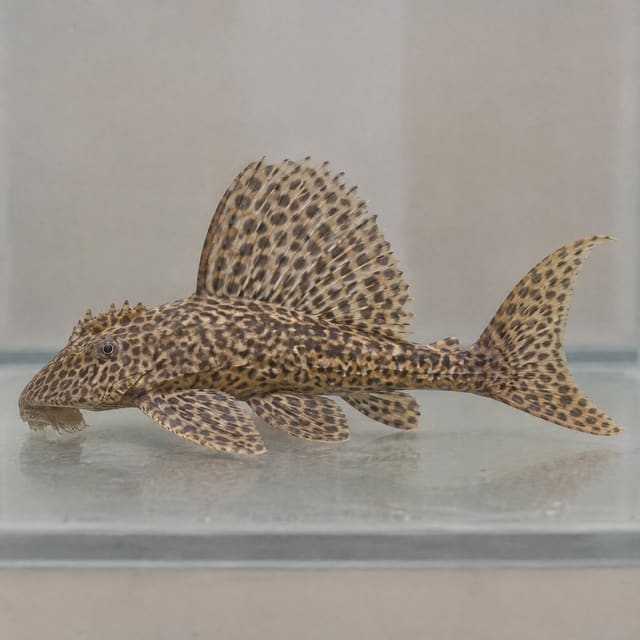
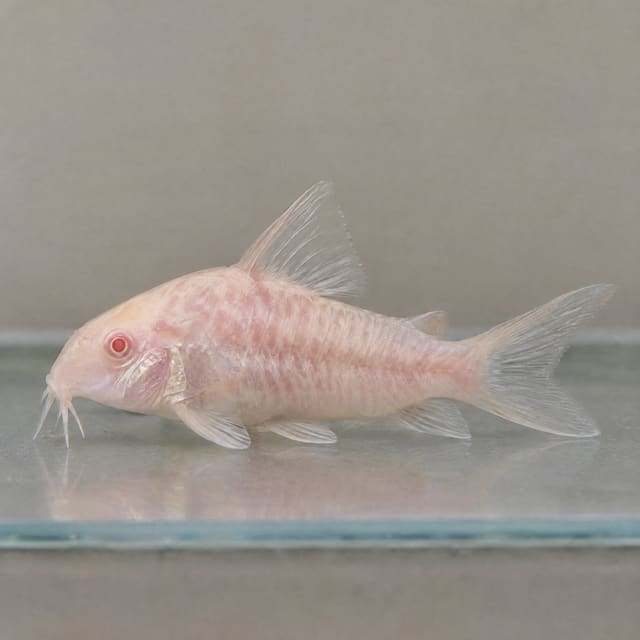
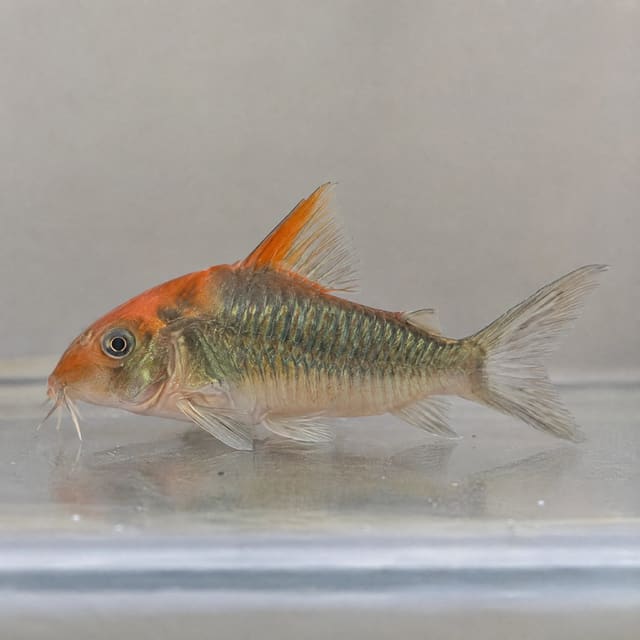
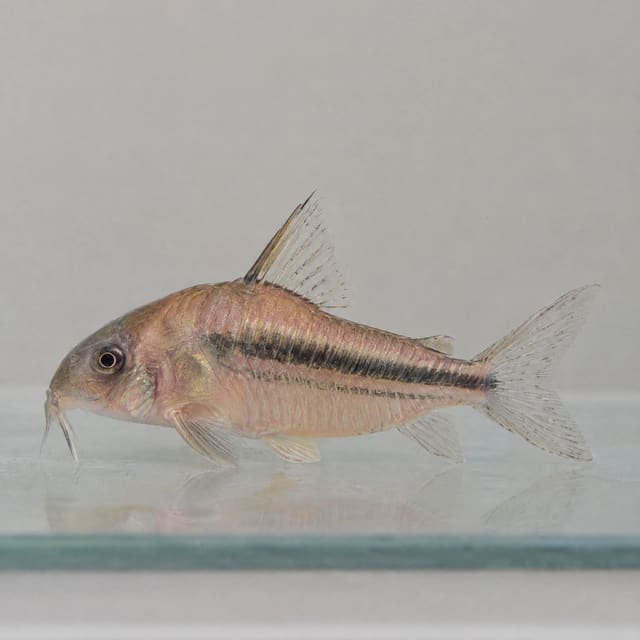
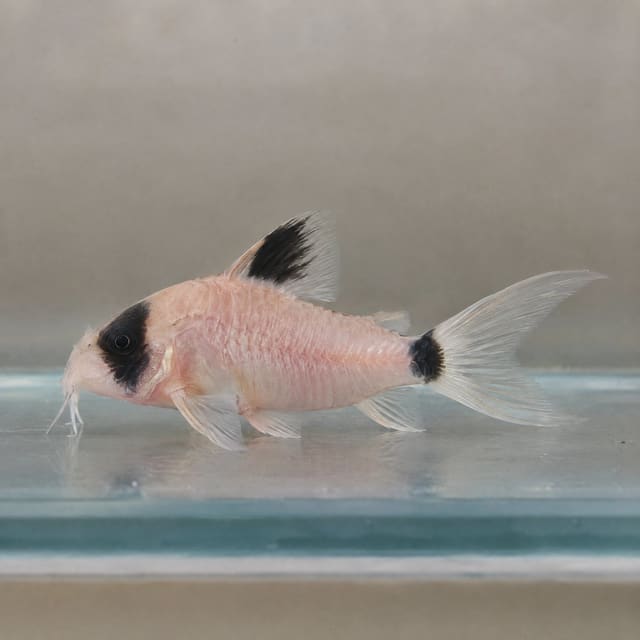
The photographs show the species, not the individual you will receive. Stripe width, contrast and tail markings vary from fish to fish and change with age.
Before ordering, read our delivery and Live Arrival Guarantee information and have the aquarium running and mature, so the fish goes straight into stable water.
This pleco lives on the bottom and among wood, so floor area is what it uses. ScotCat's royal panaque factsheet says a fully grown fish needs a 5 or 6 ft aquarium, about 150–180 cm long, to function properly. OATA includes the larger plecos among its "tank busters" and says they need an exceptionally large aquarium, often well over 500 litres, warning that an off-the-shelf tank is unlikely to be big enough for the long term.
Start with the largest base you can and plan upgrades early. Royal plecos are slow-moving and long-lived, and a cramped tank shows up as poor water quality long before the fish looks too big.
Our tank volume calculator converts your tank's measurements into litres, and our stocking calculator shows how much capacity a fish this size uses before you add anything else.
Planet Catfish describes the natural habitat as fallen trees and wood tangles. The revision explains why wood matters so much: Panaque teeth are short and spoon-shaped, wider at the tip, and the authors compare them to the head of an adze, a tool made for gouging wood, driven by greatly enlarged jaw muscles. Within its group, P. armbrusteri has the most teeth of all, and the authors call it one of the most specialised members.
| Area | Purpose |
|---|---|
| Several large pieces of driftwood | Its food source and cover; add new wood as old pieces are worn away |
| Root overhang or cave | A daytime retreat in the darker part of the tank |
| Sand with scattered leaves | A soft floor that is easy to siphon of wood fragments and droppings |
| Clear feeding spot | An open patch at the front where vegetables are placed and the fish can be checked |
| Upper water | Swimming space for calm, large tank mates |
Use dense, well-soaked hardwood that sinks, and wedge heavy pieces so they cannot roll. OATA warns that large fish can dislodge ornaments and advises securing all décor and fitting a fish-proof cover, because big fish can be jumpy when first moved.
Planet Catfish gives 23–27°C for P. armbrusteri. That is cooler than the 26–29°C it gives for the Xingu royal pleco, so do not assume every "L027" wants the same temperature. No pH or hardness range is published for this species; ScotCat gives pH 6.0–7.5 for the related royal panaque, P. nigrolineatus, which is a sensible working range. Above all, keep conditions steady.
| Reading | Target |
|---|---|
| Temperature | 23–27°C (Planet Catfish) |
| pH | 6.0–7.5 (ScotCat, for the related royal panaque) |
| General hardness | Not published; soft to moderately hard water is the safe choice |
| Ammonia | Zero mg/l |
| Nitrite | Zero mg/l |
| Nitrate | No more than 20 mg/l above your tap water |
The waste limits come from OATA's catfish care sheet; for a fish that grazes all day they are the numbers to watch.
UK tap water ranges from soft to very hard depending on where you live, and your water company publishes the hardness for your postcode. Hard supplies can be softened by blending with reverse-osmosis water. Always treat new water with a conditioner that removes chlorine and chloramine. Our water matcher compares your readings with this pleco's needs, and our water chemistry guide explains each reading.
A fish that rasps wood around the clock produces a steady stream of waste. ScotCat recommends a large external filter that turns the tank volume over about six times an hour and gives a good current, and OATA says very large fish may need several large filters or even a pond filter to deal with solid waste. FishBase notes that Panaque can gulp air when oxygen runs low, but treat that as an emergency reserve: keep the water well aerated.
Protect heaters from damage, as OATA advises, and site the tank away from draughts and direct sunlight to keep the temperature even.
If ammonia or nitrite appears, test again, check the flow and reduce feeding before changing anything else.
Planet Catfish lists the foods royal plecos take alongside wood: prepared algae wafers, fresh vegetables such as courgette, cucumber, peas and green beans, and tubers such as potato and yam. ScotCat adds that vegetable foods are a must and advises against frequent meaty frozen foods, because a royal panaque's long gut is built for greens.
ScotCat notes that royal plecos hide by day and come out at night to search for food, so feed around lights-out and lift any leftovers in the morning. A rounded belly is the best sign that it is eating enough.
Add the fish only to an aquarium with a mature filter, ammonia and nitrite at zero, the temperature already between 23 and 27°C and the driftwood in place. OATA recommends the floating-bag method: switch the aquarium lights off, float the sealed bag for about 10 minutes so the temperatures match, then add small amounts of tank water to the bag over up to 20 minutes before releasing the fish with as little bag water as possible. Our guide on how to acclimatise new fish covers each step.
Its hooked cheek odontodes and fin spines snag nets and can pierce bags, which is why OATA advises double-bagging catfish. Move it in a container rather than a net.
| Checkpoint | What to do |
|---|---|
| Before release | Test ammonia, nitrite, temperature and pH; make sure soaked driftwood is already in the tank |
| First night | Lights off; place a slice of courgette beside the wood |
| Days 2–3 | Look for it after dark and for fresh rasping marks on the wood |
| Day 4 | Retest ammonia and nitrite as the filter adjusts to the new fish |
| End of week | Do the normal water change and check that its belly is filling out |
Planet Catfish describes P. armbrusteri as generally peaceful, though it may defend its territory against its own kind. ScotCat's advice for royal panaques is a large community with like-sized cichlids or large barbs that swim in the upper layers; it notes that even smaller relatives come to no harm, and that aggressive species should be avoided because they upset this peaceful catfish.
From our range, the Tinfoil Barb is a large barb for the upper water of a big tank and the Red Spot Severum a calm, sizeable cichlid. Check each one's temperature range against 23–27°C with our tank mates tool before mixing.
| Suits | Avoid |
|---|---|
| Like-sized, calm cichlids | Aggressive or boisterous cichlids |
| Large barbs and characins in the upper water | A second royal pleco without separate wood and caves |
| Fish comfortable at 23–27°C | Species that need warmer water than its range |
| Smaller peaceful catfish in a big tank | Fast feeders that strip vegetables before it emerges |
If you are comparing royal plecos, see the L190 Golden Royal Pleco, the Royal Pleco (Panaque nigrolineatus), our L027 Royal Pleco, the L090 Papa Panaque and the L239 Blue Fin Panaque. Keep them as alternatives rather than tank mates unless each can have its own territory.
OATA lists the warning signs to watch in catfish: clamped fins, flicking against décor, shimmying, changes in breathing, colour or appetite, loss of condition and unusual hiding. In a royal pleco, a thinning belly or wood left untouched are the earliest clues that something is wrong.
| If you see | Do this |
|---|---|
| Thin belly or no fresh marks on the wood | Offer vegetables at night near its retreat and check tank mates are not eating them first |
| Fast breathing or gulping at the surface | Test ammonia and nitrite and raise aeration and flow straight away |
| Clamped fins, flicking or shimmying | Test the water, change some water and look closely for parasites |
| White spots or fluffy growths | Test the water and follow our white spot guidance |
| Murky water and clogged sponges | Clean pre-filters, remove leftovers and siphon around the wood |
| Damaged fins or scraped skin | Look for a bully or a second pleco and add more cover |
Never diagnose from a single sign; poor water, low oxygen, bullying and hunger can look alike. If white spots appear, our white spot treatment guide explains the next steps, and our pleco care guide covers routine checks for every suckermouth catfish. Read any medicine's label for warnings about catfish before using it.
FishBase and Planet Catfish give its IUCN Red List status as Least Concern, last assessed in 2018. Planet Catfish records no aquarium breeding of P. armbrusteri; its page for the related Araguaia royal pleco cites a 2013 Amazonas magazine report of a first captive royal pleco breeding, so spawning is possible in principle but very rare. Buy this fish as a long-term centrepiece for a large, wood-filled aquarium.
It is Panaque armbrusteri, a large wood-eating royal pleco from the Rio Tapajós and its tributaries in Brazil, described by Lujan, Hidalgo and Stewart in 2010. Planet Catfish lists it under the codes L027 and LDA077; UK shops sell it as L27D.
Planet Catfish explains that the name comes from the English translation of a Japanese word covering both lightning and thunder, a reference to the lightning-like pale stripes that run along the body, especially in larger fish.
Large. Planet Catfish gives 400 mm standard length and FishBase 43 cm total length and 1.3 kg; the largest of the specimens studied in the 2010 description measured 345 mm standard length.
Yes, always. Planet Catfish says all Panaque appear to feed on wood, and the 2010 revision describes their spoon-shaped teeth as shaped like the head of an adze, a tool for gouging wood. Offer vegetables, tubers and algae wafers as well.
ScotCat says a fully grown royal panaque needs a 5–6 ft aquarium, about 150–180 cm long, and OATA notes that very large fish often need well over 500 litres. Plan for the adult before you buy.
Planet Catfish gives 23–27°C for P. armbrusteri. No pH is published for the species; ScotCat gives pH 6.0–7.5 for the related royal panaque.
Look for alternating dark brown and paler beige-to-grey stripes running the length of the body, a modest hump behind the head and, in young fish, a clear "window" in the dark tail. The 2010 revision notes that its tooth rows widen as it grows, which is unique among plecos.
No. FishBase and Planet Catfish give its IUCN Red List status as Least Concern, last assessed in 2018.
No reviews for this item yet. Bought one? Honest reviews only, good or bad.
What customers say about ordering from us
Easy website plenty of info on fish your buying great to pick a time slot
TRACEY DURRANT · 7 Oct 2026
Got some lovely fish thank you
Kevin Mackie · 7 Oct 2026
Reviews of our shop, collected by Judge.me, an independent third-party review collector. Newest first.
Moved by UK carriers licensed to handle live animals
Hand-packed with oxygen bags, poly box, heat pack
Email photos the same day; an optional unboxing video helps us review problems faster — claim terms apply
Klarna & PayPal Pay in 3 at checkout