Easy
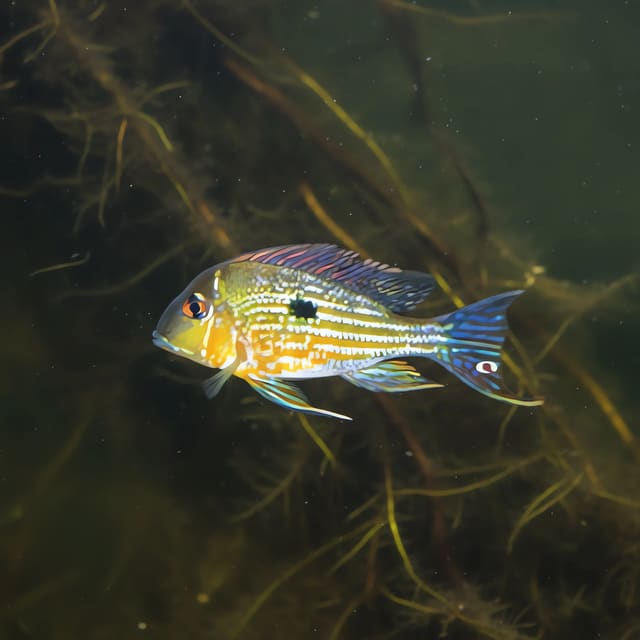
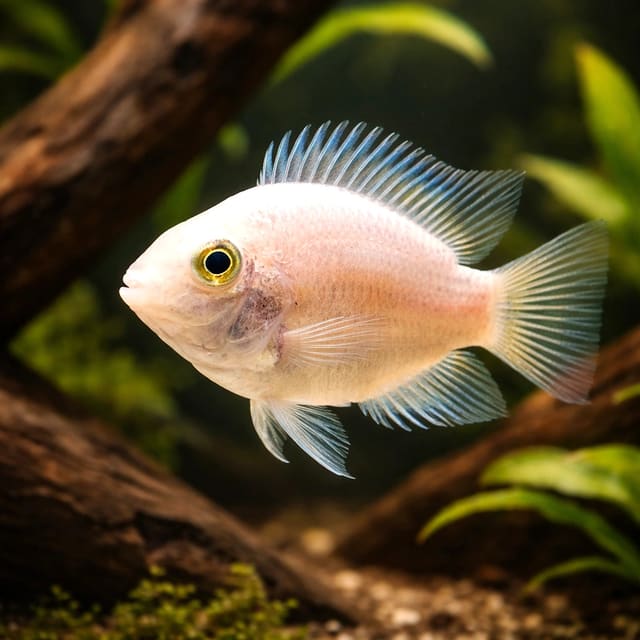
Electric Blue Acara (Andinoacara pulcher) – Neon Blue, 2–7cm Sizes
22–23°C · pH 6.5–8
£6.19

The Red Spot Severum (Heros severum) is a South American cichlid that reaches 20 cm. It suits intermediate keepers planning an aquarium of at least 300 litres; OATA’s American-cichlid guidance gives 24–27°C, pH 6.5–7.5 and 4–12°dH. Sold individually in sizes from 3–4 cm to 15–17 cm.
Adult size is the maximum length this species reaches at full maturity (scientific sources). The livestock you receive will be younger and smaller — pick a size above for the actual shipping size. Product-photo provenance and any image-specific limitations are stated on the listing.
Heros severus
Save when buying multiple fish. Each quantity is one fish; sex and pair formation are not guaranteed unless the selected variant explicitly states them.
The Red Spot Severum (Heros severum) is a South American cichlid that reaches 20 cm. It suits intermediate keepers planning an aquarium of at least 300 litres; OATA’s American-cichlid guidance gives 24–27°C, pH 6.5–7.5 and 4–12°dH. Sold individually in sizes from 3–4 cm to 15–17 cm.
Adult size is the maximum length this species reaches at full maturity (scientific sources). The livestock you receive will be younger and smaller — pick a size above for the actual shipping size. Product-photo provenance and any image-specific limitations are stated on the listing.
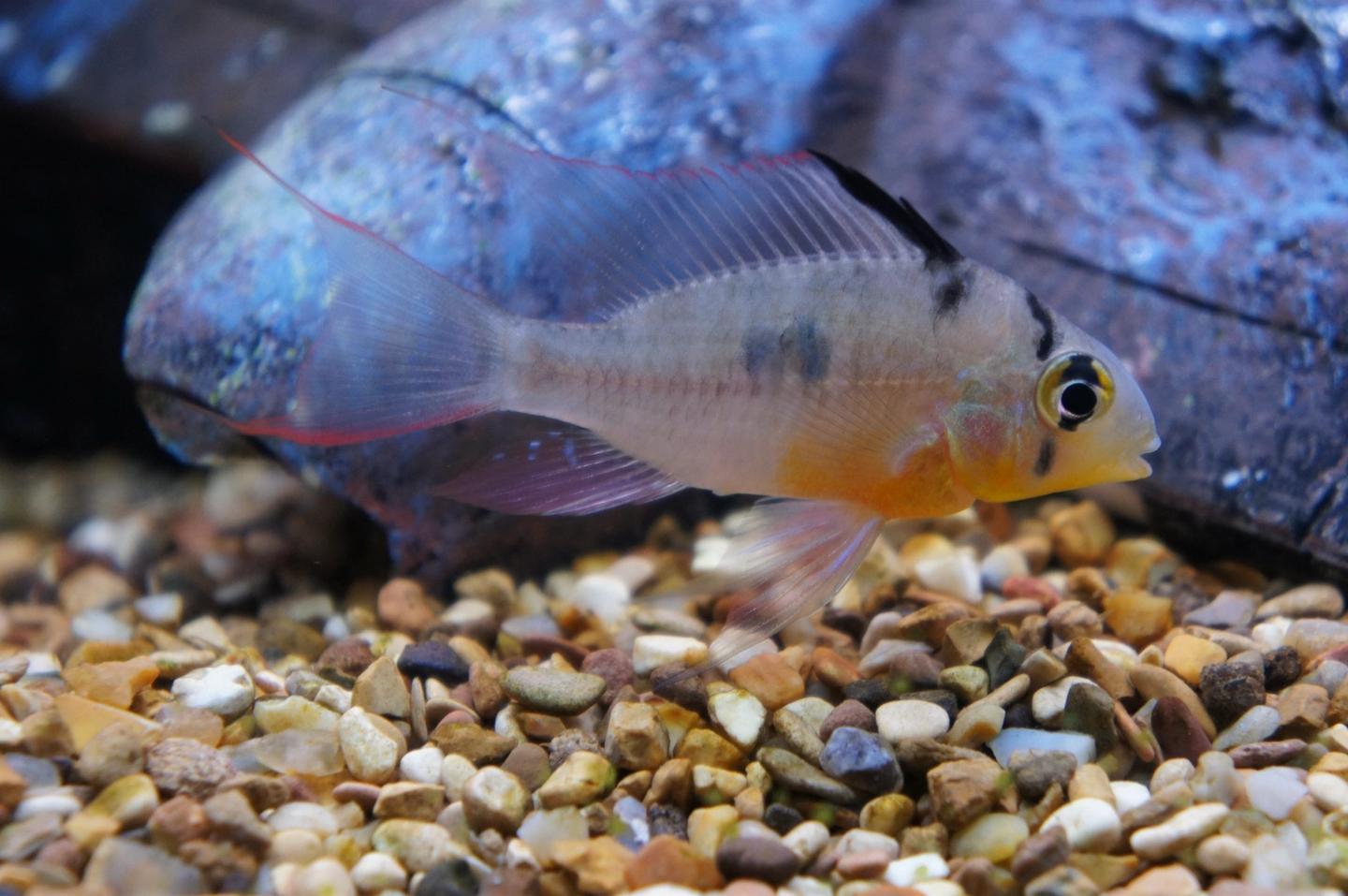
Cichlids are a family of roughly 1,800 accepted species, not one care type. Before buying, identify the exact species and source, then compare adult measurement, usable tank dimensions, social system, territory, tested water, diet and an exit plan. No family-wide minimum tank, water range or tank-mate list is safe.
Maintain these water conditions for optimal health and vibrant colors
The Red Spot Severum (Heros severum) is a South American cichlid from the family Cichlidae that reaches 20 cm. It suits an intermediate keeper who can provide a large, mature aquarium, maintain stable water quality and assess cichlid behaviour carefully. Its deep-bodied form gives it the visual presence expected from a centrepiece fish, and it mainly uses the middle region of the aquarium.
Plan the complete setup around its adult length rather than the size delivered. A smaller fish still needs a route into its permanent aquarium, including enough swimming room, suitable filtration and companions chosen for their adult size and temperament. This is not a fish for a small temporary community that has no realistic upgrade plan.
One fish can form the focus of a robust community. A pair is another possible group-care pattern, but space alone does not make two cichlids compatible: their behaviour must be watched and a separation plan kept ready. Keep the aquarium lightly stocked while the biological filter adjusts to the fish’s waste output.
Browse our South American cichlid collection when comparing this fish with other cichlid choices, but assess each candidate on adult size, temperament and water needs rather than appearance alone.
One purchase supplies one Red Spot Severum in the size selected. The live size selector may show the labels 3 - 4 cm, 4 - 5 cm, 5 - 6 cm, 6 - 7 cm, 7 - 9 cm, > 8 cm, 10 - 12 cm, 13 - 15 cm and 15 - 17 cm. Use the live selector to see the precise choices presented when ordering.
The size you select is the size supplied, not the adult size. Dispatch size describes the fish when it leaves us; it is not a promise that growth stops at that measurement. Build the aquarium, filtration and compatibility plan around the 20 cm adult figure even when choosing one of the smaller labels.
Sex is guaranteed only when the selected option explicitly states male or female. This Red Spot Severum listing has no sex-guaranteed option.
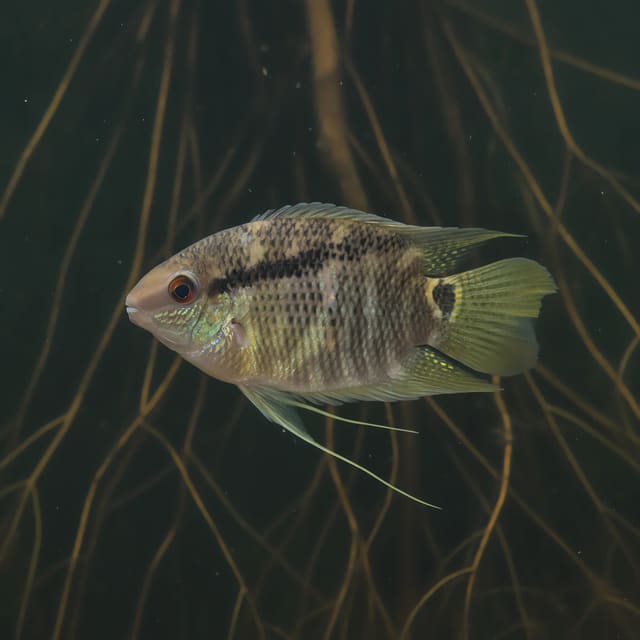
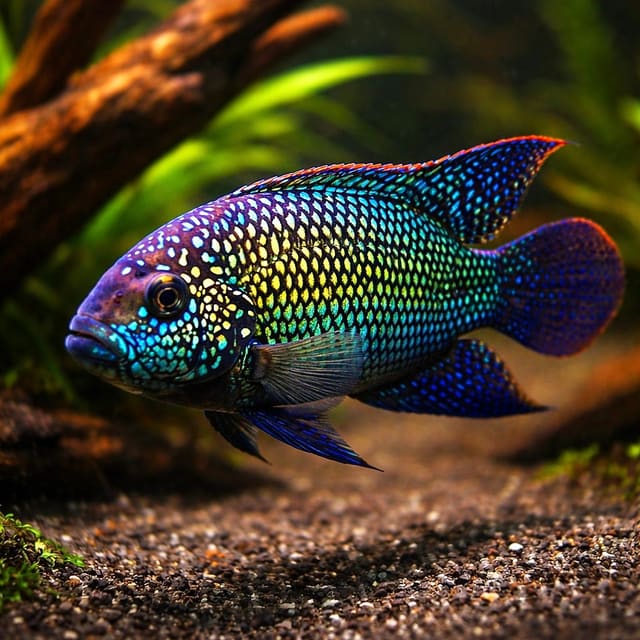
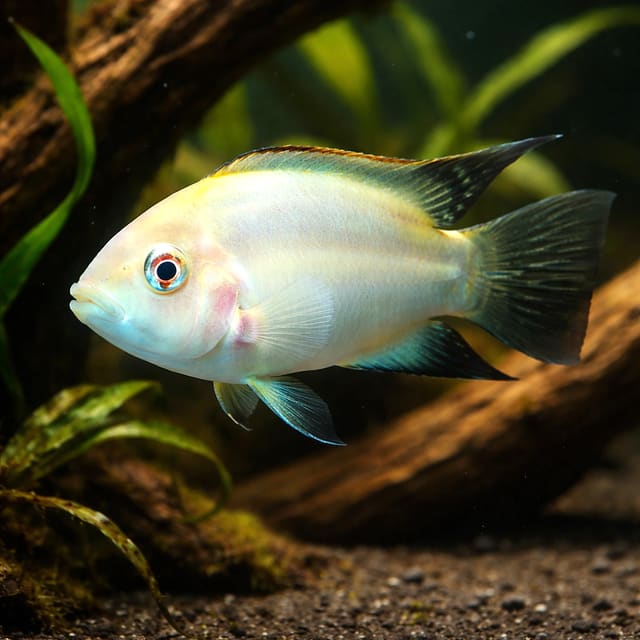
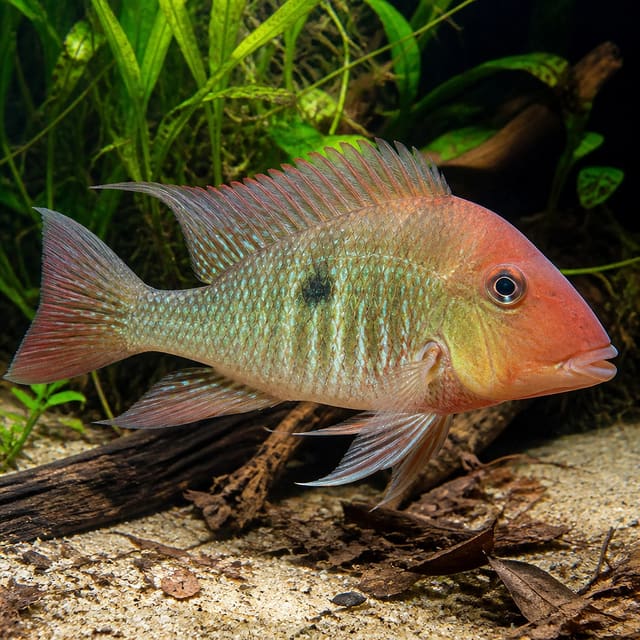
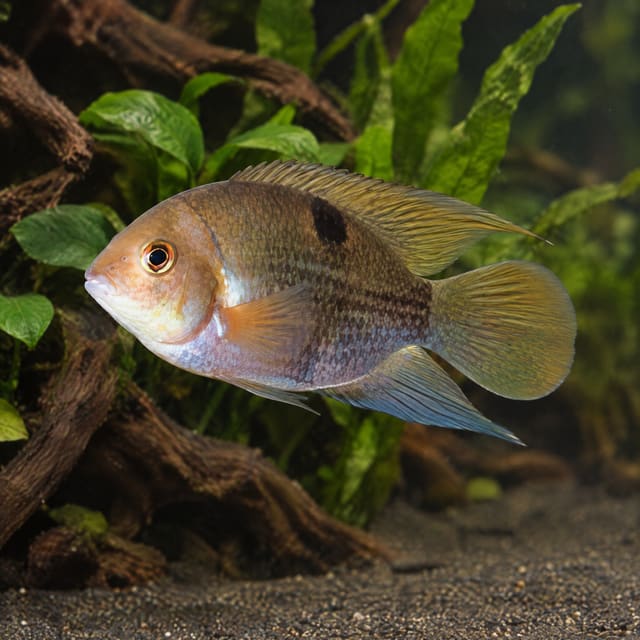
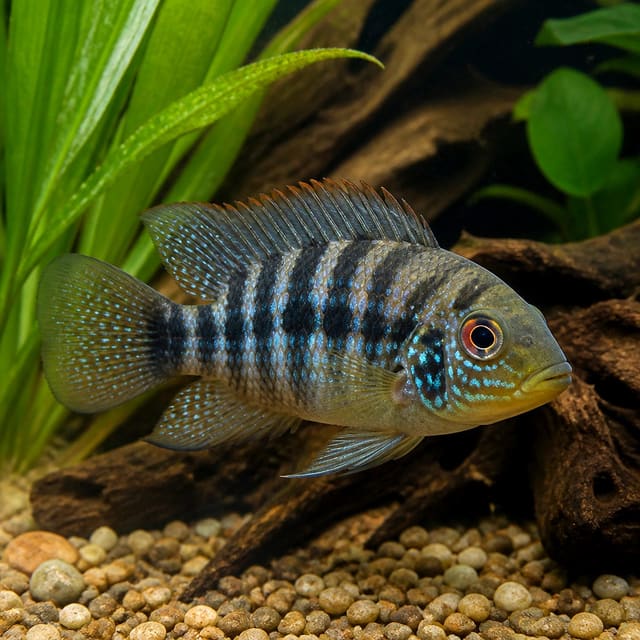
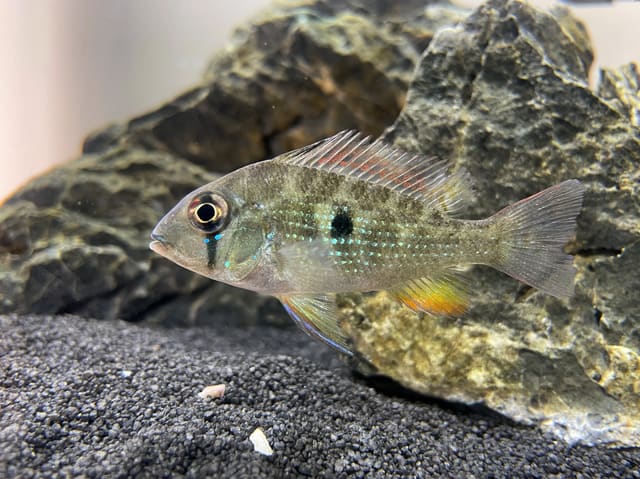
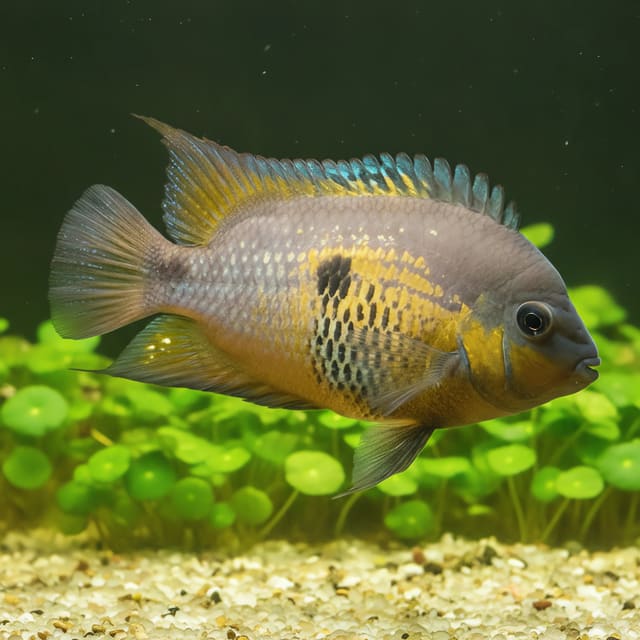
Some gallery images have been digitally enhanced to improve image quality. They show the listed type of animal rather than guaranteeing the exact markings of the individual supplied, so natural colour and pattern can vary.
Colour and markings can also vary in appearance with lighting, viewing angle and the fish’s condition. Choose the animal for its long-term space and care needs rather than expecting a live fish to reproduce every colour shown in an illustrative scene.
Plan for an adult length of 20 cm and an aquarium of at least 300 litres. Keep the water at 24–27°C, pH 6.5–7.5 and 4–12°dH, with carbonate hardness of 3–10°dKH. The OATA American-cichlid guidance supplies these water values for the group and recommends at least 300 litres for larger species over 15 cm.
| Suits | Not suited to |
|---|---|
| An intermediate keeper able to maintain a large filtered aquarium | A small aquarium with no adult-size plan |
| Stable tropical water within 24–27°C and pH 6.5–7.5 | Uncycled aquariums with detectable ammonia or nitrite |
| Single-fish or carefully assessed pair planning | Adding several cichlids without a separation plan |
| A robust community built around larger shoaling fish | A community chosen only by colour or trade name |
Keep ammonia and nitrite at zero. Nitrate should not rise more than 20 mg per litre above the normal tap-water level. Those readings turn a broad care plan into practical weekly decisions: if ammonia or nitrite appears, stop adding fish, test again and correct the water-quality problem before increasing feeding or stocking.
Use at least 300 litres as the starting aquarium size for this 20 cm cichlid. OATA applies that minimum to American cichlids over 15 cm, placing this fish on the larger side of its group-care framework. More water also changes conditions more slowly, giving the keeper more time to notice and correct changes in temperature or waste levels.
Fine aquarium gravel or sand is appropriate group guidance because many American cichlids dig or sift the substrate while feeding or breeding. Secure decorations so digging cannot leave them unstable. Arrange wood, plants or other cover without blocking the main swimming area, and check that the fish cannot become trapped behind heavy objects.
Live plants may be dug up or eaten by American cichlids. Treat planting as part of the layout rather than an immovable feature: protect roots, use securely positioned plants, or include suitable artificial cover where repeated digging would otherwise leave the aquarium bare.
A dispatch-size fish may look small in a 300-litre aquarium, but that is preferable to making several disruptive moves as it grows. A permanent setup allows the filter, layout and social plan to develop around the same adult fish. Measure access routes, cabinet support and maintenance clearance before filling the aquarium so weekly care remains practical.
Keep the aquarium at 24–27°C, pH 6.5–7.5 and general hardness of 4–12°dH. Carbonate hardness should remain within 3–10°dKH. Stability within these working values matters more than repeatedly adjusting the aquarium towards a chosen midpoint.
Our water chemistry guide explains what each test measures, while the water matcher helps compare measured values with the stated range. Record results with the date, water change and any unusual observation. A sequence of readings is more useful than one isolated number because it shows whether conditions are stable or moving.
If ammonia or nitrite is detectable, treat that result as urgent. Pause further stocking, check the filter for interrupted flow or blockage, remove uneaten food and perform an appropriate conditioned-water change. Continue testing until both readings return to zero. Do not try to hide a waste problem by feeding more lightly without also checking filtration and maintenance.
Avoid sudden chemistry changes made only to chase a precise number. Test tap water as well as aquarium water, use tap-water conditioner on replacement water and make gradual, measured decisions. If pH or hardness moves unexpectedly, check the source water, recent additions and maintenance history before adding chemical adjusters.
Run a well-established biological filter before introducing this fish. The RSPCA’s aquarium welfare guidance explains that fish release toxic ammonia and that filter bacteria convert it first to toxic nitrite and then to safer nitrate. A filter therefore needs living bacterial capacity as well as water movement.
Prepare and mature the aquarium before choosing an arrival date. Our first tropical aquarium guide sets out the preparation sequence. Confirm zero ammonia and zero nitrite with tests; clear-looking water alone does not show that the biological filter can process fish waste.
Overstocking or adding several fish quickly can produce new tank syndrome because the bacterial population cannot yet process the increased waste. A large aquarium reduces rapid swings, but water volume cannot replace a mature filter. Keep the first stocking plan conservative and use test results to decide when the system is stable.
Never rinse established filter media under tap water. Chlorine or chloramine may damage the bacteria on which biological filtration depends. When cleaning is needed, swish the media lightly in aquarium water removed during a partial water change, preserve as much bacterial material as possible and restore normal flow promptly.
Feed once a day, offering only what the fish can finish within a few minutes. OATA describes American cichlids as generally omnivorous, often with a preference for meaty foods. Use an appropriately sized cichlid pellet or granule as the regular prepared food and supplement it with suitable frozen or freeze-dried items.
The few-minute rule is a limit, not a target to keep adding food until time expires. Start with a small amount, watch it being eaten and stop when feeding interest slows or pieces reach the substrate untouched. Remove uneaten food where practical before it breaks down.
Overfeeding creates more faeces and leaves food to decay, increasing the load on the biological filter. If nitrate begins rising faster than usual, or solid waste accumulates before the weekly clean, review portion size and uneaten food before assuming the filter needs replacement. A fish that begs at the glass has not measured its nutritional requirement.
Match the food to the fish’s present dispatch size while keeping the same once-daily structure. Smaller individuals need smaller pieces, not an unrestricted number of meals. Larger individuals may manage larger items, but the portion must still disappear within a few minutes. Record appetite during the first week so a later reduction is easy to recognise.
Change 25% of the aquarium water at least once every week. Treat replacement tap water with a conditioner that neutralises chlorine or chloramine before it enters the aquarium. Keep the replacement water close enough to the aquarium conditions to avoid a sudden temperature or chemistry shift.
Do not deep-clean every surface and all filter media together. The biological filter depends on established bacteria, so maintenance should remove waste while preserving that community. Clean the area that needs attention and leave functioning media undisturbed.
Use the same container markings or measured method each week. In a 300-litre aquarium, 25% is 75 litres, although the actual water volume may be lower after substrate and décor displacement. Calculate the change from the working water volume where that is known, and keep the routine consistent enough to compare test results from week to week.
Check the substrate beneath feeding areas and around wood or decorations, where waste may collect. If debris repeatedly settles in one place, adjust the cleaning route or water circulation without creating a harsh current across the fish’s main swimming area. Maintenance should solve the cause of accumulating waste as well as remove what is visible.
Be home to receive the fish because a live-animal parcel must not be left unattended. The fish is hand-bagged in pure oxygen and placed in an insulated poly box, with a heat pack when the weather calls for one. A licensed live-animal courier carries the parcel, and tracking is sent for the confirmed delivery.
Prepare the aquarium before the parcel arrives. The heater, filter and cover should be operating, and ammonia and nitrite should both read zero. Acclimatisation cannot compensate for an immature filter or unsuitable water, so complete those checks before opening the box.
Keep the first day focused on safe transfer and observation. Do not combine arrival with a major aquascape change, filter replacement or the addition of several other fish. A quiet stocking plan makes it easier to distinguish normal settling from a water-quality problem.
During the first week, check temperature, ammonia and nitrite daily enough to catch a change quickly, particularly after feeding begins. Note whether the fish swims upright, breathes steadily and takes food. If ammonia or nitrite appears, correct the water-quality problem immediately and avoid adding further fish while the filter adjusts.
Retain the size label as an arrival measurement, not an adult prediction. Growth changes space use, food size and waste output, so review the aquarium plan as the fish develops while keeping the 20 cm adult figure as the fixed planning point.
Watch for changes in swimming, breathing, colour, temperament, body condition and feeding. OATA highlights fish hanging at the surface, sitting on the bottom, swimming erratically, hiding more than normal, changing aggression, breathing faster or slower, losing condition, or losing interest in food as signs that deserve investigation.
Begin with water tests because even small amounts of ammonia or nitrite can stress American cichlids. Correcting filtration or water quality is a direct response to a measured problem; adding medication without a clear reason can complicate the situation.
Keep brief notes on normal appetite, preferred swimming area and interactions. A change is easier to recognise when there is a baseline. Photographs taken for your own comparison can also show whether marks, fin damage or body condition are changing over time.
If you are concerned about a health change, test the water and contact us with the results, aquarium volume, temperature, recent additions and a clear description of the signs. Those details allow the next decision to address the aquarium as well as the fish.
Begin with one Red Spot Severum unless the aquarium has been planned for a compatible pair. OATA says most American cichlids do better singly or in pairs, but temperament varies across the group. This fish is semi-aggressive and capable of becoming territorial when breeding, so a pair needs observation and a workable separation option.
| Pattern | Decision rule |
|---|---|
| Single fish | Preserve swimming room and choose all companions around the cichlid’s adult size and temperament. |
| Pair | Provide separated cover and be ready to divide the fish if one is repeatedly chased or excluded. |
| Robust community | Use larger shoaling species with compatible water needs and enough room to withdraw from the cichlid. |
Do not treat two fish selected together as a guaranteed compatible pair. Watch whether both can feed, use cover and occupy the aquarium without relentless pursuit. Brief displays differ from one fish being repeatedly pinned into a corner, prevented from feeding or physically damaged.
Breeding-related territorial behaviour can change a previously settled social pattern. Keep a divider, separate aquarium or other realistic separation method ready before that change occurs. Décor can create visual breaks, but visual barriers are not a substitute for removing a fish that remains under pressure.
Add livestock slowly. Every new fish changes both the social structure and the biological load, so evaluate one change before making another. For a compatibility assessment, send us the aquarium dimensions, adult stock list, water values and intended group sizes.
The supported community pattern is a robust aquarium with larger shoaling species. This is a category for screening, not a universal promise: the proposed fish must also share the 24–27°C and pH 6.5–7.5 working range, fit the aquarium at adult size and tolerate a substantial semi-aggressive cichlid.
Use particular caution with very aggressive cichlids. OATA’s guidance places more aggressive American cichlids alone or with equally aggressive cichlids, which is a specialised social plan rather than a routine community. Mixing aggression levels without sufficient space and separation routes can leave the less dominant fish unable to feed or rest.
Small fish, tiny shrimp, fin-nipping fish and delicate slow-moving animals all require cautious compatibility screening. Treat those as prompts for close screening rather than fixed universal outcomes. Fin-nipping risk depends on the animals involved, while a small animal must be assessed against the cichlid’s 20 cm adult size rather than its arrival size.
Observe after every introduction. Intervene if one animal is repeatedly chased, trapped away from food, forced to the surface or bottom, or develops fin and scale damage. Rearranging cover may interrupt a territory, but persistent aggression calls for separation rather than repeated layout changes.
The Red Spot Severum (Heros severum) reaches 20 cm. Plan the permanent aquarium around that adult length rather than the dispatch size.
Use an aquarium of at least 300 litres. OATA’s American-cichlid group guidance sets this minimum for larger species over 15 cm, and this fish is planned at 20 cm.
OATA says most American cichlids do better singly or in pairs. Begin with one fish unless there is enough space, separated cover and a practical separation plan for a carefully assessed pair.
It carries an intermediate store care rating because the keeper must manage a large aquarium, stable water quality and changing cichlid behaviour. It suits someone confident with cycling, testing and weekly maintenance.
Feed this fish once daily with an appropriately sized cichlid pellet or granule, supplemented by suitable frozen or freeze-dried foods. OATA describes American cichlids as generally omnivorous and often preferring meaty foods; offer only what is eaten within a few minutes.
Keep it at 24–27°C and pH 6.5–7.5, with general hardness of 4–12°dH. These are OATA’s group-care values for American cichlids.
This fish is semi-aggressive and may become territorial when breeding. Treat fin-nipping as an individual compatibility risk: provide space and cover, watch interactions and separate fish if chasing or damage persists.
OATA names larger shoaling species as possible companions for calmer cichlids such as severums in a robust community. Match adult size, temperament and water needs, then monitor every introduction rather than treating any species as universally compatible.
Before opening the parcel, film every delivery continuously from the sealed parcel onward. It is hand-bagged in pure oxygen inside an insulated poly box, with a heat pack when the weather calls for one, and carried by a licensed live-animal courier. Be home to receive it, then float the bag for 20–30 minutes before releasing the fish.
No reviews for this item yet. Bought one? Honest reviews only, good or bad.
What customers say about ordering from us
I have a small group of long finned mountain minnows. So was delighted to be able to order ten of this variety to increase the genetics in my tank . The ones I recieved are healthy but it’s to early to give a verdict on wether they are of a long finned type since they are small currently.
Gordon Walker · 23 Sept 2026
100% success travel and "installation". Pleased with quality of purchase. The Siamese fighter a bit "shy" so have not yet seen him at his best yet but looking good. Happy customer. GG
George E Garratt · 21 Sept 2026
Reviews of our shop, collected by Judge.me, an independent third-party review collector. Newest first.