Moderate
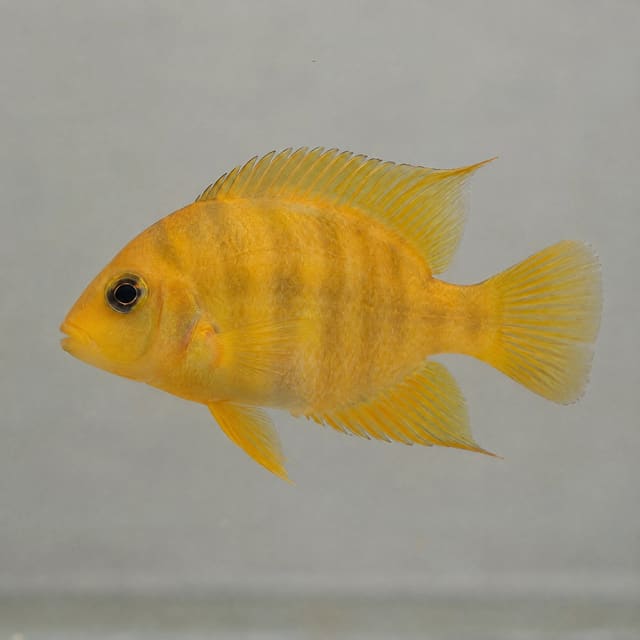
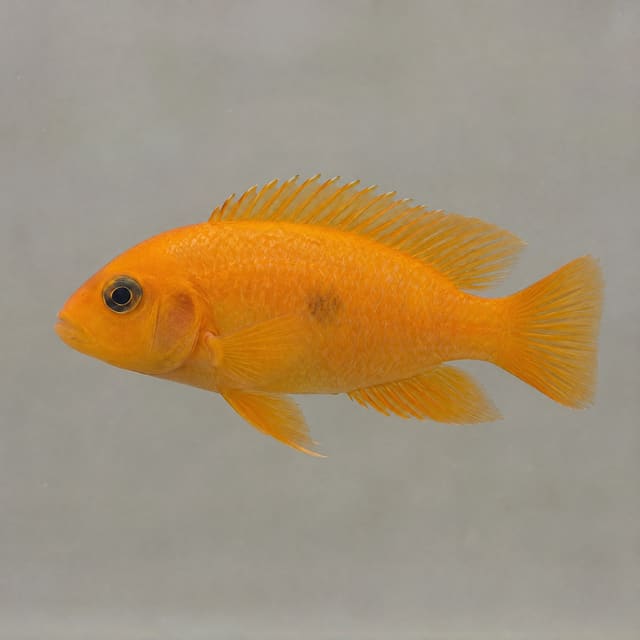
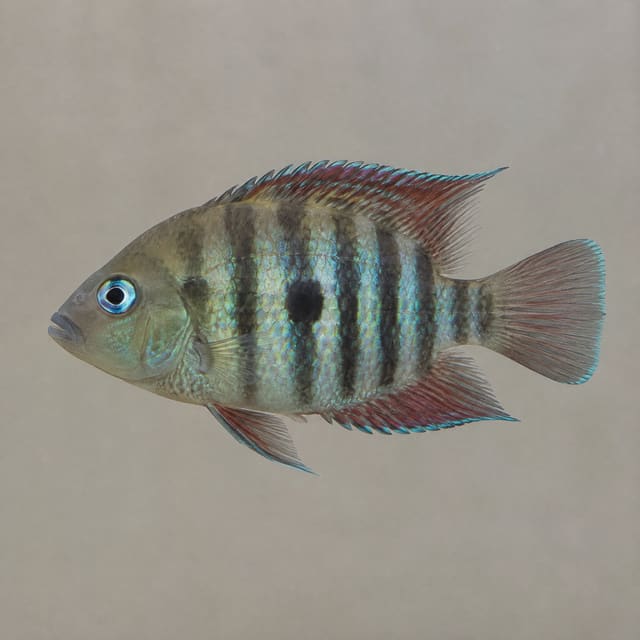
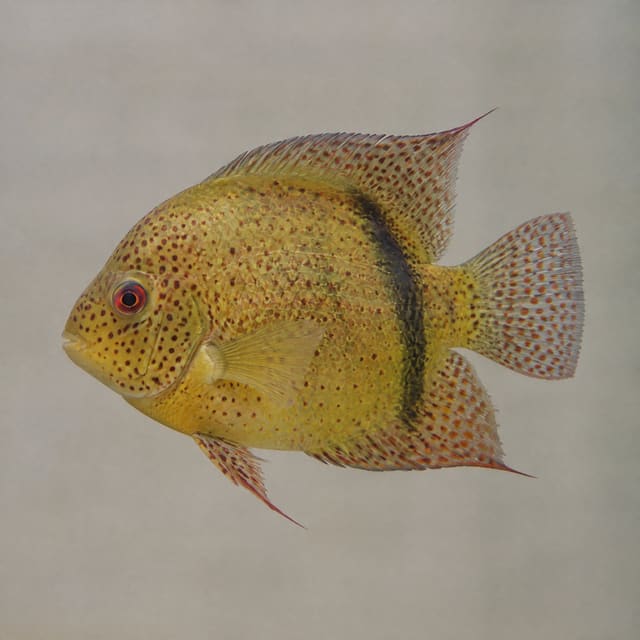
Red Head Bahia Eartheater (Geophagus sp. 'Bahia Red')
£18.29
The Red Hump Eartheater ('Geophagus' steindachneri) is a sand-sifting cichlid from Colombia and north-western Venezuela whose mature males grow a red hump on the forehead. It reaches about 15 cm standard length, needs a 120 × 45 cm base or more with soft sand, and is a maternal mouthbrooder best kept as one male with three or more females. Sold individually as one live fish.
Geophagus steindachneri
Save when buying multiple fish. Each quantity is one fish; sex and pair formation are not guaranteed unless the selected variant explicitly states them.
The Red Hump Eartheater ('Geophagus' steindachneri) is a sand-sifting cichlid from Colombia and north-western Venezuela whose mature males grow a red hump on the forehead. It reaches about 15 cm standard length, needs a 120 × 45 cm base or more with soft sand, and is a maternal mouthbrooder best kept as one male with three or more females. Sold individually as one live fish.
Cichlids are a family of roughly 1,800 accepted species, not one care type. Before buying, identify the exact species and source, then compare adult measurement, usable tank dimensions, social system, territory, tested water, diet and an exit plan. No family-wide minimum tank, water range or tank-mate list is safe.
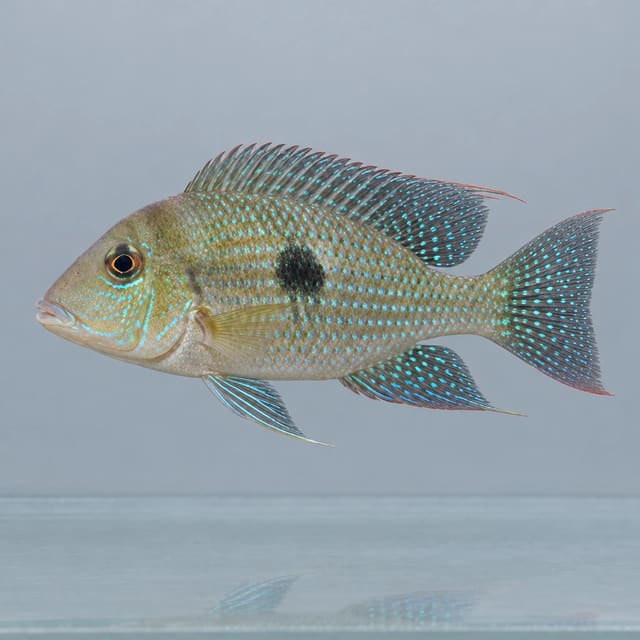
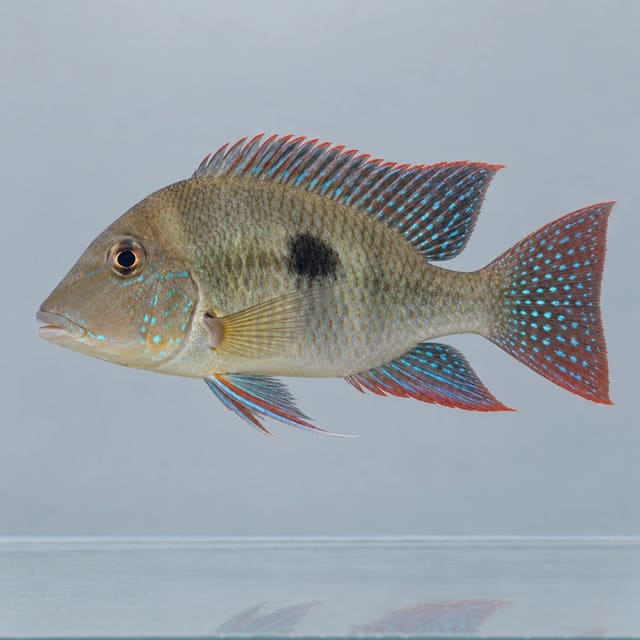
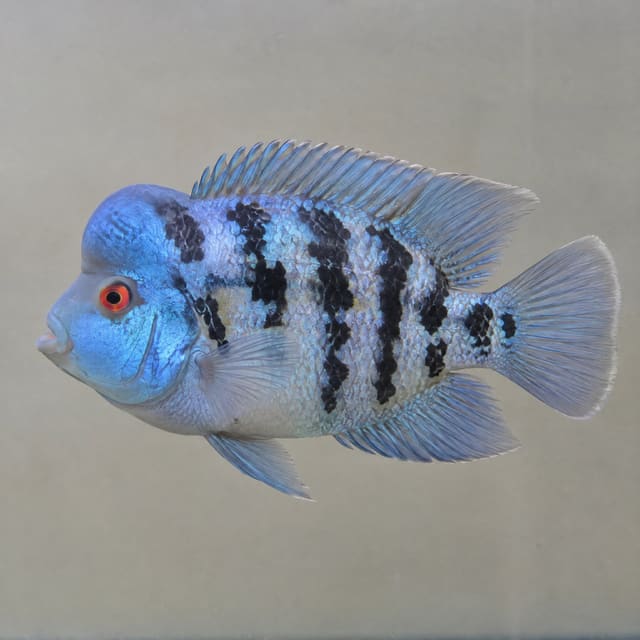
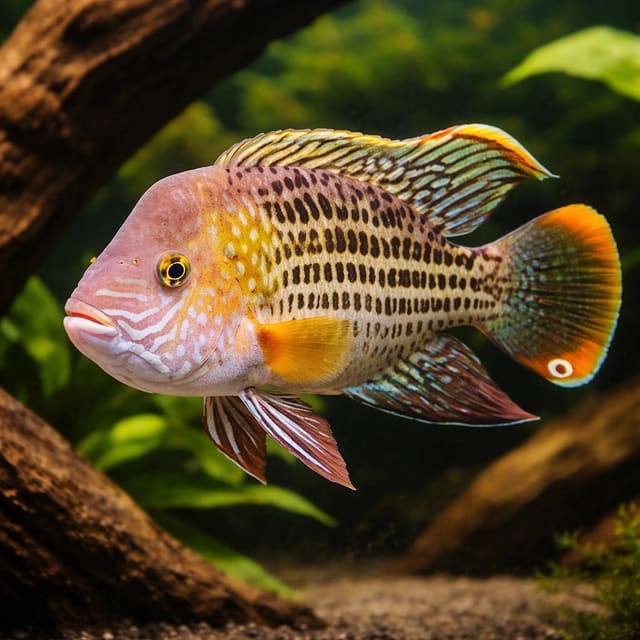
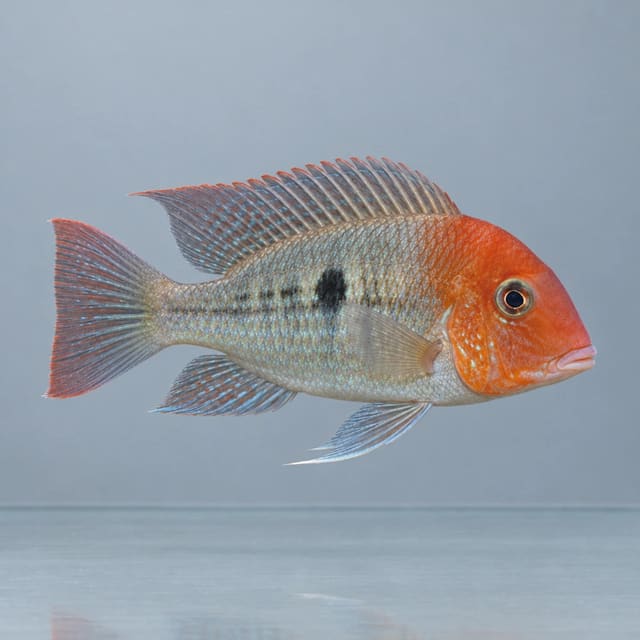
The Red Hump Eartheater, 'Geophagus' steindachneri, is a sand-sifting cichlid from the Río Magdalena basin of Colombia, including its great tributary the Río Cauca, the Río Sinú in the north-west of the country and the Río Limón basin of north-western Venezuela, which drains into Lake Maracaibo. Its common name comes from the mature male: he grows a rounded hump on the forehead, coloured red in many fish. Our photographs show such a male, with a red hump, a silvery body dotted with rows of red-orange spots, a few dark smudges along the flank and long, pale blue fins.
Seriously Fish notes that the species gives its name to the 'G.' steindachneri group, together with 'G.' crassilabris and 'G.' pellegrini. These fish form a lineage whose place in the classification is still unresolved, which is why the genus name is often written in quotation marks. Colour forms differ from one locality to another, and some may eventually be described as separate species. The species is named after Franz Steindachner, an Austrian zoologist.
| Name | What it means |
|---|---|
| Red Hump Eartheater | The usual English name, after the male's red forehead hump |
| 'Geophagus' steindachneri | The scientific name, Eigenmann & Hildebrand, 1922; quotation marks show the genus placement is unresolved |
| Geophagus hondae | An older name (Regan, 1912), now a synonym, still seen on some trade lists for particular colour forms |
| 'G.' steindachneri group | Its small group of close relatives from north-western South America |
| Eartheater | From Geophagus, "earth eater" in Greek, after the way it sifts sand for food |
Where most eartheaters spawn on a stone or carry the brood with both parents, this one is a maternal mouthbrooder: the female alone carries the eggs and young in her mouth. That, a manageable adult size and a striking male make it one of the most rewarding eartheaters for a UK keeper with a large, well-filtered aquarium. FishBase calls it a peaceful species, and the IUCN Red List rates it Least Concern (2021).
One purchase supplies one live Red Hump Eartheater. The size option is "Standard": the fish is sent at the size currently available, which is a young fish below adult size. Sex is not chosen or guaranteed, and young fish do not yet show the hump, which develops only in sexually mature males.
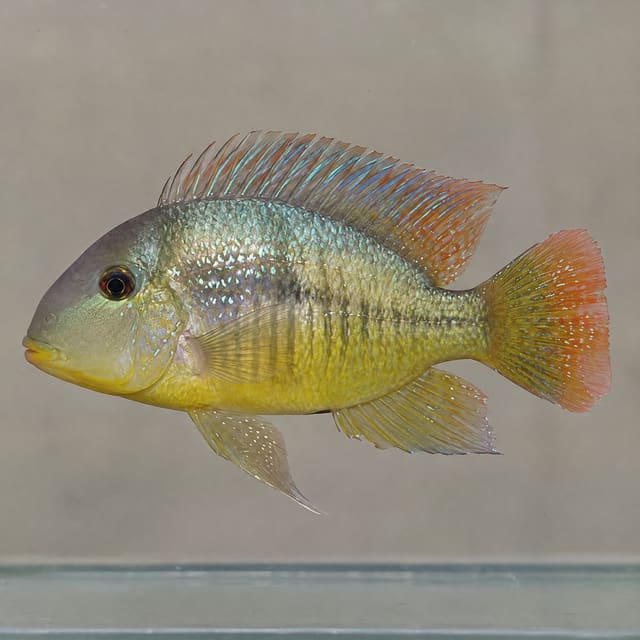
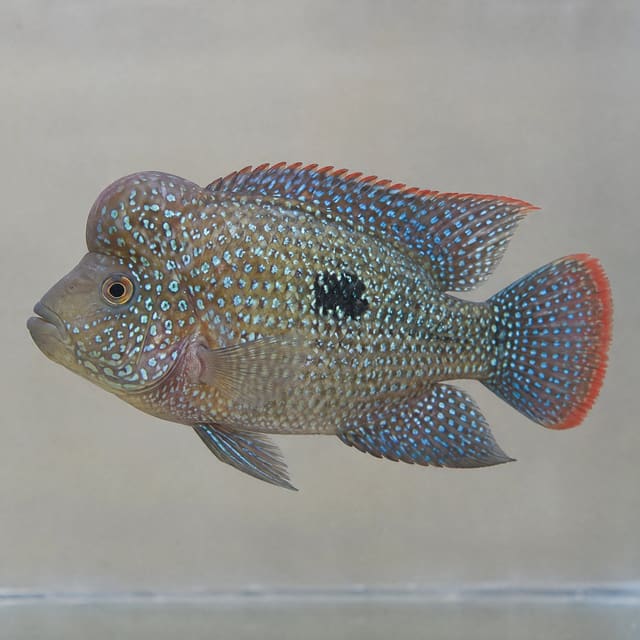
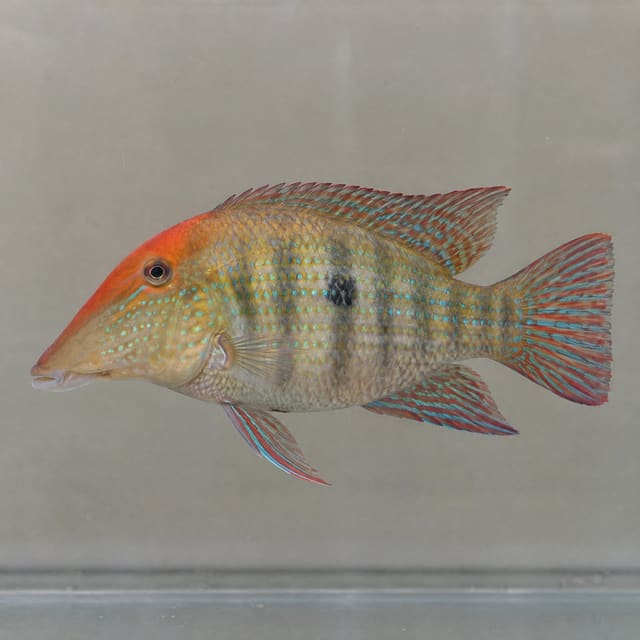
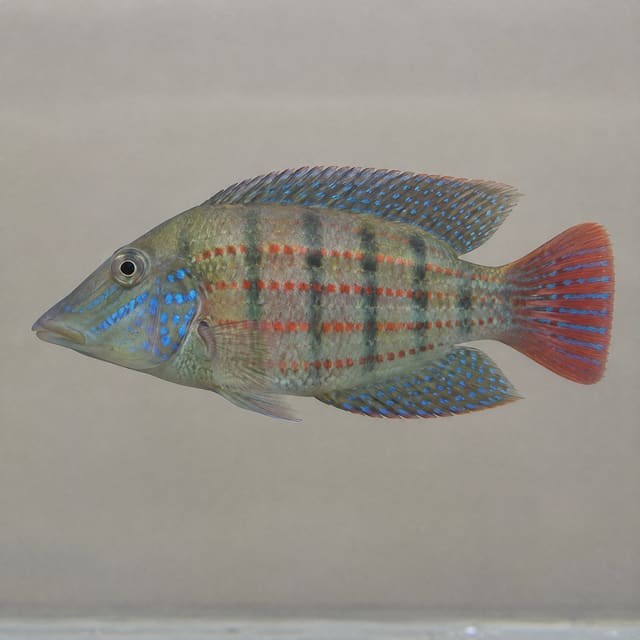
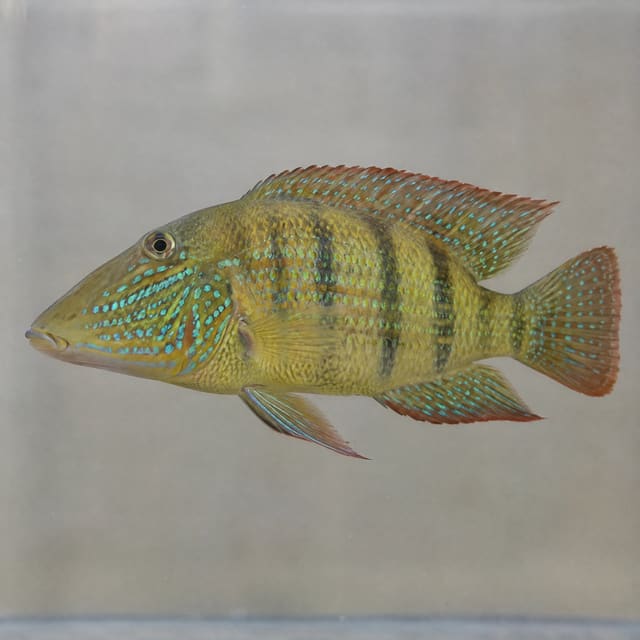
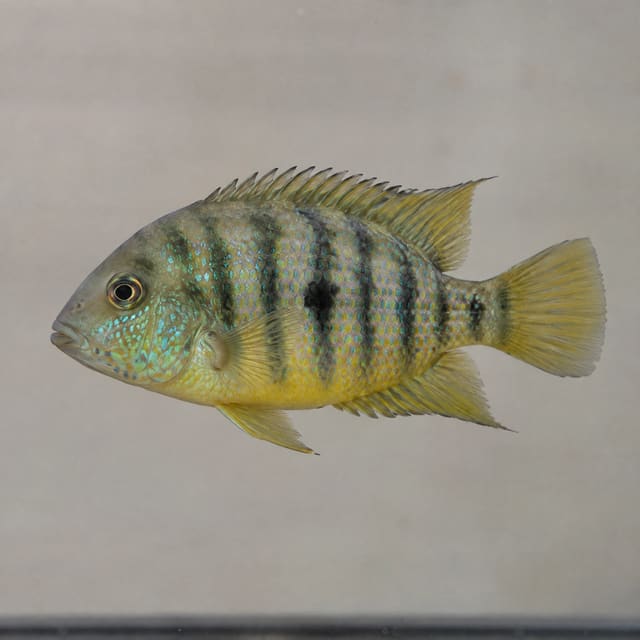
The photographs show an adult male of the species, not the individual you will receive. Females and young fish are plainer, colour varies between localities, and any fish looks paler for a few days after travelling.
Before you order, read our delivery and Live Arrival Guarantee information, and make sure the aquarium is matured and at temperature.
Seriously Fish gives a maximum of 150 mm standard length, measured from the snout to the base of the tail, and FishBase records 19.8 cm total length, tail included. Adult males are larger than females and have longer lobes on the dorsal, anal and tail fins.
Seriously Fish asks for an aquarium base of at least 120 × 45 cm, about 243 litres. OATA gives at least 300 litres for American cichlids over 15 cm. For a single fish, the Seriously Fish base is the minimum; for a male with three or more females, we suggest working towards 300 litres so that females can keep out of the male's way.
Stand the aquarium away from radiators, windows and draughts, keep it out of direct sunlight, and heat it all year round, as OATA advises.
Seriously Fish describes its wild habitats as varied but mostly forested streams, tributaries and backwaters with sandy beds. The most essential item of décor is a soft, sandy substrate, so that the fish can browse naturally. Gravel or small pebbles can stop it feeding, damage the gill filaments and even be swallowed, with a risk of internal damage or blockage.
| Area | Purpose |
|---|---|
| Broad open sand | The feeding ground, sifted all day |
| Chunks of driftwood with scattered roots and branches | Shade and refuges, especially for females away from the male |
| One or two flattish, water-worn rocks | Possible spawning sites inside the male's territory |
| Relatively dim lighting | The favoured set-up, which also calms the fish |
| No leaf litter | Seriously Fish advises against it: sifting keeps broken-down leaves in suspension and blocks filters |
Set rocks on the glass before adding sand so the fish cannot undermine them, and keep plants to tough species in pots or on wood. Leave the front of the tank as clear sand so you can watch the sifting and the male's displays.
Seriously Fish gives 20–30°C, pH 6.0–7.5 and 2–12 dGH. FishBase lists a narrower 24–26°C, pH 6.5–7.0 and 5–15 dH. The two ranges overlap at 24–26°C, pH 6.5–7.0 and 5–12 dGH, and that is what we suggest you aim for. It also sits inside OATA's general guidance for American cichlids of 22–27°C, pH 6.5–8.0 and 4–12 dGH.
| Reading | Target |
|---|---|
| Temperature | 24–26°C (Seriously Fish range 20–30°C) |
| pH | 6.5–7.0 (Seriously Fish range 6.0–7.5) |
| General hardness | 5–12 dGH |
| Ammonia and nitrite | 0 mg/l |
| Nitrate | No more than 20 mg/l above your tap water (OATA) |
UK tap water varies from soft in much of Scotland, Wales and north-west England to hard in much of the south and east. Moderately hard water usually needs no adjustment for this fish; in a very hard-water area, blending tap water with reverse-osmosis water lowers the hardness, and a steady blend matters more than an exact figure. Treat all new water with a conditioner, as OATA advises, to remove chlorine or chloramine. Our water matcher compares your supply with this range, and our water chemistry guide explains pH, GH and KH.
Seriously Fish warns that these cichlids are susceptible to deteriorating water quality and should never be introduced to a biologically immature aquarium. It suggests changing at least 40–70% of the water every week, and mechanical filtration designed to trap the fine particles the fish stir up, because sand running through a filter blocks and wears it. For a tank of about 243 litres, its equipment note suggests a filter rated around 970–1,215 litres per hour.
New to large aquariums? Our nitrogen cycle guide explains how to mature the filter before any fish arrive.
This eartheater is a bottom feeder by nature. It takes mouthfuls of sand, sifts out edible items and passes the rest out through the gills and mouth. Seriously Fish reports that wild fish mostly eat small aquatic and terrestrial invertebrates, plant material such as seeds, organic detritus and sediment, and that even adults seem unable to swallow larger items properly. Once settled, it rises into open water at feeding time but goes back to sifting afterwards.
A brooding female eats little or nothing while she holds eggs, which is normal; resume normal feeding once she releases the fry.
Ammonia and nitrite must read zero and the temperature must be steady before the fish arrives. Use OATA's floating-bag method: switch the lights off, float the sealed bag for about 10 minutes, add small amounts of tank water to the bag over up to 20 minutes, and release the fish with as little bag water as possible. Our guide on how to acclimatise new fish takes you through it, and our cichlid care guide covers the basics for all cichlids.
| Checkpoint | What to do |
|---|---|
| Before arrival | Test the water, set 24–26°C, place the wood and rocks and dim the lights |
| Arrival | Acclimatise with the lights off and release the fish near cover |
| First day | Leave it alone; a few fine granules at most |
| Days 2–7 | Small meals several times a day, watch for sifting and remove leftovers |
| End of week | Retest the water and make your normal large water change |
Hiding and pale colour for a day or two are normal. Gasping, clamped fins or a fish lying on the sand are not, and call for an immediate water test.
Seriously Fish names pelagic characins, fish that swim in open water above the bottom, as ideal tank mates, and advises avoiding aggressive or territorial bottom-dwelling species. Adult males are aggressively territorial towards rival males, especially when breeding, so keep only one male in all but the largest aquariums.
| Suits | Avoid |
|---|---|
| Open-water characins such as the Red-Blue Colombian Tetra | A second adult male Red Hump Eartheater in an ordinary-sized tank |
| Larger midwater characins such as the Spotted Silver Dollar in a large aquarium | Aggressive or territorial bottom-dwelling cichlids and catfish |
| Its own females, three or more to one male | Very small fish that would compete poorly for food or be eaten |
| Fish that like 24–26°C and soft to moderately hard water | Fish that need very hard, alkaline water |
For other humped eartheaters, compare the Paraguay Eartheater, a cooler-water mouthbrooder, and the larger Pearl Eartheater; keep only one of these sand-sifters unless the floor is very large. Check any mix with our tank mates tool, browse all South American cichlids, the South American cichlid category and our Geophagus and eartheater range, or see our other bottom-dwelling fish.
OATA describes a healthy fish as having clear, bright eyes, undamaged fins, intact scales, no ulcers or bumps, normal swimming and steady breathing; clamped fins, flicking against décor and shimmying are warning signs. With a territorial mouthbrooder, many problems are social rather than medical, so watch how the fish behave as well as how they look.
| If you see | Do this |
|---|---|
| One fish hiding with torn fins | Look for a maturing male; add cover, or rehome one of two males |
| A female with a swollen throat who refuses food | She is probably brooding; leave her in peace or move her to her own tank |
| Rapid breathing or gasping | Test ammonia, nitrite and temperature at once and increase surface movement |
| Pits or erosion on the head | Increase water changes and check that the diet is fine-grade and varied |
| White spots or cotton-like patches | Test the water and get fish-health advice before treating |
| A thin fish that does not sift | Check the sand is soft and fine, and offer smaller, more frequent meals |
Test the water first whenever something changes; most health problems in cichlids follow a fall in water quality.
Seriously Fish describes 'G.' steindachneri as an ovophilous maternal mouthbrooder: the female takes the eggs into her mouth soon after they are laid and broods them alone. The pair bond is weak and lasts only for spawning, and males are polygamous, breeding with several females in a season. The species becomes sexually mature at a relatively small size, and mature males grow the nuchal hump, which can be very pronounced in some individuals.
Return the female to the group only when she has recovered condition, and make sure the male has other females to court.
It is 'Geophagus' steindachneri, a sand-sifting cichlid from the Magdalena and Sinú river systems of Colombia and the Río Limón basin in north-western Venezuela. Mature males grow a rounded hump on the forehead, which in many fish is red, hence the name. It is a maternal mouthbrooder: the female carries the eggs and young in her mouth.
Yes. Geophagus hondae Regan, 1912 is a synonym of 'Geophagus' steindachneri, and Seriously Fish notes that some colour forms still appear on trade lists under that name. Colour varies with locality, and some forms may one day be described as separate species.
Seriously Fish gives a maximum of 150 mm standard length, measured without the tail, and FishBase records 19.8 cm total length. Males grow larger than females.
Seriously Fish asks for a base of at least 120 × 45 cm, about 243 litres. OATA advises at least 300 litres for American cichlids over 15 cm, so for a male with three or more females we suggest working towards 300 litres.
Only in a very large aquarium. Seriously Fish says adult males are aggressively territorial towards rival males and recommends a single male with three or more females, which spreads his attention when he comes into breeding condition.
Seriously Fish gives 20–30°C, pH 6.0–7.5 and 2–12 dGH; FishBase gives a narrower 24–26°C, pH 6.5–7.0 and 5–15 dH. Aim for 24–26°C, pH 6.5–7.0 and 5–12 dGH, where both agree, with zero ammonia and nitrite.
It sifts sand for small invertebrates, seeds and detritus and cannot swallow large food properly. Offer fine-grade sinking foods plus small frozen bloodworm, brine shrimp and mosquito larvae in three or four small meals a day.
One live fish of the standard size currently available, normally a young fish. Sex is not chosen or guaranteed, and young fish do not yet show the hump.
No reviews for this item yet. Bought one? Honest reviews only, good or bad.
What customers say about ordering from us
Easy website plenty of info on fish your buying great to pick a time slot
TRACEY DURRANT · 7 Oct 2026
Got some lovely fish thank you
Kevin Mackie · 7 Oct 2026
Reviews of our shop, collected by Judge.me, an independent third-party review collector. Newest first.
Moved by UK carriers licensed to handle live animals
Hand-packed with oxygen bags, poly box, heat pack
Email photos the same day; an optional unboxing video helps us review problems faster — claim terms apply
Klarna & PayPal Pay in 3 at checkout