Easy
Electric Blue Acara (Andinoacara pulcher) – Neon Blue, 2–7cm Sizes
22–23°C · pH 6.5–8
£6.19
Cutter's Cichlid (Cryptoheros cutteri) is a freshwater cichlid from Honduras and Guatemala that reaches a recorded maximum of 11.2 cm standard length. OATA's group guidance for American cichlids recommends at least 120 litres for a pair and gives 22–27°C and pH 6.5–8.0; use mature filtration. Sold individually.
Adult size is the maximum length this species reaches at full maturity (scientific sources). The livestock you receive will be younger and smaller. Product-photo provenance and any image-specific limitations are stated on the listing.
Cryptoheros cutteri
Save when buying multiple fish. Each quantity is one fish; sex and pair formation are not guaranteed unless the selected variant explicitly states them.
Cutter's Cichlid (Cryptoheros cutteri) is a freshwater cichlid from Honduras and Guatemala that reaches a recorded maximum of 11.2 cm standard length. OATA's group guidance for American cichlids recommends at least 120 litres for a pair and gives 22–27°C and pH 6.5–8.0; use mature filtration. Sold individually.
Adult size is the maximum length this species reaches at full maturity (scientific sources). The livestock you receive will be younger and smaller. Product-photo provenance and any image-specific limitations are stated on the listing.

Cichlids are a family of roughly 1,800 accepted species, not one care type. Before buying, identify the exact species and source, then compare adult measurement, usable tank dimensions, social system, territory, tested water, diet and an exit plan. No family-wide minimum tank, water range or tank-mate list is safe.
Maintain these water conditions for optimal health and vibrant colors
Cutter's Cichlid is Cryptoheros cutteri, a freshwater cichlid associated with the lower part of the water column. FishBase records the species from Honduras and Guatemala and gives a maximum of 11.2 cm standard length for male or unsexed fish. Treat 11.2 cm as a recorded maximum rather than a promised final size for every individual.
The 11.2 cm figure is standard length, which excludes the caudal fin. Allow for the complete fish as well as room to turn, feed and move away from equipment. Build the aquarium around the adult fish rather than the compact dispatch grade.
The wider Cryptoheros genus comprises small cichlids from Central America and south-eastern Mexico, with the genus summary describing lengths of up to 13 cm. That genus figure gives useful natural-history context, while the 11.2 cm FishBase value is the species-level measurement to use for this fish. FishBase classifies Cryptoheros cutteri as Least Concern.
This cichlid suits a keeper prepared to mature the filter before introduction, test water every week, control feeding and assess other fish individually. Those decisions matter more than chasing a particular decorative style.
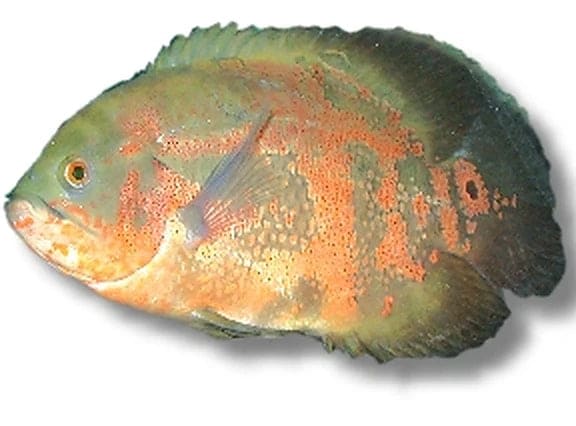
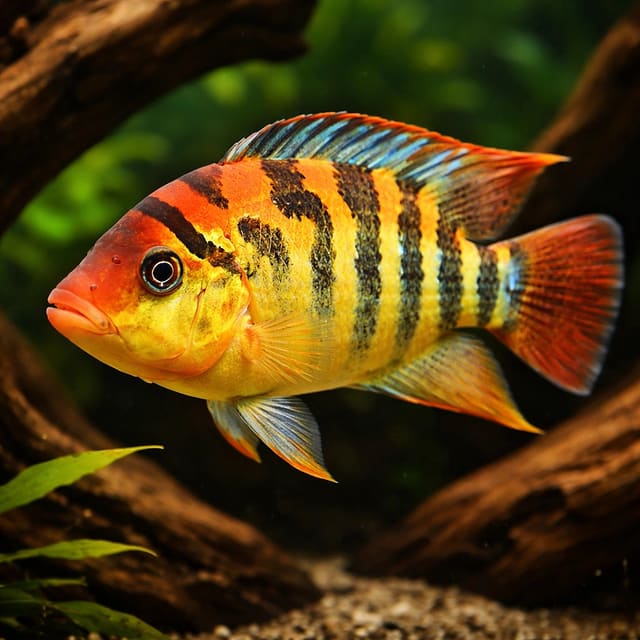
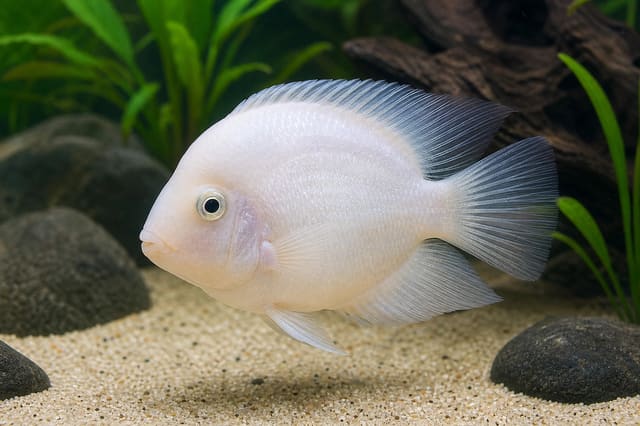
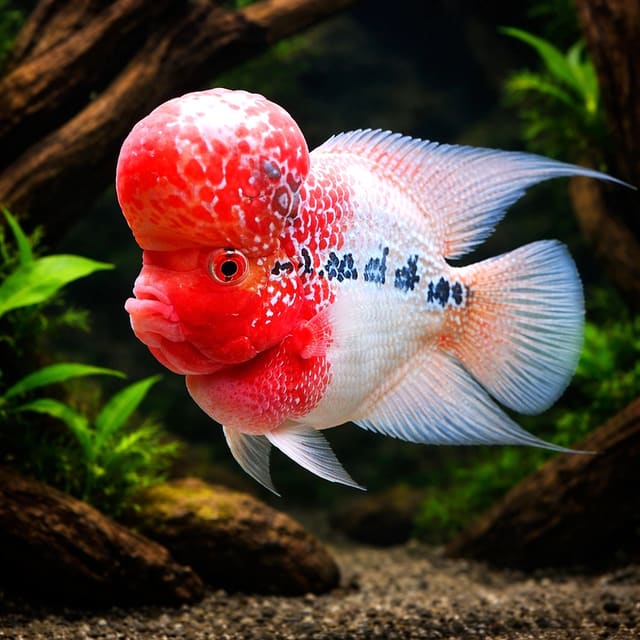
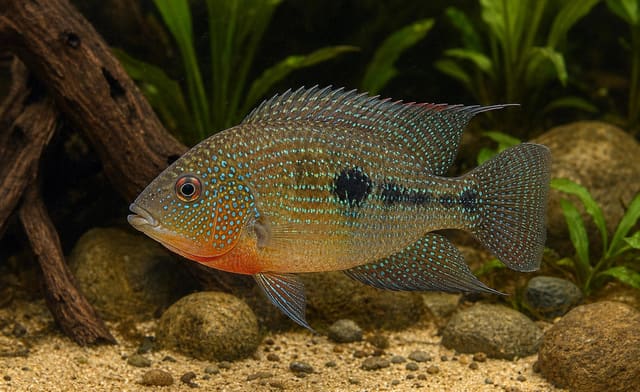
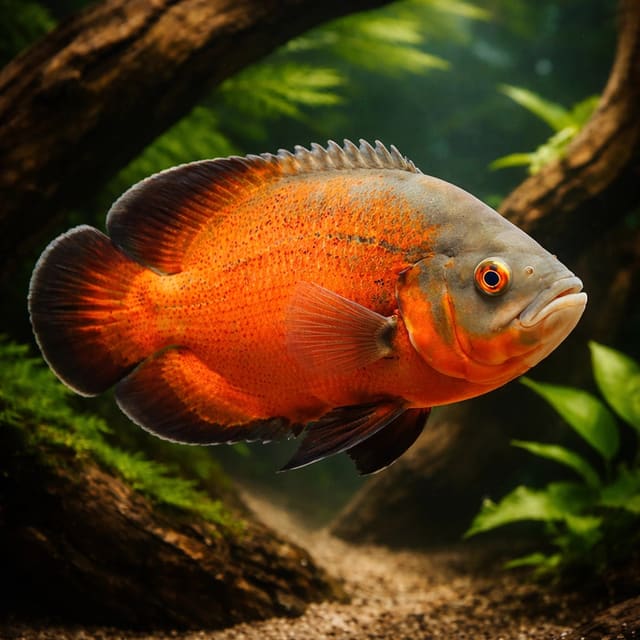
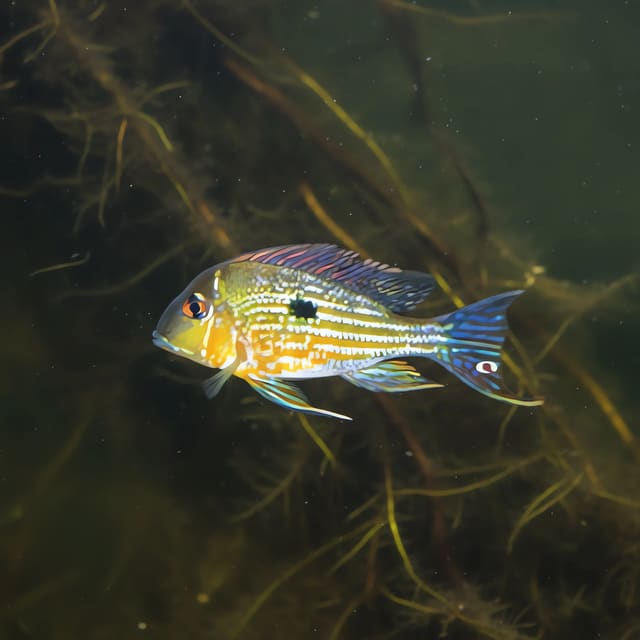
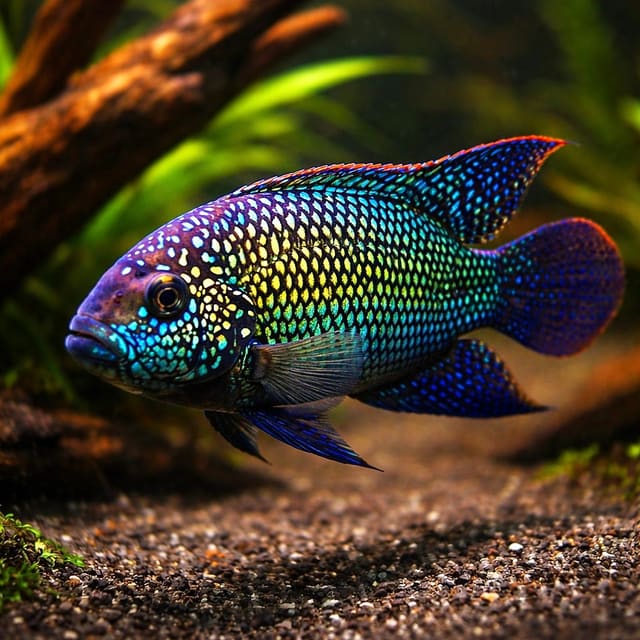
The gallery images are representative, based on reference photographs of this species, so colours can look slightly different from the live animal.
One purchase supplies one animal. The dispatch grade is 3–4 cm. This measurement describes the fish sent by the shop, not its expected adult length.
Compare the 3–4 cm dispatch grade with the recorded maximum of 11.2 cm standard length before choosing the aquarium. A fish sent at 4 cm is still planned around the adult measurement, filtration load and intended social arrangement. Do not use the small dispatch measurement as a reason to begin with an undersized or unmatured setup.
Sex is guaranteed only when the selected option explicitly states male or female. This Cutter's Cichlid listing has no sex-guaranteed option.
Colour, body shape, dispatch size and gallery appearance are not substitutes for an explicit sex choice. Plan the social arrangement so it remains workable regardless of the sex of the animal supplied.
If you are comparing this fish with other cichlids, browse the wider South American cichlid collection and compare each animal's adult dimensions and care requirements separately. Shared catalogue placement does not make two cichlids compatible.
OATA's American-cichlid guidance gives 22–27°C, pH 6.5–8.0 and 4–12°dH for the group; use these as broad group guidance rather than a species-specific optimum. It also recommends at least 120 litres for a pair of smaller species under 15 cm. Cutter's Cichlid falls within that size-planning category because FishBase records a maximum of 11.2 cm standard length.
| Decision | Planning value |
|---|---|
| Recorded maximum | 11.2 cm standard length |
| Pair baseline | At least 120 litres |
| Temperature | 22–27°C |
| pH | 6.5–8.0 |
| General hardness | 4–12°dH |
| Carbonate hardness | 3–10°dKH |
| Ammonia | 0 mg/l |
| Nitrite | 0 mg/l |
| Nitrate | Up to 20 mg/l above the normal tap-water level |
| Suits | Not suited to |
|---|---|
| A mature, filtered aquarium | An unmatured or unfiltered setup |
| One fish or a carefully assessed pair | An automatic mixed-community plan |
| Water held within the stated working bands | Tank mates with conflicting water needs |
For one fish, choose the aquarium by considering its adult movement, filtration capacity and any future stocking plan rather than simply halving the pair figure. For a pair, start with at least 120 litres and increase the space when the complete stocking plan requires it. A larger aquarium usually gives more stable temperature and water quality and provides more choices when arranging equipment and cover.
Before ordering, write down the aquarium volume, measured temperature, pH, general hardness, carbonate hardness, ammonia, nitrite and nitrate. A complete set of numbers makes it much easier to decide whether the setup is ready.
Start with the adult plan: FishBase's 11.2 cm standard-length maximum, the number of cichlids intended and the capacity of the filter. OATA recommends buying as large an aquarium as reasonably possible because greater water volume generally makes temperature and water quality more stable.
For a pair of smaller American cichlids under 15 cm, use at least 120 litres. That is a planning minimum for the pair, not a reason to crowd additional fish into the same volume. A mixed aquarium needs a separate stocking assessment based on every occupant.
Use fine aquarium gravel or sand. American cichlids may dig or sift the substrate while feeding or breeding, so keep the substrate manageable and inspect the layout after any rearrangement by the fish. Check that decorations and equipment remain stable rather than relying on loose substrate to hold them upright.
American cichlids may dig up or eat live plants. Choose planting and cover with that possibility in mind, and do not make the whole layout dependent on delicate rooted plants remaining untouched. Keep access to the filter intake, heater and substrate clear enough for inspection and maintenance.
| Planning question | Action |
|---|---|
| One fish or a pair? | Decide before arranging the tank. |
| Are other fish planned? | Assess their adult size and temperament separately. |
| Can waste be removed? | Leave practical siphon access to the substrate. |
| Can equipment be checked? | Keep intakes and heater areas visible. |
Finish the layout before the fish arrives, then confirm that the filter is mature and the water is within the stated range. Rearranging an aquarium after a territorial fish has settled can complicate observation and maintenance.
Before introduction, practise reaching the filter intake, heater area and the places where debris is likely to settle. Pass the siphon over the accessible substrate without moving the main decorations. If routine maintenance requires dismantling the layout, simplify it while the aquarium is still empty of fish.
Check the arrangement again from the front and sides. The fish needs usable swimming room, while you need a clear view for checking breathing, fins, scales and feeding. A layout that hides every part of the aquarium makes those daily welfare checks harder. Leave enough open access to see the fish and remove waste while retaining securely positioned cover.
Choose a stable operating point within 22–27°C, pH 6.5–8.0 and 4–12°dH rather than moving the aquarium around the full range. Carbonate hardness should remain within 3–10°dKH. Test the actual aquarium and replacement water instead of estimating chemistry from appearance.
Keep ammonia and nitrite at 0 mg/l. Keep nitrate no more than 20 mg/l above the normal level in your tap water by comparing the aquarium result with a tested tap-water baseline.
Our water chemistry guide explains what the principal measurements mean. Once you have test results, use the water matcher to compare the aquarium with the stated ranges.
If a value is drifting, look for a practical cause before making abrupt changes. Check the filter for blockage, review whether feeding has increased and confirm that weekly maintenance has been completed. Replacement water must be conditioned before it enters the aquarium.
A worked example makes the nitrate rule clearer. If tap water measures 10 mg/l nitrate, the aquarium reading should remain no more than 20 mg/l above that baseline. The corresponding ceiling is therefore 30 mg/l. Repeat the calculation whenever the tap-water baseline changes.
Suppose the aquarium repeatedly measures 25°C, pH 7.2 and 8°dH, with ammonia and nitrite at 0 mg/l. Those readings sit inside the working bands, so the useful action is to preserve them through consistent maintenance rather than alter them towards one edge of each range. Record the values and compare the next test under similar conditions.
If a later result moves unexpectedly, repeat the test before changing the aquarium. Then compare feeding, filter flow, maintenance and replacement-water preparation with the normal routine. This sequence helps distinguish a one-off reading from a developing trend and avoids turning a stable aquarium into one that changes abruptly.
The RSPCA explains that aquarium filters are vital for processing fish waste. Fish release toxic ammonia; beneficial bacteria in a working biological filter convert it first to nitrite, which is also toxic, and then to the safer nitrate form. A filter moving water is not enough by itself: the biological population must be established and maintained.
Prepare and mature the aquarium before the Cutter's Cichlid arrives. Our first tropical aquarium guide sets out the preparation sequence. Confirm with tests that ammonia and nitrite are both 0 mg/l before introduction.
Adding too many fish too quickly can cause new tank syndrome because the filter bacteria cannot process the sudden rise in waste. The result may be unhealthy ammonia or nitrite levels. A small fish still adds biological load, so the 3–4 cm dispatch grade does not remove the need for a mature filter.
Protect the bacterial population during maintenance. Never rinse biological media beneath the tap, where chlorine or chloramine may harm it. Lightly rinse media in aquarium water removed during a partial water change.
Filter capacity and aquarium volume work together. A powerful filter does not turn a small aquarium into a suitable adult home, while a large aquarium still requires effective biological filtration. Plan both parts around the adult fish and total intended stock.
Use the first water tests after introduction to confirm that the established filter continues to hold ammonia and nitrite at 0 mg/l. Keep feeding controlled, avoid adding other livestock at the same time and compare the readings with the pre-arrival baseline. This gives the filter one measured change to accommodate rather than several changes at once.
During the first month, continue the normal weekly tests and record filter flow alongside the results. If flow falls, inspect the filter for a blockage; if media needs attention, rinse it lightly in removed aquarium water. Do not combine a major media clean with extra stocking or increased feeding, because each action affects the system the filter must support.
American cichlids are generally omnivorous and often prefer meaty foods. Use specialised cichlid pellets or granules as the regular prepared food, supplemented with suitable frozen or freeze-dried items. For a smaller cichlid, OATA identifies daphnia, brine shrimp and bloodworm as appropriate examples.
Feed once a day and offer only what the fish can eat within a few minutes. The time limit is more useful than adding another meal: it lets you watch whether the fish is eating while preventing excess food from remaining in the aquarium.
| Meal choice | How to use it |
|---|---|
| Cichlid pellets | Offer a portion eaten within a few minutes. |
| Cichlid granules | Use as an alternative prepared format. |
| Frozen food | Rotate with the prepared diet. |
| Freeze-dried food | Use as a supplementary item. |
| Daphnia, brine shrimp or bloodworm | Choose appropriately sized portions. |
Watch the fish rather than feeding by habit. A meal is too large if uneaten food remains after a few minutes. Overfeeding increases faeces and allows leftovers to break down, releasing waste into the water. That raises the workload on the biological filter and can undermine otherwise sound water management.
If food remains, remove what you can and reduce the next portion. Check ammonia, nitrite and nitrate when feeding has been excessive or appetite has changed. Keep the once-daily schedule while adjusting the portion to what is actually consumed.
Reduced intake or a loss of interest in food is also a health-warning sign. Compare it with breathing, swimming, colour and behaviour rather than assuming the fish has simply become selective. A consistent feeding routine makes those changes easier to recognise.
Begin with a controlled portion and watch the complete meal. If every item is eaten well within a few minutes and the fish continues feeding normally, record that amount as a practical reference. If food remains at the end of the feeding window, remove the leftovers and make the next portion smaller rather than adding a second meal later.
When rotating to frozen or freeze-dried food, keep the same consumption rule. The format may change, but the meal still ends after a few minutes. Note any reduced interest alongside the day's water readings and behaviour. This simple record separates a portioning mistake from a broader change involving appetite, breathing, swimming or water quality.
At least once every week, carry out a 25% partial water change. Use a siphon to remove solid waste from the substrate, particularly around feeding areas and places where circulation allows debris to settle.
The arithmetic is straightforward: a 25% change on a 120-litre aquarium is 30 litres. If the aquarium is larger, multiply its total volume by 0.25 to find the weekly change. Measure the real aquarium volume used for water rather than assuming the nominal tank size is exact after substrate and decoration are added.
Do not wash filter media under tap water. Protecting the established bacteria is part of maintaining 0 mg/l ammonia and 0 mg/l nitrite. Avoid replacing or heavily cleaning all biological media at the same time.
Record the results so trends are visible. A single acceptable reading cannot show whether nitrate is gradually rising or pH is moving between weeks. A short log containing the date, test values, changed-water volume and any feeding or behaviour change gives you a practical comparison.
Maintenance is also the right time to check whether digging has shifted substrate around equipment or made waste harder to reach. Restore safe access without repeatedly rebuilding the whole aquarium. The goal is a stable environment that remains straightforward to inspect and clean.
For a measured water volume of 160 litres, 25% is 40 litres. For 200 litres, it is 50 litres. Mark the chosen container or use a measured method so the weekly amount is repeatable. Prepare enough conditioned replacement water for that volume before removing aquarium water.
Use the pre-change test results and the amount removed as one maintenance record. If the aquarium's usable water volume changes after a substantial layout adjustment, calculate the 25% amount again. Consistent measurement makes comparisons between weeks more useful than estimating a different change each time.
Before the fish arrives, test the aquarium and confirm that ammonia and nitrite are 0 mg/l. Check that temperature sits within 22–27°C, the filter is operating normally and the aquarium is ready for its intended occupant. Someone must be present to receive live fish rather than leaving the parcel unattended.
Follow the current delivery and Live Arrival Guarantee policy for the complete receiving and claim requirements. Film every delivery continuously from the sealed parcel onward. Keep the footage and send it with your order number if you need to make a claim.
Prepare the destination first so the fish is not waiting while equipment is adjusted or water is tested.
Once released, observe swimming, breathing and orientation. The health checklist for American cichlids includes hanging at the surface, sitting on the bottom, erratic swimming and a change in gill-cover movement. One observation should be compared with the fish's overall condition rather than viewed in isolation.
Do not add several unplanned fish at the same time. Every increase in stock and feeding raises the amount of waste the biological filter must process. Gradual stocking gives the beneficial bacteria time to respond and lowers the risk of new tank syndrome.
Record the arrival date and the aquarium's test readings. Those figures create a useful first-day baseline for the observations made during the following week.
Learn the fish's normal swimming, colour, breathing, feeding and use of the aquarium. Individual fish vary, so a change from its established pattern is often more useful than comparing it with a general expectation.
If you see a change, test temperature, ammonia, nitrite, nitrate and the principal chemistry values. Check whether the filter is blocked, whether feeding has increased and whether the weekly water change was completed. These checks address the environmental causes that can stress American cichlids.
| Checkpoint | Decision |
|---|---|
| First day | Record water values and initial behaviour. |
| First week | Compare feeding, breathing and swimming each day. |
| Weekly thereafter | Test water and complete a 25% change at least once a week. |
| Any sudden change | Test immediately and inspect the filter. |
Contact us for guidance if a health change persists or the fish develops visible spots, growths, damaged tissue or continuing breathing difficulty. Give the aquarium volume, stocking, recent additions, test results, maintenance date and feeding pattern so the situation can be assessed clearly.
OATA advises that most American cichlids do better either singly or in pairs, while recognising that behaviour and sexing vary between species. For Cutter's Cichlid, decide on one fish or a pair before choosing the aquarium and arranging its cover.
A pair of smaller American cichlids under 15 cm needs an aquarium of at least 120 litres. Individual temperament, layout and any additional occupants may call for more space. Do not treat 120 litres as automatic approval for a mixed cichlid community.
The offer does not guarantee sex, so ordering two fish does not guarantee a male-and-female pair. It also does not guarantee that two individuals will remain compatible. Base the decision on the space and management needed for two cichlids, not on an assumed pairing outcome.
Observe feeding especially closely when more than one cichlid is present. Both fish should be able to take food within the few-minute feeding period. Reduced intake, more hiding or a change in aggression is a reason to reassess the arrangement promptly.
Mixing American cichlids can be difficult because species and individuals vary in temperament. OATA notes that calmer American cichlids may work in robust communities with larger shoaling fish, while more aggressive species may need to be kept alone or with equally aggressive cichlids. That general distinction does not create a dependable tank-mate list for Cutter's Cichlid.
Assess the actual aquarium and every proposed occupant. Compatibility remains uncertain until adult size, temperament, shared water needs, feeding access and available space have all been considered together.
| Screening question | Requirement |
|---|---|
| Do the water needs overlap? | All occupants must share a stable working range. |
| Is the aquarium large enough? | Plan for every fish at adult size, not dispatch size. |
| Can every fish feed? | No occupant should be excluded during the daily meal. |
| Is behaviour stable? | Watch for persistent hiding or changed aggression. |
| Can waste be controlled? | The mature filter must handle the total stock and feeding. |
A larger aquarium improves environmental stability, but volume alone does not settle a temperament conflict. Likewise, decorative cover cannot compensate for incompatible water needs or a filter overloaded by the total stock.
Reassess the combination if one fish begins hiding more, eating less, changing colour, breathing abnormally or showing fin and scale damage. Test the water at the same time because poor water quality can add stress to an already difficult social arrangement.
Contact us for a stocking and compatibility assessment before combining this fish with an established community. Include the aquarium volume and dimensions, water readings, filter, substrate, and the common or scientific name and adult size of every existing fish.
Start by writing down the proposed companion's adult size and water range. If its temperature, pH or hardness needs do not overlap with 22–27°C, pH 6.5–8.0 and 4–12°dH, stop the plan at that point. Shared water conditions are a basic requirement, not a reason by themselves to combine the fish.
Next, review the aquarium's total adult stock and feeding access. A candidate that fits physically at dispatch size may not fit once every occupant reaches adult dimensions. Plan where each fish can take the daily meal and how you will notice persistent hiding or reduced intake. Finally, consider the filter's ability to keep ammonia and nitrite at 0 mg/l after the added waste.
Passing every screen still calls for observation because individual temperament varies. Record normal feeding and behaviour after any carefully planned addition. If aggression changes, one fish stops feeding or damage appears, reassess the combination and test the water immediately rather than assuming more decorative cover will solve the problem.
It is a freshwater, benthopelagic cichlid from Honduras and Guatemala. FishBase records a maximum of 11.2 cm standard length.
One purchase supplies one animal.
The dispatch grade is 3–4 cm. This is the size sent, not the adult size.
For a pair of smaller American cichlids under 15 cm, OATA recommends at least 120 litres. Use sand or fine gravel and a mature biological filter.
OATA says most American cichlids do better singly or in pairs. Assess aquarium space and individual temperament before choosing either arrangement.
OATA's broad American-cichlid guidance gives 22–27°C, pH 6.5–8.0 and 4–12°dH. Keep ammonia and nitrite at 0 mg/l.
Feed cichlid pellets or granules with frozen or freeze-dried foods such as daphnia, brine shrimp or bloodworm. Offer one meal eaten within a few minutes daily.
Start filming before the sealed parcel is opened, continue through opening and show the fish inside the sealed bag. Float the bag for 20–30 minutes, then release the fish without pouring transport-bag water into the aquarium.
Mixing American cichlids can be difficult. Combine fish only after checking adult size, temperament, shared water needs, aquarium space and feeding access.
No reviews for this item yet. Bought one? Honest reviews only, good or bad.
What customers say about ordering from us
Easy website plenty of info on fish your buying great to pick a time slot
TRACEY DURRANT · 7 Oct 2026
Got some lovely fish thank you
Kevin Mackie · 7 Oct 2026
Reviews of our shop, collected by Judge.me, an independent third-party review collector. Newest first.