Easy
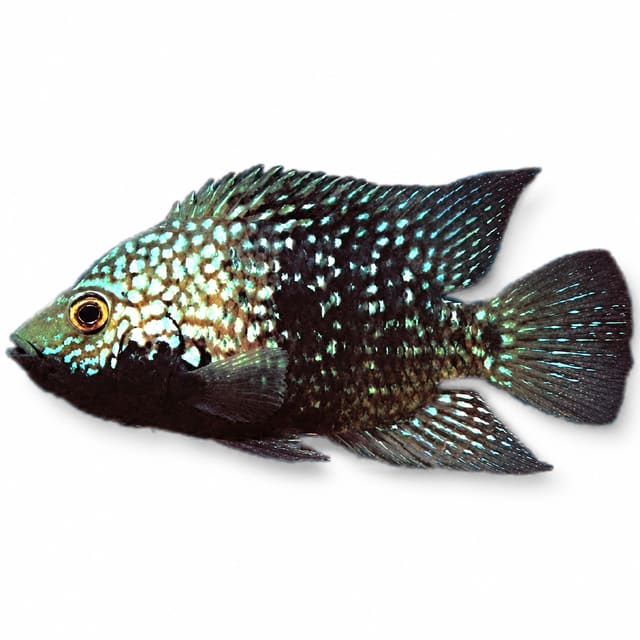
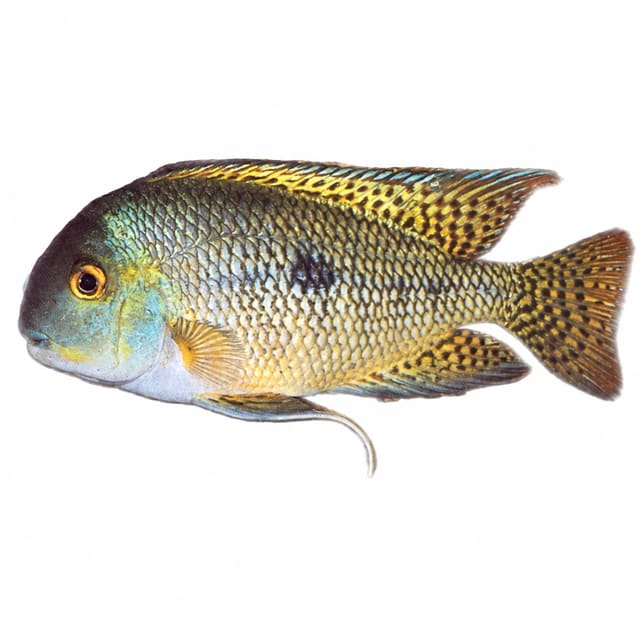
Electric Blue Acara (Andinoacara pulcher) – Neon Blue, 2–7cm Sizes
22–23°C · pH 6.5–8
£6.19
The Blue Neon Tiger Parrot Cichlid (Hybrid parrot cichlid) is an aquarium-bred hybrid fish in the family Cichlidae. It suits a keeper prepared to provide at least 300 litres, a mature filter and OATA’s American-cichlid ranges of 22–27°C, pH 6.5–8.0 and 4–12°dH. Sold individually in 2,5-3 cm, 3-4 cm, 4-5 cm, 5-6 cm and XL dispatch sizes.
Save when buying multiple fish. Each quantity is one fish; sex and pair formation are not guaranteed unless the selected variant explicitly states them.
The Blue Neon Tiger Parrot Cichlid (Hybrid parrot cichlid) is an aquarium-bred hybrid fish in the family Cichlidae. It suits a keeper prepared to provide at least 300 litres, a mature filter and OATA’s American-cichlid ranges of 22–27°C, pH 6.5–8.0 and 4–12°dH. Sold individually in 2,5-3 cm, 3-4 cm, 4-5 cm, 5-6 cm and XL dispatch sizes.

Cichlids are a family of roughly 1,800 accepted species, not one care type. Before buying, identify the exact species and source, then compare adult measurement, usable tank dimensions, social system, territory, tested water, diet and an exit plan. No family-wide minimum tank, water range or tank-mate list is safe.
Maintain these water conditions for optimal health and vibrant colors
Blue Neon Tiger Parrot Cichlid is the trade name for an aquarium-bred hybrid in the family Cichlidae. Treat “Hybrid parrot cichlid” as its descriptive scientific label rather than a species binomial. It suits a keeper prepared to provide at least 300 litres, mature biological filtration, weekly water testing and an individual compatibility assessment. Its care should be planned around American-cichlid needs and the behaviour of the individual fish, not around a wild distribution assigned to a named species.
The history of the blood parrot cichlid identifies parrot cichlids as hybrids and places them within Cichlidae, with the blood parrot first bred in Taiwan around 1986. Blue Neon Tiger describes this aquarium trade form; it does not turn the hybrid into a separate Latin-named species.
| Suits | Not suited to |
|---|---|
| Keepers prepared to mature and maintain a biological filter | Unfiltered or biologically immature aquariums |
| Aquariums planned from the larger American-cichlid category | Permanent setups chosen from the fish’s dispatch size |
| Weekly testing and partial water changes | Care based only on how clear the water looks |
| Individually screened stocking plans | Combinations chosen from a universal tank-mate list |
You can also compare the wider South American cichlid collection when deciding which type of cichlid best fits the aquarium.
One purchase supplies one Blue Neon Tiger Parrot Cichlid in the option selected on the live size selector. The size labels are 2,5-3 cm, 3-4 cm, 4-5 cm, 5-6 cm and XL. Use the live selector to choose the grade you want and to see the choices presented at the time of ordering.
This is a hybrid rather than a wild species, so the care advice here follows its parent group. The size you select is the size supplied, not the adult size. A smaller dispatch grade may make handling and initial food sizing different, but it does not justify a smaller permanent aquarium. Likewise, XL is a named dispatch grade rather than an adult-size guarantee. Complete the adult aquarium plan before choosing any grade.
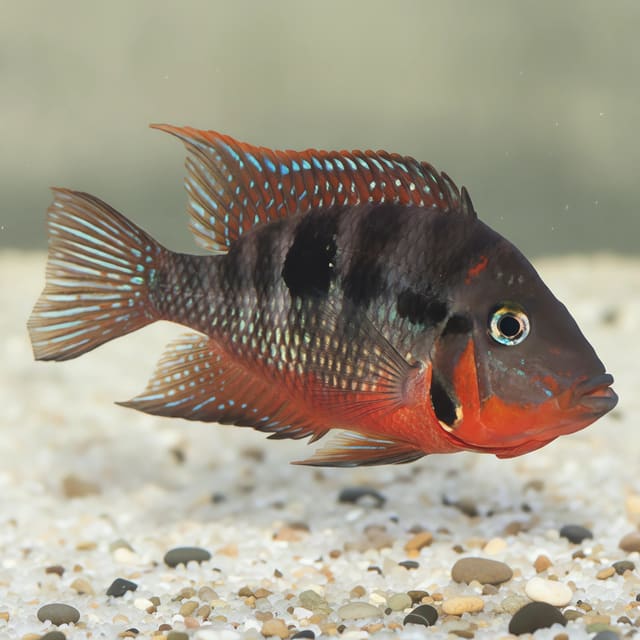
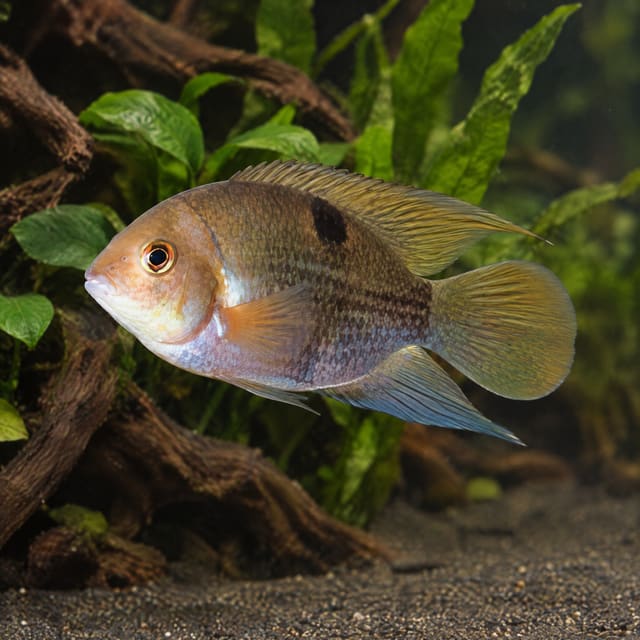
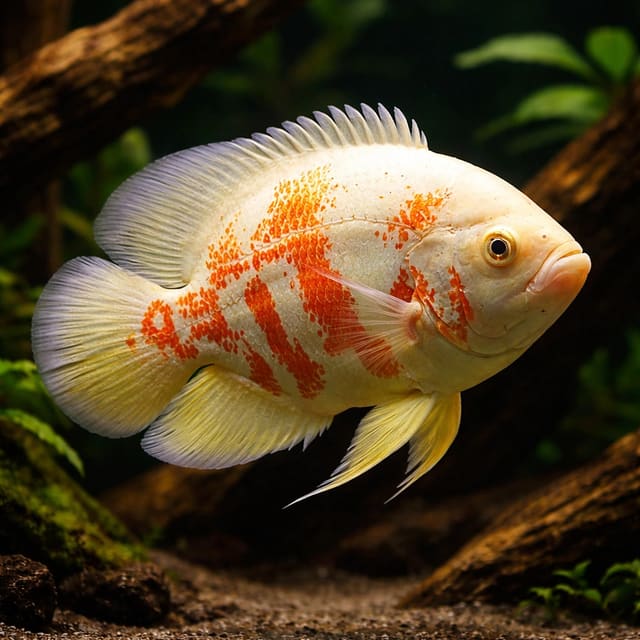
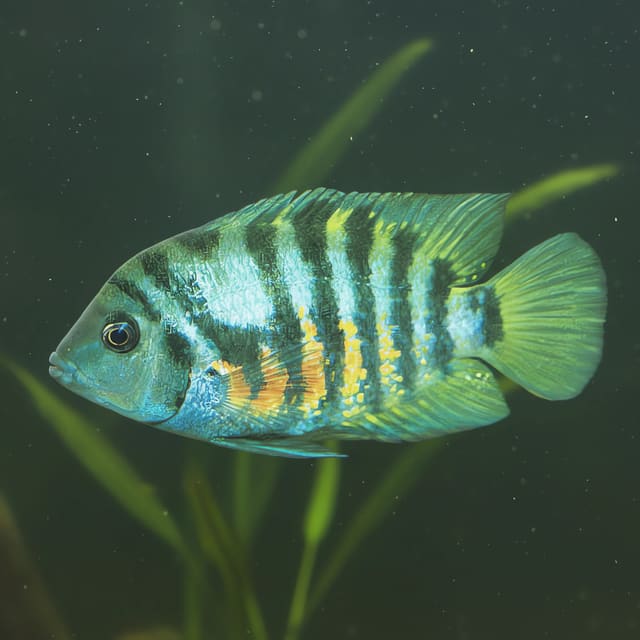
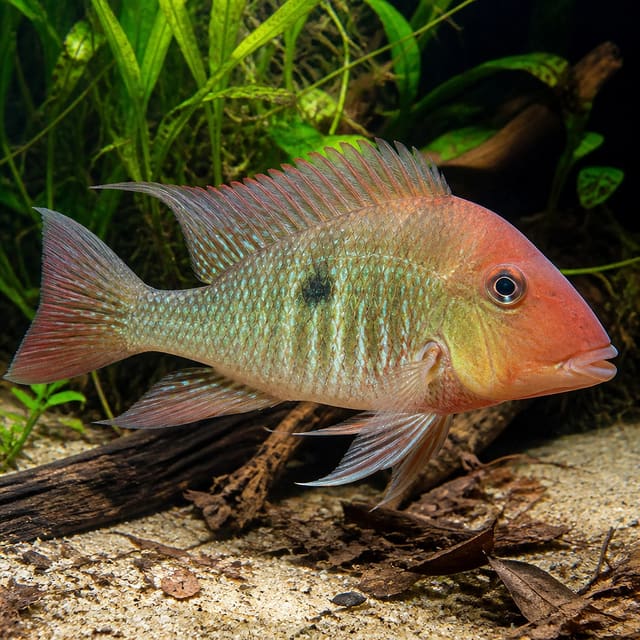
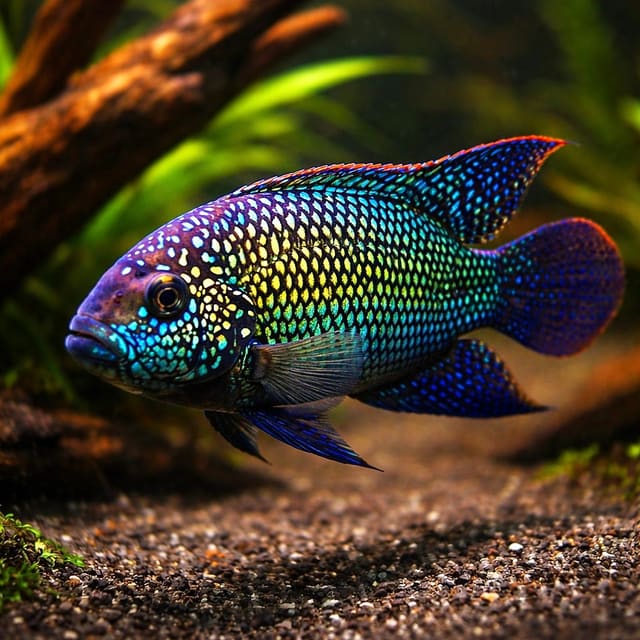
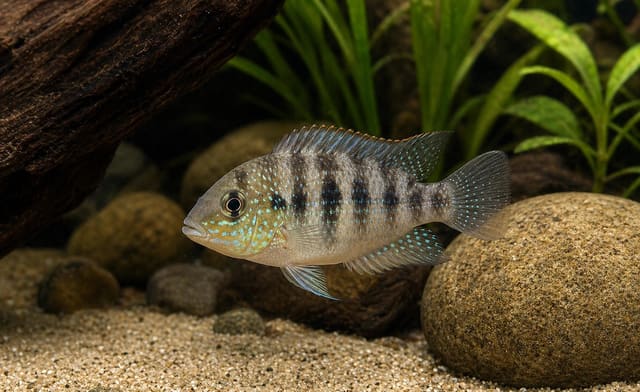
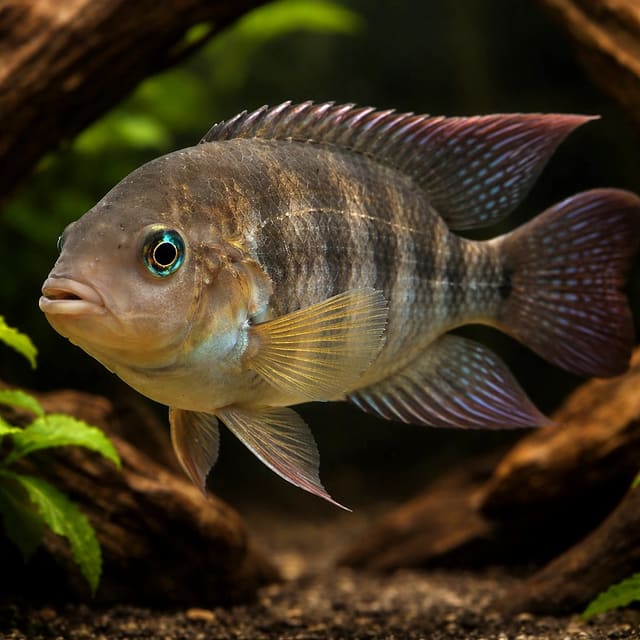
The gallery images are representative of this type of animal rather than photographs of the exact animal supplied, so colours can look slightly different from the live animal.
| Decision | What to do |
|---|---|
| Purchase unit | Treat each quantity of one as one animal. |
| Dispatch grade | Choose 2,5-3 cm, 3-4 cm, 4-5 cm, 5-6 cm or XL on the live selector. |
| Permanent space | Use at least 300 litres as the larger American-cichlid planning point. |
| More than one fish | Assess the space and compatibility of every fish before increasing quantity. |
Sex is guaranteed only when the selected option explicitly states male or female. This Blue Neon Tiger Parrot Cichlid listing has no sex-guaranteed option.
For dispatch days, packing arrangements, claims and guarantee terms, read our current delivery and Live Arrival Guarantee policy before ordering.
Keep this hybrid at 22–27°C, pH 6.5–8.0 and general hardness of 4–12°dH. OATA’s American-cichlid guidance supplies these broad group values, not a species-specific optimum. It recommends at least 120 litres for a pair of smaller species under 15 cm and at least 300 litres for larger or more aggressive species over 15 cm.
Plan this hybrid in the larger category and provide at least 300 litres. A larger aquarium gives more room to arrange separate areas and helps keep temperature and water quality stable. Do not place a newly selected dispatch size into the smaller branch, because a dispatch label describes the fish supplied rather than its permanent space requirement.
Use the working water range only after confirming that your tap water and established aquarium can remain within it. The decisive setup is not merely a tank that reaches the correct temperature on one test; it is an aquarium that holds stable conditions, maintains zero ammonia and zero nitrite, and leaves enough room for the final stocking plan.
A working filter is essential. The RSPCA’s aquarium guidance explains that fish release toxic ammonia, while beneficial bacteria in a biological filter convert ammonia to nitrite and then to the safer nitrate. This process must be established before the Blue Neon Tiger Parrot Cichlid enters the aquarium.
Prepare and mature the aquarium before ordering livestock. Our first tropical tank guide explains the setup sequence. At the point of introduction, test the water rather than judging readiness from clear appearance alone: clear water can still contain ammonia or nitrite.
A filter that has merely been switched on is not the same as a mature biological filter. Beneficial bacteria need an established cycle and can be damaged by chlorine or chloramine. Keep the filter operating, check it for blockages and protect its media during maintenance.
Stocking too many fish too quickly can create new tank syndrome because the bacterial population cannot process the increased waste. Prevent that problem by treating every additional fish as an increase in biological load. Test before introduction, increase stocking slowly and continue the weekly testing routine after the fish has settled.
If a test shows ammonia or nitrite, pause the introduction plan and continue establishing the biological filter. Adding the fish at that point increases the waste load before the bacterial population is ready to process it. The correct checkpoint is the measured condition of the aquarium, not the number of days the equipment has been running.
Use 22–27°C, pH 6.5–8.0 and general hardness of 4–12°dH as the working American-cichlid range. OATA also gives carbonate hardness of 3–10°dKH, ammonia at 0 mg per litre, nitrite at 0 mg per litre and nitrate at no more than 20 mg per litre above the normal tap-water level.
| Water value | Working target |
|---|---|
| Temperature | 22–27°C |
| pH | 6.5–8.0 |
| General hardness | 4–12°dH |
| Carbonate hardness | 3–10°dKH |
| Ammonia | 0 mg per litre |
| Nitrite | 0 mg per litre |
| Nitrate | Up to 20 mg per litre above the tap-water level |
Measure the tap water as well as the aquarium. The nitrate target is relative to the normal tap-water value, so a tank reading only becomes meaningful when you know that baseline. Our water chemistry guide explains what the principal readings mean, while the water matcher helps compare measured values with the working range.
Stability matters as much as reaching a number. Record weekly readings so that a gradual change is visible before it becomes a larger welfare problem.
| Record | Why it matters |
|---|---|
| Tap-water nitrate | Provides the baseline for the aquarium limit. |
| Aquarium nitrate | Shows how far the tank sits above that baseline. |
| Ammonia and nitrite | Checks whether waste is being processed safely. |
| pH and hardness | Shows whether the water remains inside the working range. |
| Temperature | Reveals drift between weekly checks. |
For example, if tap water measures 10 mg per litre nitrate, the stated ceiling for the aquarium is 30 mg per litre because the limit is up to 20 mg per litre above the baseline. If the tap reading later changes, recalculate from the new baseline rather than treating 30 mg per litre as a permanent universal figure.
Provide at least 300 litres as the larger American-cichlid planning point, then check usable dimensions, temperament and the complete stocking plan. OATA recommends buying as large an aquarium as is reasonable because larger volumes tend to keep temperature and water quality more stable. The filter remains essential whatever volume is chosen.
Use fine aquarium gravel or sand. American cichlids may dig or sift the substrate while feeding or breeding, so a fine substrate fits that behaviour better than a layout that depends on every grain remaining untouched. Check the substrate during weekly siphoning and remove trapped solid waste.
Provide cover while allowing the fish to move through the aquarium without being forced into constant close contact with another cichlid. American cichlids may dig up or eat live plants, so do not make the layout dependent on delicate planting remaining rooted. Artificial plants can provide cover where digging makes live planting impractical.
Review the layout whenever another fish is proposed. A tank can have adequate total volume yet still create conflict if every fish is pushed into the same usable area. The final arrangement should support the chosen stocking plan and make weekly cleaning straightforward.
If two fish would have to share one confined route between cover, reconsider the arrangement before adding the second animal. If décor blocks filter flow or traps waste beyond the reach of a siphon, move it while the aquarium is still empty. These checks turn the layout from decoration into a workable care system.
OATA describes American cichlids generally as omnivorous fish that often prefer meaty foods. Use specialised cichlid pellets or granules as the prepared-food base and supplement them with suitable frozen or freeze-dried foods. Match every item to what the individual fish can take and swallow comfortably.
Feed once a day and offer only what the fish can eat within a few minutes. Do not keep adding food simply because a cichlid continues to show interest. American cichlids can consume a large quantity in one sitting, and overfeeding adds faeces and uneaten food that break down into toxic waste.
| Feeding decision | Action |
|---|---|
| Prepared food | Choose an appropriately sized cichlid pellet or granule. |
| Supplement | Use suitable frozen or freeze-dried food. |
| Portion | Stop when the few-minute feeding window has ended. |
| Leftovers | Remove uneaten food rather than allowing it to decay. |
| Reduced appetite | Check behaviour, appearance and water quality. |
For smaller fish, OATA lists daphnia, brine shrimp and bloodworm among suitable group examples. Its larger-fish examples include cockles, lance fish and prawns. Select from the appropriate side of that guidance only when the food is correctly sized for the animal in front of you; a dispatch label alone does not define the permanent adult feeding plan.
Use the same daily feeding point as a health check. Watch whether the fish reaches food, swallows normally and maintains interest. A reduction in intake or complete loss of interest can accompany a health or water-quality problem, especially when it appears alongside altered breathing, colour or swimming.
Keep the feeding method consistent enough to make changes obvious. Feeding at one daily checkpoint lets you compare response from day to day, while the few-minute limit prevents an observation session from becoming repeated overfeeding. Record an unusual refusal alongside the day’s water readings when a health concern develops.
Complete the aquarium, filtration and water checks before the fish arrives. Ammonia and nitrite must both read 0 mg per litre, temperature must sit within 22–27°C, and the planned pH and hardness should fall within the working American-cichlid range.
Increase the aquarium population slowly. Every added fish increases waste and feeding, while the beneficial bacteria in the filter need time to adjust to the higher load. A mature aquarium can still develop new tank syndrome if stocking rises faster than its biological capacity.
Judge settling by a pattern of normal swimming, steady breathing, intact fins and scales, clear bright eyes and continued interest in food. One brief observation is less useful than comparing the fish at the same time each day. A change from its own recent pattern should trigger a water test and a closer inspection.
The purpose of the first month is to learn the fish’s ordinary pattern while confirming that the aquarium remains stable under its new biological load. Do not add further livestock simply because the first few days look calm. Continue gradual stocking and let the measured filter performance and observed interactions guide the timing of any later addition.
At least once every week, change 25% of the aquarium water. Use a siphon to remove solid waste from the substrate, especially from areas where food or faeces collect. Treat replacement tap water with conditioner to remove chlorine or chloramine before it enters the aquarium.
| Actual water volume | 25% change |
|---|---|
| 120 litres | 30 litres |
| 200 litres | 50 litres |
| 300 litres | 75 litres |
Use the aquarium’s actual water volume for this calculation rather than its nominal empty capacity. Substrate and décor occupy space, so the amount changed may differ from a calculation based only on the model name. The examples show the arithmetic; the 300-litre planning point for this hybrid comes from placing it in OATA’s larger American-cichlid category.
Test ammonia and nitrite at least weekly and record the result. Include nitrate, pH and temperature in the routine so that the current reading can be compared with previous weeks and the tap-water baseline. Weekly testing is particularly important because even small amounts of ammonia can stress American cichlids.
Link cleaning decisions to measured conditions. Uneaten food, excess waste, rising nitrate or restricted flow each points to a practical correction. Keep the regular 25% change as the baseline rather than waiting for the aquarium to look dirty.
A repeatable order reduces the risk of exposing filter media to tap water or forgetting to restart normal circulation. It also makes weekly records easier to compare. If the aquarium’s actual volume is 240 litres, for example, a 25% change is 60 litres; calculate from the real volume and keep that amount consistent as the routine baseline.
Learn the fish’s normal daily pattern so that change is easy to recognise. Healthy fish should have clear, bright eyes, undamaged fins, intact scales, appropriate swimming and continued interest in food. Compare the animal with its own established behaviour rather than relying on colour alone.
| Change you see | Immediate check |
|---|---|
| Hanging at the surface | Test water and examine breathing. |
| Sitting on the bottom | Compare swimming and appetite with normal. |
| Erratic swimming | Test water and inspect for injury. |
| Darker or paler colour | Check behaviour, interactions and water values. |
| Faster or slower gill movement | Test ammonia, nitrite and temperature. |
| White spots or fluffy growths | Inspect the whole fish and other livestock. |
| Fin or scale loss | Check interactions and physical condition. |
| Reduced feeding | Test water and compare body condition. |
Changes in aggression or unusually persistent hiding also deserve attention. In a mixed aquarium, observe which fish approaches, chases, blocks space or withdraws. Be ready to use the separation plan prepared during compatibility screening if an interaction threatens injury.
Test water quality first whenever health or behaviour changes. Record ammonia, nitrite, nitrate, pH and temperature, then contact us for further guidance if the concern continues. Keep the observations and readings together so the next decision is based on the fish’s condition and the aquarium at the same time.
A single sign can have more than one possible cause, so start with actions that protect welfare and produce useful information: test the water, inspect the animal and observe interactions. Do not let uncertainty delay separation when one fish is repeatedly attacking another. Keep a note of recent feeding, stocking and filter-maintenance changes because each can help explain why the aquarium’s normal pattern altered.
OATA advises that most American cichlids do better singly or in pairs, although the right arrangement varies across the group. Use that as a starting point rather than treating the Blue Neon Tiger Parrot Cichlid as a shoaling fish.
One purchase supplies one fish. Buying two animals creates a two-fish stocking plan, but it does not guarantee a bonded pair, compatible temperaments or particular sexes. The sex disclosure applies to every size grade, and the aquarium must be able to support each fish if their behaviour requires separate management.
Do not use the smaller dispatch grades as a reason to crowd multiple fish into temporary space. Complete the permanent plan first, add livestock slowly and watch behaviour at feeding and throughout the aquarium. If one fish persistently chases, excludes or injures another, use the planned separation option rather than waiting for the interaction to resolve itself.
A plan for two fish remains conditional on their observed behaviour. Check whether both animals can move through the aquarium, use cover and reach food without persistent interference. Occasional movement near another fish is different from repeated chasing, blocked access or injury; record the pattern rather than judging from one moment.
If only one fish feeds confidently while the other hides, loses condition or shows damaged fins or scales, act on the separation plan and test the water at the same time. If both appear settled, continue the same daily observations because cichlid behaviour can change as the stocking arrangement develops. The goal is not to force a pair arrangement but to maintain a safe plan for every animal.
Mixing American cichlids can be difficult because size and temperament vary widely, and some members of the group may be very aggressive. OATA notes that calmer American cichlids may enter a robust community, while more aggressive species must be kept alone or with equally aggressive cichlids. The Blue Neon Tiger Parrot Cichlid therefore needs an individual assessment rather than a universal list of companions.
Avoid an American-cichlid combination when the aggression levels are mismatched or the aquarium cannot support the adult stocking plan. Do not assume that two fish are compatible merely because they are sold under the same broad family or both fit the water range.
After introduction, observe the whole aquarium rather than only the new fish. Look for repeated chasing, increased hiding, colour change, fin or scale damage, altered feeding and a change in breathing. These signs can indicate that the social arrangement needs action even when the water tests remain within range.
For a stocking and compatibility assessment, contact us with the aquarium’s actual volume and dimensions, current livestock and counts, the intended additions, and recent temperature, pH, hardness, ammonia, nitrite and nitrate readings. That allows the proposed combination to be judged as one aquarium rather than as isolated species names.
| Proposal | Decision test |
|---|---|
| Another cichlid | Compare aggression, adult space and the separation contingency. |
| A community fish | Confirm shared water needs, adult size and access to usable space. |
| A second hybrid | Plan for two individual temperaments rather than assuming a pair. |
| Any extra livestock | Include its waste load in the mature-filter assessment. |
Reject a proposal when one required condition fails even if the other checks look favourable. Shared water values do not compensate for dangerous aggression, and adequate total volume does not compensate for a layout that prevents fish from moving apart. Compatibility remains a combination of adult planning, behaviour, space, filtration and a workable response if the arrangement changes.
Plan this hybrid in OATA’s larger American-cichlid category and use at least 300 litres as the permanent planning point; the selected dispatch size is not its adult size.
Provide at least 300 litres. This is OATA’s group planning point for larger or more aggressive American cichlids, and the aquarium also needs a mature filter and enough usable space for the complete stocking plan.
OATA says most American cichlids do better singly or in pairs. One fish is the simpler starting plan; two require at least 300 litres, filtration for both animals, room to move apart and a practical separation plan.
Choose it only if you are prepared to mature the filter, provide at least 300 litres, test water every week and assess every tank mate individually. OATA describes American cichlids generally as undemanding, but their size and temperament vary.
OATA’s American-cichlid guidance recommends appropriately sized cichlid pellets or granules supplemented with suitable frozen or freeze-dried foods. Feed only what it eats within a few minutes, once a day.
Keep it at 22–27°C, pH 6.5–8.0 and general hardness of 4–12°dH. These are OATA’s broad American-cichlid group values, not a species-specific optimum.
American-cichlid temperament varies, and some members of the group may be very aggressive. Screen the individual fish and watch for repeated chasing, increased hiding, blocked access to food, damaged fins or missing scales.
Use an individual adult-size, temperament, space, water and filter-capacity assessment. OATA allows calmer American cichlids in robust communities with larger shoaling species, while more aggressive cichlids must be kept alone or with equally aggressive cichlids.
Have someone present to receive the parcel and start filming every delivery while it is still sealed. Open it in one continuous take with the fish still visible inside the sealed bag, float the bag for 20–30 minutes, then release the fish without pouring the bag water into the aquarium.
Independently collected by Judge.me from customers who bought this item. All reviews are shown.
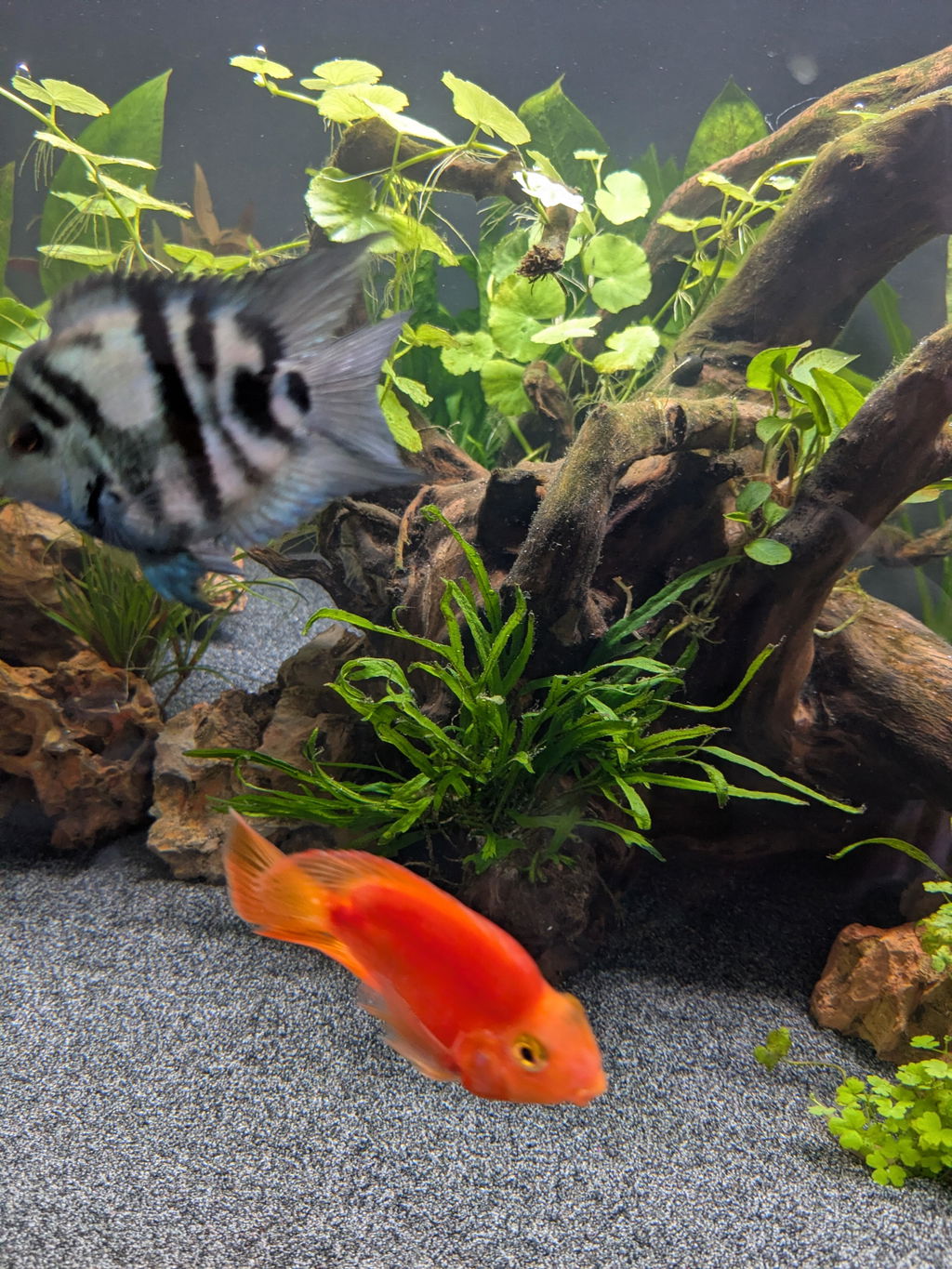
Healthy fish nothing lilke pic
Reply from Tropical Fish Co
Thanks for the honest note, and that's fair. Colour on the parrot varieties shifts a lot with age, lighting and how settled the fish is, so they rarely look like a photo on day one - but our listing images should still set an expectation you can hold us to, so we'll take another look at that one. If what arrived isn't the variety you ordered, email hello@tropicalfishco.co.uk with your order number and we'll put it right. - Reza, Tropical Fish Co