Easy
Electric Blue Acara (Andinoacara pulcher) – Neon Blue, 2–7cm Sizes
22–23°C · pH 6.5–8
£6.19
The Blue Acara (Aequidens pulcher latifrons) is a cichlid from Trinidad and Venezuela that reaches 16 cm. It suits beginners ready for a well-filtered cichlid aquarium; keep a pair, using the FishBase, Seriously Fish and OATA overlap of 22–23°C, pH 6.5–8.0 and 5–12 dGH. Sold individually in 3–4 cm, 4–5 cm, 5–6 cm, 7–9 cm and XL sizes.
Adult size is the maximum length this species reaches at full maturity (scientific sources). The livestock you receive will be younger and smaller — pick a size above for the actual shipping size. Product-photo provenance and any image-specific limitations are stated on the listing.
Aequidens pulcher
Save when buying multiple fish. Each quantity is one fish; sex and pair formation are not guaranteed unless the selected variant explicitly states them.
The Blue Acara (Aequidens pulcher latifrons) is a cichlid from Trinidad and Venezuela that reaches 16 cm. It suits beginners ready for a well-filtered cichlid aquarium; keep a pair, using the FishBase, Seriously Fish and OATA overlap of 22–23°C, pH 6.5–8.0 and 5–12 dGH. Sold individually in 3–4 cm, 4–5 cm, 5–6 cm, 7–9 cm and XL sizes.
Adult size is the maximum length this species reaches at full maturity (scientific sources). The livestock you receive will be younger and smaller — pick a size above for the actual shipping size. Product-photo provenance and any image-specific limitations are stated on the listing.

Cichlids are a family of roughly 1,800 accepted species, not one care type. Before buying, identify the exact species and source, then compare adult measurement, usable tank dimensions, social system, territory, tested water, diet and an exit plan. No family-wide minimum tank, water range or tank-mate list is safe.
Maintain these water conditions for optimal health and vibrant colors
The Blue Acara (Aequidens pulcher latifrons) is a freshwater cichlid from Trinidad and Venezuela. FishBase records the Blue Acara in the family Cichlidae and gives a maximum length of 16 cm. It suits a beginner who wants a characterful cichlid and is prepared to provide a mature biological filter, a suitable aquarium footprint and consistent maintenance.
FishBase now lists it as Andinoacara pulcher. Adults occur in both turbid standing water and clear, free-flowing streams, where they feed on worms, crustaceans and insects. This feeding biology, rather than colour or size at dispatch, determines the meaty aquarium diet described below.
| Suits | Not suited to |
|---|---|
| A beginner prepared for cichlid care | An immature or unfiltered aquarium |
| A pair planned around a 16 cm adult | Animals small enough to swallow |
| A sand-based aquarium with driftwood | Layouts dependent on rooted plants remaining undisturbed |
| Regular testing and weekly maintenance | Unscreened cichlid mixtures |
Explore the South American cichlid collection only after comparing each fish’s adult space, water and compatibility requirements.
One purchase supplies one Blue Acara of the selected size. Use the live size selector to choose 3–4 cm, 4–5 cm, 5–6 cm, 7–9 cm or XL. The numeric labels describe the fish’s dispatch length; XL is a named grade without a stated centimetre range.
The size you select is the size supplied, not the adult size. Every choice therefore needs an aquarium planned around the same 16 cm adult length. Do not use a smaller dispatch grade as the basis for a smaller permanent aquarium or a more crowded stocking plan.
| Offer detail | What it means |
|---|---|
| 3–4 cm to 7–9 cm | The stated dispatch-length choices |
| XL | A named dispatch grade without a centimetre figure |
| One selected size | One live fish per purchase |
| 16 cm | The adult planning length, not a dispatch choice |
Sex is guaranteed only when the selected option explicitly states male or female. This Blue Acara listing has no sex-guaranteed option. Plan the aquarium without assuming sex from colour, finnage, body shape, an image or the selected dispatch size.
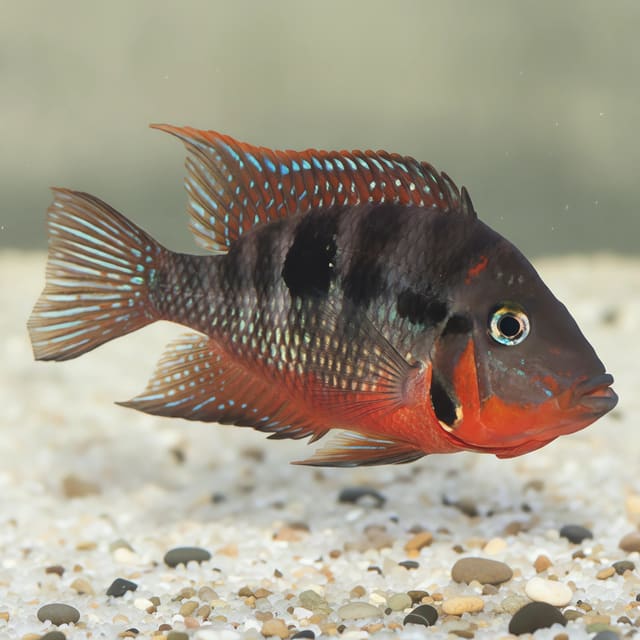
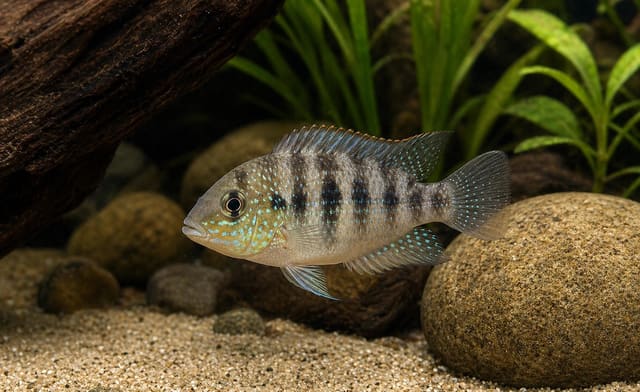
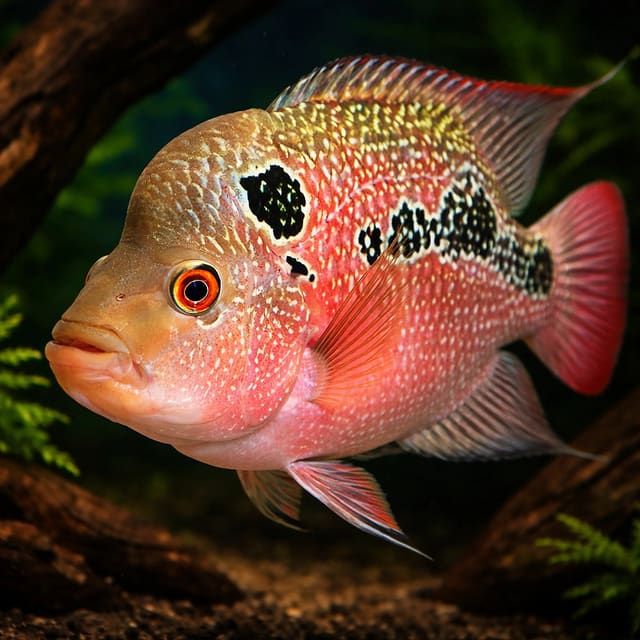
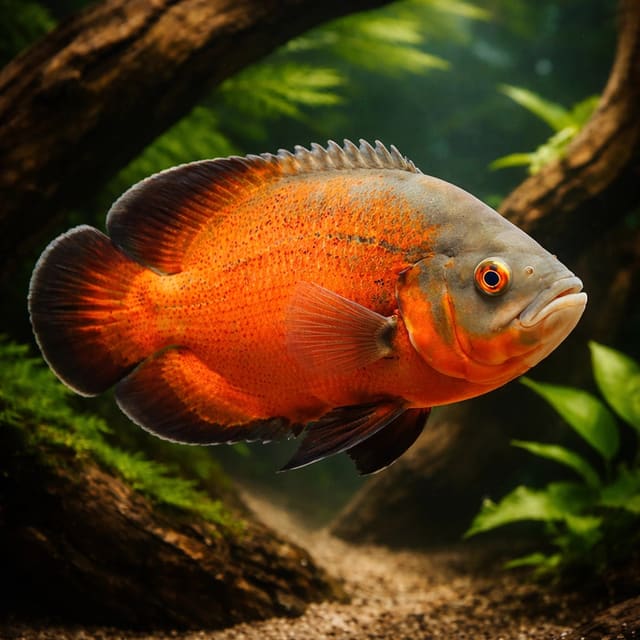
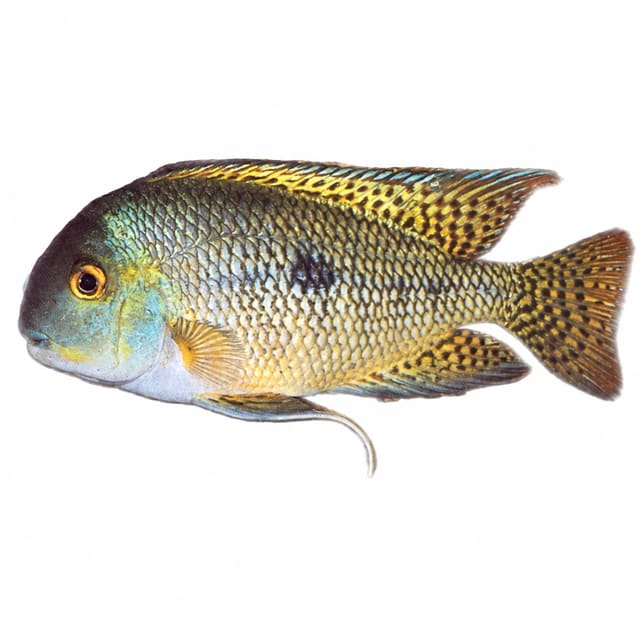
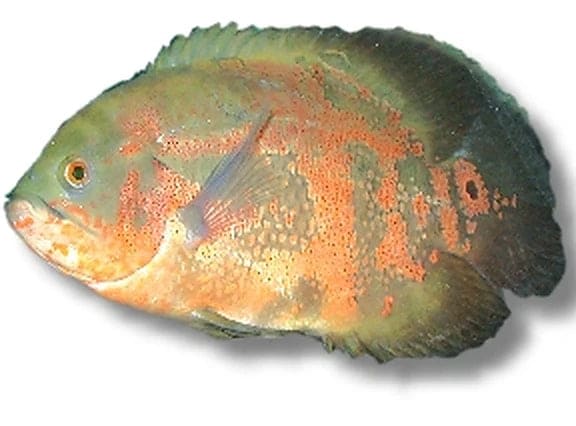
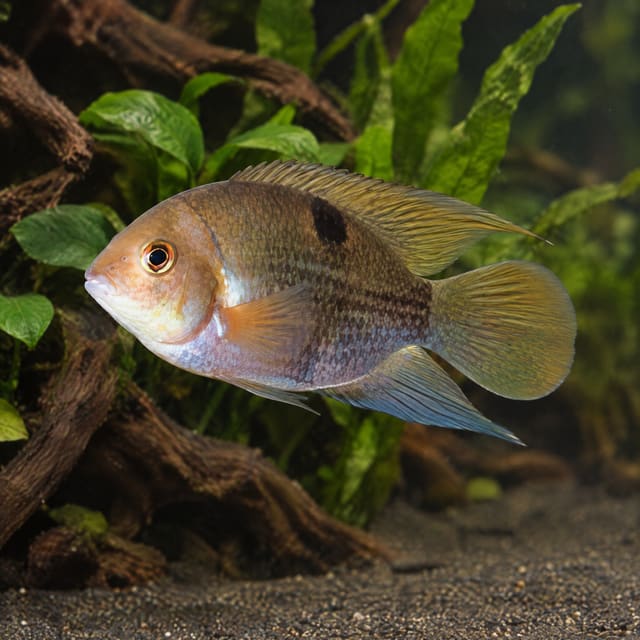
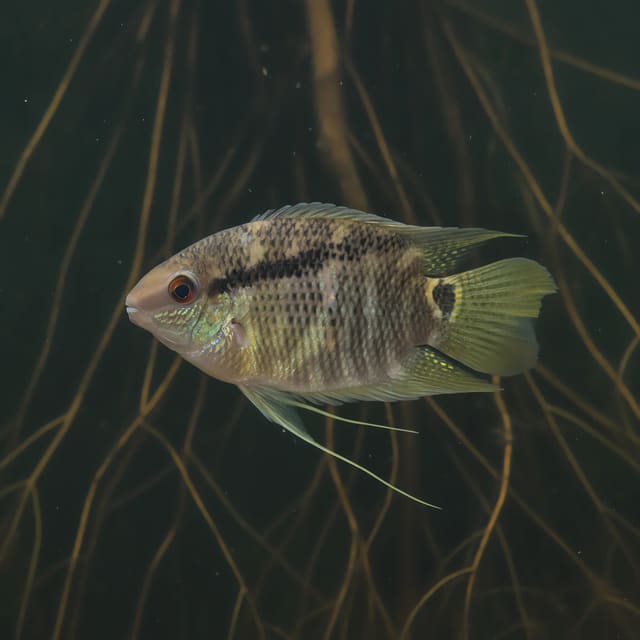
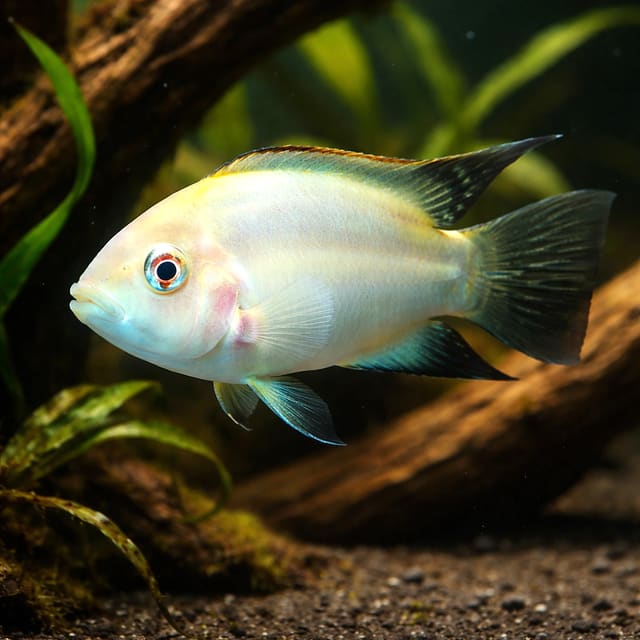
Some gallery images have been digitally enhanced to improve image quality. They show the listed type of animal rather than guaranteeing the exact markings of the individual supplied, so natural colour and pattern can vary. Use the gallery to understand the illustrated body shape and markings, not to predict the exact colour, sex or individual appearance of the fish supplied.
Plan for a pair in an aquarium with base measurements of at least 120 × 30 cm or an equivalent footprint. Seriously Fish describes that base as just about sufficient for a pair, so treat it as the starting point rather than spare capacity for an automatic community. A longer or wider aquarium gives more room to arrange separate areas and to assess companions without assuming that water volume alone resolves cichlid behaviour.
FishBase records aquarium keeping in pairs. This is a pair-planning instruction, not a general rule that every combination of two unfamiliar fish will immediately behave as an established pair. Observe interactions and be ready to separate fish if persistent aggression develops.
A litre figure can describe aquariums with very different shapes. The stated 120 × 30 cm base is therefore the decisive species-level space reference for a pair. If an aquarium is tall but has a shorter or narrower base, the extra height does not make its footprint equivalent.
This fish digs, so the usable plan must also tolerate movement of the substrate and disturbance around rooted plants. A soft sandy base, driftwood and plants attached to décor create a layout that works with that behaviour instead of relying on delicate planting remaining untouched.
Keep routine aquarium water at 22–23°C, pH 6.5–8.0 and 5–12 dGH. This is the overlap of FishBase’s recorded wild environment, Seriously Fish aquarium guidance and OATA’s American-cichlid range. FishBase records 18–23°C, pH 6.5–8.0 and hardness up to 25 dGH; Seriously Fish gives 22–28°C, pH 6.5–8.0 and 5–25 dGH; OATA gives 22–27°C, pH 6.5–8.0 and 4–12 dGH.
The overlap is deliberately narrower than any one of those ranges. For example, 24°C sits within the Seriously Fish and OATA temperature ranges but outside FishBase’s recorded 18–23°C environment, so it is not part of the three-way overlap used here. A reading of 10 dGH sits within both the Seriously Fish and OATA hardness ranges and therefore fits the routine target.
Use our water chemistry guide to understand what each test measures, then enter the readings in the water matcher to compare them with the target. Record the actual numbers rather than describing water only as soft, hard, acidic or alkaline.
Stability still matters within the range. Test replacement water as well as the aquarium when the tap-water chemistry changes or a reading begins to move. Never use the upper limit of one source to widen another source’s boundary; the working range above keeps every routine value inside all three named references.
Use a soft sandy substrate with driftwood branches and an efficient biological filter. Seriously Fish recommends this arrangement and notes that Blue Acaras are avid diggers and can be sensitive to deteriorating water quality. The layout should therefore tolerate substrate movement while leaving the filter able to circulate and process waste effectively.
Floating plants can provide shade. Rooted plants are more likely to be disturbed, so do not make the success of the aquarium depend on an extensive rooted display. Anubias and Java fern attached to wood or other décor have a better chance of remaining in place because their position does not depend on undisturbed substrate.
| Use | Reason |
|---|---|
| Soft sand | Supports the digging behaviour described for this species |
| Driftwood branches | Provides structure without relying on rooted planting |
| Floating plants | Creates shaded areas |
| Attached Anubias or Java fern | Better able to withstand substrate disturbance |
| Efficient biological filtration | Processes waste and supports stable water quality |
The RSPCA explains that fish release toxic ammonia and that a working biological filter supports bacteria which convert ammonia to nitrite and then to the safer nitrate. The filter must be established and maintained; simply placing a filter in the aquarium on the day the fish arrives does not create a mature bacterial population.
Position décor so it does not block routine observation of the fish or access for waste removal. Leave enough usable base area for a 16 cm adult pair after the hardscape is installed. Check that branches and attached plants do not obstruct the filter intake or outlet, and inspect the filter for blockages during regular maintenance.
Prepare and mature the biological filter before adding the Blue Acara. Follow the first tropical aquarium guide before livestock arrives, then confirm that ammonia and nitrite both read zero mg per litre. A clear-looking aquarium is not, by itself, a test of biological maturity.
OATA warns that adding fish too quickly can cause new tank syndrome. Every increase in fish numbers and feeding increases the waste that the filter’s bacterial population must process. Add livestock slowly, test after stocking changes and do not treat unused physical space as proof that the filter can immediately support more fish.
Do not compensate for an immature filter by feeding heavily or adding several planned companions together. Overfeeding produces excess faeces and uneaten food, while rapid stocking can exceed the filter’s present capacity. The correct sequence is to establish the aquarium, confirm the readings, add livestock gradually and continue testing.
When planning a pair, remember that filtration capacity and behavioural space are separate decisions. Zero ammonia and nitrite do not make a cramped footprint suitable, while a large footprint does not replace a mature biological filter. Both conditions must be met.
Base the diet on meaty foods that match the Blue Acara’s recorded feeding biology. FishBase records wild adults eating worms, crustaceans and insects, while Seriously Fish describes the species as mainly carnivorous. Suitable aquarium foods include bloodworm, brine shrimp, chopped mussel or prawn, earthworms and a quality dried food.
Offer only what the fish can finish within a few minutes, once a day. That portion and frequency come from OATA’s American-cichlid guidance. The group sheet also recommends variety and warns that these fish can consume a large amount in one sitting, so appetite should not be used as permission to keep adding food.
| Food role | Suitable choices |
|---|---|
| Quality dried food | A complete dried product accepted readily by the fish |
| Small meaty foods | Bloodworm and brine shrimp |
| Chopped meaty foods | Mussel or prawn prepared in a size the fish can take |
| Worm food | Earthworms prepared appropriately for feeding |
Watch the feeding response from start to finish. If food remains after a few minutes, reduce the next portion and remove waste during maintenance. Uneaten food and excess faeces break down and release toxic waste into the water, placing an avoidable load on the biological filter.
Use body condition, interest in food and the time taken to finish the portion as practical checks. A sudden reduction in food intake belongs with the other health changes described below and should trigger water testing. Continue to vary suitable meaty items rather than relying on a single treat food.
Feed for health and water quality, not to intensify the illustrated gallery colours. Colour response is not a feeding target established for this offer, while controlled portions and diet variety directly support the care decisions described by the species and group guidance.
At least once every week, change 25% of the aquarium water. OATA strongly recommends this frequency and amount for American cichlids. Use a siphon to remove solid waste from the substrate, especially where food or faeces collect around driftwood and other décor.
Test ammonia and nitrite at least once per week and keep both at zero mg per litre. Check nitrate against the target of no more than 20 mg per litre above the normal tap-water level. A weekly result creates a useful comparison with the fish’s behaviour, appetite and appearance.
If filter media needs cleaning, do not run it under the tap. Rinse it lightly in aquarium water removed during the partial water change. This reduces the number of beneficial bacteria lost while removing accumulated debris.
Do not turn a 25% weekly change into a rule that postpones action when tests or the fish indicate a problem. The weekly routine is the baseline. If ammonia or nitrite appears, stop adding livestock, test the aquarium and assess feeding, filter operation and accumulated waste before proceeding with the stocking plan.
Keep the filter running effectively between maintenance sessions. A Blue Acara can be sensitive to declining water quality, so combine regular testing, controlled feeding, waste removal and filter checks rather than relying on any single task to maintain the aquarium.
Receive the parcel in person and begin filming while it is still sealed. Continue in one take through opening the parcel and showing the fish inside the sealed bag. This creates the continuous unboxing record required for a Live Arrival Guarantee claim while allowing the fish’s condition to be seen before anything is disturbed.
The fish is hand-bagged in pure oxygen and placed in an insulated poly box, with a heat pack when the weather calls for it. A licensed live-animal courier carries the parcel. Read the current delivery and Live Arrival Guarantee policy before the planned arrival.
Send us the order number and continuous unboxing video on the same day if anything has gone wrong. The video should show the sealed parcel, its opening and the fish still inside the sealed bag.
Before release, the aquarium should already be mature and within the planned water range. OATA advises checking that ammonia and nitrite are zero before adding fish and increasing livestock numbers slowly so the biological filter can adjust. These water checks belong to aquarium preparation rather than the numbered parcel procedure.
After release, keep the stocking plan conservative. Do not add several other fish simply because the Blue Acara has entered the aquarium successfully; continue testing and allow the filter’s bacterial population to respond to the increased waste and feeding.
Observe swimming, breathing, colour, appetite, body condition, fins and scales every day. OATA identifies changes in these areas as useful early signs that a fish or its environment needs attention. The value lies in noticing a departure from the animal’s normal pattern rather than waiting for several signs to appear together.
| If you see | Do this |
|---|---|
| Hanging at the surface, sitting on the bottom or erratic swimming | Test water quality and check filter operation |
| Gill covers moving faster or slower than normal | Test the aquarium and review recent changes |
| Darker or paler colour than normal | Check water readings and observe behaviour |
| More hiding or a change in aggression | Review interactions, territory and stocking |
| White spots, fluffy growths, damaged fins or missing scales | Test the water and contact us for health guidance |
| Reduced food intake or declining body condition | Check water quality and record the feeding response |
Clear, bright eyes, intact scales and undamaged fins provide a useful baseline for routine observation. Record any sudden change alongside the latest temperature, pH, ammonia, nitrite and nitrate readings. This makes it easier to distinguish a water-quality event from a compatibility problem that appears during interactions.
Do not respond to reduced appetite by adding larger portions. Remove uneaten food, check the water and keep the once-daily portion within what can be eaten in a few minutes. Extra food increases waste at the point when the aquarium may already be under strain.
Behaviour also matters in a pair or community. A change in hiding or aggression should trigger a review of the usable footprint, visual structure and companions, while damaged fins require both a water-quality check and close observation of interactions.
Plan the aquarium around a 16 cm adult. FishBase records that maximum as total length. Seriously Fish lists 15 cm standard length, so the two references contain a real size difference; the 16 cm FishBase figure is the adult length used throughout the care plan.
Growth does not change the permanent requirements attached to the selected dispatch grade. The aquarium footprint, mature filtration and compatibility plan should be ready from the beginning. A smaller fish still contributes waste, grows towards the adult planning length and may be paired or combined only after the same compatibility assessment.
Blue Acaras are avid diggers. Check that substrate movement has not exposed unstable décor, buried attached plants, blocked a filter intake or created pockets where waste accumulates. Use sand, driftwood and plants fixed to décor so routine digging does not undermine the whole design.
FishBase records both parents guarding eggs and larvae. Seriously Fish advises removing other fish after a pair forms unless the aquarium is very large. This behaviour matters to community planning even when breeding is not the keeper’s aim, because a pair defending a site can change how much space remains usable by other fish.
Do not build the care plan around visual assumptions about male or female fish. The offer does not guarantee sex, and the correct decisions—adult space, water, feeding, filtration and companion screening—apply without assigning a sex from appearance.
Plan to keep the Blue Acara in a pair. FishBase records aquarium keeping in pairs, and Seriously Fish bases its space guidance on a pair. Use at least a 120 × 30 cm base or an equivalent footprint, then increase the space assessment when other fish are considered.
Peaceful for a cichlid of this size does not mean that every community combination is suitable. A pair may guard eggs and larvae, and Seriously Fish advises removing other fish after a pair forms unless the aquarium is very large. Treat pair behaviour, usable territory and companion escape space as part of the stocking decision.
| Can be considered | Condition |
|---|---|
| Medium-sized characins | Each fish must be too large to swallow |
| Corydoras species | Screen adult size, water needs and available base area |
| Loricariids | Confirm suitable water and enough usable space |
| Other relatively peaceful cichlids | Use a big enough aquarium and assess the individual mix |
Avoid animals small enough to swallow. This condition comes directly from the species profile, which limits combinations to other species too large to be swallowed. Do not move small fish or invertebrates into the caution category after screening; if they are small enough to swallow, they remain an avoid.
No named companion is universal. The table identifies kinds of fish described by Seriously Fish, but every proposed combination still depends on adult dimensions, water compatibility, the aquarium footprint and observed behaviour.
Assess every community before adding the Blue Acara or a new companion. OATA warns that mixing American cichlids can be difficult, while Seriously Fish describes this species as peaceful for a cichlid and names conditional companion groups. Those statements support careful screening, not a universal tank-mate list.
| Question | Decision |
|---|---|
| Can the Blue Acara swallow it? | Avoid the animal if the answer is yes |
| Do their water needs fit? | Compare the proposed companion with 22–23°C, pH 6.5–8.0 and 5–12 dGH, the FishBase, Seriously Fish and OATA overlap |
| Is the aquarium large enough? | Start from the 120 × 30 cm pair footprint and add space for every companion |
| Is the temperament suitable? | Choose the named peaceful groups conditionally and observe the actual fish |
For other cichlids, use only relatively peaceful species and a sufficiently large aquarium. Do not treat another fish’s ability to fight back as the main compatibility test. The supported Blue Acara guidance favours peaceful companions that cannot be swallowed.
Treat fin safety as part of the individual assessment. Inspect fins during daily observation and watch for changes in hiding, aggression or swimming. If persistent aggression or fin damage appears, separate the affected fish rather than assuming the combination will settle without intervention.
Ask for one stocking and compatibility assessment before committing to a mixed cichlid plan. Provide the aquarium’s base dimensions, current livestock, adult sizes and measured water values so the proposed combination can be assessed against the same space and water decisions used here.
A Blue Acara reaches 16 cm. Plan the permanent aquarium around this FishBase maximum adult length rather than the selected dispatch size.
A pair needs a base of at least 120 × 30 cm or an equivalent footprint. Seriously Fish describes that base as just about sufficient for a pair, so add space when considering companions.
Keep this fish in a pair. FishBase records aquarium keeping in pairs, while compatibility between individual fish still needs observation.
Yes. Seriously Fish calls the Blue Acara a beginner’s cichlid, but it still needs a mature biological filter, weekly maintenance and a pair-sized aquarium footprint.
Feed meaty foods such as bloodworm, brine shrimp, chopped mussel or prawn, earthworms and a quality dried product. OATA’s American-cichlid guidance says to feed only what it can finish within a few minutes, once a day.
Keep it at 22–23°C, pH 6.5–8.0 and 5–12 dGH. These values are the overlap of FishBase, Seriously Fish and OATA guidance.
The Blue Acara is peaceful for a cichlid of this size, but American-cichlid mixes can be difficult and a pair may guard eggs and larvae. Treat fin safety as an individual compatibility check and separate fish if persistent aggression or damage appears.
This fish can be considered with medium-sized characins, Corydoras, Loricariids and, in a big enough aquarium, other relatively peaceful cichlids. Every companion must be too large to swallow and suited to the same water.
Start filming before opening the sealed parcel and continue through opening it and showing the fish inside the sealed bag. It is hand-bagged in pure oxygen in an insulated poly box, with a heat pack when needed; receive it in person, inspect it the same day, float the bag for 20–30 minutes and do not pour the bag water into the aquarium.
No reviews for this item yet. Bought one? Honest reviews only, good or bad.
What customers say about ordering from us
Easy website plenty of info on fish your buying great to pick a time slot
TRACEY DURRANT · 7 Oct 2026
Got some lovely fish thank you
Kevin Mackie · 7 Oct 2026
Reviews of our shop, collected by Judge.me, an independent third-party review collector. Newest first.