−15%
Easy
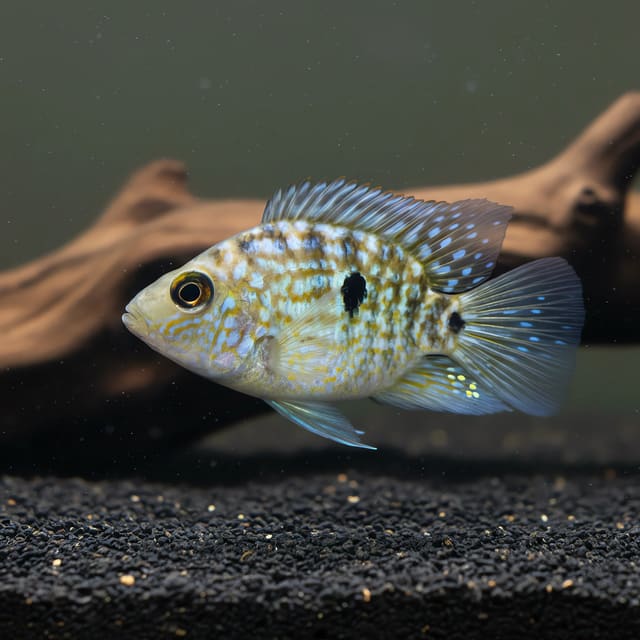
Electric Blue Acara (Andinoacara pulcher) – Neon Blue, 2–7cm Sizes
22–23°C · pH 6.5–8
£6.79£7.99

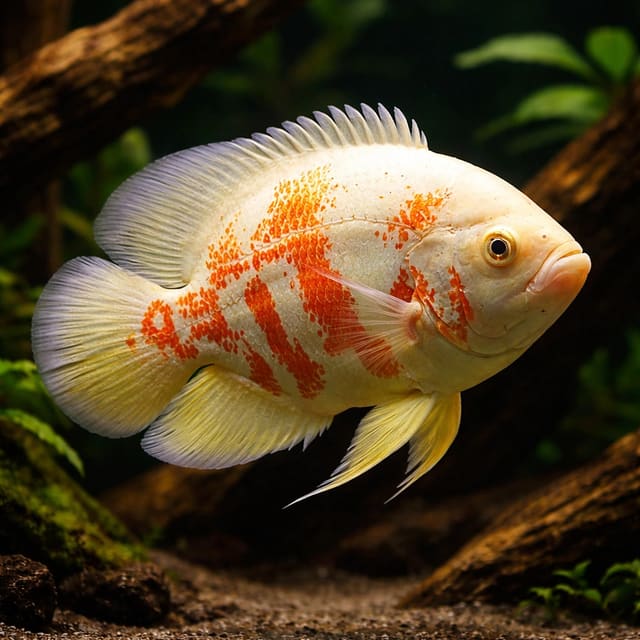
The Red Oscar (Astronotus ocellatus) is a large freshwater cichlid from South America’s western Amazon and Orinoco basins that reaches 45.7 cm total length. It suits keepers who can provide at least a 150 × 60 cm base and about 540 litres for one adult, with 20–28°C, pH 6.0–7.5 and 5–20 dGH. Sold individually in sizes from 4–5 cm to 16–20 cm.
Adult size is the maximum length this species reaches at full maturity (scientific sources). The livestock you receive will be younger and smaller — pick a size above for the actual shipping size. Product-photo provenance and any image-specific limitations are stated on the listing.
Astronotus ocellatus
The Red Oscar (Astronotus ocellatus) is a large freshwater cichlid from South America’s western Amazon and Orinoco basins that reaches 45.7 cm total length. It suits keepers who can provide at least a 150 × 60 cm base and about 540 litres for one adult, with 20–28°C, pH 6.0–7.5 and 5–20 dGH. Sold individually in sizes from 4–5 cm to 16–20 cm.
Adult size is the maximum length this species reaches at full maturity (scientific sources). The livestock you receive will be younger and smaller — pick a size above for the actual shipping size. Product-photo provenance and any image-specific limitations are stated on the listing.
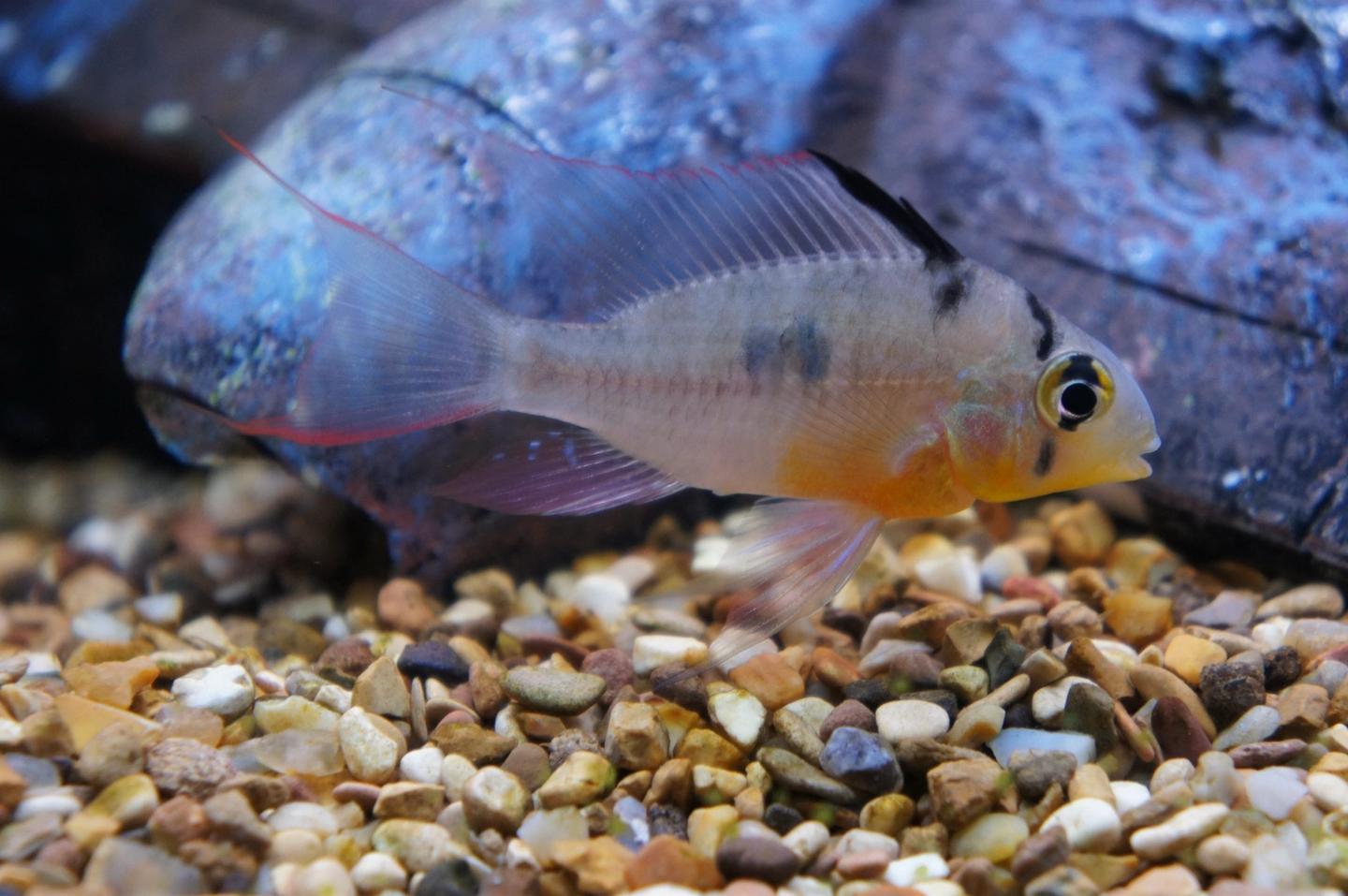
Cichlids are a family of roughly 1,800 accepted species, not one care type. Before buying, identify the exact species and source, then compare adult measurement, usable tank dimensions, social system, territory, tested water, diet and an exit plan. No family-wide minimum tank, water range or tank-mate list is safe.
Maintain these water conditions for optimal health and vibrant colors
Red Oscar (Astronotus ocellatus) is a large freshwater member of Cichlidae, the cichlid family. FishBase places the species in South America’s western Amazon and Orinoco basins and describes it as benthopelagic, meaning that its natural position is associated with the lower part of the water column rather than the surface alone. The red form belongs to the same species and follows the same adult-space and husbandry plan.
| Suits | Not suited to |
|---|---|
| Keepers able to provide a 150 × 60 cm base and about 540 litres for one adult | Small community aquariums |
| Systems with efficient filtration and weekly 30–50% water changes | Carefully aquascaped layouts that must remain undisturbed |
| Plans that exclude much smaller fish | Communities containing much smaller fish |
The decisive measurement is the adult fish, not the dispatch grade. FishBase records a maximum of 45.7 cm total length for a male or unsexed fish. That is a recorded maximum rather than a promised final size for every individual. Seriously Fish uses 35 cm standard length for aquarium planning; standard length stops at the base of the tail, while total length includes the tail. These measurements serve different purposes, so plan generous length, width and water volume instead of treating a juvenile grade as a lasting indication of space.
| Decision | Planning figure |
|---|---|
| Adult aquarium base | At least 150 × 60 cm |
| Single-adult volume | About 540 litres |
| Recorded maximum | 45.7 cm total length |
| Aquarium water range | 20–28°C, pH 6.0–7.5, 5–20 dGH |
| More than one Oscar | Larger quarters than the single-adult plan |
An aquarium with a 150 × 60 cm base and a volume of about 540 litres is described as only just large enough for one adult. Treat both the footprint and volume as essential: a tall aquarium with insufficient length or width does not reproduce the stated base dimensions. A pair, group or mixed community needs larger quarters, with the final plan determined by the number, adult dimensions and behaviour of every fish.
This is a suitable choice for a keeper prepared to establish the adult aquarium before it is needed, run efficient filtration and complete substantial weekly maintenance. It is a poor match for a small community aquarium or a carefully planted layout that must remain undisturbed, because Oscars may dig into the substrate. Explore the South American cichlid collection only after comparing each fish’s adult dimensions and behaviour with the aquarium you can provide.
One purchase supplies one Red Oscar in the size selected through the live size selector. The dispatch sizes shown are 4–5 cm, 5–6 cm, 6–7 cm, 7–9 cm, 10–15 cm and 16–20 cm. Check the live selector for the sizes that can be chosen for the order.
The size you select is the size supplied, not the adult size. A 4–5 cm or 5–6 cm fish still needs a credible route to the full single-adult plan of at least 150 × 60 cm base dimensions and about 540 litres. Selecting a larger dispatch grade changes the size received; it does not increase the purchase unit, set the final adult size or reduce the aquarium requirement.
| Check | Action |
|---|---|
| Adult housing | Reserve the 150 × 60 cm base and about 540 litres for one adult |
| Water | Prepare 20–28°C, pH 6.0–7.5 and 5–20 dGH |
| Maintenance | Plan weekly 30–50% water changes |
| Companions | Do not combine the Oscar with much smaller fish |
A smaller grade can make transport and initial placement easier to organise, but it must not become a reason to postpone the adult plan indefinitely. Measure the intended aquarium base, calculate its actual volume and confirm that filtration, water-change access and long-term placement all work before ordering. If the permanent aquarium is not yet prepared, set a firm upgrade point based on the fish’s space rather than assuming a particular growth rate.
Sex is guaranteed only when the selected option explicitly states male or female. This Red Oscar listing has no sex-guaranteed option. Oscars do not tend to show dependable external sexual differences, so colour, apparent body shape, dispatch size and gallery appearance should not be used to assign sex.
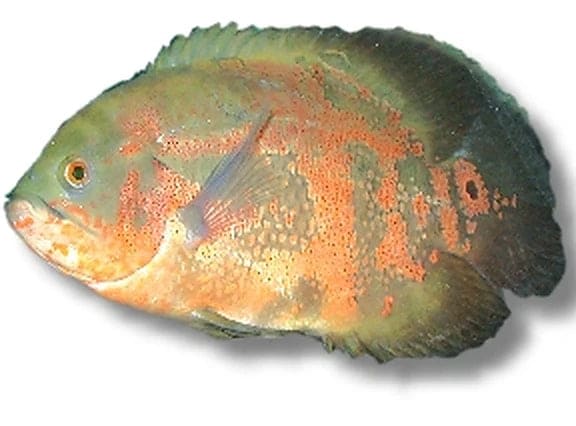
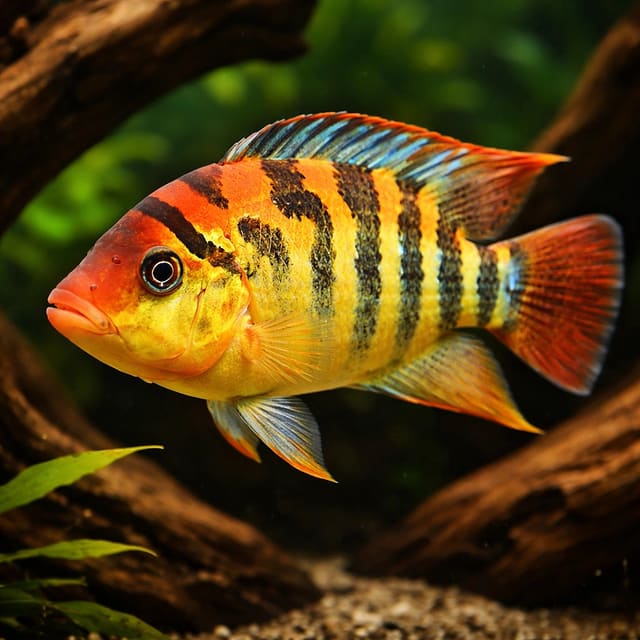
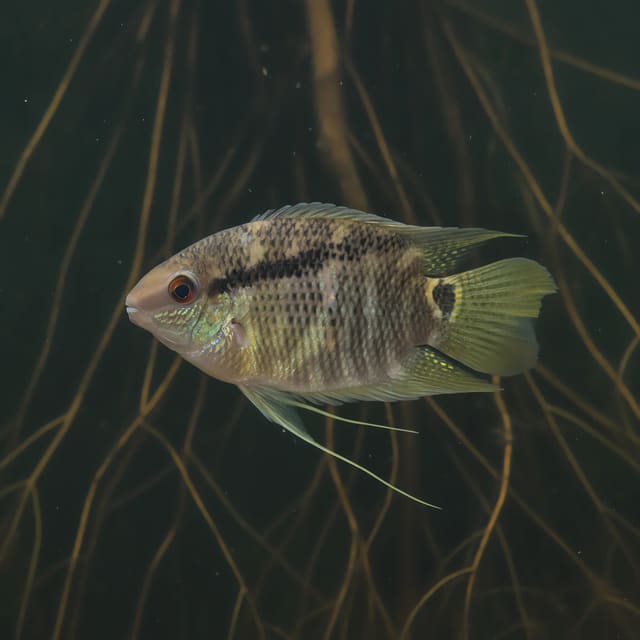
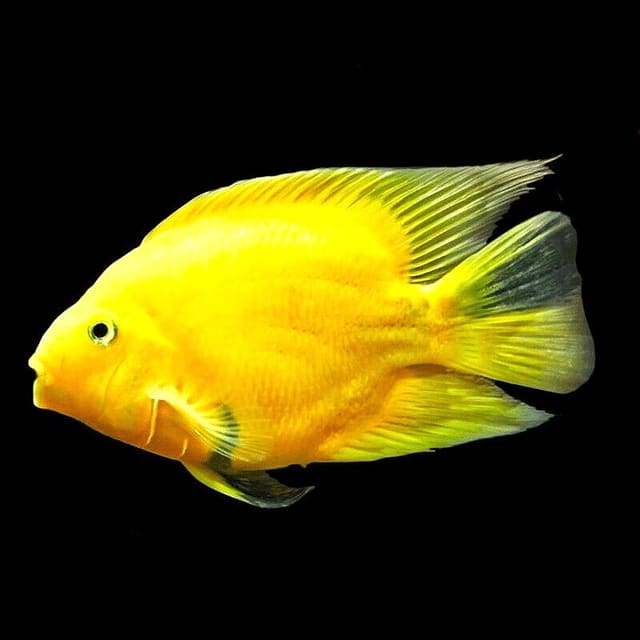
The gallery images are representative, based on reference photographs of this species, so colours can look slightly different from the live animal.
Before arranging receipt, read our current delivery and Live Arrival Guarantee policy. Check its receiving requirements and claim process before the delivery date.
Set the aquarium to 20–28°C, pH 6.0–7.5 and 5–20 dGH. These are the aquarium ranges stated specifically for Astronotus ocellatus. Choose a stable point within each range that also suits any proposed companion, then keep changes controlled rather than moving repeatedly between the endpoints.
| Value | How to use it |
|---|---|
| Temperature | Maintain one stable point within 20–28°C |
| pH | Keep within 6.0–7.5 and avoid abrupt movement |
| General hardness | Keep within 5–20 dGH |
| Ammonia | Maintain at 0 mg/l |
| Nitrite | Maintain at 0 mg/l |
Start with measured tap water and aquarium water rather than choosing values by guesswork. Our water chemistry guide explains what the main tests represent, while the water matcher lets you compare measured values with the stated range. If the tap water already sits inside the pH and hardness ranges, consistency is usually the clearest operating goal. Any adjustment method must preserve stability through every water change.
Temperature planning must account for the full aquarium, not only the displayed heater setting. The species guidance calculates roughly 150–225 W divided across two heaters for an aquarium of about 540 litres when the room is around 20°C. That is a worked example, not a universal wattage formula: room temperature, aquarium construction and equipment performance affect the result. Check the actual water temperature at a representative position and confirm that the chosen equipment can hold it steadily.
Place the heaterstat externally if the system allows it, because Oscars have been known to break this equipment. Where an external arrangement is not possible, choose a layout that limits direct interaction while preserving water circulation and service access. Inspect heating equipment during routine maintenance and act on a temperature change before it becomes a prolonged departure from the selected set point.
For a worked example, an aquarium held at 25°C, pH 7.0 and 10 dGH sits within all three aquarium ranges. A reading of pH 7.6 does not. The correct response is to assess the source water and adjustment method carefully, not to chase the number with abrupt changes. Stability within the stated range is the practical objective.
Run efficient filtration from the beginning and size it around the adult aquarium rather than the juvenile received. The single-adult example uses about 540 litres and a turnover of four to five times the aquarium volume per hour. That produces a total nominal flow target of approximately 2,160–2,700 litres per hour before any allowance for real-world installation effects.
| Calculation | 540-litre example |
|---|---|
| Four times volume | 540 × 4 = 2,160 lph |
| Five times volume | 540 × 5 = 2,700 lph |
| Two-filter example | Two units rated 1,080–1,350 lph each |
| Biological readiness | Ammonia and nitrite both 0 mg/l before introduction |
The two-filter example follows the published calculation for this aquarium size. It creates a practical way to share nominal flow and can also make equipment access easier, but the essential target is effective filtration throughout the aquarium. Arrange inlets and outlets so that waste can reach the filters and the full water body circulates without removing all calmer areas.
The RSPCA explains why a mature biological filter is vital: fish release toxic ammonia, beneficial bacteria convert it to toxic nitrite and further bacteria convert nitrite to safer nitrate. A filter therefore needs more than water movement. It needs established biological media, regular operation and maintenance that preserves the bacterial population.
Do not judge readiness from clear-looking water alone. Test ammonia and nitrite and require both to read 0 mg/l before introducing the Oscar. Continue testing after introduction because feeding and waste increase the biological demand. A non-zero result is an action point even when the fish still appears normal.
Check filters for blockages during weekly maintenance. If biological media needs cleaning, rinse it lightly in aquarium water removed during the water change. Do not run it under the tap because any chlorine or chloramine present may kill beneficial bacteria and weaken the process the filter is meant to perform.
If flow falls, first check the intake, pipework and media for obstruction. If ammonia or nitrite appears, test again, remove accumulated waste during the water change and review whether the filter is operating correctly. Feed with restraint while water quality is being restored, because uneaten food and excess waste add further pressure.
Use a soft sandy substrate, relatively dim lighting and large driftwood roots or branches if you want a natural-style arrangement. Keep enough unobstructed base area for a large-bodied adult to move through the aquarium. The 150 × 60 cm footprint is only just large enough for one adult, so every major piece of décor must earn the floor space it occupies.
Expect the fish to dig into the substrate. A carefully aquascaped layout that depends on precise contours or rooted stems staying in place is therefore a poor fit. Choose an arrangement that can tolerate displacement and that still permits straightforward removal of solid waste during maintenance.
| Feature | Decision |
|---|---|
| Substrate | Use soft sand where substrate is included |
| Lighting | Relatively dim lighting suits the natural-style plan |
| Wood | Use large roots or branches without consuming essential swimming room |
| Plants | Expect digging and possible disturbance |
| Heaterstat | Place externally if possible |
| Cleaning access | Leave routes for siphoning and equipment service |
Test the layout against the adult fish, not the animal’s dispatch size. Look from one end of the aquarium to the other and identify narrow passages created by wood, equipment or decorative structures. If an adult using the stated planning lengths would have to squeeze through them, simplify the layout before introduction.
Keep filter intakes, outlets and maintenance routes accessible. A decorative arrangement that prevents blockage checks or traps waste behind immovable structures works against the dedicated maintenance regime this fish needs. Open service access also makes a weekly 30–50% water change easier to complete consistently.
Heating equipment needs particular thought. The species has been known to break heaterstats, so an external position is preferable when the equipment design permits it. Any alternative arrangement should preserve circulation and allow frequent inspection without claiming that concealment alone removes the risk.
Review the layout after the fish begins using it. If digging repeatedly sends substrate into an intake, adjust the relationship between substrate depth and intake position. If waste collects in one inaccessible area, remove or reposition the obstruction. Let the fish’s use of the aquarium guide small functional changes while protecting the stated base space and maintenance access.
Complete a 30–50% water change every week. This is the maintenance range paired with efficient filtration for an Oscar aquarium. Choose the percentage according to measured water quality and waste accumulation, but do not let a visually clear aquarium replace testing or the weekly schedule.
OATA’s American-cichlid sheet gives group-level targets of 0 mg/l ammonia, 0 mg/l nitrite and nitrate no more than 20 mg/l above the normal tap-water level. It also calls for testing at least weekly. Use these pollution limits alongside the Oscar’s aquarium water range, with the OATA figures serving as routine water-quality safeguards rather than a different temperature, pH or hardness target.
Use nitrate as a comparison with the normal tap-water reading. If tap water measures 10 mg/l nitrate, the group limit translates to no more than 30 mg/l in the aquarium. If tap water measures 20 mg/l, the corresponding ceiling is 40 mg/l. These are worked applications of the “20 mg/l above tap water” calculation rule, not fixed targets to aim for.
A non-zero ammonia or nitrite result calls for immediate attention. Confirm the reading, inspect filtration, remove accumulated waste and complete an appropriate partial water change with conditioned water. Review recent feeding and any livestock additions because both can increase the demand on the biological filter.
Record the test results, water-change percentage and any change in flow or behaviour. A short weekly record reveals trends that a single reading can hide. If nitrate repeatedly approaches its ceiling before the next scheduled change, increase maintenance effectiveness rather than waiting for the limit to be exceeded.
Use a good-quality cichlid pellet as the staple diet and supplement it regularly with suitable live or frozen foods. Earthworms are one specifically named option. Oscars are generalised omnivores, and a higher-protein aquarium menu is preferred, but variety remains appropriate because their natural diet includes animal prey and plant material.
In nature, the species eats items including smaller fish, insects, crustaceans, zooplankton and terrestrial or aquatic vegetation. Meatier foods appear to be preferred, while fruit and other plant material may be taken when prey is scarce. Natural feeding observations explain the fish’s broad diet; they do not require recreating every wild item in the aquarium.
| Food decision | Role |
|---|---|
| Quality cichlid pellet | Staple aquarium food |
| Suitable live foods | Regular supplement |
| Suitable frozen foods | Regular supplement |
| Earthworms | Named live-food option |
| Uneaten food | Remove rather than allowing it to decay |
For portion timing, the broader American-cichlid feeding guidance says to offer only what can be eaten within a few minutes, once a day. Start with a controlled portion and watch what is consumed. If food remains after the feeding window, reduce the next portion and remove leftovers before they break down.
Do not interpret an enthusiastic response as permission to keep adding food. Overfeeding creates excess faeces or uneaten food, and decomposition releases harmful waste into the water. The result is extra pressure on the biological filter and a greater chance of ammonia, nitrite or nitrate moving in the wrong direction.
Use weekly testing and body condition to refine portions. If nitrate rises faster while the maintenance schedule is unchanged, review food quantity and leftover removal. If body condition decreases or interest in food changes, test the water first and compare the behaviour with the fish’s normal pattern.
A simple routine is pellet as the dependable base, with suitable live or frozen supplements rotated through regular meals. Keep the portion small enough to finish within minutes. This provides variety without turning every feeding into an uncontrolled mixture or increasing food merely because the fish continues to respond.
Have the aquarium filtered, heated, mature and within 20–28°C, pH 6.0–7.5 and 5–20 dGH before the fish arrives. Ammonia and nitrite must both read 0 mg/l. If this is your first setup, follow our guide to preparing and maturing a tropical aquarium before arranging livestock.
Send the continuous unboxing video with your order number if you need to make a Live Arrival Guarantee claim.
Add livestock slowly to a mature system. Beneficial bacterial populations must respond whenever fish numbers and feeding increase, and stocking too quickly can produce new tank syndrome when the biological filter cannot process the added waste. Even though one purchase supplies one animal, consider the total introduction plan if other fish are being added around the same time.
Test ammonia and nitrite after introduction instead of assuming that an established filter will absorb every change immediately. Both must remain at 0 mg/l. If either appears, check filtration, remove waste, complete an appropriate conditioned water change and restrain feeding while the system recovers.
Observe swimming, breathing and interest in food during settling without demanding immediate feeding behaviour. Compare what you see over time with the individual fish’s developing normal pattern. A change matters more when it persists or appears alongside a water-quality departure.
During the first week, prioritise stable water, working equipment and measured feeding. Avoid simultaneous changes to décor, stocking and water chemistry unless a welfare problem requires action. A controlled introduction makes it easier to connect any change in behaviour with the condition that caused it.
Build a baseline for the individual fish during the first month. Note its usual swimming position, breathing rate, colour, hiding pattern, body condition and response at feeding time. Individual variation is normal; the useful signal is a departure from that fish’s established pattern.
| What you see | What to do |
|---|---|
| Hanging at the surface | Test water and inspect filtration and temperature |
| Sitting on the bottom unusually | Compare with its baseline and test water |
| Erratic swimming | Check water values and equipment promptly |
| Faster or slower gill movement | Test ammonia, nitrite and temperature |
| Darker or paler colour | Review water quality, behaviour and recent changes |
| Reduced food intake | Check water before altering the diet |
Also watch for white spots, fluffy growths, missing fins or scales, ulcerations, bumps and a marked increase or decrease in body condition. These signs do not all have the same cause, so begin with measured aquarium conditions rather than choosing a treatment from appearance alone.
When a health change appears, test ammonia and nitrite immediately, compare nitrate with the normal tap-water level and check temperature against the selected point within 20–28°C. Inspect filter flow and confirm that heating and circulation equipment are operating. Correct a measurable husbandry problem carefully and contact us for further guidance when the change persists or the fish’s condition concerns you.
Use the first weekly maintenance session to assess how much waste accumulates and whether the planned 30–50% change is keeping nitrate controlled. At the second and later checks, compare the readings rather than viewing each result in isolation. A repeated upward trend means the balance among feeding, filtration and water changes needs adjustment.
At the end of the month, review whether access for siphoning and equipment service still works after the fish has disturbed the substrate. Adjust the functional layout where waste is trapped or an intake is repeatedly obstructed. Preserve the adult footprint while making maintenance easier, because a routine that can be completed reliably is more protective than a decorative plan that blocks essential work.
Do not combine a Red Oscar with much smaller fish. The species is predatory, and adult size rules out an ordinary community arrangement except in the largest private aquaria. This is a size-and-predation decision, not a claim that every Oscar behaves identically.
Seriously Fish identifies larger characids, anostomids, other cichlids and larger loricariid or doradid catfish as potential companions. “Potential” is the controlling word: these are categories to assess, not universal tank mates. A fish belonging to one of them still needs compatible adult dimensions, water values, space and temperament.
| Screen | Decision rule |
|---|---|
| Adult size | Reject much smaller fish because predation remains a risk |
| Water overlap | Require compatibility with 20–28°C, pH 6.0–7.5 and 5–20 dGH |
| Floor space | Do not fit a community into the 150 × 60 cm single-adult plan |
| Waste load | Recalculate filtration and maintenance for every additional fish |
| Temperament | Plan observation and separation if pressure develops |
Use adult dimensions for both fish. A companion that appears substantial beside a small dispatch-grade Oscar may still become the much smaller animal once the Oscar develops. Reverse the comparison as well: a very large or forceful companion may place the Oscar under pressure even though predation by the Oscar is unlikely.
Water overlap must be real rather than approximate. A candidate whose routine range does not intersect the Oscar’s aquarium values should not be added. Where the ranges overlap only narrowly, choose a stable shared point and make sure it remains suitable for both animals through normal maintenance.
Space is the next filter. About 540 litres and a 150 × 60 cm base are only just large enough for one adult Oscar. Adding a companion to that single-adult plan does not create a community aquarium. Larger quarters must account for the other fish’s adult footprint, waste production and access to usable areas.
Individual outcomes remain uncertain even after the basic screen is passed. Observe access to space and food, changes in hiding and any rise in aggression. Have a separation plan before introduction, and ask us for one stocking and compatibility assessment using the aquarium’s dimensions, volume, measured water values and complete livestock list.
Use one adult as the default planning unit. The aquarium guidance places a single adult in at least a 150 × 60 cm base and about 540 litres, describing that space as only just large enough. Larger quarters are required for a pair or group, and no single extra-fish allowance replaces a full assessment of adult space and behaviour.
| Plan | Space decision |
|---|---|
| One adult | At least 150 × 60 cm and about 540 litres |
| Two Oscars | Larger than the single-adult plan |
| Group | Larger quarters with individual behaviour monitored |
| Mixed community | Only in a substantially larger aquarium after full screening |
Do not assume that buying two unsexed fish creates a compatible pair. Oscars do not tend to show clear external sexual differences, and established pairs develop their own bond. Quantity, matching dispatch grades and similar colour do not settle that behavioural relationship.
If more than one Oscar is planned, increase aquarium size before the fish require it. Preserve enough usable base area for each fish, arrange filtration for the total load and maintain a practical route for separation. Waiting for sustained conflict before finding alternative housing leaves too little room for a controlled response.
For a mixed aquarium, start with the adult Oscar and work outward. Remove much smaller fish from consideration, then test the remaining candidates for water overlap, adult space and temperament. Larger characids, anostomids, other cichlids and larger loricariid or doradid catfish remain possibilities rather than promises.
Watch for a change in aggression, increased hiding, altered breathing, reduced feeding or loss of body condition after any introduction. Test the water at the same time because additional feeding and waste can affect behaviour indirectly through declining water quality. Separate fish when continued interaction compromises normal access to space or food.
A solitary plan avoids the uncertainty of pairing and mixed-species interaction, but it does not reduce the adult aquarium requirement. One Oscar still needs the full footprint, efficient filtration and weekly 30–50% water changes. Choose the stocking model that can be maintained for the adults rather than the one that fits the dispatch sizes temporarily.
It is a freshwater South American cichlid in Cichlidae. FishBase places it in the western Amazon and Orinoco basins and records a maximum of 45.7 cm total length.
One purchase supplies one animal in the selected option; increase the cart quantity only when you intend to order more than one animal.
Use the live selector to choose 4–5, 5–6, 6–7, 7–9, 10–15 or 16–20 cm. The chosen grade is the dispatch size, not the adult size.
Plan at least 150 × 60 cm base dimensions and about 540 litres for one adult. That is only just large enough, and a pair, group or community needs larger quarters.
The aquarium guidance sizes about 540 litres for a single adult and calls for larger quarters for a pair or group. Do not fit multiple fish into the single-adult plan.
Use 20–28°C, pH 6.0–7.5 and 5–20 dGH. OATA’s American-cichlid group guidance sets ammonia and nitrite at 0 mg/l and nitrate at no more than 20 mg/l above the normal tap-water level.
Use a quality cichlid pellet as the staple, supplemented regularly with suitable live or frozen foods; earthworms are one named option. The once-daily American-cichlid schedule limits each portion to what is eaten within a few minutes.
Start filming with the parcel still sealed before opening it, then continue until the fish is shown inside the sealed bag. Receive the parcel in person, open and inspect it on the day it arrives, and float the bag for 20–30 minutes before releasing the fish. Send the video with your order number if making a Live Arrival Guarantee claim.
Do not combine it with much smaller fish. Larger characids, anostomids, other cichlids and larger loricariid or doradid catfish are potential companions only after screening adult size, water overlap, space and temperament.
No reviews for this item yet. Bought one? Honest reviews only, good or bad.
What customers say about ordering from us
I have a small group of long finned mountain minnows. So was delighted to be able to order ten of this variety to increase the genetics in my tank . The ones I recieved are healthy but it’s to early to give a verdict on wether they are of a long finned type since they are small currently.
Gordon Walker · 23 Sept 2026
100% success travel and "installation". Pleased with quality of purchase. The Siamese fighter a bit "shy" so have not yet seen him at his best yet but looking good. Happy customer. GG
George E Garratt · 21 Sept 2026
Reviews of our shop, collected by Judge.me, an independent third-party review collector. Newest first.