Moderate
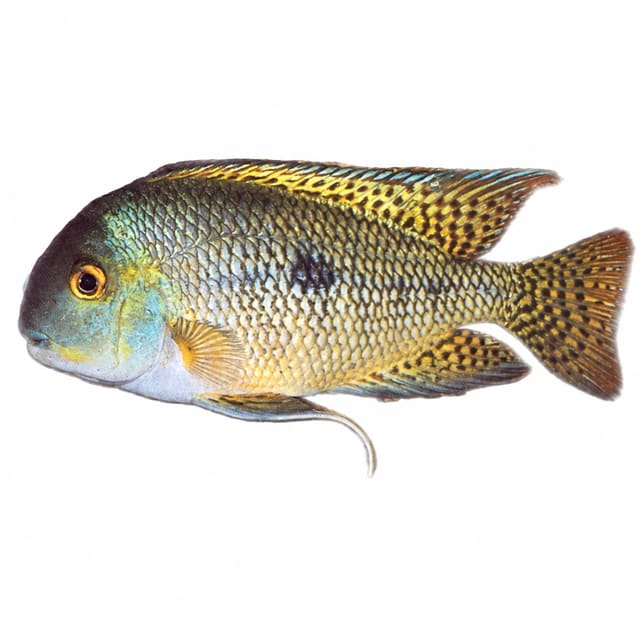
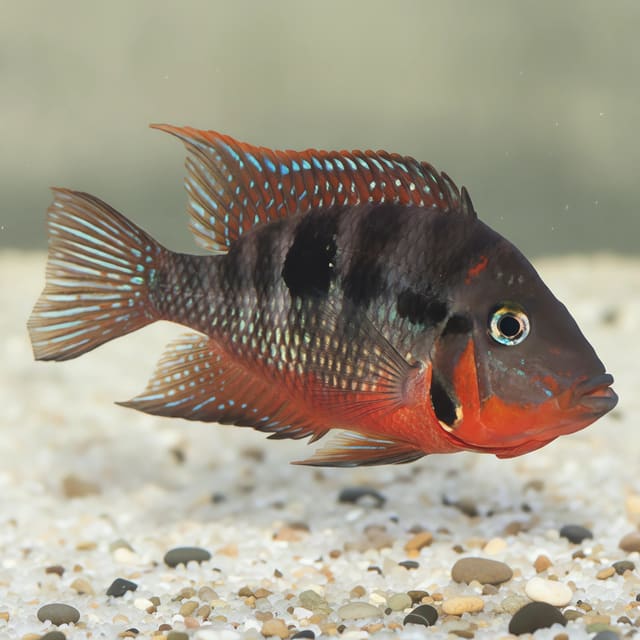
Firemouth Cichlid (Thorichthys meeki)
20–32°C · pH 6.5–8.5 · 108L
£5.39

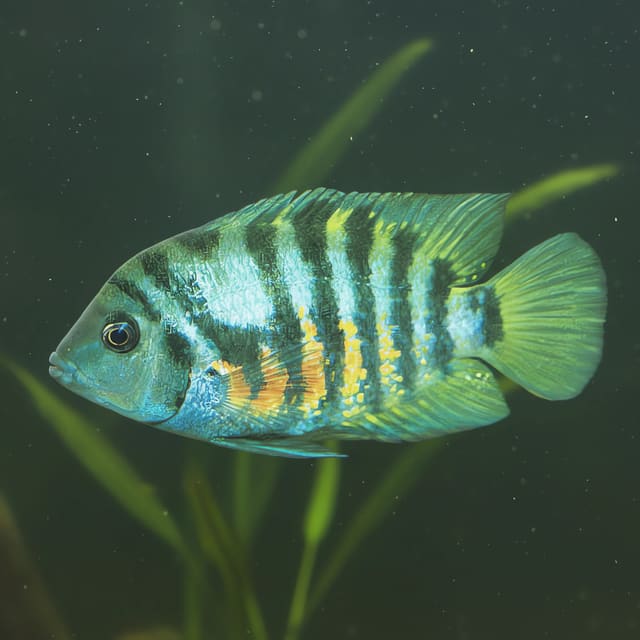
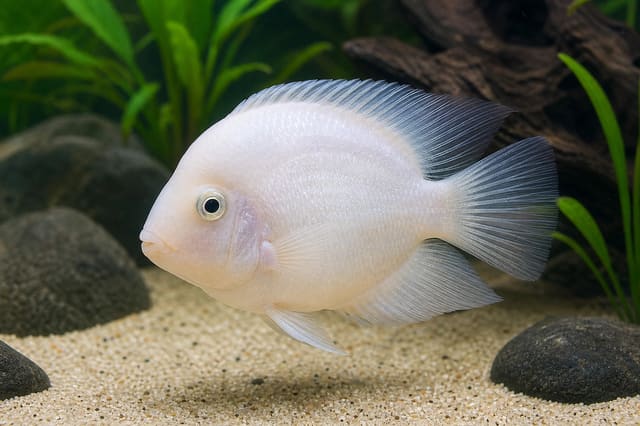
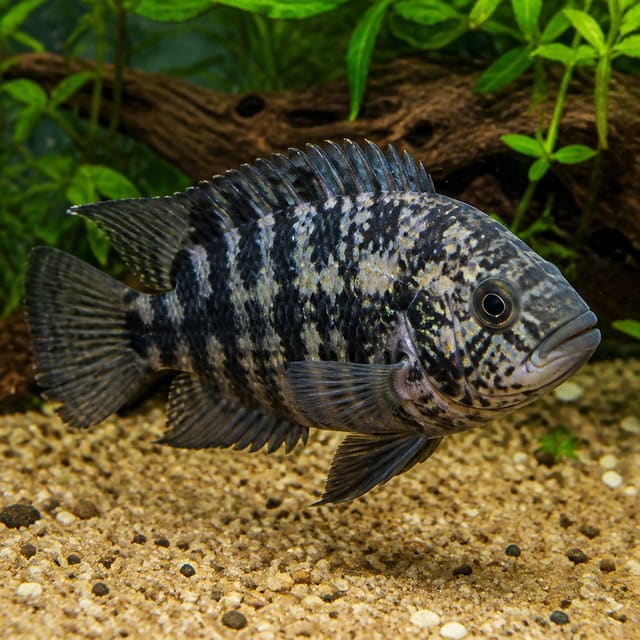
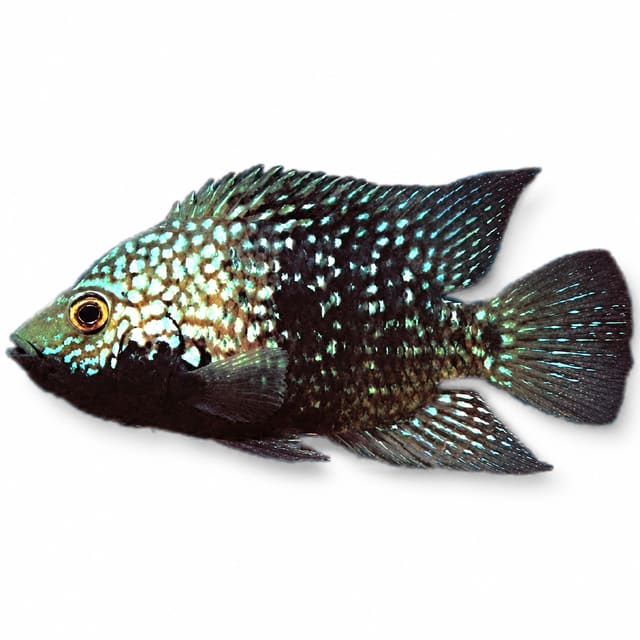
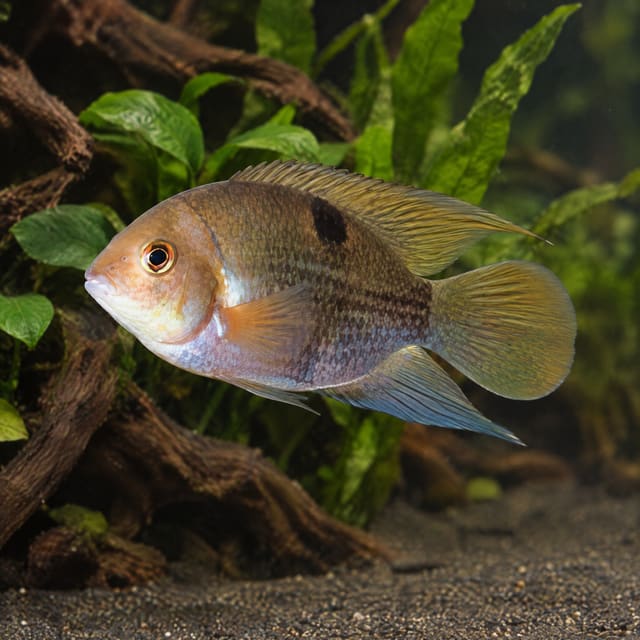
Xanthic Zebra Convict Cichlid is a pale form of the bold Central American convict cichlid, sold as one live fish in a choice of sizes. Feeding and water care are straightforward, but strong territorial aggression makes a mature, species-focused aquarium and confident cichlid management essential.
Cichlasoma nigrofasciatum
Save when buying multiple fish. Each quantity is one fish; sex and pair formation are not guaranteed unless the selected variant explicitly states them.
Minimum of 2 per order.
Xanthic Zebra Convict Cichlid is a pale form of the bold Central American convict cichlid, sold as one live fish in a choice of sizes. Feeding and water care are straightforward, but strong territorial aggression makes a mature, species-focused aquarium and confident cichlid management essential.
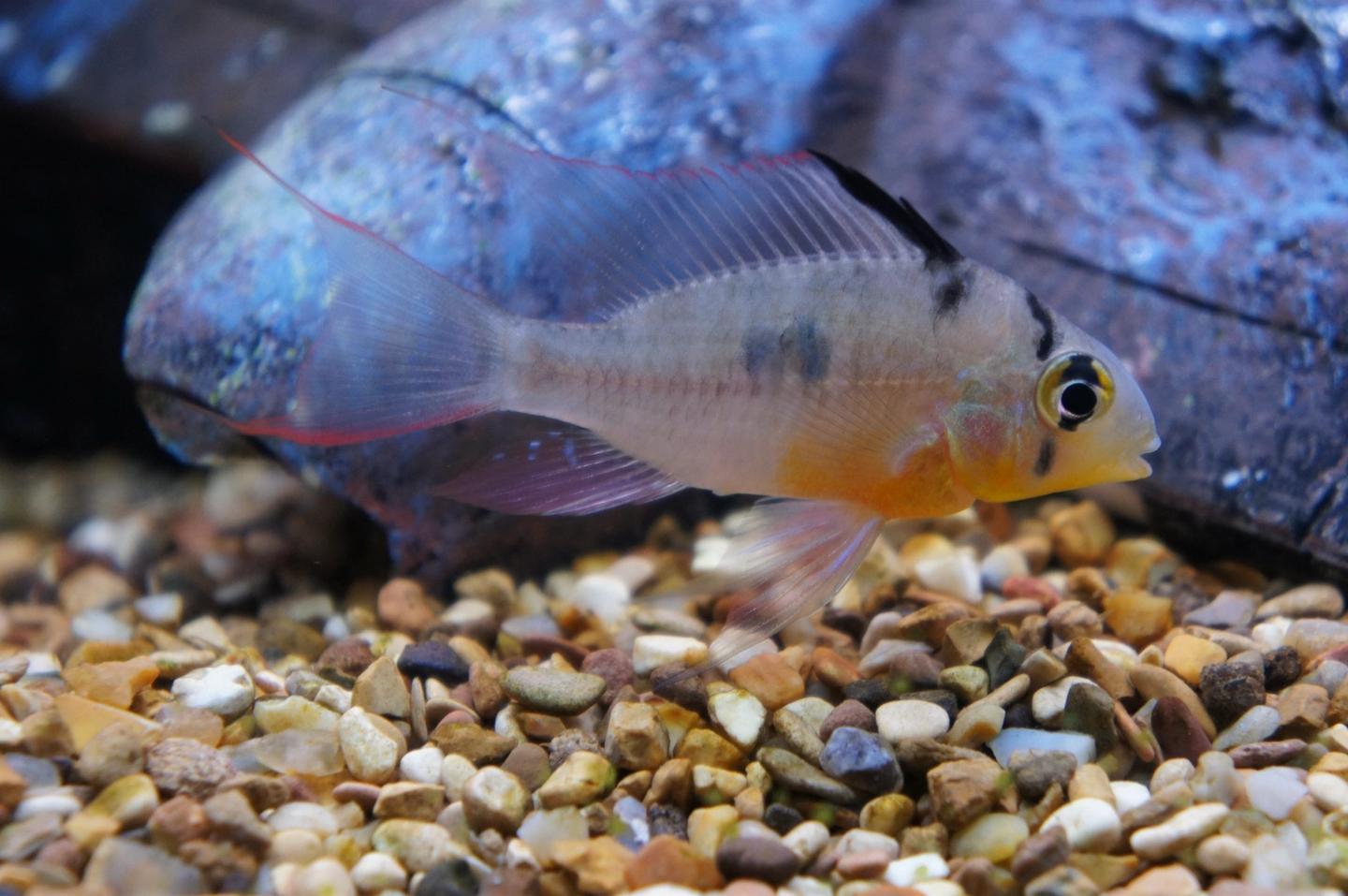
Cichlids are a family of roughly 1,800 accepted species, not one care type. Before buying, identify the exact species and source, then compare adult measurement, usable tank dimensions, social system, territory, tested water, diet and an exit plan. No family-wide minimum tank, water range or tank-mate list is safe.
Maintain these water conditions for optimal health and vibrant colors
The Xanthic Zebra Convict Cichlid is the pale colour form sold under the supplier identity Cichlasoma nigrofasciatum xant. Current scientific references accept the species as Amatitlania nigrofasciata; Cichlasoma nigrofasciatum remains a familiar synonym in the aquarium trade. That naming bridge matters because the fish is still the same assertive Central American cichlid whichever of those two genus names a book, shop list or keeper uses.
One purchase supplies one live fish of the size chosen. The listing has genuine size choices covering 3–4 cm, 4–5 cm, 5–6 cm, 6–7 cm and XL. The size you select is the size supplied, not the adult size. Availability belongs to the live selector and can change; the permanent care copy therefore describes the size choices without claiming that every grade is always available. Sex is guaranteed only when the selected option explicitly states male or female. This Xanthic Zebra Convict Cichlid listing has no sex-guaranteed option. Two fish should therefore never be assumed to be a male and female or an already compatible pair.
This is a fish for someone who enjoys decisive cichlid behaviour and is prepared to build the aquarium around territory. Basic feeding and water care are undemanding, but the species is not a routine community choice. A settled pair can defend a cave and a large area with surprising force, especially once breeding behaviour begins. For that reason Tropical Fish Co assesses the overall care level as intermediate: the water range is forgiving, while the social management demands judgement, spare space and a plan for separating fish if necessary.
Published adult measurements need careful labels. FishBase records a maximum of 10 cm standard length for a male or unsexed fish, while the specialist aquarium profile reports 15 cm standard length. Standard length, or SL, stops at the base of the tail and is not the same as total length. Rather than hiding that difference inside one overconfident “maximum size” card, this guide keeps both records visible and recommends planning around the larger aquarium record.
| Buying or planning question | Practical answer |
|---|---|
| What does one quantity buy? | One live fish of the selected size. |
| Is sex guaranteed? | No. No option on this listing explicitly guarantees male or female. |
| What social plan is safest? | A species-focused aquarium planned around one compatible pair. |
| What is the key risk? | Territorial aggression, particularly during spawning and parental care. |
| What footprint is evidenced? | At least 90 × 30 cm or equivalent for a single pair; substantially more for multiple pairs or other cichlids. |
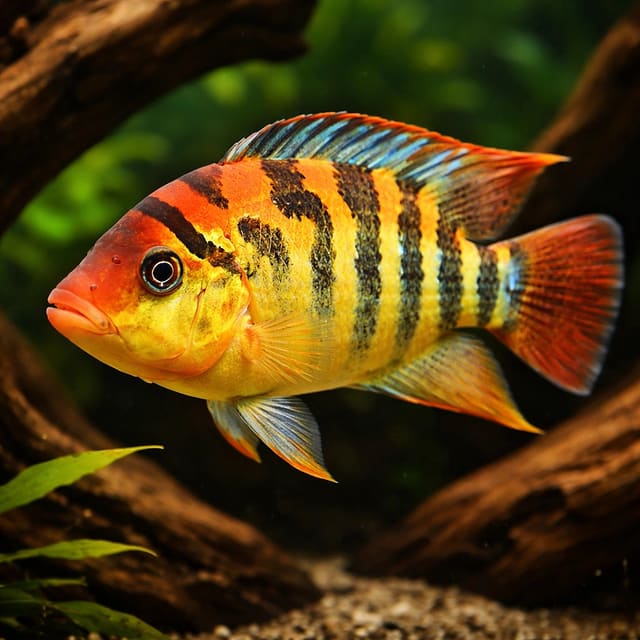
Gallery images have been digitally enhanced to improve image quality. Natural colour, pattern, size and maturity can vary between live animals. The photographs do not guarantee sex, pair formation, exact colour intensity or the appearance of the individual sent.
If you are comparing completely different cichlid routes, the store’s South American cichlid collection is a browsing collection, not a compatibility list for this Central American species. Choose the fish whose adult footprint, water and behaviour fit the aquarium rather than treating the shared word “cichlid” as evidence that two species can live together.
The strongest species-specific aquarium guidance gives base dimensions of 90 × 30 cm or equivalent for a single pair. It does not give a litre figure, so this page does not manufacture one from those dimensions: aquarium height, actual water depth, displacement and shape would make such a conversion misleading. Treat 90 × 30 cm as a lower footprint reference, then choose more floor area where possible. Multiple pairs or a mixed cichlid arrangement require something substantially bigger.
Territory is three-dimensional even though the important planning measure is floor space. Use rockwork, wood, roots and several caves to break long views across the base. Each shelter needs a stable structure that cannot collapse when the fish digs underneath it. Place heavy rocks directly on a secure base before adding loose substrate, or otherwise make them impossible to undermine. A cave at each end and visual barriers through the middle are more useful than one decorative cave that both fish must contest.
A mature aquarium is essential. If this is your first system, follow the first tropical aquarium setup guide before livestock is ordered. A working biological filter turns toxic ammonia into nitrite and then the safer nitrate form; neither ammonia nor nitrite should be accepted as a normal reading. Add fish only after the filter can process waste reliably, because the convict’s reputation for toughness does not make it immune to toxic water.
For routine long-term aquarium care, the specialist species profile recommends 24–28°C, pH 6.0–8.0 and 5–25 dGH. FishBase records 20–36°C, pH 7.0–8.0 and 9–20 dH as environmental values associated with the species, but those observations describe where fish have been recorded rather than a target range to swing through at home. Keep a stable point inside the aquarium guidance and match any companions to the same conditions.
| Water factor | Working guidance |
|---|---|
| Temperature | 24–28°C for routine aquarium care. |
| pH | 6.0–8.0; stable water is more useful than repeatedly adjusting towards a precise midpoint. |
| General hardness | 5–25 dGH in the species aquarium profile. |
| Ammonia and nitrite | Keep both at zero with a mature, correctly maintained biological filter. |
| Nitrate | Control accumulation through sensible stocking, feeding and regular partial water changes. |
Measure your tap water and established aquarium before choosing livestock. The aquarium water chemistry guide explains what the common tests mean, while the water parameter matcher helps compare actual readings with the stated range. Avoid abrupt chemical corrections. A stable pH near one end of the stated range is usually preferable to a daily sequence of additives that makes pH and mineral content rise and fall.
A wide care range does not mean the fish benefits from moving across it. Start with the values of the established aquarium and source water, choose a temperature that can be held reliably through seasonal room changes, and make replacement water similar before it enters the tank. If a reading begins to drift, find the cause first: evaporation, exhausted buffering, a missed water change or an inaccurate test each needs a different response.
Keep a simple record of temperature, pH, hardness and nitrogen-cycle readings. The value of a log is not paperwork; it makes slow change visible before the fish is forced to show distress. Record major maintenance and equipment changes beside the readings. A sudden difference after a new substrate, large wood addition or altered water source can then be traced instead of treated with a random chemical correction.
Choose a filter with enough biological capacity for a solid-bodied cichlid and protect its intake. The species occurs in flowing water as well as warm pools, so it does not require a motionless aquarium; equally, the layout should include calmer places behind wood and rocks. Aim for surface movement and good oxygen exchange without turning every cave entrance into a jet. Check the filter for blockages, follow its service instructions and preserve the mature biological colony whenever maintenance is needed. Confirm that normal flow resumes, that the surface still moves and that no cave has become a stagnant pocket after equipment is returned.
Watch the fish rather than trusting equipment labels alone. Persistent surface breathing, very fast gill movement, loss of appetite or an abrupt change in aggression should prompt an immediate water test and equipment check. Those signs do not diagnose one disease, so avoid guessing at medication. Confirm temperature, ammonia, nitrite and pH first, then seek qualified advice if the fish remains unwell.
Plan access as carefully as décor. Heater guards, filter intakes and cave roofs should be reachable without putting hands into a narrow defended corner. Leave enough clear space to siphon waste and inspect the fish from more than one angle. If a divider may be needed, check that it fits before the aquarium is fully furnished and that water can circulate safely on both sides.
Growth changes both waste output and territorial reach. A juvenile may use only one shelter, while a mature fish can claim most of the base. Review the layout as the fish grows and avoid filling every open area with decorations that remove escape routes. The goal is not emptiness; it is a structured aquarium with usable pathways between secure refuges.
Convict cichlids are active diggers. Fine gravel or sand allows natural moving and sifting, but expect the landscape to change. Rooted plants may be uprooted, particularly near a chosen spawning site. Tough plants attached to wood or rock can be easier to protect than delicate stems planted in the territory, although no planting method is guaranteed once a fish decides to excavate.
Use caves with smooth entrances and enough room for the fish to turn. Wood, roots and rocks provide the cracks and crevices associated with the species’ natural habitat and also give a subordinate fish routes out of sight. Avoid narrow ornaments that can trap a growing cichlid and check every structure after maintenance. A rearranged rock that seems stable to a person may become loose after repeated digging.
The species profile describes this fish as unfussy and recommends variety. FishBase records a broad wild diet including worms, crustaceans, insects, fish and plant matter. That does not require recreating every wild item. In the aquarium, use a reputable, appropriately sized cichlid pellet or granule as a dependable base and rotate suitable frozen, freeze-dried or fresh additions according to the manufacturer’s instructions and the fish’s response.
Feed an amount that is taken promptly. A confident convict may continue begging after it has eaten enough, and its willingness to feed is not evidence that another portion is needed. Uneaten food decomposes into the same nitrogenous waste the filter must process. If food reaches caves and remains there, reduce the portion or change the delivery point. Body shape, activity and consistent appetite are better guides than a rigid scoop used for every fish.
When more than one fish shares the aquarium, spread food across separated areas and confirm that both animals eat. A dominant fish can control the preferred feeding station. Repeated hiding, weight loss or a fish being pinned behind equipment signals a social problem, not merely a need to add more food.
Test water regularly, remove waste from accessible areas and make partial water changes with conditioned replacement water of similar temperature. The OATA American cichlid sheet recommends a weekly 25% partial change as broad group guidance. Actual frequency must respond to the aquarium’s readings, stocking and feeding rather than becoming an excuse to ignore rising waste between calendar dates.
Clean deliberately. Moving every cave and rock at once can erase territorial boundaries and trigger a fresh contest. Siphon sections in rotation where that is practical, inspect hidden waste traps and preserve enough familiar structure for the fish to orient itself. Never sacrifice safety to preserve a layout: an unstable stone or failed filter needs immediate correction.
OATA’s broad American-cichlid guidance emphasises maintaining effective filtration and checking equipment for blockages. Follow the filter manufacturer’s service instructions, work only on the parts that require attention and preserve the established biological colony. Confirm normal flow afterwards and test the aquarium if maintenance was unusually extensive or the fish behave differently.
FishBase records roughly 100–150 eggs and biparental guarding, while the aquarium profile describes the species as readily bred and strongly territorial. These are biology and husbandry observations, not a promise that purchased fish will pair or spawn. The listing has no sex-guaranteed option. Mature males often become larger with extended dorsal and anal fins, while females may show a dorsal spot and stronger colour in spawning condition, but such traits should not be used to promise the sex of a juvenile or unseen supplied fish.
If a pair forms, expect the defended area to expand. Have a divider or separate mature aquarium available before conflict becomes urgent. Do not wait for physical damage to prove that the arrangement has failed. Additional fish may need moving even in an aquarium that appeared peaceful for weeks, because courtship and parental care can change behaviour quickly.
Read the current delivery and Live Arrival Guarantee policy before the parcel is due. Someone must be present to receive live fish. Prepare the aquarium, dim the lights and avoid last-minute water changes that create different temperature or chemistry just before arrival. The policy advises floating the sealed bag for 20–30 minutes before release and not pouring transport water into the aquarium.
The unboxing video is claim evidence, not a fish-care ritual. If a Live Arrival Guarantee claim is needed, record one continuous video showing the parcel still sealed, the outer box, the opening and the fish still inside the sealed bag, then contact Tropical Fish Co the same day with the order number. Once the evidence is secured, keep handling calm and follow the current acclimation directions.
The most useful compatibility fact is also the simplest: the xanthic form retains the convict cichlid’s territorial behaviour. The specialist profile explicitly calls the species a poor community fish and says it is best maintained in a species aquarium. Pale colour does not signal a gentler temperament. Plan the stocking list around that evidence rather than around the softer appearance.
A single compatible pair can use a 90 × 30 cm base as a lower species-specific reference, with ample caves and sight breaks. “Compatible” matters. Two fish of unknown sex may not pair, and two that tolerate each other when young may fight as they mature. Observe access to food, resting sites and open swimming space. A fish that remains hidden, is repeatedly chased or shows damaged fins needs intervention.
The species profile mentions robust Central American cichlids only in a very large aquarium. That sentence should be read as a narrow possibility for experienced keepers, not as a ready-made shopping list. Adult size, sex, individual temperament, territory shape and breeding condition all change the result. An aquarium can meet a nominal volume and still fail if one fish controls every cave or pins another against the glass.
Do not infer compatibility from family name, geographic region or a retailer category. Another cichlid may need the same temperature yet compete for exactly the same bottom territory. Conversely, a fast fish that stays higher in the water may still be harassed whenever it crosses a nest boundary. The correct question is not “Can these species sometimes coexist?” but “Can every fish retreat, feed and rest safely in this exact layout, including during breeding?”
The source packet does not establish a universal list for catfish, shrimp, snails or other invertebrates, so this guide does not promise them as safe companions. If a proposed animal is not covered by species-level evidence, assess it separately rather than converting an old retail claim into a guarantee.
Provide more than one cave and several visual barriers even when the aquarium contains only two convicts. One fish may need to withdraw during courtship or after spawning. Arrange the layout so that leaving a cave does not force it directly into the other fish’s line of sight, and keep equipment accessible so a divider can be installed without dismantling the whole tank.
Territory can shift after a large clean, new decoration or filter change. Recheck behaviour after any layout alteration. Feeding time is especially informative: both fish should approach food without one being repeatedly driven away. If aggression escalates, separation is a responsible management step, not a failure to make the fish “bond”.
| Proposed arrangement | Decision |
|---|---|
| One established pair in a structured species aquarium | The clearest practical plan, with monitoring and separation capacity. |
| Robust Central American cichlids in a very large aquarium | Possible only as an experienced, case-by-case arrangement. |
| Small peaceful community fish | Avoid; this species is not a general community fish. |
| Two unsexed fish assumed to be a pair | Do not assume compatibility or sex from purchase quantity. |
| Several pairs in the minimum footprint | Avoid; multiple pairs need substantially larger quarters. |
Published measurements do not give one simple whole-fish maximum. FishBase records 10 cm standard length for Amatitlania nigrofasciata, while the specialist aquarium profile reports 15 cm standard length. Standard length excludes the tail, so plan the aquarium around the larger published record rather than treating the dispatch size as the adult size.
The species profile gives a base of 90 × 30 cm or equivalent for a single pair and says multiple pairs or other cichlids need substantially more space. Footprint, caves and broken sight lines matter more than a convenient litre number, so those dimensions are kept in their original form rather than estimated as a volume.
Plan around one compatible pair in a dedicated, well-structured aquarium. More than one pair requires a much larger footprint and a contingency plan for serious territorial conflict. This listing does not guarantee sex, so never assume that buying two fish will produce a male and female or an established pair.
Its basic feeding and water care are forgiving, but its aggression is not. Tropical Fish Co therefore assesses the listing as intermediate: a newer keeper can succeed if the aquarium is mature and species-focused, yet it is a poor choice for someone wanting an uncomplicated mixed community.
Offer a varied cichlid diet rather than relying on one food. The species accepts many aquarium foods, while wild records include worms, crustaceans, insects, fish and plant matter. Use an appropriately sized prepared staple with varied suitable additions, feed modestly and remove leftovers before they damage water quality.
For routine aquarium care, use the specialist species range of 24–28°C, pH 6.0–8.0 and 5–25 dGH, then keep conditions stable. FishBase records a broader wild environmental range, but that is not a reason to chase extremes in a home aquarium.
Yes. The species is territorial and aggression can become extreme around spawning and brood defence. Long fins, slow movement or small body size do not mix safely with that behaviour. Space, barriers and caves help define territories, but they do not turn it into a peaceful community fish.
The safest plan is a species-focused aquarium. The specialist profile allows robust Central American cichlids only in a very large tank, and that is a conditional expert arrangement rather than a universal tank-mate list. Ordinary small or peaceful community fish should not be placed in the same territory.
Tropical Fish Co hand-packs live fish in oxygenated bags inside an insulated box, adding a heat pack when conditions call for it, and uses a licensed live-animal courier. Someone must receive the parcel. For a Live Arrival Guarantee claim, record one continuous video from the still-sealed parcel through opening to the fish still sealed in its bag, and contact the team the same day.
FishBase: Amatitlania nigrofasciata supplies the accepted-name bridge, Central American distribution, habitat notes, diet record, breeding observation and the 10 cm SL maximum. Its environmental values describe recorded conditions and are not presented here as a routine aquarium target.
Seriously Fish: Amatitlania nigrofasciata supplies the species-level aquarium range, 15 cm SL record, 90 × 30 cm pair footprint, digging and cave guidance, varied feeding advice and the strong warning that this is not a normal community fish.
OATA’s American cichlid care sheet provides UK group-level context for cycling, testing, feeding, filtration and maintenance. Those broad figures are kept labelled as group guidance rather than used to override the species profile.
RSPCA aquarium environment guidance supports the need for a mature biological filter and explains why ammonia and nitrite control matters.
No reviews for this item yet. Bought one? Honest reviews only, good or bad.
What customers say about ordering from us
I have a small group of long finned mountain minnows. So was delighted to be able to order ten of this variety to increase the genetics in my tank . The ones I recieved are healthy but it’s to early to give a verdict on wether they are of a long finned type since they are small currently.
Gordon Walker · 23 Sept 2026
100% success travel and "installation". Pleased with quality of purchase. The Siamese fighter a bit "shy" so have not yet seen him at his best yet but looking good. Happy customer. GG
George E Garratt · 21 Sept 2026
Reviews of our shop, collected by Judge.me, an independent third-party review collector. Newest first.