−15%
Easy
Electric Blue Acara (Andinoacara pulcher) – Neon Blue, 2–7cm Sizes
22–23°C · pH 6.5–8
£6.79£7.99

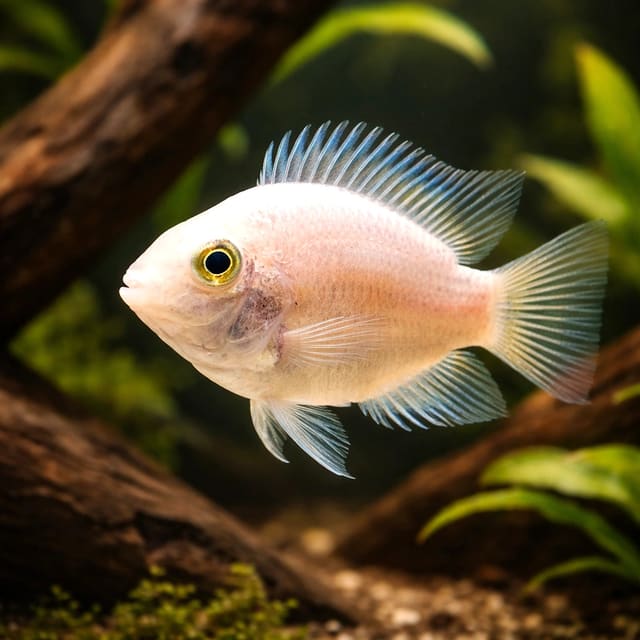
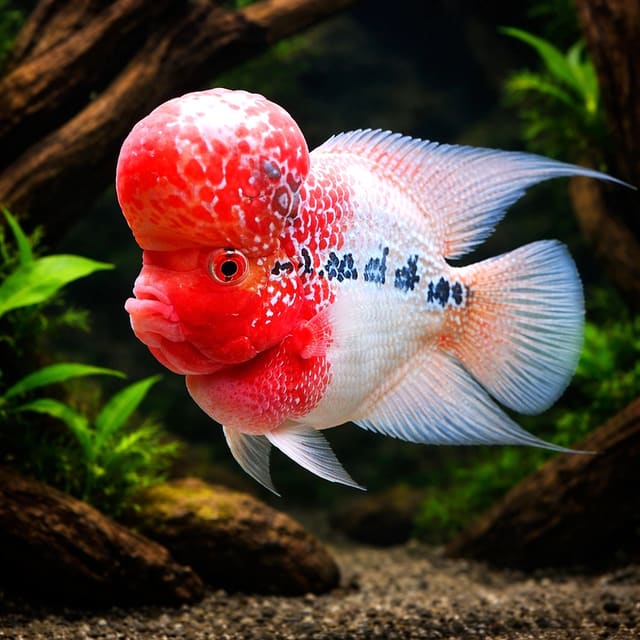
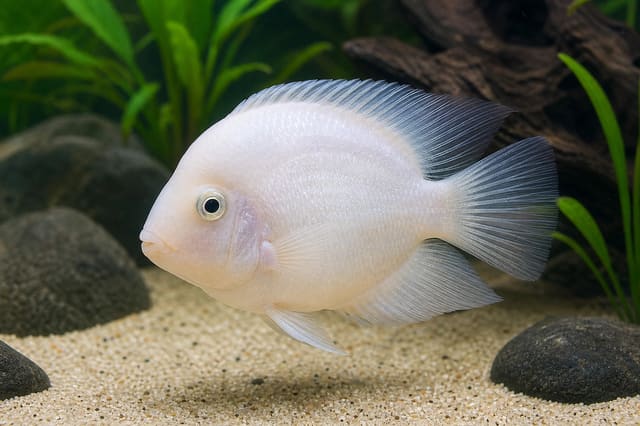
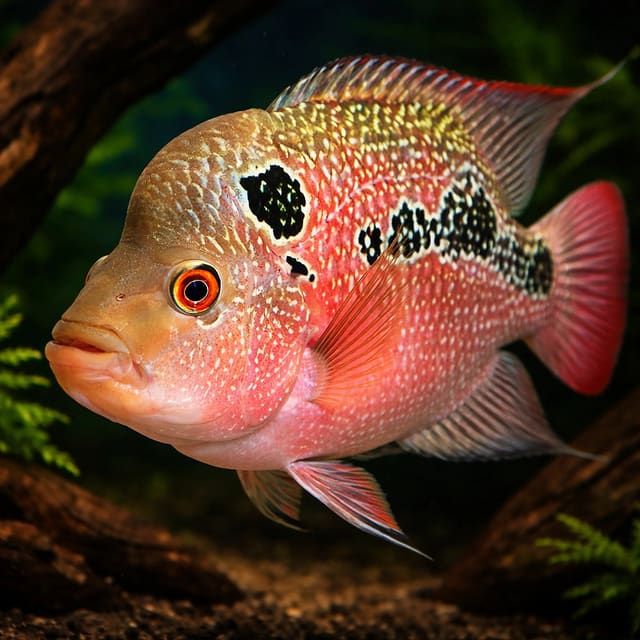
The Yellow Parrot Cichlid (Hybrid parrot cichlid (captive-bred trade form)) is a hybrid cichlid first bred in Taiwan around 1986. It suits intermediate keepers; keep it at 24–28°C and pH 6.5–8.0, while OATA says most American cichlids do better singly or in pairs. Sold individually in 6–7 cm and 7–9 cm sizes.
Hybrid parrot cichlid (captive-bred trade form)
Save when buying multiple fish. Each quantity is one fish; sex and pair formation are not guaranteed unless the selected variant explicitly states them.
The Yellow Parrot Cichlid (Hybrid parrot cichlid (captive-bred trade form)) is a hybrid cichlid first bred in Taiwan around 1986. It suits intermediate keepers; keep it at 24–28°C and pH 6.5–8.0, while OATA says most American cichlids do better singly or in pairs. Sold individually in 6–7 cm and 7–9 cm sizes.

Cichlids are a family of roughly 1,800 accepted species, not one care type. Before buying, identify the exact species and source, then compare adult measurement, usable tank dimensions, social system, territory, tested water, diet and an exit plan. No family-wide minimum tank, water range or tank-mate list is safe.
Maintain these water conditions for optimal health and vibrant colors
The Yellow Parrot Cichlid (Hybrid parrot cichlid (captive-bred trade form)) is a freshwater hybrid cichlid in the family Cichlidae. The blood parrot cichlid hybrid, whose natural colours include yellow, was first bred in Taiwan around 1986, according to the Wikipedia overview of the blood parrot cichlid. This aquarium-bred hybrid has no single wild range to reproduce. It suits an intermediate keeper who can maintain a mature biological filter, stable tropical conditions and carefully screened companions.
The Yellow Parrot Cichlid is a bright, heavy-bodied parrot-type cichlid with a compact mouth. That combination creates a conspicuous centrepiece fish, but it also affects practical decisions. Food must be easy to take, the layout must leave turning and swimming room, and faster companions must not prevent it from feeding. Treat the fish as semi-aggressive rather than as a peaceful shoaling species.
Plan around the fish’s actual growth, body depth and behaviour, and measure it as it develops. Measure it periodically, watch how comfortably it turns around hardscape and review its space before crowding becomes apparent. Its dispatch measurement is only the starting point for that plan.
Keep the aquarium at 24–28°C, pH 6.5–8.0 and general hardness 5–18°dH. Keep ammonia and nitrite at zero, with nitrate no more than 20 mg/l above the normal tap-water level. Follow OATA’s American-cichlid sheet for the ammonia, nitrite and nitrate limits and the weekly maintenance routine.
Use an aquarium that is as large as practical, with a mature filter and room to separate feeding and territorial areas. OATA recommends at least 120 litres for a pair of the smaller American cichlid species and at least 300 litres for the larger or more aggressive species. Set up the aquarium before the fish arrives, as large as you can reasonably provide, and do not size it from the 6–9 cm dispatch size.
| Suits | Not suited to |
|---|---|
| An intermediate keeper prepared to test water every week | An unfiltered or immature aquarium |
| A spacious tropical setup with stable 24–28°C water | A permanent home chosen only from the dispatch size |
| Single-fish or pair planning with behaviour monitored | A peaceful shoal planned without individual screening |
| Robust companions that leave it feeding access | Tiny fish, shrimp or delicate slow feeders |
| A layout with open swimming room and secure cover | Crowded hardscape with no way to separate territories |
Choose it if you already have some fishkeeping experience: the weekly routine is straightforward, but growth, waste, feeding access and variable cichlid temperament all need more planning than a small peaceful community fish.
One purchase supplies one Yellow Parrot Cichlid. Choose 6–7 cm or 7–9 cm to suit your prepared aquarium and its existing inhabitants. The size you select is the size supplied, not the adult size. Continue reviewing swimming room, filtration load and compatibility as the fish grows.
Choose the size for your aquarium, not to select sex, age or temperament. Compare the selected fish’s body depth with gaps in the hardscape, confirm it can reach suitable food, and assess whether established fish control the feeding area. Make those checks whichever size you choose.
Sex is guaranteed only when the selected option explicitly states male or female. This Yellow Parrot Cichlid listing has no sex-guaranteed option.
This is a hybrid rather than a wild species, so the care advice here follows its parent group. Follow the water, maintenance and companion steps below, allowing for its compact mouth and semi-aggressive temperament.
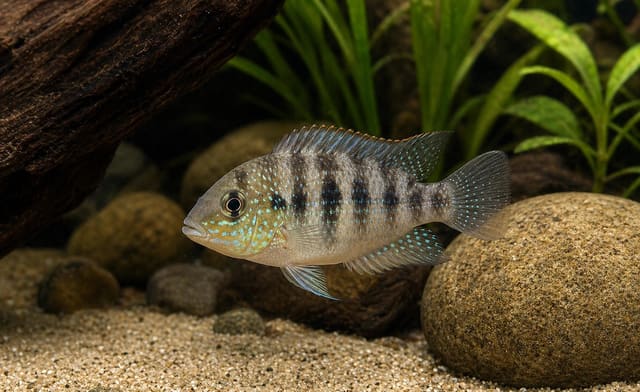
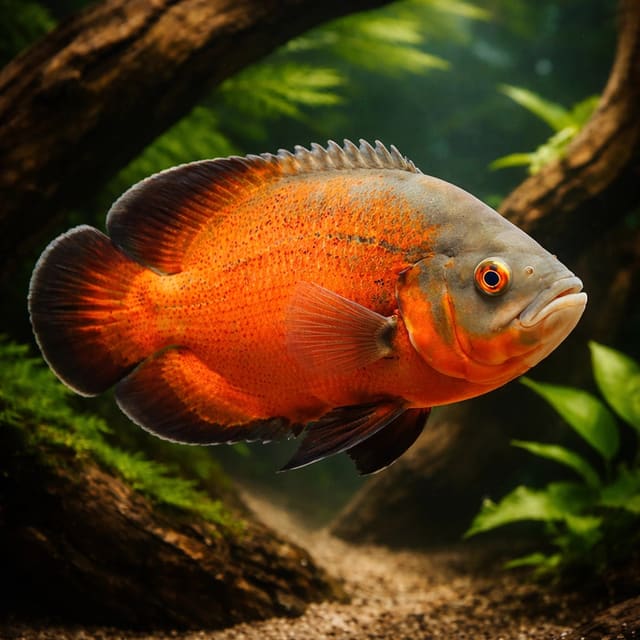
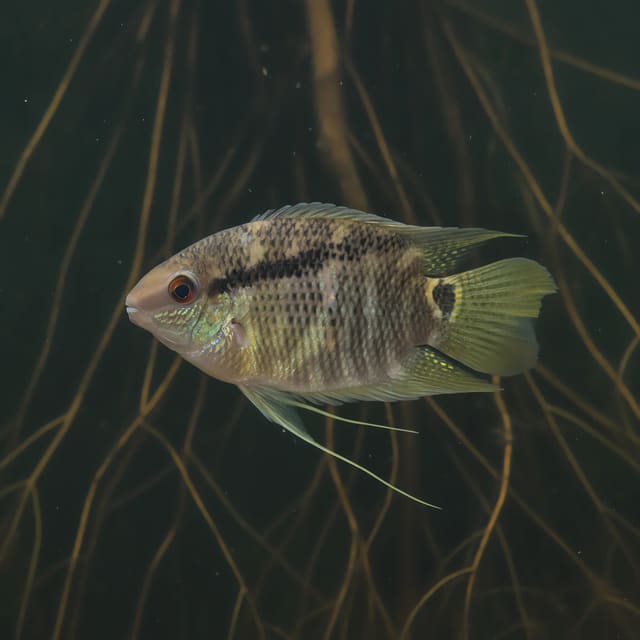
Some gallery images have been digitally enhanced to improve image quality. They show the listed type of animal rather than guaranteeing the exact markings of the individual supplied, so natural colour and pattern can vary. The gallery can help with recognising the general body form and colour presentation, but it should not be used to infer sex, age or the character of an individual fish.
Keep temperature within 24–28°C, pH within 6.5–8.0 and general hardness within 5–18°dH. For carbonate hardness, OATA’s general guide for American cichlids is 3–10°dKH. Aim for consistency inside those ranges rather than moving the aquarium repeatedly from one edge to the other.
| Measurement | Action |
|---|---|
| Temperature | Maintain 24–28°C and check replacement water before it enters the aquarium. |
| pH | Keep it stable between 6.5 and 8.0. |
| General hardness | Keep it within 5–18°dH. |
| Carbonate hardness | Aim for 3–10°dKH, the general guide for American cichlids. |
| Ammonia and nitrite | Maintain zero mg/l. |
| Nitrate | Do not let it rise more than 20 mg/l above the normal tap-water level. |
Test at least once a week and test again when behaviour, breathing, appetite or colour changes. A result outside the target tells you which correction is needed; appearance alone cannot distinguish a water problem from competition or illness. Record results so gradual changes are visible before they become abrupt.
Treat replacement tap water with a conditioner that removes chlorine or chloramine before adding it. Keep the new water close to the aquarium’s established conditions, then make controlled changes rather than chasing a number with repeated large adjustments.
Use our water chemistry guide to understand each measurement, then enter your readings in the water matcher. A useful weekly decision is simple: if ammonia or nitrite is detectable, stop adding livestock, reduce the immediate waste load and restore safe biological filtration; if nitrate is climbing, review feeding, stocking and the maintenance interval.
Choose the largest practical aquarium and leave broad swimming room through the front and middle. Keep cover around the sides or back so fish can move out of direct view without being trapped. The Yellow Parrot Cichlid’s deep body makes usable width and uncluttered turning space as important as the litre capacity.
OATA recommends at least 120 litres for a pair of the smaller American cichlid species and at least 300 litres for the larger or more aggressive species. Decide the aquarium size before the fish arrives, not after it has grown. If the fish becomes bulky or aggressive, move to the 300-litre benchmark before adding companions.
A mature aquarium means the biological filter is already processing fish waste reliably; it does not mean old water. Prepare the system and confirm zero ammonia and nitrite before the fish arrives. If this is your first livestock aquarium, follow the first tropical tank guide before ordering.
Reassess the layout whenever the fish begins scraping through a narrow gap, cannot turn cleanly, loses access to a retreat or is repeatedly confronted at one boundary. Remove the bottleneck or create another route instead of adding more decorative clutter.
Run a well-established filter continuously. The RSPCA’s aquarium welfare guidance explains that biological filtration supports bacteria which convert toxic ammonia to nitrite and then to the safer nitrate. A filter is therefore essential waste-processing equipment, not just a way to make the water look clear.
At least once every week, perform a partial water change of 25%. Use a siphon to lift solid waste from accessible substrate while preserving stable areas for the fish.
Avoid replacing or aggressively cleaning all established media together. Chlorine or chloramine can kill the beneficial bacteria living in it, while excessive cleaning reduces the population available to process waste. If flow falls, clear the blockage while preserving as much mature media as possible.
Use the weekly result to adjust the routine. Rising nitrate or trapped food calls for closer substrate cleaning and a feeding review. Detectable ammonia or nitrite requires immediate attention to filtration, waste and stocking. A clear-looking aquarium can still contain harmful dissolved waste, so visual clarity never replaces testing.
Use appropriately sized cichlid pellets or granules as the regular food, supplemented with suitable frozen or freeze-dried items. OATA describes American cichlids generally as omnivorous fish that often prefer meaty foods. Frozen bloodworm and brine shrimp make suitable supplements.
Feed once a day and offer only what the fish can eat within a few minutes. That limit controls the amount entering the aquarium and makes it easier to see whether the Yellow Parrot Cichlid is swallowing food or losing it to another fish. Remove leftovers before they break down into additional waste.
| What you see | What to do |
|---|---|
| Food is taken and swallowed promptly | Keep the same particle size and controlled portion. |
| Food is repeatedly picked up and dropped | Try a smaller or softer piece before increasing the amount. |
| A faster fish takes every piece | Spread the ration across separate feeding areas and reassess compatibility. |
| Food remains after a few minutes | Remove it and reduce the next portion. |
| Interest in food falls | Test the water and check breathing, appearance and tank-mate pressure. |
Watch each meal, because the compact mouth can make some foods hard to take. Do not assume that repeated mouthing means the fish has eaten successfully. Choose particles it can grip and swallow, and avoid relying on large, hard foods that are repeatedly discarded.
Overfeeding can leave excess faeces and uneaten food that releases toxic waste as it decomposes. A larger single meal is not a substitute for a suitable daily portion. Keep the diet varied, but change one feeding variable at a time so you can tell whether size, texture or competition solved the problem.
Prepare the mature aquarium before receiving the parcel: confirm the heater and filter are operating, ammonia and nitrite are zero, and the water sits within the planned range. Someone must be present to receive live fish, so the parcel is not left unattended.
Follow the Tropical Fish Co delivery and Live Arrival Guarantee policy in this order:
After release, judge the fish by balance, breathing and swimming behaviour before focusing on colour or appetite. At the next normal daily feed, offer a small amount that can be eaten within a few minutes. Confirm that the fish swallows it and that established companions do not take the entire ration.
Add no further livestock while the filter and the fish are adjusting to the increased waste and feeding. OATA warns that increasing stocking too quickly can cause new tank syndrome when the biological filter cannot process the added load.
Check the fish briefly at every feed. A healthy fish should have clear, bright eyes, intact scales, undamaged fins, appropriate swimming and an interest in food. Learn its normal routine so a change in movement, breathing or appetite becomes useful information rather than a vague impression.
| Change | First check |
|---|---|
| Hanging at the surface, sitting on the bottom or erratic swimming | Test ammonia, nitrite, temperature and the filter’s operation. |
| Faster or slower gill movement | Check water quality and compare with the fish’s normal breathing. |
| Darker or paler colour | Review water readings, hiding and recent aggression. |
| More aggression or hiding | Check sight lines, retreat access and competition at feeding. |
| White spots, fluffy growths, ulcers, bumps or lost scales | Record the appearance and test water before choosing the next response. |
| Weight change or reduced feeding | Watch one complete meal and confirm food is swallowed. |
Start with water testing because even small amounts of ammonia or nitrite can stress American cichlids. Correct the measurable cause and inspect the filter before assuming the problem is purely behavioural. If the readings are safe, observe whether another fish controls the open water, retreat or feeding area.
Repeated food loss has a distinct first response: reduce particle size or use a softer suitable food. Torn fins or constant cornering point towards a compatibility or layout problem. Separate fish when one cannot feed, rest or move through the aquarium without repeated pressure.
Do not change several variables together unless immediate welfare requires it. A written note of water readings, appetite, breathing and visible changes gives a clearer basis for further guidance and shows whether the first correction worked.
Add fish gradually rather than filling the aquarium in one step. Every new fish and every increase in feeding creates more waste, while the beneficial bacterial population needs time to increase. Too many additions in a short period can leave the filter unable to process ammonia and nitrite.
If ammonia or nitrite appears after an addition, stop increasing the population and restore safe filtration and water quality. If readings remain safe but one fish loses feeding access, the problem is compatibility or layout rather than biological capacity alone. More filtration cannot create social space.
Use the first month to establish a repeatable pattern: daily controlled feeding, observation at each meal, weekly testing, a 25% partial water change at least once a week, substrate siphoning and filter checks. Record the fish’s length periodically without treating any single measurement as its final size.
A stable routine makes later decisions easier. When appetite, water readings and interactions remain consistent, you have a baseline. When one changes, compare it with that baseline and act on the specific difference rather than rebuilding the whole aquarium.
Treat the Yellow Parrot Cichlid as a semi-aggressive fish whose compatibility depends on space, individual behaviour and feeding access. OATA notes that American cichlids vary in temperament and some may be very aggressive, while calmer species such as angelfish and severums can be mixed in a robust community aquarium with larger shoaling species.
Screen every proposed companion individually before combining it with this hybrid. Screen candidates by their adult space requirement, temperament, feeding speed and water needs. A companion must be able to reach food and retreat without being trapped, while the Yellow Parrot Cichlid must not be continually outcompeted because of its compact mouth.
| Decision | Rule |
|---|---|
| Potential match | Robust, appropriately sized fish that share the water range and leave each other feeding and retreat access. |
| Use caution | Other cichlids, including aggressive individuals or fish that compete directly for the same territory. |
| Avoid | Tiny fish, shrimp and delicate slow feeders. |
| Reject the match | Any pairing that causes constant cornering, repeated fin damage or loss of feeding access. |
A larger aquarium can improve the number of usable routes and retreat areas, but volume alone cannot make incompatible behaviour safe. Similar body length alone does not make a good match. Compare confidence, feeding method and each fish’s use of the tank.
Use one compatibility assessment before purchase and another after introduction. Describe the aquarium volume, water values, established animals and their behaviour when you ask us for help screening a proposed combination. Browse the South American cichlid collection for alternatives, and screen any fish from it individually before combining it with this one.
Prepare more than one usable route between open water, cover and food before introducing the fish. Break long sight lines with secure hardscape, but preserve enough width for the deep-bodied fish to turn. Check that no cave or gap becomes a dead end where another fish can block the exit.
Watch the first complete feeding session and the periods immediately before and after it. A workable match lets each fish take food, move away and resume normal swimming. Repeated pursuit, cornering, torn fins, surface hanging or refusal to leave cover means the arrangement needs intervention.
OATA states that the more aggressive American cichlids must be kept either alone or with equally aggressive cichlids. If you keep this fish with other aggressive cichlids, give each enough territory and be ready to separate them.
Group planning also needs restraint. OATA says most American cichlids do better singly or in pairs, while some species have different social needs. For this hybrid, begin with the individual fish or a carefully assessed pair rather than assuming that several similar-looking parrot cichlids form a peaceful group.
You will receive the selected 6–7 cm or 7–9 cm dispatch size. The selected size is the size supplied, not an adult size.
Choose the largest mature aquarium you can reasonably provide, set up before the fish arrives. For American cichlids, OATA recommends at least 120 litres for a pair of the smaller species and at least 300 litres for the larger or more aggressive species.
Plan for one fish or a carefully assessed pair. OATA says most American cichlids do better singly or in pairs, but monitor feeding access, territorial pressure and the space needed as each fish grows.
It is better suited to keepers with some aquarium experience. Weekly testing and maintenance are straightforward, but its growth, waste load, compact-mouth feeding and semi-aggressive temperament require careful aquarium and companion planning.
Feed appropriately sized cichlid pellets or granules with suitable frozen or freeze-dried foods. OATA recommends one daily portion that can be eaten within a few minutes; supplement with frozen bloodworm or brine shrimp.
Keep it at 24–28°C, pH 6.5–8.0 and general hardness of 5–18°dH. Keep ammonia and nitrite at zero and nitrate no more than 20 mg/l above the normal tap-water level.
Treat it as semi-aggressive and watch interactions rather than assuming a fixed response. Repeated chasing, cornering, fin damage, hiding or loss of feeding access means the pairing or layout must change.
Consider robust, appropriately sized fish with matching water needs and compatible feeding behaviour. OATA says some calmer American cichlids can share robust communities with larger shoaling fish; avoid tiny fish, shrimp and delicate slow feeders.
It is hand-packed with pure oxygen in an insulated box, with a heat pack when the weather calls for it. Receive the parcel in person, film the sealed parcel being opened with the fish still in the bag, and float the bag for 20–30 minutes before releasing.
No reviews for this item yet. Bought one? Honest reviews only, good or bad.
What customers say about ordering from us
I have a small group of long finned mountain minnows. So was delighted to be able to order ten of this variety to increase the genetics in my tank . The ones I recieved are healthy but it’s to early to give a verdict on wether they are of a long finned type since they are small currently.
Gordon Walker · 23 Sept 2026
100% success travel and "installation". Pleased with quality of purchase. The Siamese fighter a bit "shy" so have not yet seen him at his best yet but looking good. Happy customer. GG
George E Garratt · 21 Sept 2026
Reviews of our shop, collected by Judge.me, an independent third-party review collector. Newest first.