Moderate
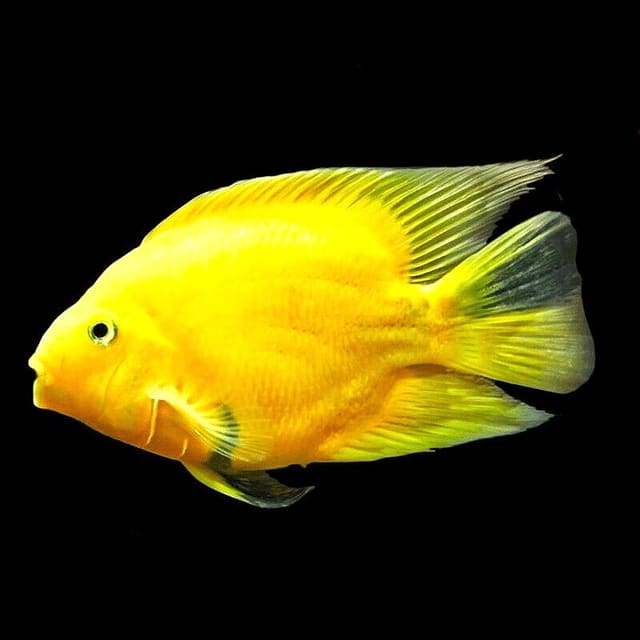
Yellow Parrot Cichlid (Hybrid Parrot Cichlid)
24–28°C · pH 6.5–8
£40.99
Hybrid Blue Tiger Parrot trade cichlid: one unsexed fish of the selected grade. Current 3–4, 4–5, 4–6 cm and XL options; no exact XL band. Plan mature stable water, retreats and space for growth; parentage unconfirmed.
Hybrid Blue Tiger Parrot (trade hybrid)
Save when buying multiple fish. Each quantity is one fish; sex and pair formation are not guaranteed unless the selected variant explicitly states them.
Hybrid Blue Tiger Parrot trade cichlid: one unsexed fish of the selected grade. Current 3–4, 4–5, 4–6 cm and XL options; no exact XL band. Plan mature stable water, retreats and space for growth; parentage unconfirmed.

Cichlids are a family of roughly 1,800 accepted species, not one care type. Before buying, identify the exact species and source, then compare adult measurement, usable tank dimensions, social system, territory, tested water, diet and an exit plan. No family-wide minimum tank, water range or tank-mate list is safe.
Maintain these water conditions for optimal health and vibrant colors
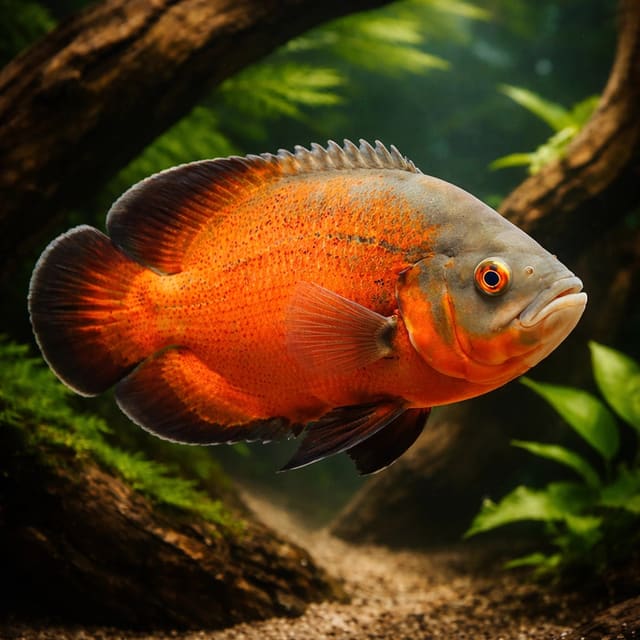
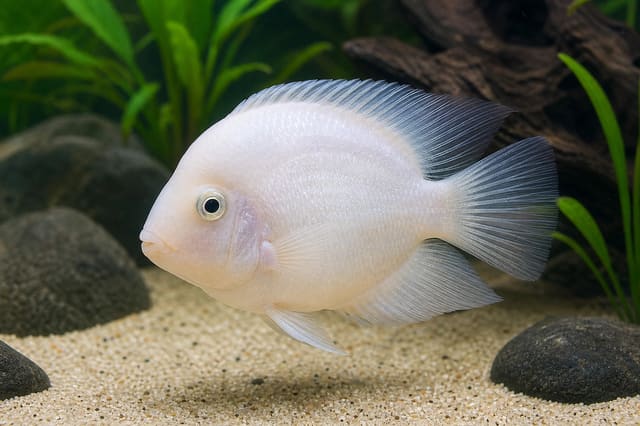
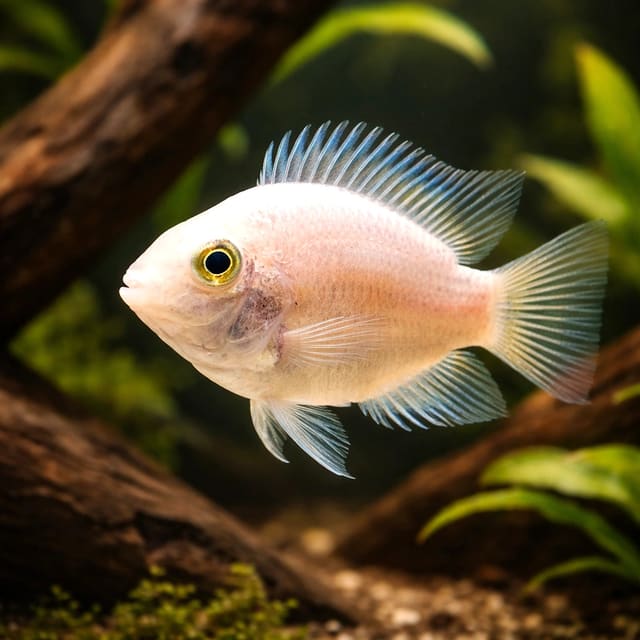
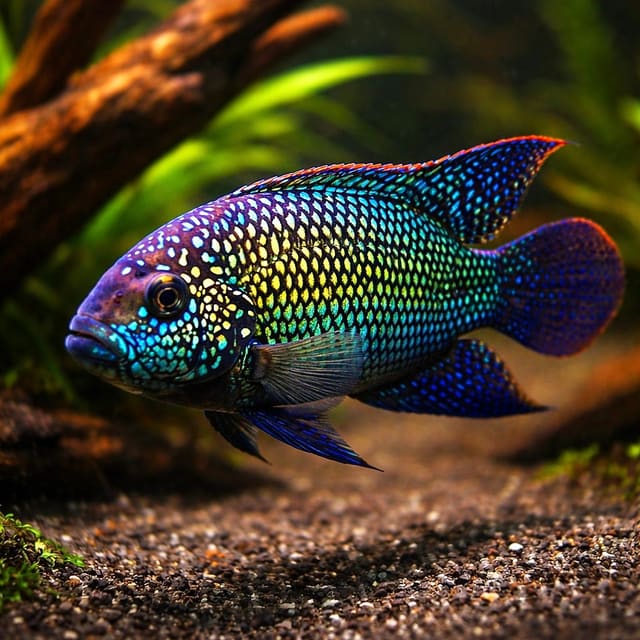
Hybrid Blue Tiger Parrot is the supplier’s ornamental cichlid trade identity, not an accepted scientific binomial. The exact cross, breeder, parentage and genetic lineage are not established by that label. Current options are 3–4 cm, 4–5 cm, 4–6 cm and XL; XL has no exact centimetre band stated. Each quantity is one unsexed fish of the selected grade, not a sexed or bonded pair. Supplier grades are approximate, not measurements of each individual.
Plan a mature, well-filtered aquarium with stable water, swimming space and retreats. Colour, body proportions, temperament and growth can vary; do not buy a juvenile assuming an exact adult size or a permanent peaceful disposition. Observe the individual’s feeding, swimming and territorial behaviour and be prepared to separate incompatible fish.
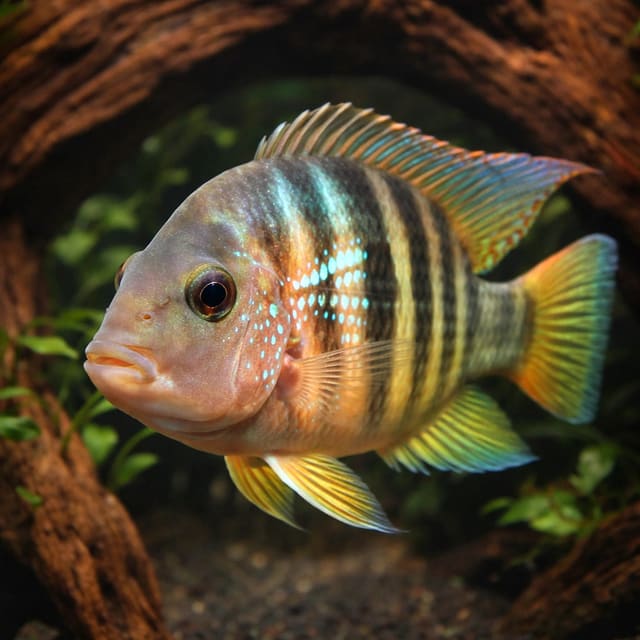
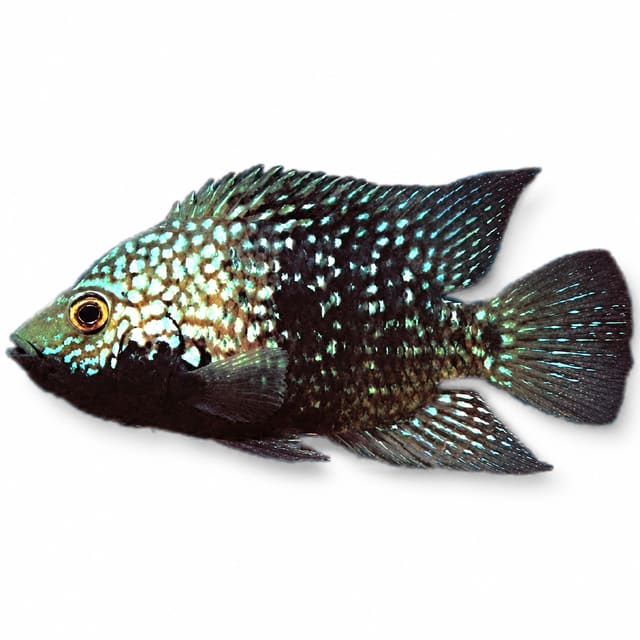
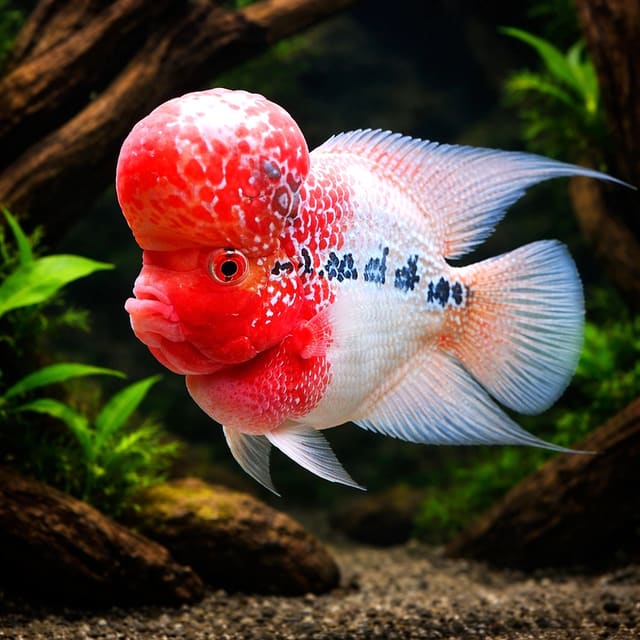
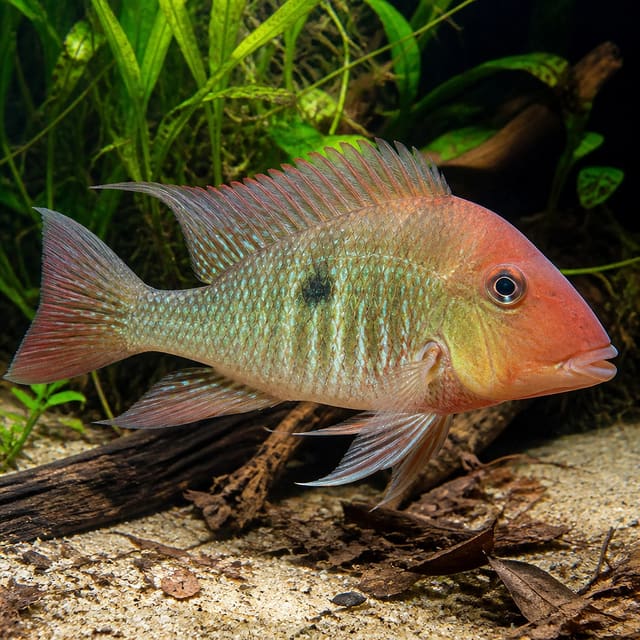
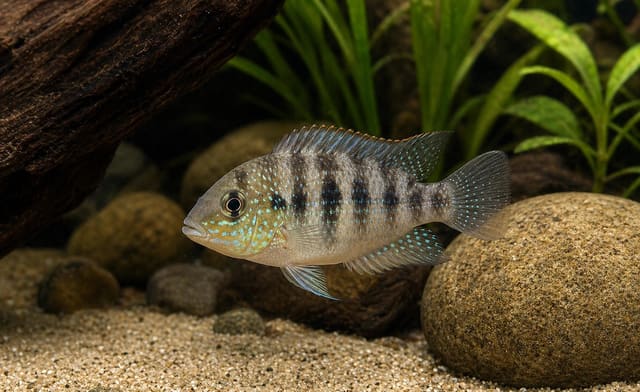
The gallery is representative, not a guarantee of the fish supplied. It does not certify sex, individual measurements, parentage or capture provenance. Read the current delivery and live-arrival terms before ordering, including receiving requirements and any guarantee conditions.
| Attribute | Details |
|---|---|
| Trade identity | Hybrid Blue Tiger Parrot — exact parentage unverified |
| Common name | Blue Tiger Parrot Cichlid |
| Care level | Moderate |
| Temperament | Semi-aggressive |
| Adult size | No source-confirmed adult maximum for this trade form; plan for growth and reassess space |
| Minimum tank size | Existing retailer planning baseline of 200 litres; footprint, individual growth and stocking can require more |
| Temperature | 24–28°C — provisional retailer guidance, not measured holding conditions |
| pH | pH 6.5–7.5 — provisional retailer guidance |
| Diet | Omnivore |
| Lifespan | No source-confirmed lifespan for this trade form; prepare for a long-term commitment |
| Tank region | Middle |
The supplier lists this fish as “Hybrid / blue tiger parrot”, without parentage, locality or breeder details. No natural-range or particular Central American cross is claimed here. The site’s Hybrid shopping category is a catalogue route, not proof of biological origin.
Focus on practical welfare rather than inventing a wild habitat: mature filtration, clean oxygenated water, stable decor and space to retreat and feed. The cichlid care guide covers broad preparation; it does not establish a tolerance range or lineage for this trade form.
Do not choose permanent housing from the dispatch grade. The existing 200-litre recommendation is a retailer planning baseline for one fish, not a verified universal minimum or proof that any mixed community will fit. Check tank length, floor area, retreats and adult companions, and allow for growth or an upgrade. Maintain effective filtration for the actual feeding and stocking load.
Use a soft sand or smooth fine gravel substrate to protect the fish’s mouth and underside. Decor should include caves, rock piles and driftwood to create visual barriers and reduce territorial disputes. Leave open swimming areas in the centre and front of the tank. Live plants can be used, but choose hardy species and protect roots, as cichlids may dig or rearrange the layout.
Maintain stable water with measured partial water changes. The existing 24–28°C and pH 6.5–7.5 values are provisional retailer husbandry guidance, not supplier care data or recent holding measurements. Ask about holding conditions and acclimate gradually; do not force abrupt chemistry changes to chase a number. Monitor ammonia, nitrite, oxygenation and feeding response.
As this is a live fish, ensure your aquarium is fully cycled before introduction. Acclimate slowly on arrival and allow the fish to settle in a quiet environment with subdued lighting for the first day or two.
Offer suitably sized complete cichlid pellets as the feeding foundation, with appropriate frozen or live items and vegetable-containing foods for variety where accepted. Observe actual swallowing and body condition rather than assuming the trade label establishes a natural diet. Remove persistent leftovers.
Offer modest portions while observing feeding, and adjust to appetite, competition and waste. Choose food the individual can grasp and swallow comfortably. Do not assume every fish has the same mouth function from the “parrot” label, and seek qualified advice if swimming or feeding becomes persistently impaired.
Compatibility depends on the individual, layout, food access and exact companions’ long-term needs. There is no universally safe list of rainbowfish, silver dollars, plecs, barbs or cichlids. Assess adult size, water, diet and territorial behaviour; generic group names are not a stocking plan. Provide several retreats and keep a separation option ready.
Avoid tiny fish that may be bullied or eaten, as well as very passive species that cannot compete at feeding time. Fin-nippers and highly aggressive cichlids are also poor choices. In mixed cichlid tanks, provide plenty of space and cover to reduce territorial behaviour. As with all hybrid cichlids, individual temperament can vary, so observe interactions carefully after introduction.
Before ordering, confirm the cycle, water results, available space, suitable food and receiving arrangements. The live selector shows current grades, price and stock. Read the published delivery and live-arrival conditions; this guide does not promise a particular delivery speed or unconditional outcome.
Treat the fish as a long-term responsibility, with a plan for growth, changing behaviour and any upgrade or safe rehoming. Recheck the aquarium if appetite, swimming or social interactions change instead of relying on a trade-name care estimate.
No reviews for this item yet. Bought one? Honest reviews only, good or bad.
What customers say about ordering from us
Easy website plenty of info on fish your buying great to pick a time slot
TRACEY DURRANT · 7 Oct 2026
Got some lovely fish thank you
Kevin Mackie · 7 Oct 2026
Reviews of our shop, collected by Judge.me, an independent third-party review collector. Newest first.