Cichlasoma flowerhorn
22–27°C · pH 6.5–8
£24.99
The Astronotus ocellatus mix (Astronotus ocellatus) is an Oscar cichlid from the western Amazon and Orinoco basins that reaches 45.7 cm. It suits a keeper prepared for one adult in approximately 540 litres with a 150 × 60 cm base; the overlap of Seriously Fish and OATA guidance is 22–27°C, pH 6.5–7.5 and 5–12 dGH. Sold individually as one live fish.
Adult size is the maximum length this species reaches at full maturity (scientific sources). The livestock you receive will be younger and smaller. Product-photo provenance and any image-specific limitations are stated on the listing.
Astronotus ocellatus
The Astronotus ocellatus mix (Astronotus ocellatus) is an Oscar cichlid from the western Amazon and Orinoco basins that reaches 45.7 cm. It suits a keeper prepared for one adult in approximately 540 litres with a 150 × 60 cm base; the overlap of Seriously Fish and OATA guidance is 22–27°C, pH 6.5–7.5 and 5–12 dGH. Sold individually as one live fish.
Adult size is the maximum length this species reaches at full maturity (scientific sources). The livestock you receive will be younger and smaller. Product-photo provenance and any image-specific limitations are stated on the listing.

Cichlids are a family of roughly 1,800 accepted species, not one care type. Before buying, identify the exact species and source, then compare adult measurement, usable tank dimensions, social system, territory, tested water, diet and an exit plan. No family-wide minimum tank, water range or tank-mate list is safe.
Maintain these water conditions for optimal health and vibrant colors
Astronotus ocellatus mix is an Oscar, a large freshwater cichlid from the western Amazon and Orinoco basins of South America that reaches a maximum recorded 45.7 cm total length. It suits a keeper prepared to devote substantial floor space, filtration capacity and weekly maintenance to one powerful, predatory fish. Its scale makes it a planned centrepiece rather than a routine addition to a mixed community.
FishBase records Astronotus ocellatus in the cichlid family and gives a maximum recorded length of 45.7 cm total length. It also reports 40 cm elsewhere in the account. Seriously Fish gives 35 cm standard length in its aquarium profile. Use the 45.7 cm FishBase figure when checking whether the aquarium, turning space and equipment layout remain practical.
In nature, FishBase places the species in quiet, shallow waters of the western Amazon and Orinoco basins, including mud- and sand-bottomed canals and ponds. Wild food includes small fish, crayfish, worms and insect larvae. That background explains the need for a substantial aquarium, a soft substrate and careful screening of anything small enough to be treated as prey. It does not identify the origin of the animal offered here.
If those commitments fit your plans, you can also browse our South American cichlid collection while comparing the space and care needs of other large cichlids.
One purchase supplies one live fish. The permanent aquarium must be planned around the adult measurements from the outset.
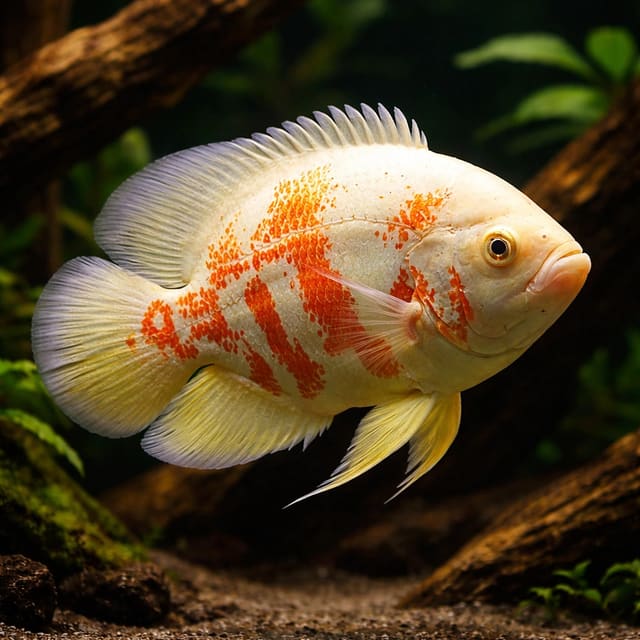
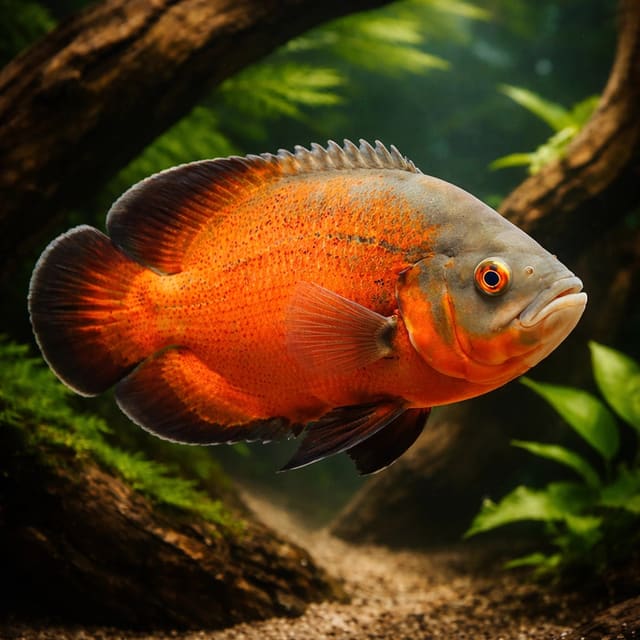
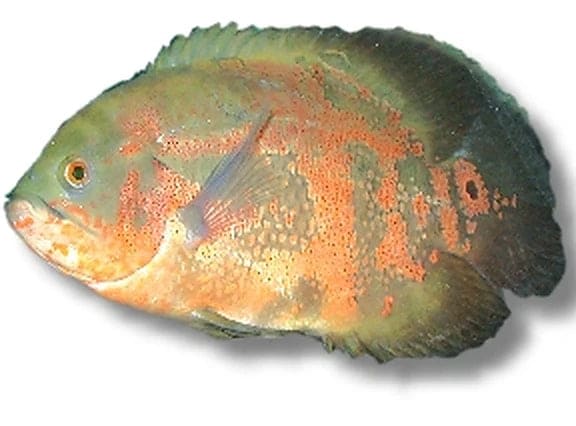
The word “mix” belongs to the offer name, while the animal is identified as Astronotus ocellatus, commonly called the Oscar. Ornamental Oscars occur in numerous forms, but colour or markings must not be used to infer sex, life stage or origin.
Sex is guaranteed only when the selected option explicitly states male or female. This Astronotus ocellatus mix listing has no sex-guaranteed option.
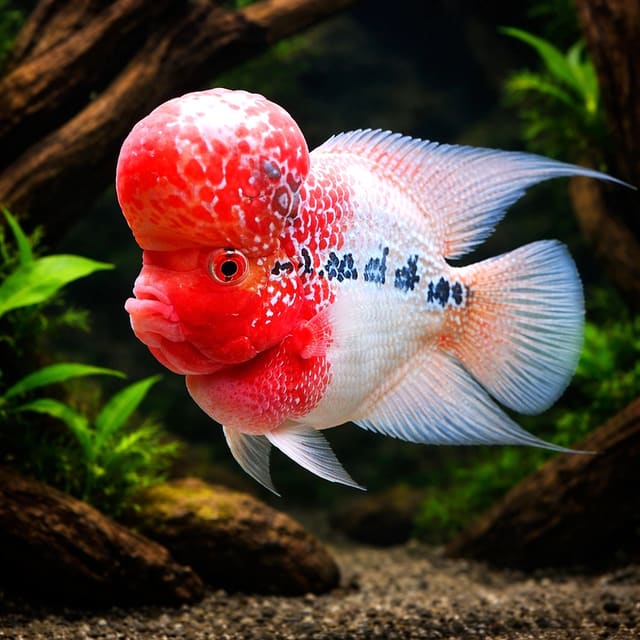
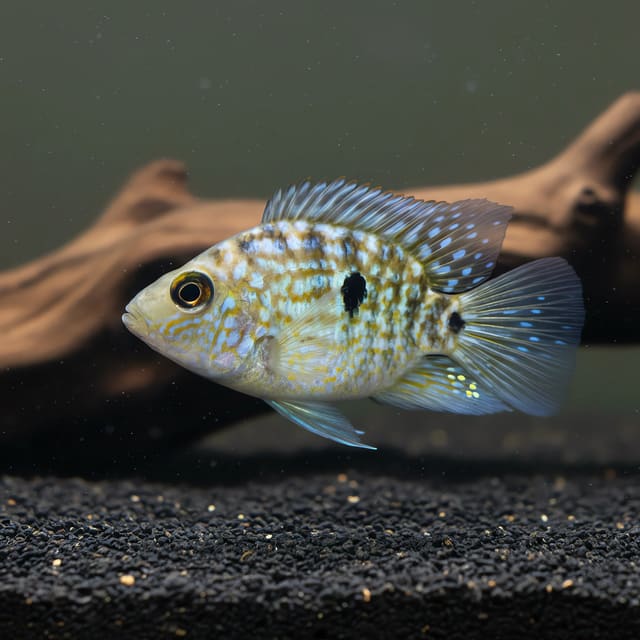
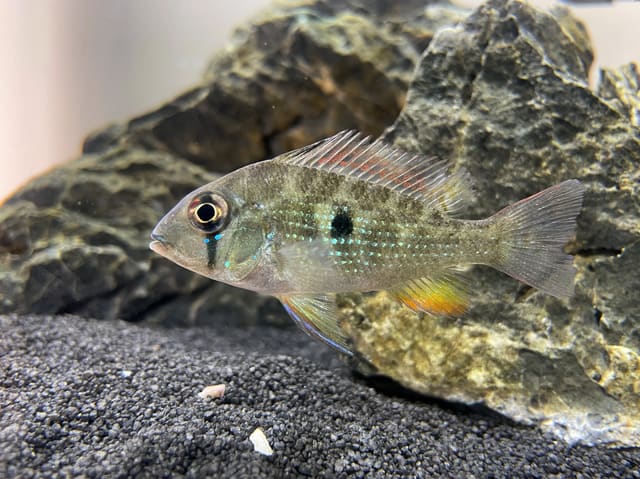
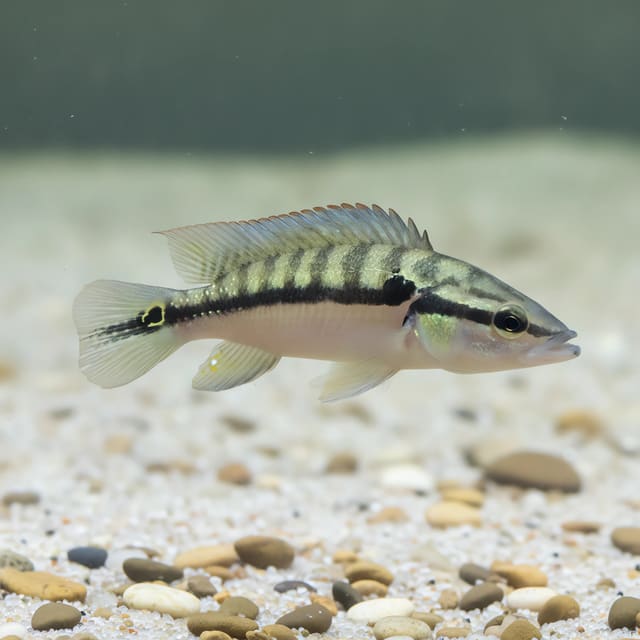
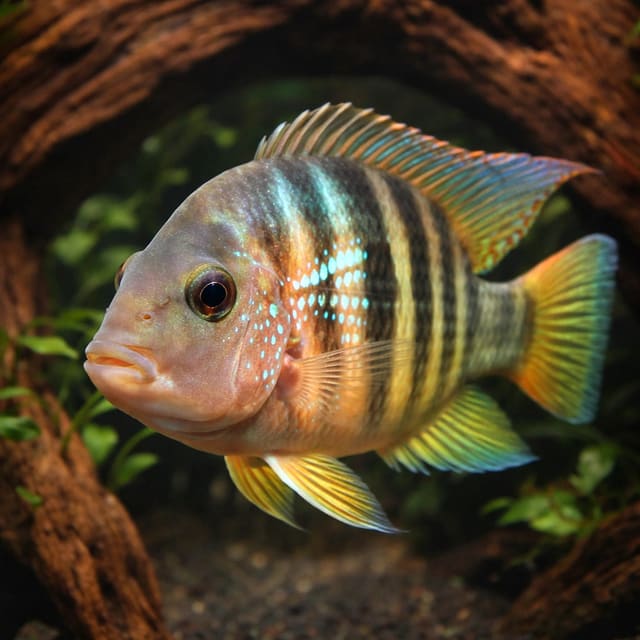
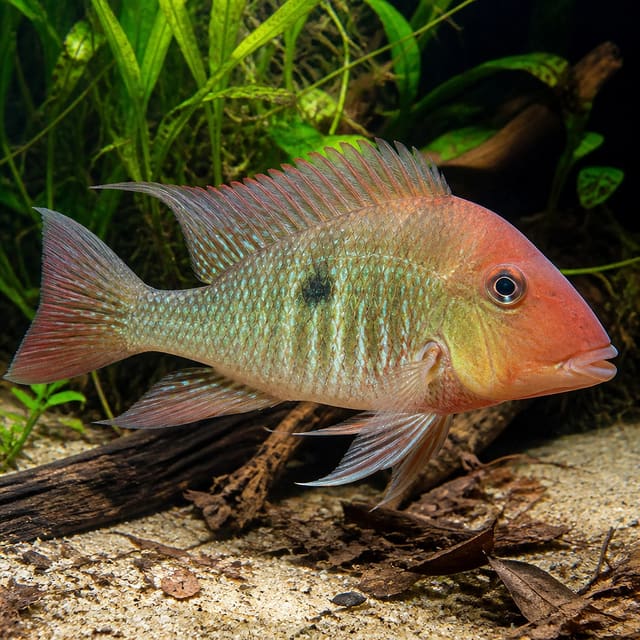
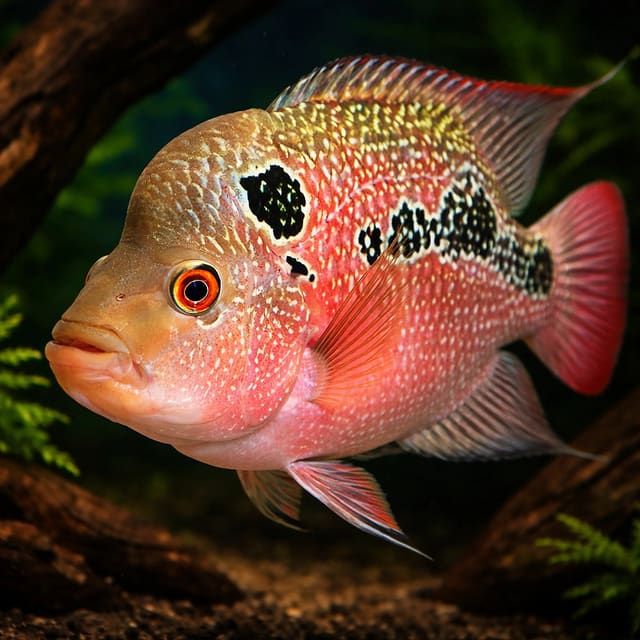
The gallery images are representative of this type of animal rather than photographs of the exact animal supplied, so colours can look slightly different from the live animal.
| Decision | What to check |
|---|---|
| Purchase unit | One purchase means one live fish. |
| Adult planning | Allow for a maximum recorded 45.7 cm total length. |
| Single adult | Use at least approximately 540 litres and a 150 × 60 cm base. |
| More than one | A pair or group needs larger quarters. |
Measure the intended aquarium base rather than relying only on its advertised volume. A tall aquarium can hold many litres while still lacking the 150 cm length and 60 cm front-to-back space used in the single-adult recommendation.
Seriously Fish gives the Oscar aquarium plan as a base of 150 × 60 cm and approximately 540 litres, describing that as just about large enough for one adult. Larger quarters are required for a pair or group. Treat both the base dimensions and volume as minimum planning checks; passing one does not compensate for failing the other.
Its species guidance spans 20–28°C, pH 6.0–7.5 and 5–20 dGH. OATA’s American-cichlid sheet gives group guidance of 22–27°C, pH 6.5–8.0 and 4–12 dGH. Use the overlap as a practical routine target: 22–27°C, pH 6.5–7.5 and 5–12 dGH.
| Planning value | Instruction |
|---|---|
| Adult length | Plan for up to 45.7 cm total length. |
| Single-adult aquarium | At least approximately 540 litres. |
| Base dimensions | At least 150 × 60 cm. |
| Routine temperature | 22–27°C. |
| Routine pH | 6.5–7.5. |
| Routine hardness | 5–12 dGH. |
| Ammonia and nitrite | Keep both at 0 mg/l. |
| Suits | Not suited to |
|---|---|
| A keeper with approximately 540 litres and a 150 × 60 cm base for one adult | An aquarium smaller than either single-adult planning measure |
| A weekly 30–50% water-change routine | A carefully aquascaped aquarium that cannot tolerate digging |
| Individual screening of large potential companions | A routine community containing much smaller fish |
| Strong, mature biological filtration | An unfiltered or immature aquarium |
Stability remains essential inside the routine ranges. Establish the intended temperature and water chemistry before introduction, then compare new test results with the aquarium’s normal readings. If your tap water sits outside the routine targets, plan how changes will be made consistently before choosing the fish rather than forcing rapid corrections after arrival.
Start with a mature aquarium of at least approximately 540 litres and a base measuring 150 × 60 cm for one adult. This is not a temporary target for later growth: the permanent aquarium must be capable of accommodating a large adult. If the intended aquarium is smaller in either base dimension, choose a different animal rather than treating extra height as replacement swimming and turning room.
A useful worked check is a nominal 150 × 60 cm aquarium. It passes the stated base test only when those dimensions describe usable aquarium space, and it must also hold approximately 540 litres. A 150 × 50 cm aquarium fails the depth check even if added height raises its nominal volume; a shorter but deeper aquarium fails the stated length check.
Large aquariums provide more stable environmental conditions, but volume cannot remove waste without an established biological filter and regular water changes. Prepare and mature the system before the fish arrives. If this is your first livestock aquarium, follow our guide to preparing and maturing a tropical aquarium before setting an arrival date.
Recheck the plan whenever décor, another large fish or a breeding pair would reduce usable space. The adult-size commitment remains the same even when the fish has ample room around it.
Set the aquarium to 22–27°C, pH 6.5–7.5 and 5–12 dGH for routine keeping. These values are the overlap of the Seriously Fish species aquarium range and OATA’s American-cichlid guidance. Choose stable values within the band instead of repeatedly moving the water towards a single midpoint.
Keep ammonia and nitrite at 0 mg/l. OATA also advises keeping nitrate from exceeding 20 mg/l above its normal tap-water level. Test the tap water as well as the aquarium so that this nitrate comparison has a measured baseline. Our water chemistry guide explains what the main readings mean, while the water matcher helps compare measured aquarium values with the stated range.
| Result | Action |
|---|---|
| Ammonia above 0 mg/l | Stop treating the aquarium as stable; test again, check filtration and address waste loading. |
| Nitrite above 0 mg/l | Check the biological filter and recent changes in fish or feeding. |
| Nitrate rising unusually | Compare it with tap water and review water-change volume and feeding. |
| Temperature outside 22–27°C | Correct the cause steadily and inspect the heater arrangement. |
| pH or hardness drifting | Compare aquarium and replacement water before the next change. |
Record results at least weekly and use the same units each time. A single reading shows the present condition; a short sequence shows whether waste is accumulating or chemistry is drifting. Test again after a major stocking or feeding change because beneficial bacteria must adjust to increased waste.
Treat replacement tap water with a conditioner that removes chlorine or chloramine before it enters the aquarium. Match the established aquarium conditions closely enough to avoid abrupt swings during a substantial weekly water change.
A well-established biological filter is essential. The RSPCA explains that biological filtration supports bacteria that convert toxic ammonia to toxic nitrite and then to safer nitrate. That process only works reliably when filter media is mature, oxygenated and protected from chlorine or chloramine.
For an aquarium of approximately 540 litres, the Oscar profile recommends turnover of four to five times the aquarium volume each hour. The arithmetic gives a total nominal flow of about 2,160–2,700 litres per hour. Its worked example uses two filters rated at 1,080–1,350 litres per hour each. Account for the real aquarium layout when arranging intakes and returns so water circulates without leaving waste trapped behind large wood.
Seriously Fish recommends a weekly change of 30–50% for this species. OATA’s broader American-cichlid routine recommends a 25% partial water change at least once a week. Use the species routine here and retain the weekly frequency even when test results appear stable.
For a 540-litre aquarium, a 30% change is approximately 162 litres and a 50% change is approximately 270 litres. Prepare for that practical handling requirement before choosing the aquarium. Buckets may be manageable for a small system but become inefficient at this scale, so the water-change method must safely handle the calculated volume every week.
Preserving the bacterial population is part of keeping ammonia and nitrite at zero. If flow falls soon after cleaning, inspect for a blockage before assuming the filter rating is adequate.
Feeding and filtration are linked: excess food becomes additional waste. Adjust portions at the feeding stage rather than expecting a larger filter to compensate for repeated overfeeding.
Use a soft, sandy substrate, relatively dim lighting and large driftwood roots or branches for a natural-style arrangement. Oscars tend to dig into the substrate, so a carefully planted or delicately aquascaped layout is a poor match. Leave broad, uncomplicated routes through the aquarium instead of filling every area with movable decoration.
| Feature | Planning decision |
|---|---|
| Substrate | Choose soft sand that suits digging behaviour. |
| Wood | Use large roots or branches while preserving turning space. |
| Lighting | Keep it relatively dim. |
| Live plants | Expect American cichlids to dig up or eat plants. |
| Plastic cover | OATA presents plastic plants as an alternative form of cover for the group. |
| Heater | Position the heaterstat externally if possible because this species has been known to break such equipment. |
At approximately 540 litres in a room around 20°C, the species profile estimates roughly 150–225 W of heating split across two heaters to hold 20–28°C. Use that as the worked equipment estimate for that aquarium and room condition, while setting the routine aquarium target to 22–27°C. A different room temperature or aquarium volume changes the heating demand.
Check that large wood does not obstruct filter intakes or create pockets where solid waste cannot be siphoned. Reassess the route from one end of the aquarium to the other after every layout change. The fish needs usable floor space, not merely an impressive nominal volume around densely packed décor.
Inspect equipment whenever digging moves substrate. A filter intake that becomes buried or a heater exposed to physical contact needs prompt attention. Keep the weekly maintenance route accessible so cleaning does not require dismantling the whole arrangement.
Use a good-quality cichlid pellet as the staple food and supplement it regularly with suitable live or frozen foods. The species is a generalised omnivore, but meatier items are preferred. Earthworms are specifically noted as a suitable live food, while OATA’s group guidance includes larger items such as cockles, lance fish or prawns for larger American cichlids.
Feed once a day and offer only what the fish eats within a few minutes. This gives a clear endpoint: begin with a measured portion, watch it being taken and stop when food remains uneaten at the end of that short period. Do not turn enthusiastic feeding behaviour into unlimited portions; American cichlids can consume a large amount in one sitting.
| Food role | Instruction |
|---|---|
| Staple | Good-quality cichlid pellet. |
| Regular supplements | Suitable live or frozen foods. |
| Named examples | Earthworms, cockles, lance fish or prawns. |
| Frequency | Once daily. |
| Portion limit | Only what is eaten within a few minutes. |
Wild Oscars consume smaller fish, insects, crustaceans, zooplankton and some terrestrial or aquatic vegetation, with plant material and fruit taken when prey is scarce. That natural breadth supports a varied aquarium menu, but aquarium portion size and frequency should follow the controlled daily routine above.
Remove food that is left to break down. Excess faeces and uneaten food release waste into the water, placing additional pressure on the biological filter and making ammonia, nitrite or nitrate problems more likely. If weekly test results worsen after increasing portions, reduce the amount offered and recheck the aquarium’s maintenance and filter flow.
Use appetite as an observation point as well as a feeding task. A clear reduction in intake or complete loss of interest can be an early sign that the fish or water needs attention, especially when it appears alongside changed breathing, colour or swimming.
Arrange for someone to receive the fish so the live-animal parcel is not left unattended. Before it arrives, test the aquarium, confirm ammonia and nitrite are 0 mg/l, check that temperature is within 22–27°C and make sure the intended space is ready. Do not use arrival day to finish maturing the filter or make a major untested change to the aquarium.
Follow our delivery and acclimatisation policy. Film every delivery continuously from the sealed parcel onward, float the bag for 20–30 minutes before releasing the fish, and never pour the bag water into the aquarium.
During the first day, judge the fish against the immediate conditions you can measure. Confirm temperature, ammonia and nitrite first. Check that filter outlets provide circulation and that décor leaves an open route through the aquarium. Avoid repeatedly moving wood or chasing the fish in an attempt to make it settle in a chosen position.
A large fish adds a meaningful waste load. Increase livestock only slowly because the beneficial bacterial population must grow as feeding and waste increase.
Learn the fish’s normal swimming, colour, breathing, feeding and use of cover. Individual behaviour can vary, so a change from its own recent pattern is more useful than expecting every Oscar to act identically.
| What you see | What to do first |
|---|---|
| Hanging at the surface, sitting on the bottom or erratic swimming | Test temperature, ammonia and nitrite, then inspect circulation. |
| Faster or slower gill movement | Check water quality and compare breathing with its normal rate. |
| Darker or paler colour | Look for simultaneous changes in hiding, aggression or breathing. |
| More hiding or changed aggression | Review companions, usable space and recent layout changes. |
| White spots, fluffy growths, ulcers, bumps or damaged scales and fins | Test water and document the visible change clearly. |
| Reduced feeding or changing body condition | Check the portion, recent intake and water readings. |
Water testing is the first response because even small amounts of ammonia or nitrite can stress American cichlids. Correct husbandry failures promptly, but do not guess at a disease treatment from appearance alone. If you are concerned about a health change, contact us with the water readings and a clear description of the fish’s behaviour and appearance.
Continue the normal weekly record even when the aquarium looks clear. Clear water can still contain dissolved ammonia, nitrite or nitrate, while a reduced filter flow may be noticed before visible waste accumulates.
At the first-month review, compare the initial and current test results, feeding portion, waste accumulation and filter flow. That comparison shows whether the routine is keeping pace with the fish’s waste load and whether the planned water-change method remains workable.
Avoid much smaller fish. The Oscar’s predatory nature means a fish that fits its mouth or behaves like prey is a poor choice even when both species share similar water values. Adult size also limits community keeping to exceptionally large aquariums.
This species is not described as especially aggressive for a cichlid of its size, but that does not make it a routine community fish. Predation, physical scale, feeding power and the space occupied by each adult all matter. A companion that is too timid to reach food can fail even without obvious fighting.
| Check | Decision rule |
|---|---|
| Adult size | Reject candidates that will remain much smaller or prey-sized. |
| Aquarium space | Count the adult footprint of every large fish; 540 litres is the single-Oscar plan. |
| Water values | Require a stable overlap with 22–27°C, pH 6.5–7.5 and 5–12 dGH. |
| Feeding access | Choose fish able to feed without being persistently displaced. |
| Behaviour | Reject a match that causes sustained hiding, damage or blocked feeding. |
| Equipment and décor | Keep turning routes, filter flow and maintenance access open. |
Seriously Fish names larger characids, anostomids, other cichlids and larger loricariid or doradid catfish as potential companions. These categories are starting points, not guaranteed matches. Species within each group differ in adult size and behaviour, and the aquarium must be large enough for the complete stocking plan.
Before combining large fish, write down the adult size, water range and space requirement for every candidate. If the total plan is difficult to assess, ask us with the aquarium dimensions, filter capacity, current inhabitants and measured water values.
One adult can be housed in the stated minimum plan of approximately 540 litres with a 150 × 60 cm base. A pair or group needs larger quarters. Do not calculate a pair by simply doubling food or filtration while retaining the single-adult footprint; the fish still require additional usable space and separate routes around décor.
American-cichlid guidance says most members of the group do better singly or in pairs, but the Oscar profile gives the more useful space decision for this species: the stated aquarium is just about large enough for one adult, and larger quarters are necessary for more. Begin with the number of adults the final aquarium can hold, not the number of fish that could fit temporarily.
Observe changes after any introduction. Increased hiding, damaged fins or scales, changed aggression, reduced feeding and altered body condition all require attention. Test the water at the same time because social stress and deteriorating water can produce overlapping signs.
Have a realistic separation plan before trying a pair or group. The permanent decision must account for adult fish and the stated adult space requirements. If suitable larger quarters or separation space cannot be maintained, choose a single-adult plan from the beginning.
FishBase records Astronotus ocellatus reaching up to 45.7 cm total length. Plan the aquarium, turning space and equipment layout around that adult figure.
Use at least approximately 540 litres with a base of 150 × 60 cm for one adult. Seriously Fish describes that aquarium as just about large enough for a single adult, with larger quarters required for a pair or group.
Plan the stated approximately 540-litre, 150 × 60 cm aquarium for one adult. A pair or group can be kept only in larger quarters, and a separation plan is needed if individuals do not coexist successfully.
It suits a keeper prepared for a fish reaching 45.7 cm, an approximately 540-litre aquarium, strong biological filtration and weekly 30–50% water changes. Its size, waste load, digging and companion screening make advance planning essential.
Use a good-quality cichlid pellet as the staple and add suitable live or frozen foods such as earthworms, cockles, lance fish or prawns. Feed once daily and offer only what it eats within a few minutes.
Keep it at 22–27°C, pH 6.5–7.5 and 5–12 dGH. These routine values are the overlap of the Seriously Fish species range and OATA’s American-cichlid guidance; keep ammonia and nitrite at 0 mg/l.
Seriously Fish describes the Oscar as not especially aggressive for a cichlid of its size, but it is predatory and must not be combined with much smaller fish. Screen every companion for adult size, space, behaviour and feeding access.
Avoid much smaller fish. Larger characids, anostomids, other cichlids and larger loricariid or doradid catfish are potential candidates, but each match needs enough space and compatible water, behaviour and feeding access.
Someone must be present to receive it. Film every delivery continuously from the sealed parcel as it is opened with the fish still in the bag, float the bag for 20–30 minutes, then release the fish without pouring the bag water into the aquarium.
No reviews for this item yet. Bought one? Honest reviews only, good or bad.
What customers say about ordering from us
Easy website plenty of info on fish your buying great to pick a time slot
TRACEY DURRANT · 7 Oct 2026
Got some lovely fish thank you
Kevin Mackie · 7 Oct 2026
Reviews of our shop, collected by Judge.me, an independent third-party review collector. Newest first.