Moderate
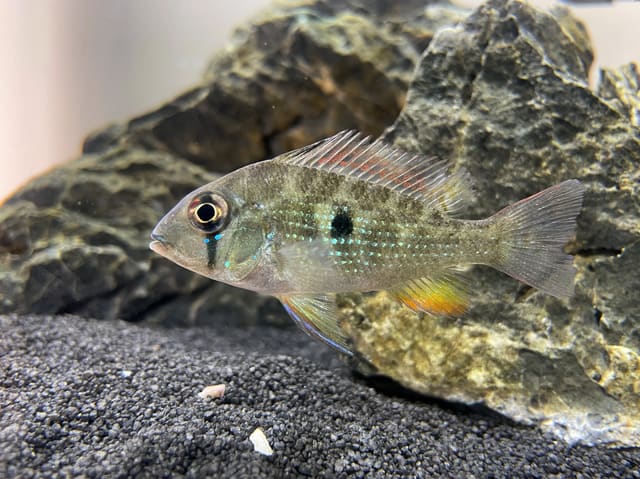
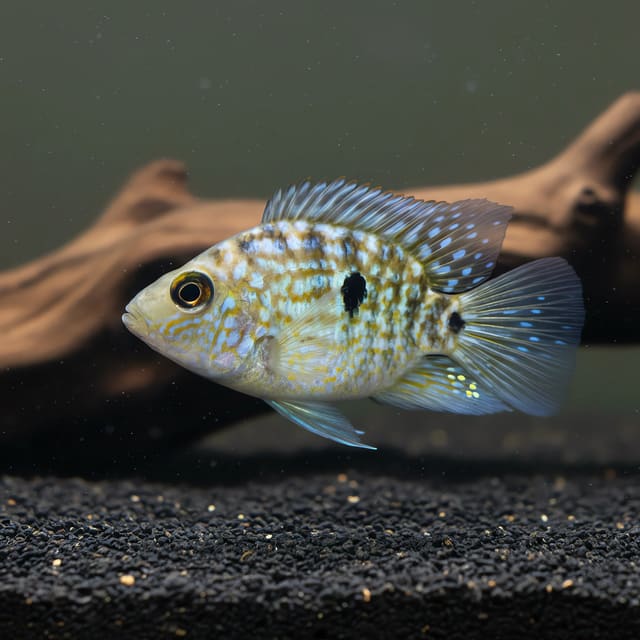
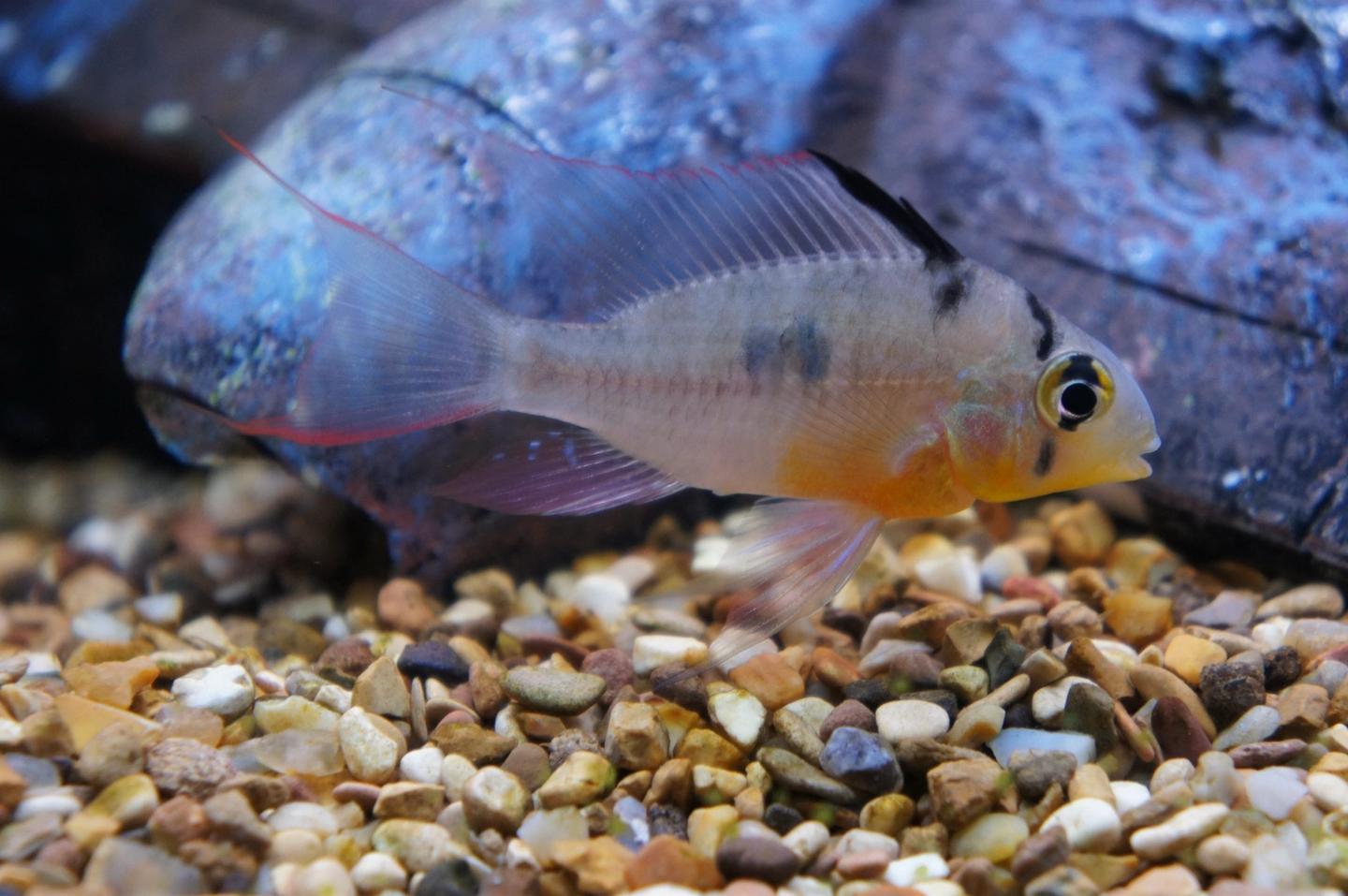
Paraguay Eartheater (Gymnogeophagus balzanii)
21–25°C · pH 6–8 · 250L
£37.99

Uaru Cichlid (Uaru amphiacanthoides) is a large South American fish for spacious, mature aquariums with warm soft water and a plant-heavy diet. One live fish per purchase, with six size choices.
Uaru amphiacanthoides
Save when buying multiple fish. Each quantity is one fish; sex and pair formation are not guaranteed unless the selected variant explicitly states them.
Uaru Cichlid (Uaru amphiacanthoides) is a large South American fish for spacious, mature aquariums with warm soft water and a plant-heavy diet. One live fish per purchase, with six size choices.
Cichlids are a family of roughly 1,800 accepted species, not one care type. Before buying, identify the exact species and source, then compare adult measurement, usable tank dimensions, social system, territory, tested water, diet and an exit plan. No family-wide minimum tank, water range or tank-mate list is safe.
Maintain these water conditions for optimal health and vibrant colors
Uaru Cichlid (Uaru amphiacanthoides) is a large South American cichlid for a spacious aquarium built around warm, soft water, good filtration and a plant-heavy diet. Its deep body and unhurried presence can make it a striking focus in a display, but its most important requirements are practical ones: enough room for adult fish, compatible company and a maintenance routine that keeps conditions dependable.
Also known as the Triangle Cichlid, Uaru is relatively peaceful for a fish of its size. It is particularly interesting to keep in a considered pair or group arrangement, where interactions between the fish are part of the attraction. Plan that social setting before buying. A young fish can look quite manageable in a modest aquarium, while the home needed by several adults is a much larger commitment.
One purchase supplies one live fish of the selected size. The size choices are 2–2.5 cm, 3–4 cm, 4–5 cm, 6–7 cm, 7–9 cm and 10–12 cm. Use the selector to choose the size for your order. The size you select is the size supplied, not the adult size. Choose a starting size with your prepared aquarium and existing fish in mind, while allowing for the substantial adult body from the outset.
Sex is guaranteed only when the selected option explicitly states male or female. This Uaru Cichlid listing has no sex-guaranteed option.
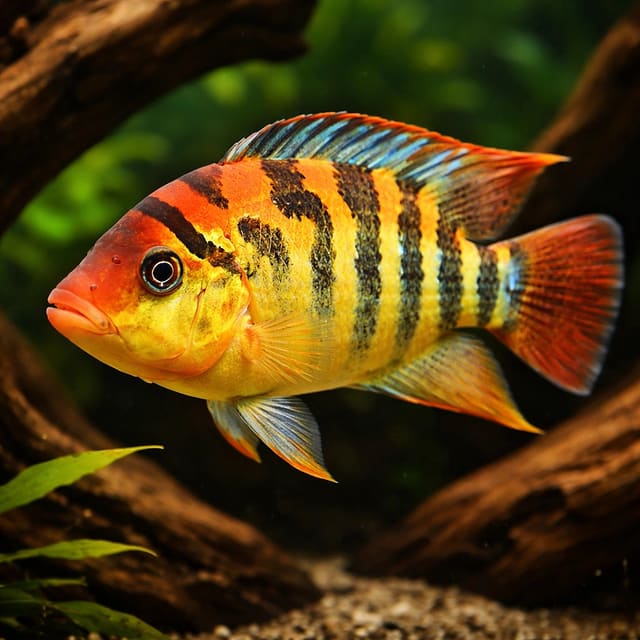
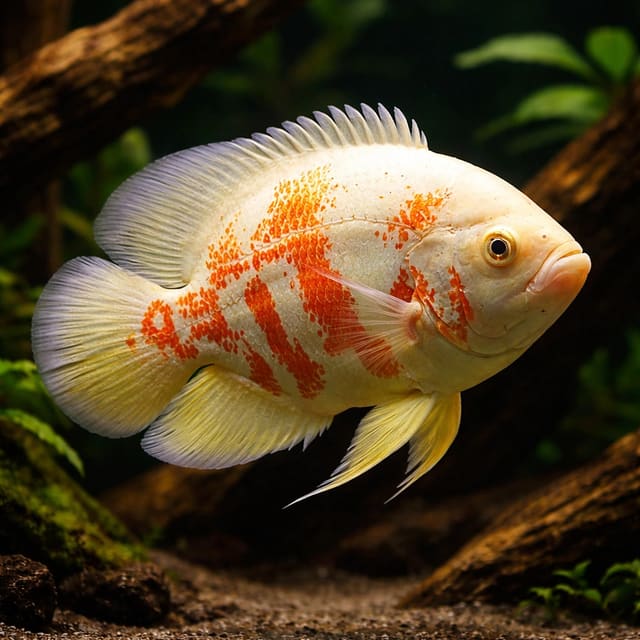
The gallery images are representative of this type of animal rather than photographs of the exact animal supplied, so colours can look slightly different from the live animal.
This fish's care makes more sense when those three needs are considered together. Warm water must suit every resident; enough space must remain after wood and roots are installed; and its food must contain plenty of suitable plant material. Meeting just one part of that plan does not compensate for missing another. A large tank with unsuitable companions or inconsistent water quality will still be difficult to manage well.
Wood and root arrangements work particularly well as a starting point for the layout. Uaru can eat most aquatic plants, so avoid making the display depend on preserving delicate planting. Open swimming room and secure shelter can be created with carefully placed décor, leaving routes around the main structures and clear access for cleaning. A simpler layout can be an attractive and practical home.
Its peaceful reputation should also be read in context. Uaru should be protected from overly aggressive fish, and possible companions need to tolerate its warmer aquarium conditions. The best community is one where every resident can eat, move away from others and rest without persistent disturbance. Watch how the actual fish behave rather than depending entirely on the general reputation of a species.
Uaru suits a keeper who can maintain a mature, spacious system and who enjoys paying attention to feeding and social behaviour. If your experience so far is with a small first aquarium, make the larger setup and its stable water conditions the next project before adding this fish. Existing experience with warm-water aquariums is helpful, but reliable observation and preparation matter more than a label.
For a South American display, start with the species whose needs you most want to accommodate, then choose other residents around that plan. The South American cichlid collection helps you explore the different kinds of fish involved. Similar origins do not make all cichlids interchangeable: compare adult size, temperament and water requirements before deciding which arrangement you can maintain comfortably.
Before ordering, write down the adult aquarium dimensions, the measured water conditions and the company you intend to keep. Check that the person responsible for routine care can prepare replacement water and provide the diet consistently. This gives the whole household a clear, practical plan for the fish's care.
FishBase records a maximum of 25 cm SL for male or unsexed Uaru. Seriously Fish gives 254 mm SL, equivalent to 25.4 cm standard length. Standard length excludes the tail fin. These records show why a tiny purchase-size fish needs an adult plan; they are not measurements of the whole animal from the tip of the mouth to the end of the tail.
Allow for the depth and turning room of the fish as well as its length. A deep-bodied adult needs more usable space than a quick glance at a juvenile might suggest. Plan passages around wood so that the fish can turn and pass without being funnelled into a narrow gap, and leave an open swimming area that remains useful when the fish grow.
There are two useful but differently scoped aquarium figures to consider. Seriously Fish describes a pair aquarium measuring 120 × 45 × 37.5 cm, approximately 200 litres. OATA's broader American cichlid guidance recommends at least 300 litres for larger species over 15 cm. The former is a pair-specific species example; the latter is a general planning recommendation covering large American cichlids.
For a new Uaru setup, use that larger 300-litre general planning baseline and assess the footprint carefully, with more space for groups or a mixed display. It is not a guarantee that every 300-litre aquarium suits every arrangement. The number and adult size of the residents, the dimensions and the amount of décor all affect whether the fish have sufficient room.
A pair's example should not be multiplied into a rule that a group will fit neatly into a certain volume. Social interactions do not scale that way, and neither does available shelter. If you intend to keep a group, discuss the actual aquarium dimensions and intended residents before buying. Have a realistic plan for separating fish if persistent conflict develops.
Consider access from your own side of the glass. Can you reach behind the main piece of wood with a siphon? Can a filter intake be checked without moving the whole display? Can you observe every fish when it feeds? A roomy aquarium becomes much easier to care for when its layout also supports those everyday tasks.
Place substantial décor securely and allow for disturbed substrate. A piece that rests safely in an empty tank may need attention once fish begin feeding and moving around it. Check for sharp edges, unstable stacks and gaps that could become awkward as the fish grow. Removing a poorly placed item before arrival is easier than changing the whole aquarium around settled fish.
Do not leave an essential upgrade as an uncertain future possibility. Settle where the adult home will be, how it will be filtered and how you will maintain it before choosing the fish. That allows the smaller starting sizes to be a considered choice within a long-term plan, rather than a reason to postpone the space decision.
Uaru is native to the Amazon region. FishBase describes the Amazon–Solimões drainage between the Japurá and Tapajós rivers and the middle and lower Negro basin. The species occurs in freshwater, and the care profile describes clear-water tributaries with submerged branches and roots. This is background to its natural history, not a claim about the collection or breeding origin of the individual supplied.
A roomy aquarium with sand or aquarium gravel, bogwood and roots is the species-profile recommendation. Arrange the main structures to provide a sense of cover while leaving open swimming space. The aim is a layout in which fish can see and move around one another without all activity being forced into a single narrow channel.
Wood can also interrupt a direct view across the aquarium. Think about that when placing it: a feature that lets a fish move calmly out of another's line of sight may be more useful than a dense barrier that leaves it trapped at one end. Keep exits open and assess the arrangement from the fish's level as well as from your preferred viewing angle.
Seriously Fish advises leaving the Uaru aquarium unplanted because most aquatic plants may be eaten. Treat a wood-and-root layout as the reliable starting point. If you want to experiment with live plants, be prepared for damage and consumption; buying a tougher-looking plant is not a guarantee that it will remain untouched.
Separate the role of décor from the feeding plan. Plants in the aquarium do not provide a controlled, complete ration, and the survival of ornamental planting should not depend on the fish ignoring a normal part of its diet. Supply appropriate food deliberately and build an attractive layout that still works if planted areas are lost.
Keep the substrate accessible around the places where food collects. Uneaten plant material and prepared food can lodge against roots just as easily as other leftovers. A small clear feeding area can make it easier to judge how much has been eaten and to remove what remains without disturbing sheltered fish.
Uaru needs clean, well-filtered water. Position the intake and outlet so that the filter can do its job, and check for areas where waste repeatedly accumulates. Effective circulation and an open swimming area should work together. If a strong outlet makes a resting place unusable, consider its direction and the arrangement of the décor.
Check the heater and thermometer as part of preparing the aquarium, and allow the system to run steadily before livestock arrives. Keep equipment accessible for routine inspection. In a warm aquarium, a failed or poorly adjusted heater can affect the whole community, so notice temperature changes promptly and investigate them rather than relying on the heater's dial alone.
| Care point | Guidance for this aquarium |
|---|---|
| Temperature | 27–30°C, species aquarium guidance |
| pH | 6.0–7.0, species aquarium guidance |
| General hardness | Soft water, up to 5 dGH |
| Ammonia and nitrite | Zero mg/l, general OATA aquarium guidance |
These aquarium temperature, pH and hardness values follow Seriously Fish's Uaru profile. Maintain a stable setting within that guidance which also suits the intended companions. The warmer conditions are an important part of choosing tankmates; a fish that thrives in a cooler community may not belong in the same display.
Measure the water you have before deciding how to prepare the aquarium. pH and general hardness describe different things, so check both. A water sample with the right pH can still have more minerals than the soft-water plan requires. Our water chemistry guide explains the main aquarium tests and why a set of readings is more useful than one isolated number.
If your usual water is much harder than the intended conditions, plan a reliable preparation method with experienced advice before keeping Uaru. The important practical question is whether you can produce suitable replacement water consistently. Avoid repeated rapid adjustments made in response to single readings; stable, understood conditions are easier to maintain than a tank that is continually being changed.
Test replacement water as well as the aquarium where necessary, and record any changes in its source or preparation. That helps explain an unexpected result after maintenance. Keep the units with the readings, particularly for hardness, so that comparisons remain meaningful when you discuss them with a retailer or another keeper.
A biological filter develops a community of bacteria that processes fish waste. Ammonia is converted to nitrite and then nitrate; ammonia and nitrite must not be allowed to build up. Clear water can still contain harmful waste, so visual appearance cannot replace testing. An aquarium that has just been filled and heated is not ready simply because its equipment is switched on.
The first tropical tank guide is a useful starting point when establishing a new system. Let the aquarium and filter become capable of handling the intended load before adding fish, and increase stocking gradually. Each addition and each increase in food asks the biological filter to process more waste.
Keep track of temperature, test results, feeding and maintenance. A brief written record can show whether a change began after adding livestock, altering a food or cleaning the filter. It also gives someone helping you a clearer picture than a description that the aquarium has been running for a long time.
Watch the fish alongside the tests. A change in breathing, feeding or use of the aquarium deserves attention even if the water looks clear. Check the actual readings and equipment, then seek informed advice if the change persists. Do not treat a fish's ability to survive a brief problem as evidence that the conditions are suitable for long-term care.
Uaru is best described as a plant-heavy omnivore. FishBase records animal foods in its natural diet together with a need for plant material, while Seriously Fish describes substantial plant consumption and a strongly herbivorous tendency in captivity. In practice, a diet dominated by rich animal food because the fish is a cichlid misses an important part of its needs.
Choose an appropriate complete prepared food with a substantial plant component, and include suitable vegetable matter and other foods advised for Uaru. Read what a food is intended to provide rather than choosing on the strength of a picture of a large cichlid on the packaging. A useful diet balances dependable prepared nutrition with appropriate variety.
Suitable invertebrate foods can add variety, but they should not displace the plant-heavy approach. Introduce food changes thoughtfully and watch acceptance. A fish's enthusiasm for a particular item tells you that it likes that food; it does not establish that the item should make up most of the diet.
Match food size to the fish. Small arrivals need portions they can take comfortably, while larger fish may manage a different format. This is another reason to observe a meal rather than scattering food and leaving. Check that each individual is taking and swallowing food, especially when fish of different sizes share the aquarium.
Pairs and groups need feeding arrangements that allow every fish to eat. Distribute suitable food where you can observe it, and look beyond the first fish to approach. A confident individual can appear well fed while another repeatedly gives way. If that happens, adjust feeding positions and assess the social arrangement instead of simply increasing the total food.
OATA's general American cichlid guidance advises feeding what can be consumed within a few minutes, usually once daily, while avoiding overfeeding. Use that broad advice as a starting point and obtain guidance on an appropriate ration for your fish's size and condition. Plant material may need observation and removal according to how it is used; do not let uneaten portions accumulate indefinitely.
After feeding, look around the roots and filter intake for trapped pieces. Leftovers break down and add waste even when they were originally a healthy food. Removing them and adjusting the next ration is more useful than assuming the filter will absorb any amount of excess feeding.
Watch for a fish losing interest in food, struggling to compete or changing in condition. A well-planned feeding routine gives you a regular opportunity to notice these things without chasing or handling the fish. Observe several meals if needed, and compare the individual with its own usual behaviour rather than with the boldest fish in the aquarium.
If feeding changes markedly, check water quality and recent events first. A new companion, maintenance disturbance or equipment problem may be relevant. Persistently poor appetite or declining condition warrants knowledgeable advice. Avoid attempting to solve every feeding problem by switching to richer foods, and do not improvise treatment from one symptom alone.
OATA recommends, for American cichlids generally, a partial water change of about 25% at least weekly and water testing at least once a week. Treat that as a baseline to review against your aquarium's readings and load. The aim is to prevent waste accumulating while keeping conditions steady; a heavily fed or densely stocked display may need a different maintenance plan.
Prepare replacement water consistently. Use a suitable conditioner for chlorine or chloramine where required and avoid a sudden change in temperature or chemistry. Make sure that a soft-water preparation method is repeatable before depending on it. A maintenance routine should remain practical during ordinary busy weeks, not only when there is unlimited time to prepare each change.
Siphon debris from the substrate and around accessible roots while keeping disturbance controlled. Notice where waste gathers repeatedly. If reaching one pocket means dismantling half the aquarium, adjust the layout so that future cleaning is less disruptive. Leave secure shelter available while working and keep equipment operating appropriately throughout the process.
Check the filter for blockages or reduced output. When biological media needs cleaning, OATA advises lightly rinsing it in aquarium water removed during a water change, rather than under chlorinated tap water. Follow the equipment instructions and preserve the bacteria that process waste. Cleaning is intended to maintain function, not to sterilise an established biological filter.
Count and locate the fish during daily observation and notice how they use the aquarium. Look for changes in breathing, fins, body condition, appetite and behaviour. A Uaru that repeatedly remains apart from others or loses access to food needs closer attention even if the rest of the group appears settled.
If a problem appears, test the water, check temperature and equipment, and record what has changed recently. Contact an experienced aquarium retailer or aquatic veterinary professional as appropriate. Useful information includes the aquarium dimensions, residents, test readings, feeding and the timing of the change. It is much easier to assess a specific pattern than a general impression that the fish looks unhappy.
Arrange for someone to receive the delivery, and have the aquarium ready before the confirmed date. Tropical Fish Co uses a licensed live-animal courier, oxygen-filled bags and insulated packing. Read the current delivery and Live Arrival Guarantee policy for the service details and conditions, then follow the supplied acclimatisation guidance. Do not pour the transport water into the aquarium.
Open and inspect the parcel the day it arrives. For a Live Arrival Guarantee claim, prepare a continuous unboxing video beginning with the still-sealed parcel, showing it being opened and the fish inside the sealed bag before anything is disturbed. Contact the team the same day with the order number if there is a problem. This is evidence for a claim; a prepared aquarium and careful acclimatisation are the steps that support the fish's transition into its new home.
Seriously Fish recommends keeping Uaru in pairs or groups. Consider companionship together with adult space, feeding access and the ability to separate fish if necessary. A purchase of two unsexed fish does not establish a compatible breeding pair, and a larger group needs a layout that lets individuals move away from one another.
Watch how the arrangement works over time. A fish may feed confidently at first and later become reluctant when another fish dominates a particular area. Observe repeated interactions rather than judging the group from a single calm moment. Persistent exclusion, chasing or inability to rest calls for a change in the arrangement.
Keep shared needs at the centre of the community plan. The water parameter matcher can help compare measured conditions with guidance, but it cannot decide whether a particular fish will be bullied or whether the aquarium has enough adult space. Treat water matching and behavioural assessment as separate checks.
The species profile names tetras, angelfish, Heros, Geophagus, Satanoperca and larger characins among possible companions. It also stresses the need for tankmates to tolerate the warmer conditions. Research the exact species in each group, then assess its adult space, feeding and temperament alongside the Uaru plan. These names identify possibilities to examine, not a shopping list to fit into one aquarium.
Angelfish and Heros are familiar examples for a South American display, but familiarity is not a substitute for checking the actual fish and aquarium. Their own social needs and behaviour still matter. With bottom-associated cichlids, assess the use of lower space and feeding areas as well as the open water above them.
Tetras and larger characins also vary substantially. Choose the precise species for the intended temperature and dimensions rather than relying on a broad label such as community fish. A visually balanced display still needs enough room for all its residents to grow and behave normally.
Avoid keeping Uaru with overly aggressive fish, as the species profile advises. Its size does not make it immune to harassment. Repeated chasing, restricted feeding and a fish being held in one corner are reasons to act, even if there is no obvious injury. A peaceful large fish should not have to compete continually with residents selected for aggression.
Build some flexibility into the plan. A spare safe arrangement or a clear route to obtaining help is valuable if a pairing or community develops problems. The sensible response to persistent conflict is to reconsider the fish or layout, rather than assume that they will eventually settle because their water requirements overlap.
Uaru's social behaviour is one of the pleasures of keeping it well. Give yourself time to observe without disturbing the aquarium: who feeds first, who rests together and whether every fish can move freely. Those details help you judge whether the arrangement is working, and they often reveal a small problem before it becomes an established pattern.
FishBase records 25 cm standard length for male or unsexed fish, and Seriously Fish gives 25.4 cm standard length. Both exclude the tail. Plan for a substantial, deep-bodied adult with generous turning and swimming room.
Seriously Fish gives a pair example of 120 × 45 × 37.5 cm, approximately 200 litres. OATA's broader guidance is at least 300 litres for American cichlids above 15 cm. Use the larger general planning baseline for a new setup, with more room for groups or mixed displays.
The species guidance recommends pairs or groups. Plan the social arrangement around adult space and behaviour, provide feeding access for each fish and be ready to separate individuals if persistent conflict develops.
It is a substantial commitment for a first aquarium because it needs a spacious mature system, warm soft water and a plant-heavy feeding plan. Establish those conditions and a dependable maintenance routine before adding the fish.
Provide a plant-heavy omnivorous diet using appropriate complete prepared food and suitable vegetable matter, with other suitable foods for variety. Expect aquarium plants to be eaten and do not rely on ornamental planting as the feeding plan.
Species aquarium guidance is 27–30°C, pH 6.0–7.0 and soft water up to 5 dGH. Maintain stable conditions and choose companions that can live comfortably in the same warm water.
Some can be considered: the species profile names angelfish, Heros, Geophagus and Satanoperca among possible companions. Check the exact species' temperature, space and behaviour needs, and avoid overly aggressive fish.
Tropical Fish Co uses a licensed live-animal courier, oxygen-filled bags and insulated packing. Be present to receive the parcel and inspect it the same day. A Live Arrival Guarantee claim requires continuous video from the sealed parcel through opening to the fish in its sealed bag, plus same-day contact with your order number.
FishBase: Uaru identity, range and recorded size supplies the scientific record, including its standard-length and sex scope. The linked Seriously Fish profile provides the species aquarium advice on warm soft water, social keeping, layout and diet.
OATA: American cichlid care supplies broader guidance on aquarium planning, water testing, maintenance and introductions. It covers many species, so its general recommendations are distinguished from the Uaru-specific guidance above. RSPCA: aquarium environments explains biological filtration and the need for an appropriately prepared, maintained home.
No reviews for this item yet. Bought one? Honest reviews only, good or bad.
What customers say about ordering from us
I have a small group of long finned mountain minnows. So was delighted to be able to order ten of this variety to increase the genetics in my tank . The ones I recieved are healthy but it’s to early to give a verdict on wether they are of a long finned type since they are small currently.
Gordon Walker · 23 Sept 2026
100% success travel and "installation". Pleased with quality of purchase. The Siamese fighter a bit "shy" so have not yet seen him at his best yet but looking good. Happy customer. GG
George E Garratt · 21 Sept 2026
Reviews of our shop, collected by Judge.me, an independent third-party review collector. Newest first.